

U0402 on 2021 Dodge Charger: Implausible TCM Data Causes & Fixes
On a 2021 Dodge Charger, code U0402 most often indicates a software glitch between the Powertrain Control Module (PCM) and Transmission Control Module (TCM). The primary fix is a software update performed by a dealer, as outlined in manufacturer bulletins. When this code occurs, the PCM may deny torque requests from the TCM, forcing the transmission into a fixed-gear 'limp mode'. Expect to pay for about an hour of labor for the update if not covered by warranty.
- Code U0402 means the Transmission Control Module is sending bad data to the main engine computer.
- The most probable cause on a 2021 Charger is a software bug that requires a dealer to update the Powertrain Control Module (PCM).
- Before considering expensive hardware replacement, always check for software TSBs and verify the battery and charging system are healthy.
- Driving with this code is not recommended as the transmission may shift erratically or enter a fixed-gear limp mode.
- This is not a DIY-friendly repair; professional diagnosis with manufacturer-specific tools is highly recommended.
What's Unique About the 2021-2021 Dodge CHARGER
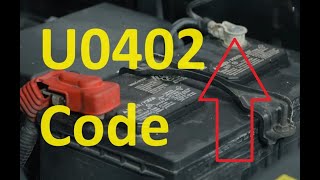
The 2021 Dodge Charger, part of the modern LD platform, utilizes the sophisticated ZF 8-speed (such as the 8HP70) automatic transmission, which is controlled by an integrated mechatronic unit (TCM). 🎬 Watch: Common causes and fixes for the U0402 TCM code. This system relies heavily on a complex Controller Area Network (CAN bus) for all its operations. Unlike older vehicles, a transmission problem is frequently not mechanical but rather a software or communication issue between modules. For this specific code, Stellantis has issued service bulletins like 18-001-23 Rev. A, pointing directly to PCM software as the cause, making a software re-flash a more common and targeted fix than replacing hardware.
Diagnostic Flowchart
Tap your situation to follow the diagnostic path that matches what you're seeing on this vehicle.
Symptoms You May Notice
- Check Engine Light (Malfunction Indicator Lamp) is on.
- Transmission or other warning lights on the dashboard, such as for the traction control system.
- Vehicle enters 'limp mode', often stuck in a single gear and with reduced power.
- Erratic, harsh, or delayed shifting.
- Loss of gear selection or a delay when moving the shifter, sometimes reverting to neutral.
- Traction control or stability control system warnings.
- A feeling of the torque converter slipping longer than usual when pulling away from a stop.
- Replacing the entire transmission when the issue is purely electronic.
- Replacing the TCM when only a software update is needed.
Most Likely Causes
- Powertrain Control Module (PCM) Software Glitch 🔴 High Probability → Shop Engine Control Module (ECM) Modern vehicle software is complex, and bugs can cause modules to misinterpret data. Dodge and other Stellantis brands have issued multiple TSBs (e.g., 18-001-23 Rev. A) specifically to address U0402 with a software update.
How to confirm: A dealer or qualified shop with a wiTECH scan tool can check the current software calibration ID against the latest available version from the manufacturer. This should be the first step in diagnosis.
Typical fix: Reprogramming (re-flashing) the PCM with the latest software version. The process requires a stable power supply (battery charger) and takes approximately 0.2 hours of labor according to TSBs.
Est. part cost: $0 (software only) - Low Battery Voltage or Charging System Issue 🟡 Medium Probability → Shop Vehicle Battery Control modules require a stable voltage to communicate properly. Low voltage from an aging battery or faulty alternator can cause data corruption and trigger various network codes, including U0402.
How to confirm: Test the battery with a digital multimeter; it should read approximately 12.6 volts with the engine off and 13.5-14.5 volts with the engine running. A load test is recommended for a more accurate assessment of battery health.
Typical fix: Charge or replace the battery. Test and replace the alternator if the charging voltage is incorrect.
Est. part cost: $150-$350 - Faulty Transmission Control Module (TCM) ⚪ Low Probability → Shop Transmission Assembly While less common than software issues, the TCM (often part of the valve body assembly in the ZF 8-speed) can fail internally, causing it to send corrupt data.
How to confirm: This is a process of elimination. If the software is up-to-date, the battery is good, and wiring is intact, the TCM itself becomes the primary suspect. A technician may use an oscilloscope to analyze the data signal on the CAN bus.
Typical fix: Replace the Transmission Control Module and program it to the vehicle's VIN. A 'Proxy Configuration Alignment' and 'Transmission Quick Learn' procedure are mandatory after installation.
Est. part cost: $400-$800 - Wiring or Connector Issue ⚪ Low Probability The wiring harness between the PCM and TCM can be damaged by heat, vibration, or corrosion, leading to signal degradation. A known failure point is the STAR connector junction, where CAN bus wires meet.
How to confirm: Visually inspect the wiring harness for any signs of damage, chafing, or corrosion at the connectors for both the PCM and TCM. Perform a resistance test on the CAN bus wires (should be ~60 Ohms with battery disconnected).
Typical fix: Repair the damaged section of wire or replace the corroded connector. Applying dielectric grease can help prevent future corrosion.
Est. part cost: $20-$200
Rare But Worth Checking
- Faulty Powertrain Control Module (PCM): → Shop Engine Control Module (ECM) It is rare for the PCM to be the cause of the failure, as it is the module reporting the fault. However, an internal PCM fault can, in some cases, lead to misinterpreting good data. This should only be considered after all other possibilities are exhausted.
- Aftermarket engine/transmission tuning: → Shop Transmission Assembly An aftermarket tune can sometimes cause communication conflicts between the PCM and TCM, especially under high load. A user on a Hellcat forum reported the U0402 code appearing at high speeds after installing a tune, with the tuning company suggesting a potential hardware issue that was actually a software conflict.
Diagnosis Steps
- Check for Technical Service Bulletins (TSBs) for your vehicle's VIN. A software update is a very common fix for this code on Stellantis products.
- Use a professional scan tool to check for any other DTCs. Codes like U1424 or P1DD2 strongly suggest a software-level torque request issue.
- Test the battery and charging system to ensure voltage is stable and within the correct range (12.6V+ engine off, 13.5-14.5V engine on). A weak battery is a frequent cause of network errors.
- If TSBs, battery, and other codes are ruled out, perform a thorough visual inspection of the wiring harness and connectors between the PCM and TCM, including grounds and the STAR connector junction.
- Using an advanced scan tool (like wiTECH), verify that the PCM and TCM software are updated to the latest versions available from the manufacturer.
- If all other steps fail to identify the issue, the TCM is the likely culprit and may require advanced testing or replacement by a professional.
Parts You'll Likely Need
- PCM Software Update — This is the most common fix, as specified by manufacturer TSBs. A software bug can cause the PCM to misinterpret valid data from the TCM, leading to a limp mode condition.
OEM price range: $100-$200 (Labor cost at dealer)
Aftermarket price range: N/A - Transmission Control Module (TCM)
(OEM #Part number is VIN-specific. NOTE: 68347574AA, cited in pass 2, is INCORRECT for the 2021 Charger's 8-speed transmission and applies to older 5-speed models.)— If software and wiring are confirmed to be good, the TCM itself may have an internal fault causing it to send invalid data. On the ZF 8-speed, this is often integrated with the valve body.
Trusted brands: Mopar
OEM price range: $500-$900
Aftermarket price range: $300-$600
Related Codes That Often Appear With This One
- U0101 — This code means 'Lost Communication with TCM'. It can appear alongside U0402 if the data issue is intermittent or progresses to a complete communication failure.
- U1424 — 'Implausible Engine Torque Signal Received'. This code is often seen with U0402 in TSBs, highlighting the core issue of a torque request conflict between the two modules.
- P1DD2 — 'Torque Request Signal From TCM Denied'. This is a direct result of the PCM receiving implausible data (U0402) and actively rejecting the TCM's request, often leading to limp mode.
Technical Service Bulletins (TSBs) & Recalls
- 1801222: Mentions U0402 - Implausible Data Received From TCM as part of a list of communication codes for 2021 model year vehicles.
- 18-001-23 Rev. A: Describes U0402 being caused by PCM software, leading to the PCM denying TCM torque requests and forcing a limp mode. The fix is a PCM re-flash.
Platform-Specific Known Issues
- A known issue documented in TSB #1801222 involves a group of communication codes, including U0402, that can be resolved with a PCM software update.
- TSB 18-001-23 Rev. A, while for a Ram 1500, provides an excellent explanation applicable to the Charger: when U0402 sets due to a software issue, the PCM denies torque requests from the TCM, causing a fixed-gear limp mode. The fix is to reprogram the PCM.
Mechanic-Grade Diagnostic Values
- CAN Bus Network Resistance — expected: ~60 Ohms. Failure: A reading of ~120 Ohms indicates a missing terminating resistor or an open in the circuit. A reading near 0 Ohms indicates a short between CAN High and CAN Low wires.
- CAN Bus Voltage (Key On, Engine Off) — expected: CAN High (CAN-H): ~2.6V. CAN Low (CAN-L): ~2.4V.. Failure: Voltages that are stuck high (e.g., 5V or 12V), stuck low (0V), or do not mirror each other indicate a short to power, short to ground, or an open circuit.
- TCM Power Supply Voltage — expected: 11.5V - 13.5V with ignition on.. Failure: Voltage below 11.5V can cause the module to send corrupt data or reset unexpectedly.
Hidden / Shadow Codes Worth Checking
- U0402-00: A specific sub-code for 'Implausible Data Received from TCM'. TSBs state that when this code sets in the PCM, the module will deny torque requests from the TCM, which is the direct cause of the vehicle entering a fixed-gear limp mode. (see via This code is visible on dealer-level scan tools like wiTECH or other high-end professional scanners.)
Scan Tool Commands That Help
- wiTECH: Proxy Configuration Alignment (Proxi) — This procedure is mandatory after replacing the TCM or certain other network modules. It synchronizes the vehicle's component configuration across the entire network. Failing to perform a Proxi alignment can cause a flashing odometer and set multiple communication codes, including U0402.
- wiTECH (or equivalent): Transmission Quick Learn — This must be performed after replacing the TCM, valve body, or the entire transmission. It allows the TCM to relearn clutch fill times and adaptive pressure values for smooth shifting. It can also resolve harsh shifting complaints.
- wiTECH (or equivalent): Reset Adaptive Values / Clear Keep Alive Memory — This function clears the learned shift patterns from the TCM's memory. It is often performed before a 'Quick Learn' to reset the module to its factory baseline, or as a first step to address poor shift quality.
Wiring & Ground Locations
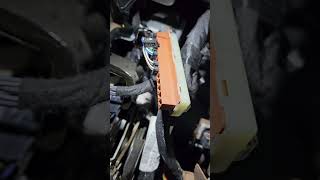
- STAR Connector (Splice Pack) — Often located behind the instrument cluster, behind the driver's side kick panel, or under the glove box. On some Dodge vehicles, there are multiple STAR connectors, sometimes color-coded (e.g., a brown one for the interior CAN bus), located behind the headlight switch.. This is a central junction where multiple CAN bus circuits meet. A single loose pin or corrosion in this connector can disrupt communication between many modules, including the PCM and TCM, causing a U0402 code.
- G300 / G301 — On older Charger models, G300 is located below the left 'B' pillar and G301 is below the right 'B' pillar. While the exact designator may change, these are common grounding locations for interior modules.. A poor body ground for any module on the CAN bus can introduce electrical noise and cause data corruption, leading to communication codes.
- Passenger Cylinder Head Ground — A factory grounding point is located on the passenger side cylinder head, often with a braided strap connecting to the firewall.. This is a critical engine-to-chassis ground. High resistance here can cause modules to seek ground through other paths, creating voltage differentials that corrupt CAN bus signals.
- Under-Seat Ground Stud — There is a factory ground stud with multiple wires connected located under the front passenger seat, beneath the carpet.. This serves as a grounding point for various interior electronics. Corrosion or a loose connection here can cause intermittent and hard-to-diagnose communication faults.
Real Owner Repair Stories
- White One Auto, LLC YouTube Channel (2019 Dodge Charger 392) — CAN communication problems, multiple trouble codes.
❌ Tried (didn't work) The previous shop had replaced the electronic shifter assembly, but the problem persisted.
✅ What actually fixed it A technician discovered the shifter's wiring harness had been improperly routed and was crushed underneath the shifter assembly itself. This damaged the CAN bus and ground wires within the harness. The final fix was to replace the damaged shifter wiring harness.
OEM Part Supersession History
05150913AC, 5150913AA, 5150913AB, 68259190AA, 68259190AB, 68293698AA→68347574AA— Standard part evolution and updates.
Heads up: This entire part family, including the latest supersession 68347574AA, is listed for vehicles with the 5-speed W5A580 automatic transmission and is NOT compatible with the ZF 8-speed transmission found in the 2021 Dodge Charger.
Helpful Videos
Used OEM Parts in Stock
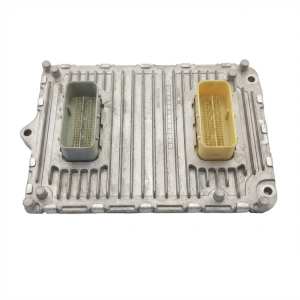
New Aftermarket Parts Available



The information in this article is provided for general reference and educational purposes only. Vehicle specifications, procedures, and part compatibility can vary by production date, trim level, and region. Always consult your vehicle's factory service manual and verify part numbers before purchasing or performing repairs. Safety-critical components such as airbags, seat belts, and braking systems should be installed by a qualified professional.
- Dodge CHARGER:
- 🧭 Diagnostic Flowchart
- 🎬 Helpful Videos
- 🛍️ Shop This Part
- What's Unique About the 2021-2021 Dodge CHARGER
- Symptoms You May Notice
- Most Likely Causes
- Rare But Worth Checking
- Diagnosis Steps
- Parts You'll Likely Need
- Related Codes That Often Appear With This One
- Technical Service Bulletins (TSBs) & Recalls
- Platform-Specific Known Issues
- Mechanic-Grade Diagnostic Values
- Hidden / Shadow Codes Worth Checking
- Scan Tool Commands That Help
- Wiring & Ground Locations
- Real Owner Repair Stories
- OEM Part Supersession History
- 🎟️ Get 5% Off