

OBD-II Code U0404: Invalid Data from Shifter
What U0404 means, why it triggers, and how to fix it
- Code U0404 indicates a digital communication failure between the gear shifter and the transmission computer, not an internal mechanical breakdown.
- Cleaning spilled liquids from the shifter's internal circuit board costs under $20 and resolves the code in a majority of Jeep and Dodge vehicles.
- Dealership software updates, typically costing $150 to $250, are the primary manufacturer-recommended fix for this code across multiple brands.
- Driving with an active U0404 code causes harsh shifting that inflicts over $2,000 in mechanical damage to transmission clutch packs within 3 to 6 months.
What Does U0404 Mean?

Code U0404 means the Powertrain or Transmission Control Module receives illogical data from the gear shifter module. The computer controlling the transmission does not understand which gear you are selecting. This communication breakdown triggers the check engine light and causes noticeable shifting problems.
Technical definition: Invalid Data Received From Gear Shift Control Module "A".
Can I Drive With U0404?
Yes, But With Caution. You can drive, but strictly limit it to reaching a repair shop. Continuing to drive with harsh shifting places severe stress on internal transmission components and drivetrain mounts. This turns a minor electronic issue into a major mechanical failure, adding thousands to the repair cost. The transmission also unexpectedly enters 'limp mode' or gets stuck in one gear, creating a safety risk in traffic.
Common Causes

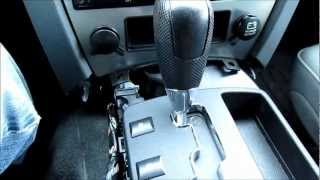
- Contaminated or Dirty Gear Shifter Assembly (Very Common) — Spilled drinks or resulting graphite dust from wear contaminates the internal circuit board of center-console shifters. 🎬 Watch: How to clean your shifter's circuit board to fix this code. This sticky residue causes shorts and incorrect data signals.
- Outdated Control Module Software (Very Common) — A known software glitch in the Transmission Control Module (TCM) or Gear Shifter Module (GSM) triggers this code. This is extremely common in Jeep, Dodge, and Chrysler vehicles and requires a dealer software update.
- Poor Ground Connections (Common) — A corroded or loose main ground connection, particularly the frame grounds on GM trucks, causes erratic electrical signals and widespread communication faults.
- Damaged Wiring or Fretting Corrosion (Common) — Wires between the shifter module and transmission computer become frayed or corroded. Additionally, micro-vibrations cause 'fretting' corrosion on connector pins, wearing away protective plating and creating poor connections.
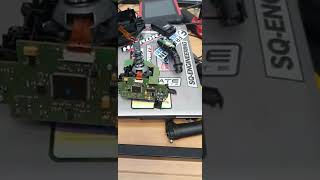
- Failing Gear Shift Control Module (Less Common) — The electronic shifter assembly fails internally due to broken solder joints on the circuit board (common in BMW models) or general component degradation. 🎬 See how to repair cracked solder joints on BMW shifter modules.
- Low Battery Voltage (Less Common) — A weak battery or low cranking voltage prevents communication modules from initializing correctly upon startup, generating invalid data codes.
Symptoms

- Erratic or Harsh Shifting — The transmission shifts unpredictably, slams into gear, or feels like it is slipping.
- Gear Indicator Lights Flashing or Incorrect — The selected gear on the dash (P, R, N, D) blinks, shows the wrong gear, or illuminates all positions at once.
- Vehicle Stuck in Gear or Limp Mode — The transmission locks into a single gear (often neutral or second gear) to prevent further damage, severely limiting vehicle speed.
- Service 4WD Message (on GM trucks) — On Chevrolet and GMC trucks, this code is accompanied by a 'Service 4WD' message, as the transfer case control module relies on valid shifter data.
- Check Engine Light is On (also visible on scanner) — The Malfunction Indicator Lamp (MIL) illuminates on the dashboard.
Diagnostic Flowchart

Tap your situation to follow the diagnostic path that matches what you're seeing on this code.
Common Fixes & Costs
- Clean Shifter Assembly Internals — Parts: $10-$20 (parts-only), Labor: $0 (DIY) or $150-$300 (parts+labor), ~1.8 hr book time (DIY)
- TCM/GSM Software Update — Parts: $0, Labor: $150-$250 (dealer-only, parts+labor), ~1.0 hr book time (Professional)
- Repair/Clean Frame Ground Connection
— Parts: $5-$15 (parts-only), Labor: $0 (DIY) or $75-$150 (parts+labor), ~0.8 hr book time
(DIY)
: OEM Varies by vehicle (Alt: Dorman, Standard Motor Products (SMP)) - Replace Gear Shifter Assembly
— Parts: $150-$700 (parts-only), Labor: $150-$350 (labor-only), for a total of $300-$1050 (parts+labor)., ~2.2 hr book time
(Intermediate)
: OEM 68428790AF (Alt: Dorman 601-401)
: OEM 56054430AH (Alt: Cardone, Dorman) - Repair Damaged Wiring or Connectors — Parts: $20-$100 (parts-only), Labor: $200-$500 (parts+labor), ~2.5 hr book time (Intermediate)
DIY vs Professional
- Clean Shifter Assembly Internals 🟢 Beginner
Tools: Trim removal tools, screwdrivers, electronic contact cleaner, cotton swabs. - TCM/GSM Software Update 🟢 Beginner
Tools: Proprietary dealership scan tool and software subscription. - Repair/Clean Frame Ground Connection 🟢 Beginner
Tools: Socket/wrench set, wire brush, sandpaper. - Replace Gear Shifter Assembly 🟢 Beginner
Tools: Trim removal tools, socket/wrench set, screwdrivers. - Repair Damaged Wiring or Connectors 🟢 Beginner
Tools: Multimeter, wiring diagrams, wire strippers, soldering iron, heat shrink tubing.
Used vs. New Parts: Buying Guide
When a used part is worth it: For older vehicles (over 150k miles) on a tight budget, a used gear shifter assembly from a reputable salvage yard is a cost-effective solution. It makes sense when the new part is exceptionally expensive or backordered.
Donor-vehicle mileage cap: roughly under 80000 miles for the part to have meaningful remaining life.
Donor quality checklist:
- Verify the donor vehicle was not scrapped due to a similar electronic or transmission issue.
- Match the OEM part number exactly; superseded numbers require dealer programming.
- Avoid parts from flood-damaged or high-humidity environments.
Decision logic:
- If The fix is a known software issue or cleaning a circuit board. → Neither new nor used parts are needed; pursue the software update or cleaning first.
- If Vehicle is less than 8 years old and the new part costs under $500. → Buy a new OEM or high-quality aftermarket part for a longer warranty and guaranteed compatibility.
- If The vehicle is older, and the repair is for a known mechanical wear item inside the shifter. → A used part carries a high risk of repeat failure; favor a new part to avoid repeat labor costs.
- If A replacement module requires dealer programming. → Factor in the programming cost. Buying the part directly from the dealer simplifies the warranty and programming process.
Warranty tradeoff: Used parts typically come with a 30-90 day functional warranty covering the part only. New aftermarket parts carry a 1-3 year warranty, while new OEM parts have a 1-year warranty. Labor is rarely covered.
Worst-case if a used part fails: $300-$600 if a used shifter fails after installation, representing the repeat labor cost plus the hassle of obtaining another part.
What Happens If You Wait — Timeline
- 0-1 month: Intermittent check engine light. Occasional harsh shift or flashing gear indicator that resolves after restarting the vehicle. No other major symptoms. (MPG impact: 0-2%% · Added cost: $0)
- 1-3 months: Check engine light is constantly on. Harsh shifting becomes frequent, especially on downshifts. A drop in fuel economy is observed. (MPG impact: 5-10%% · Added cost: $50-$150 in wasted fuel.)
- 3-6 months: Harsh shifting is the norm, putting significant shock load on the drivetrain. The vehicle unexpectedly enters 'limp mode'. Consistent stress causes premature wear on transmission clutch packs and engine mounts. (MPG impact: 10-15%% · Added cost: $800-$2,500 for replacing damaged clutch packs or motor mounts.)
- 6+ months: Catastrophic failure occurs. Constant slamming into gear leads to a cracked clutch drum or major internal transmission failure. The vehicle becomes undrivable. (MPG impact: 15-25%% · Added cost: $3,500-$7,000+ for a complete transmission overhaul or replacement.)
Cost of Not Fixing It
- Short-Term (0-1 month): Erratic shifting puts premature wear on transmission clutches and drivetrain components. You experience a 5-10% drop in fuel economy and unpredictable 'limp mode' activation. (Added cost: $50-$150 in wasted fuel and potential towing costs.)
- Medium-Term (1-6 months): Continued shock loading from harsh shifts damages transmission clutch packs, solenoids, and engine mounts. This turns a simple electronic fault into a significant mechanical repair. (Added cost: $800-$2,500 for replacing worn clutch packs or damaged mounts.)
- Long-Term (6+ months): Catastrophic failure of internal transmission components occurs. The repair cost exceeds the value of the vehicle, requiring a full transmission rebuild or replacement. (Added cost: $3,500-$7,000+ for a complete transmission overhaul.)
Diagnosis Steps
- Check for Technical Service Bulletins (TSBs)
Search online for TSBs for your vehicle's make, model, and year related to code U0404. Manufacturers frequently release software updates that are the primary fix for this code, saving hours of diagnostic time.
Tools: Internet access (Beginner) - Scan for All Codes and Review Freeze Frame Data
Use an OBD-II scanner to read codes from all modules (PCM, TCM, BCM). A code like P0700 often accompanies U0404, confirming the fault is in the transmission system. Erase the codes to see which return immediately.
Tools: OBD-II Scanner (Beginner) - Inspect and Clean the Shifter Internals
Disassemble the center console to access the shifter module. Visually inspect for spilled liquids. Carefully clean the internal circuit board with electronic contact cleaner and cotton swabs to remove residue or graphite dust creating a short.
Tools: Screwdrivers, trim removal tools, electronic contact cleaner, cotton swabs (Intermediate) - Inspect and Test the Battery and Grounds
Ensure battery voltage is above 12.4 volts with the engine off. Visually inspect the main battery ground and chassis-to-engine ground straps for corrosion. On GM trucks, thoroughly clean the ground on the frame rail under the driver's door.
Tools: Multimeter, wire brush (Beginner) - Live Data Analysis (Advanced)
Using a bi-directional scanner, access the live data stream for the Transmission Control Module (TCM). Monitor the 'Shifter Position' PID. Move the physical gear selector through each position and verify the value on the scan tool changes instantly. A lagging or unchanging value points directly to a fault in the shifter assembly.
Tools: Bi-directional OBD-II Scanner (Advanced) - Perform CAN Bus Network Test (Advanced)
With the battery disconnected, measure resistance between the CAN High and CAN Low pins at the OBD-II port (pins 6 and 14). A healthy network reads 60 Ohms. Then, with the key on, measure voltage: CAN High should read ~2.6V, and CAN Low ~2.4V. Deviations indicate a short or open circuit.
Tools: Multimeter (Advanced) - Check Connector Pin Integrity (Pro Tip)
Visually inspect connector pins at the shifter and TCM for fretting corrosion or backed-out pins. Perform a 'pin-drag' test with a correctly sized terminal to ensure good tension. Never back-probe connectors with paper clips, as this permanently damages terminals.
Tools: Terminal pick set, wiring diagram (Advanced)
When This Code Triggers (Freeze-Frame Conditions)
- Engine Coolant Temp: 180-200°F (82-93°C) (The fault often occurs when the vehicle is fully warmed up and has been running for some time.)
- Battery Voltage: 9-16 Volts (The code sets if battery voltage drops during startup, but is typically monitored when voltage is stable and the engine is running.)
- Engine RPM: 1500-2500 RPM (The code frequently triggers during steady-state driving or moderate acceleration, not typically at idle.)
- Vehicle Speed: 35-60 mph (56-97 kph) (The invalid signal is often detected at cruising speeds when the system expects consistent communication from the shifter.)
Related Codes
- P0700 — This is a generic request from the Transmission Control Module (TCM) to the main engine computer (PCM) to turn on the check engine light. P0700 tells you to look at the transmission system, while U0404 identifies the shifter data as the specific fault.
- U0101 — Means 'Lost Communication with TCM.' U0404 means the TCM is online but receiving illogical data. U0101 means the TCM is completely offline, pointing to a power/ground failure to the TCM itself.
- U0401 — Means 'Invalid Data Received from ECM/PCM.' U0404 points to the shifter as the source of bad data, while U0401 points to the engine computer. Having both suggests a network-wide problem like low system voltage.
- P0705 — U0404 is a digital CAN bus communication error from an electronic shifter module. P0705 refers to an analog electrical circuit fault in a traditional Transmission Range Sensor. Diagnosis for P0705 focuses on sensor voltages and linkage alignment.
Climate & Environmental Factors
- High Humidity: Ambient humidity above 60% significantly accelerates corrosion of electrical contacts and circuit boards. This moisture increases resistance in connections, causing fretting corrosion and triggering a U0404 code without any liquid spill.
- Extreme Cold: Cold weather lowers a battery's effective voltage. A weak battery provides insufficient voltage during a cold start, causing the shifter module to initialize improperly and generate invalid data codes.
How to Talk to a Mechanic About This Code
Say this: "I have a check engine light and my scanner shows code U0404 for invalid data from the shifter. I'd like to book a diagnostic appointment. Please check for any available TSBs for a software update first. If that's not it, please inspect the shifter wiring, connectors, and ground points before recommending a full shifter replacement."
This signals you are an informed customer. It directs the technician to the most common and cheapest fixes first (software, wiring), preventing them from immediately quoting an expensive part like a new shifter assembly.
Avoid saying:
- 'My check engine light is on, can you just fix it?'
- 'The car is shifting weird, I think I need a new transmission.'
- 'Just do whatever you think is best.'
Questions to ask before authorizing the repair:
- Did you check for any Technical Service Bulletins? Is my vehicle's software up to date?
- How did you test the shifter module? Did you watch its live data on a scan tool to confirm it was sending bad signals?
- Did you inspect the wiring harness and the main frame ground for corrosion or damage?
- If you are recommending a shifter replacement, how have you ruled out a software or wiring issue as the root cause?
Where to Take It: Dealer vs Independent vs Chain
- Dealer:
Recommended if a known TSB/software update is the likely fix. For out-of-warranty vehicles, start with an independent shop unless a software issue is confirmed.
Best for: Vehicles under warranty., Fixes that are known to be software updates, as they have the proprietary tools., Vehicles less than 3 years old or complex brands (e.g., BMW, Audi) where independent shops lack specific tools.
Downsides: Highest labor rates., Quick to replace an entire assembly rather than perform a simpler repair like cleaning a circuit board. (Typical cost: +50% vs. baseline) - Independent Shop:
Best overall fit for most U0404 situations. They are well-equipped to handle the most frequent causes (wiring, grounds, shifter replacement) at a lower cost than a dealer.
Best for: Out-of-warranty vehicles where cost is a factor., Diagnosing and repairing common U0404 causes like wiring faults, corroded grounds, or replacing a shifter assembly.
Downsides: Quality varies greatly; look for shops with ASE-certified technicians and good reviews for electrical work., Lacks the tools for a dealer-only software flash. (Typical cost: +0% vs. baseline) - Chain Shop:
AVOID for U0404 diagnosis. This code requires specific electronic and network diagnostic skills outside the scope of a typical chain repair shop.
Best for: Simple, unrelated maintenance like oil changes or tires.
Downsides: Technician skill is highly variable and not specialized in complex electronics., Business model pressures technicians to replace parts rather than perform detailed diagnostics., Unable to correctly diagnose nuanced issues like software glitches or CAN bus faults. (Typical cost: -10% vs. baseline)
When to Walk Away From the Repair
If the estimated repair cost exceeds 40-50% of the car's private-party value, pause and seriously consider selling the car as-is or trading it in.
- Car worth $5000, fix is $2500: Walk away. The repair cost is 50% of the car's value. It is not a sound investment.
- Car worth $15000, fix is $1000: Fix it. The repair is well below the threshold and makes economic sense.
- Car worth $3000, fix is $250: Fix it. A low-cost repair like a software update or cleaning is worth it to restore the car's function and value.
What Scan Tool You Need for This Code
Minimum: A scanner that reads manufacturer-specific codes from the Transmission Control Module (TCM) and displays live data for the shifter position.
A basic $20 code reader only shows engine codes (like P0700) but cannot access the TCM to see the U0404 code or the live shifter data needed for diagnosis. You will be guessing at the problem.
Budget: BlueDriver Pro (~$100) — Connects to a smartphone app and reads codes from the TCM. It allows you to view the live data PID for shifter position, which is essential to see if the module reports gear changes correctly.
Mid-range: XTool A30M / D7 (~$200-400) — Offers full system diagnostics and bi-directional control. This allows you to read live shifter data and perform active tests on related components, speeding up diagnosis significantly.
Professional: Autel MaxiCOM MK808S / Launch X431 CRP919XBT (~$450-800) — Provides full, dealer-level bidirectional diagnostics, component coding, and module programming capabilities. These handle complex diagnostics and re-programming of a replacement shifter module if needed.
Rent vs buy: Most auto parts stores offer free code reading, but their tools cannot access the required TCM live data. For U0404, buying at least a budget-level scanner is highly recommended for accurate DIY diagnosis.
How to Clear the Code After You Fix It
- Reconnect the battery if it was disconnected for the repair.
- Use a quality OBD-II scan tool to erase all Diagnostic Trouble Codes (DTCs).
- Perform a complete drive cycle to allow the vehicle's onboard diagnostics to run their self-tests and set the readiness monitors.
Drive cycle (~30 minutes): A generic drive cycle includes a cold start (sitting for 8+ hours), 2-3 minutes of idling, followed by mixed city and highway driving. Include steady-speed cruising around 55 mph for at least 5-10 minutes and some stop-and-go periods.
Readiness monitors affected: Catalyst (CAT) Monitor, Evaporative System (EVAP) Monitor, Oxygen (O2) Sensor Monitor
Before emissions retest: drive at least 100 miles to fully set monitors.
Watch out for:
- Disconnecting the battery or clearing codes resets readiness monitors to 'Not Ready', causing an automatic emissions test failure.
- The code returns within 50-100 miles if the root cause remains unfixed.
- The EVAP monitor requires the fuel tank to be between 1/4 and 3/4 full to run.
Will This Fail Emissions / State Inspection?
Yes — this code typically fails an OBD-II emissions inspection.
- California: An active check engine light is an automatic failure. After repair, the vehicle must complete a drive cycle to set all required readiness monitors to 'Ready' before passing a Smog Check.
- New York: A vehicle with an illuminated check engine light automatically fails the emissions portion of the NYS inspection.
- Texas: In the 17 counties requiring emissions testing, an active U0404 code causes an automatic failure during the OBD-II DTC check.
Most Commonly Affected Vehicles

- Jeep Grand Cherokee (2014-2017) — Extremely common. Check for TSB 21-011-16 REV. B for a software update. If software is current, the cause is almost always a contaminated shifter circuit board requiring cleaning.
- Honda Pilot, Odyssey, Passport, Ridgeline (2016-2022) — These models use a 'Shift-By-Wire' (SBW) push-button shifter. The code points to an electrical fault in the SBW shifter control module or its CAN bus wiring.
- Dodge Durango, Ram (2014-2017) — Shares platforms with Jeep. The rotary dial shifter fails or suffers from software glitches. TSB 21-011-16 REV. B applies to some Durango models.
- Ford F-150, Expedition (2017-2024) — Check for wiring harness damage near the transmission per Ford SSM 48563. On 2024+ models with the stowable shifter, replacement requires dealer programming of the TRON module.
- Chevrolet / GMC Silverado, Sierra, Tahoe, Yukon (2007-2014) — Almost always appears with a 'Service 4WD' message. The most frequent cause is a corroded ground connection on the frame rail located directly under the driver's side door.
- BMW 3-Series (E90), 5-Series (E60), G-Series (2005-2023) — Points to a failure of the Gear Selector Switch (GWS) module. A common DIY repair for E90 models involves re-soldering weak connector pin joints on the GWS circuit board.
- Various Heavy-Duty Trucks with Allison Transmissions (2005-2024) — Indicates the TCM isn't getting a valid signal from the shift selector. Common causes include low cranking voltage or fretting corrosion on connectors.
- Kia / Hyundai Various (2018-2024) — On models with electronic shifters, this code appears due to intermittent faults in the shifter assembly or wiring. Diagnosis focuses on power, ground, and CAN bus connections.
Manufacturer-Specific Notes
- Jeep/Chrysler/Dodge: Always check for TSBs regarding a software update first. If software is not the cause, cleaning the shifter's internal circuit board to remove residue from spills is a highly successful DIY repair.
- Chevrolet / GMC: If U0404 is accompanied by a 'Service 4WD' message, immediately inspect and clean the main ground connection on the truck's frame directly under the driver's side door.
- BMW: On E90/E60 models, the main connector solder joints on the Gear Selector Switch (GWS) circuit board frequently crack. Re-soldering the pins saves over a thousand dollars on a replacement module.
- Allison Transmission: This code appears if there is a hardware/software mismatch, such as a newer 'prognostic' TCM calibration used with an older shift selector. Fretting corrosion on large multi-pin connectors is also highly common.
- Ford: Always check for Special Service Message (SSM) 48563 related to wiring harness chafe near the transmission. Run a VIN check for open wiring recalls.
- Honda: Honda has issued several powertrain-related warranty extensions for CVT belts and VCM issues. Contact a dealer with your VIN to inquire about unpublicized 'goodwill' programs that cover the Shift-By-Wire module.
Real Owner Stories
2016 Jeep Grand Cherokee at 75K miles
Check engine light came on, all gear indicator lights (P,R,N,D) on the dash lit up simultaneously. Transmission shifted harshly and got stuck in gear.
What they tried:
- Took it to a mechanic who read U0404 and P0700 codes and recommended replacing the shifter assembly for $950.
- Owner searched online forums and found the DIY cleaning fix.
Outcome: Owner disassembled the center console and cleaned the shifter's internal circuit board with electronic contact cleaner. The board was covered in graphite dust. After reassembly, the codes cleared and did not return. Total cost was $15.
Lesson: For Jeep/Dodge/Chrysler products, always try the DIY shifter circuit board cleaning before paying for a replacement. It is the most common fix and costs almost nothing.
2011 GMC Sierra 1500 at 120K miles
Check engine light and a 'Service 4WD' message appeared simultaneously. No noticeable shifting problems.
What they tried:
- A parts store scan showed code U0404.
- Owner researched the combination of U0404 and 'Service 4WD' on truck forums.
Outcome: Forum posts pointed to a corroded ground connection on the frame rail under the driver's side door. The owner disconnected the battery, unbolted the ground wire, and used a wire brush to clean the contact point. After re-tightening, the codes and messages vanished permanently.
Lesson: On GM trucks, if U0404 appears with a 'Service 4WD' message, the first and most likely culprit is the frame ground under the driver's door, not a faulty shifter.
2017 Honda Pilot at 60K miles
Intermittent issue where the vehicle would not shift out of Park. The push-button shifter lights flashed. Eventually set a U0404 code.
What they tried:
- Restarting the car temporarily fixed the issue.
- Took the vehicle to the Honda dealership for diagnosis.
Outcome: The dealership diagnosed a failing Shift-By-Wire (SBW) electronic shifter assembly and replaced the entire unit. The shifter was not covered under existing powertrain warranty extensions. Total repair cost was $800.
Lesson: For modern push-button or dial shifters, intermittent electrical faults are common. The entire complex unit often requires replacement, which is costly.
2015 Audi A6 at 85K miles (Out of Warranty)
MMI screen lagged and adaptive cruise control behaved erratically. Eventually set a U0404 code.
What they tried:
- Owner found a TSB online describing exact symptoms and stating a software update was the fix.
- Contacted the local Audi dealer to perform the TSB software update.
Outcome: The dealership quoted a $665 diagnostic fee just to 'confirm' the TSB. The owner found another dealer who agreed to perform the update for a flat one-hour labor charge of $220. The update fixed all issues.
Lesson: Dealers try to charge for extensive diagnostics even when a TSB clearly identifies the solution. Be persistent and shop around at different dealerships or independent shops with factory tools.
How to Prevent This Code From Triggering
- Use a center console cover or spill-proof mugs (Daily habit) — Prevents the number one cause of failure: spilled liquids contaminating the shifter's electronic circuit board.
- Apply dielectric grease to key electrical connectors (During any related service) — Seals out moisture and oxygen, preventing the corrosion and fretting on connector pins that leads to invalid data signals. Use on the connector body and seals, not directly on the pins.
- Periodically check for Technical Service Bulletins (TSBs) (Once per year) — Allows you to proactively get software updates that fix communication glitches like U0404 before symptoms become severe.
- Maintain battery health and clean ground connections (Every oil change) — Ensures stable voltage for all control modules. Low voltage during startup is a common cause of temporary communication codes.
- Practice smooth shifting habits (Daily habit) — Avoids aggressive shifting or changing from Drive to Reverse while moving. This reduces mechanical stress on the shifter mechanism and electrical shock on internal components.
Frequently Asked Questions
Can I fix U0404 myself?
Yes, several common fixes are DIY-friendly. Checking for TSBs, cleaning ground connections, and cleaning the shifter's internal circuit board often solve the problem.
Will clearing the code make it go away?
Clearing the code turns off the check engine light temporarily, but it returns if the underlying fault remains. Some systems automatically clear the code after 40 engine starts without a recurrence.
Can driving with U0404 damage my transmission?
Yes, the resulting harsh shifting causes significant mechanical damage over time. Each hard shift puts shock load on internal clutches, gears, and drivetrain mounts. Continuing to drive turns a simple electronic fix into a multi-thousand dollar transmission repair.
Is a U0404 code expensive to fix?
Costs range from $15 for DIY electronic cleaner to $250 for a dealer software update. A full shifter replacement is the most expensive common fix, costing $300 to $1,050 depending on the vehicle.
The dealer said I need a new transmission. Is that true?
It is extremely unlikely you need a new transmission. Code U0404 specifically points to a data error from the shifter, not an internal mechanical failure. Insist on diagnosing the shifter communication circuit before authorizing major transmission work.
What are the most common misdiagnoses for U0404?
The most common mistake is replacing the entire shifter assembly ($500+) when the root cause is a software glitch requiring a dealer update ($150) or a corroded frame ground. Another major error is condemning the Transmission Control Module (TCM) when the problem is merely the data it receives.
Could a bad TCM cause the U0404 code?
While a faulty TCM is technically possible, it is a rare cause. The code's definition implies the TCM is working but receiving a bad signal. The fault is far more likely to be the shifter, wiring, or software.
Key Takeaways
- Code U0404 indicates a digital communication failure between the gear shifter and the transmission computer, not an internal mechanical breakdown.
- Cleaning spilled liquids from the shifter's internal circuit board costs under $20 and resolves the code in a majority of Jeep and Dodge vehicles.
- Dealership software updates, typically costing $150 to $250, are the primary manufacturer-recommended fix for this code across multiple brands.
- Driving with an active U0404 code causes harsh shifting that inflicts over $2,000 in mechanical damage to transmission clutch packs within 3 to 6 months.
Helpful Videos

Shop the Parts Behind U0404
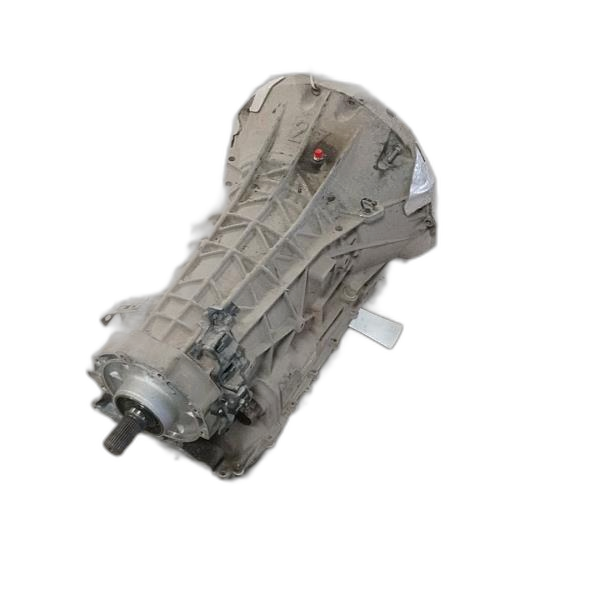
Below are the parts most often responsible for code U0404, ranked by how frequently each one is the actual culprit (per the diagnosis above). Tap any to see what we have for your vehicle.


The information in this article is provided for general reference and educational purposes only. Vehicle specifications, procedures, and part compatibility can vary by production date, trim level, and region. Always consult your vehicle's factory service manual and verify part numbers before purchasing or performing repairs. Safety-critical components such as airbags, seat belts, and braking systems should be installed by a qualified professional.
- 🧭 Diagnostic Flowchart
- 🎬 Helpful Videos
- 🛍️ Shop This Part
- What Does U0404 Mean?
- Can I Drive With U0404?
- Common Causes
- Symptoms
- Common Fixes & Costs
- DIY vs Professional
- Used vs. New Parts: Buying Guide
- What Happens If You Wait — Timeline
- Cost of Not Fixing It
- Diagnosis Steps
- When This Code Triggers (Freeze-Frame Conditions)
- Related Codes
- Climate & Environmental Factors
- How to Talk to a Mechanic About This Code
- Where to Take It: Dealer vs Independent vs Chain
- When to Walk Away From the Repair
- What Scan Tool You Need for This Code
- How to Clear the Code After You Fix It
- Will This Fail Emissions / State Inspection?
- Most Commonly Affected Vehicles
- Manufacturer-Specific Notes
- Real Owner Stories
- 2016 Jeep Grand Cherokee at 75K miles
- 2011 GMC Sierra 1500 at 120K miles
- 2017 Honda Pilot at 60K miles
- 2015 Audi A6 at 85K miles (Out of Warranty)
- How to Prevent This Code From Triggering
- Frequently Asked Questions
- Can I fix U0404 myself?
- Will clearing the code make it go away?
- Can driving with U0404 damage my transmission?
- Is a U0404 code expensive to fix?
- The dealer said I need a new transmission. Is that true?
- What are the most common misdiagnoses for U0404?
- Could a bad TCM cause the U0404 code?
- Key Takeaways
- 🎟️ Get 5% Off