

OBD-II Code U0407: Invalid Data Received From Glow Plug Control Module
The Ultimate 2026 Guide: What U0407 means, why it triggers, and how to fix it for good.
- Test the CAN bus network for exactly 60 ohms of resistance and verify ~2.6V on CAN High and ~2.4V on CAN Low before buying a replacement Glow Plug Control Module.
- Inspect the GPCM connector pins for green or white corrosion, as this simple physical fault causes over 30% of U0407 invalid data errors.
- Fix U0407 within 1 to 2 months to prevent the engine from blocking active DPF regeneration, which leads to a clogged filter and a $2,000 to $5,000 replacement bill.
- Check for companion codes like U0106 (Lost Communication) or P0670 (Control Circuit), as their presence confirms a total power loss or internal module failure rather than a simple data glitch.
What Does U0407 Mean?
U0407 means your vehicle's Powertrain Control Module (PCM) is receiving corrupted or nonsensical data from the Glow Plug Control Module (GPCM). The GPCM controls the glow plugs—heaters that warm the engine's cylinders for reliable diesel starting in the cold. When the PCM receives this corrupted data, it sets code U0407 and illuminates the check engine light.
Technical definition: The SAE/OBD-II definition is "Invalid Data Received From Glow Plug Control Module 1". This network communication code indicates a control module on the Controller Area Network (CAN) bus received data from the GPCM that is irrational or incorrect. The data is present but corrupted or out-of-range, distinct from U0106, which means no data is received at all.
Can I Drive With U0407?
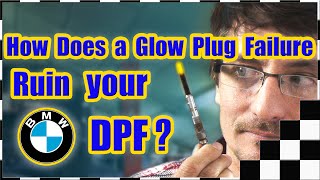
Yes, But With Caution. Yes, but your diesel engine will be very hard or impossible to start in cold weather, potentially leaving you stranded. More critically, prolonged driving with this fault prevents Diesel Particulate Filter (DPF) regeneration, leading to a clogged DPF 🎬 Watch: How faulty glow plugs can ruin your DPF filter.—a repair costing between $1,500 and $5,000. Address this code promptly to avoid escalating repair costs.
Common Causes
- Faulty Glow Plug Control Module (GPCM) (Very Common) — The module itself is the most frequent failure point. Internal components burn out, suffer moisture intrusion, or fail from heat cycles, causing it to send corrupt data over the CAN bus.
- Wiring or Connector Damage (Common) — The wiring harness connected to the GPCM is highly vulnerable. Wires fray from vibration, melt from exhaust heat, or suffer rodent damage. Connector pins corrode or lose tension, leading to data errors.
- Poor Power or Ground Supply (Common) — The GPCM requires a stable 12-volt power supply and a solid ground. A blown fuse, faulty relay, corroded battery terminal, or loose ground strap causes the module to transmit garbled data.
- Low Battery Voltage or Charging System Fault (Less Common) — A weak battery causes significant voltage drops during startup. This corrupts data on the CAN bus network, triggering a U0407 code even if the GPCM is fully functional.
- Failing Glow Plugs or Glow Plug Harness (Less Common) — A short-circuited glow plug or a fault in the under-valve-cover harness puts extreme electrical stress on the GPCM. This overheats the module, causing it to broadcast invalid data.
- CAN Bus Network Fault (Rare) — A faulty terminating resistor, electrical noise from another failing component, or a short between the CAN High and CAN Low wires corrupts the GPCM's messages.
- Software or Programming Issues (Rare) — The module's programming becomes corrupted, or a replacement module is installed without VIN programming. A software update via a Technical Service Bulletin (TSB) is sometimes required.
Symptoms
- Hard Starting or No Start in Cold Weather — The primary performance symptom. The engine cranks for an extended period or fails to start entirely when ambient temperatures drop below 45°F.
- Check Engine Light or Glow Plug Light is On — The glow plug indicator light on the dashboard flashes, stays on longer than usual, or fails to illuminate entirely.
- Rough Idle After Starting — For the first few minutes after a cold start, the engine runs rough, shakes, or stumbles until it builds sufficient heat for stable combustion.
- White or Black Smoke from Exhaust on Startup — Incomplete combustion in cold cylinders causes excessive white smoke (unburnt fuel) or black smoke from the tailpipe immediately after starting.
- Decreased Fuel Economy — An engine failing to start or run efficiently consumes more fuel, especially in vehicles where glow plugs assist emissions control after startup.
Diagnostic Flowchart
Tap your situation to follow the diagnostic path that matches what you're seeing on this code.
Common Fixes & Costs
- Replace the Glow Plug Control Module (GPCM)
— Parts: $250-$750, Labor: $150-$300, ~1.2 hr book time
(Intermediate)
: OEM
: OEM
: OEM - Clean or Repair Main Power/Ground Connections — Parts: $5-$20, Labor: $75-$200, ~0.5 hr book time (DIY)
- Replace Blown Fuse or Faulty Relay — Parts: $5-$35, Labor: $75-$150, ~0.8 hr book time (DIY)
- Repair Damaged Wiring or Connectors — Parts: $15-$60, Labor: $150-$450, ~2.5 hr book time (Professional)
- Reprogram or Update Module Software — Parts: $0, Labor: $150-$250, ~1.0 hr book time (Professional)
Used vs. New Parts: Buying Guide
When a used part is worth it: A used OEM GPCM from a low-mileage, non-corroded donor vehicle is a cost-effective option for older models where new OEM parts are scarce. It is better than an unproven aftermarket part.
Donor-vehicle mileage cap: roughly under 80000 miles for the part to have meaningful remaining life.
Donor quality checklist:
- Verify the donor vehicle was not scrapped due to electrical or engine failure.
- Inspect the connector pins on the used module for corrosion, bending, or water intrusion.
- Match the OEM part number exactly. Superseded part numbers require software updates.
- Avoid parts from the 'Salt Belt' as they are prone to hidden corrosion.
Decision logic:
- If The vehicle is a 2004-2005 Duramax LLY → Favor a professional rebuild of your original module over a used or cheap new part.
- If A new OEM part is available and affordable (<$400) → Buy new OEM for the best reliability and warranty.
- If The vehicle is over 10 years old and a new OEM part is over $500 → A tested, warranted used part from a reputable salvage yard is a reasonable choice.
- If The only options are a used part with no history or a new aftermarket part with poor reviews → Use a professional repair service for your original module.
Warranty tradeoff: Used parts come with a 30-90 day warranty. Aftermarket parts have 1-year warranties but inconsistent quality. New OEM parts carry a 1-2 year warranty. Professional repair services include a 1-year or lifetime warranty.
Worst-case if a used part fails: $250-$500 if a used or cheap aftermarket part fails, including repeat diagnostic and labor charges.
What Happens If You Wait — Timeline
- 0-1 month: Code U0407 is set. Check engine light is on. The only symptom is a hard start on cold mornings (<45°F). No noticeable performance loss once the engine is warm. (MPG impact: 0-2%% · Added cost: $0)
- 1-3 months: DPF regeneration cycles fail because the ECU detects the glow plug fault and blocks active regen. Soot accumulates in the DPF. Fuel economy drops slightly. (MPG impact: 3-5%% · Added cost: $50-$100 in wasted fuel)
- 3-6 months: The DPF is moderately clogged. The DPF warning light illuminates, and the vehicle enters a limited power 'limp mode'. A forced regeneration at a dealership is required. (MPG impact: 5-15%% · Added cost: $300-$600 for a forced regeneration service.)
- 6+ months: The DPF is completely blocked with hardened soot and ash. It cannot be regenerated and must be replaced. Extreme backpressure causes damage to turbocharger seals. (MPG impact: 15-25%% · Added cost: $2,000-$7,000 for DPF replacement and potential turbo repairs.)
Cost of Not Fixing It
- Immediate (First cold start): Hard starting or no-start condition in weather below 45°F. Potential to be stranded. (Added cost: $150-$300 (Towing service))
- 0-2 months: Failed DPF regeneration cycles. The engine cannot create the heat to burn off soot, causing the DPF to clog. Fuel economy decreases by 5-10%. (Added cost: $50-$150 (Increased fuel consumption))
- 2-6 months: Severely clogged Diesel Particulate Filter (DPF). The vehicle enters limp mode with significant power loss. A forced regeneration at a dealer is required. (Added cost: $300-$600 (Forced DPF regeneration service))
- 6+ months: Permanent DPF damage. The filter becomes completely blocked and must be replaced. Extreme backpressure causes premature turbocharger failure. (Added cost: $2,000-$7,000 (DPF replacement, potential turbo damage))
Diagnosis Steps
- Scan for All Diagnostic Trouble Codes (DTCs)
Use a professional-grade OBD-II scanner to read codes from all modules. Note U0407's status. Pay close attention to companion codes like U0106 (Lost Communication), P0670 (GPCM Control Circuit), or P0671-P0678 (specific glow plug faults), as they pinpoint the failure.
Tools: Professional OBD-II Scanner (Beginner) - Verify Battery and Charging System Health
Use a multimeter to ensure battery voltage is above 12.4 volts with the engine off. Start the engine and verify the alternator produces 13.7 to 14.7 volts. A weak battery creates electrical noise and communication errors during cranking.
Tools: Multimeter (Beginner) - Perform a Thorough Visual Inspection
Locate the GPCM. Meticulously inspect the module, connectors, and wiring harness for corrosion, water intrusion, melted plastic, frayed wires, or rodent damage. Ensure the connector is fully seated and locked.
Tools: Flashlight, Inspection Mirror (Beginner) - Check GPCM Power and Ground Circuits
Disconnect the GPCM connector. Using a wiring diagram, identify power and ground pins. With the key on, verify battery voltage at the power supply pin. Measure resistance between the ground pin and the negative battery terminal; it must read less than 0.2 ohms.
Tools: Multimeter, Wiring Diagram (Intermediate) - Test the CAN Bus Network at the Connector
With the battery disconnected, measure resistance between the CAN High and CAN Low pins at the GPCM connector. A healthy network reads exactly 60 ohms. A reading of 120 ohms indicates a broken wire or faulty terminating resistor; 0 ohms indicates a short.
Tools: Multimeter, Wiring Diagram (Advanced) - Check CAN Bus Voltages
Reconnect the battery and turn the ignition 'On'. Measure voltage between the CAN High pin and chassis ground; it should be ~2.6V. Measure voltage between the CAN Low pin and chassis ground; it should be ~2.4V. Deviations point to a network wiring problem.
Tools: Multimeter, Wiring Diagram (Advanced) - Perform a Harness 'Wiggle Test'
With the key on, monitor the U0407 code status or live CAN data on a scan tool. Gently wiggle the wiring harness leading to the GPCM, focusing on connectors and bends. If the code appears or data drops, you have an intermittent wiring fault.
Tools: Professional OBD-II Scanner (Intermediate) - Advanced: Test Individual Glow Plug Resistance
Disconnect the harness at the glow plugs. Measure resistance from the glow plug terminal to the engine block. A healthy plug reads 0.1 to 2.0 ohms. Infinity (OL) means the plug is bad. Near-zero ohms indicates a short, which overloads and destroys the GPCM.
Tools: Multimeter, Socket Set (Advanced) - Check for Technical Service Bulletins (TSBs)
Check online service databases for TSBs related to U0407 for your specific VIN. Manufacturers frequently release software updates to fix communication glitches causing this code (e.g., GM TSB 20-NA-176).
Tools: Dealer/Online TSB Database (Professional) - Isolate the Fault and Replace the GPCM
If power, ground, and CAN bus wiring test perfectly, and no software updates apply, the GPCM is the culprit. Replace it with an OEM part. Note that many vehicles require the new module to be programmed to the vehicle's VIN.
Tools: Socket Set, Replacement Module, J2534 Programmer (if required) (Intermediate)
When This Code Triggers (Freeze-Frame Conditions)
- Fault Trigger: Key On or Cranking (The code sets during the initial power-up sequence when all modules on the CAN bus report their status. A failure to communicate valid data logs the fault.)
- Engine State: Off or Starting (This communication fault is not dependent on engine RPM or load. It is a network integrity issue detected before the engine runs stably.)
- Battery Voltage: 11.8V - 12.5V (Freeze frame shows slightly low or fluctuating battery voltage, which causes data corruption on the CAN bus during the high current draw of cranking.)
- Ambient Temperature: < 40°F (5°C) (The underlying fault becomes most apparent during a cold start attempt when the glow plug system is commanded on and fails to respond correctly.)
Related Codes
- U0106 — Means 'Lost Communication With Glow Plug Control Module'. If U0407 means the GPCM sends a garbled message, U0106 means it is completely silent. U0106 strongly suggests a total module failure, power/ground loss, or broken CAN wires.
- P0670 — Means 'Glow Plug Control Module Control Circuit'. P0670 is set *by* the GPCM reporting an internal fault. Seeing P0670 and U0407 together confirms the GPCM has failed internally.
- P0671, P0672, etc. — These codes correspond to a fault in a specific glow plug circuit. A shorted glow plug overloads and damages the GPCM's internal driver, causing the module to broadcast invalid data and trigger U0407.
- P0683 — Means 'GPCM to PCM Communication Circuit Malfunction'. This points directly to a problem in the communication wiring between the PCM and the GPCM, whereas U0407 is broader.
Climate & Environmental Factors
- Cold Weather: Low ambient temperatures are the primary environmental trigger. A failing GPCM's malfunction becomes most apparent during cold starts (<45°F) when the glow plugs are heavily relied upon.
- Humidity and Road Salt: In the 'Salt Belt', moisture and salt accelerate corrosion of GPCM connectors, wiring harness pins, and ground connections. This corrosion creates resistance, corrupting data signals and triggering the code.
- Engine Bay Heat: The GPCM is often located directly on the engine, exposed to extreme heat cycles. Constant heating and cooling causes internal electronic components and solder joints to fail, generating invalid data.
How to Talk to a Mechanic About This Code
Say this: "I have a check engine light with a U0407 code, and I'm experiencing hard starts in the cold. I'd like to schedule a diagnosis. Before replacing the glow plug control module, please test for stable power and a clean ground at the GPCM connector, and verify the CAN bus resistance and voltages."
This language signals you understand the code is for 'Invalid Data' and the fault is often in the wiring, power supply, or network. It directs the technician to perform a proper diagnosis instead of immediately replacing the most expensive part.
Avoid saying:
- 'My glow plug thingy is broken.'
- 'My check engine light is on, can you just fix it?'
- 'Just replace the glow plug module so I can get back on the road.'
Questions to ask before authorizing the repair:
- What were the voltage and ground readings at the GPCM connector?
- What was the resistance between the CAN High and CAN Low pins? Was it exactly 60 ohms?
- Did you inspect the connector for corrosion or damaged pins?
- If you recommend a GPCM replacement, does it require VIN programming, and is that included in the quote?
- What is the warranty on the recommended repair and the new part?
Where to Take It: Dealer vs Independent vs Chain
- Dealer:
Best for: Vehicles under powertrain or emissions warranty., Complex electrical issues on newer trucks (2018+)., Repairs requiring manufacturer-specific software updates or GPCM programming.
Downsides: Highest labor rates, often $200+ per hour., Technicians often default to replacing the module without extensive wiring diagnostics. (Typical cost: +50% vs. baseline) - Independent Shop:
Best fit for most cases. A dedicated diesel technician checks wiring, grounds, and network integrity before replacing an expensive module.
Best for: Out-of-warranty diesel trucks with known U0407 issues (Duramax, Powerstroke, Cummins)., Cost-conscious owners wanting a thorough diagnosis of wiring and connectors.
Downsides: Quality varies; you must verify the shop has specific experience with diesel CAN bus systems., They occasionally lack the latest proprietary programming tools for brand-new models. (Typical cost: +0% vs. baseline) - Chain Shop:
AVOID. U0407 requires diagnostic expertise beyond the scope of chain shops. They will likely misdiagnose the issue.
Best for: Simple, unrelated maintenance like oil changes or tires.
Downsides: Technicians lack specialized training for complex diesel network diagnostics., High pressure to sell parts leads to unnecessary GPCM replacements. (Typical cost: -10% vs. baseline)
When to Walk Away From the Repair
If the estimated repair cost for the U0407 fault and related issues (like a clogged DPF) exceeds 40-50% of your truck's private-party value, evaluate your options.
- Car worth $25000, fix is $1200: Fix it. This is a standard repair cost and well below the threshold for a vehicle of this value.
- Car worth $12000, fix is $4500: Borderline. The U0407 was ignored, and the DPF is now clogged. Get a second opinion to confirm the DPF is truly beyond saving before authorizing.
- Car worth $8000, fix is $4500: Walk away. The repair cost exceeds 50% of the vehicle's value. Sell the truck as a 'mechanic special' or trade it in.
What Scan Tool You Need for This Code
Minimum: A scanner that reads manufacturer-specific 'U' codes (network codes) and displays live data for the charging system. A basic $20 reader only shows 'P' codes and misses U0407 entirely.
U0407 is a network communication error. To diagnose it, you need a tool that attempts communication with the GPCM, reads live battery voltage, and checks CAN bus status.
Budget: BlueDriver Pro Scan Tool (~$100) — Reads and clears enhanced codes like U0407 for most makes. Its live data graphing is crucial for checking battery voltage stability during startup.
Mid-range: Foxwell NT510 Elite (~$180) — Offers brand-specific diagnostics with bidirectional control. This allows you to command the GPCM to perform tests, confirming if the module is faulty or if the problem is elsewhere.
Professional: Autel MaxiCOM MK808S / Launch X431 Series (~$450-900) — Provides full bidirectional control, module programming (required for many Ford/GM GPCM replacements), and network topology mapping. Essential for complex CAN bus diagnostics.
Rent vs buy: Buy. Auto parts store loaner tools are too basic for network codes. A DIYer should invest in at least the BlueDriver to see the necessary data.
How to Clear the Code After You Fix It
- Fix the underlying hardware fault (e.g., replace GPCM, repair wiring).
- Reconnect the battery if it was disconnected.
- Use an OBD-II scan tool to perform the 'Clear/Reset DTCs' function.
- Perform the specific drive cycle required for your vehicle to run the system's self-tests.
Drive cycle (~30 minutes): A general diesel drive cycle involves: 1) Cold start (coolant temp below 122°F). 2) Idle for 2-3 minutes. 3) Drive at a steady 55 mph for 10-15 minutes. 4) Perform several smooth accelerations and decelerations. 5) Idle for 2-3 minutes before shutting down.
Readiness monitors affected: Comprehensive Component Monitor, Misfire Monitor, EGR System Monitor, NMHC Catalyst Monitor
Before emissions retest: drive at least 100 miles to fully set monitors.
Watch out for:
- Clearing the code with a scanner does not fix the issue; it returns on the next startup if the hardware fault isn't repaired.
- Disconnecting the battery resets all emissions readiness monitors to 'Not Ready', guaranteeing an emissions test failure.
- For vehicles 2010+, a 'Permanent DTC' cannot be cleared with a scanner. It clears itself after the computer verifies the repair by running approximately 15 warm-up cycles and 200 miles.
Will This Fail Emissions / State Inspection?
Yes — this code typically fails an OBD-II emissions inspection.
- California: An active Check Engine Light results in an automatic failure. For 2010+ vehicles, a stored Permanent DTC causes a failure even if the light is off, until required drive cycles are completed.
- Texas: An illuminated Check Engine Light is an automatic failure. After repair, readiness monitors must be set to 'Ready' to pass. Disconnecting the battery resets them and causes a failure.
- New York: A U0407 code and associated Check Engine Light results in an OBD-II inspection failure. The issue must be repaired and the code cleared to pass.
Most Commonly Affected Vehicles
- Ford F-250 / F-350 Super Duty (Powerstroke) (2011-2019) — The GPCM on the 6.7L Powerstroke is a very common failure. Replacement costs vary significantly by year. VIN programming is required for a replacement module.
- Chevrolet / GMC Silverado / Sierra 2500HD/3500HD (Duramax) (2004-2005, 2011-2016) — The GPCM on the 2004-2005 6.6L LLY Duramax is a notorious failure point. Aftermarket replacements cause communication issues; a professional rebuild of the original module is the most reliable solution.
- Ram 2500 / 3500 (Cummins) (2007.5-2018) — On the 6.7L Cummins, U0407 is triggered by a failing GPCM located on the vibrating intake manifold. Issues are sometimes linked to complex emissions systems.
- Ford F-Series, Excursion (Powerstroke) (1999-2010) — Models with the 7.3L, 6.0L, and 6.4L Powerstroke engines use a GPCM that is a common failure item. On the 7.3L, burnt pins on the harness connector are a frequent cause.
- Jeep Grand Cherokee (CRD / EcoDiesel) (2007-2008, 2014-2019) — The 3.0L CRD and EcoDiesel engines set this code due to frequent module failure. For 2020+ models, TSB #S2025000005 Rev. A highlights the importance of software updates.
- Volkswagen Jetta, Golf, Passat (TDI) (2009-2015) — TDI models are well-known for glow plug system issues. U0407 points to a faulty GPCM or the harness connected to it.
- BMW 335d, X5 xDrive35d (2009-2013) — The glow plug controller on M57 diesel models is a known weak point. Failure prevents proper DPF regeneration, making timely replacement critical.
- Mercedes-Benz Sprinter, E-Class, ML-Class (BlueTEC/CDI) (2007-2016) — The GPCM is located in the 'V' of the engine where it is exposed to extreme heat, leading to premature failure.
- Isuzu N-Series Trucks (2011-2018) — A TSB identifies water leaking into the GPCM connector from the cylinder head area, causing U0407. The fix involves an updated, better-sealed wiring harness.
Manufacturer-Specific Notes
- Ford: On Powerstroke trucks, a replacement GPCM must be programmed with the vehicle's VIN using diagnostic software (FDRS). Installing a new module without programming causes it to fail immediately and set communication codes.
- Chevrolet / GMC: On 2004-2005 LLY Duramax engines, cheap aftermarket replacements cause new communication bus errors. The most reliable solution is a professional rebuild of the original OEM module by a service like GoECM.
- Isuzu: A service bulletin for N-Series trucks identifies a design flaw where water pools on the cylinder head and seeps into the glow plug harness, causing corrosion. The official fix replaces harness terminals with updated, sealed versions.
- Ram (Cummins): On 6.7L Cummins engines, U0407 is sometimes a symptom of broader emissions control system issues. A failing EGR system causes software glitches across multiple modules, requiring a holistic diagnosis.
Real Owner Stories
2005 GMC Sierra 2500HD (LLY Duramax) with 155K miles
Truck had a persistent no-start condition in cold weather, accompanied by codes U0407 and P0670. The glow plug light would not stay on.
What they tried:
- Replaced all 8 glow plugs - no change.
- Bought a cheap aftermarket GPCM online - cleared P0670 but immediately created a new U0106 'Lost Communication' code.
- Tested wiring and found power, ground, and CAN signals were good at the module connector.
Outcome: Sent the original OEM GPCM to a repair service (GoECM) for a rebuild. After reinstalling the repaired module, all codes cleared and the truck starts reliably.
Lesson: For the LLY Duramax, aftermarket GPCMs are notoriously problematic. A professional rebuild of the original module is the most reliable solution.
2012 Ford F-350 (6.7L Powerstroke) at 110K miles
Check engine light on with code U0407. No noticeable driving symptoms, but the truck was due for an emissions test.
What they tried:
- Visual inspection revealed green corrosion on several pins of the GPCM connector.
- Cleaned the connector pins with electrical contact cleaner and a small brush.
- Cleared the code with a basic scanner.
Outcome: The code returned within two days. The owner replaced the corroded connector pigtail (Dorman 645-514) and applied dielectric grease. The code was cleared, did not return, and the truck passed emissions.
Lesson: If you see corrosion, cleaning is often a temporary fix. Replacing the connector pigtail is a permanent repair for a few dollars in parts.
2008 Ram 2500 (6.7L Cummins) with 200K miles
Intermittent U0407 code, hard starting in the mornings, and a slight decrease in fuel economy.
What they tried:
- Replaced the GPCM, but the code returned intermittently.
- Performed a 'wiggle test' on the harness and discovered the code appeared when wiring near the main fuse box was moved.
Outcome: Inspection found the main 60A fuse for the GPCM circuit had a hairline crack, making a poor connection. Replacing the $5 fuse and cleaning the terminals resolved the issue permanently.
Lesson: Always check the simple things first. An intermittent communication code is easily caused by a poor power supply from a faulty fuse, not just a complex module failure.
How to Prevent This Code From Triggering
- Perform Regular Ground Maintenance (Every 30,000 miles or 2 years) — Corroded ground straps cause intermittent electrical faults. Clean all major chassis and engine ground points with a wire brush and re-secure them tightly to ensure stable voltage.
- Apply Dielectric Grease to Connectors (Anytime a connector is disconnected) — Apply a small amount of dielectric grease to the connector seal to prevent moisture intrusion and corrosion, a leading cause of invalid data signals in the Salt Belt.
- Protect Wiring from Heat and Abrasion (During any engine-bay service) — Secure loose harnesses with high-temperature ties or wrap them in heat-resistant loom (e.g., Tesa 51036) to prevent melting and chafing that leads to shorts.
- Replace Glow Plugs as a Set (Every 60,000-80,000 miles) — A shorted glow plug puts immense stress on the GPCM, leading to its failure. Replacing glow plugs proactively prevents this stress.
- Use High-Quality Fuel and Correct Engine Oil (Always) — Using correct low-ash (Low SAPS) oil and quality diesel fuel helps the DPF system function correctly, reducing strain on the interconnected emissions and glow plug systems.
Frequently Asked Questions
What is the most common mistake when diagnosing U0407?
The biggest mistake is immediately replacing the GPCM without testing. The fault is frequently in the wiring, a corroded connector, a bad ground, or a blown fuse. Always test power, ground, and CAN bus signals at the module's connector before condemning the part.
Can a bad battery cause a U0407 code?
Yes. A battery with low voltage or bad cells causes significant electrical noise and voltage drops during cranking. This corrupts data messages on the CAN network, leading to a U0407 code even if the GPCM is perfectly fine.
How much does it cost to fix code U0407?
The cost ranges from $150 for a simple fuse or ground repair to over $1,000 for a new OEM module. A Chevy Silverado 2500HD GPCM replacement averages $400, while a Ford F-250 Super Duty ranges from $450 to $900. Labor typically adds $150 to $300 depending on shop rates.
Are cheaper aftermarket GPCMs reliable?
No, aftermarket GPCMs are a gamble. Owner forums for Duramax and Powerstroke trucks are filled with reports of cheap GPCMs failing quickly or causing new error codes. For critical components, a high-quality OEM part or a professionally rebuilt original module is the most reliable solution.
Will clearing the code fix the problem?
No. Clearing the code only turns the check engine light off temporarily. The main computer checks the GPCM on the next startup, and the code returns immediately if the underlying hardware or network fault remains.
Can bad glow plugs cause DPF problems?
Yes. Modern diesel engines use glow plugs to help create the high temperatures needed for DPF regeneration. If the glow plugs fail, the DPF cannot clean itself, leading to a clog and a repair costing upwards of $2,000.
What's the difference between U0407 and U0106?
U0407 (Invalid Data) means the main computer hears from the GPCM, but the message is garbled or nonsensical. U0106 (Lost Communication) means the main computer gets complete silence. U0106 points directly to a dead module, a power/ground failure, or a total break in the wiring.
Key Takeaways
- Test the CAN bus network for exactly 60 ohms of resistance and verify ~2.6V on CAN High and ~2.4V on CAN Low before buying a replacement Glow Plug Control Module.
- Inspect the GPCM connector pins for green or white corrosion, as this simple physical fault causes over 30% of U0407 invalid data errors.
- Fix U0407 within 1 to 2 months to prevent the engine from blocking active DPF regeneration, which leads to a clogged filter and a $2,000 to $5,000 replacement bill.
- Check for companion codes like U0106 (Lost Communication) or P0670 (Control Circuit), as their presence confirms a total power loss or internal module failure rather than a simple data glitch.
Helpful Videos
Shop the Parts Behind U0407
Below are the parts most often responsible for code U0407, ranked by how frequently each one is the actual culprit (per the diagnosis above). Tap any to see what we have for your vehicle.



The information in this article is provided for general reference and educational purposes only. Vehicle specifications, procedures, and part compatibility can vary by production date, trim level, and region. Always consult your vehicle's factory service manual and verify part numbers before purchasing or performing repairs. Safety-critical components such as airbags, seat belts, and braking systems should be installed by a qualified professional.
- 🧭 Diagnostic Flowchart
- 🎬 Helpful Videos
- 🛍️ Shop This Part
- What Does U0407 Mean?
- Can I Drive With U0407?
- Common Causes
- Symptoms
- Common Fixes & Costs
- Used vs. New Parts: Buying Guide
- What Happens If You Wait — Timeline
- Cost of Not Fixing It
- Diagnosis Steps
- When This Code Triggers (Freeze-Frame Conditions)
- Related Codes
- Climate & Environmental Factors
- How to Talk to a Mechanic About This Code
- Where to Take It: Dealer vs Independent vs Chain
- When to Walk Away From the Repair
- What Scan Tool You Need for This Code
- How to Clear the Code After You Fix It
- Will This Fail Emissions / State Inspection?
- Most Commonly Affected Vehicles
- Manufacturer-Specific Notes
- Real Owner Stories
- 2005 GMC Sierra 2500HD (LLY Duramax) with 155K miles
- 2012 Ford F-350 (6.7L Powerstroke) at 110K miles
- 2008 Ram 2500 (6.7L Cummins) with 200K miles
- How to Prevent This Code From Triggering
- Frequently Asked Questions
- What is the most common mistake when diagnosing U0407?
- Can a bad battery cause a U0407 code?
- How much does it cost to fix code U0407?
- Are cheaper aftermarket GPCMs reliable?
- Will clearing the code fix the problem?
- Can bad glow plugs cause DPF problems?
- What's the difference between U0407 and U0106?
- Key Takeaways
- 🎟️ Get 5% Off