

U0415 on 2014-2019 Cadillac XTS: Causes for Invalid ABS Data and Steering Faults
On a 2014-2019 Cadillac XTS, code U0415 is most often triggered by a faulty wheel speed sensor or its wiring, causing a 'Steering Assist Is Reduced' message. This is a known issue documented in TSB #19NA182, which may point to a simple software update for the Power Steering Control Module. The fix is usually replacing the bad sensor/harness or reprogramming the module, not the expensive ABS module or steering rack.
- U0415 on a Cadillac XTS means the power steering module is receiving bad data from the ABS system.
- The most common symptom is a 'Steering Assist Is Reduced' message and heavy steering, as noted in TSB #19NA182.
- Before suspecting expensive modules, check for faulty wheel speed sensors, damaged sensor wiring, and low brake fluid.
- A scan tool that can read live data from wheel speed sensors is the most important diagnostic tool for this code.
- This is a safety-critical fault; driving is possible but not recommended due to the loss of power steering and other safety features.
What's Unique About the 2014-2019 Cadillac XTS
For this specific generation of Cadillac XTS and its platform mates (Buick LaCrosse, Chevy Impala), the U0415 code is directly linked to a loss of power steering assist. General Motors issued Technical Service Bulletin (TSB) #19NA182 specifically for a "Steering Assist Is Reduced" message on the dashboard accompanied by code U0415 or C056D. The bulletin reveals that this can be caused by a hardware fault (like a wheel speed sensor) OR a software anomaly within the Power Steering Control Module (PSCM) that can be fixed with a dealer-installed software update.
Diagnostic Flowchart
Tap your situation to follow the diagnostic path that matches what you're seeing on this vehicle.
Symptoms You May Notice
- "Steering Assist Is Reduced" message in the driver information center
- Steering becomes heavy or difficult to turn
- ABS warning light illuminated
- Traction Control or StabiliTrak warning light illuminated
- "Service StabiliTrak" message
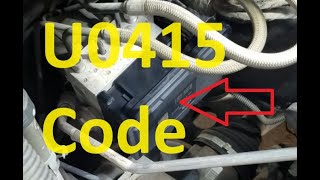
- Replacing the Power Steering Rack. Since the primary symptom is heavy steering, many incorrectly assume the steering rack is faulty. A YouTube video on a 2017 Impala showed a shop quoted a steering rack replacement when the actual cause was a simple damaged wheel speed sensor wire. The U0415 code clearly points to a data communication problem originating from the ABS system 🎬 Watch: Understanding the U0415 code and how to fix it, which controls the electric power steering assist.
Most Likely Causes
- Faulty Wheel Speed Sensor 🔴 High Probability → Shop ABS Wheel Speed Sensor Wheel speed sensors are exposed to the elements and can fail from contamination, damage, or age. On these GM platforms, the magnetic encoder ring is part of the wheel hub and can collect metallic debris, causing erratic signals (per TSB PIC5428G). This corrupt data is then broadcast by the ABS module, triggering the U0415 code in the steering module.
How to confirm: Use an OBD-II scanner with live data to monitor all four wheel speed sensors while driving. A faulty sensor will show erratic readings, dropouts, or a speed that doesn't match the others. Also, visually inspect the magnetic encoder ring on the hub for debris.
Typical fix: Replace the faulty wheel speed sensor and clear the codes. If debris is found on the hub, clean it off thoroughly. If the bearing is noisy or cleaning doesn't resolve the issue, replace the entire wheel hub/bearing assembly.
Est. part cost: $40-$90 - Damaged Wheel Speed Sensor Wiring/Harness 🔴 High Probability → Shop ABS Wheel Speed Sensor The wiring to each wheel hub is subject to constant stress from suspension movement and steering, which can cause wires to break internally, often with no visible damage to the outer insulation. This creates an intermittent open or short in the circuit.
How to confirm: Visually inspect the wiring for chafing or breaks. Gently pull and wiggle the harness while watching live data for signal dropouts. A 'spongy' or stretchy feeling in the wire's insulation often indicates an internal break. Perform a continuity test from the sensor connector to the EBCM connector.
Typical fix: Replace the damaged harness pigtail. Splicing is not recommended as it can alter resistance and fail prematurely due to moisture and movement.
Est. part cost: $20-$50 - Power Steering Control Module (PSCM) Software Anomaly 🟡 Medium Probability → Shop Power Steering Control Module TSB #19-NA-182 explicitly states the cause may be a software anomaly. The PSCM firmware may misinterpret data or fail to clear historical faults (like those from a temporary low battery event), keeping the U0415 code active and the steering assist reduced.
How to confirm: This is confirmed after ruling out physical faults with sensors and wiring. A GM dealer can check the vehicle's software calibration against the latest version available in the TIS2Web system.
Typical fix: A dealer reprograms the Power Steering Control Module (PSCM) with the latest software calibration. No parts are required for this specific fix.
Est. part cost: $0 (if under warranty), $100-$250 (dealer labor for programming) - Failing ABS Control Module (EBCM) ⚪ Low Probability → Shop ABS Control Module While less common than sensor or wiring issues, the ABS module itself can fail internally, causing it to send invalid data to the rest of the vehicle's network.
How to confirm: This is a diagnosis of exclusion. If all wheel speed sensors, wiring, software updates, and power/ground connections to the ABS module have been confirmed to be good, the module itself is the likely culprit.
Typical fix: Replace the ABS control module. This often requires programming by a dealer or a specialized shop to match the vehicle's VIN.
Est. part cost: $400-$1200 - Low Brake Fluid Level ⚪ Low Probability → Shop Brake Fluid As documented in GM bulletin PIT5490B for other platforms, if the brake fluid is low, it can slosh during maneuvers, causing the level sensor to momentarily send a 'low' signal to the ABS module. The ABS module then broadcasts this status, which other modules can interpret as invalid data under certain conditions, triggering U0415.
How to confirm: Check the brake fluid level in the master cylinder reservoir. If it is at or near the 'MIN' line, this could be the cause.
Typical fix: Top off the brake fluid to the 'MAX' line and inspect the brake system for leaks, as fluid level should not drop significantly in a sealed system.
Est. part cost: $5-$15
Rare But Worth Checking
- Low Battery Voltage or Poor Grounds: → Shop Vehicle Battery Low system voltage from a failing battery or poor ground connections can cause unpredictable communication errors between modules, including U0415. On some GM vehicles, these codes can get 'stuck' in the PSCM even after the battery is replaced, requiring a manual clear or a software update. Always ensure the battery is healthy and main grounds are clean and tight before diagnostics.
- Incorrect Steering Angle Sensor Alignment: According to GM bulletin PI0800A for related platforms, if a steering angle sensor alignment procedure is performed incorrectly, it can cause U0415 (with fault byte 75) to set and not clear, leading to a loss of power steering assist. The fix requires reprogramming the power steering control module.
Diagnosis Steps
- Read all codes from all available modules using a professional-grade scan tool. Pay close attention to any codes stored in the EBCM (ABS), PSCM (Power Steering), and CCM (Chassis Control Module).
- Check for applicable TSBs, especially #19NA182. The issue may be a known software anomaly requiring a PSCM reprogram at a dealership.
- Check battery health and verify system voltage is stable and above 12.4V. Ensure main power and ground connections are clean and tight.
- Check the brake fluid level. Top off if necessary and check for leaks.
- Using the scan tool's live data function, monitor the reported speed from all four wheel speed sensors while driving slowly in a straight line. All four should read identically.
- If a sensor shows an erratic or no reading, raise the vehicle and visually inspect that corner. Check the sensor's wiring harness for any damage, corrosion, or loose connections. Gently pull and wiggle the harness, feeling for 'spongy' spots that indicate internal wire breaks.
- Inspect the magnetic encoder ring on the wheel hub for metallic debris, which can disrupt the sensor reading. Clean if necessary.
- If wiring appears intact, test the sensor itself according to the manufacturer's procedure, or swap it with the sensor from the other side of the same axle to see if the problem follows the sensor.
- If all sensors, wiring, and software are confirmed good, inspect the main connector at the ABS module for corrosion or backed-out pins.
- If all inputs are confirmed good, the ABS module (EBCM) is the most likely remaining cause.
Parts You'll Likely Need
- Front Wheel Speed Sensor
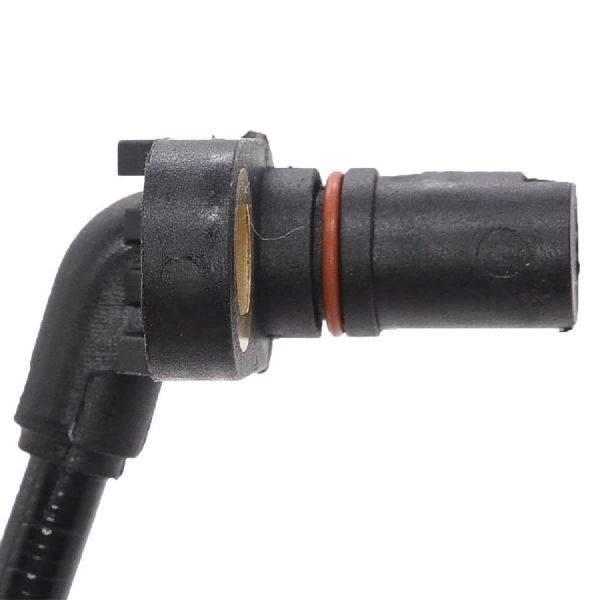
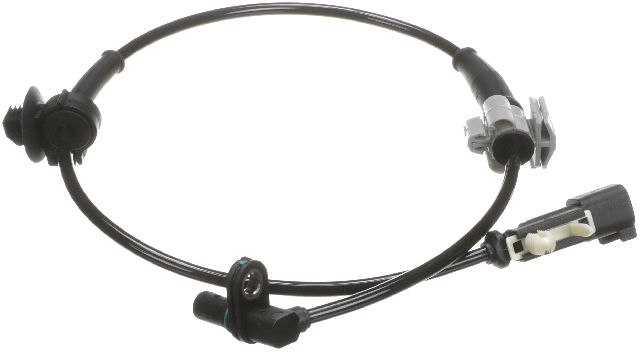
(OEM #23460591 (replaces 20899215, 23136762))— This is the most frequent hardware failure point that leads to invalid speed data being sent to the ABS module, triggering the U0415 code and affecting power steering.
Trusted brands: ACDelco (GM Genuine), Delphi, Bosch
OEM price range: $30-$70
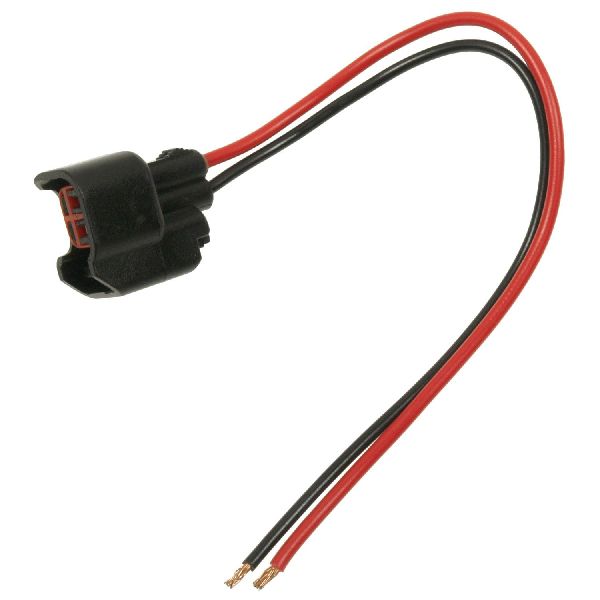
Aftermarket price range: $25-$50 - Wheel Speed Sensor Wiring Harness (Pigtail) — The harness is a common failure point due to internal wire breaks from flexing. Replacing the pigtail is the proper repair instead of splicing.
Trusted brands: ACDelco, Dorman, Pico
OEM price range: $35-$60
Aftermarket price range: $20-$40
Related Codes That Often Appear With This One
- C056D — This code is also mentioned in TSB #19NA182 and relates to an electronic control unit calibration or configuration issue. It often appears with U0415 when the steering system is affected by a software anomaly.
- C0035-C0050 — These codes correspond to specific wheel speed sensor circuit faults (e.g., C0035 for Left Front). If one of these is present, it strongly points to a specific sensor or its wiring as the root cause of the U0415 code.
Technical Service Bulletins (TSBs) & Recalls
- 19-NA-182: Corrects a customer concern of "Steering Assist Is Reduced" Message with DTCs C056D or U0415 set, noting the cause may be a software anomaly requiring a PSCM reprogram.
- PIC5428G: Provides diagnostic aid for wheel speed sensor codes (C0035-C0050), suggesting cleaning of metallic debris from the magnetic encoder ring on the wheel bearing as a primary step.
- PI0800A: Notes that DTC U0415 can be set by an improperly performed steering angle sensor alignment, requiring a PSCM re-flash to correct.
Platform-Specific Known Issues
- A known issue documented in TSB #19NA182 involves a "Steering Assist Is Reduced" message with DTC U0415 or C056D. This bulletin is critical as it identifies that the cause may be a software anomaly in the Power Steering Control Module, which can be fixed by reprogramming it at a dealer, potentially avoiding unnecessary hardware replacement.
Mechanic-Grade Diagnostic Values
- Digital (Magneto-Resistive) Wheel Speed Sensor Voltage — expected: The sensor is a two-wire digital sensor. One wire should have a reference voltage (e.g., 11-12V) and the other is the signal wire. The signal wire voltage toggles between two states (e.g., ~0.7V and ~1.8V) as the wheel is spun, creating a square wave on an oscilloscope.. Failure: No voltage on the reference wire indicates a wiring or EBCM issue. A signal wire that is stuck high, stuck low, or does not produce a clean square wave when the wheel is spun indicates a faulty sensor or a problem with the hub's magnetic encoder ring.
Hidden / Shadow Codes Worth Checking
- U0415 with Symptom Byte 75: This specific sub-code is set in the Power Steering Control Module (PSCM) when an incorrect steering angle sensor alignment procedure is performed. It can cause the code to become 'stuck' and not clear with a standard scan tool. (see via A GM-specific scan tool like the GDS2 or a high-end professional scanner is required to view the symptom byte associated with the DTC.)
- U0415 with Symptom Byte 00: This variation is noted in GM preliminary information (PIC5923A) for other platforms and typically sets in the Power Steering Control Module (PSCM), pointing towards a known software or calibration issue that requires a dealer update. (see via Requires a professional scan tool like the GM GDS2 to view the symptom byte.)
Scan Tool Commands That Help
- GDS2 (GM Global Diagnostic System 2): Power Steering Control Module - Programming — Used to flash the PSCM with updated software as recommended by TSB #19NA182 to resolve software anomalies causing U0415. This is performed using the Service Programming System (SPS).
- GDS2 (GM Global Diagnostic System 2): Power Steering Control Module - Setup — This function must be performed after programming the PSCM or replacing it. It configures the module to the specific vehicle.
- GDS2 (GM Global Diagnostic System 2): Steering Angle Sensor Centering / Software Endstop Learning — This calibration is required after PSCM programming or replacement to prevent U0415 with symptom byte 75 from setting. It ensures the steering system knows the straight-ahead position.
- GDS2 (GM Global Diagnostic System 2): Module Diagnostics > EBCM > Data Display — To monitor the live data stream from all four wheel speed sensors simultaneously. This is the primary method for identifying an erratic or failing sensor that is causing the EBCM to broadcast invalid data.
Wiring & Ground Locations
- EBCM (Electronic Brake Control Module) — Typically located in the engine bay, attached to the hydraulic ABS pump assembly. It's a black plastic module with a large electrical connector and several metal brake lines running into the attached aluminum block.. This module is the source of the 'invalid data'. While often not the root cause, its power, ground, and communication lines are critical. The main connector is a key inspection point for corrosion or backed-out pins.
- EBCM Ground — The primary ground for the EBCM is typically a chassis ground located near the module in the engine compartment, often on the fender or frame rail. On similar GM platforms, common ground points are designated G106 or G107.. A poor or corroded ground connection to the EBCM can cause it to malfunction and send corrupt data over the CAN bus, directly triggering a U0415 code in other modules.
Real Owner Repair Stories
- YouTube user 'slims automotive repair' (2014 Cadillac SRX (similar platform and EBCM)) — ABS, traction control, and power steering warning lights.
❌ Tried (didn't work) Attempting to reprogram a used module from another vehicle without the proper procedure. The video warns that once an EBCM is programmed to a VIN, it is 'locked' and cannot be simply swapped and reprogrammed by most shops.
✅ What actually fixed it The video states that the only reliable options for a failed EBCM on this platform (when new parts are discontinued) are to send the original module out for repair to a specialist service (like 'zodeex Technology' mentioned in the video) or to use the 'Replace and Reprogram' function in GM's SPS2 software, which can successfully program a used module.
OEM Part Supersession History
20899215, 23136762→23460591— Standard part evolution and consolidation by GM/ACDelco.
Helpful Videos
We Have This Part in Stock


The information in this article is provided for general reference and educational purposes only. Vehicle specifications, procedures, and part compatibility can vary by production date, trim level, and region. Always consult your vehicle's factory service manual and verify part numbers before purchasing or performing repairs. Safety-critical components such as airbags, seat belts, and braking systems should be installed by a qualified professional.
- Cadillac XTS:
- 🧭 Diagnostic Flowchart
- 🎬 Helpful Videos
- 🛍️ Shop This Part
- What's Unique About the 2014-2019 Cadillac XTS
- Symptoms You May Notice
- Most Likely Causes
- Rare But Worth Checking
- Diagnosis Steps
- Parts You'll Likely Need
- Related Codes That Often Appear With This One
- Technical Service Bulletins (TSBs) & Recalls
- Platform-Specific Known Issues
- Mechanic-Grade Diagnostic Values
- Hidden / Shadow Codes Worth Checking
- Scan Tool Commands That Help
- Wiring & Ground Locations
- Real Owner Repair Stories
- OEM Part Supersession History
- 🎟️ Get 5% Off