

U0415 on 2006-2013 Chevrolet Equinox: ABS Communication Fault Causes and Fixes
On a 2006-2013 Equinox, code U0415 typically points to a communication breakdown with the ABS module. The most common causes are a known software glitch in the power steering module requiring a dealer reprogram (per TSB PI0800A) or corrosion in the X411 electrical connector located under the rear of the vehicle by the fuel tank (per TSB PIT5427B).
- U0415 is a communication code, not a specific part failure. It means the ABS module's data is unreadable or illogical.
- For the 2006-2013 Equinox, diagnosis should start with the known issues documented in GM's Technical Service Bulletins.
- The two most likely fixes are repairing the X411 electrical connector for corrosion or having the Power Steering Control Module reprogrammed by a professional.
- This is not a good DIY repair for beginners, as it involves diagnosing complex electrical networks and potentially reprogramming modules.
- Do not immediately replace the ABS module; it is more likely to be a wiring, connector, or software issue.
What's Unique About the 2006-2013 Chevrolet EQUINOX
For this generation of Equinox and its platform-mate, the GMC Terrain, the U0415 code is frequently tied to specific, documented issues rather than random failures. GM has issued technical service bulletins pointing directly at software problems in the Power Steering Control Module (PSCM) and, most notably, a known issue with corrosion in a specific wiring connector (X411) located under the rear of the vehicle, behind and to the left of the fuel tank. This means diagnosis is often more targeted than on other vehicles, where the cause could be almost anywhere in the system.
Diagnostic Flowchart
Tap your situation to follow the diagnostic path that matches what you're seeing on this vehicle.
Generation note: This range covers two Equinox generations: the first (2006-2009) and the second (2010-2013). The cited TSBs specifically mention 2010-2017 models (second generation and onwards), which are well-documented for these issues. While the underlying causes may also affect first-generation models, they are most clearly documented for the 2010-2013 models.
Symptoms You May Notice
- ABS warning light illuminated
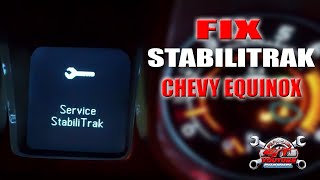
- Traction Control or StabiliTrak warning light on
- "Service Power Steering" or "Steering Assist is Reduced" message in the driver information center.
- Loss of power steering assist, making steering feel heavy.
- Vehicle pulling or attempting to steer to one side while driving.
- Check Engine Light may be on
- Replacing wheel speed sensors. While a faulty wheel speed sensor can cause ABS issues, it usually sets its own specific code (e.g., C0045). U0415 is a communication error, not a sensor input error. However, a faulty wheel speed sensor can sometimes be the root cause that makes the ABS module send invalid data, which in turn sets U0415 in another module.
Most Likely Causes
- Corroded or Damaged X411 Connector 🔴 High Probability GM Technical Service Bulletin PIT5427B specifically identifies the X411 connector as a common failure point for a host of communication codes, including U0415. Its location under the rear of the vehicle makes it highly susceptible to moisture, salt, and corrosion.
How to confirm: Visually inspect the pins and wiring at the X411 connector, which is located under the rear of the vehicle, behind and to the left of the fuel tank. Look for green or white corrosion, pushed-out pins, or physical damage. TSB PIT5171B suggests checking for resistance changes between CAN bus pins at the DLC while wiggling the harness near X411 to find intermittent breaks.
Typical fix: Clean the connector with electrical contact cleaner. If damage is severe, replace the affected terminals or the entire connector pigtail. The bulletin advises replacing any corroded terminals.
Est. part cost: $10-$50 - Power Steering Control Module (PSCM) Software Issue 🟡 Medium Probability → Shop Power Steering Control Module TSB PI0800D (superceding PI0800A) identifies a calibration error where the PSCM incorrectly sets a U0415 code if a steering angle sensor alignment procedure is performed incorrectly. A separate bulletin also notes a glitch where the PSCM fails to clear temporary faults, causing a steering warning message on every startup until it is reprogrammed.
How to confirm: This requires a GM-compatible scan tool. If code U0415 is present with C0544, and symptoms include the vehicle pulling to one side, a software issue is highly likely. The issue is confirmed if the code will not clear with a scan tool.
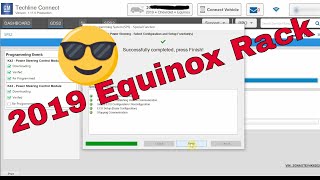
Typical fix: A GM dealer or qualified independent shop must reprogram the Power Steering Control Module (PSCM) with updated software via the Service Programming System (SPS).
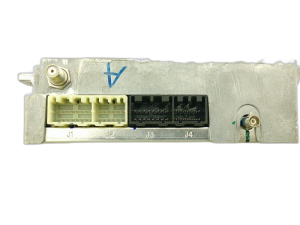
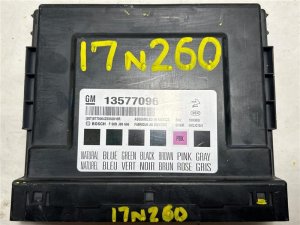
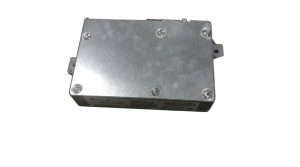
Est. part cost: $0 (software only) - Failing ABS Control Module (EBCM) ⚪ Low Probability → Shop ABS Control Module While less common than the TSB-related issues, the ABS module (also known as the EBCM) can fail internally, causing it to send corrupted data onto the network.
How to confirm: This is typically diagnosed by exclusion. If all wiring (especially at X411), connectors, and software have been verified as good, the module itself becomes the primary suspect. A comprehensive scan tool can help monitor data packets from the module for errors.
Typical fix: Replace the ABS control module. This often requires programming the new module to the vehicle's VIN.
Est. part cost: $200-$600
Rare But Worth Checking
- Low Brake Fluid Level: → Shop Brake Fluid A GM service bulletin for other vehicles (PIT5490B) notes that a low brake fluid level can cause the fluid to slosh during maneuvers, momentarily triggering a sensor fault in the EBCM. This can cause the EBCM to send invalid data, setting a U0415 code in other modules. It's a simple and quick check worth performing.
- Damaged CAN Bus Wiring: A rodent or physical impact could damage the communication wires between the ABS module and other controllers. TSB PIT5171B notes that internal wire breaks can occur in the harness leading to the X411 connector, even if the connector itself looks fine.
Diagnosis Steps
- Scan all vehicle modules for codes. Note which modules have stored U0415 and any other accompanying codes (like C0544 or other 'U' codes).
- Check the brake fluid level. Top off if low, as this is a simple potential cause.
- Locate and inspect the X411 connector for corrosion or damage as per TSB PIT5427B. It is located under the rear of the vehicle, behind and to the left of the fuel tank. This is a critical and common failure point.
- If the connector appears clean, consider performing an advanced check by measuring resistance on the CAN bus pins at the diagnostic port while wiggling the harness near X411 to check for intermittent wire breaks.
- If codes C0544 and U0415 are present and will not clear, check for applicable TSBs for your specific VIN, particularly PI0800D regarding the PSCM reprogram.
- If a TSB applies, have the relevant module (usually the PSCM) reprogrammed by a dealer or qualified shop.
- If no TSBs apply and all wiring appears intact, perform advanced diagnostics on the CAN bus network, checking for proper voltage and resistance at the ABS module connector.
- If all other possibilities are exhausted, the ABS control module (EBCM) is the likely culprit.
Parts You'll Likely Need
- Connector Terminals / Pigtail — To repair the corroded X411 connector identified in TSB PIT5427B.
Trusted brands: ACDelco, Dorman
OEM price range: $20-$60
Aftermarket price range: $10-$40 - ABS Control Module (EBCM)
(OEM #e.g., 20837392, 22755615, 22752689 (verify by VIN))— Replaced as a last resort when wiring and software issues are ruled out.
Trusted brands: ACDelco (GM Genuine), Bosch, Cardone (remanufactured)
OEM price range: $400-$600
Aftermarket price range: $200-$450
Related Codes That Often Appear With This One
- C0544 — This code is for the steering angle sensor. TSB PI0800D explicitly links C0544 and U0415, indicating they are often set together due to a software issue in the power steering system, typically after an incorrect alignment procedure.
- U0100, U0101, U0121, U0140 — These are all communication loss codes for the ECM, TCM, EBCM, and BCM respectively. Finding them alongside U0415 strongly points to a network-wide issue, such as the corroded X411 connector mentioned in TSB PIT5427B.
- C0045 — This code indicates a fault in a wheel speed sensor circuit. A faulty wheel speed sensor can provide bad data to the ABS module, which then broadcasts this 'invalid data' over the network, causing other modules like the PSCM to log U0415.
Technical Service Bulletins (TSBs) & Recalls
- PI0800D: DTC C0544 and/or U0415 Set and Will Not Clear, Malfunction Lamp Indicator (MIL) On.
- PIT5427B: Diagnostic Tip For Various Communication DTCs... U0415...
- 20-NA-091 (or similar bulletin): Service Power Steering Message Displayed at Start Up, Current DTCs Found in PSCM That Will Not Clear.
Platform-Specific Known Issues
- TSB PI0800D: Addresses an issue on 2013 models where an incorrect steering angle sensor alignment procedure can cause U0415 and C0544 to set and not clear, requiring a reprogram of the Power Steering Control Module. A key symptom is the vehicle pulling to one side.
- TSB PIT5427B: Points to corrosion in the X411 connector (located under the rear of the vehicle, left of the fuel tank) as a cause for U0415 and numerous other communication codes on 2010-2017 models.
- TSB 20-NA-091 (or similar): Describes a PSCM calibration error that can cause codes like U0415 to remain 'current' in the module's memory even after the fault is gone, triggering a steering warning message on every startup until the module is reprogrammed.
Mechanic-Grade Diagnostic Values
- High-Speed GMLAN (CAN Bus) Network Resistance — expected: Approximately 60 Ohms. Failure: A reading of 120 Ohms indicates one of the two terminating resistors is offline. A reading near 0 Ohms indicates a short between the CAN High and CAN Low wires.
- CAN Bus Voltage (Key On, Engine Off) — expected: CAN High (Pin 6): ~2.7V, CAN Low (Pin 14): ~2.2V. Failure: CAN High voltage significantly lower than 2.5V or CAN Low voltage significantly higher than 2.5V indicates a short or open on that line.
- CAN Line Resistance to Ground — expected: Megaohms or Open/Infinite (OL). Failure: A low resistance reading (e.g., 1.5 ohms) indicates a short to ground on that specific CAN wire, which will disrupt communication.
Hidden / Shadow Codes Worth Checking
- U0415 with symptom byte 75: This specific sub-code is set in the Power Steering Control Module (PSCM) when an incorrect steering angle sensor alignment procedure is performed. (see via A GM-specific scan tool like the GDS2 or Tech2 is required to view symptom bytes.)
- C0544 with symptom byte 5A: This code for the steering angle sensor is often set concurrently with U0415 75 and points to the same PSCM software issue described in TSB PI0800D. (see via Requires a GM-specific scan tool (GDS2/Tech2) capable of reading manufacturer-specific codes and their associated symptom bytes.)
Scan Tool Commands That Help
- GDS2 (GM Global Diagnostic System 2): Reprogram Electric Power Steering Control Module (EPS) — Used to resolve the locked U0415 75 / C0544 5A codes per TSB PI0800D. The procedure involves using the Service Programming System (SPS) to flash the module.
- GDS2: Steering Angle Sensor Centering / Software Endstop Learning — This calibration must be performed after reprogramming the PSCM or replacing steering components to prevent the U0415 code from returning.
- GDS2: Module Diagnostics > EBCM > Data Display — To monitor live data from all four wheel speed sensors simultaneously. This is critical for identifying an erratic sensor that is causing the EBCM to send invalid data, which in turn sets the U0415 in another module.
Wiring & Ground Locations
- X411 — Under the rear of the vehicle, to the left of the fuel tank.. This is a major pass-through connector for the rear chassis harness. TSB PIT5427B identifies it as a primary point for corrosion that disrupts CAN bus communication between the EBCM and other modules, causing U0415 and other codes.
- G110 — On the right rear of the engine.. This is a primary engine ground. A poor connection here can cause voltage fluctuations and electrical noise, potentially corrupting data from modules grounded to the engine block and leading to communication codes like U0415.
- G105 — On the top rear of the 2.4L engine, or the left rear of the 3.6L engine.. This is another critical engine ground point. Verifying it is clean and tight is a key step in diagnosing any network communication issue.
- EBCM Ground — The Electronic Brake Control Module has a dedicated ground wire in its main connector, which typically grounds to a point on the chassis near the module in the engine bay. For a 2014 model, a ground terminal is located near the fuse box.. A compromised ground directly at the EBCM can cause it to send out the invalid data that this code describes.
Real Owner Repair Stories
- YouTube channel 'Busted to Built' (2014 Chevrolet Equinox) — ABS and Stabilitrak lights on. Scan revealed code C0045 (Left Front Wheel Speed Sensor Circuit) and U0415 (Invalid Data Received from EBCM).
❌ Tried (didn't work) The diagnostic approach correctly identified that U0415 was a secondary code caused by the primary wheel speed sensor fault.
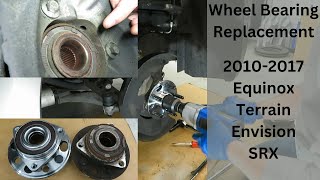
✅ What actually fixed it The technician graphed all four wheel speeds and saw the left front signal dropping out. Inspection revealed the magnetic reluctor ring on the back of the wheel bearing was cracked and broken. Replacing the entire left front wheel bearing assembly (which includes the new reluctor ring) resolved both the C0045 and the U0415 codes.
OEM Part Supersession History
22752689→22752690— Part revision or update by the manufacturer.
Heads up: Part number 22752689 is listed for 2011 models, while 22752690 is listed for 2011-2013 models. While they may be interchangeable, it is critical to verify the correct part number by VIN. Any replacement EBCM will likely require programming to the vehicle.
Model Year Variations Within This Range
- 2006-2009 (First Gen) vs 2010-2013 (Second Gen): The first generation used a 3.4L V6 standard, with an optional 3.6L V6 in Sport models. The second generation switched to a 2.4L I4 standard with an optional 3.0L V6 (2010-2012) or 3.6L V6 (2013). Critically, 2.4L models use electric power steering, while V6 models in the second generation used hydraulic power steering. This is significant because TSB PI0800D, a major cause of U0415, applies specifically to models with electric power steering.
Helpful Videos

We Have This Part in Stock

The information in this article is provided for general reference and educational purposes only. Vehicle specifications, procedures, and part compatibility can vary by production date, trim level, and region. Always consult your vehicle's factory service manual and verify part numbers before purchasing or performing repairs. Safety-critical components such as airbags, seat belts, and braking systems should be installed by a qualified professional.
- Chevrolet EQUINOX:
- 🧭 Diagnostic Flowchart
- 🎬 Helpful Videos
- 🛍️ Shop This Part
- What's Unique About the 2006-2013 Chevrolet EQUINOX
- Symptoms You May Notice
- Most Likely Causes
- Rare But Worth Checking
- Diagnosis Steps
- Parts You'll Likely Need
- Related Codes That Often Appear With This One
- Technical Service Bulletins (TSBs) & Recalls
- Platform-Specific Known Issues
- Mechanic-Grade Diagnostic Values
- Hidden / Shadow Codes Worth Checking
- Scan Tool Commands That Help
- Wiring & Ground Locations
- Real Owner Repair Stories
- OEM Part Supersession History
- Model Year Variations Within This Range
- 🎟️ Get 5% Off