

U0415 on 2015-2017 Chevrolet Silverado: Invalid ABS Data Causes & Fixes
On a 2015-2017 Silverado, code U0415 is most often caused by a simple issue like low brake fluid or a wiring problem, not a failed ABS module. Check the brake fluid level first, as per GM TSB #PIT5490B. If full, inspect the wiring harnesses under the driver's side dash and door sill plates for damage, as specified in GM service bulletins PIT5288H and PIT5457D.
- Always check the brake fluid level first when you see code U0415 on a 2015-2017 Silverado. It's the easiest and a very common fix.
- This code is almost always a wiring or connection problem, not a failed ABS module. Focus diagnostic time on the known problem areas: under the door sills and behind the driver's side dash.
- Do not replace the expensive EBCM (ABS module) until all other possibilities are exhausted.
- U0415 disables important safety systems like ABS and StabiliTrak, so it should be addressed promptly.
What's Unique About the 2015-2017 Chevrolet SILVERADO

The 2015-2017 Silverado, part of the K2XX generation, is well-documented by GM for having specific electrical vulnerabilities that trigger U0415. Multiple Technical Service Bulletins (TSBs) point to wiring harnesses that are prone to chafing and corrosion in predictable locations, like under the door sill plates (TSB PIT5457D) and behind the instrument panel (TSB PIT5288H). Another key TSB (#PIT5490B) identifies something as simple as low brake fluid causing this complex-sounding communication code, often accompanied by a "Service Trailer Brake" message.
Diagnostic Flowchart

Tap your situation to follow the diagnostic path that matches what you're seeing on this vehicle.
Symptoms You May Notice
- Service StabiliTrak / Traction Control warning light
- ABS warning light illuminated
- "Service Trailer Brake System" message on the Driver Information Center (DIC)
- "Steering Assist is Reduced Drive With Care" message
- Inoperative windshield wipers (per TSB PIT5288H)
- Erratic or jerky shifting
- Dead battery or no/slow crank (per TSB PIT5288H)
- Blank radio or touch screen display (per TSB PIT5288H)
- Replacing the Electronic Brake Control Module (EBCM) without first checking for low brake fluid or performing a thorough inspection of the wiring harnesses under the dash and sill plates.
- Replacing wheel speed sensors when no wheel speed sensor codes (e.g., C0035-C0050) are present.
- Replacing the Trailer Brake Control Module (TBCM) because of the 'Service Trailer Brake' message, when the fault originates from the EBCM's inputs.
Most Likely Causes

- Low Brake Fluid Level 🔴 High Probability → Shop Brake Fluid According to GM TSB #PIT5490B, the brake fluid level sensor is very sensitive. During turns, braking, or acceleration, fluid sloshing in a reservoir that is near the 'min' line can momentarily trip the sensor. The EBCM reports this low level status, and the Chassis Control Module flags the data as invalid, setting U0415 and often displaying a 'Service Trailer Brake' message.
How to confirm: Visually inspect the brake fluid level in the master cylinder reservoir. If it is low, this is the likely cause. A professional scan tool (GDS2) can also be used to monitor the 'Brake Fluid Level Sensor' parameter in the EBCM data list, which will read 'OK' or 'Low'.
Typical fix: Top off the brake fluid to the 'max' line using the specified DOT fluid. It is critical to also inspect the brake system for leaks or worn brake pads to understand why the fluid was low in the first place. TSB #PIT5490B advises inspecting the rear of the master cylinder for leaks into the brake booster if no external leaks are found.
Est. part cost: $5-$15 - Damaged or Corroded Wiring Harness 🔴 High Probability Multiple TSBs identify specific weak points. TSB PIT5288H points to the main dash harness being pinched by the left instrument panel mounting bracket, near the parking brake pedal. TSB PIT5457D cites corrosion in the harness and splice packs under the driver and passenger door sill plates due to water intrusion. This TSB specifically calls out the Communication Enable circuit (5986) as a common point of failure.
How to confirm: Visually inspect the wiring harnesses in the locations specified by the TSBs. For PIT5288H, look for a pinched harness near the park brake pedal from underneath the dash. For PIT5457D, remove the sill plates and look for green corrosion, swollen wire insulation, or broken wires. A multimeter can be used to check for low voltage on the Communication Enable circuit (5986).
Typical fix: Repair the damaged section of the wire harness by soldering in a new piece of wire (same gauge) and protecting it with heat-shrink tubing. Clean corroded connectors and apply dielectric grease. Ensure the harness is re-routed or protected to prevent future damage.
Est. part cost: $10-$30 - Poor Ground Connection (G218) 🟡 Medium Probability These trucks are known for having electrical issues caused by poor grounds. Ground G218, which serves the Body Control Module (BCM), is a frequent culprit. It is located on the driver's side A-pillar, often behind the dash speaker grille or side cover. Factory paint or trapped dash insulation under the ground lug often prevents a solid connection, leading to intermittent communication issues.
How to confirm: Perform a voltage drop test on the ground connection. A reading of more than a few millivolts indicates a poor connection. A visual inspection may reveal paint under the terminal, a loose nut, or trapped insulation foam.
Typical fix: Disassemble the ground connection. Sand the contact surface on the chassis down to bare metal. Clean the eyelet terminal. Reassemble securely and apply dielectric grease to prevent future corrosion.
Est. part cost: $0-$5 - Weak or Failing Battery ⚪ Low Probability → Shop Vehicle Battery Low system voltage during cranking can cause multiple modules to lose communication or receive corrupt data, triggering a cascade of 'U' codes, including U0415. Modern trucks are extremely sensitive to battery voltage and condition.
How to confirm: Test the battery's state of charge and perform a load test to check its health. A simple voltage reading is not sufficient. Check terminals for corrosion and tightness.
Typical fix: Replace the vehicle's battery.
Est. part cost: $150-$300
Rare But Worth Checking
- Power Steering Control Module (PSCM) Software Glitch: → Shop Power Steering Control Module A known software issue in the PSCM can cause U0415 to remain as a current code even after the initial fault (like a dead battery) is fixed. This can cause a persistent "Steering Assist is Reduced" message until the PSCM is reprogrammed by a dealer with the latest calibration, per TSB 20-NA-113.
- Failing Electronic Brake Control Module (EBCM): → Shop ABS Control Module While this is what the code definition seems to imply, it is rarely the root cause on this platform. The EBCM should only be suspected after all wiring, grounds, and fluid levels have been thoroughly checked and confirmed to be good. Replacement requires programming to the vehicle's VIN.
Diagnosis Steps
- Check the brake fluid level in the master cylinder. If low, top it off and inspect the brake system for leaks or wear. Clear codes and re-test. This is the most common fix.
- If fluid is OK, use a GM-compatible scan tool to check for codes in ALL modules. Note all communication ('U') codes and look for patterns.
- Following TSB #PIT5457D, remove the driver and passenger sill plates and peel back the carpet. Inspect the wiring harness channel for signs of water intrusion, swelling, and green corrosion, particularly on the CAN bus wires (twisted pair) and the Communication Enable circuit 5986.
- Following TSB #PIT5288H, inspect the wire harness behind the left side of the instrument panel, near the parking brake pedal assembly. Look for any signs of the harness being pinched or chafed against the metal I/P mounting bracket.
- Inspect and clean ground G218. Locate it on the driver's side A-pillar frame (may require removing the dash end panel or speaker grille). Remove the nut, sand the contact surface to bare metal, clean the terminal, and re-secure it tightly.
- Inspect the main EBCM connector for corrosion or backed-out pins. The EBCM is typically located on the frame rail under the driver's door.
- If all wiring and connections are confirmed to be good, the issue may lie with the EBCM itself, but this is the least likely cause and should be the last step.
Parts You'll Likely Need
- Brake Fluid (DOT 3) — The most common and simplest fix is topping off a low brake fluid reservoir, as per TSB #PIT5490B.
Trusted brands: ACDelco, Prestone
OEM price range: $10-$20
Aftermarket price range: $5-$15 - Electronic Brake Control Module (EBCM)
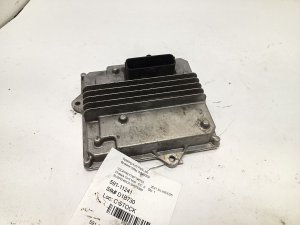
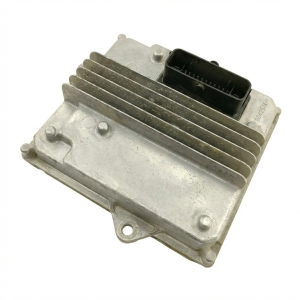
(OEM #84609554 (replaces 23154721, 23237319, 84074934, 84074964, 84256796))— This part is only replaced as a last resort after all wiring, ground, and fluid-related issues have been ruled out. It is an expensive part and requires programming to the vehicle with special tools.
Trusted brands: ACDelco (Genuine GM)
OEM price range: $485-$950
Related Codes That Often Appear With This One
- U0077 — High Speed Communication Bus (-), often indicates a general network wiring issue and is cited in TSBs PIT5288H and PIT5457D.
- U0121 — Lost Communication With Anti-Lock Brake System (ABS) Control Module, indicates a more severe communication breakdown, often from the same wiring faults.
- U0126 — Lost Communication With Steering Angle Sensor Module, often set concurrently due to shared communication bus issues.
- U0131 — Lost Communication With Power Steering Control Module, also related to network wiring faults described in TSB PIT5457D.
- U0428 — Invalid Data Received From Steering Angle Sensor Module, indicates corrupted data on the same network.
Technical Service Bulletins (TSBs) & Recalls
- PIT5288H: Addresses various electrical issues from a pinched wire harness in the left instrument panel.
- PIT5457D: Details communication loss from corroded/damaged wiring under the door sill plates.
- PIT5490B: Explains how low brake fluid causes a 'Service Trailer Brake' message and U0415.
- PIT5405C: Mentions poor grounds (like G218) and battery issues as potential causes for a wide range of communication codes.
Platform-Specific Known Issues
- TSB #PIT5490B: Notes that a "Service Trailer Brake" message accompanied by code U0415 is often caused simply by the brake fluid level being near the minimum mark, allowing fluid to slosh and momentarily trip the sensor. The fix is to top off the fluid and inspect for the cause of the low level.
- TSB #PIT5457D: Cites loss of communication with the EBCM and other modules, including code U0415, due to open, damaged, or corroded wiring found under the driver and passenger sill plates. It specifically highlights checking the Communication Enable circuit (5986) for opens or high resistance.
- TSB #PIT5288H: Points to a pinched wire harness behind the left instrument panel (near the parking brake pedal) as a cause for a wide range of communication codes, including U0415, leading to various electrical problems like a dead battery or inoperative wipers.
Mechanic-Grade Diagnostic Values
- High-Speed GMLAN Bus Resistance — expected: Approximately 60 Ohms (measured between pins 6 and 14 of the DLC with battery disconnected).. Failure: A reading of ~120 Ohms indicates an open in the bus or a missing terminating resistor. A reading significantly lower than 60 Ohms suggests the CAN High and Low wires are shorted together.
- High-Speed GMLAN Bus Voltage (Key On) — expected: CAN High (Pin 6) should be ~2.6V and CAN Low (Pin 14) should be ~2.3V, with data transmission causing rapid fluctuations.. Failure: Voltages stuck high, low, or at 0V indicate a short to power, short to ground, or an open circuit.
- Communication Enable Circuit (Circuit 5986) Voltage — expected: Approximately 12V (battery voltage) with the key on.. Failure: Low or no voltage indicates an open or high resistance in the circuit, a common issue under the door sill plates as noted in TSB PIT5457D.
Scan Tool Commands That Help
- GDS2 (GM Global Diagnostic System 2): EBCM Data Display > Brake Fluid Level Sensor — To confirm the diagnosis from TSB #PIT5490B. This allows you to see the sensor status ('OK' or 'Low') in real-time as the vehicle moves, confirming if fluid slosh is the root cause.
- GDS2 (GM Global Diagnostic System 2): PSCM Programming (SPS) — Use this function to update the Power Steering Control Module software. Per TSB 20-NA-113, a software bug can cause U0415 to stay as a current DTC after a temporary fault (like a weak battery) is resolved. Reprogramming the PSCM is the only fix.
- GDS2 (GM Global Diagnostic System 2): EBCM Setup and Configuration (SPS) — This is required after replacing the Electronic Brake Control Module (EBCM). A new module is 'blank' and must be programmed with the vehicle's VIN and specific configuration before it will be recognized by other modules on the network.
Wiring & Ground Locations

- G218 — On the driver's side A-pillar, behind the dash side cover or speaker grille.. This is a critical ground for the Body Control Module (BCM). A poor connection here due to paint or trapped insulation can cause a wide range of intermittent communication faults across the vehicle networks, including setting U0415.
- CAN Bus Terminating Resistor (Rear) — On some models, a 120-Ohm terminating resistor is taped to the wiring harness above the spare tire, near the chassis control module or fuel pump control module.. The high-speed CAN bus requires two 120-Ohm resistors for proper communication. One is in the ECM, the other is at the far end of the bus. If this external resistor or its wiring is damaged, network resistance will read 120 Ohms instead of 60, causing communication failures.
- EBCM Main Ground — On the frame rail, typically located below the driver's door.. This is the primary ground connection for the Electronic Brake Control Module. Corrosion or a loose connection at this point can directly cause the EBCM to malfunction or send invalid data.
- EBCM Connector (X1) — The main 38-pin connector at the EBCM module itself, located on the frame rail.. This is the single point of connection for all power, ground, and communication lines to the ABS module. Water intrusion, corrosion, or backed-out pins in this connector will directly cause communication codes like U0415.
Real Owner Repair Stories
- gm-trucks.com forum user (2015 Silverado 1500) — Service Trailer Brake, Service Stabilitrak, ABS light on. Codes U0415, U0121, C0561.
❌ Tried (didn't work) Checked brake fluid (it was full)., Replaced trailer brake controller switch in the dash.
✅ What actually fixed it Found a broken wire inside the wiring harness located under the driver's door sill plate, consistent with TSB PIT5457D. The user reported finding multiple corroded wires in the channel. Splicing and repairing the broken wire resolved all codes and warning messages.
OEM Part Supersession History
23154721, 23237319, 84074934, 84074964, 84256796, 84609554→85698746— Standard part evolution for design improvements, reliability updates, or manufacturing changes.
Heads up: A new module is not plug-and-play. It must be programmed to the vehicle's VIN using GM's Service Programming System (SPS) with a J2534 interface. Failure to program will result in the module not communicating and the warning lights remaining on.
Model Year Variations Within This Range
- 2016-2017: The 2016 model year received a mid-cycle refresh that included a redesigned front fascia, new headlights, and updated infotainment systems with Apple CarPlay/Android Auto. While the core electrical architecture and known TSB issues for U0415 remained largely the same, these changes introduced different radio and display software, which could be a factor if symptoms include a blank screen as mentioned in TSB PIT5288H. A radio software recall was issued for some 2016 models for unrelated issues.
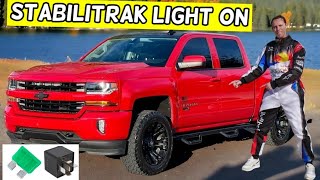
Helpful Videos
We Have This Part in Stock

The information in this article is provided for general reference and educational purposes only. Vehicle specifications, procedures, and part compatibility can vary by production date, trim level, and region. Always consult your vehicle's factory service manual and verify part numbers before purchasing or performing repairs. Safety-critical components such as airbags, seat belts, and braking systems should be installed by a qualified professional.
- Chevrolet SILVERADO:
- 🧭 Diagnostic Flowchart
- 🎬 Helpful Videos
- 🛍️ Shop This Part
- What's Unique About the 2015-2017 Chevrolet SILVERADO
- Symptoms You May Notice
- Most Likely Causes
- Rare But Worth Checking
- Diagnosis Steps
- Parts You'll Likely Need
- Related Codes That Often Appear With This One
- Technical Service Bulletins (TSBs) & Recalls
- Platform-Specific Known Issues
- Mechanic-Grade Diagnostic Values
- Scan Tool Commands That Help
- Wiring & Ground Locations
- Real Owner Repair Stories
- OEM Part Supersession History
- Model Year Variations Within This Range
- 🎟️ Get 5% Off