

U0415 on 2015 Land Rover LR4: Invalid ABS Data Causes and Fixes
Code U0415 on a 2015 Land Rover LR4 indicates a communication error where the All-Terrain Control Module receives invalid data from the ABS module. This is frequently caused by low battery voltage or electrical faults, not a bad ABS module. Before replacing parts, fully test the battery and charging system, and investigate potential parasitic drains, especially the one noted in TSB SSM72146 related to the center console cooler.
- U0415 on a 2015 LR4 is a network code, not necessarily a failed part. It means the All-Terrain system is getting bad data from the ABS system.
- The most likely cause is a weak battery, failing alternator, or a parasitic power drain—not a bad ABS module.
- A known issue is the center console cooler draining the battery, which is documented in a Land Rover TSB (SSM72146).
- Do not replace any expensive modules until the vehicle's entire electrical system has been thoroughly tested.
- This is not a DIY-friendly repair; professional diagnostics are needed to correctly identify the fault and program any replacement modules.
What's Unique About the 2015-2015 Land Rover LR4
The Land Rover LR4 (and its global counterpart, the Discovery 4) has highly integrated electronic systems, including Terrain Response, air suspension, and ABS, which are all extremely sensitive to battery voltage. A well-documented and unique issue on this platform is detailed in Technical Service Bulletin (SSM72146), where the center console cooler box can fail to shut down, causing a parasitic battery drain. This voltage drop can trigger a cascade of network communication faults like U0415, even though the ABS module itself may be perfectly fine. Owners have confirmed that pulling the fuse for the cooler box can be a temporary fix while awaiting a permanent solution. This sensitivity means that a 'Christmas tree' of warning lights is a common symptom of a simple low battery or alternator issue.
Diagnostic Flowchart
Tap your situation to follow the diagnostic path that matches what you're seeing on this vehicle.
Symptoms You May Notice
- ABS warning light illuminated
- Traction control (DSC) warning light illuminated
- Hill Descent Control (HDC) unavailable message
- "Special Programs Off" message on the driver display
- Air suspension fault warnings or vehicle lowering to bump stops
- Emergency brake unavailable message
- Check Engine Light may be on
- A 'Christmas Tree' effect of multiple, seemingly unrelated warning lights on the dashboard 🎬 Watch: How to troubleshoot and fix common Land Rover dashboard lights.
- Replacing the ABS control module without first performing a thorough test of the battery, charging system, and for parasitic draws.
- Replacing the All-Terrain Control Module (ATCM) when the fault lies in the power supply or ABS module communication.
- Ignoring a 'Low Battery' warning on the dash, assuming it's a minor glitch, when it is often the direct precursor to network communication faults.
Most Likely Causes
- Low Battery Voltage or Failing Alternator 🔴 High Probability → Shop Vehicle Battery The LR4's complex electronics are highly sensitive to voltage drops. Multiple TSBs and countless owner forum posts point to low voltage as the root cause for various communication faults, often before any modules have actually failed. A battery that reads below 12.4V at rest or an alternator charging outside the 13.5-14.8V range can cause these issues.
How to confirm: Test the battery voltage with the engine off after it has rested (should be above 12.4V). Perform a complete load test on the battery. Check the alternator's output voltage while running (should be ~13.5-14.8V). A failing alternator or a bad battery that won't hold a charge above 12.1V are common culprits.
Typical fix: Replace the vehicle's main AGM battery and/or alternator. After replacement, the Battery Monitoring System (BMS) should be reset using a compatible diagnostic tool to ensure proper charging strategy.
Est. part cost: $250-$900 - Parasitic Power Drain 🟡 Medium Probability TSB SSM72146 specifically calls out the center console cooler box remaining active after ignition off, draining the battery and causing U-codes like U0415. Other modules can also fail to 'sleep' properly, causing a significant current draw after the vehicle is shut down.
How to confirm: Perform a parasitic draw test with an ammeter connected in series with the negative battery terminal. After waiting at least 20 minutes for all modules to go to sleep, the draw should be very low (typically under 50mA). If it's higher (e.g., 0.5A), start pulling fuses to isolate the problematic circuit. Fuse #16 for the cooler box is a primary suspect.
Typical fix: If the cooler box is the cause, the temporary fix is to pull its fuse. A permanent fix may require a dealer software update or component replacement. For other drains, repair or replace the faulty component/module.
Est. part cost: $50-$400 - Wiring or Connector Issues ⚪ Low Probability Corrosion is a known issue. Ground points in the driver and passenger footwells can corrode if sunroof drains have leaked. The CAN bus wiring harness itself, a twisted pair of wires, can also suffer from corrosion at module connectors or chafing, particularly in the engine bay or near wheel arches.
How to confirm: Visually inspect the wiring harness and connectors at the ABS module, ATCM, and Central Junction Box (behind the glovebox) for damage, corrosion, or loose pins. Check main ground points in the footwells for corrosion. Advanced diagnosis involves using an oscilloscope to check for a clean 2.5V signal on the CAN-H and CAN-L lines.
Typical fix: Clean corroded ground points or connectors. Repair the damaged section of the wiring harness. This can be labor-intensive to trace.
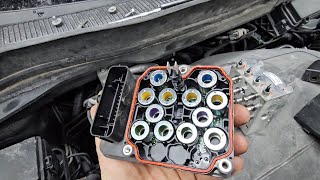
Est. part cost: $20-$500 - Faulty ABS Control Module ⚪ Low Probability → Shop ABS Control Module While module failure is less common than electrical issues, it can happen. Internal circuit board failure or moisture intrusion can cause the module to send corrupted data. Sometimes an electrical smell may be noticed from the unit if it has shorted internally.
How to confirm: This is a diagnosis of exclusion. If the battery, charging system, and all related wiring are confirmed to be in perfect condition, the module itself is the likely culprit. Requires a professional scan tool to attempt communication and run self-tests.
Typical fix: Replace the ABS control module and have it professionally programmed to the vehicle's VIN. Using a used module is possible but it MUST be programmed.
Est. part cost: $800-$1800
Rare But Worth Checking
- Faulty Wheel Speed Sensor: → Shop ABS Wheel Speed Sensor While a bad wheel speed sensor typically sets its own specific code (e.g., C003A), it's possible for an intermittent sensor fault to feed implausible data to the ABS module, which in turn broadcasts invalid data to the network, triggering U0415.
- Faulty All-Terrain Control Module (ATCM): It's possible for the receiving module (ATCM) to be the source of the fault, misinterpreting good data, but this is much less common than issues with the sending module (ABS) or the network itself.
- Corrupted Module Software: A glitch or failed update can cause modules to send invalid data. Sometimes a software re-flash by a dealer or specialist can resolve the issue without replacing hardware. This is especially true if other modules have been recently replaced or updated. NHTSA Campaign 15V-214 (Land Rover recall P062) specifically addresses a software issue on 2015 LR4s that could cause this fault.
Diagnosis Steps
- Connect a professional, Land Rover-compatible scan tool (like JLR SDD) to read fault codes from ALL vehicle modules. Save a complete fault report.
- Perform a complete battery and charging system test. The battery must be an appropriate AGM type and in excellent health. Voltage at rest should be >12.4V, and charging voltage should be ~13.5-14.8V.
- If battery/alternator are good, perform a parasitic draw test. Connect an ammeter and wait 20+ minutes for the vehicle to sleep. A draw over 50-100mA indicates a problem. Pull fuses to isolate the circuit, paying special attention to the cooler box (Fuse #16 in passenger compartment).
- Inspect the main electrical connectors at the ABS module and the All-Terrain Control Module for any signs of corrosion, moisture, or damaged pins.
- Inspect key ground points for corrosion, especially those located in the driver and passenger footwell kick panel areas, which are vulnerable to water from clogged sunroof drains.
- Check the fuses related to the ABS and ATCM systems in both the engine bay and passenger compartment fuse boxes.
- If all power, ground, and wiring checks pass, the issue likely lies within the ABS module itself. This requires advanced diagnostics to confirm before replacement.
Parts You'll Likely Need
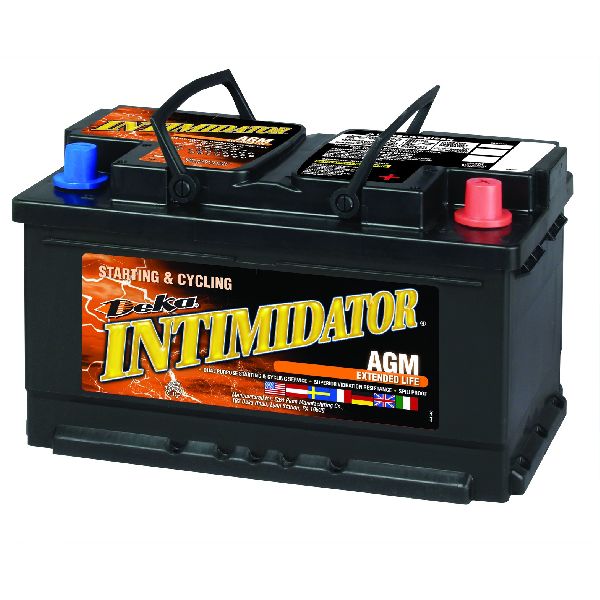
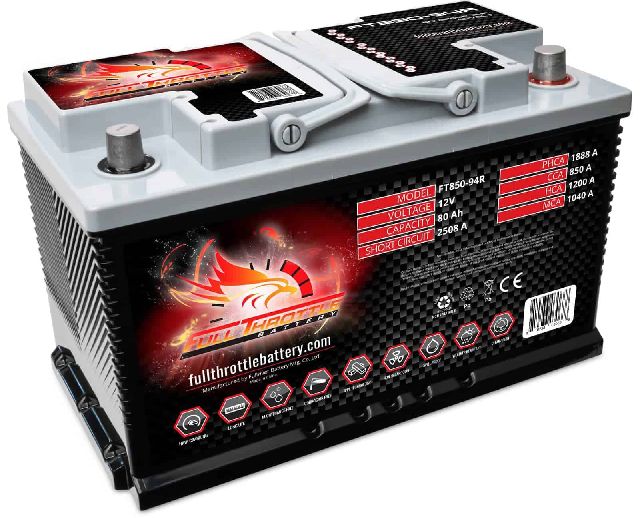
- Vehicle Battery
(OEM #LR094935 (May vary, confirm with VIN))— A weak or failing AGM battery is the most frequent cause of network communication faults on the LR4. The vehicle requires a specific high-capacity AGM battery (H8 or Group 49 size, ~90Ah, 850CCA).
Related Codes That Often Appear With This One
- U0416-68 — Mentioned in TSB SSM72143, this code for 'Invalid Data from Vehicle Dynamics Control Module' often appears with U0415 due to the same underlying voltage drop issues affecting multiple systems.
- U0421-68 — Mentioned in TSB SSM72146, this code for 'Invalid Data from Ride Level Control Module' can also be triggered by the same parasitic drain/low voltage conditions.
- C0020-1C — This code for 'ABS Pump Motor Control - Circuit voltage out of range' can indicate an electrical failure within the ABS module itself, which would lead to it sending invalid data.
Technical Service Bulletins (TSBs) & Recalls
- SSM72146: Notes that various U-codes, including U0415-68, can be caused by the center console cooler box remaining active and draining the battery. The temporary fix is to pull the associated fuse.
- SSM72143: Links U0415-68 from the All Terrain Control Module (ATCM) and U0416-68 from the Air Suspension module to voltage drop issues.
Platform-Specific Known Issues
- Technical Service Bulletin SSM72146 directly links code U0415-68 to a parasitic battery drain caused by the center console cooler box remaining active after the vehicle is turned off.
- TSB SSM72143 confirms that voltage drops can cause the All Terrain Control Module (ATCM) to flag code U0415-68.
- Sunroof drain leaks are a common problem, leading to water ingress in the cabin and corrosion of important ground points and wiring harnesses in the footwells, which can cause a variety of CAN bus errors.
Mechanic-Grade Diagnostic Values
- High-Speed CAN Bus Resistance — expected: ~60Ω. Failure: A reading of ~120Ω indicates an open circuit or a problem with one of the two terminating resistors (located in the Instrument Cluster and ABS module). A reading near 0Ω indicates a short between the CAN High and Low wires.
- High-Speed CAN High (CAN-H) Voltage to Ground — expected: ~2.6V (or 2.65V). Failure: Significant deviation from this voltage suggests a bus fault. For example, a reading of 7.0V could indicate a short to power in a connected module.
- High-Speed CAN Low (CAN-L) Voltage to Ground — expected: ~2.3V (or 2.35V). Failure: Significant deviation, such as a reading of 1.3V, points to a bus problem or a faulty module pulling the voltage down.
- Wheel Speed Sensor Resistance — expected: 950-1100Ω. Failure: Readings outside this range indicate a faulty sensor which could feed implausible data to the ABS module.
Hidden / Shadow Codes Worth Checking
- U0415-68: The '-68' suffix is a subtype defined as 'Algorithm Based Failure'. This indicates the module has received data that has passed a basic validity check but is considered irrational or illogical by the receiving module's software algorithms. This is common with low voltage events or intermittent data corruption. (see via Land Rover-specific diagnostic tools like JLR SDD or high-end multi-brand scanners (e.g., Autel, GAP IIDTool).)
- U3002-81: VIN Mismatch. This code can be stored in the ABS module if a used module from another vehicle has been installed without proper programming. The ABS module's stored VIN does not match the vehicle's actual VIN, causing communication conflicts and triggering faults like U0415. (see via JLR SDD or equivalent advanced diagnostic tool.)
Scan Tool Commands That Help
- JLR SDD (Symptom Driven Diagnostics): Read All Stored DTCs — This should be the first step to get a complete picture of faults across all vehicle modules, not just the one reporting the U0415 code. Often, codes in other modules point to the root cause (e.g., low voltage codes).
- JLR SDD (Symptom Driven Diagnostics): New Module Programming / Configure New Module (ABS) — This function is mandatory when installing a new or used ABS module. It writes the vehicle's VIN and Car Configuration File (CCF) to the module, allowing it to synchronize with the rest of the vehicle's network.
- JLR SDD or equivalent (e.g., GAP IIDTool): Live Data Stream (ABS & ATCM) — To monitor real-time data from the ABS module (like individual wheel speeds) and see what the ATCM is receiving. This can help identify if a specific wheel speed sensor is providing erratic data that the ABS module is then broadcasting.
- JLR SDD or equivalent: Clear/Reset Adaptations (Transmission) — While not directly for the ABS, if a transmission module is also acting up or has been serviced, resetting its learned adaptations can be necessary. However, some sources advise caution when doing this on high-mileage vehicles.
Wiring & Ground Locations
- Main Battery Ground — On the frame rail, straight down from the battery. Can be seen looking alongside but below the radiator.. A poor main ground connection can affect the entire vehicle's electrical stability, causing low voltage conditions and high alternator output, both of which are known to trigger network communication faults like U0415.
- Engine Bay Ground Studs — There are 2-3 prominent earth studs on the inner fender (guard) to the right of the battery compartment.. These are primary grounding points for various engine bay components. Corrosion here can lead to intermittent electrical issues for modules located nearby, including the ABS module.
- Footwell Ground Points — Behind the trim panels in both the left (driver) and right (passenger) footwells.. These ground points serve numerous interior modules, including potentially the Central Junction Box (CJB) which acts as a gateway. They are notoriously susceptible to corrosion from water ingress via clogged sunroof drains or leaking windshields.
- ABS Module Connector (C0501 / C0500) — Directly on the ABS modulator assembly in the engine bay.. This is the primary connection for power, ground, and CAN bus signals to the ABS module. Any corrosion or loose pins here will directly interrupt communication and cause faults.
Real Owner Repair Stories
- Reddit user in r/LandRover (2013 LR4) — Multiple codes including U0415-68, U0416-68, U0421-68, U0126-00, U0401-68. Traction control, stability control, and other systems impacted.
❌ Tried (didn't work) Not specified, but the user had a list of codes from a diagnostic tool.
✅ What actually fixed it The final fix was replacing a faulty brake light switch (Brake Switch 2). The battery was also changed as a precaution. - Land Rover Forums user (LR4 (year not specified)) — A 'Christmas tree' of warning lights including HDC, ABS, EBA, lowered suspension, and 'special programs off'. The issue was triggered after hitting a pothole.
❌ Tried (didn't work) Taking it to a Land Rover dealer, who only read codes and provided no solution. Replacing the brake light switch made no difference.
✅ What actually fixed it The owner noticed odd readings from the steering angle sensor. After reseating the connector for the steering angle sensor, the faults were resolved. The hard shock from the pothole likely caused a momentary bad connection. - MHH Auto forum user (Land Rover LR4 (L319)) — '4 amigos' on the dash (multiple warning lights) after a used ABS module was installed.
❌ Tried (didn't work) Attempting to reprogram the EEPROM inside the gel-filled ABS module was not feasible.
✅ What actually fixed it A CAN filter was installed between the Body Control Module (BCU) and the ABS module. The filter intercepts the VIN broadcast from the BCU and swaps it with the VIN from the donor vehicle stored in the used ABS module, resolving the U3002 VIN mismatch and clearing the associated faults.
When the Usual Fixes Don't Work
- While low battery voltage is the most common cause, several owner-documented repairs show that it is not always the culprit. In one case, a cascade of communication codes including U0415 was ultimately traced to a faulty brake light switch, a fix that cost under $200. In another instance, the root cause was a loose electrical connector on the steering angle sensor, which was resolved by simply reseating it. These cases highlight the importance of checking critical sensor inputs to the ABS system before concluding the module itself or its power supply is at fault.
Helpful Videos
We Have This Part in Stock


The information in this article is provided for general reference and educational purposes only. Vehicle specifications, procedures, and part compatibility can vary by production date, trim level, and region. Always consult your vehicle's factory service manual and verify part numbers before purchasing or performing repairs. Safety-critical components such as airbags, seat belts, and braking systems should be installed by a qualified professional.
- Land Rover LR4:
- 🧭 Diagnostic Flowchart
- 🎬 Helpful Videos
- 🛍️ Shop This Part
- What's Unique About the 2015-2015 Land Rover LR4
- Symptoms You May Notice
- Most Likely Causes
- Rare But Worth Checking
- Diagnosis Steps
- Parts You'll Likely Need
- Related Codes That Often Appear With This One
- Technical Service Bulletins (TSBs) & Recalls
- Platform-Specific Known Issues
- Mechanic-Grade Diagnostic Values
- Hidden / Shadow Codes Worth Checking
- Scan Tool Commands That Help
- Wiring & Ground Locations
- Real Owner Repair Stories
- When the Usual Fixes Don't Work
- 🎟️ Get 5% Off