

U0415 on 2015-2019 Lincoln MKC: ABS Communication Fault Causes and Fixes
On a 2015-2019 Lincoln MKC, code U0415 almost always points to a communication glitch between the Anti-Lock Brake (ABS) and Power Steering (PSCM) modules, often caused by low battery voltage or a software issue. Before replacing parts, fully charge the battery, clear the codes, and check for relevant software updates at a dealership. Multiple TSBs confirm this is a known issue, sometimes requiring an ABS module reprogram or, in specific 2019 cases, a full replacement to resolve the low-voltage s
- U0415 is a communication error code, not necessarily a failed part. It means the Power Steering module is confused by data from the ABS module.
- The most common cause on the Lincoln MKC is a temporary glitch from a weak battery or low voltage. Always check the battery and clear codes first.
- This code is almost always accompanied by U0420 in the ABS module; they are a pair.
- A critical fire recall (NHTSA 23V378000) for the battery monitor sensor affects all 2015-2019 MKCs and can cause the voltage problems that trigger this code. Ensure this recall is performed.
- For 2019 models, a known software bug is a likely cause, and a dealer reprogram of the ABS module is the specific fix.
What's Unique About the 2015-2019 Lincoln MKC
For the Lincoln MKC, this code is exceptionally well-documented by the manufacturer. Lincoln has issued multiple Technical Service Bulletins (TSBs) acknowledging that U0415, often paired with U0420, can be a temporary glitch caused by low voltage during engine start. One TSB even states the code can sometimes be disregarded if no other symptoms are present. For 2019 models specifically, a known software bug in the ABS module can trigger this code, with TSB SSM 48506 initially recommending a module reprogram. A later TSB, SSM 51099, superseded this for some 2019 models, escalating the fix to a complete replacement of the ABS module with an updated part (KJ7Z-2C219-C) to correct the low voltage sensitivity.
Diagnostic Flowchart
Tap your situation to follow the diagnostic path that matches what you're seeing on this vehicle.
Symptoms You May Notice
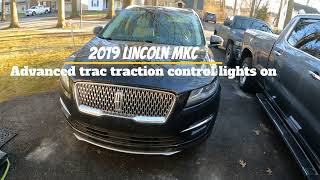
- Illumination of the AdvanceTrac, Hill Start Assist, or Stability Control warning lights. 🎬 Watch: Real-world symptoms of AdvanceTrac and Hill Assist failure
- ABS warning light is on.
- Check Engine Light may be on.
- Potential changes in power steering feel or effort.
- Brake pedal feels spongy or unresponsive.
- Wheels may lock up during hard braking.
- Replacing the Power Steering Control Module (PSCM) or the entire power steering rack. The U0415 code is logged in the PSCM, but it's reporting a problem with the *data it's receiving*, not necessarily a problem with itself.
- Unnecessarily replacing wheel speed sensors without first checking for TSBs, software updates, or battery voltage issues.
Most Likely Causes
- Temporary Glitch or Low Battery Voltage 🔴 High Probability → Shop Vehicle Battery Multiple TSBs (SSM 47910, SSM 48506, SSM 51099) confirm that low system voltage, especially during engine start, can inadvertently set this code. A critical recall (NHTSA 23V378000) for a faulty battery monitor sensor on all 2015-2019 MKCs can cause voltage instability and even underhood fires, making this a very likely root cause.
How to confirm: Test the battery's state of charge and the alternator's output. A healthy, fully charged battery should have ~12.6V with the engine off and ~13.7-14.7V with the engine running. Check for an open recall on your vehicle's VIN.
Typical fix: Fully charge the battery and clear all diagnostic trouble codes. If codes do not return, no further action is needed. Address the battery monitor sensor recall (NHTSA 23V378000) at a dealer to prevent future voltage issues and fire risk. The fix involves adding an in-line fuse to the sensor's power circuit.
Est. part cost: $0-$200 - ABS Module Software Requires Update 🔴 High Probability → Shop ABS Control Module Specifically for 2019 models without Lane Keep Assist, TSB SSM 48506 identifies a software issue as the direct cause, requiring a reprogram to fix low-voltage sensitivity. This was a common initial step before a hardware replacement was later recommended for some vehicles.
How to confirm: A Lincoln dealership or a qualified shop with Ford's diagnostic tool (IDS or FDRS) can check the current software calibration of the ABS module against the latest available version.
Typical fix: Reprogram the ABS control module to the latest software level using a Ford-specific scan tool.
Est. part cost: $0 - Faulty ABS Wheel Speed Sensor 🟡 Medium Probability → Shop ABS Wheel Speed Sensor A failing wheel speed sensor sends erratic signals to the ABS module. The ABS module then broadcasts this bad data over the network, which the PSCM correctly identifies as 'invalid,' triggering U0415. These sensors are exposed to the elements and can fail from corrosion or damage.
How to confirm: Use a scan tool that can read live data from the ABS module. Look for codes specific to a wheel speed sensor (e.g., C0031, C0034, etc.) or monitor the speed readings from all four wheels while driving to spot an erratic or missing signal. An oscilloscope can also be used to check the sensor's waveform.
Typical fix: Replace the faulty wheel speed sensor and clear all codes. The front sensor part number is often cited as BV6T-2C190-KB.
Est. part cost: $40-$120 - Failing ABS Control Module ⚪ Low Probability → Shop ABS Control Module For some 2019 models, TSB SSM 51099 explicitly identifies the ABS module itself as the root cause of low-voltage sensitivity, requiring replacement with an updated part (KJ7Z-2C219-C) to resolve the issue permanently.
How to confirm: This is a diagnosis of exclusion unless TSB SSM 51099 applies directly to your vehicle. If all software, battery, and sensor issues have been ruled out, and the wiring harness is confirmed to be intact, the module itself is the likely culprit.
Typical fix: Replace and program the ABS control module. This must be done by a professional, as the new module needs to be configured to the vehicle's VIN and options.
Est. part cost: $500-$1200
Rare But Worth Checking
- Damaged Wiring or Poor Connection: A damaged wire or corroded connector in the CAN bus harness between the ABS module and the PSCM can corrupt the signal. This is less common than other causes but should be checked if the issue persists, especially the main connector at the ABS module for moisture or corrosion.
Diagnosis Steps
- Perform a full vehicle scan with a high-quality OBD-II scanner capable of reading all modules (ABS, PSCM, BCM, etc.). Note all codes, paying special attention to U0420 in the ABS module or any wheel speed sensor codes.
- Check for open recalls, especially NHTSA campaign 23V378000 for the battery monitor sensor, which can cause voltage issues and fire risk.
- Test the battery and charging system. Ensure voltage is stable and within the correct range (12.6V+ engine off, 13.7-14.7V engine on).
- If the battery was low, charge it fully. Clear all DTCs from all modules.
- Perform a hard reset by disconnecting the negative battery terminal for 30 minutes to reset all modules.
- Drive the vehicle to see if the codes and symptoms return. Per TSB ASI-44737 and SSM 47910, if the codes do not return, no further repair is necessary.
- If codes return, contact a dealer to check for applicable TSBs. For 2019 models, specifically ask about SSM 48506 (reprogram) and SSM 51099 (module replacement).
- If no TSBs apply or the software is current, diagnose the root cause within the ABS system. Use a scan tool to monitor live data from all four wheel speed sensors while driving to check for dropouts or erratic readings.
- If a specific wheel speed sensor is suspect, inspect its wiring and tone ring for damage before replacing the sensor.
- As a final step, inspect the wiring harness and connectors between the ABS and PSCM modules for any signs of damage or corrosion, paying close attention to the main ABS module connector. 🎬 Watch: Troubleshooting the ABS module on a similar Ford platform
Parts You'll Likely Need
- ABS Wheel Speed Sensor
(OEM #BV6T-2C190-KB (Front))— A common source of the 'invalid data' that the ABS module sends out, leading to the U0415 code in the power steering module. Part number BV6T-2C190-KB is frequently cited for front sensors.
Trusted brands: Motorcraft, Bosch, Standard Motor Products (SMP), Duralast
OEM price range: $80-$150
Aftermarket price range: $40-$90 - ABS Control Module
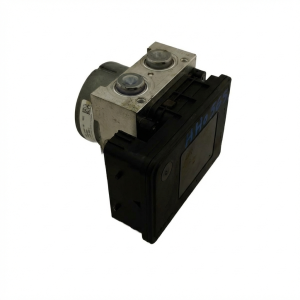
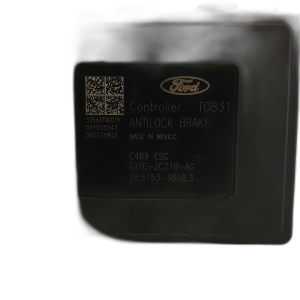
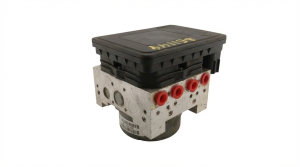
(OEM #GJ7Z-2C219-A, KJ7Z-2C219-C (2019 specific update))— This is the source of the invalid data. If software updates and sensor checks don't resolve the issue, the module itself may have an internal fault. TSB SSM 51099 specifically calls for replacement with part KJ7Z-2C219-C on some 2019 models.
Trusted brands: Motorcraft
OEM price range: $400-$700
Aftermarket price range: $400-$800 (Remanufactured)
Related Codes That Often Appear With This One
- U0420 — This code means 'Invalid Data Received From Power Steering Control Module' and is typically stored in the ABS module. U0415 and U0420 almost always appear together on the MKC, indicating a mutual communication problem between the two modules, often triggered by the same low-voltage event.
- C0031, C0034, C0037, C003A — These codes correspond to specific wheel speed sensor faults (Front Left, Front Right, Rear Left, Rear Right). If one of these is present, it is the likely root cause of the invalid data that triggers U0415.
Technical Service Bulletins (TSBs) & Recalls
- SSM 51099: Recommends ABS module replacement with part KJ7Z-2C219-C for certain 2019 MKCs to fix low-voltage sensitivity.
- ASI-44737: Advises that U0415 can sometimes be disregarded.
- SSM 48506: Recommends an ABS module reprogram for this code on certain 2019 MKC vehicles.
- SSM 48083: Mentions U0415 and U0420 may be inadvertently set.
- SSM 47910: Links U0415 and U0420 to low system voltage during startup and advises to charge battery and clear codes.
Platform-Specific Known Issues
- TSB SSM 51099: For some 2019 MKC vehicles, this bulletin supersedes previous advice. It states that low voltage during a start can set U041
Mechanic-Grade Diagnostic Values
- CAN Bus Network Resistance — expected: ~60 Ohms. Failure: A reading of ~120 Ohms indicates an open circuit or a missing termination resistor. A reading of ~40 Ohms indicates an extra termination resistor on the network. A reading of less than 40 Ohms could indicate a short in the harness.
- CAN Bus Voltage (Multimeter) — expected: CAN High: ~2.7V, CAN Low: ~2.2V (relative to ground). Failure: Significant deviation from these average voltages can indicate a bus issue. Note that a multimeter provides an average; an oscilloscope is needed for definitive analysis.
- CAN Bus Voltage (Oscilloscope) — expected: CAN High fluctuates between 2.5V and 3.5V. CAN Low fluctuates between 2.5V and 1.5V.. Failure: Distorted waveforms, lack of fluctuation, or voltages outside these ranges indicate noise, shorts, or opens on the bus.
Scan Tool Commands That Help
- Ford IDS/FDRS: Module Reprogramming > ABS — Used to update the ABS module's software to the latest calibration, which is the specific fix called for in TSB SSM 48506 for some 2019 models.
- Ford IDS/FDRS: Self Test > All Continuous Memory DTCs — This function should be run after any programming or repair to read all stored codes from every module on the network and then clear them to confirm the fix.
- Ford IDS/FDRS: Programmable Module Installation (PMI) — This is a required step when a new ABS control module is installed. It configures the new module to the vehicle's VIN and specific options using As-Built data.
Wiring & Ground Locations
- ABS Control Module — In the engine bay, located behind the battery, tucked between the brake booster and the driver's side strut tower.. This is the primary location to inspect for corroded connectors, damaged wiring, or loose ground connections that could corrupt data coming from the module.
- Wheel Speed Sensor Harnesses — Running from each wheel hub into the main vehicle harness. Pay special attention to the front harnesses where they pass the suspension and can be subject to rubbing from the tires.. A chafed or broken wire in a wheel speed sensor harness can introduce the 'invalid data' that the ABS module then broadcasts, causing the PSCM to log U0415. This can happen even if the sensor itself is good.
Real Owner Repair Stories
- Ford Edge Forum (2015 Ford Edge Sport AWD (similar platform)) — ABS, traction control, stability control, and park aid lights on.
❌ Tried (didn't work) Replacing the right rear ABS sensor based on a specific sensor code.
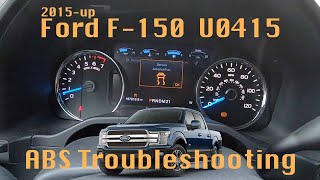
✅ What actually fixed it A continuity test revealed an open circuit (broken wire) in the signal wire for the right front ABS sensor. A new wire was soldered between the sensor connector and the ABS module connector, which permanently fixed the U0415 code. - YouTube video (2015-2020 Ford F150) (2015 Ford F-150 (different platform, same code logic)) — Instrument cluster lights up like a 'Christmas tree' with 'Hill Start Assist Not Available', 'Service AdvanceTrac', and ABS light. Code U0415 was present initially, with wheel speed sensor codes appearing later.
❌ Tried (didn't work) Initial code scan only showed U0415, which was not specific enough to pinpoint the cause.
✅ What actually fixed it A visual inspection of the front left wheel speed sensor harness revealed that the tire had rubbed through the wiring, exposing copper. Replacing the damaged wheel speed sensor and its integrated harness resolved all issues.
OEM Part Supersession History
KJ7Z-2C219-B→KJ7Z-2C219-C— Updated part to address low-voltage sensitivity issues as identified in TSB SSM 51099.
Heads up: For the specific issue described in the TSB, the older '-B' part should not be used as a replacement; the '-C' version contains the hardware fix.
Model Year Variations Within This Range
- 2019: Vehicles from this year, particularly those without Lane Keep Assist, are subject to specific TSBs (SSM 48506, SSM 51099) that point to a software or module hardware sensitivity to low voltage, with prescribed fixes of reprogramming or replacing the ABS module with an updated part (KJ7Z-2C219-C).
Helpful Videos
Used OEM Parts in Stock
New Aftermarket Parts Available


The information in this article is provided for general reference and educational purposes only. Vehicle specifications, procedures, and part compatibility can vary by production date, trim level, and region. Always consult your vehicle's factory service manual and verify part numbers before purchasing or performing repairs. Safety-critical components such as airbags, seat belts, and braking systems should be installed by a qualified professional.
- Lincoln MKC:
- 🧭 Diagnostic Flowchart
- 🎬 Helpful Videos
- 🛍️ Shop This Part
- What's Unique About the 2015-2019 Lincoln MKC
- Symptoms You May Notice
- Most Likely Causes
- Rare But Worth Checking
- Diagnosis Steps
- Parts You'll Likely Need
- Related Codes That Often Appear With This One
- Technical Service Bulletins (TSBs) & Recalls
- Platform-Specific Known Issues
- Mechanic-Grade Diagnostic Values
- Scan Tool Commands That Help
- Wiring & Ground Locations
- Real Owner Repair Stories
- OEM Part Supersession History
- Model Year Variations Within This Range
- 🎟️ Get 5% Off