

OBD-II Code U0420: Invalid Data Received From Power Steering Control Module
What U0420 means, why it triggers, and how to fix it comprehensively
- Code U0420 indicates invalid data from the electric power steering system, causing sudden, heavy steering that requires 5 to 10 times the normal physical effort to turn.
- Perform a battery load test and verify voltage stays above 10.5V during engine crank; weak batteries are the number one cause of false U0420 codes.
- On 2015-2022 Chevy Colorado and GMC Canyon trucks, U0420 frequently indicates a failed electric steering rack assembly requiring a $1,500 to $3,000 replacement.
- For 2017-2020 Mazdas and 2022+ Jeeps, U0420 is a known software bug fixed by a $150 to $300 dealer software update, not a hardware replacement.
- Stop DIY diagnosis and tow the vehicle to a professional shop if the battery and wiring test fine, as steering component replacement requires specialized programming and steering angle calibration.
What Does U0420 Mean?

Code U0420 indicates the vehicle's main computer received invalid data from the Power Steering Control Module (PSCM). The PSCM controls the electric power steering assist. Because safety systems like stability control rely on steering data, they disable themselves and trigger secondary warning lights when this code sets.
Technical definition: Invalid Data Received From Power Steering Control Module 'A'.
Can I Drive With U0420?
No — Do Not Drive. Driving is unsafe. The power assist fails without warning, making the steering wheel suddenly very heavy. This sudden increase in required steering effort—up to 10 times the normal force—is a severe safety risk that causes crashes mid-turn. Ignoring the code escalates simple wiring issues into complete steering rack failures costing over $2,500.
Common Causes

- Low Battery Voltage or Bad Grounds (Very Common) — Electric power steering requires massive electrical current. A weak battery, failing alternator, or corroded ground wire causes voltage drops that confuse the PSCM electronics, forcing it to send invalid data.
- Software Glitch or Outdated Programming (Very Common) — On many modern vehicles (especially Mazda and Jeep), a software bug causes other modules to misinterpret normal startup voltage fluctuations as invalid steering data. A dealer software update fixes this.
- Failing Electric Power Steering Rack Assembly (Common) — Modern vehicles integrate the control module into the steering rack. A mechanical or electrical failure inside the rack or its integrated sensors corrupts the data, requiring replacement of the entire assembly.
- Damaged Wiring or Corroded Connectors (Common) — Power steering wires and plugs sit under the car, exposed to water, salt, and debris. Corrosion or a loose pin distorts the signal, triggering the code.
- Failing Power Steering Control Module (PSCM) (Common) — The electronic module controlling the power steering suffers an internal failure from a bad computer chip or age, broadcasting garbled data across the vehicle's network.
- Water Intrusion into Network Modules (Less Common) — Water leaking into related network connectors (like the Electronic Brake Control Module on GM trucks) causes network-wide communication chaos, triggering U0420 even if the steering module is perfectly fine.
- CAN Bus Network Interference (Rare) — A shorted CAN bus wire, damaged termination resistor, or poorly installed aftermarket electronics (remote starters, lighting) corrupts data packets on the communication network.
Symptoms

- Power Steering Warning Light On — A steering wheel icon, often with an exclamation mark, illuminates on the dashboard.
- Heavy or Stiff Steering — The steering wheel becomes extremely difficult to turn, especially at low speeds, because the electric assist shuts off.
- Intermittent Loss of Power Steering — Steering feels normal but suddenly becomes heavy, sometimes returning to normal after restarting the vehicle.
- Service Stability Control / ESC Light On — The stability control system disables itself and illuminates its warning light because it lacks reliable steering angle data.
- Active Safety System Warnings — Systems like Lane Keep Assist and Automatic Emergency Braking disable and display warnings, as they rely on steering data.
- Invalid Data Frames on CAN Bus (scan-tool only — no driver-felt sign) — An advanced scan tool monitoring the CAN bus network shows error frames originating from the PSCM's network address.
Diagnostic Flowchart

Tap your situation to follow the diagnostic path that matches what you're seeing on this code.
Common Fixes & Costs
- Replacing a Weak Battery — Parts: $150-$350, Labor: $30-$60, ~0.5 hr book time (DIY)
- Updating Module Software — Parts: $0, Labor: $125-$200, ~1.0 hr book time (Professional)
- Repairing Damaged Wiring, Connectors, or Grounds — Parts: $10-$50, Labor: $50-$150, ~1.0 hr book time (Intermediate)
- Replacing the Entire Electric Power Steering Rack Assembly
— Parts: $800-$2,200, Labor: $400-$800, ~4.5 hr book time
(Professional)
Chevrolet Colorado / GMC Canyon (2015-2022): OEM 84670810, 84670795 (Alt: Cardone 22-1113 (Reman))
Ford Fusion (2013-2016): OEM HG9C3D080AM, KG9Z3504G (Alt: Motorcraft STE-899-RM, Detroit Axle 5101EB) - Replacing the Power Steering Control Module (PSCM)
— Parts: $400-$900, Labor: $150-$300, ~1.5 hr book time
(Professional)
Mazda 3 (2017-2018): OEM PSZK-18-881D (Alt: N/A)
DIY vs Professional
- Replacing a Weak Battery 🟢 Beginner
Tools: Basic hand tools (wrench set). - Repairing Damaged Wiring, Connectors, or Grounds 🟢 Beginner
Tools: Multimeter, contact cleaner, wire strippers, solder, heat shrink tubing, wire brush. - Updating Module Software 🟢 Beginner
Tools: Manufacturer-specific diagnostic interface and paid service portal subscription. - Replacing the PSCM or Steering Rack Assembly 🟢 Beginner
Tools: Full mechanic's tool set, vehicle lift, manufacturer-specific scan tool for programming.
Used vs. New Parts: Buying Guide
When a used part is worth it: A used electric power steering rack is a high-risk option reserved for older, low-value vehicles. A remanufactured rack from a reputable supplier offers a better balance of cost and reliability.
Donor-vehicle mileage cap: roughly under 60000 miles for the part to have meaningful remaining life.
Donor quality checklist:
- Verify the donor vehicle was not involved in a front-end collision.
- Match the OEM part number exactly.
- Avoid parts from 'Salt Belt' regions to minimize pre-existing corrosion.
Decision logic:
- If Vehicle is less than 7 years old or has high value → Buy a new OEM or high-quality remanufactured part to ensure longevity and safety.
- If Vehicle is over 10 years old and budget is the primary concern → A remanufactured part is strongly preferred over a risky used part.
- If The labor cost for replacement is very high → Invest in a new or remanufactured part to avoid paying for labor twice if a used part fails.
Warranty tradeoff: Used parts offer a 30-90 day warranty for the part only. Remanufactured units come with a 1-year to lifetime warranty. New OEM parts carry a 1-2 year warranty.
Worst-case if a used part fails: 600-1200
What Happens If You Wait — Timeline
- 0-1 month: Intermittent fault. The power steering warning light illuminates but turns off after restarting. Momentary loss of steering assist occurs rarely. (MPG impact: 0%% · Added cost: $0)
- 1-4 months: Frequent intermittent failure. The warning light stays on longer. Loss of assist becomes common during low-speed maneuvers. A whining sound may occur when turning. (MPG impact: 0-1%% · Added cost: $0-$50 (Cost of diagnostic scan))
- 4-8 months: Progressive failure. Steering feels consistently heavy. The underlying electrical issue causes stress and potential damage to the PSCM. (MPG impact: 1-3%% · Added cost: $400 - $900 (PSCM requires replacement due to electrical stress))
- 8+ months: Complete failure of the steering rack assembly or control module. Steering is entirely manual and dangerously heavy. The vehicle is unsafe to drive. (MPG impact: 2-5%% · Added cost: $1,500 - $3,000+ (Full steering rack replacement required))
Cost of Not Fixing It
- Immediate: Sudden loss of power steering creates a severe safety hazard. Active safety systems like Stability Control and Automatic Emergency Braking disable. (Added cost: N/A (Safety Risk))
- 1-6 months: Continued operation with an intermittent electrical fault causes cascading damage. A simple wiring issue eventually destroys the PSCM from electrical stress. (Added cost: $800 - $2500)
- 6+ months: Complete failure of the electric power steering rack assembly. Steering effort becomes dangerously high and unsustainable for normal driving. (Added cost: $1500 - $3000+)
Diagnosis Steps
- Read All Trouble Codes from All Modules
Use a professional scanner to read codes from the ABS, BCM, and PSCM. Note any communication codes (U-codes), manufacturer codes (C-codes), and sub-codes (e.g., U0420:68).
Tools: Professional OBD-II Scanner (Beginner) - Check Battery and Charging System
Perform a battery load test. Ensure voltage remains above 10.5V during cranking and the alternator outputs 13.5-14.5V while running. Weak batteries are the primary cause of false U0420 codes.
Tools: Multimeter, Battery Load Tester (Beginner) - Check for Manufacturer TSBs and Recalls
Search your vehicle's VIN and 'U0420' online for Technical Service Bulletins. Many vehicles require simple software fixes or qualify for free dealer repairs.
Tools: Internet Access (Beginner) - Inspect Wiring, Connectors, and Perform Wiggle Test
Inspect the PSCM and EBCM connectors for green/white corrosion or bent pins. With the ignition on, gently wiggle the wiring harness; if the warning light flickers, you have a loose connection.
Tools: Flashlight, Contact Cleaner Spray (Intermediate) - Pro Tip: Check PSCM Power and Ground
Back-probe the PSCM connector. Verify stable battery voltage (12.2V-14.8V) at the power supply pin. Check resistance between the ground pin and chassis; it must be less than 0.1 Ω.
Tools: Multimeter, Wiring Diagram (Advanced) - Analyze Live Data PIDs
View the live data stream from the PSCM. The 'Torque Sensor Input' should read near 0.0V with hands off the wheel and change smoothly when turning. Frozen or nonsensical values indicate a faulty module or sensor.
Tools: Advanced OBD-II Scanner (Advanced) - Pro Tip: Test CAN Bus Network Health
With the battery disconnected, measure resistance between Pin 6 and Pin 14 on the OBD-II port. A healthy network reads ~60 Ohms. 120 Ohms indicates an open circuit; 0 Ohms indicates a short.
Tools: Multimeter (Advanced)
When This Code Triggers (Freeze-Frame Conditions)
- Module Voltage: 10.5-12.0V (During engine crank/startup, when a weak battery causes a voltage dip.)
- Vehicle Speed: 0 mph (Immediately after ignition on, during module self-test and initialization.)
- System Status: Module Initialization (The fault logs within the first 5 seconds after the vehicle powers on.)
- RPM: 1500-2500 (During steady-state cruise when an intermittent wiring issue causes a lost or corrupted data packet.)
Related Codes
- U0131 — Means 'Lost Communication With Power Steering Control Module.' If present with U0420, it strongly suggests a complete power, ground, or network wiring failure to the PSCM.
- U0415 — Means 'Invalid Data Received From ABS Control Module.' Often appears with U0420 because stability systems depend on steering data. On GM trucks, check for EBCM connector corrosion first.
- C0545 — Means 'Steering Wheel Torque Sensor Circuit.' Points to a fault within the steering rack's integrated sensor, making a full rack replacement the required repair.
- U0422 — Means 'Invalid Data Received From Body Control Module (BCM).' Indicates a network-wide communication problem requiring CAN bus wiring diagnosis.
Climate & Environmental Factors
- Road Salt and Humidity: Vehicles in the 'Salt Belt' or coastal climates suffer accelerated corrosion on exposed steering rack connectors and ground points, leading to high resistance and signal degradation.
- Cold Weather: Cold temperatures reduce battery cranking amperage. On 2017-2020 Mazdas, this momentary voltage drop during a cold start triggers a software glitch that logs U0420:68 without an actual hardware fault.
How to Talk to a Mechanic About This Code
Say this: "I have a U0420 code with intermittent loss of power steering. Please start by checking for TSBs, testing the battery and charging system, and inspecting the PSCM wiring and connectors before recommending a steering rack replacement."
This directs the technician to follow a logical diagnostic path instead of jumping to the most expensive conclusion, potentially saving you from an unnecessary $2,500 repair.
Avoid saying:
- 'My steering feels weird, can you fix it?'
- 'The power steering light is on, just replace whatever is broken.'
- 'I think I need a new steering rack.'
Questions to ask before authorizing the repair:
- Did you find a relevant TSB for my vehicle?
- What were the results of the battery load test and charging system check?
- Did you find any corrosion or damage on the PSCM or related module connectors?
- If you are recommending a module or rack replacement, how did you rule out a wiring or software issue?
- Does the recommended repair require module programming or steering angle sensor calibration, and is that included in the quote?
Where to Take It: Dealer vs Independent vs Chain
- Dealer:
Necessary for software updates. A good second opinion if a complex network or programming issue is suspected.
Best for: Vehicles with known software-related TSBs (Mazda, Jeep)., Cars under warranty., Complex diagnostics where an independent shop has failed.
Downsides: Highest labor rates., Quick to replace an entire assembly rather than diagnose a component-level fault. (Typical cost: +50% vs. baseline) - Independent Shop:
Best starting point. A good independent shop solves 80% of U0420 causes (battery, wiring, grounds). Move to a dealer if a software flash is required.
Best for: Initial diagnosis on out-of-warranty vehicles., Common fixes like battery replacement, wiring repair, and checking grounds.
Downsides: Lacks expensive, manufacturer-specific tools for module programming., Diagnostic skill varies significantly. (Typical cost: +0% vs. baseline) - Chain Shop:
AVOID for diagnosis. Do not trust them to diagnose the root cause of a U0420 code due to high risk of unnecessary repairs.
Best for: Battery testing and replacement only.
Downsides: Technicians lack advanced diagnostic training for complex network codes., High pressure to upsell parts leads to expensive misdiagnoses. (Typical cost: -10% vs. baseline)
When to Walk Away From the Repair
If the estimated repair cost for a steering rack replacement exceeds 50% of your car's private-party value, seriously consider selling or trading it in.
- Car worth $12000, fix is $2500: Fix it. The repair cost is significant but well below the 50% threshold.
- Car worth $5000, fix is $2500: Borderline. This is exactly 50%. Get a second opinion and consider the car's overall condition before proceeding.
- Car worth $3000, fix is $2500: Walk away. The repair cost is over 80% of the car's value. It is not economically sensible to perform this repair.
What Scan Tool You Need for This Code
Minimum: A tool that reads codes from ALL vehicle modules (ABS, SRS, BCM) and displays live data PIDs from the Power Steering Control Module.
A $20 engine code reader cannot see U-codes stored in the ABS or Body Control Modules, nor can it view live steering angle data essential for diagnosis.
Budget: BlueDriver Pro (~$100) — Reads codes from all modules and displays live data for key PIDs like steering angle. The absolute minimum for DIY diagnosis.
Mid-range: Innova 5610 or Foxwell NT510 Elite (~$350) — Bidirectional tools that perform steering angle sensor calibration and offer in-depth, manufacturer-specific data.
Professional: Autel MaxiCOM MK808S or Launch X431 series (~$500-1200) — Provides full bidirectional control, including module programming and initialization required when replacing a PSCM or steering rack.
Rent vs buy: Buying a budget pick like the BlueDriver is a good investment. Auto parts store loaner tools are typically basic engine code readers incapable of diagnosing U0420.
How to Clear the Code After You Fix It
- Reconnect battery if disconnected for repair.
- Use a professional OBD-II scan tool to clear all codes from all modules.
- Perform a complete drive cycle to allow readiness monitors to run.
Drive cycle (~30 minutes): Start with a cold engine. Idle for 2-3 minutes with electrical loads on. Accelerate to 55 mph and hold steady for 5-10 minutes. Perform 15-20 minutes of mixed city driving with several stops. Allow the vehicle to cool completely.
Readiness monitors affected: Catalyst Monitor, EVAP System Monitor, Oxygen (O2) Sensor Monitor, All other emissions-related readiness monitors
Before emissions retest: drive at least 100 miles to fully set monitors.
Watch out for:
- Disconnecting the battery clears the code but resets all readiness monitors, guaranteeing an emissions test failure.
- The code returns immediately if the root cause is not properly repaired.
- The EVAP monitor requires specific fuel levels (1/4 to 3/4 full) and ambient temperatures to run its self-test.
Will This Fail Emissions / State Inspection?
Yes — this code typically fails an OBD-II emissions inspection.
- California: A U-code illuminating the MIL is an automatic failure. The vehicle cannot be tested until all required readiness monitors successfully complete their checks.
- New York: An active U0420 code with the check engine light on results in a failure. Readiness monitors must be set to pass.
- Texas: In emissions-testing counties, an active U0420 code triggering the check engine light causes an OBD inspection failure.
Most Commonly Affected Vehicles
- Chevrolet Colorado (2015-2022) — Widely known for internal failures of the electric power steering rack. GM Safety Recall #15595 covers 2015 models; later models exhibit identical failures without coverage. Repair costs exceed $2,500.
- GMC Canyon (2015-2022) — Suffers the exact same steering rack assembly failure as the Colorado and is included in GM Safety Recall #15595.
- Ford Fusion, Explorer, Flex (2011-2016) — Subject to multiple recalls (14S06, 15S18) and extended warranty program 15N01 for power steering failures stemming from faults within the steering gear itself.
- Mazda 3, 6, CX-5, CX-9 (2017-2020) — U0420:68 is caused by a software bug in the Forward Sensing Camera triggered by a weak battery. TSB 15-003/20 dictates a dealer software update, not hardware replacement.
- Chevrolet Malibu (2016-2018) — TSB 17-NA-190 notes this code appears harmlessly during remote starts. No repair is needed if no symptoms are present.
- Hyundai Elantra, Sonata (2011-2017) — Known for mechanical failure of the flexible steering coupler. While not a direct cause of U0420, this widespread issue precedes electrical faults.
- Jeep Grand Wagoneer / Wagoneer (2022-2025) — U0420 is almost exclusively a software issue. TSB 08-094-25 REV. A requires dealers to update module software and perform a 'reset-proxi-reset' procedure.
- Land Rover Range Rover Evoque, Discovery Sport (2012-2016) — TSB SSM71278 links U0420 to low battery voltage and high resistance on chassis ground points G1D122A/B, not a failed steering rack.
Manufacturer-Specific Notes
- General Motors (Chevrolet, GMC, Buick): TSB 17-NA-190 states U0420 sets harmlessly during remote starts on models like the Malibu. TSB PIT5499B points to water in the brake module connector as a cause on trucks.
- Ford: U0420 has manufacturer-specific meanings (e.g., U0420-00 means a rear lamp circuit fault). Use a scanner with Ford-specific definitions to avoid misdiagnosis.
- Mazda: U0420:68 is a software bug in the Forward Sensing Camera triggered by a weak battery during cranking. TSB 15-003/20 fixes this with a software update.
- Jeep: On 2022+ models, U0420 is a software issue requiring a dealer update and a 'Proxi Alignment' procedure with the wiTECH scan tool.
Real Owner Stories
2017 Mazda CX-5 at 60K miles - The Software Glitch
Multiple warning lights appeared after starting the car, including 'Service SCBS' and the power steering light. Steering felt normal.
Outcome: A Mazda dealer performed a software update on the FSC module per TSB 15-003/20. The $185 repair permanently resolved the codes.
Lesson: On modern Mazdas, U0420 is a known software bug triggered by a minor voltage drop at startup. Always check TSBs before replacing hardware.
2016 Chevy Colorado at 90K miles - The Expensive Fix
Intermittent loss of power steering assist and 'Service Stabilitrak' messages progressed until the steering remained permanently heavy.
Outcome: The code combination confirmed an internal failure of the electric power steering rack. The dealership replaced the entire assembly for $2,450.
Lesson: On GM trucks, U0420 accompanied by a torque sensor code (C0545) guarantees the steering rack is the culprit, requiring an expensive replacement.
2013 Ford Fusion at 110K miles - The Intermittent Nightmare
A 'Steering Fault Service Now' message appeared intermittently, followed by a complete loss of power steering and a friction noise when turning.
Outcome: The 'High Friction' code indicated a mechanical failure inside the steering gear causing the electrical fault. Replacing the electric power steering unit solved the problem.
Lesson: Intermittent electrical faults stem from progressing mechanical failures. Take mechanical codes seriously, even if clearing them provides a temporary fix.
2017 Chevy Colorado at 75K miles - The Car Wash Anomaly
Immediately after a drive-through car wash, the 'Service Stabilitrak' and power steering warning lights illuminated with code U0420.
Outcome: The issue resolved itself after drying. Water forced into the poorly sealed Electronic Brake Control Module (EBCM) connector caused the fault, a known issue per TSB PIT5499B.
Lesson: If faults appear immediately after a car wash or heavy rain, suspect water intrusion into an exposed connector. Allow the vehicle to dry and inspect seals.
How to Prevent This Code From Triggering
- Maintain Battery Health and Connections (Every 6 months) — Electric power steering is highly sensitive to voltage. Cleaning terminals and ensuring the battery passes a load test prevents voltage drops that trigger U0420.
- Protect Exposed Electrical Connectors (During under-vehicle service) — Applying dielectric grease to the rubber seals of steering rack connectors prevents water intrusion and corrosion, preserving the data signal.
- Perform Manufacturer Software Updates (During scheduled dealer service) — Manufacturers release software updates to fix bugs causing erroneous communication codes. On Mazda and Jeep vehicles, updates are the primary fix.
- Avoid Deep Puddles and High-Pressure Undercarriage Washing (Daily driving habit) — High-pressure water forces moisture into imperfectly sealed electrical connectors, causing shorts and corrosion.
Frequently Asked Questions
Is it safe to drive with code U0420?
No, driving is unsafe. The power assist shuts off unpredictably, making the wheel extremely hard to turn. This causes severe danger during turns or emergency maneuvers.
What are the most common misdiagnoses for U0420?
A common mistake is replacing the module that logged the code instead of finding the source of the bad data. For example, Mazdas often have a software glitch in the forward-facing camera, while GM trucks suffer from corroded brake module connectors. Always diagnose the entire network before replacing parts.
Will code U0420 go away on its own?
Intermittent issues temporarily turn the warning light off after restarting the car. However, the underlying electrical or mechanical problem remains. The code always returns until the root cause is repaired.
Can a weak battery really cause my power steering to fail?
Yes. Electric power steering systems are highly sensitive to voltage fluctuations. A weak battery provides inconsistent power during engine start, forcing the control module to shut down and trigger the U0420 code.
My Hyundai/Kia makes a clicking noise when I turn the wheel. Is this related to U0420?
That clicking indicates a failed flexible steering coupler inside the electric power steering motor, a known issue on Hyundai and Kia models. While mechanical, this failure causes excessive play and stress on the steering system. This stress eventually leads to electrical faults like U0420 if left unrepaired.
Why did my 'Service Stabilitrak' light come on with the steering light?
The Stabilitrak system requires accurate steering angle data to function. When the power steering module sends invalid data (U0420), Stabilitrak cannot trust the information. It shuts itself off as a safety measure and illuminates the warning light.
What's the difference between replacing the module versus the whole steering rack?
On older vehicles, the Power Steering Control Module (PSCM) is a separate, replaceable component. Modern vehicles integrate the module, sensors, and electric motor directly into the steering rack. If any internal component fails on an integrated system, you must replace the entire rack assembly.
Can a car wash cause a U0420 code?
Yes. High-pressure car washes force water into sensitive, poorly sealed electrical connectors. On GM trucks with exposed EBCM connectors (TSB #PIT5499B), this water intrusion causes shorts and communication codes like U0420.
What does the code U0420:68 mean on my Mazda?
U0420:68 is a manufacturer-specific sub-code indicating the Forward Sensing Camera (FSC) received an error signal from the power steering module. Mazda TSB 15-003/20 identifies this as a software glitch triggered by low battery voltage at startup. The fix requires a dealer software update, not hardware replacement.
Key Takeaways
- Code U0420 indicates invalid data from the electric power steering system, causing sudden, heavy steering that requires 5 to 10 times the normal physical effort to turn.
- Perform a battery load test and verify voltage stays above 10.5V during engine crank; weak batteries are the number one cause of false U0420 codes.
- On 2015-2022 Chevy Colorado and GMC Canyon trucks, U0420 frequently indicates a failed electric steering rack assembly requiring a $1,500 to $3,000 replacement.
- For 2017-2020 Mazdas and 2022+ Jeeps, U0420 is a known software bug fixed by a $150 to $300 dealer software update, not a hardware replacement.
- Stop DIY diagnosis and tow the vehicle to a professional shop if the battery and wiring test fine, as steering component replacement requires specialized programming and steering angle calibration.
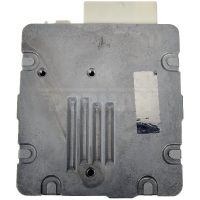
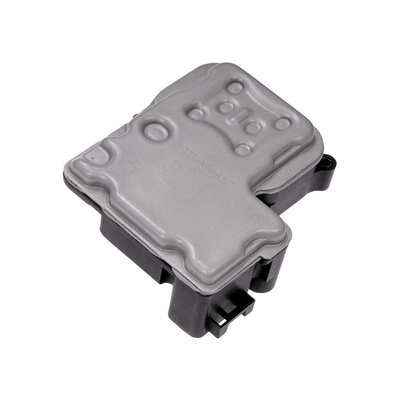
Shop the Parts Behind U0420
Below are the parts most often responsible for code U0420, ranked by how frequently each one is the actual culprit (per the diagnosis above). Tap any to see what we have for your vehicle.




The information in this article is provided for general reference and educational purposes only. Vehicle specifications, procedures, and part compatibility can vary by production date, trim level, and region. Always consult your vehicle's factory service manual and verify part numbers before purchasing or performing repairs. Safety-critical components such as airbags, seat belts, and braking systems should be installed by a qualified professional.
- 🧭 Diagnostic Flowchart
- 🛍️ Shop This Part
- What Does U0420 Mean?
- Can I Drive With U0420?
- Common Causes
- Symptoms
- Common Fixes & Costs
- DIY vs Professional
- Used vs. New Parts: Buying Guide
- What Happens If You Wait — Timeline
- Cost of Not Fixing It
- Diagnosis Steps
- When This Code Triggers (Freeze-Frame Conditions)
- Related Codes
- Climate & Environmental Factors
- How to Talk to a Mechanic About This Code
- Where to Take It: Dealer vs Independent vs Chain
- When to Walk Away From the Repair
- What Scan Tool You Need for This Code
- How to Clear the Code After You Fix It
- Will This Fail Emissions / State Inspection?
- Most Commonly Affected Vehicles
- Manufacturer-Specific Notes
- Real Owner Stories
- 2017 Mazda CX-5 at 60K miles - The Software Glitch
- 2016 Chevy Colorado at 90K miles - The Expensive Fix
- 2013 Ford Fusion at 110K miles - The Intermittent Nightmare
- 2017 Chevy Colorado at 75K miles - The Car Wash Anomaly
- How to Prevent This Code From Triggering
- Frequently Asked Questions
- Is it safe to drive with code U0420?
- What are the most common misdiagnoses for U0420?
- Will code U0420 go away on its own?
- Can a weak battery really cause my power steering to fail?
- My Hyundai/Kia makes a clicking noise when I turn the wheel. Is this related to U0420?
- Why did my 'Service Stabilitrak' light come on with the steering light?
- What's the difference between replacing the module versus the whole steering rack?
- Can a car wash cause a U0420 code?
- What does the code U0420:68 mean on my Mazda?
- Key Takeaways
- 🎟️ Get 5% Off