

U0420 on 2017 Mazda MAZDA6: Invalid Data from Power Steering Explained
On a 2017 Mazda6, code U0420 is almost always caused by a software glitch detailed in Mazda TSB #15-003-20-3737a. A weak battery often triggers the fault during startup, causing the Forward Sensing Camera (FSC) to disable safety systems. The fix is typically a software update at a dealership, not an expensive part replacement.
- U0420 on your 2017 Mazda6 is most likely a software issue, not a failed part.
- Before going to the shop, have your 12V battery professionally load-tested. A weak battery is the number one trigger for this code.
- The official fix is a software update for the Forward Sensing Camera (FSC) as described in Mazda TSB #15-003-20-3737a.
- This is not a DIY repair; it requires dealer-level tools to update the module software.
- Do not replace the power steering rack or camera module unless the software update and a new battery fail to resolve the issue.
What's Unique About the 2017-2017 Mazda MAZDA6
For this generation of Mazda6 and its platform mates (like the CX-5 and Mazda3), the U0420 code is very specifically linked to a known software sensitivity. Mazda issued Technical Service Bulletin #15-003-20-3737a that directly addresses this issue, noting that a temporary voltage drop from an aging battery during engine cranking is enough to cause the EPS control module to fail its initial learning for the steering center position. The Forward Sensing Camera's software then incorrectly flags this temporary startup hiccup as a persistent problem, disabling multiple advanced driver-assistance systems (ADAS) and illuminating warning lights.
Diagnostic Flowchart
Tap your situation to follow the diagnostic path that matches what you're seeing on this vehicle.
Symptoms You May Notice
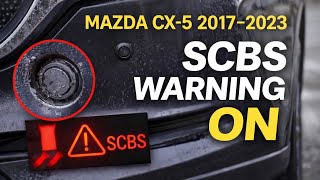
- SBS/SCBS (Smart Brake Support/Smart City Brake Support) amber warning light is on.
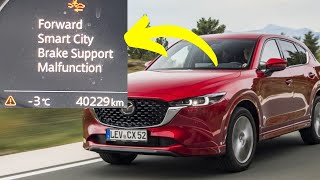
- Warning messages in the instrument cluster, such as 'Front camera sensor system malfunction 🎬 Watch: A visual guide to this common camera sensor warning.', 'Forward Smart City Brake Support Malfunction 🎬 Watch: How to fix the Smart City Brake Support error.', or 'Driver attention alert system malfunction'.
- Other warning lights, such as for the traction/stability control system (TCS/DSC), may illuminate.
- In some cases, the steering may feel heavy or inconsistent if the fault is intermittent.
- Cruise control may be disabled.
- Replacing the Forward Sensing Camera (FSC). One owner on a Mazda forum was quoted $1,200 for this repair, which would not have fixed the software issue.
- Replacing the steering rack or EPS module before performing the software update.
- Replacing the FSC with a used unit. As one owner on the Mazdas247 forum discovered, a used camera will still produce an error until it is properly programmed to the vehicle by a dealer.
Most Likely Causes
- Control Module Software Anomaly 🔴 High Probability A specific TSB (#15-003-20-3737a) was issued by Mazda for this exact problem, where the Forward Sensing Camera (FSC) software is too sensitive to startup voltage drops causing an EPS initialization error.
How to confirm: A Mazda dealer or qualified shop with access to the Mazda Modular Diagnostic System (M-MDS) can check the current software version of the FSC and see if the update from the TSB is applicable. The stored code will specifically be U0420:68 in the FSC module.
Typical fix: Reprogramming the Forward Sensing Camera (FSC) with updated software (IDS version 108.04 or later) provided by Mazda. This is not a part replacement. The warranty labor time for this procedure is 0.3 hours.
Est. part cost: $0 - Weak or Failing 12V Battery 🔴 High Probability → Shop Vehicle Battery The documented software issue is explicitly triggered by low voltage during engine cranking. Modern vehicles with many electronic modules are highly sensitive to stable battery voltage, and the owner's manual has specific instructions for jump-starting to avoid electrical issues.
How to confirm: Perform a professional load test on the battery. A simple voltage check is not sufficient. Many auto parts stores can do this for free. The battery should be able to maintain voltage above 10.5V during a heavy load.
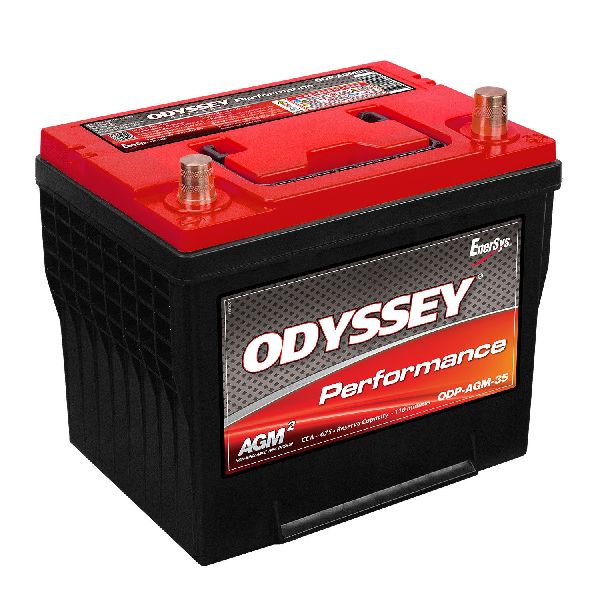
Typical fix: Replace the 12-volt battery. An AGM (Absorbed Glass Mat) battery of Group Size 35 is the commonly recommended replacement for its ability to handle the high electrical demands of modern cars.
Est. part cost: $150-$350 - Faulty Electric Power Steering (EPS) Control Module ⚪ Low Probability → Shop Power Steering Control Module While less common than the software glitch, the module that sends the data can fail internally. However, this should only be considered after the TSB and battery have been addressed.
How to confirm: After ruling out software and battery issues, a technician would diagnose the EPS module directly using a high-level scan tool to monitor its data output on the CAN bus and check for DTCs stored within the EPS module itself.
Typical fix: Replace the entire steering rack assembly, as the EPS module is integrated into it. This requires programming and calibration.
Est. part cost: $1000-$1800
Rare But Worth Checking
- Wiring or Connector Issue: Corrosion or damage to the wiring harness or connectors for the EPS module or FSC can corrupt the signal. This is worth checking if the vehicle has a history of flood damage, collision repair, or rodent infestation.
- Aftermarket Device Interference: A Mazda TSB (MT-004/18) warns that aftermarket devices plugged into the OBD-II port (like insurance trackers or some diagnostic dongles) can disrupt CAN bus communication and cause various 'U' codes, including U0420. This should be one of the first things checked.
Diagnosis Steps
- Disconnect any aftermarket devices (insurance trackers, etc.) from the OBD-II port, as per TSB MT-004/18.
- Check the health of the 12V battery using a professional load tester. Replace if weak or failing. A Group 35 AGM battery is recommended.
- If the battery is good, have a Mazda dealership or qualified independent shop connect the Mazda Modular Diagnostic System (M-MDS).
- Check for stored trouble codes, paying close attention to sub-codes like U0420:68 stored in the FSC module.
- Verify if TSB #15-003-20-3737a applies to your vehicle's VIN and if the FSC software update has been performed.
- If the update is needed, have the technician reprogram the Forward Sensing Camera (FSC) following the TSB procedure using IDS software 108.04 or later.
- If the code persists after the software update, inspect the wiring and connectors between the FSC and the EPS module for any signs of damage or corrosion.
- As a final step, if all else fails, perform advanced diagnostics on the Electric Power Steering (EPS) control module itself.
Parts You'll Likely Need
- Vehicle Battery (Group Size 35, AGM Recommended 🎬 See this step-by-step walkthrough for replacing your Mazda battery.) — A weak battery is the most common trigger for the software fault that causes this code on startup. An AGM battery is better suited for the high electrical demands of the vehicle.
Trusted brands: Panasonic (OEM), Interstate (Costco), Duralast, Optima
OEM price range: $250-$400
Aftermarket price range: $150-$350
Related Codes That Often Appear With This One
- U0420:68 — This is the specific sub-code identified in the Mazda TSB, indicating the FSC received an 'Event Information' error signal from the EPS module. A professional scan tool is needed to see this level of detail.
- U0131 — This code means 'Lost Communication With Power Steering Control Module' and can appear with U0420 if the communication breakdown is more severe than just invalid data.
- C0051 — This code relates to the Steering Wheel Angle Sensor. Since the EPS module relies on this data to determine the steering center position, a fault in the EPS communication can cause other modules like the ABS/DSC to also flag an issue with the steering angle signal.
Technical Service Bulletins (TSBs) & Recalls
- 15-003-20-3737a: SBS/SCBS WARNING LIGHT ON WITH DTC U0420:68.
- MT-004/18: ELECTRICAL CONCERNS DUE TO AFTERMARKET ACCESSORIES.
Platform-Specific Known Issues
- Mazda Technical Service Bulletin 15-003-20-3737a was issued specifically for the 2017-2020 Mazda6, 2017-2018 Mazda3, 2017-2020 CX-5, and 2018-2020 CX-9 to address DTC U0420:68. It states the issue is caused by a voltage drop during cranking and is resolved by reprogramming the Forward Sensing Camera (FSC).
Mechanic-Grade Diagnostic Values
- CAN Bus Termination Resistance — expected: ~60 ohms across CAN_H and CAN_L pins. Failure: A reading of ~120 ohms indicates a missing terminating resistor; an open or short indicates a wiring fault.
- CAN Bus Idle Voltage — expected: CAN_H and CAN_L lines should both be approximately 2.5V. Failure: Significant deviation from 2.5V, or shorts to ground/power, indicate a bus wiring fault.
- EPS Control Module Supply Voltage — expected: 12.2 V to 14.8 V with ignition on. Failure: Voltage below 12.2V, especially during cranking, can trigger the fault.
- EPS Control Module Ground Resistance — expected: Less than 0.1 Ω. Failure: Higher resistance indicates a poor ground connection, which can cause intermittent communication issues.
- Battery Voltage During Cranking — expected: Should not drop below 10.5V. Failure: A drop below 10.5V indicates a weak battery and is a known trigger for the TSB-related fault.
Hidden / Shadow Codes Worth Checking
- U0420:68: Error signal received from electric power steering (EPS) control module. This is the specific 'Event Information' code addressed by TSB 15-003-20-3737a and can be logged by the Forward Sensing Camera (FSC), Adaptive Front Lighting System (AFS), or the Electronically Controlled Brake Unit. (see via Mazda M-MDS or equivalent professional scan tool capable of reading manufacturer-specific sub-codes.)
- U0420:86: Signal Invalid - Checksum Error. This code is logged by the Vehicle Control Module (VCM) when it receives data from the EPS module that fails a checksum verification, indicating corrupted data. (see via Mazda M-MDS or equivalent professional scan tool.)
- U0420:00: No Subtype Information / Communication Error. Logged by the Vehicle Control Module (V/C-Module) when there's a communication error with the EPS control module, leading to the disabling of systems like Mazda Radar Cruise Control (MRCC). (see via Mazda M-MDS or equivalent professional scan tool.)
Scan Tool Commands That Help
- Mazda M-MDS: Module Reprogramming > FSC — This is the primary function used to perform the software update on the Forward Sensing Camera as prescribed by TSB 15-003-20-3737a to fix the U0420:68 fault.
- Mazda M-MDS: FSC Aiming (Dynamic or Static) — This calibration procedure is mandatory after replacing the Forward Sensing Camera or the vehicle's windshield to ensure the camera is correctly aligned with the road. For 2017 models, a dynamic aiming procedure (test drive) is recommended for its simplicity.
- Mazda M-MDS: Clear DTCs — Used after a repair procedure (like reprogramming) to clear stored fault codes from all modules before verifying the fix.
- Mazda M-MDS: DTC Inspection (On-Demand Self-Test) — To check for current, pending, and on-demand DTCs in specific modules like the EPS, FSC, and VCM to see which module is logging the fault and if other codes are present.
Wiring & Ground Locations
- EPS Module Connector — The EPS control module is typically located on the steering column or integrated into the steering rack itself, requiring removal of lower dash panels for access.. This is the primary connector for the module sending the 'invalid data'. Corrosion or a poor connection here can directly cause the U0420 code.
- FSC Connector — Located at the Forward Sensing Camera, mounted to the windshield near the rearview mirror, behind a plastic cover.. This is the connector for the module that most commonly *receives* the invalid data and logs the U0420:68 code. A poor connection could mimic a data fault.
- Chassis Ground Points — Multiple ground points exist in the engine bay and chassis. Key locations include a point near the passenger side motor mount, grounds on the transmission, and a multi-ground point on the frame under the driver's side headlight.. A poor or corroded ground connection for the EPS module can cause fluctuating reference voltage and electrical noise, leading to the transmission of invalid data signals.
- Jump-Start Ground Point — The owner's manual specifies a dedicated ground point on the chassis for jump-starting, away from the battery itself.. Mazda's explicit instruction to use a remote ground point highlights the sensitivity of the vehicle's electrical system to voltage fluctuations, which are the root cause of the TSB-related U0420 fault.
OEM Part Supersession History
GHP9-67-XCXA→Multiple revisions exist, such as B61L-67-XCXB, B61L-67-XCXE, and GSH7-67-XCXV, which itself replaces over ten previous part numbers.— Updates to address hardware issues like overheating and software compatibility.
Heads up: Using a used camera, even with a matching part number, is not a simple swap. The module is often VIN-locked and requires dealer-level programming (FSC Aiming) to function with the vehicle's safety systems.
Helpful Videos



We Have This Part in Stock


The information in this article is provided for general reference and educational purposes only. Vehicle specifications, procedures, and part compatibility can vary by production date, trim level, and region. Always consult your vehicle's factory service manual and verify part numbers before purchasing or performing repairs. Safety-critical components such as airbags, seat belts, and braking systems should be installed by a qualified professional.
- Mazda MAZDA6:
- 🧭 Diagnostic Flowchart
- 🎬 Helpful Videos
- 🛍️ Shop This Part
- What's Unique About the 2017-2017 Mazda MAZDA6
- Symptoms You May Notice
- Most Likely Causes
- Rare But Worth Checking
- Diagnosis Steps
- Parts You'll Likely Need
- Related Codes That Often Appear With This One
- Technical Service Bulletins (TSBs) & Recalls
- Platform-Specific Known Issues
- Mechanic-Grade Diagnostic Values
- Hidden / Shadow Codes Worth Checking
- Scan Tool Commands That Help
- Wiring & Ground Locations
- OEM Part Supersession History
- 🎟️ Get 5% Off