

U0422 on 2017-2018 Buick LaCrosse: Invalid Data from BCM Explained (TSB 16-NA-407)
On this LaCrosse, code U0422 is often a harmless communication glitch that happens at startup. Per GM Technical Service Bulletin #16-NA-407, this code should be ignored unless it is currently active or appears with codes U1534 or U1538. No parts or repairs are typically needed.
- This code is specifically addressed by GM in TSB #16-NA-407 and is often not a sign of a problem.
- Before any repair, check if the code is 'History' or 'Active'. If it's a history code and alone, it should be cleared and ignored.
- Do not replace the BCM or CCM unless a thorough diagnosis confirms a hardware failure.
- The presence of codes U1534 or U1538 alongside U0422 indicates a real problem that needs diagnosis.
- Proper diagnosis requires a scan tool that can read GM-specific codes and module data, including the history/active status.
What's Unique About the 2017-2018 Buick LACROSSE
The 2017-2018 LaCrosse is built on GM's P2XX/E2XX platform, which uses a complex communication network between its many computers. GM issued TSB #16-NA-407 to address a specific scenario on this platform where normal, high-traffic conditions during startup can cause this code to be set without any actual part failure. The bulletin explicitly advises technicians to ignore the code if it's just a stored 'history' code and not accompanied by other specific BCM faults (U1534, U1538), which is unique guidance not applicable to most other vehicles.
Diagnostic Flowchart
Tap your situation to follow the diagnostic path that matches what you're seeing on this vehicle.
Symptoms You May Notice
- Most often, no symptoms at all.
- Check Engine Light or other warning message on the instrument cluster.
- If a true fault exists, potential issues with body electronics like interior/exterior lights, power locks, or windows.
- In rare cases where the fault is real and not the TSB-described glitch, the car may not start or may enter a 'limp mode'.
- Replacing the Chassis Control Module (CCM). The CCM is the one reporting the problem, not the cause of it.
- Replacing the Body Control Module (BCM) without checking if the code is active or if other codes (U1534, U1538) are present. The TSB clearly states to ignore the code in many cases.
- Chasing wiring issues when the code is only in 'History' status and no other codes are present.
Most Likely Causes
- Startup Communication Timing Issue (Per TSB 16-NA-407) 🔴 High Probability As documented in TSB #16-NA-407, high bus traffic during startup, combined with PEPS module arbitration, can cause a temporary data availability issue for the door switch status between the BCM and CCM.
How to confirm: Use a scan tool. If U0422 is a 'history' code and not 'active' or 'current', and codes U1534 or U1538 are not present in the BCM, this is the confirmed cause.
Typical fix: Clear the code. No parts replacement is necessary. The TSB advises to ignore the code in this scenario.
Est. part cost: $0 - Body Control Module (BCM) Software Issue 🟡 Medium Probability → Shop Body Control Module Complex modules can have software glitches that are resolved with updates. Other TSBs for similar platforms link U0422 to software anomalies.
How to confirm: A dealer or qualified shop checks the BCM software calibration version against the latest version available from GM's TIS2Web service.
Typical fix: Re-flash the BCM with updated software. This requires specialized tools.
Est. part cost: $0 - Faulty Body Control Module (BCM) ⚪ Low Probability → Shop Body Control Module
How to confirm: This is a last resort after ruling out software and wiring. If the code is active, accompanied by U1534/U1538, and software/wiring is confirmed good, the BCM may be at fault.
Typical fix: Replace and program the Body Control Module. This must be programmed with the vehicle's VIN.
Est. part cost: $250-$500 - Wiring or Connection Issue ⚪ Low Probability Vibrations and moisture can affect any vehicle's wiring over time.
How to confirm: Visually inspect and test the CAN bus wiring and connectors between the BCM and CCM for damage, corrosion, or loose pins. This includes checking for good ground connections.
Typical fix: Repair the damaged wiring or clean/replace the affected connector. Applying dielectric grease can prevent future corrosion.
Est. part cost: $5-$50
Rare But Worth Checking
- Low Battery Voltage: → Shop Vehicle Battery A weak or failing battery can cause unpredictable communication errors between modules during startup. Always ensure the battery and charging system are healthy before diagnosing network codes, as unstable voltage can scramble module output.
- Faulty Chassis Control Module (CCM): → Shop Body Control Module It's less likely, but the module setting the code could itself be faulty, misinterpreting good data from the BCM. This is very rare and should only be considered after all other possibilities are exhausted.
Diagnosis Steps
- Connect a professional-grade scan tool capable of reading GM-specific codes and data, including history status.
- Check if the code U0422 is 'Active'/'Current' or 'History'.
- Scan all modules for other DTCs, specifically looking for U1534 or U1538 in the BCM.
- If U0422 is a 'History' code and no other relevant codes are present, clear the code and do not proceed further. This is the normal condition described in TSB #16-NA-407.
- If the code is 'Active' or present with U1534/U1538, proceed with diagnosis.
- Test the vehicle's battery and charging system to rule out low voltage as a cause. A resting voltage below 12.4V or an unstable alternator output can cause network issues.
- Check for available software updates for the Body Control Module (BCM) and Chassis Control Module (CCM) using a dealer tool or equivalent.
- Inspect the wiring and connectors for the BCM and CCM. Pay close attention to the CAN bus wiring for any signs of corrosion, damage, or loose connections. Check for solid ground connections.
- If software is current and wiring is intact, further diagnostics on the CAN bus network may be needed to isolate a faulty module (BCM or CCM).
Parts You'll Likely Need
- No Parts Needed — Per TSB #16-NA-407, this code is frequently a benign software anomaly that requires no parts for repair.
OEM price range: $0
Aftermarket price range: $0 - Body Control Module (BCM)
(OEM #13599318 (example, VIN specific))— If the code is active and diagnosis confirms a hardware failure, the BCM is the most likely component to have failed, as it is the source of the 'invalid data'.
Trusted brands: ACDelco (Genuine GM)
OEM price range: $250-$500
Aftermarket price range: $150-$350
Related Codes That Often Appear With This One
- U1534 — TSB #16-NA-407 explicitly states that U0422 may be set along with this BCM fault code. Its presence indicates a more legitimate issue that should be diagnosed.
- U1538 — Also mentioned in TSB #16-NA-407 as a companion code. If U0422 appears with U1538, it warrants a full diagnosis and should not be ignored.
Technical Service Bulletins (TSBs) & Recalls
- 16-NA-407: Information on Chassis Control Module (CCM) Receives Invalid Data and Sets DTC U0422.
- 17-NA-390: Mentions U0422 setting in the Power Steering Control Module on 2018 LaCrosse, related to other DTCs.
- 19-NA-202: Shows U0422 can be set on the related Malibu platform due to a software anomaly in the electronic brake control module.
Platform-Specific Known Issues
- GM Technical Service Bulletin #16-NA-407 directly addresses this code on this vehicle. It explains that high network traffic on the communication bus during startup can cause the BCM to delay sending a 'door open switch' status, prompting the Chassis Control Module to log U0422. The bulletin clarifies this is due to 'PEPS module arbitration' leading to the door switch 'virtual device availability (VDA)' being set to unavailable. The official fix is to ignore the code unless it is active or accompanied by BCM faults U1534 or U1538.
Mechanic-Grade Diagnostic Values
- CAN Bus Resistance — expected: Approximately 60 Ohms between CAN High and CAN Low pins 🎬 Watch: How to troubleshoot a total CAN bus communication breakdown at the DLC (with battery disconnected).. Failure: A reading of 120 Ohms indicates a missing termination resistor or a break in one of the CAN lines. A reading near 0 Ohms indicates a short between the CAN High and Low wires.
- CAN High Voltage (Key On) — expected: Fluctuates between 2.5V and 3.5V (average ~2.7V on a multimeter).. Failure: Voltage stuck high, low, or at 0V indicates a short to power, ground, or an open circuit.
- CAN Low Voltage (Key On) — expected: Fluctuates between 2.5V and 1.5V (average ~2.2V on a multimeter).. Failure: Voltage stuck high, low, or at 0V indicates a short to power, ground, or an open circuit.
- Battery Voltage (Key On, Engine Off) — expected: Greater than 12.4V.. Failure: Voltage below 12.4V may indicate a weak battery, which can cause random communication codes.
Hidden / Shadow Codes Worth Checking
- U0422-71: Indicates 'Invalid Data Received - Actuator Stuck'. This specific symptom byte points away from a simple communication glitch and suggests the BCM is receiving invalid data related to a physical component, like a door lock or HVAC blend door actuator, that it controls. GM bulletin PIT5569B advises that when a '-71' code is present, the root cause is often an input to the sending module (like a faulty wheel speed sensor sending bad data to the EBCM), not the receiving module itself. (see via A professional scan tool like the GM GDS2 is required to view symptom bytes.)
Scan Tool Commands That Help
- GM GDS2: Module Diagnostics > BCM > Control Functions — This menu allows a technician to perform bidirectional tests, such as commanding door locks, windows, and lights to activate. If a U0422-71 code is present, a technician can use these commands to test the specific actuators controlled by the BCM to see which one is not responding, helping to isolate the fault.
- GM GDS2: Vehicle DTC Information > DTC Display — This is the primary function to see all codes in all modules. It's critical for seeing if U0422 is a 'History' code (per TSB 16-NA-407) or if it's accompanied by other codes in the BCM or other modules that would point to a more serious fault.
- GM GDS2: Configuration/Reset Functions > BCM Programming — This is used after replacing the BCM. The new module must be programmed to the vehicle's VIN and specific options before it will function correctly.
Wiring & Ground Locations
- Body Control Module (BCM) — On some similar GM platforms, the BCM is located in the center console, accessible by removing the passenger side lower trim panel. It typically has multiple large, color-coded connectors.. This is the module sending the 'invalid data'. While often not the root cause, its connectors and ground are primary points of inspection if a true wiring fault is suspected.
- Chassis Control Module (CCM) — The Chassis Control Module is a distinct part from the BCM, often located elsewhere in the vehicle. On the 2017 LaCrosse, it is listed as a separate component in the brake system category.. This is the module that *sets* the U0422 code after receiving invalid data from the BCM. A fault at its connector could theoretically cause it to misinterpret a valid signal.
- Ground G218 — On many GM vehicles, G218 is a common ground point located at the base of the driver-side A-pillar, behind the kick panel.. GM service bulletin 18-NA-355 (for other models) identifies a poor connection at G218 as a potential cause for various communication codes. A high-resistance ground here can cause unpredictable module behavior.
- Serial Data Gateway Module (SDGM) — On similar GM vehicles like the Silverado, the SDGM is located under the driver's side of the dashboard.. While the LaCrosse TSB points to a timing issue, on other GM vehicles of the same era, U0422 is frequently caused by a faulty SDGM or its connectors (X1, X2). The SDGM manages traffic between different CAN buses, and a fault there can corrupt data from the BCM.
Real Owner Repair Stories
- YouTube video regarding HP Tuners software (Chevrolet Camaro (similar GM CAN architecture)) — U0422 code appeared after using tuning software.
❌ Tried (didn't work) Checking for wiring faults or bad modules, as the car was new and otherwise functioning perfectly.
✅ What actually fixed it The issue was a corrupted configuration file within the HP Tuners VCM Suite software, caused by connecting to multiple different vehicles. The fix was to completely uninstall the software from the PC, manually delete the HP Tuners folder from 'My Documents' to clear cached files, and then reinstall the software.
OEM Part Supersession History
13509768, 13524297, 13524298, 13599317→13599318— Part has been updated by GM over time. These are all part numbers for the Serial Data Gateway Module (SDGM), not the BCM.
Heads up: This part requires programming and/or special setup procedures after installation to ensure proper operation in the vehicle.
Helpful Videos

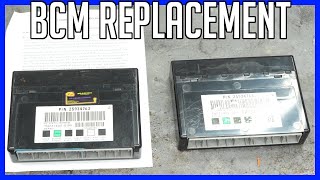
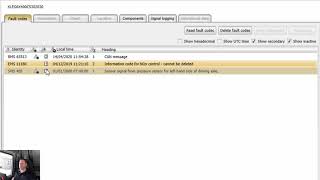
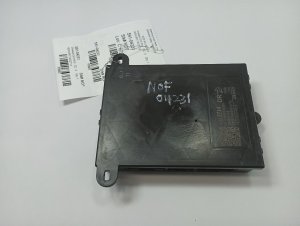
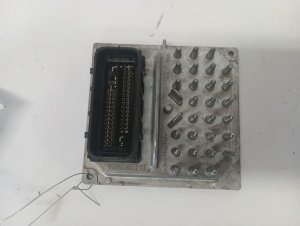
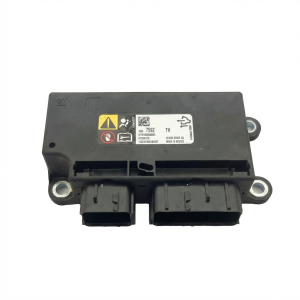
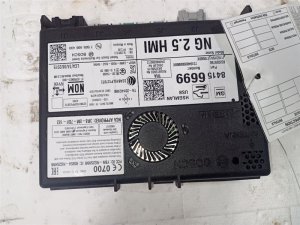
We Have This Part in Stock
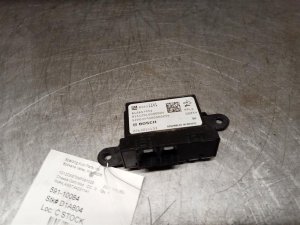
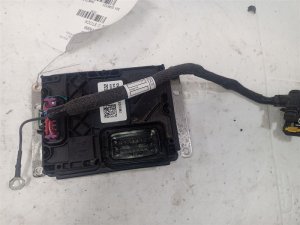

The information in this article is provided for general reference and educational purposes only. Vehicle specifications, procedures, and part compatibility can vary by production date, trim level, and region. Always consult your vehicle's factory service manual and verify part numbers before purchasing or performing repairs. Safety-critical components such as airbags, seat belts, and braking systems should be installed by a qualified professional.
- Buick LACROSSE:
- 🧭 Diagnostic Flowchart
- 🎬 Helpful Videos
- 🛍️ Shop This Part
- What's Unique About the 2017-2018 Buick LACROSSE
- Symptoms You May Notice
- Most Likely Causes
- Rare But Worth Checking
- Diagnosis Steps
- Parts You'll Likely Need
- Related Codes That Often Appear With This One
- Technical Service Bulletins (TSBs) & Recalls
- Platform-Specific Known Issues
- Mechanic-Grade Diagnostic Values
- Hidden / Shadow Codes Worth Checking
- Scan Tool Commands That Help
- Wiring & Ground Locations
- Real Owner Repair Stories
- OEM Part Supersession History
- 🎟️ Get 5% Off