

U0422 on 2019-2021 Chevrolet Blazer: Invalid BCM Data & Adaptive Cruise Fixes
This code means the Electronic Brake Control Module (EBCM) received invalid data from the Body Control Module (BCM), often affecting the Adaptive Cruise Control. The cause is frequently a faulty front seatbelt buckle sensor sending incorrect status data, a software issue, or a poor connection, not a failed module. A dealer scan to check seatbelt status data and for software updates is the most common fix.
- U0422 on your Blazer with an adaptive cruise warning is most likely caused by a faulty front seatbelt buckle sensor, not the cruise control system itself.
- Do not replace any expensive modules (BCM, EBCM) until a technician has used a proper scan tool to check the seatbelt status data and searched for software updates.
- A trip to a dealer or a qualified shop is necessary to perform the specific diagnostics and potential software updates required to fix the issue permanently.
- Always check for simple fixes first, like ensuring the battery is fully charged and its terminals are clean and tight, and also check for known problematic ground locations.
What's Unique About the 2019-2021 Chevrolet BLAZER
On modern GM platforms like the Blazer, U-codes such as U0422 are often network or software-related rather than indicating a hard part failure. The data from the BCM is routed through a central hub called the Serial Data Gateway Module (SDGM). A logic glitch or a poor connection at this gateway module can corrupt the data stream between the BCM and other modules like the EBCM, triggering the U0422 code even if the BCM itself is perfectly fine. This is why simply replacing the BCM is often an incorrect diagnosis. Furthermore, as identified in TSB PIT5845, the root cause is often an entirely different component—like a seatbelt buckle—feeding bad information into the network.
Diagnostic Flowchart
Tap your situation to follow the diagnostic path that matches what you're seeing on this vehicle.
Symptoms You May Notice
- Adaptive Cruise Control is unavailable or not working.
- "Service Driver Assist System" message on the instrument cluster.
- "Adaptive Cruise Control Temporarily Unavailable" message on the instrument cluster.
- Check Engine Light is on
- Regular cruise control may still work.
- Other electronic features may behave erratically, such as power locks or interior lights. 🎬 Watch: Identifying common electronic issues on this Blazer model.
- Replacing the Body Control Module (BCM) without diagnosing the network. The code indicates the BCM's *data* is invalid, not necessarily that the BCM itself has failed.
- Replacing Adaptive Cruise Control components before checking for the seatbelt buckle fault outlined in TSB PIT5845.
Most Likely Causes
- Faulty Front Seatbelt Buckle Sensor Very High Probability TSB #PIT5845 specifically identifies concerns with the front seatbelts as a primary cause. The sensor in the buckle fails to report the correct 'buckled' or 'unbuckled' status to the Sensing and Diagnostic Module (SDM), which passes bad data to the BCM, which in turn broadcasts it to the EBCM, triggering the code and disabling ACC.
How to confirm: Using a GM GDS 2 scan tool, access the SDM data list and monitor the 'Driver Seat Belt Status' and 'Passenger Seat Belt Status' parameters while buckling and unbuckling the seatbelts. 🎬 See how to test a seat belt buckle sensor yourself. If the status does not change, the buckle/sensor is faulty.
Typical fix: Diagnose and repair the seatbelt concern first. This usually involves replacing the faulty front seatbelt buckle assembly.
Est. part cost: $80-$150 - Software Anomaly in a Control Module 🔴 High Probability Modern vehicles rely on complex software for module communication. Glitches can cause temporary data corruption between the BCM, SDGM, and EBCM.
How to confirm: A GM dealer or qualified shop must check for available software updates for the EBCM, BCM, and SDGM using the vehicle's VIN.
Typical fix: Reprogramming the relevant control module(s) with the latest factory software. TSB #PIT5845 specifically points to a diagnostic routine for this issue.
Est. part cost: $0 - Poor Connection at Serial Data Gateway Module (SDGM) 🟡 Medium Probability → Shop Telematics Interface Module The SDGM acts as a central router for network traffic. Similar GM platforms have known issues with loose or corroded terminals, or backed-out pins in the SDGM connectors, interrupting communication. 🎬 Watch: A guide to testing GM serial data network issues.
How to confirm: Visually inspect the connectors and terminals at the SDGM for any signs of damage, corrosion, or poor pin tension. This requires accessing the module, which is typically under the driver's side dashboard near the fuse box.
Typical fix: Cleaning, repairing, or re-seating the connector terminals. In some cases, a connector pigtail may need to be replaced.
Est. part cost: $10-$50 - Low Battery Voltage or Poor Ground Connection ⚪ Low Probability → Shop Vehicle Battery Control modules are sensitive to voltage drops. A weak battery or a high-resistance ground can cause unpredictable communication errors. A separate GM document notes that U0422 can be caused by high resistance in grounds G132 and G133, located behind the RH wheelhouse liner.
How to confirm: Test the battery's state of charge and health. Voltage should be above 12.4V at rest. Inspect and test the main battery ground and specifically check grounds G132 and G133 for tightness and corrosion.
Typical fix: Recharge or replace the battery. Clean, tighten, or repair the specific ground connections.
Est. part cost: $0-$250
Rare But Worth Checking
- Faulty Body Control Module (BCM): → Shop Body Control Module While the code directly names the BCM, it's less likely to be the root cause than a communication or software issue. It should only be replaced after all other diagnostic steps have been exhausted.
- Faulty Electronic Brake Control Module (EBCM): The EBCM is the module setting the code. An internal fault could cause it to misinterpret valid data, but this is uncommon. It should be considered only after ruling out software and wiring.
Diagnosis Steps
- Connect a professional-grade scan tool (GM GDS 2 recommended) capable of communicating with all vehicle modules (BCM, EBCM, SDGM, SDM).
- Scan all modules for DTCs. Note that U0422 is likely set in the EBCM.
- Follow the diagnostic procedure outlined in TSB #PIT5845: Use the scan tool to monitor the Sensing and Diagnostic Module (SDM) data for both 'Driver's and Passenger's Seat Belt Status'. Verify the status changes correctly when buckling and unbuckling. If it does not change, diagnose the seatbelt system before proceeding.
- If the seatbelt system is functioning correctly, check for Technical Service Bulletins (TSBs) and available software updates for the BCM, EBCM, and SDGM.
- Check battery voltage and charging system performance to rule out power supply issues.
- Inspect the wiring and connectors between the BCM, SDGM, and EBCM for any signs of damage, corrosion, or loose/backed-out pins.
- Specifically locate and inspect grounds G132 and G133, located behind the RH wheelhouse liner, for high resistance or corrosion.
- If no wiring, ground, or software issues are found, further diagnosis of the individual modules (BCM, SDGM, EBCM) may be required.
Parts You'll Likely Need
- Front Seatbelt Buckle Assembly — This is the most likely cause of the U0422 code when accompanied by an Adaptive Cruise Control failure, per TSB PIT5845.
Trusted brands: GM Genuine Parts
OEM price range: $80-$150
Aftermarket price range: $50-$100 - Body Control Module (BCM)
(OEM #13534182)— Replaced only if it is confirmed to be faulty after extensive diagnostics. It is an uncommon cause. Requires programming.
Trusted brands: ACDelco
OEM price range: $250-$400
Aftermarket price range: $150-$300 - Serial Data Gateway Module (SDGM)
(OEM #13599318)— This module can fail or suffer from poor connections, disrupting communication. It requires programming upon replacement.
Trusted brands: ACDelco, GM Genuine Parts
OEM price range: $80-$200
Aftermarket price range: $60-$150
Related Codes That Often Appear With This One
- U0401 — Invalid Data Received From ECM/PCM. This often appears with other U-codes, indicating a wider network communication problem.
- U1534 or U1538 — These codes relate to door switch communication and, when present with U0422 on some GM vehicles, can point to a specific startup glitch noted in TSB 16-NA-407, though this is less likely on the Blazer than the seatbelt issue.
Technical Service Bulletins (TSBs) & Recalls
- PIT5845: "Adaptive Cruise Inoperative with Adaptive Cruise Control Temporarily Unavailable Message and code U0422. Concerns with the front seatbelts can cause the DTC U0422 in the EBCM and an adaptive cruise control concern. Use GDS 2 to monitor the SDM data and look at both the driver's and passenger's seat belt status."
Platform-Specific Known Issues
- GM TSB #PIT5845 was issued specifically to address diagnostics for the Adaptive Cruise Control system when code U0422 is set in the EBCM on 2019-2021 Blazers. It states the primary cause is often 'concerns with the front seatbelts' and directs technicians to diagnose the seatbelt status in the SDM before investigating the cruise control system.
Mechanic-Grade Diagnostic Values
- CAN Bus Terminating Resistance — expected: ~60 Ohms (± 5 Ohms) across DLC pins 6 and 14 (battery disconnected). Failure: A reading of ~120 Ohms indicates an open circuit on the bus. A reading near 0 Ohms indicates a short between the CAN High and CAN Low wires.
- CAN Bus Voltage (Key On, Engine Off) — expected: CAN High (Pin 6 to ground): ~2.5V to 3.5V. CAN Low (Pin 14 to ground): ~1.5V to 2.5V.. Failure: Voltages stuck at 0V, 5V, or 12V indicate a short to ground or power.
- Battery Voltage — expected: ~12.4-12.6V (engine off), 13.7-14.7V (engine running).. Failure: Low resting or running voltage can cause unpredictable communication errors across all modules.
Hidden / Shadow Codes Worth Checking
- U0422-XX (e.g., U0422-71): GM uses 2-digit symptom bytes that provide specific details about the fault. For example, on other GM vehicles, a '-71' can mean 'Actuator Stuck'. These sub-codes are critical for diagnosis as they pinpoint the type of invalid data. (see via A professional scan tool like the GM GDS2 is required to read symptom bytes; most basic OBD-II readers will only show the primary U0422 code.)
Scan Tool Commands That Help
- GM GDS2: Module Diagnostics > SDGM > Data Display — To view the live data stream being managed by the Serial Data Gateway Module, which helps identify corrupt or missing information from the BCM.
- GM GDS2 / SPS: Serial Data Gateway Module Learn Procedure — This is mandatory after replacing the SDGM. It allows the new module to learn the configuration of all other control modules on the vehicle's network. Failure to perform this can cause communication DTCs.
- GM GDS2 / SPS: SDGM Reprogramming — Per GM Service Update N212353390, some vehicles that had an SDGM replaced may have been programmed incorrectly. Reprogramming the module to the latest software can resolve communication issues.
Wiring & Ground Locations
- SDGM (Serial Data Gateway Module) — Located at the RH (passenger side) front kick panel area. On some similar GM vehicles, it is located high in the dashboard and can be difficult to access.. This module is the central router for network traffic. Poor connections at its X1 and X2 connectors are a common cause of communication codes like U0422.
- G132 / G134 — Engine-to-body ground cable/strap. Pass 2 mentioned G132 behind the RH wheelhouse liner; TSB PIT5689A also shows G134 as part of this critical engine ground assembly.. A loose or broken engine ground strap can cause a wide range of communication DTCs and no-start conditions.
- G103 (Reference from other GM platforms) — On some GM vehicles, this ground is located at the left rear of the engine compartment on the cowl, above the brake booster.. This ground point often serves the BCM, SDM (Sensing and Diagnostic Module), and IPC (Instrument Panel Cluster). A fault here can directly cause communication issues between these key modules.
OEM Part Supersession History
13509768, 13524297, 13524298, 13599317→13599318— Standard part revision and consolidation by the manufacturer.
Heads up: The new part (13599318) requires programming with GM's Service Programming System (SPS) to function correctly in the vehicle.
Model Year Variations Within This Range
- 2020-2021 (Potentially): Around 2020, GM began rolling out its new Vehicle Intelligence Platform (VIP) electrical architecture. This system uses high-speed Ethernet buses in addition to CAN buses. The SDGM acts as an Ethernet switch and the backup Power Mode Master. Diagnostic procedures can differ, as Ethernet buses do not use the 120-ohm terminating resistors found on CAN buses, so a 60-ohm resistance check would not apply to those specific networks.
Helpful Videos

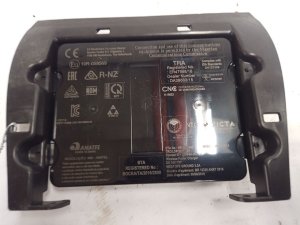
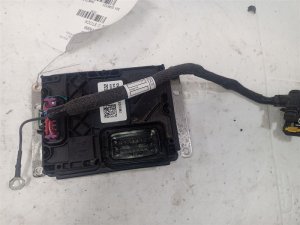
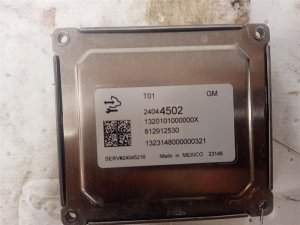
We Have This Part in Stock

The information in this article is provided for general reference and educational purposes only. Vehicle specifications, procedures, and part compatibility can vary by production date, trim level, and region. Always consult your vehicle's factory service manual and verify part numbers before purchasing or performing repairs. Safety-critical components such as airbags, seat belts, and braking systems should be installed by a qualified professional.
- Chevrolet BLAZER:
- 🧭 Diagnostic Flowchart
- 🎬 Helpful Videos
- 🛍️ Shop This Part
- What's Unique About the 2019-2021 Chevrolet BLAZER
- Symptoms You May Notice
- Most Likely Causes
- Rare But Worth Checking
- Diagnosis Steps
- Parts You'll Likely Need
- Related Codes That Often Appear With This One
- Technical Service Bulletins (TSBs) & Recalls
- Platform-Specific Known Issues
- Mechanic-Grade Diagnostic Values
- Hidden / Shadow Codes Worth Checking
- Scan Tool Commands That Help
- Wiring & Ground Locations
- OEM Part Supersession History
- Model Year Variations Within This Range
- 🎟️ Get 5% Off