

U0422 on 2021-2023 Chrysler Pacifica: BCM Invalid Data Causes and Fixes
On 2021-2023 Chrysler Pacificas, especially Hybrid models, code U0422 is most often caused by a software glitch. The fix is typically a software update performed by a dealer, as specified in Technical Service Bulletins. Before considering module replacement, the 12V battery's health must be verified, as low voltage is a common cause of network communication errors.
- U0422 on a 2021-2023 Pacifica almost always points to a software issue, not a broken part.
- The most direct fix is having a Chrysler dealer update the software for the vehicle's control modules.
- Do not replace the Body Control Module (BCM) unless software updates and battery issues have been completely ruled out.
- A weak 12V battery is a frequent cause of this code and should be the first component checked after reading codes.
What's Unique About the 2021-2023 Chrysler PACIFICA

The Chrysler Pacifica, particularly the Plug-in Hybrid (PHEV) model, is a complex vehicle with numerous interconnected computer modules. This complexity makes it prone to software-related communication errors. Manufacturer-issued Technical Service Bulletins (TSBs) for this specific code confirm that software anomalies are a known issue, sometimes triggered by something as simple as using the remote start. [S2208000202] For the Pacifica Hybrid, this code often points to an issue between the Body Control Module and the specialized Hybrid Control Processor (HCP). [S2108000041]
Diagnostic Flowchart

Tap your situation to follow the diagnostic path that matches what you're seeing on this vehicle.
Symptoms You May Notice
- Check Engine Light (Malfunction Indicator Lamp) is on. [S2108000041]
- Remote start is disabled or not working.
- Potential for erratic behavior of body functions (lights, locks, windows), though often the code appears with no other symptoms.
- Instrument cluster may chime or display warnings intermittently.
- Replacing the Body Control Module (BCM) before verifying that the module software is up to date. The TSBs strongly indicate that a software update is the most likely solution.
- Chasing wiring problems without first load-testing the 12V battery. Unstable voltage can mimic the symptoms of a network fault.
Most Likely Causes

- Module Software Anomaly 🔴 High Probability Chrysler has issued multiple Technical Service Bulletins (TSBs) to address software bugs that cause this code to set erroneously, particularly on Hybrid models and sometimes after using remote start. [S2208000202, S2108000041]
How to confirm: A dealer uses a wiTECH scan tool to check the current software calibration of the Hybrid Control Processor (HCP), Powertrain Control Module (PCM), and Body Control Module (BCM) against the latest available versions.
Typical fix: Reprogramming the affected module(s) with the latest software. This is a dealer-level repair.
Est. part cost: $0 - Weak or Failing 12V Battery 🟡 Medium Probability → Shop Vehicle Battery Modern vehicles with many electronic modules are highly sensitive to voltage fluctuations. A weak battery can cause modules to transmit scrambled or invalid data during startup, triggering network codes like U0422 before the main systems have even stabilized.
How to confirm: Test the 12V battery with a digital multimeter or an electronic battery tester. A healthy, resting battery should be at approximately 12.6 volts; a reading below 12.4V warrants a load test. Many auto parts stores will perform a load test for free.
Typical fix: Replace the 12V battery.
Est. part cost: $150-$350 - Faulty Body Control Module (BCM) ⚪ Low Probability → Shop Body Control Module
How to confirm: After ruling out software and wiring, a technician may use a bi-directional scan tool to test BCM functions and monitor its data output on the CAN bus. This is a process of elimination. If the BCM fails to respond or sends garbled data with good power and ground, it is likely faulty.
Typical fix: Replace the Body Control Module and program the new unit to the vehicle. This requires a dealer or a well-equipped independent shop with programming capabilities.
Est. part cost: $300-$600 - CAN Bus Wiring Issue ⚪ Low Probability A known weak point in some Pacificas is the CAN bus star connector (also called a 'star point' or 'junction block'), often located under the glove box. Poor pin retention or corrosion in this connector can disrupt the entire network, causing a flood of communication codes.
How to confirm: Visually inspect wiring harnesses connected to the BCM and PCM/HCP for damage. A technician would use a multimeter or oscilloscope to check for continuity, shorts to ground, and proper signal on the CAN bus wires. Wiggling the wires at the star connector while monitoring the bus signal can often pinpoint a loose connection.
Typical fix: Repair the damaged section of the wiring harness or clean and secure the pins in the star connector. In some cases, the connector itself may need to be replaced.
Est. part cost: $5-$50
Diagnosis Steps
- Connect a professional-grade OBD-II scanner to read the code and check for any 🎬 Watch: How to bypass the security gateway to read codes. other accompanying DTCs. Note all codes from all modules.
- Check for any applicable Technical Service Bulletins (TSBs) or recalls for your vehicle's VIN. TSBs S2208000202 and S2108000041 are directly relevant.
- Thoroughly test the 12V battery's health, state of charge, and stability under load. A resting voltage below 12.4V is a red flag. Do not skip this step.
- If the battery is healthy, the next step is to have a Chrysler dealer check the software versions of the HCP, PCM, and BCM. This is the most probable cause.
- If software is up to date, perform a visual inspection of the wiring and connectors at the Body Control Module and the Powertrain/Hybrid Control Module for any signs of damage, corrosion, or looseness.
- Specifically locate and inspect the CAN bus star connector, often found under the passenger side dashboard/glove box area, for any signs of loose pins or corrosion.
- If wiring appears intact, advanced diagnostics are needed. This involves using an oscilloscope to check CAN bus signals for proper voltage (CAN High ~3.5V, CAN Low ~1.5V when active) and looking for noise or malformed data packets. This can isolate whether the fault is with the BCM itself or the network.
Parts You'll Likely Need

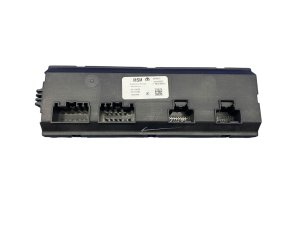
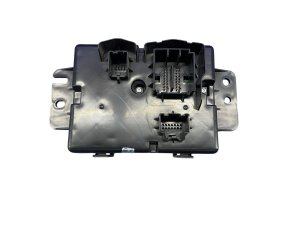
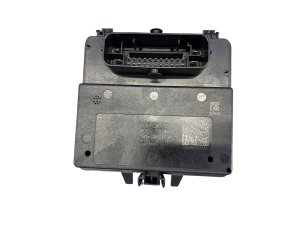
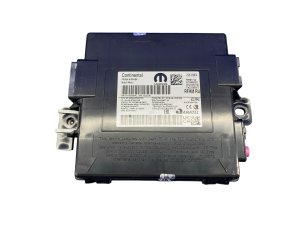
- Body Control Module (BCM)
(OEM #68491084AG (supersedes 68491084AE, 68491084AF for 2021 models), 68579877AC (for 2023 models). Note: Always verify the exact part number with a dealer using your VIN.)— This part is only needed if it has been confirmed to be internally faulty after ruling out software, battery, and wiring issues. It is the source of the 'invalid data'.
Trusted brands: Mopar
OEM price range: $300-$600
Aftermarket price range: $200-$450
Related Codes That Often Appear With This One
- U1190-00 — A Chrysler TSB explicitly links U0422 and U1190 as codes that can be set erroneously together after a remote start. [S2208000202]
- Multiple U-series codes — If the issue is a network-wide problem, such as a fault at the star connector or low battery voltage, many modules may report communication loss or invalid data simultaneously.
Technical Service Bulletins (TSBs) & Recalls
- S2208000202: U1190-00 And U0422-00 Are Set Erroneously After Remote Starting The Vehicle
- S2108000041: Check Engine Light On, U0422-00 Implausible Data Received From Body Control Module Is Active In The HCP
Platform-Specific Known Issues
- TSB S2208000202 notes that on some 2023 models, codes U0422-00 and U1190-00 can be set erroneously after a remote start, indicating a software bug rather than a hardware failure.
- TSB S2108000041 addresses an issue on 2021 models where a Check Engine Light with code U0422-00 is active in the Hybrid Control Processor (HCP), pointing specifically to a software issue in the Pacifica Hybrid's control system.
- The CAN bus star connector, a central point for module communication, can be a source of network instability due to poor connections, leading to this and other U-codes.
Mechanic-Grade Diagnostic Values
- CAN Bus Network Termination Resistance — expected: Approximately 60 Ohms. Failure: A reading of 120 Ohms indicates a missing terminating resistor or a break in the circuit. A reading significantly less than 60 Ohms suggests a short between CAN lines.
- CAN Bus Voltage (Key On, Engine Off) — expected: CAN High: ~2.5V to 3.5V. CAN Low: ~1.5V to 2.5V. Both should have a bias voltage of approximately 2.5V when idle.. Failure: Voltages that are stuck high, low, or near zero indicate a short to power, a short to ground, or an open circuit.
- BCM Power Supply Voltage — expected: 12.0V ± 0.5V. Failure: Low voltage can cause the BCM to transmit corrupt data. High voltage ripple can also indicate a problem.
Scan Tool Commands That Help
- wiTECH (Dealer Tool) or compatible aftermarket (e.g., Autel, Snap-on): Proxy Configuration Alignment (or Proxi Alignment) — This procedure is mandatory after replacing the Body Control Module (BCM) or other major network modules. It synchronizes the vehicle's configuration map from the BCM to all other modules on the network. Failure to perform this can result in a flashing odometer and multiple communication codes, including U0422.
- wiTECH: Reprogram the BCM — Used to load the latest software calibration into the Body Control Module. This is the primary fix identified in TSBs S2208000202 and S2108000041 for erroneously set U0422 codes.
- wiTECH: Clear All DTCs — After a software flash or a Proxy Alignment, the tool will prompt to clear numerous communication codes that were set during the procedure. This is a required final step.
Wiring & Ground Locations

- Body Control Module (BCM) — On 2021-2023 Pacifica models, the BCM is located behind the main instrument panel, to the left of the steering column. Access requires removing lower dash panels.. The BCM is the source of the 'invalid data'. Its connectors and grounding are primary points of inspection for wiring-related faults.
- CAN Bus Star Connector / Junction Block — Located on the passenger side, under the glove box area. It's a white or tan connector block where multiple CAN bus wire pairs meet.. This is a central hub for the CAN-C network. Poor pin retention, corrosion, or loose connections at this block can disrupt communication for multiple modules, causing a flood of 'U' codes, including U0422. Wiggling the wires at this connector while monitoring the network can help diagnose intermittent issues.
- Security Gateway Module (SGM/SGW) — Located behind the center stack/radio assembly. Access requires removing trim panels around the radio and climate controls.. For 2018+ models, this module blocks direct diagnostic commands from the OBD-II port. To perform advanced functions like a Proxy Alignment or BCM reprogramming with an aftermarket tool, a '12+8' bypass cable must be connected directly to the SGM connectors.
- BCM Diagnostic Wire (for turn signal mod) — Pin 25 (Left) and Pin 28 (Right) of the C6 connector at the BCM.. While related to a lighting modification, a forum post identifies specific BCM diagnostic wire pins. This demonstrates the level of detail available in wiring diagrams and the potential for aftermarket modifications to tap into BCM wiring, which could be a source of invalid data if done incorrectly.
Real Owner Repair Stories
- Reddit user in r/ChryslerPacifica (2021 or 2022 Chrysler Pacifica) — Remote start would honk, turn on, and then immediately shut off, displaying 'Remote Start Disabled'. A Check Engine Light was also present.
❌ Tried (didn't work) Having the battery tested (it tested OK).
✅ What actually fixed it The user acknowledged the Check Engine Light was on. Other users confirmed that the remote start feature is automatically disabled by the vehicle's software whenever a hard fault code (like one that triggers the CEL) is stored in any module. The underlying cause of the CEL needed to be fixed to restore remote start functionality.
OEM Part Supersession History
68491084AE→68491084AF, then 68491084AG— Standard part evolution. Later revisions typically contain hardware and firmware improvements to address field issues and improve reliability.
Heads up: When replacing, it is critical to use the latest part number (68491084AG) as the older versions (AE, AF) are obsolete. Using a used module with an older part number may re-introduce known issues.
Model Year Variations Within This Range
- 2021-2023: Access to diagnostic functions through the OBD-II port is restricted by a Security Gateway Module (SGM). While the dealer's wiTECH tool can authenticate through it, aftermarket scan tools require a physical 12+8 bypass cable connected directly to the SGM to perform bidirectional controls like a Proxy Alignment or reprogramming. The SGM is typically located behind the radio.
- 2023: TSB S2208000202 specifically calls out 2023 models for erroneously setting U0422 and U1190-00 after a remote start, indicating a software issue unique to or more prevalent in this model year's software calibration.
Helpful Videos
We Have This Part in Stock

The information in this article is provided for general reference and educational purposes only. Vehicle specifications, procedures, and part compatibility can vary by production date, trim level, and region. Always consult your vehicle's factory service manual and verify part numbers before purchasing or performing repairs. Safety-critical components such as airbags, seat belts, and braking systems should be installed by a qualified professional.
- Chrysler PACIFICA:
- 🧭 Diagnostic Flowchart
- 🎬 Helpful Videos
- 🛍️ Shop This Part
- What's Unique About the 2021-2023 Chrysler PACIFICA
- Symptoms You May Notice
- Most Likely Causes
- Diagnosis Steps
- Parts You'll Likely Need
- Related Codes That Often Appear With This One
- Technical Service Bulletins (TSBs) & Recalls
- Platform-Specific Known Issues
- Mechanic-Grade Diagnostic Values
- Scan Tool Commands That Help
- Wiring & Ground Locations
- Real Owner Repair Stories
- OEM Part Supersession History
- Model Year Variations Within This Range
- 🎟️ Get 5% Off