

U0422 on 2014-2021 Ram 1500: Invalid Body Control Module Data Causes & Fixes
On a 2014-2021 Ram 1500, code U0422 most often indicates a temporary communication glitch with the Body Control Module (BCM), especially after a battery disconnect on trucks with air suspension. The fix is often a dealer-performed software update to the Air Suspension Control Module (ASCM) per TSB #08-078-20, or simply clearing the code. It can also appear as a secondary 'ghost' code on EcoDiesel models with other emission system faults.
- U0422 on a Ram 1500 means the Body Control Module (BCM) is sending invalid data over the vehicle's network.
- The most common trigger, especially on trucks with air suspension, is a temporary software glitch after the battery has been disconnected. This often requires a dealer software update to fix permanently.
- On EcoDiesel models, this code can be a red herring, pointing to a primary problem in the emissions system.
- Before suspecting an expensive BCM failure, always check for TSBs, ensure the battery is healthy, and inspect for obvious wiring damage.
- Due to the need for specialized scan tools and software programming, this code is best diagnosed by a qualified technician or dealership.
What's Unique About the 2014-2021 Ram 1500

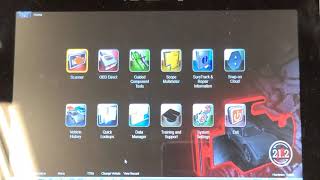
On the Ram 1500, U0422 is frequently not a sign of a major part failure, but rather a specific software issue. Manufacturer documents show it commonly appears on trucks with air suspension after the battery has been disconnected and reconnected, triggering a "Service Air Suspension" message. Crucially, the fix in this case is a software flash for the Air Suspension Control Module (ASCM), not the BCM itself. It's also known to set when the power running boards are obstructed or as a secondary code on EcoDiesel models experiencing primary emission system problems. In many of these cases, the BCM itself is not faulty, 🎬 Watch: Common causes and fixes for the U0422 code but a software update or a fix to a different system is required.
Diagnostic Flowchart

Tap your situation to follow the diagnostic path that matches what you're seeing on this vehicle.
Generation note: This year range covers the end of the fourth generation (DS) Ram 1500 (2014-2018 and continuing as the Ram 1500 Classic) and the start of the fifth generation (DT) in 2019. The provided Technical Service Bulletins (TSBs) reference issues on both generations, indicating the problem can occur across the entire 2014-2021 range.
Symptoms You May Notice

- "Service Air Suspension" message in the instrument cluster.
- Check Engine Light or other warning lamps illuminated.
- Air suspension may be stuck at one height or unresponsive.
- Malfunctions with power windows, door locks, or interior/exterior lights.
- Problems with power side steps (may be obstructed or inoperative).
- In rare cases, the vehicle may not start if the BCM is involved with the immobilizer system.
- Erratic behavior of windshield wipers or climate controls.
- Replacing the Air Suspension Control Module (ASCM) when the actual fault is a software issue that requires a reflash per TSB #08-078-20.
- Replacing the Body Control Module (BCM) when the root cause is a wiring problem, a software glitch after a battery change, or a fault in another system (like on EcoDiesel models).
Most Likely Causes

- Software Glitch After Battery Disconnect 🔴 High Probability → Shop Vehicle Battery A known issue documented in TSB #08-078-20 where the Air Suspension Control Module (ASCM) sets U0422 after a power loss event. The ASCM misinterprets the BCM's initial communication after power is restored.
How to confirm: The code appears immediately after the battery was disconnected for service or replacement, often accompanied by the 'Service Air Suspension' message. Forum users consistently report this exact scenario.
Typical fix: The dealer needs to reprogram the Air Suspension Control Module (ASCM) with updated software as per TSB #08-078-20. In some cases, simply clearing the code may resolve it temporarily, but the TSB is the permanent fix.
Est. part cost: $0 - Faulty Body Control Module (BCM) 🟡 Medium Probability → Shop Body Control Module Like any electronic module, the BCM can fail internally due to age, voltage spikes, or moisture intrusion, causing it to send corrupt data. Water leaks from the windshield or cowl area are a known cause of BCM failure.
How to confirm: A technician will use a diagnostic scan tool to try and communicate directly with the BCM. If the module is unresponsive or fails internal self-tests after all wiring and power/ground checks pass, it is condemned. Symptoms of a true BCM failure are often more widespread and persistent, affecting multiple unrelated systems (e.g., lights, locks, and wipers all acting erratically).
Typical fix: Replacement of the BCM. The new module must be programmed to the vehicle's specific VIN and options. This is not a plug-and-play part.
Est. part cost: $200-$500 - Wiring or Network Issue 🟡 Medium Probability Wiring for the CAN bus network can become damaged, corroded, or shorted, disrupting communication between modules. Connectors at the BCM or other modules can also become loose or corroded. Aftermarket trailer wiring is a common source of network problems.
How to confirm: Visually inspect the BCM harness and connectors. A technician will use a multimeter to test the CAN bus circuits. With the battery disconnected, the resistance between CAN High (Pin 6) and CAN Low (Pin 14) at the OBD-II port should be approximately 60 ohms. A reading of 120 ohms indicates an open circuit, while other readings suggest a short.
Typical fix: Repairing the damaged section of wiring or cleaning/replacing the faulty connector.
Est. part cost: $10-$100 - Underlying Diesel Emission System Fault ⚪ Low Probability On EcoDiesel models, TSBs #18-019-15 REV C and #18-021-15 REV F show U0422 can be set alongside codes for NOx sensors and the Diesel Particulate Filter (DPF). The BCM communication fault is a symptom, not the root cause; the PCM is likely flagging a secondary fault due to the primary emissions issue.
How to confirm: Scan the vehicle for all codes. If codes like P1288, P1289, or P2463 are present with U0422 on an EcoDiesel, the emissions system is the primary suspect.
Typical fix: Diagnose and repair the primary emission system fault first. This could involve replacing faulty NOx sensors or servicing the DPF system. Once the primary fault is fixed and cleared, the U0422 code will typically not return.
Est. part cost: $200-$800
Rare But Worth Checking
- Low Battery Voltage or Failing Alternator: → Shop Vehicle Battery A weak battery or unstable voltage from a failing alternator can cause modules to malfunction and send invalid data without a full disconnect. Always ensure the battery and charging system are healthy before diagnosing complex network issues.
- Obstructed Power Side Steps: A service document indicates that if the power running boards are jammed, the BCM sends a 'Signal Not Available' (SNA) message over the network. The Air Suspension module can misinterpret this SNA signal, logging a U0422 code and displaying a service message as a result.
Diagnosis Steps
- Check the battery and charging system to ensure voltage is stable and within specification (typically 12.4V+ at rest, 13.5-14.5V running). A weak battery is a common source of electronic gremlins.
- Connect a high-level scan tool capable of reading manufacturer-specific codes from all modules (BCM, ASCM, PCM, etc.).
- Record all present DTCs. Note if the code appeared after a battery replacement or other service.
- If the "Service Air Suspension" message is present on a 2020+ model, reference TSB #08-078-20. The likely fix is a software update of the ASCM at a dealership.
- If on an EcoDiesel with other emission codes (P-codes), diagnose and repair those codes first as per TSBs #18-019-15 and #18-021-15.
- If U0422 is the only code, inspect the BCM wiring harness and connectors for any visible damage, corrosion, or looseness. Check for signs of water intrusion. Pay special attention to the harness under the driver's side door sill.
- Perform a CAN bus integrity check. Disconnect the battery. Using a multimeter, measure the resistance between Pin 6 (CAN-H) and Pin 14 (CAN-L) of the OBD-II port. A healthy network should read approximately 60 Ohms.
- Test the power and ground circuits at the BCM to ensure it's receiving proper power.
- If wiring, power, and grounds are good, and software updates don't apply or don't work, the final step is suspecting an internal BCM failure, which typically requires professional diagnosis and replacement.
Parts You'll Likely Need
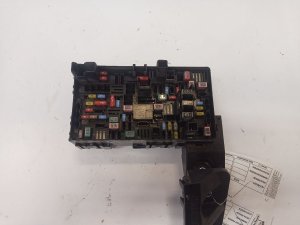
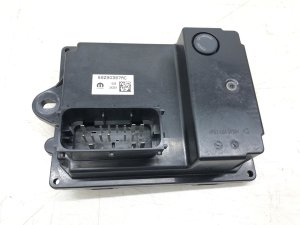
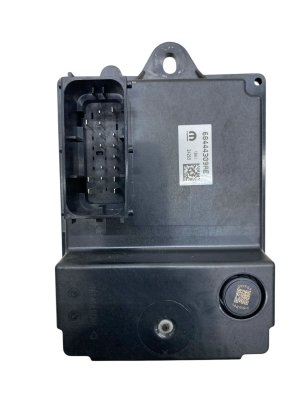
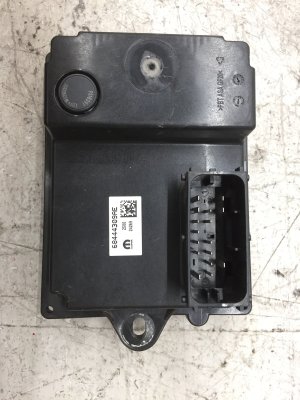
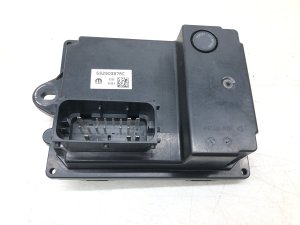
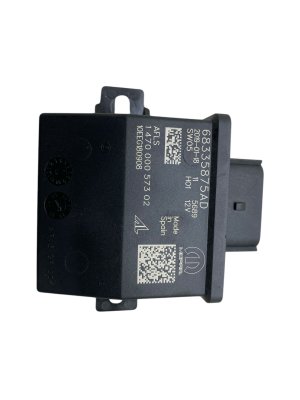
- Body Control Module (BCM)
(OEM #Varies greatly by VIN, year, and options. Examples: 68320319AC, 68357472. Must be verified with dealer.)— If all wiring and software issues are ruled out, the BCM itself may have failed internally and is the source of the invalid data. This part is NOT plug-and-play and requires programming.
Trusted brands: Mopar, Dorman (Remanufactured)
OEM price range: $300-$600
Aftermarket price range: $200-$450
Related Codes That Often Appear With This One
- P1289 — NOx Sensor 1/2 Zero Offset Too Low, seen on EcoDiesel models per TSB #18-019-15 & #18-021-15.
- P2463 — Diesel Particulate Filter - Soot Accumulation, seen on EcoDiesel models per TSB #18-019-15 & #18-021-15.
- U3017 — Control Module Timer/Clock Performance, seen on EcoDiesel models per TSB #18-019-15 & #18-021-15.
Technical Service Bulletins (TSBs) & Recalls
- 08-078-20: Addresses U0422 and 'Service Air Suspension' message after a battery disconnect, recommending an ASCM software update.
- 18-019-15 REV C: Lists U0422 as a possible secondary code to primary diesel emission faults on 2014-2015 EcoDiesel models.
- 18-021-15 REV F: Also lists U0422 as a secondary code to primary diesel emission faults on 2014-2015 EcoDiesel models.
- S1923000042 (Rev C): A STAR case document explaining how obstructed power side steps can lead to the ASCM setting a U0422 code.
Platform-Specific Known Issues
- TSB #08-078-20: On 2020 models with air suspension, a "Service Air Suspension" message and DTC U0422 can set after a battery is disconnected and reconnected. The fix is a software update for the Air Suspension Control Module (ASCM).
- TSBs #18-019-15 REV C & #18-021-15 REV F: On 2014-2015 EcoDiesel models, U0422 can be set as a secondary code when primary faults exist within the diesel emissions system, such as with NOx sensors or the DPF.
- A known issue exists where obstructing the power side steps can cause the BCM to send an error message ('SNA') that the ASCM misinterprets, logging U0422.
Mechanic-Grade Diagnostic Values
- CAN C Bus Resistance — expected: 53.5 to 67 Ohms between CAN C (+) and CAN C (-) circuits at the OBD-II port (Pins 6 & 14) with battery disconnected.. Failure: A reading of ~120 Ohms indicates an open in the circuit or a missing terminating resistor. A reading below 50 Ohms suggests a short between the CAN wires.
- CAN Bus Voltage (Key On, Engine Off) — expected: CAN High (Pin 6) and CAN Low (Pin 14) should both be at approximately 2.5V when the bus is idle (recessive state).. Failure: Voltages that are stuck high, low, or at 0V indicate a short to power or ground on that specific bus wire.
- CAN Bus Voltage (Active Communication) — expected: During active data transmission (dominant state), CAN High (Pin 6) should rise to ~3.5V and CAN Low (Pin 14) should drop to ~1.5V.. Failure: A flat line on either wire during a command that requires communication (e.g., turning on lights) indicates a lack of data transmission.
Scan Tool Commands That Help
- wiTECH: Restore Vehicle Configuration — This function, found under the 'Diagnostic Procedures' tab, is used after replacing a BCM or to correct configuration errors. It rewrites the vehicle's sales code configuration to the BCM and other modules, which can resolve issues where a module is not configured correctly for the truck's options.
- wiTECH: ASCM/TCM/BCM Reprogram/Flash — Used to apply software updates as specified by a TSB, such as the one for the ASCM (TSB #08-078-20) to fix the U0422 code after a battery disconnect. It is also used for other modules to fix software-related drivability or function issues.
- wiTECH: Vehicle Scan Report — Before performing any repairs, especially those under investigation by engineering, technicians are instructed to create and save a full vehicle scan report to document all DTCs present across all modules.
Wiring & Ground Locations
- BCM Location — Under the driver's side dashboard, mounted high up behind the instrument panel, near and above the parking brake pedal assembly.. This is the primary module in question. Physical access is needed to inspect its connectors for corrosion or damage and to test its power and ground circuits directly.
- Main Body Ground — A primary ground point is located on the driver's side wheelwell, forward of the upper control arm. Another is on the firewall, connecting to the back of the cylinder head.. A poor body or engine ground can cause voltage differentials between modules, leading to communication errors like U0422. These are critical checkpoints for any electrical issue.
- CAN Bus Wiring Harness — The CAN bus wires are typically a twisted pair. A common point of failure is the harness that runs under the driver's side door sill plate, where it can be pinched or corroded from water entry.. Damage to this harness can directly short or open the CAN bus circuits, cutting off communication between the BCM and other essential modules.
- Trailer Tow Connector Wiring — The wiring harness leading to the 7-pin and 4-pin trailer connectors at the rear bumper.. Improperly installed aftermarket trailer wiring, or corrosion/damage to the factory plug, can short the CAN bus or other lighting circuits, which can backfeed and cause the BCM to send invalid data.
Real Owner Repair Stories
- 5thGenRams Forum User (2025 Ram 1500 Laramie) — "Trailer Brakes Need Service" alert on every start, along with other infotainment and key fob issues.
❌ Tried (didn't work) Initial dealer visit was for multiple issues, including a cracked transmission housing.
✅ What actually fixed it The dealer ordered replacement modules to fix the trailer brake service alert, indicating a hardware failure in either the Integrated Trailer Brake Module (ITBM) or another related controller that was causing network communication faults. - DodgeForum.com User (2001 Ram 1500 (older model, but principle applies)) — Blowing 'Park Lamp' fuse when trailer is connected. Trailer lights dim, connector getting very hot.
❌ Tried (didn't work) Replacing the fuse (including with a higher amperage one, which is dangerous), replacing the plug-in trailer wiring harness.
✅ What actually fixed it The underlying issue was a short in the truck's trailer wiring circuit, causing excessive current draw that heated the connector and blew fuses. This highlights how trailer wiring faults can manifest as problems within the truck's main electrical system, potentially affecting the BCM.
OEM Part Supersession History
68357472AA, 68357472AB, 68357472AC→68405097AA— Part revision and consolidation for newer model years or to address hardware issues.
Heads up: While newer parts often supersede older ones, it is critical to verify the correct part number for a specific VIN using a dealer's parts catalog. Using the wrong BCM, even if it physically fits, will cause features to not work.68245054AE→68245054AF— Standard part revision by the manufacturer.
Heads up: A new BCM is not plug-and-play. It must be programmed with the vehicle's VIN and configuration. For 2019+ models, many dealers cannot program a used BCM, requiring a cloning service or tools like AlfaOBD for a used part to function.
Model Year Variations Within This Range
- 2019-2021 (DT): The 5th Generation (DT) Ram 1500 introduced a more complex and segmented network architecture, including a Secure Gateway Module (SGW). This requires specific diagnostic tools (like wiTECH 2.0) and an authorized account to unlock the gateway for diagnostics and programming. The BCM is more integrated with infotainment and driver-assist systems.
- 2014-2018 (DS) & 2019+ (Classic): The 4th Generation (DS) trucks have a less complex network than the DT models and do not have a Secure Gateway Module (on most pre-2018 models). This allows for easier diagnostic access with a wider range of aftermarket tools, though dealer-level functions still require wiTECH.
Helpful Videos
We Have This Part in Stock

The information in this article is provided for general reference and educational purposes only. Vehicle specifications, procedures, and part compatibility can vary by production date, trim level, and region. Always consult your vehicle's factory service manual and verify part numbers before purchasing or performing repairs. Safety-critical components such as airbags, seat belts, and braking systems should be installed by a qualified professional.
- Ram 1500:
- 🧭 Diagnostic Flowchart
- 🎬 Helpful Videos
- 🛍️ Shop This Part
- What's Unique About the 2014-2021 Ram 1500
- Symptoms You May Notice
- Most Likely Causes
- Rare But Worth Checking
- Diagnosis Steps
- Parts You'll Likely Need
- Related Codes That Often Appear With This One
- Technical Service Bulletins (TSBs) & Recalls
- Platform-Specific Known Issues
- Mechanic-Grade Diagnostic Values
- Scan Tool Commands That Help
- Wiring & Ground Locations
- Real Owner Repair Stories
- OEM Part Supersession History
- Model Year Variations Within This Range
- 🎟️ Get 5% Off