

U0423 on 2016-2018 Mazda MX-5: Invalid Instrument Cluster Data Causes and Fixes
On a 2016-2018 Mazda MX-5, code U0423 is almost always caused by a software glitch in the MAZDA CONNECT system, not a failed part. It often appears with codes U0323 and U3000 and cannot be cleared with a standard scanner. The fix is a specific reset procedure or a software update from a Mazda dealer.
- U0423 on a 2016-2018 MX-5 is almost certainly a software glitch, not a hardware failure.
- The code will likely be accompanied by U0323 and U3000, and you will not be able to clear them with a normal scanner.
- Before paying for any diagnostic work, ensure your vehicle's battery is fully charged and healthy, as low voltage is a known trigger.
- Do not replace the Instrument Cluster or ABS module. The fix is a specific reset procedure or a software update performed by a Mazda dealer.
What's Unique About the 2016-2018 Mazda MX-5
The ND generation MX-5, equipped with the MAZDA CONNECT infotainment system, is prone to a specific software fault documented in Mazda Technical Service Bulletin (TSB) MT-010-18. This glitch can be triggered by a low battery or by disconnecting power, causing codes U0423, U0323, and U3000 to become logged and impossible to delete with standard scan tools. This is a well-documented platform quirk across multiple Mazda models of the era, where the solution is a software reset or update, not hardware replacement.
Diagnostic Flowchart
Tap your situation to follow the diagnostic path that matches what you're seeing on this vehicle.
Symptoms You May Notice
- TCS/DSC indicator lights are illuminated
- TPMS warning light is flashing
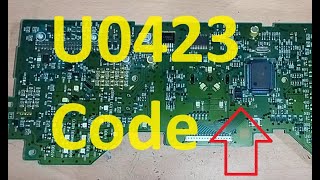
- Inability to clear the U0423 code (and related codes) with a standard OBD-II scanner 🎬 Watch: A breakdown of U0423 causes and common fixes
- Check Engine Light may be on
- Smart Brake Support (SBS) or Smart City Brake Support (SCBS) warning light may be on
- Replacing the ABS control module
- Replacing the Instrument Cluster without performing the TSB reset procedure or software update first
- Assuming a standard OBD-II scanner can clear the code once it is 'latched' by this glitch
Most Likely Causes
- MAZDA CONNECT Software Glitch 🔴 High Probability A known condition documented in Mazda TSBs MT-010-18 and MTI_1137. It occurs if the ignition is turned off within 20 seconds of being turned on when the battery is low, or if the Connectivity Master Unit (CMU) or 'ROOM' fuse is disconnected. This often happens after a DIY battery replacement.
How to confirm: The presence of U0423 along with U0323 and U3000, and the inability to clear these codes with a standard tool, are strong indicators. A Mazda dealer can confirm with their M-MDS tool. You can also check the MAZDA CONNECT software version in the settings; outdated versions are more prone to this issue.
Typical fix: Perform the specific reset procedure outlined in TSB MTI_1137 or have a Mazda dealer update the MAZDA CONNECT system software. The latest recommended version is 74.00.324A or newer.
Est. part cost: $0 - Low Battery Voltage or Failing Alternator 🟡 Medium Probability → Shop Vehicle Battery Low voltage is a primary trigger for the software glitch described in the TSB. Modern vehicles require a stable power supply for all control modules to communicate correctly, and voltage drops can cause data corruption.
How to confirm: Test the battery with a multimeter or electronic battery tester; a healthy, fully charged battery should read approximately 12.6 volts. With the engine running, voltage should be between 13.7 and 14.7 volts.
Typical fix: Recharge or replace the battery. If the charging system voltage is incorrect, diagnose the alternator and charging system.
Est. part cost: $150-$350
Rare But Worth Checking
- Wiring or Connector Issue: While the software glitch is most common, a physical network problem can also cause this code. A poor ground connection at the ABS module or Instrument Cluster, or a damaged wire in the CAN bus harness, can corrupt communication between modules. This should be investigated only after the TSB-related software issue has been ruled out.
- Faulty Instrument Cluster (IC): → Shop Instrument Cluster In very rare cases, the instrument cluster itself may have an internal hardware failure. This is an expensive last resort and should not be considered unless all software updates and wiring checks have been completed by a professional.
- Aftermarket OBD-II Device: Mazda has noted in M-Tip MT-004/18 that some aftermarket devices plugged into the OBD-II port (like insurance trackers or performance monitors) can disrupt CAN bus communication, prevent modules from sleeping, and cause a variety of communication DTCs. If you have such a device, removing it should be one of the first diagnostic steps.
Diagnosis Steps
- Verify the battery is fully charged and in good health. Address any low voltage issues first, as this is the primary trigger.
- Attempt to clear the DTCs using an OBD-II scanner. Note if U0423, U0323, and U3000 cannot be cleared. This is a key symptom of the TSB issue.
- If codes persist, the TSB software glitch is highly likely. The next step is to perform the specific reset procedure from TSB MTI_1137.
- TSB Reset Procedure (from MTI_1137): 1. Confirm CMU is connected and ROOM fuse is installed. 2. Turn ignition ON. 3. Go to MAZDA CONNECT settings and change both Temperature (F to C) and Distance (Mi to Km) units. 4. Turn ignition OFF. 5. Remove the ROOM fuse from the engine bay fuse box. 6. Press and hold the tripmeter reset button for more than 5 seconds. 7. Reinstall the ROOM fuse. 8. Turn ignition ON. 9. Attempt to delete the DTC(s) with a capable scan tool (M-MDS, FORScan, etc.). 10. Return the Temperature and Distance units to their original settings.
- If the reset procedure fails, the vehicle must be taken to a Mazda dealer for a MAZDA CONNECT software update using their M-MDS tool. Request an update to version 74.00.324A or later.
- Only if all software-related fixes fail should a technician begin diagnosing CAN bus wiring, grounds, and connectors between the ABS module and Instrument Cluster.
Parts You'll Likely Need
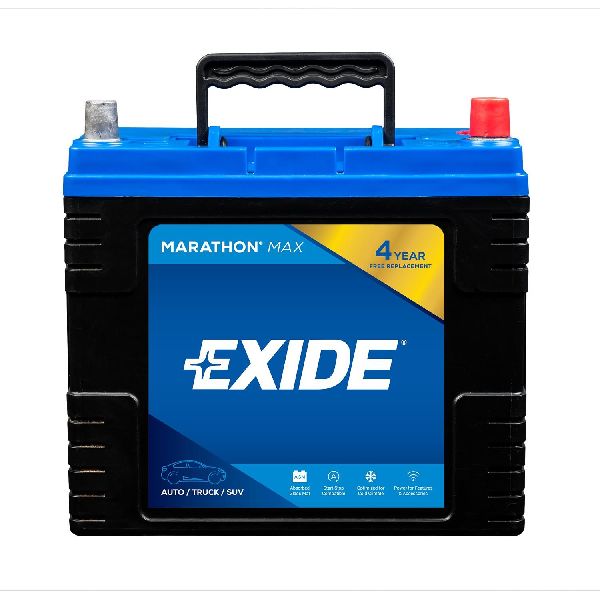
- Vehicle Battery — A weak or failing battery is a common trigger for the software glitch that causes the U0423 code.
Trusted brands: Panasonic (OEM), Bosch, Interstate
OEM price range: $250-$400
Aftermarket price range: $150-$300
Related Codes That Often Appear With This One
- U0323 — This code, indicating 'Software Incompatibility with Instrument Panel Control Module' from the PCM, is part of the same known software glitch.
- U3000 — This is a general 'Control Module' failure code, logged by the Instrument Cluster. In this specific context, it is part of the trio of non-deletable codes caused by the software issue described in TSB MT-010-18.
Technical Service Bulletins (TSBs) & Recalls
- MT-010-18: "DTC U0323/U0423/U3000 CANNOT BE DELETED" - Describes the software issue and provides a specific reset procedure.
- MTI_1137: "Mulri-Model (Equipped with Mazda connect) - DTC U0323/U0423/U3000 Cannot be deleted (Update)" - Provides the detailed, multi-step repair procedure involving the ROOM fuse and tripmeter button.
Platform-Specific Known Issues
- A documented software issue in the MAZDA CONNECT system can cause DTCs U0423, U0323, and U3000 to become impossible to delete with standard tools, especially after a low battery event or power interruption.
- This issue is not unique to the MX-5 and affects a wide range of Mazda vehicles from the 2014-2019 era that use the same MAZDA CONNECT infotainment system.
Mechanic-Grade Diagnostic Values
- CAN Bus Resistance — expected: Approximately 60 Ω. Failure: A reading of 120 Ω indicates a missing termination resistor or a break in one of the CAN lines. A reading below 60 Ω (e.g., 40 Ω) suggests an extra termination resistor is present. A reading of 0 Ω indicates a short between CAN High and CAN Low.
- CAN Bus Voltage (Key On, Engine Off) — expected: CAN_H: ~2.6V, CAN_L: ~2.4V. Failure: Voltages that are stuck high, stuck low, or do not mirror each other during communication point to a short or open in the wiring harness.
- Instrument Cluster Ground Resistance — expected: Less than 0.5 Ω. Failure: Higher resistance indicates a poor ground connection, which can cause intermittent communication issues and trigger U-codes.
Scan Tool Commands That Help
- Mazda M-MDS: Module Programming -> As-Built -> IC — This function is used to restore the instrument cluster's (IC) factory configuration data. It's a necessary step if the cluster is replaced, and can sometimes resolve corruption issues. Performing this will reset all personalization settings.
- Mazda M-MDS: Self Test -> Modules -> IC — This command initiates an on-demand self-test of the instrument cluster to check for internal faults. It's a preliminary step before condemning the cluster.
- Mazda M-MDS: Software Update — This is the primary fix for the known software glitch described in the TSBs. It updates the Connectivity Master Unit (CMU) firmware, which resolves the condition that prevents DTCs from being cleared.
- FORScan: Reset All DTCs — After performing the physical TSB reset procedure (pulling the ROOM fuse, etc.), a powerful tool like FORScan may be required to successfully send the 'clear codes' command, as generic scanners often fail.
Wiring & Ground Locations
- HS-CAN & MS-CAN — The ND MX-5 uses two separate CAN buses: a High-Speed (HS-CAN) at 500kbps for critical systems like ABS and Engine Control, and a Medium-Speed (MS-CAN) at 125kbps for body and infotainment modules.. The Instrument Cluster acts as a gateway, communicating on both buses. A fault on either bus can lead to communication errors. U0423 specifically relates to data from the IC on the HS-CAN bus that the ABS module needs.
- Instrument Cluster Ground Points — The main grounds for the instrument panel harness are typically screwed to the metal dashboard reinforcement structure, at the lower corners behind the dash assembly.. A loose or corroded ground point for the instrument cluster is a potential cause of data corruption and communication DTCs. Verifying these grounds are clean and tight is a key diagnostic step after ruling out the software glitch.
- ABS/DSC HU/CM Unit — The ABS Hydraulic Unit/Control Module (HU/CM), which logs the U0423 code, is located in the right front of the engine compartment.. This is the module that is reporting the invalid data from the instrument cluster. Checking its connector and nearby ground points for corrosion or damage is important if the software fixes fail.
- Main Chassis Grounds — Key grounding points that require service for good electrical continuity include the left rear strut tower, right rear strut tower, right front footwell, and the left front strut tower in the engine bay.. A service update for Global MX-5 Cup cars highlights the importance of cleaning these main chassis grounds to ensure stable voltage for all modules. Poor grounding can be an underlying cause of the voltage fluctuations that trigger the U0423 software latch.
Real Owner Repair Stories
- Mazdas247 Forum user 'VobraZero' (2016.5 Mazda CX-5 (platform mate with same MAZDA CONNECT system)) — Multiple warning lights (TPMS, Traction Control) appeared after a battery change. Codes U0423, U0323, and U3000 were present.
❌ Tried (didn't work) Attempting to clear codes with a standard OBD-II scanner.
✅ What actually fixed it The user successfully performed the specific TSB reset procedure: changed units in Mazda Connect settings, pulled the ROOM fuse, held the trip meter button for 5+ seconds, reinstalled the fuse, and then cleared the codes. This resolved the issue completely without a dealer visit or replacing parts.
Model Year Variations Within This Range
- 2016-2018: All 2016-2018 models use the same SKYACTIV 2.0L engine rated at 155 horsepower. The major powertrain update with a higher redline and more horsepower occurred in the 2019 model year, after the range specified for this article. Therefore, the underlying cause and fix for U0423 are consistent across the 2016-2018 model years.
Helpful Videos
We Have This Part in Stock


The information in this article is provided for general reference and educational purposes only. Vehicle specifications, procedures, and part compatibility can vary by production date, trim level, and region. Always consult your vehicle's factory service manual and verify part numbers before purchasing or performing repairs. Safety-critical components such as airbags, seat belts, and braking systems should be installed by a qualified professional.
- Mazda MX-5:
- 🧭 Diagnostic Flowchart
- 🎬 Helpful Videos
- 🛍️ Shop This Part
- What's Unique About the 2016-2018 Mazda MX-5
- Symptoms You May Notice
- Most Likely Causes
- Rare But Worth Checking
- Diagnosis Steps
- Parts You'll Likely Need
- Related Codes That Often Appear With This One
- Technical Service Bulletins (TSBs) & Recalls
- Platform-Specific Known Issues
- Mechanic-Grade Diagnostic Values
- Scan Tool Commands That Help
- Wiring & Ground Locations
- Real Owner Repair Stories
- Model Year Variations Within This Range
- 🎟️ Get 5% Off