

OBD-II Code U0428: Invalid Data From Steering Angle Sensor
The Ultimate 2026 Guide to What U0428 Means, Why It Triggers, and Exactly How to Fix It
- Code U0428 disables your vehicle's stability and traction control systems, increasing the risk of losing control during emergency maneuvers.
- On 2014-2019 GM trucks, a corroded G218 ground wire causes 80% of U0428 codes, requiring a $0 repair rather than a $500 sensor replacement.
- Always check for Technical Service Bulletins (TSBs) first; Jeep and Chrysler vehicles frequently resolve this code with a 1-hour dealer software update.
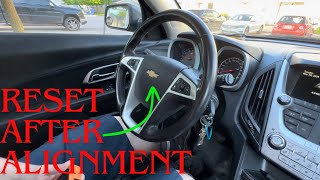
- If this code appears immediately after a wheel alignment, the shop failed to perform a mandatory Steering Angle Sensor zero-point calibration.
What Does U0428 Mean?
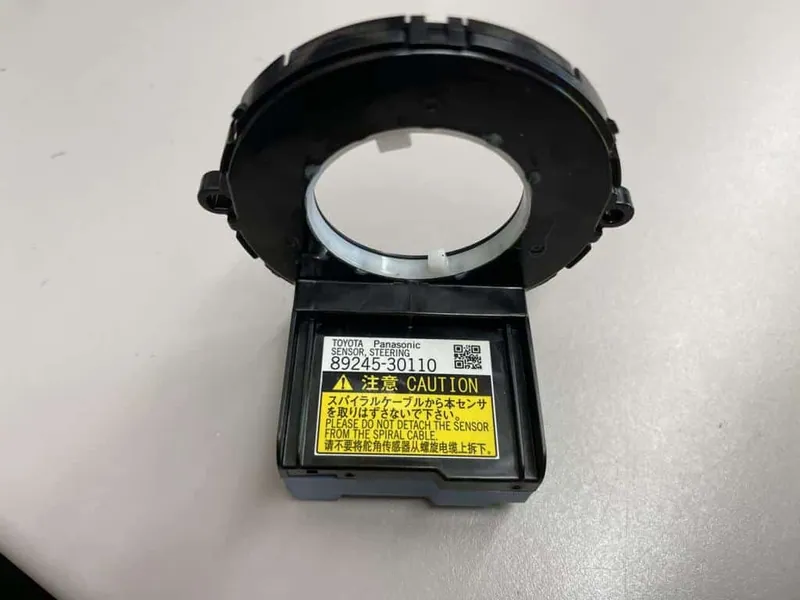
This code means your car's main computer receives nonsensical information from the Steering Angle Sensor (SAS). This sensor tells stability control, ABS, and electric power steering exactly how fast and far your steering wheel is turned. When the data is corrupt, these critical safety systems shut down as a precaution, triggering warning lights on your dash.
Technical definition: Invalid Data Received From Steering Angle Sensor Module. This indicates a control module on the Controller Area Network (CAN bus) received data from the SAS module that is illogical, corrupt, outside its expected range, or fails a signal comparison. The fault logs because the received steering data contradicts what the wheel speed sensors report the vehicle is actually doing.
Can I Drive With U0428?
Yes, But With Caution. Yes, but with extreme caution. Your vehicle's electronic stability control (ESC), traction control, and ABS are disabled, significantly increasing the risk of losing control in an emergency maneuver or on slippery roads. Power steering becomes heavy or unpredictable, which is dangerous mid-turn. On 2014-2019 GM trucks, this fault causes the engine to stall during low-speed turns, creating a severe safety hazard. Driving long-term with this fault damages other control modules, adding over $1,000 to the final repair cost.
Common Causes

- Damaged Wiring or Poor Ground Connection (Very Common) — On 2014-2019 GM trucks, this code is almost exclusively caused by corroded wires under the door sill plates or a bad body ground connection (specifically the G218 ground 🎬 Watch: How to fix the G218 ground on GM trucks.). These issues disrupt CAN bus communication, causing the invalid data error.
- Needs Recalibration (Common) — The sensor loses its 'center' or 'zero' position after a wheel alignment, battery replacement, or steering component repair. If not recalibrated, it sends data that conflicts with the vehicle's actual direction of travel, triggering the code.
- Control Module Software/Calibration Issue (Common) — A software glitch makes control modules overly sensitive to minor data discrepancies. Manufacturers frequently release Technical Service Bulletins (TSBs) with software updates to fix these communication errors, especially on Jeep, GM, and Ford models.
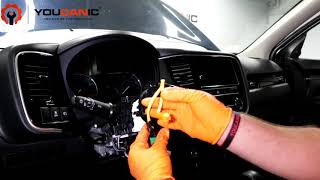
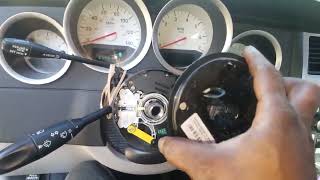
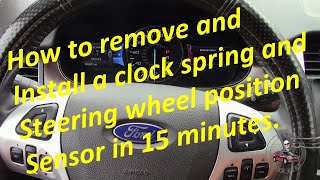
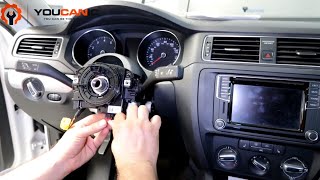
- Faulty Steering Angle Sensor (SAS) (Common) — The sensor fails internally due to age, wear, electrical faults, or memory corruption from voltage spikes. This causes it to send erratic, frozen, or incorrect data. On many vehicles, the SAS is integrated into the clockspring assembly behind the steering wheel.
- Failing or Weak Battery / High-Resistance Cables (Less Common) — Low system voltage during cranking causes widespread communication problems across the vehicle's network, leading to a cascade of 'U' codes. On some GM trucks, a high-resistance negative battery cable is a known cause documented in TSB 18-NA-161.
- Aftermarket OBD-II Device Interference (Rare) — Plug-in OBD-II devices, like insurance trackers or cheap diagnostic scanners, interfere with CAN bus communication. This interference corrupts messages between modules and triggers a false U0428 code, a known issue on newer Subaru models.
- Mismatched Tire Sizes or Severe Misalignment (Rare) — Significantly mismatched tire sizes or severe misalignment cause wheel speed sensors to report speeds that conflict with the steering angle sensor. The system flags the SAS data as invalid because it contradicts the vehicle's yaw and wheel speed.
Symptoms

- Traction Control or Stability Control Light is On — This is the most common symptom. The light (a car with squiggly lines) illuminates because the system disables itself due to untrustworthy sensor data.
- 'Service StabiliTrak' or 'Service Power Steering' Message — Many vehicles, particularly from GM, display a specific text message on the driver information center, such as 'Service StabiliTrak' or 'Steering Assist is Reduced'.
- ABS Light is On — The Anti-lock Braking System uses steering angle data to anticipate driver intent, so it is also disabled and triggers its own warning light.
- Heavy, Jerky, or Inconsistent Steering — If your vehicle has electric power steering, you will notice it becomes difficult to turn the wheel, or the assistance feels inconsistent at low speeds.
- Steering Wheel Does Not Return to Center Properly — After making a turn, the steering wheel does not return to its neutral, straight position smoothly. This happens when the system loses its true center position.
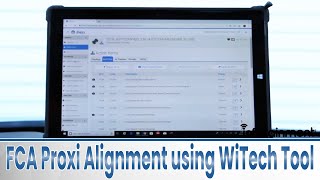
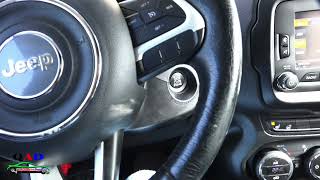
- Blinking Odometer (FCA Vehicles) — On Jeep, Chrysler, and Dodge vehicles, a blinking odometer is a classic sign of a CAN bus network configuration error that accompanies code U0428, indicating a 'Proxy Alignment' procedure is required. 🎬 See how to perform a Proxi Alignment on FCA vehicles.
Diagnostic Flowchart
Tap your situation to follow the diagnostic path that matches what you're seeing on this code.
Common Fixes & Costs
- Repairing Damaged Wiring or Ground — Parts: $0-$25, Labor: $130-$400, ~1.0-2.5 hr book time (Intermediate)
- Recalibrating the Steering Angle Sensor — Parts: $0, Labor: $65-$200, ~0.5-1.0 hr book time (Professional)
- Updating Control Module Software — Parts: $0, Labor: $130-$200, ~1.0 hr book time (Professional)
- Replacing the Steering Angle Sensor
— Parts: $150-$500, Labor: $200-$600, ~1.5-3.0 hr book time
(Professional)
Chevrolet/GMC (2014-2019 K2XX): OEM ACDelco/GM: 13590209 (Alt: Dorman 525-260, Standard Motor Products SWS112)
Jeep Renegade (2015-2016): OEM Mopar: 68459489AA (supersedes previous versions), 59001668 (Alt: Dorman, Standard Motor Products (confirm specific P/N))
Ford F-150 (2015-2020): OEM Motorcraft/Ford: HC3Z-3F818-A, BB5Z-3F818-A, FC3Z-3F818-A (VIN confirmation is critical) (Alt: Motorcraft (often same as OEM)) - Replacing Negative Battery Cable
— Parts: $40-$120, Labor: $65-$150, ~0.5-1.0 hr book time
(Beginner)
Chevrolet/GMC (per TSB 18-NA-161): OEM Part number is VIN-specific and should be confirmed with a GM dealer. (Alt: Available from various brands, ensure it matches OEM specifications for gauge and length.)
Used vs. New Parts: Buying Guide
When a used part is worth it: Buying a used Steering Angle Sensor or clockspring assembly is generally not recommended due to its critical role in the airbag and stability control systems. It only makes sense if the vehicle is very old, a new part is unavailable, and the used part comes from a reputable dismantler with a clear history and a good warranty.
Donor-vehicle mileage cap: roughly under 60000 miles for the part to have meaningful remaining life.
Donor quality checklist:
- Verify the donor vehicle was not in a frontal collision that stressed the steering column.
- Ensure the part number is an exact match; superseded parts are often not compatible.
- The part must be 'centered' and locked for shipping to prevent damage to the internal ribbon cable.
Decision logic:
- If The part is integrated with the airbag clockspring. → Strongly favor a new OEM or high-quality aftermarket part due to the extreme safety risk.
- If A new aftermarket part costs less than $250. → Buy new. The small savings from a used part do not justify the risk of premature failure and paying for labor twice.
- If Vehicle is over 15 years old and the budget is extremely tight. → A used part is a last resort, but accept the risk of a much shorter service life.
Warranty tradeoff: Used parts typically offer a 30-90 day warranty on the part only, not labor. New aftermarket parts usually come with a 1-year to limited lifetime warranty. OEM parts carry a 1-2 year warranty.
Worst-case if a used part fails: $300-$700 if a used part fails shortly after installation, covering repeat labor costs and the purchase of another (likely new) part.
What Happens If You Wait — Timeline
- 0-1 month: Code is set, and warning lights for ESC/ABS/Traction Control illuminate. Safety systems are disabled. Power steering feels heavy or inconsistent. (MPG impact: 0%% · Added cost: $0. The primary cost is the significantly increased safety risk due to disabled stability control.)
- 1-3 months: Intermittent but more frequent issues arise. On GM trucks, this includes engine stalling during low-speed turns. On other cars, unpredictable power steering behavior becomes more common, creating a daily driving hazard. (MPG impact: 0%% · Added cost: $200-$500 in potential added diagnostic time as intermittent network issues are harder to trace than a hard fault.)
- 3-8 months: The root cause (e.g., persistent water intrusion, bad ground, network chatter) affects other modules. You see new, seemingly unrelated warning lights or codes as the unstable communication network causes other components to log faults. (MPG impact: 0%% · Added cost: $500-$900. The original problem requires a more complex diagnosis, and there is a growing risk of needing to fix secondary issues.)
- 8+ months: Catastrophic failure occurs. Persistent data corruption or voltage instability on the CAN bus permanently damages the memory of an expensive control module, like the Body Control Module (BCM) or Electronic Brake Control Module (EBCM), requiring replacement and programming. (MPG impact: 0%% · Added cost: $900-$2,000+. A BCM replacement for a 2015 Silverado costs over $600 for a programmed part plus labor.)
Cost of Not Fixing It
- Immediate: Electronic Stability Control (ESC) and ABS are disabled, significantly increasing the risk of losing control in an emergency maneuver or on slippery roads. Power steering becomes heavy or erratic. (Added cost: Potential cost of an accident.)
- 1-6 months: Continued operation with an unstable communication network causes other modules to log fault codes or behave unpredictably. On some GM trucks, the engine stalls during low-speed turns, creating a severe safety hazard. (Added cost: $200-$500 in added diagnostic time for new, related codes.)
- 6+ months: Persistent network data corruption or voltage issues from the root cause permanently damage memory in other expensive control modules (like the BCM or EBCM), requiring replacement. (Added cost: $800-$2000+)
Diagnosis Steps
- Check for Technical Service Bulletins (TSBs)
Before any physical inspection, search online for your vehicle's make, model, year, and 'U0428 TSB'. The most common fix is a dealer-installed software update or a well-documented wiring repair.
Tools: Internet access (Beginner) - Scan ALL Vehicle Modules for Codes
Use a professional-grade OBD-II scanner to read codes from all modules (EBCM, BCM, PSCM, PCM), not just the engine computer. U0428 rarely appears alone. Note all other communication (U-codes) and chassis (C-codes), as they provide critical clues to the root cause.
Tools: OBD-II Scanner (all-module capability) (Beginner) - Perform a Detailed Visual Inspection
Look for obvious damage. Specifically check the wiring harnesses around the steering column, under the driver and passenger door sill plates, and at the battery. On GM trucks, the G218 ground stud behind the driver's kick panel is a primary suspect; check for looseness or trapped insulation.
Tools: Flashlight, trim removal tools (Intermediate) - Attempt Recalibration
If you have a capable scan tool, try to perform a Steering Angle Sensor recalibration or 'zero point' procedure. If the procedure fails immediately or the code returns, it confirms a hard fault in the sensor, wiring, or a related module that prevents the calibration from completing.
Tools: Advanced Scan Tool (Intermediate) - Analyze Live Sensor Data (PID)
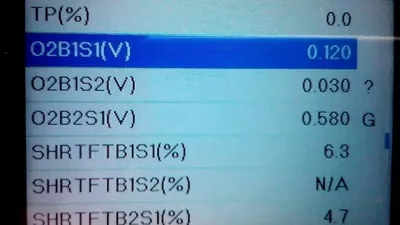
Use an advanced scan tool to view the live data stream from the Steering Angle Sensor. The angle reading (PID) should be close to 0° (within +/- 5°) when the wheel is straight. As you turn the wheel lock-to-lock, the value should change smoothly and logically without any jumps, freezes, or drop-offs. An incorrect value (e.g., stuck at 800°), erratic jumps, or no reading at all points to a faulty sensor or wiring.
Tools: Advanced Scan Tool (Advanced) - Test Sensor Voltage and Ground
If live data is absent or frozen, test the sensor connector. Most analog sensors use a 3-wire setup: a 5-volt reference, a chassis ground, and a signal wire. With the key on, use a multimeter to confirm you have ~5V on the reference wire (often 4.9V to 5.1V) and good continuity to ground (<1 Ω) on the ground wire. A missing power or ground supply indicates a wiring problem, not a bad sensor.
Tools: Multimeter, wiring diagram, back-probe kit (Advanced) - Perform CAN Bus Network Test
If multiple U-codes are present, test the CAN bus itself. With the battery disconnected, measure the resistance between the CAN High (Pin 6) and CAN Low (Pin 14) pins at the OBD-II port. It should be approximately 60 Ω. With the battery reconnected and key on, check voltages: CAN High should be ~2.5-3.5V and CAN Low should be ~1.5-2.5V. Readings outside this range indicate a network-wide wiring short or a faulty terminating resistor/module.
Tools: Multimeter, wiring diagram (Advanced) - Check for External Interference
As a final check, unplug any aftermarket devices from the OBD-II port (insurance trackers, performance monitors, etc.). Clear the codes and perform a test drive to see if the code returns. These devices disrupt network communication.
Tools: None (Beginner)
When This Code Triggers (Freeze-Frame Conditions)
- Vehicle Speed: 15-65 mph (During normal driving, especially during or just after a turn.)
- Engine State: Running (Fault logs moments after startup during module self-tests or while driving.)
- System Voltage: 11.5V - 14.8V (Code triggers during low voltage events (e.g., cranking with a weak battery) or normal operation.)
- Steering Wheel Angle: Any (The fault triggers when the reported angle is illogical or doesn't match data from other sensors (like wheel speed), regardless of the actual angle.)
Related Codes
- U0126 — U0126 means 'Lost Communication With Steering Angle Sensor Module', while U0428 means 'Invalid Data'. U0126 indicates the sensor module is completely offline (no signal), pointing to a power/ground issue, connector problem, or total module failure. U0428 means the module is online but sending a corrupt or illogical signal.
- C0710 — This chassis code means 'Steering Wheel Angle Sensor Signal' fault. It is set by the Electronic Brake Control Module (EBCM) at the same time the Body Control Module (BCM) sets U0428. They are two codes describing the same event from different modules' perspectives, strongly confirming the SAS data is the root of the problem.
- U0121 — 'Lost Communication With Electronic Brake Control Module (EBCM)'. Seeing U0121 alongside U0428 is a major clue that the problem is not the SAS itself. It points to a broader network failure (like a bad ground or wiring harness) that affects multiple modules simultaneously, a common scenario on GM trucks.
- U1504 — 'Implausible Message Data Length Received From Steering Angle Sensor'. This is a more specific version of U0428, common in FCA vehicles. While U0428 means the data is generally invalid, U1504 means the data packet's structure or length is wrong. This points strongly toward a software/firmware issue, frequently fixed by a dealer software update.
Climate & Environmental Factors
- High Humidity & Salt: Significantly increases the likelihood of U0428, especially on GM trucks. Moisture and road salt accelerate corrosion on wiring harnesses under door sill plates, at the G218 ground point, and within sensor connectors, leading to signal degradation and network faults.
- Extreme Cold: Exacerbates pre-existing issues. Low temperatures reduce battery efficiency, causing low system voltage during startup that triggers a flood of communication codes, including U0428. Wires and plastic connectors also become brittle and are more susceptible to breaking.
How to Talk to a Mechanic About This Code
Say this: "I have a U0428 code and the stability control light is on. I'd like to schedule a diagnostic. Based on my vehicle's make, I suspect it is a wiring, ground, or software issue rather than a bad sensor. Can you please check for TSBs and inspect common wiring failure points before recommending a sensor replacement?"
This signals you understand the common causes of U0428 are often not the sensor itself. It directs the technician toward a more efficient diagnosis, focusing on known issues like GM ground faults or FCA software updates, preventing you from paying for an unnecessary sensor replacement.
Avoid saying:
- 'My traction control light is on, can you just fix it?'
- 'I think I need a new steering angle sensor.'
- 'Just do whatever it takes to get the light off.'
Questions to ask before authorizing the repair:
- Did you find a relevant Technical Service Bulletin (TSB) for this code on my vehicle?
- If you are recommending a sensor replacement, what was the result of the live data test and the voltage/ground tests at the sensor connector?
- If the fix is a wiring repair, can you show me the location of the corrosion or damage?
- Does this repair require a steering angle sensor calibration or a proxy alignment procedure to complete?
Where to Take It: Dealer vs Independent vs Chain
- Dealer:
Best for: Vehicles under warranty., Jeep, Chrysler, or Dodge vehicles that need a software update or 'Proxy Alignment'., Complex cases where manufacturer-specific diagnostic tools and information are essential.
Downsides: Highest labor rates., Less willing to perform a simple wiring repair and more likely to replace a larger harness or component. (Typical cost: +50% vs. baseline) - Independent Shop:
Best fit for most scenarios, provided the shop is well-equipped. An independent shop with strong diagnostic skills efficiently handles the common wiring, ground, and calibration issues that cause U0428 without the high dealer cost.
Best for: Out-of-warranty vehicles, especially common models like GM trucks or Fords., Diagnosing and repairing known wiring and ground issues (like the GM G218 ground)., Post-alignment recalibration.
Downsides: Shop must have modern, bi-directional scan tools and access to TSBs and wiring diagrams., Quality varies, so vet the shop's reputation for electrical and diagnostic work. (Typical cost: +0% vs. baseline) - Chain Shop:
AVOID for diagnosis. A chain shop is not the right place for a complex communication code like U0428. Their business model is not set up for the in-depth electrical and network diagnosis required.
Best for: Simple, related maintenance like battery testing or replacement.
Downsides: Technicians lack the advanced diagnostic training for network communication codes., Likely to misdiagnose the issue and default to replacing the sensor, which does not solve the problem., Generally not equipped for software updates or advanced calibrations. (Typical cost: -10% vs. baseline)
When to Walk Away From the Repair
If the estimated repair cost for U0428 exceeds 40-50% of your car's current private-party value, seriously consider selling it as-is or trading it in.
- Car worth $5000, fix is $2200: Walk away. A repair costing nearly half the car's value is not a sound investment, especially with the potential for other age-related issues.
- Car worth $15000, fix is $800: Fix it. This repair is well below the threshold and restores critical safety features, protecting the vehicle's value.
- Car worth $3000, fix is $1200: Borderline. Get a second opinion to confirm the diagnosis and cost. If the fix is a guaranteed wiring repair, it is worth it. If it requires an expensive module, it is time to sell.
What Scan Tool You Need for This Code
Minimum: A scanner that reads codes from ALL vehicle modules (ABS, BCM, etc.) and displays live sensor data. A basic engine-only code reader is not sufficient.
U0428 is a network code, not an engine code. A cheap $20 scanner won't see it or the related chassis codes (C-codes). You need to see codes from the Brake Control Module and Body Control Module and view live steering angle data to diagnose the problem.
Budget: BlueDriver Pro (~$90) — Reads codes from all modules on supported vehicles (GM, Ford, Chrysler) and graphs live steering angle sensor data to see if it is frozen or erratic. It cannot perform the final SAS calibration.
Mid-range: Foxwell NT630 Plus / Autel MaxiCheck MX808 (~$150-350) — Provides full-system diagnostics, live data, and crucially, includes the bi-directional 'Steering Angle Sensor Calibration' function required after a repair or alignment. This is the minimum level for a complete DIY repair.
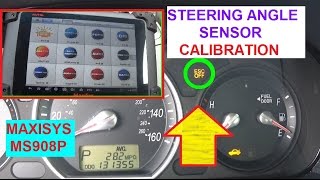
Professional: Autel MaxiSys Series (MS906BT+) (~$500-1500) — Offers full OEM-level diagnostics, including SAS calibration, Proxy Alignment for FCA vehicles, and advanced network testing capabilities. Software like FORScan (for Ford) or AlfaOBD (for FCA) paired with a quality adapter also provides professional-level functions for a specific brand.
Rent vs buy: For a one-time diagnosis, you cannot rely on a free rental scanner from an auto parts store, as they are typically basic engine-code-only readers. If you have a vehicle prone to this issue (GM, FCA) or do your own maintenance, buying a mid-range scanner with SAS calibration is a worthwhile investment.
How to Clear the Code After You Fix It
- Reconnect battery if disconnected for repair.
- Use a bi-directional scan tool to clear the U0428 code from all modules.
- Perform the Steering Angle Sensor 'Zero Point' calibration or relearn procedure with the scan tool.
- Perform a test drive that includes both straight-line driving and several left and right turns to confirm the fix.
Drive cycle (~20 minutes): After clearing the code and performing calibration, start the engine and let it idle for 2 minutes. Drive for at least 15 minutes at mixed city and highway speeds, including several turns. Park the vehicle and shut it off for a few minutes. Restart and check if any warning lights return.
Readiness monitors affected: Catalyst monitor, Evaporative System monitor, O2 Sensor monitor
Before emissions retest: drive at least 50 miles to fully set monitors.
Watch out for:
- Simply clearing the code with a basic scanner without performing the mandatory SAS calibration causes the code to return immediately.
- The code returns if the root cause (e.g., bad ground, corroded wire, software bug) is not correctly identified and fixed.
- Forgetting to perform a 'Proxy Alignment' on FCA vehicles leaves the odometer blinking even if the U0428 code is gone.
Will This Fail Emissions / State Inspection?
Yes — this code typically fails an OBD-II emissions inspection.
- California: Automatic failure. Any active code that illuminates a warning light (including ABS/ESC) fails the inspection. Clearing the code resets readiness monitors, which must all be completed before a re-test is possible.
- New York: Automatic failure. The NYS inspection includes a check for illuminated ABS and stability control warning lights. An active U0428 code with these lights on fails the safety portion of the inspection.
- Texas: Likely to pass, with a caveat. Texas state law explicitly states that an illuminated ABS warning light is NOT a cause for failure. However, if the code also triggers the primary 'BRAKE' warning light, it fails. Most U0428 scenarios only light up the ABS/ESC lamps.
Most Commonly Affected Vehicles
- Chevrolet/GMC Silverado/Sierra, Tahoe/Yukon (2014-2019) — Extremely common on the K2XX platform. Almost always caused by a poor ground at G218 (behind driver kick panel), corroded wiring under the door sill plates, or a high-resistance battery cable. Check TSBs PIT5405C, PIT5457D, 18-NA-161, and 20-NA-113 before replacing any parts.
- Jeep Renegade (2015-2016) — Often caused by a software glitch requiring a dealer update per TSB #18-061-16. If software is current, the sensor (integrated into the clockspring) is the likely cause. Often accompanied by a blinking odometer, which requires a 'Proxy Alignment' procedure.
- Jeep Cherokee (2017) — Frequently associated with a software issue in the Powertrain Control Module (PCM) that is fixed with an update, per TSB 18-066-20. This is the first diagnostic step.
- Ford F-150, Transit, Transit Connect (2015-2020) — Often appears with other codes like C1B00 and U2100. Frequently points towards a failure of the sensor itself or a need for recalibration after suspension work or steering rack replacement. On Transit models, replacing the steering rack requires programming with a diagnostic tool.
- Ford Focus, Mondeo (2012-2018) — This code commonly appears after a wheel alignment if the sensor is not recalibrated using a tool like FORScan or at a dealer. The system detects a mismatch between the steering angle and the vehicle's direction of travel.
- Volkswagen/Audi Golf, Jetta, A3, A4 (2006+) — Commonly occurs after the battery is disconnected. A manual recalibration (turning the wheel lock-to-lock, then driving straight for a short distance) resolves the issue. If it persists, it is misdiagnosed when the real fault is a bad ABS wheel speed sensor preventing the recalibration from completing.
- Nissan Rogue, Leaf (2014-2023) — Nissan has an official position statement (NPSB-16-602) that a SAS reset is mandatory after any alignment. The code is also triggered by a weak 12V battery on the Leaf EV, causing multiple communication faults.
- Subaru WRX, Outback, Forester (2020+) — Often appears in a large cluster of communication codes (U0073, U0122, U0140, etc.). This pattern is highly indicative of either a failing battery or interference from a plugged-in aftermarket OBD-II device (e.g., insurance tracker).
Manufacturer-Specific Notes
- General Motors (Chevrolet/GMC): On 2014-2019 trucks and SUVs, U0428 is almost always caused by a bad ground (G218), corroded wiring under the door sills, or a bad battery cable, not a failed sensor. Always check TSBs PIT5405C, PIT5457D, 18-NA-161, and 20-NA-113 before replacing parts.
- Jeep/Chrysler/Dodge (FCA): On many models like the Renegade and Cherokee, this code is caused by a software bug that requires a dealer to reprogram a control module per a TSB (e.g., 18-061-16). A blinking odometer accompanies this code, indicating a network configuration error that requires a 'Proxy Alignment' procedure with a capable scan tool.
- Ford: This code frequently appears after a wheel alignment or steering rack replacement. The sensor MUST be recalibrated with a diagnostic tool (like FORScan or IDS) to match the new alignment angles. Ford issued multiple recalls (e.g., for 2022-2023 Mustangs) for steering sensor calibration issues that require a software update at the dealer.
- Mitsubishi: Service manuals strongly advise diagnosing the entire CAN bus system before addressing U0428. They consider network line problems (external noise, wiring faults) to be a primary cause of this code being set incorrectly, and list 'Steering wheel sensor malfunction' as a lower probability cause.
Real Owner Stories
2015 Chevrolet Silverado 1500
Owner experienced multiple warning lights including 'Service StabiliTrak', ABS, and traction control, along with the HVAC and radio cutting out. The issues occurred at low speeds while turning the steering wheel.
Outcome: The owner found GM TSB PIT5405C. The cause was the dash insulator mat trapped under the G218 ground stud behind the driver's side kick panel. The owner cut away the interfering insulation, cleaned the ground, and re-secured it, completely resolving all symptoms.
Lesson: On GM trucks, always check the G218 ground issue and other wiring-related TSBs before assuming a control module or sensor failed. This $0 fix saves hundreds in misdiagnosis.
2016 Jeep Renegade with 70K miles
After replacing a dead battery, the owner had a blinking odometer, and the stability control warning light came on with code U0428. The vehicle drove normally otherwise.
Outcome: The root cause was a software glitch. The dealer confirmed TSB 18-061-16 applied and updated the Powertrain Control Module (PCM) software. After the update, the Proxy Alignment procedure completed successfully, clearing the U0428 code and stopping the odometer from blinking.
Lesson: On FCA vehicles (Jeep, Chrysler, Dodge), a blinking odometer with U0428 strongly points to a network configuration or software issue. Always check for TSBs related to software updates before replacing hardware.
2013 Ford F-150
Immediately after getting a wheel alignment, the 'Service AdvanceTrac' warning light appeared on the dash, and the scanner showed codes U0428 and C1B00. The turn signals would not stay on.
Outcome: The dealership technician identified that the Steering Angle Sensor was not recalibrated after the wheel alignment. They performed the SAS 'zero point' calibration procedure using the Ford IDS scan tool. This cleared the codes and restored normal function for a 1-hour labor charge.
Lesson: If code U0428 appears immediately after a wheel alignment or replacement of steering/suspension parts, the cause is a lack of sensor recalibration. The sensor must be told the new 'straight-ahead' position.
2020 Subaru Outback
The owner suddenly got a cascade of warning lights for ABS, EyeSight, and traction control, along with a cluster of communication codes including U0428, U0122, and U0073.
Outcome: Forum posts suggested that plug-in OBD-II devices cause network communication 'chatter' on newer Subarus. The owner unplugged their insurance tracker, cleared the codes with a basic scanner, and drove the vehicle. The codes and warning lights never returned.
Lesson: If you have an aftermarket device plugged into your OBD-II port and experience a sudden flood of communication codes, unplug the device and clear the codes before pursuing any diagnosis.
How to Prevent This Code From Triggering
- Clean and Protect Key Ground Points (Every 2-3 years or during other maintenance) — Corrosion at critical ground points (like G218 on GM trucks) introduces resistance that disrupts module communication. Disconnecting, cleaning the metal surfaces, and applying dielectric grease prevents moisture intrusion and oxidation.
- Apply Dielectric Grease to Exposed Connectors (When servicing nearby components) — For connectors in vulnerable areas (underbody, behind wheel wells, under door sills), applying dielectric grease creates a barrier against water and road salt, which are primary causes of the wiring corrosion that triggers U0428.
- Perform Regular Battery Health Checks (Annually, especially before winter) — A weak battery providing low voltage during startup is a common cause of a flood of communication 'U' codes. Most auto parts stores perform a free load test to check your battery's health.
- Keep Door and Window Seals in Good Condition (Inspect annually) — Water leaks from failing door seals drip directly onto wiring harnesses routed under the door sill plates. This moisture is a direct cause of the wire corrosion that leads to U0428 on GM vehicles.
- Always Request SAS Calibration After an Alignment (Every time a wheel alignment is performed) — Explicitly telling the service provider that a 'Steering Angle Sensor Zero Point Calibration' is required ensures they don't skip this critical final step, preventing the code from triggering.
Frequently Asked Questions
Can I fix code U0428 myself?
Yes, if the cause is a simple bad ground, corroded wire, or a weak battery. However, correctly diagnosing the issue and replacing or recalibrating the sensor requires advanced scan tools. Stop DIY and go to a shop if you need to remove the steering wheel, due to airbag deployment risks.
How much does it cost to fix U0428?
A simple wiring repair or software update costs $130 to $250 at a shop. Recalibrating the sensor after an alignment costs $65 to $200. A full steering angle sensor replacement ranges from $350 to $1,100, depending on the vehicle and labor rates.
Will a wheel alignment fix code U0428?
No, an alignment alone does not fix it. In fact, an alignment is a common cause of this code if the mechanic fails to recalibrate the steering angle sensor afterward to match the new steering geometry.
Can I reset the steering angle sensor myself?
On some VW and Audi vehicles, you can perform a basic reset after a battery disconnect by turning the steering wheel fully left, then fully right, and driving straight. For a persistent U0428 code or after an alignment, a proper calibration with a bi-directional scan tool is mandatory.
Is the Steering Angle Sensor the same as the clockspring?
On many modern vehicles, the steering angle sensor is integrated directly into the clockspring assembly behind the steering wheel. On older cars, it is a separate unit mounted lower on the steering column.
What are common misdiagnosis pitfalls for U0428?
The biggest pitfall is immediately replacing the steering angle sensor. The code is usually caused by a software bug, a bad ground wire on a GM truck, or a faulty ABS wheel speed sensor preventing recalibration. Always diagnose systematically before buying parts.
My odometer is blinking along with code U0428 on my Jeep, what does that mean?
A blinking odometer on FCA vehicles indicates a CAN bus network configuration error. It requires a 'Proxy Alignment' procedure with a capable scan tool to re-establish communication with all modules. This 1-hour procedure resolves the U0428 code and stops the blinking.
Will code U0428 go away on its own?
No. Because U0428 relates to a critical safety system, it remains a permanent code until the underlying fault is repaired and a proper scan tool recalibration is performed.
What is a Steering Angle Sensor recalibration?
It is a procedure performed with a bi-directional scan tool that resets the sensor's 'zero point' or center position. This is required after an alignment or replacing steering components so the car's computers know precisely when the wheels point straight ahead.
Key Takeaways
- Code U0428 disables your vehicle's stability and traction control systems, increasing the risk of losing control during emergency maneuvers.
- On 2014-2019 GM trucks, a corroded G218 ground wire causes 80% of U0428 codes, requiring a $0 repair rather than a $500 sensor replacement.
- Always check for Technical Service Bulletins (TSBs) first; Jeep and Chrysler vehicles frequently resolve this code with a 1-hour dealer software update.
- If this code appears immediately after a wheel alignment, the shop failed to perform a mandatory Steering Angle Sensor zero-point calibration.
Helpful Videos

Shop the Parts Behind U0428
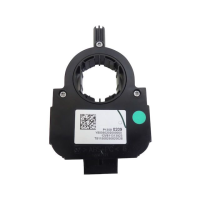
Below are the parts most often responsible for code U0428, ranked by how frequently each one is the actual culprit (per the diagnosis above). Tap any to see what we have for your vehicle.




The information in this article is provided for general reference and educational purposes only. Vehicle specifications, procedures, and part compatibility can vary by production date, trim level, and region. Always consult your vehicle's factory service manual and verify part numbers before purchasing or performing repairs. Safety-critical components such as airbags, seat belts, and braking systems should be installed by a qualified professional.
- 🧭 Diagnostic Flowchart
- 🎬 Helpful Videos
- 🛍️ Shop This Part
- What Does U0428 Mean?
- Can I Drive With U0428?
- Common Causes
- Symptoms
- Common Fixes & Costs
- Used vs. New Parts: Buying Guide
- What Happens If You Wait — Timeline
- Cost of Not Fixing It
- Diagnosis Steps
- When This Code Triggers (Freeze-Frame Conditions)
- Related Codes
- Climate & Environmental Factors
- How to Talk to a Mechanic About This Code
- Where to Take It: Dealer vs Independent vs Chain
- When to Walk Away From the Repair
- What Scan Tool You Need for This Code
- How to Clear the Code After You Fix It
- Will This Fail Emissions / State Inspection?
- Most Commonly Affected Vehicles
- Manufacturer-Specific Notes
- Real Owner Stories
- 2015 Chevrolet Silverado 1500
- 2016 Jeep Renegade with 70K miles
- 2013 Ford F-150
- 2020 Subaru Outback
- How to Prevent This Code From Triggering
- Frequently Asked Questions
- Can I fix code U0428 myself?
- How much does it cost to fix U0428?
- Will a wheel alignment fix code U0428?
- Can I reset the steering angle sensor myself?
- Is the Steering Angle Sensor the same as the clockspring?
- What are common misdiagnosis pitfalls for U0428?
- My odometer is blinking along with code U0428 on my Jeep, what does that mean?
- Will code U0428 go away on its own?
- What is a Steering Angle Sensor recalibration?
- Key Takeaways
- 🎟️ Get 5% Off