

U0428 on 2015-2019 Cadillac Escalade ESV: Causes and Fixes for Invalid Steering Data
This code means another module is receiving invalid data from the Steering Angle Sensor. The most common causes are not the sensor itself, but wiring issues. Check for a bad ground at G218 under the dash and inspect for corroded wires in the Communication Enable Circuit (5986) under the driver's side sill plate, as outlined in GM service bulletins PIT5405C and PIT5457D.
- U0428 on this Escalade is most likely an electrical problem, not a failed sensor.
- Before buying any parts, inspect the BCM ground G218 under the driver's side dash.
- The second place to check is the wiring harness running under the driver's side door sill for corrosion or damage.
- This is a complex electrical issue. If you are not comfortable tracing wires, professional diagnosis is recommended to avoid further damage or unnecessary part replacement.
What's Unique About the 2015-2019 Cadillac ESCALADE ESV
On this generation of Escalade and its GM K2XX platform siblings (like the Silverado, Sierra, Tahoe, and Yukon), electrical network issues are a well-documented pattern. Multiple Technical Service Bulletins (TSBs) point to specific, recurring failure points in the wiring and grounds that cause a cascade of communication codes, including U0428. The problem is rarely a sophisticated module failure and more often a simple, but difficult to find, wiring or grounding fault located under the dash (G218) or in the sill plate harnesses.
Diagnostic Flowchart
Tap your situation to follow the diagnostic path that matches what you're seeing on this vehicle.
Symptoms You May Notice
- Service StabiliTrak / Traction Control warning light
- Service Power Steering message
- Steering feels jerky, or assistance level changes unexpectedly
- Instrument panel, radio, or HVAC may go blank intermittently
- Backup camera guidelines may be missing or inoperative
- Alarm may sound unexpectedly when locking doors
- Engine may stall at low speeds, particularly while turning
- Replacing the Steering Angle Sensor without first checking grounds (G218) and wiring harnesses (sill plates). The TSBs strongly indicate that wiring is the more probable cause.
- Replacing the Power Steering Control Module (PSCM) or Electronic Brake Control Module (EBCM) when they are simply not receiving a valid signal due to a network fault.
- Replacing the battery without confirming it has failed a load test. While a weak battery can cause myriad electrical issues, it's less likely to be the specific cause of U0428 if the G218 ground and sill plate wiring are known weak points.
Most Likely Causes
- Poor Body Control Module (BCM) Ground at G218 🔴 High Probability GM TSB #PIT5405C explicitly calls this out. The front dash insulator mat can get trapped between the ground eyelet and the body stud, preventing a solid connection and causing widespread electrical issues and numerous communication codes, including U0428. This is a known issue across the K2XX platform.
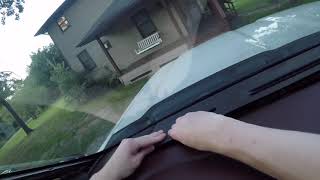
How to confirm: Locate the G218 ground stud, which is on the driver's side under the dash, near the A-pillar, sometimes behind the parking brake pedal assembly or near the driver's dash speaker. Check if the 10mm nut is loose or if the black dash insulator mat is pinched under the ground connector. A visual inspection and ensuring the nut is tight is the first step. 🎬 Watch: How to fix the G218 ground connection issue.
Typical fix: Remove the 10mm nut and the ground connector eyelet. Cut away the portion of the insulator mat that is interfering. Use a small brush to clean the contact surfaces of the stud and eyelet to ensure a clean metal-to-metal connection, then securely retighten the ground nut.
Est. part cost: $0-$5 - Damaged/Corroded Wiring in Communication Enable Circuit (5986) 🔴 High Probability GM TSB #PIT5457D identifies this as a common source of communication loss with the steering (SWPS, PSCM) and brake (EBCM) modules. Water intrusion from clogged sunroof drains or wet boots, and physical damage from foot traffic are common under the sill plates where this harness runs.
How to confirm: Remove the driver and/or passenger side sill plates to access the wiring harness channel. Carefully unwrap and inspect the harness for signs of corrosion (green or white crust), pinched wires, or water damage. TSB #PIT5457D specifically mentions splice J365 under the passenger front sill plate as a potential trouble spot. 🎬 See this walkthrough for diagnosing U0428 and C0710 signal codes. A multimeter can be used to check for low voltage on circuit 5986 at one of the affected modules (like the EBCM or PSCM) when the fault occurs.
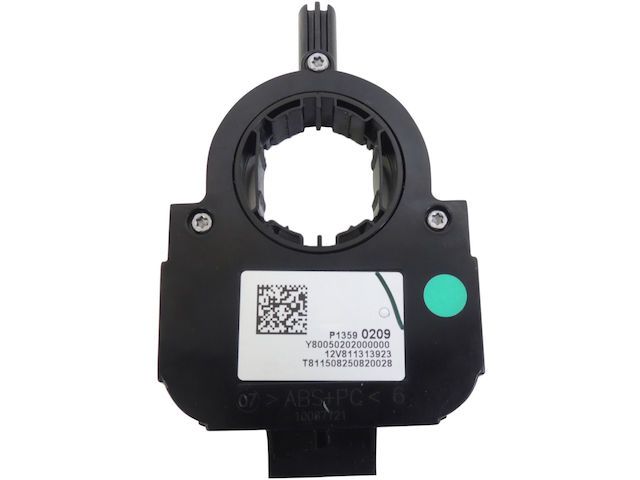
Est. part cost: $5-$25 - Failed Steering Angle Sensor (SAS) / Steering Wheel Position Sensor (SWPS) ⚪ Low Probability → Shop Steering Angle Sensor While the code directly names this module, it is more often the victim of bad data or poor communication rather than the source of the problem. It should only be suspected after the common wiring and grounds are confirmed to be in perfect condition.
How to confirm: Use a professional scan tool to view live data from the Steering Angle Sensor. As you turn the wheel, the degrees should change smoothly and logically. If the data is frozen, jumps erratically, is absent, or shows 'invalid', and the wiring/grounds are good, the sensor itself may be faulty.
Typical fix: Replace the steering angle sensor. It is typically located in the steering column, often as part of the clock spring assembly. After replacement, a steering angle sensor calibration procedure must be performed with a compatible scan tool to ensure it communicates correctly with the other modules.
Est. part cost: $75-$300
Rare But Worth Checking
- Faulty Body Control Module (BCM):
Diagnosis Steps
- Scan all vehicle modules for codes. Note all U-codes, C-codes, and B-codes present, as they provide clues to the scope of the communication failure.
- Inspect the BCM ground at location G218. Per TSB #PIT5405C, check for the dash insulator mat being trapped under the ground terminal. Correct this by removing the 10mm nut, cutting the mat away, cleaning the contacts, and retightening.
- Clear codes and perform a test drive, turning the steering wheel lock-to-lock. If codes return, proceed to the next step.
- Following TSB #PIT5457D, remove the driver's side sill plate and inspect the wiring harness in the channel for corrosion, water damage, or pinched wires. Pay close attention to the Communication Enable Circuit (5986). The wire color may vary, so a wiring diagram is helpful.
- If the driver's side is clean, inspect the passenger side sill plate area, particularly near splice J365, which is another known failure point mentioned in the TSB.
- Repair any damaged wiring found. Ensure repairs are sealed against moisture using heat-shrink connectors.
- If all wiring and grounds are confirmed to be in perfect condition, use a scan tool to monitor the live data from the Steering Angle Sensor. If the data is absent, erratic, or invalid, the sensor itself is the likely culprit.
- If the sensor is replaced, perform the steering angle sensor calibration procedure using a compatible scan tool. This step is mandatory for the new sensor to function correctly. 🎬 Watch: How to calibrate the steering angle sensor on GM trucks.
Parts You'll Likely Need
- Wiring Repair Supplies — The most common causes are wiring-related, requiring supplies for splicing and sealing damaged circuits found under the sill plates or at the G218 ground.
Trusted brands: 3M
Aftermarket price range: $5-$25 - Steering Angle Sensor
(OEM #13590209)— If wiring and grounds are confirmed to be in perfect condition, the sensor itself may have failed. Replacement requires calibration.
Trusted brands: GM Genuine Parts, ACDelco
OEM price range: $75-$150
Aftermarket price range: $50-$100
Related Codes That Often Appear With This One
- U0121 — Lost Communication With Electronic Brake Control Module (EBCM). This often appears with U0428 because the EBCM relies on steering angle data to operate StabiliTrak. Both are mentioned in TSB #PIT5457D as being affected by faults in circuit 5986.
- U0131 — Lost Communication With Power Steering Control Module (PSCM). The PSCM also uses steering angle data. This code is frequently seen with U0428 per TSB #PIT5457D.
- C0710 — Steering Wheel Position Sensor Signal. This is a chassis code that often accompanies U0428, directly pointing to a problem with the sensor's signal or calibration.
- U0077 — Lost Communication With Body Control Module 'B'. This code, along with many other U-codes, is listed in TSB #PIT5457D as a related fault caused by the same underlying wiring issues in the communication enable circuit.
Technical Service Bulletins (TSBs) & Recalls
- PIT5457D: Mentions U0428 in the context of communication loss with various modules (EBCM, PSCM, SWPS). Points to damaged wiring in the Communication Enable Circuit (5986) under the driver and passenger sill plates as a primary cause.
- PIT5405C: Lists U0428 as a possible code resulting from a poor BCM ground at G218, caused by the dash insulator mat interfering with the connection. Also links this ground issue to steering kick, stalling, and blank instrument panels.
- PIT5405B: An earlier version of the TSB also linking various electrical issues and codes (including U0428) to the G218 ground and other power/ground issues.
Platform-Specific Known Issues
- A poor ground at G218 caused by a trapped dash insulator is a well-documented issue for this GM platform, causing a wide range of seemingly unrelated electrical problems. Owners on forums for platform-mates like the Chevy Tahoe have confirmed this is a common problem.
- The communication enable circuit (5986) is prone to damage under the sill plates due to its location, as documented in TSB #PIT5457D. Water intrusion and chafing in this area are frequent root causes for a host of communication DTCs.
Mechanic-Grade Diagnostic Values
- Communication Enable Circuit 5986 Voltage — expected: Approximately 12 volts when the ignition is in ACC or ON, or briefly after turning the vehicle off before the BCM sleeps.. Failure: Low voltage or no voltage indicates an open, short, or high resistance in the circuit.
- Communication Enable Circuit 5986 Load Test — expected: The circuit should be able to light a 194 bulb (approx. 250mA draw) and maintain at least 11 volts across the bulb.. Failure: If the bulb does not light, or if the voltage across the lit bulb drops below 11 volts, it indicates high resistance in the circuit that cannot handle a minimal load.
- BCM Current Protection on Circuit 5986 — expected: Normal current draw is under 0.88 amps.. Failure: If the circuit draws more than 0.88 amps (e.g., due to a short to ground), the BCM will shut down the output, resulting in zero volts.
Hidden / Shadow Codes Worth Checking
- U0428-71: This is a more specific version of the code indicating 'Invalid Serial Data Received'. The '-71' symptom byte points directly to the invalid nature of the data packets being sent by the Steering Angle Sensor module, as opposed to a simple loss of communication. (see via This is typically visible on professional-grade scan tools like the GM GDS2, XTool D8, or similar diagnostic equipment that can read manufacturer-specific symptom bytes.)
Scan Tool Commands That Help
- GM GDS2 / High-End Aftermarket Scanners (Autel, XTool, etc.): Steering Wheel Angle Sensor Learn / Calibration — This function is mandatory after replacing the Steering Angle Sensor or the steering gear. It is also used to reset the sensor's center position. The procedure typically involves starting the engine, turning the wheel lock-to-lock, centering it, and confirming with the scan tool. In some cases, simply performing this recalibration can resolve the U0428 code without replacing any parts.
- GM GDS2 / High-End Aftermarket Scanners: Steering Wheel Angle Sensor Reset — This function should be performed before the 'Learn' procedure. It clears the old, stored calibration values from the control module's memory. After a reset, a 'Service Stabilitrak' light will typically illuminate, indicating that the 'Learn' procedure must be performed next.
Wiring & Ground Locations
- G218 — Driver's side, under the dash near the A-pillar. It can often be found above or behind the parking brake pedal assembly or near the driver's side dash speaker.. This is a primary ground point for the Body Control Module (BCM). TSB #PIT5405C identifies that the dash insulator mat can get trapped under this ground, causing high resistance and leading to a multitude of communication codes, including U0428.
- Splice J365 — Located in the wiring harness channel under the passenger's front sill plate.. This is a known weak point in the Communication Enable Circuit (5986). TSB #PIT5457D points to this splice as a common location for corrosion and open circuits, which prevents the 'wake-up' signal from reaching modules like the SWPS and EBCM.
- Driver's Sill Plate Harness — In the wiring channel running along the floor, underneath the driver's side plastic sill plate.. This is another location specified by TSB #PIT5457D where Circuit 5986 is prone to damage from corrosion, moisture, or being pinched, causing an open or high resistance.
Real Owner Repair Stories
- YouTube channel 'Tux Car Rebuild' (2014 Chevrolet Silverado (K2XX Platform)) — Fallo en Stabilitrak (Stabilitrak Failure) message on dash, code U0428-71 present. Live data showed no angle reading when turning the steering wheel.
❌ Tried (didn't work) The initial diagnosis pointed towards replacing the steering angle sensor, which is an involved repair requiring column disassembly.
✅ What actually fixed it Before replacing the sensor, a recalibration of the steering angle sensor was performed using an XTool D8 scanner. The procedure involved accessing the electric brake module functions, selecting the sensor reprogram, following on-screen steps (centering wheel, etc.), and clearing the codes. This restored function and cleared the code without any parts being replaced.
OEM Part Supersession History
13590209→No supersession found. 13590209 is the current part number.— N/A
Heads up: This part requires programming/calibration after installation using a compatible scan tool.
Helpful Videos
We Have This Part in Stock

The information in this article is provided for general reference and educational purposes only. Vehicle specifications, procedures, and part compatibility can vary by production date, trim level, and region. Always consult your vehicle's factory service manual and verify part numbers before purchasing or performing repairs. Safety-critical components such as airbags, seat belts, and braking systems should be installed by a qualified professional.
- Cadillac ESCALADE ESV:
- 🧭 Diagnostic Flowchart
- 🎬 Helpful Videos
- 🛍️ Shop This Part
- What's Unique About the 2015-2019 Cadillac ESCALADE ESV
- Symptoms You May Notice
- Most Likely Causes
- Rare But Worth Checking
- Diagnosis Steps
- Parts You'll Likely Need
- Related Codes That Often Appear With This One
- Technical Service Bulletins (TSBs) & Recalls
- Platform-Specific Known Issues
- Mechanic-Grade Diagnostic Values
- Hidden / Shadow Codes Worth Checking
- Scan Tool Commands That Help
- Wiring & Ground Locations
- Real Owner Repair Stories
- OEM Part Supersession History
- 🎟️ Get 5% Off