

U0428 on 2015-2017 Chevrolet Silverado: Steering Angle Sensor Communication Fault Causes and Fixes
On a 2015-2017 Silverado, code U0428 is most often caused by a poor ground connection at the G218 stud under the driver's dash (TSB #18-NA-161) or corroded wiring under the door sill plates (TSB #PIT5457D). Inspecting and fixing these known electrical issues should be your first step before considering replacing the steering angle sensor.
- U0428 on a 2015-2017 Silverado is most often an electrical connection problem, not a bad sensor.
- Always start diagnosis by inspecting the G218 ground under the driver's side dash. This is a well-documented factory issue and a very low-cost fix.
- The second most likely cause is damaged or corroded wiring under the door sill plates. Inspect this area thoroughly before buying any parts.
- Do not replace the Steering Angle Sensor unless you have confirmed the wiring and grounds are perfect and have verified the sensor is failing using live scan tool data.
- This code disables critical safety systems; address it promptly to ensure StabiliTrak and power steering function correctly.
What's Unique About the 2015-2017 Chevrolet SILVERADO
This generation of Silverado (K2XX platform) is known for specific electrical vulnerabilities that trigger code U0428. General Motors has issued multiple Technical Service Bulletins (TSBs) that point directly to a poor ground connection (G218) and wire harness corrosion under the door sill plates as the primary culprits. Unlike in many other vehicles where this code might immediately suggest a bad sensor, on these trucks, the diagnostic path almost always starts with checking these specific, well-documented wiring and grounding points.
Diagnostic Flowchart
Tap your situation to follow the diagnostic path that matches what you're seeing on this vehicle.
Symptoms You May Notice
- "Service StabiliTrak" message on the instrument cluster
- "Service Power Steering" or "Steering Assist is Reduced Drive with Care" message
- ABS and Traction Control warning lights illuminated
- Loss of, or intermittent, power steering assist, making the wheel feel heavy
- Steering wheel jerks or kicks back when turning
- Instrument panel, radio, or HVAC display goes blank intermittently.
- Headlights flickering or dimming, especially when turning or applying brakes.
- In rare cases, the engine may stall at low speeds while turning.
- Replacing the Steering Angle Sensor first. On this specific Silverado generation, the problem is much more likely to be a simple ground or wiring issue that can be fixed for a fraction of the cost. Always check the G218 ground and sill plate wiring before buying parts.
Most Likely Causes
- Poor Body Control Module (BCM) Ground at G218 🔴 High Probability TSB #PIT5405C and its successor #18-NA-161 directly identify this as a common factory assembly issue. The dash insulator mat is often trapped under the ground terminal, preventing a solid connection and causing a host of communication faults.
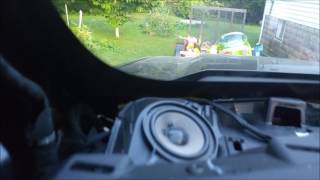
How to confirm: Locate the G218 ground stud on the A-pillar behind the driver's side dash, often near the speaker. Remove the 10mm nut and check for trapped foam insulation or corrosion. The nut may feel tight, but the insulation prevents proper metal-to-metal contact.
Typical fix: Remove the 10mm nut, pull the ground terminal off, trim away any trapped insulation material, clean the terminal and mounting surface with a wire brush, and re-secure the ground nut tightly. Per TSB #18-NA-161, the nut should be torqued to 7 Nm (62 lb in).
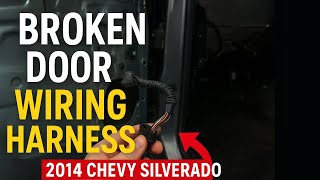
Est. part cost: $0-$5 - Damaged or Corroded Wiring in Sill Plate Harness 🔴 High Probability TSB #PIT5457D notes that water intrusion into the cabin, often from clogged sunroof drains or a leaking windshield, causes wires in the harness running under the driver and passenger door sill plates to corrode and break, disrupting CAN bus communication.
How to confirm: Remove the plastic sill plates and peel back the carpet and harness tape. Visually inspect the wires, especially the twisted pairs for the communication bus (often Tan and Tan/Black), for green or white powdery corrosion, swelling, or breaks, particularly around factory splice points.
Typical fix: Cut out the damaged section of wire, splice in a new piece of wire using weatherproof butt connectors, and seal the repair with heat shrink tubing. Ensure the harness is protected from future water damage.
Est. part cost: $5-$25 - Failing Steering Angle Sensor (SAS) ⚪ Low Probability → Shop Steering Angle Sensor While the sensor can fail, it is far less common than the wiring and ground issues on this platform. It should only be considered after the other common causes are ruled out completely.
How to confirm: Using a scan tool that can read live data, monitor the steering angle sensor output while turning the steering wheel. The reading should be smooth and linear. If it is erratic, jumps, is stuck at a value, or does not change, the sensor is likely faulty.
Typical fix: Replace the steering angle sensor, which is located within the steering column. This repair requires a calibration procedure using a compatible scan tool after installation to zero the sensor's position.
Est. part cost: $70-$250
Rare But Worth Checking
- Power Steering Control Module (PSCM) Software Error: TSB #20-NA-113 describes a software glitch where the PSCM can hold U0428 as a 'current' code even after the root cause (like a bad ground) is fixed. The code will not move to 'history' after clearing. If the code returns immediately on the next key cycle without any fault being present, a dealer reprogram of the PSCM with updated software is the required fix.
- High-Resistance Negative Battery Cable: → Shop Vehicle Battery TSB #18-NA-161 also points to a faulty negative battery cable as a cause for these symptoms. A voltage drop test across the cable while cranking should be performed. A reading above 200mV indicates a bad cable that needs replacement.
Diagnosis Steps
- Scan all vehicle modules and record all stored DTCs. Pay close attention to other communication ('U') codes and steering-related ('C') codes.
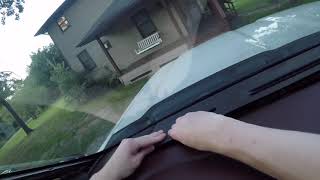
- Inspect the BCM ground G218. Locate the ground stud deep in the driver's side footwell on the A-pillar, behind the dash speaker. Check for trapped insulation foam and ensure the 10mm nut is tight on a clean metal surface, as per TSB #18-NA-161.
- Remove the driver's and passenger's side door sill plates and peel back the carpet to inspect the wiring harness. Look for any signs of corrosion (green/white powder), damage, or previous poor repairs, as noted in TSB #PIT5457D.
- If wiring and grounds are confirmed to be in good condition, connect a bi-directional scan tool.
- Monitor the live data stream for the Steering Angle Sensor. Turn the wheel lock-to-lock and verify the angle changes smoothly and logically without jumping or freezing.
- If the data is erratic or absent despite good wiring, the Steering Angle Sensor is the likely culprit.
- If the code clears but returns immediately as 'current' on the next key cycle without any fault being present, suspect the software issue described in TSB #20-NA-113 and consult a dealer for a PSCM reprogram.
Parts You'll Likely Need
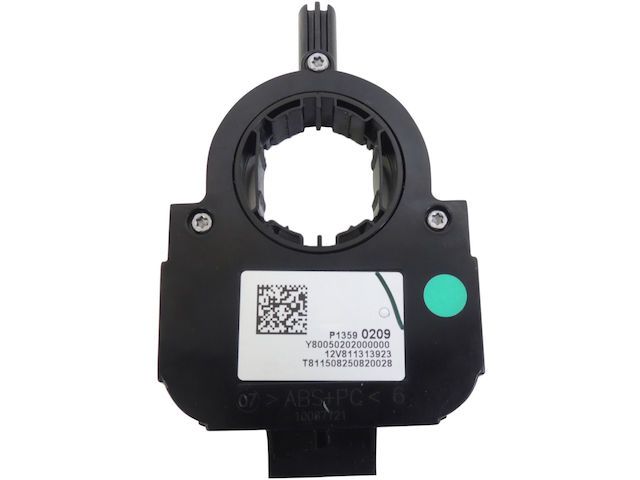
- Steering Angle Sensor
(OEM #13590209)— This sensor provides the critical steering input data. It is replaced only after confirming the much more common wiring and ground faults are not present. Requires calibration after installation.
Trusted brands: ACDelco (GM Genuine), Dorman
OEM price range: $70-$150
Aftermarket price range: $60-$120 - Wiring Repair Supplies — Needed for repairing corroded or broken wires in the sill plate harness, a very common cause of this code.
Trusted brands: 3M
OEM price range: $5-$25
Aftermarket price range: $5-$25
Related Codes That Often Appear With This One
- U0126 — Lost Communication With Steering Angle Sensor Module. This often appears with U0428 and points to the same wiring or ground issues.
- C0710 — Steering Wheel Angle Sensor Signal. This code is also directly related to the SAS and is often caused by the G218 ground issue or a calibration problem.
- C0544 — Steering Assist Control. This code is frequently listed in the same TSBs as U0428, pointing back to the G218 ground or PSCM issues.
- U0073, U0121, U0131, U0401, U0415 — These are various communication codes listed alongside U0428 in TSBs PIT5457D and 18-NA-161, indicating a widespread network communication failure due to a shared bad ground or wiring fault.
Technical Service Bulletins (TSBs) & Recalls
- PIT5457D
- PIT5405C
- 18-NA-161
- 20-NA-113
Platform-Specific Known Issues
- TSB #18-NA-161 (supersedes PIT5405C): Documents numerous communication codes, including U0428, caused by a poor BCM ground at location G218. The factory dash insulator mat gets trapped under the ground terminal, causing a poor connection that is exacerbated during high-load events like low-speed turning.
- TSB #PIT5457D: Points to open, damaged, or corroded wires in the harness located under the driver and passenger sill plates as a cause for U0428 and other communication codes due to water intrusion.
- TSB #20-NA-113: Details a Power Steering Control Module (PSCM) software error that can cause U0428 to remain as a 'current' DTC even after the physical fault is fixed, leading to misdiagnosis. The solution is a dealer-installed software update.
Mechanic-Grade Diagnostic Values
- High-Speed GMLAN Bus Resistance — expected: Approximately 60 Ω (Ohms) when measured across pins 6 and 14 of the DLC with the battery disconnected.. Failure: A reading of ~120 Ω indicates an open in the bus or a missing termination resistor (e.g., a break in the sill plate harness). A reading near 0 Ω indicates the two CAN wires are shorted together.
- Negative Battery Cable Voltage Drop — expected: Less than 200 mV (0.2 V) during engine cranking.. Failure: A voltage drop reading above 200 mV indicates high resistance in the cable or its connections, requiring replacement of the cable assembly.
- Steering Angle Sensor Ground Reference — expected: Less than 1 Ω resistance between the sensor's ground pin and a known good chassis ground.. Failure: High resistance indicates a poor ground connection specific to the sensor, which can cause faulty readings even if the main G218 ground is good.
Hidden / Shadow Codes Worth Checking
- U0428-71: This is a GM-specific symptom byte that means 'Invalid Serial Data Received'. It confirms the controlling module is receiving data packets from the SAS, but the data within those packets is corrupt, nonsensical, or fails checksum validation. This points more toward a data integrity problem (noise, voltage fluctuation, wiring fault) than a complete loss of communication. (see via A professional-grade scan tool that can display GM-specific codes and symptom bytes, such as the dealer GDS2 (Global Diagnostic System 2) or a high-end Autel/Snap-on scanner.)
Scan Tool Commands That Help
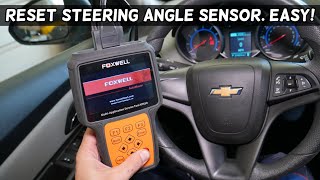
- GDS2 (or equivalent): Steering Wheel Angle Sensor Centering / Reset — This function should be performed FIRST before the 'Learn' procedure. It clears the old calibration values stored in the module. Performing this will typically turn on the traction control light, indicating a calibration is now required.
- GDS2 (or equivalent): Steering Wheel Angle Sensor Learn — This is a mandatory step after replacing the Steering Angle Sensor, the PSCM, or after performing any wheel alignment. The procedure involves turning the wheel lock-to-lock to teach the module the sensor's full range of motion and the new straight-ahead position.
- GDS2 / TIS2WEB: PSCM (Power Steering Control Module) Programming/Setup — This is required if the PSCM is replaced, or to resolve the software glitch described in TSB #20-NA-113 where code U0428 persists as 'current' even after the physical fault is fixed. This flashes the module with the latest GM software calibration.
Wiring & Ground Locations
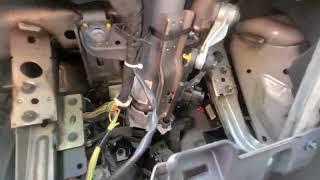
- G218 — Under the driver's side dash, on the left instrument panel support brace, often located behind or near the dash speaker on the A-pillar.. This is the primary ground for the Body Control Module (BCM), which acts as a gateway for multiple networks. A poor connection here due to trapped insulation (a known factory defect) causes voltage fluctuations that corrupt data across the CAN bus, triggering U0428 and many other codes.
- Sill Plate Harness — Runs in the channel underneath the plastic door sill trim plates on both the driver's and passenger's side.. This harness contains the twisted pair of High-Speed GMLAN wires (often Tan and Tan/Black). Water intrusion causes corrosion and breaks in these wires, leading to an open circuit on the CAN bus, which is a direct cause for communication codes like U0428.
- Power Steering Main Fuse — In a small, secondary fuse box mounted directly on top of the positive battery terminal on the passenger side of the engine bay. It is often a large 175A mega fuse.. While not a direct cause of a communication code, a loose or failing main fuse for the electric power steering can cause intermittent power loss to the PSCM, leading to voltage spikes/dips on the network that can corrupt data and set U0428.
Real Owner Repair Stories
- Reddit user comment in r/Chevy (2016 Chevrolet Silverado) — Dash going black, steering locking up, 'Stabilitrak' message, and low voltage readings in city driving.
❌ Tried (didn't work) Initial assumption was a recall-related issue.
✅ What actually fixed it The problem was a bad negative battery cable causing excessive voltage drop, as described in TSB 18-NA-161. Replacing the negative battery cable resolved all symptoms. - Multiple owner forums and YouTube comments (2014-2018 Silverado/Sierra) — Intermittent 'Service StabiliTrak' and 'Service Power Steering' messages, dash lights flashing, steering jerking at low speeds.
❌ Tried (didn't work) In many cases, owners considered replacing expensive modules or the steering sensor first.
✅ What actually fixed it The issue was resolved by accessing the G218 ground stud under the driver's dash, finding the dash insulation mat trapped under the terminal, trimming the insulation away, cleaning the contact surfaces, and re-tightening the 10mm nut. This is the most commonly reported successful DIY fix.
"I Checked Everything" — The Actual Cause
- A common scenario is when a technician has confirmed the G218 ground is perfect and the sill plate wiring has no corrosion or damage. The code U0428 is cleared, but it returns immediately on the next key cycle as 'current' instead of 'history'. This is a classic symptom of the PSCM software glitch documented in TSB #20-NA-113. The physical problem may have been temporary (like a low voltage event), but the module's software is unable to clear the fault status, requiring a dealer reprogram to fix.
OEM Part Supersession History
13590209→13590209— No supersession found. This part number appears to be stable for the 2014-2018 model years.
Heads up: This part requires programming/calibration after installation to function correctly. Failure to calibrate will result in the code persisting.
Model Year Variations Within This Range
- Vehicles built before June, 2015: TSB #18-NA-161 specifically calls out a 'poor connection at the BCM ground at G218 location' as a potential cause for vehicles built before this date, suggesting a change or increased awareness in the manufacturing process afterward.
- 2014-2016 vs. 2017-2019: The underhood fuse box layout changed between these model year groups. While the main power steering fuse is on the battery in both, the location of other related fuses in the main box may differ.
Helpful Videos

We Have This Part in Stock

The information in this article is provided for general reference and educational purposes only. Vehicle specifications, procedures, and part compatibility can vary by production date, trim level, and region. Always consult your vehicle's factory service manual and verify part numbers before purchasing or performing repairs. Safety-critical components such as airbags, seat belts, and braking systems should be installed by a qualified professional.
- Chevrolet SILVERADO:
- 🧭 Diagnostic Flowchart
- 🎬 Helpful Videos
- 🛍️ Shop This Part
- What's Unique About the 2015-2017 Chevrolet SILVERADO
- Symptoms You May Notice
- Most Likely Causes
- Rare But Worth Checking
- Diagnosis Steps
- Parts You'll Likely Need
- Related Codes That Often Appear With This One
- Technical Service Bulletins (TSBs) & Recalls
- Platform-Specific Known Issues
- Mechanic-Grade Diagnostic Values
- Hidden / Shadow Codes Worth Checking
- Scan Tool Commands That Help
- Wiring & Ground Locations
- Real Owner Repair Stories
- "I Checked Everything" — The Actual Cause
- OEM Part Supersession History
- Model Year Variations Within This Range
- 🎟️ Get 5% Off