

U0442 on 2013-2017 Mazda CX-5: Invalid PCM Data Causes and Fixes
On a 2013-2017 Mazda CX-5, code U0442 is most often caused by a weak battery causing a voltage drop during startup. Before attempting complex repairs, fully test the battery and charging system. A dirty throttle body is another common cause, and cleaning it often resolves the issue.
- Always check for other PCM codes first. U0442 is often a symptom of another problem.
- Test the battery's health under load. A voltage drop below 10V during startup is a primary cause of this code.
- Before replacing any expensive parts, perform a simple throttle body inspection and cleaning, as carbon buildup is a known trigger.
- Do not immediately replace the TCM or PCM; these modules are rarely the point of failure for this specific code.
What's Unique About the 2013-2017 Mazda CX-5
The first-generation CX-5's control logic is known to be sensitive. While a specific Technical Service Bulletin (TSB 01-015/18) addresses a similar issue for 2018+ models where interrupting the engine crank can set this code, the underlying sensitivity can also be seen in the 2013-2017 models. The TSB explains the PCM's 'engine torque calculation error detection is too sensitive,' causing it to set a P061B and send invalid data to the TCM (triggering U0442). Owners have found that issues like a slightly weak battery or carbon buildup on the throttle body can be enough to trigger this communication fault, even if they don't cause other major symptoms.
Generation note: The 2013-2017 year range covers the first generation (KE), which ran from 2013-2016, and the first year of the second generation (KF), which began in 2017. The causes and fixes discussed are relevant to both generations within this range as they share the same fundamental SkyActiv technology and control module architecture.
Symptoms You May Notice
- Check Engine Light is on
- Vehicle enters 'limp mode' (reduced power and limited gear selection)
- Transmission will not shift into higher gears (e.g., 5th or 6th)
- Hesitation or shuddering on acceleration
- Traction control, SCBS, or other warning lights may illuminate simultaneously
- Jerky acceleration or misfiring
- Transmission will not shift past 4th gear, as noted in manufacturer service bulletins.
- Surging on acceleration or fluctuations in engine RPMs.
- Replacing the Transmission Control Module (TCM). The TCM is the module that *reports* the code, but it is rarely the cause. The problem lies with the data it is *receiving* from the PCM.
- Replacing the Mass Airflow (MAF) sensor without proper diagnosis. While a faulty MAF can be a primary code that *leads* to U0442, replacing it without confirming it's the root cause can be an unnecessary expense.
Most Likely Causes
- Weak or Failing Battery 🔴 High Probability → Shop Vehicle Battery The TCM requires a stable voltage of 10V or more to function correctly. A weak battery's voltage can dip below this threshold during engine cranking, corrupting the data signal sent to the TCM and triggering the U0442 code. The sensitive electronics on this platform are particularly susceptible to voltage instability.
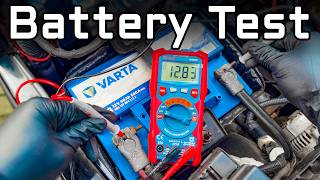
How to confirm: Perform a comprehensive battery test using a digital multimeter or an electronic battery tester. Check the static voltage (should be ~12.6V) and, more importantly, monitor the voltage during engine cranking. 🎬 See how to test your battery voltage with a multimeter If it drops below 10V, the battery is weak and very likely the cause.
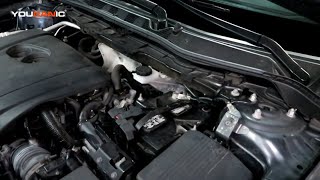
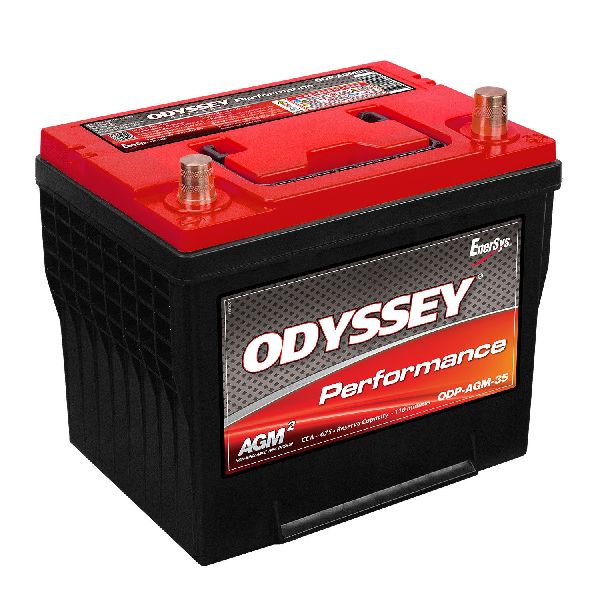
Typical fix: Replace the vehicle's 12V battery. Ensure the new battery meets or exceeds the OEM specifications for Cold Cranking Amps (CCA). The most common BCI group sizes for this vehicle are Group 35 or Group 26R. 🎬 Watch: How to replace a dead battery on your CX-5
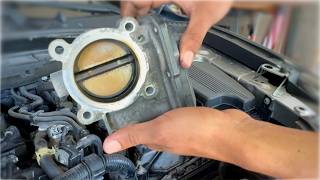
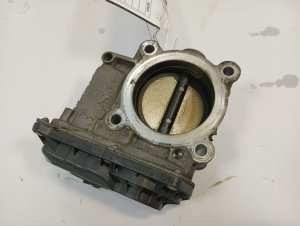
Est. part cost: $150-$250 - Dirty Throttle Body 🟡 Medium Probability → Shop Fuel Injection Throttle Body As a direct-injection engine, the SkyActiv platform is susceptible to carbon buildup. A layer of carbon on the throttle plate can cause its position to be slightly off at idle or during small movements. The sensitive PCM logic may interpret these incorrect readings as a fault, leading it to send invalid data to the TCM and trigger U0442 and P061B.
How to confirm: Visually inspect the throttle body by removing the main intake hose. Look for a dark ring of carbon buildup around the throttle plate and the bore. This is often found on vehicles with over 40,000-50,000 miles.
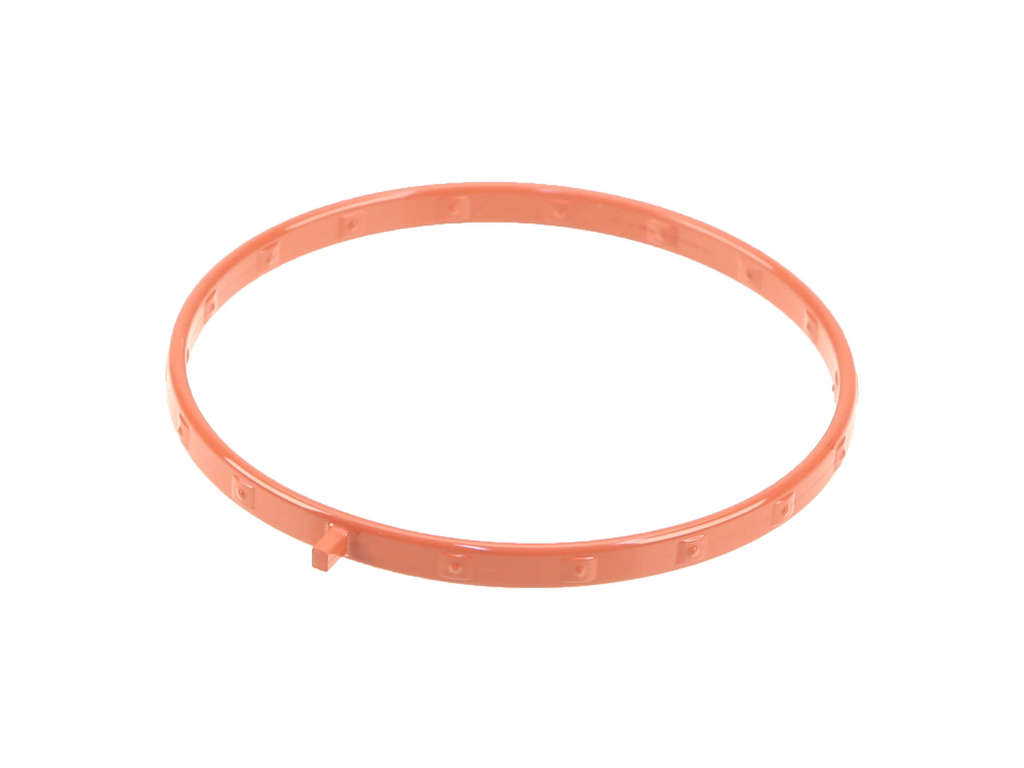
Typical fix: Clean the throttle body using a dedicated throttle body cleaner and a soft cloth. Do not spray cleaner directly into the unit; spray it on the cloth first. 🎬 Watch this walkthrough on cleaning the CX-5 throttle body It is recommended to replace the throttle body gasket (OEM Part PE01-13-655 or FS01-13-655) during reassembly. Disconnecting the battery for several minutes after the cleaning is crucial to reset the PCM's learned throttle values.
Est. part cost: $10-$30 for cleaning spray and a new gasket - Other PCM Trouble Codes are Present 🟡 Medium Probability The U0442 code is often a secondary code, a symptom of a different primary problem detected by the PCM. The official Mazda diagnostic procedure explicitly states to check for other PCM codes first.
How to confirm: Use an OBD-II scanner to check for any other stored codes in the Powertrain Control Module. Codes like P061B (Internal Control Module Torque Calculation Performance), P0101/P0102 (MAF Sensor Performance), or P0300-series (Misfires) are commonly seen with U0442.
Typical fix: Diagnose and repair the primary DTC first. For example, if a P0102 is present, inspect and clean the MAF sensor. If a P0300 is present, investigate spark plugs or ignition coils. Resolving the primary issue will usually prevent the U0442 from returning.
Est. part cost: $50-$500 depending on the primary fault
Rare But Worth Checking
- Corroded or Loose PCM/TCM Connectors or Wiring: Vibration, moisture, or road salt can lead to poor connections over time. Check that the main connectors on both the PCM (near the battery) and TCM (on the transmission) are clean, free of corrosion, and fully seated.
- Failing Powertrain Control Module (PCM): → Shop Engine Control Module (ECM) This is the least likely cause. An internal fault in the PCM can cause it to send corrupted data. This should only be considered after a dealer has confirmed the PCM software is up-to-date and all other possibilities, including wiring, have been thoroughly ruled out.
Diagnosis Steps
- Scan for all DTCs in all modules. Pay close attention to any codes stored in the PCM, especially P061B or P0101/P0102. Address any other PCM codes first, as U0442 is usually a secondary code.
- If no other codes are present, perform a full battery and charging system test. Ensure the battery voltage stays above 10V during engine cranking. A weak battery is a very common cause.
- Inspect the battery terminals and main chassis ground connections for corrosion or looseness. Clean and tighten as necessary. A user on r/AskMechanics noted heavy corrosion buildup shortly after a battery replacement preceded the error codes.
- Remove the intake boot and visually inspect the throttle body for carbon buildup. If dirty, clean it thoroughly with throttle body cleaner, applying the cleaner to a rag, not directly into the bore.
- It is recommended to replace the throttle body gasket (Part #PE01-13-655) when reinstalling.
- After cleaning the throttle body, disconnect the negative battery terminal for at least one minute to reset the PCM's learned fuel and throttle trims.
- If the code persists, inspect the wiring harness and connectors between the PCM and the TCM for any signs of damage, corrosion, or looseness.
- As a final step, consult a dealer about a possible PCM software update. TSB 01-015/18 describes a fix for overly sensitive logic in later models, and a similar update may be available for your vehicle to resolve the issue, especially if P061B is also present.
Parts You'll Likely Need
- 12V Battery
(OEM #BCI Group Size 35 or 26R)— A weak battery that drops voltage during cranking is the most common trigger for this communication code.
Trusted brands: Duralast, EverStart, DieHard, Optima
OEM price range: $200-$280
Aftermarket price range: $150-$250 - Throttle Body Gasket
(OEM #PE01-13-655 or FS01-13-655)— This gasket should be replaced when the throttle body is removed for cleaning to ensure a proper seal. It is an inexpensive part that prevents future vacuum leaks.
Trusted brands: Mazda (OEM), Beck/Arnley, Mahle
OEM price range: $20-$28
Aftermarket price range: $6-$15 - Throttle Body Cleaner — A simple and inexpensive cleaning can often resolve the code if it's caused by carbon buildup affecting sensor readings.
Trusted brands: CRC, Berryman, Gumout
Aftermarket price range: $5-$15
Related Codes That Often Appear With This One
- P061B — This code for 'Internal Control Module Torque Calculation Performance' is the most common companion to U0442. It indicates the core software sensitivity issue where the PCM detects a torque calculation error and sends invalid data, triggering the U0442 in the TCM.
- U0401 — This is another generic 'Invalid Data Received from ECM/PCM' code that can be set by other modules (like the ABS or Instrument Cluster) for the same root cause, such as a weak battery or PCM fault.
- P0101 / P0102 — A MAF sensor performance code can be the primary fault. The erratic MAF data causes the PCM to calculate torque incorrectly, which it flags as an internal error (P061B) and then sends this invalid data to the TCM, triggering U0442.
Technical Service Bulletins (TSBs) & Recalls
- 01-015/18: While officially for 2018-2019 models, this TSB is highly relevant as it describes the exact mechanism that affects earlier models. It states, 'Due to an improper control logic of the PCM, the engine torque calculation error detection is too sensitive,' causing P061B and U0442 when engine cranking is interrupted (e.g., releasing the brake pedal too soon). The fix is a PCM software update.
- Bulletin #01-015-18-3513a: Notes that the check engine light may illuminate with DTC P061B:00 and U0401:00 stored in the PCM memory when engine cranking is interrupted, and on automatic transmission vehicles, DTC U0442:00 is also stored. This most likely occurs when the brake pedal is released during engine cranking.
- Bulletin #SA-011-19: Describes a condition where DTC P061B is present alongside surging on acceleration and a transmission that will not shift past 4th gear, often setting various U codes including U0442 in the TCM.
- Bulletin #SA-011-19a: Confirms that surging on acceleration and a transmission restricted to 4th gear may occur with various communication codes like U0401, U0415, and U0442.
- Bulletin #SA-011-26: Highlights that fluctuations in engine RPMs during acceleration and a transmission that will not shift past 4th gear are symptoms associated with U0442 and other related U codes.
Platform-Specific Known Issues
- Reddit User Repair Story (2018 Model, but relevant): A user on r/CX5 with a 2018 model reported U0442, limp mode, and misfires. After a shop replaced an ignition coil and oil, the user personally replaced the spark plugs and a weak battery. The problem returned, but another user pointed to TSB 01-015/18, suggesting the root
Mechanic-Grade Diagnostic Values
- CAN Bus Network Resistance — expected: Approximately 60 Ω between CAN_H and CAN_L pins (e.g., Pins 6 and 14 of the DLC) with the battery disconnected.. Failure: A reading of ~120 Ω indicates an open circuit or a missing terminating resistor in one of the main modules (like the PCM or Instrument Cluster). A reading near 0 Ω indicates a short between the CAN lines.
- Battery Voltage During Crank — expected: Voltage should remain above 10.0V.. Failure: A dip below 10.0V during engine start is a strong indicator that the battery is weak and is the likely cause of the communication error.
Scan Tool Commands That Help
- FORScan: TCM - Reset All Adaptations — After replacing a battery, cleaning the throttle body, or performing any repair that could affect transmission shift strategy. This function, found under the 'Service Functions' (wrench icon), forces the TCM to clear its learned shift patterns and start fresh.
- Mazda Modular Diagnostic System (M-MDS): PCM DTC Inspection — This is the first step in the official Mazda diagnostic procedure. It is used to check for primary faults in the PCM, as U0442 in the TCM is almost always a secondary code.
- Mazda Modular Diagnostic System (M-MDS): Module Reprogramming — To apply the software update specified in TSB 01-015/18 for related models, which corrects overly sensitive torque calculation logic. This should be performed by a dealer if P061B is present and other causes are ruled out.
Wiring & Ground Locations
- G03 — Left front of the engine compartment.. This is a primary ground point for the PCM. A loose or corroded connection here can cause erratic PCM behavior and data corruption on the CAN bus, leading to U-codes.
- G09 — Behind the instrument cluster.. The instrument cluster acts as a gateway between the High-Speed (HS-CAN) and Medium-Speed (MS-CAN) networks and contains one of the two 120-ohm terminating resistors for the HS-CAN bus. A bad ground here can disrupt the entire network.
- PCM Connector — Next to the battery, under a small metal cover.. This is the main data connection for the PCM. A user on Mazdas247 reported that simply ensuring this large connector was fully seated and free of corrosion fixed a recurring P061B/U0442 issue.
- Negative Battery Cable Ground — The point where the main negative battery cable bolts to the chassis, near the driver's side strut tower.. This is the most critical ground for the entire vehicle's electrical system. Corrosion or looseness here can cause widespread, intermittent electrical problems, including the voltage fluctuations that trigger U0442.
Real Owner Repair Stories
- Mazdas247 Forum User 'douglask' (2013 Mazda CX-5) — Check Engine Light with codes P061B, U0442, and U0401.
❌ Tried (didn't work) Replacing the Mass Airflow (MAF) sensor multiple times.
✅ What actually fixed it The user found a post describing a fix that involved disconnecting the battery, removing and cleaning carbon buildup from the throttle body, reinstalling, and then clearing the DTCs. This resolved the issue.
Model Year Variations Within This Range
- 2016.5: The mid-cycle refresh for the 2016 model year (often called 2016.5) introduced a slightly different center console and infotainment system, but the core powertrain, PCM, and TCM architecture relevant to code U0442 remained the same as the 2013-2016 models.
Diagnostic Flowchart
Other Known Issues on This Vehicle
Issues unrelated to this code that are worth knowing about as an owner of this generation:
- Premature Rear Brake Wear 🟠 Medium — Common, especially in regions using road salt. Caliper slide pins lack sufficient lubrication from the factory, causing them to seize and drag the pads.
- Failing LED Daytime Running Lights (DRL) 🟡 Low — A well-documented issue where the sealing gasket for the DRL circuit board fails, allowing moisture ingress and causing the LEDs to flicker or fail completely. (Ref: Mazda issued a statement acknowledging improper sealing materials were used.)
- Easily Cracked Windshields 🟠 Medium — Numerous owner complaints suggest the original equipment windshields are unusually susceptible to cracking from small impacts or even thermal stress.
- Carbon Buildup on Intake Valves 🟠 Medium — As a direct-injection (GDI) engine, the SkyActiv platform is prone to carbon deposits on the intake valves over time, typically becoming noticeable after 50,000 miles. This can lead to reduced performance and efficiency.
- Failed Parking Sensor Switch in Shifter Assembly 🟡 Low — A microswitch in the gear selector mechanism can fail, preventing the car from detecting it is in 'Park'. This causes the infotainment/accessory power to stay on after the engine is shut off, leading to a drained battery.
Used vs. New Parts: Buying Guide for This Vehicle
When a used part is the smart pick: A used throttle body from a low-mileage donor vehicle is a reasonable choice if the original is physically damaged. Since the primary failure mode is carbon buildup (a cleaning issue) rather than electronic failure, a used part can be a cost-effective alternative to a new OEM unit.
Donor-vehicle mileage cap: roughly under 75000 miles for the part to have meaningful remaining life.
What to inspect on the donor part:
- Check for minimal carbon buildup on the throttle plate.
- Ensure the electrical connector pins are clean, straight, and free of corrosion.
- Verify there are no cracks in the plastic housing or damage to the connector.
- If possible, get the part from a vehicle that was not in a major front-end collision.
OEM-only on this vehicle (don't cheap out):
- Powertrain Control Module (PCM): Aftermarket or used PCMs are strongly discouraged. A new PCM from Mazda is required to ensure it has the correct software and can be properly configured and programmed to the vehicle's specific VIN and immobilizer system.
Brands owners have reported issues with on this vehicle:
- Ultra-cheap, no-name throttle bodies found on marketplace sites should be avoided. Stick to OEM or a reputable used part.
Real Owner Stories
Aggregated from forums and TSBs cited above. Mileages and costs reflect what owners reported in those sources.
2013 Mazda CX-5 — 50000 miles
Symptoms: Vehicle was shuddering and had codes P0101, P061B, U0442, and U0401 stored. A dealer had previously replaced the MAF sensor, but the problem returned.
What fixed it: The final fix was cleaning a carbon-fouled throttle body and having a dealer perform a PCM firmware update.
Source hint: mazdas247.com: Thread '2013 CX-5 Repeated MAF failure or something else?'
2018 Mazda CX-5
Symptoms: Vehicle went into limp mode, experienced misfires, and set code U0442. The owner had already replaced an ignition coil, spark plugs, and a weak battery, but the problem came back.
What fixed it: Another user identified the likely cause as the issue described in TSB 01-015/18, where interrupted engine cranking triggers the code due to sensitive PCM logic. The suggested fix was a PCM software update.
Source hint: reddit.com/r/CX5: Thread '2018 CX 5 going into limp mode'
Related OBD-II Codes
Frequently Asked Questions
The TSB mentioned (01-015/18) is for 2018-2019 models. Is it relevant to my 2013-2017 CX-5?
My battery seems to start the car fine. How can it be the cause of code U0442?
I'm cleaning the throttle body to fix this code. Do I have to replace the gasket?
Along with the Check Engine Light for U0442, my traction control and SCBS lights are on. Is this related?
If I need to replace my battery, what size should I get for my CX-5?
U0442 is the only code stored. What is the very first thing I should check?
Helpful Videos

Used OEM Parts in Stock
New Aftermarket Parts Available


The information in this article is provided for general reference and educational purposes only. Vehicle specifications, procedures, and part compatibility can vary by production date, trim level, and region. Always consult your vehicle's factory service manual and verify part numbers before purchasing or performing repairs. Safety-critical components such as airbags, seat belts, and braking systems should be installed by a qualified professional.
- Mazda CX-5:
- 🧭 Diagnostic Flowchart
- 🎬 Helpful Videos
- 🛍️ Shop This Part
- What's Unique About the 2013-2017 Mazda CX-5
- Symptoms You May Notice
- Most Likely Causes
- Rare But Worth Checking
- Diagnosis Steps
- Parts You'll Likely Need
- Related Codes That Often Appear With This One
- Technical Service Bulletins (TSBs) & Recalls
- Platform-Specific Known Issues
- Mechanic-Grade Diagnostic Values
- Scan Tool Commands That Help
- Wiring & Ground Locations
- Real Owner Repair Stories
- Model Year Variations Within This Range
- Other Known Issues on This Vehicle
- Used vs. New Parts: Buying Guide for This Vehicle
- Real Owner Stories
- 2013 Mazda CX-5 — 50000 miles
- 2018 Mazda CX-5
- Related OBD-II Codes
- Frequently Asked Questions
- 🎟️ Get 5% Off