

OBD-II Code U0444: Invalid Data From Body Control Module 'C'
What U0444 means, why it triggers, and how to fix it — The Ultimate Guide
- Code U0444 indicates the Body Control Module (BCM) is powered on but transmitting corrupted data across the vehicle's CAN bus network.
- Test the battery first; a resting voltage below 12.4V or a running voltage below 13.7V is the leading cause of U0444.
- Never replace the BCM without verifying the CAN bus network resistance reads exactly 60 ohms, ruling out wiring shorts or opens.
- Driving with U0444 risks sudden failure of critical safety systems like headlights or windshield wipers, requiring immediate diagnosis.
- Verify the first letter of your code: U0444 is a network communication error, while P0444 is a completely unrelated EVAP emissions fault.
What Does U0444 Mean?
Code U0444 means other vehicle control modules received corrupted or illogical data from the Body Control Module 'C' (BCM-C). The BCM is the central command for comfort and convenience features, controlling interior lights, power windows, and the security system. This code indicates the BCM is online, but its network communication is malformed or interrupted. The 'C' designation refers to the primary BCM or a subsidiary body module, depending on vehicle architecture.
Technical definition: Invalid Data Received From Body Control Module 'C'. This indicates a receiving module on the vehicle's Controller Area Network (CAN bus) detected corrupt, malformed, unexpected, or illogical data packets originating from the Body Control Module 'C'. The BCM-C is powered and communicating, but its data is not trustworthy.
Can I Drive With U0444?
Yes, But With Caution. Yes, but with caution. U0444 rarely affects engine operation, but it compromises body-related electrical systems. Headlights or wipers can fail suddenly in bad weather, or the anti-theft system can activate and immobilize the vehicle. Diagnose this code immediately to avoid being stranded.
Common Causes
- Low Battery Voltage or Poor Grounds (Very Common) — A weak battery or corroded BCM ground connection is the leading cause. Low voltage prevents the module from operating correctly, forcing it to send garbled messages and create data framing errors.
- Loose or Corroded BCM Connectors/Wiring (Very Common) — The main BCM electrical connector loosens, or moisture corrodes the pins. This creates intermittent data signals that trigger U0444.
- Water Intrusion in CAN Bus Junctions (Common) — Water from clogged sunroof drains or leaking windshields pools in kick panels or under carpets, corroding CAN bus splice packs. This corrupts data across the entire network segment.
- CAN Bus Network Fault (Short/Open) (Common) — CAN bus wiring shorts to power, shorts to ground, or shorts together. This corrupts all data on the network segment and requires tracing the physical wiring harness.
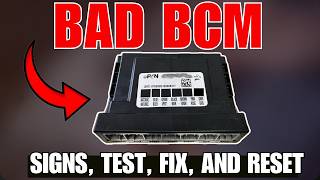
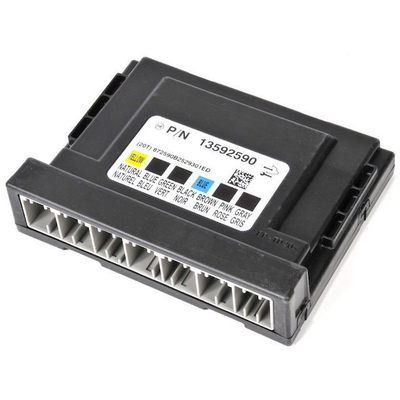
- Faulty Body Control Module (BCM) (Common) — The BCM fails internally due to age, heat stress, or water damaging its circuit board. This forces the module to generate and transmit corrupted data packets.
- Outdated or Corrupted BCM Software (Less Common) — Manufacturers release software updates (re-flashes) to fix communication bugs. 🎬 Watch: Professional walkthrough of BCM installation and reprogramming Outdated BCM software fails to communicate correctly with updated modules, logging an invalid data code.
- Aftermarket Accessories Causing Interference (Less Common) — Improperly installed aftermarket parts like remote starters or high-powered stereos create electrical noise or voltage drops on the CAN bus, corrupting the BCM's signals.
- Faulty Adjacent Control Module ('Babbling' Module) (Rare) — Another module on the same network segment fails and floods the bus with erroneous messages (a 'babbling' module). Healthy modules log U0444 because the network is too busy with garbage data to function.
Symptoms
- Erratic or Non-Functioning Interior/Exterior Lights — Dome lights, headlights, or dash lights flicker, stay on permanently, or fail to illuminate.
- Power Windows, Locks, or Mirrors Not Working — Power windows, locks, and mirrors work intermittently or ignore switch inputs entirely.
- Key Fob or Remote Entry Fails — Remote keyless entry fails to lock or unlock doors, and the trunk release stops working.
- Multiple, Unrelated Warning Lights on Dashboard — ABS, Airbag, or Traction Control warning lights illuminate simultaneously as those modules lose valid data from the BCM.
- Security System or Immobilizer Issues — The anti-theft system engages randomly, preventing the engine from starting and displaying a security message.
- Instrument Cluster Acting Erratically — Gauges sweep randomly, warning chimes sound without cause, or the entire cluster intermittently goes blank.
- HVAC System Malfunctions — Air conditioning or heating controls become unresponsive, or the blower motor stops working.
Diagnostic Flowchart
Tap your situation to follow the diagnostic path that matches what you're seeing on this code.
Common Fixes & Costs
- Replacing a Weak or Faulty Battery — Parts: $150-$350, Labor: $50-$100, ~0.5 hr book time (DIY)
- Cleaning and Securing BCM Connectors and Grounds — Parts: $5-$20, Labor: $100-$200 (diagnostic + labor), ~1.2 hr book time (DIY)
- Repairing Damaged CAN Bus Wiring Harness — Parts: $10-$50, Labor: $200-$600+ (highly variable based on location of damage), ~3.5 hr book time (Intermediate)
- BCM Software Update (Reprogramming) — Parts: $0, Labor: $150-$300 (dealer/shop fee for flashing), ~1.5 hr book time (Professional)
- Replacing the Body Control Module (BCM)
— Parts: $300-$700 (OEM Part), $200-$400 (Aftermarket/Pre-programmed), Labor: $150-$450 (includes installation and required programming/setup), ~2.5 hr book time
(Professional)
Ford F-150 (2018-2020): OEM JU5Z-15604-BX (supersedes previous versions like JU5T-15604-MAR) (Alt: Dorman (Varies by specific application), Cardone (Varies))
Ram 1500 (2016): OEM 68245054AD (Alt: MAKS TIPM Rebuilders (Remanufactured), All Computer Resources (Remanufactured))
Chevrolet/GMC Silverado/Sierra (TCCM, 2003-2007): OEM ACDelco 19258949 (Verify by VIN) (Alt: Dorman 599-110, A1 Cardone 75-2000)
Used vs. New Parts: Buying Guide
When a used part is worth it: A used BCM is a poor choice for DIY repairs. Only consider it if a professional technician with advanced programming tools agrees to 'virginize' and reprogram the salvage part. It only makes financial sense for older vehicles where a new OEM part exceeds the car's value.
Donor-vehicle mileage cap: roughly under 60000 miles for the part to have meaningful remaining life.
Donor quality checklist:
- Verify the part number matches EXACTLY.
- Ensure the donor vehicle did not have electrical or water damage.
- Obtain the VIN of the donor car, as it is required for reprogramming attempts.
- Source from a reputable recycler with a good return policy.
Decision logic:
- If The vehicle is your primary transportation → Buy a new OEM or professionally remanufactured, pre-programmed BCM. The risk of failure with a used part is too high.
- If You are a DIYer without professional scan tools → Do not buy a used BCM. It is not a plug-and-play part and requires programming that you cannot perform.
- If A new part is over $800 and the vehicle is over 10 years old → A used BCM is a calculated risk. Budget for professional programming fees ($150-$300) and accept the possibility that the part fails to program.
Warranty tradeoff: Used parts typically have a 30-90 day warranty covering only the part, not the labor or programming. New OEM and quality remanufactured parts carry a 1-year or longer warranty.
Worst-case if a used part fails: $400-$800 if the used BCM fails or cannot be programmed. This includes the sunk cost of the part plus repeat labor and programming fees.
What Happens If You Wait — Timeline
- 0-1 month: Intermittent, minor symptoms appear, such as a flickering dome light or the radio failing to power on. Drivers often dismiss this as a temporary glitch. (Added cost: $0)
- 1-3 months: Symptom frequency increases. The key fob fails occasionally, or multiple unrelated dashboard lights (ABS, Traction Control) flash on and off. The problem is a consistent annoyance. (Added cost: $150-$300 (Potential cost of towing and emergency diagnosis if stranded))
- 3-6 months: Critical safety systems become unreliable. Headlights or windshield wipers fail to activate during a storm. The instrument cluster goes blank while driving. The underlying cause worsens. (Added cost: $300-$800 (Cost of being stranded plus a more complex diagnosis as symptoms are now constant))
- 6+ months: Cascading failures begin. The constant stream of invalid data and voltage instability causes software corruption or electronic stress in healthy modules, leading to additional 'U' codes. (Added cost: $800-$2000+ (The original repair plus the cost of diagnosing and replacing a secondarily damaged module))
Cost of Not Fixing It
- 0-1 month: Intermittent electrical issues like flickering lights, a non-working key fob, or erratic gauges. These do not cause immediate mechanical damage. (Added cost: Negligible)
- 1-6 months: High risk of being stranded. The anti-theft system fails to recognize the key, causing a no-start condition. Critical safety systems like headlights or windshield wipers fail unexpectedly. (Added cost: $150-$300 (Towing and emergency diagnostic fees))
- 6+ months: Cascading electrical failures. Unstable voltage and corrupted data signals stress healthy control modules, shortening their lifespan and requiring expensive replacements. (Added cost: $500-$2000+ (Cost of diagnosing and replacing other modules damaged over time))
Diagnosis Steps
- Inspect the Battery and Grounds
Verify battery voltage is 12.4-12.6V at rest and 13.7-14.7V running. Locate the main BCM chassis ground. Measure resistance between the BCM ground pin and the negative battery terminal; it must read under 0.1 ohms. Higher readings require immediate cleaning and tightening.
Tools: Multimeter, Socket Set, Wire Brush (Beginner) - Check for Other Trouble Codes
Scan ALL modules (ABS, TCM, IPC) using a full-system OBD-II scanner. Multiple 'U' codes (like U0140 or U0073) indicate a network-wide failure, not a single faulty module. Document all codes and freeze-frame data.
Tools: OBD-II Scanner (with all-module capability) (Beginner) - Visually Inspect the BCM and its Connector
Locate the BCM under the dashboard or center console. Unplug its main electrical connector and inspect for water damage, green/white corrosion, or bent pins. Clean corrosion with electrical contact cleaner and ensure the connector seats firmly.
Tools: Flashlight, Trim Removal Tools, Electrical Contact Cleaner (Intermediate) - Perform a 'Wiggle' Test
With the ignition on and scanner viewing live data, gently wiggle the wiring harness going into the BCM connector. If symptoms or codes appear or disappear as you move the wires, you have a loose connection or broken wire.
Tools: OBD-II Scanner (Intermediate) - Test the CAN Bus Network Resistance (Power Off)
Disconnect the battery. Measure resistance between CAN High (Pin 6) and CAN Low (Pin 14) at the OBD-II port. A healthy network reads exactly 60 ohms. A 120-ohm reading indicates an open circuit or missing terminating module. A 0-ohm reading indicates a dead short between the CAN lines.
Tools: Multimeter with Pin Probes (Advanced) - Test the CAN Bus Network Voltages (Power On)
Reconnect the battery and turn the ignition ON (engine off). Check voltage on the CAN lines at the DLC. In the idle state, both CAN High (Pin 6) and CAN Low (Pin 14) sit at ~2.5V. When communicating, CAN High toggles to ~3.5V and CAN Low toggles to ~1.5V. Voltages stuck high or low indicate a short to ground or power.
Tools: Multimeter with Pin Probes (Advanced) - PRO TIP: Check CAN Lines to Ground
With the device connector unplugged, measure resistance between the CAN High pin and chassis ground, then CAN Low to chassis ground. Both must read in the mega-ohms (MΩ) or show as an open circuit. Low resistance indicates a short to ground in the harness.
Tools: Multimeter (Advanced) - Isolate Network Modules
If you suspect a 'babbling' module, disconnect other modules on the CAN bus one by one. Clear the codes after each disconnection. If U0444 disappears after unplugging a specific module (e.g., the radio), that module is the source of the network interference.
Tools: Trim Removal Tools, Socket Set (Advanced) - Check for BCM Software Updates (TSBs)
Search for Technical Service Bulletins (TSBs) for your specific vehicle related to the BCM. Manufacturers frequently release software updates to fix communication bugs, which a dealer or qualified shop flashes using a J2534 device.
Tools: Internet Access, J2534 Device (for flashing) (Professional) - Analyze CAN Bus with an Oscilloscope
Connect oscilloscope probes to CAN High and CAN Low. A healthy signal shows a clean, mirror-image square wave switching between 2.5V and 3.5V (High) and 2.5V and 1.5V (Low). Rounded-off square waves or excessive noise pinpoint the exact nature of the physical fault.
Tools: Automotive Oscilloscope (Professional)
When This Code Triggers (Freeze-Frame Conditions)
- System Voltage: 11.8-12.6V (KOEO) or 13.5-14.8V (KOER) (Sets during key-on or driving when voltage fluctuates.)
- Engine RPM: 0 - 3000 RPM (Logs at key-on (0 RPM) or during normal driving/cruise.)
- Vehicle Speed: 0 - 65 mph (Occurs when stationary or at highway speeds, as modules communicate continuously.)
- Ambient Temperature: Any (Prevalent in extreme cold or high humidity, which stresses electronics and wiring.)
Related Codes
- U0140 — 'Lost Communication With Body Control Module'. U0140 means the BCM is completely offline. U0444 means the BCM is online but transmitting bad data. U0140 requires checking BCM power and ground first; U0444 requires checking network integrity and software.
- U0073 — 'Control Module Communication Bus A Off'. This is a network-wide failure, not specific to the BCM. A U0073 points to a physical problem with the CAN bus itself (e.g., a shorted wire or a failed termination resistor), requiring full network integrity checks.
- B10F1 — 'Key In Switch - Circuit Short To Ground Or Open'. This is a BCM-specific code set *by the BCM* about its own input. U0444 is set *by other modules* about the BCM's output. Seeing both strongly suggests the BCM is failing internally.
- P0444 — 'EVAP Purge Control Valve Circuit Open'. This is a Powertrain (P) code, completely unrelated to the Body Control Module. It is commonly confused with U0444 on makes like Hyundai and BMW. Always verify the first letter of the code (U vs. P).
Climate & Environmental Factors
- High Humidity / Heavy Rain: Moisture enters the cabin through improperly sealed body seams, leaking windshields, or clogged sunroof drains. Water drips directly onto the BCM or its connectors, causing immediate short circuits and rapid corrosion.
- Cold Weather: Extreme cold causes marginal or cracked solder joints on the BCM's internal circuit board to contract and separate, creating an open circuit. The problem appears on cold starts and disappears once the interior warms up.
- Road Salt (Winter Climates): Salt-laden moisture is highly corrosive. If this spray enters connectors or modules, it dramatically accelerates the degradation of electrical contacts, leading to communication failures.
How to Talk to a Mechanic About This Code
Say this: "I have a U0444 code and want to authorize one hour of diagnostic time. Please test the battery, charging system, and the BCM's main power and ground connections before performing any network tests or module replacements."
This shows you understand that simple electrical issues are the most common cause. It directs the technician to perform the most logical first steps and prevents them from immediately quoting a BCM replacement without proper diagnosis. It also sets a clear budget for the initial investigation.
Avoid saying:
- 'My car's electronics are acting weird, can you fix it?'
- 'I think I need a new BCM.'
- 'Just do whatever it takes to fix the check engine light.'
Questions to ask before authorizing the repair:
- What were the results of the battery and charging system test?
- Did you inspect the BCM connectors and grounds for corrosion or damage?
- Did you test the CAN bus network resistance, and what was the reading? (It should be 60 ohms).
- If you are recommending a BCM replacement, how have you proven that the wiring, software, and power/grounds are all good?
- Is there a Technical Service Bulletin (TSB) or software update available for this issue?
Where to Take It: Dealer vs Independent vs Chain
- Dealer:
A strong choice, especially if a software update is a possible fix or if the vehicle is a late model with complex, proprietary network architecture.
Best for: Vehicles under warranty., Diagnosing complex software issues or applying manufacturer-only software updates (re-flashes)., Repairs covered by a known Technical Service Bulletin (TSB) or recall.
Downsides: Typically the highest labor rate., May be quicker to replace a module rather than diagnose a more complex wiring or network issue. (Typical cost: +40% vs. baseline) - Independent Shop:
Excellent fit, but only if it's a shop with a proven reputation for electrical diagnostics. Ask if they are comfortable with CAN bus troubleshooting before booking.
Best for: Out-of-warranty vehicles where cost is a primary concern., Shops that specialize in automotive electrical and diagnostic work., Diagnosing common and well-documented failure patterns (e.g., corroded grounds, water intrusion).
Downsides: Skill varies greatly; general mechanics lack the oscilloscope and bidirectional scanners required for deep network diagnosis., May not have access to the very latest manufacturer software or programming tools. (Typical cost: +0% vs. baseline) - Chain Shop:
AVOID for diagnosis. Their business model is not suited for troubleshooting intermittent and complex electronic issues like U0444.
Best for: Selling you a battery, which might coincidentally fix the problem if it was the cause.
Downsides: Technicians are generally not equipped or trained for complex network diagnostics., High pressure to sell parts and services, leading to a high risk of misdiagnosis (e.g., selling a BCM when the battery is weak)., Lack of advanced diagnostic tools required for this code. (Typical cost: -10% vs. baseline)
When to Walk Away From the Repair
Sell or trade the vehicle if the estimated repair cost exceeds 50% of its private-party value.
- Car worth $5000, fix is $2800: Walk away. The repair cost is over 50% of the car's value.
- Car worth $15000, fix is $1100: Fix it. The repair cost is well below the threshold and restores full function to a valuable vehicle.
- Car worth $3000, fix is $900: Borderline, but likely worth fixing. While it's 30% of the value, it's cheaper than a new car payment. Get a firm quote before proceeding.
What Scan Tool You Need for This Code
Minimum: A scanner that can perform an 'All System' or 'Full Module' scan. It must be able to read codes from the Body Control Module (BCM), not just the Engine Control Module (ECM).
Generic $20 OBD-II readers only scan the engine for 'P' codes and cannot see 'U' codes. You must use a scanner explicitly advertised with 'All System' or 'Full Module' scanning to access the BCM.
Budget: BlueDriver Pro / TOPDON TopScan Pro (~$90) — These are Bluetooth dongles that use a smartphone app. Their key feature is the ability to perform a full-system scan, allowing you to read and clear codes from the BCM. They can also display live data from the BCM, which is helpful for diagnosis.
Mid-range: Foxwell NT510 Elite / Autel MaxiCOM MK808S (~$359) — These tablet-style scanners add bidirectional control. This is a huge advantage for U0444, as it allows you to command the BCM to perform actions (e.g., 'turn on headlights,' 'lock doors') to test if the module is responsive, helping to distinguish between a bad BCM and a wiring problem.
Professional: XTOOL D7 / Autel MaxiCOM MK900 (~$478) — These professional-grade tools offer full bidirectional control, advanced ECU coding/programming functions, and sometimes include network topology maps. The topology view visually shows all modules on the network and their communication status, which is extremely powerful for diagnosing CAN bus problems quickly.
Rent vs buy: Most auto parts stores' free rental tools are basic code readers that CANNOT diagnose this code. For U0444, you must buy a scanner with all-system scan capability. If this is a one-time fix, consider the budget pick; if you plan to do more DIY work, a mid-range tool with bidirectional control offers the best long-term value.
How to Clear the Code After You Fix It
- Reconnect the battery if disconnected for the repair.
- Use a compatible all-system OBD-II scan tool to erase DTCs from all modules.
- Perform a complete drive cycle to allow all vehicle systems to re-initialize and confirm the fix.
Drive cycle (~30 minutes): A comprehensive drive cycle includes: a cold start, 5 minutes of idling, 15 minutes of mixed city driving (with stops and starts), and 10 minutes of steady-state driving at highway speeds (55-65 mph). Allow the vehicle to cool down completely afterward.
Readiness monitors affected: Catalyst monitor, O2 sensor monitor, EVAP system monitor, All other emissions readiness monitors
Before emissions retest: drive at least 100 miles to fully set monitors.
Watch out for:
- Disconnecting the battery clears the code but resets all readiness monitors, guaranteeing an emissions test failure until you complete a full drive cycle.
- The code returns immediately if the root cause (e.g., corroded ground, faulty wiring) remains unfixed.
Will This Fail Emissions / State Inspection?
Yes — this code typically fails an OBD-II emissions inspection.
- California: An active Check Engine Light from code U0444 results in an automatic smog check failure. Clearing the code resets readiness monitors, causing a failure until a complete drive cycle is performed.
- New York: The NYS vehicle inspection includes an OBD-II scan. An illuminated Malfunction Indicator Lamp (MIL) for any 'U' code is an automatic failure.
- Texas: In counties requiring emissions testing, an illuminated Check Engine Light is an automatic failure. You cannot pass inspection until the issue is repaired and the code is cleared.
Most Commonly Affected Vehicles
- Ford F-150, Mustang (2015-2025) — Prone to water intrusion. Recall 25C43/25V546 covers 2024-2025 Mustangs for improperly sealed body seams flooding the BCM. F-150s have multiple TSBs (22-2259, 25-2045) for module communication software updates.
- Dodge / Ram 1500 (2013-2020) — Forum discussions show a pattern of multiple warning lights (ABS, trailer brake) appearing with communication codes. The fault is often intermittent, pointing to loose connections or failing modules that temporarily recover after an ignition cycle.
- Jeep Grand Cherokee, Cherokee (2006-2018) — Often experiences issues where various modules lose communication. A recall covers 2014-2015 Cherokees for water entering the power liftgate control module. Water intrusion into the BCM or ABS module connectors is a common underlying cause.
- Chevrolet / GMC Silverado / Sierra 1500 (2003-2014) — A very common issue is a faulty Transfer Case Control Module (TCCM), which causes communication codes and a 'Service 4WD' light. A dealer reflash fixes the TCCM without replacement. For 2003-2006 models, part number 19258949 is a frequent fix.
- Chrysler Pacifica (2018-2024) — Several TSBs exist to update software in various modules (ABS, Power Sliding Door) to resolve communication loss codes like U0140, which is closely related to U0444. Water intrusion is also a known issue on related platforms.
- Hyundai Elantra, Sonata (2011-2020) — This code appears due to intermittent wiring faults or internal BCM issues. A recall for 2007-2010 Elantras covers ABS modules short-circuiting from moisture, a potential cause for network codes. Do not confuse this with code P0444.
- Toyota Camry, RAV4 (2010-2022) — While generally reliable, U0444 occurs. Diagnosis must start with checking for software updates for the main Gateway ECU, as it manages communications between different vehicle networks.
- BMW 3-Series (E90), 5-Series (E60) (2005-2013) — Susceptible to water intrusion in the trunk where multiple control modules are located. A clogged sunroof drain is a frequent cause. Crucially, do not confuse U0444 with the far more common P0444 (EVAP system) on BMWs.
Manufacturer-Specific Notes
- Ford: On F-150 trucks, a 'Trailer Brake System Fault' appears without a trailer, often with U0444. This is a software glitch requiring a dealer update. Ford also issued recalls (e.g., 25C43 for 2024-25 Mustangs) for water intrusion into the BCM due to poor body sealing.
- General Motors (Chevy/GMC): On trucks and SUVs, a faulty Transfer Case Control Module (TCCM) is a frequent culprit. It stops communicating or sends bad data, causing other modules to log U0444 and disabling the 4WD system. A software reflash via an ACDelco TDS subscription fixes this without module replacement.
- Chrysler / Dodge / Jeep: Water intrusion is a known defect. Safety recall U36 covers water getting into the BCM A-pillar connector, and another recall covers water in the Jeep Cherokee liftgate module. Always check for signs of moisture in the passenger footwell.
- Hyundai / BMW: It is critical to distinguish between U0444 and P0444. The P0444 code, related to the EVAP emissions system, is far more common. Misreading the code leads to a completely incorrect and wasteful diagnostic path.
Real Owner Stories
2016 Ram 1500 at 110K miles - The Easy Fix
Check engine light came on with U0444. Symptoms were intermittent: the radio failed to turn on, and a 'trailer brake fault' message appeared randomly with no trailer attached.
What they tried:
- Owner initially suspected the BCM itself was failing.
- Took it to a trusted mechanic who started with the basics.
- Mechanic found the main chassis ground strap near the BCM was heavily corroded and barely making contact.
Outcome: The mechanic removed the ground connection, cleaned the contact point and cable terminal with a wire brush, and re-secured it tightly. Total cost was $120 for one hour of diagnostic labor. The code was cleared and did not return.
Lesson: Always check the simplest and cheapest potential causes first. A bad ground is a very common cause of communication codes and saves you from replacing an expensive module.
2015 Ford Focus at 85K miles - Misdiagnosis Story
Car suddenly wouldn't start, displaying a 'Steering Assist Fault' and 'Immobilizer Active' message. A scan showed U0444 and multiple other 'U' codes from various modules.
What they tried:
- First shop diagnosed a failed BCM based on the U0444 code and recommended replacement for $950.
- Owner got a second opinion from a specialist in automotive electronics.
- The specialist noted the multiple communication codes and performed a CAN bus resistance test, getting a reading of 120 ohms instead of the expected 60 ohms.
Outcome: The 120-ohm reading indicated a break in the CAN bus circuit or a missing termination resistor. The specialist disconnected modules one by one. When he disconnected the ABS module, network resistance returned to normal. The ABS module had failed internally and was breaking the communication circuit. Replacing the ABS module for $600 fixed the issue.
Lesson: Multiple 'U' codes point to a network-wide issue, not just the module named in one code. A simple 60-ohm resistance test quickly tells you if the problem is with the network itself.
2013 Jeep Grand Cherokee at 125K miles - The Unusual Cause
After a heavy rainstorm, interior lights flickered, the power liftgate stopped working, and the U0444 code appeared. Problems were worse in the morning and improved during the day.
What they tried:
- Owner checked the battery and grounds, which were fine.
- He pulled back the carpet in the passenger footwell and found it damp.
- Looking up, he saw water stains coming from the A-pillar trim.
Outcome: The sunroof drain tube was clogged with debris, causing rainwater to overflow and run down the A-pillar, dripping directly onto the BCM's main connector. The owner disconnected the battery, dried the BCM connector, cleaned the green corrosion with contact cleaner, and cleared the sunroof drain with compressed air. All symptoms vanished. Cost was under $20.
Lesson: If electrical problems appear after rain, immediately suspect water intrusion. Clogged sunroof drains are a notorious cause of BCM failure. Regularly cleaning them is critical preventive maintenance.
How to Prevent This Code From Triggering
- Clean and inspect battery terminals and chassis grounds (Once per year) — Corrosion creates resistance and voltage drops, starving modules of power and forcing invalid data transmission. Clean with a wire brush and apply dielectric grease to prevent oxidation.
- Clear sunroof drains (Twice per year (spring and fall)) — Sunroof drains clog with debris, causing water to back up and overflow into the cabin, dripping directly onto the BCM. Clearing them with compressed air prevents catastrophic water damage.
- Test battery health (Every oil change) — A failing battery is a primary cause of communication codes. Replacing a weak battery that fails a load test prevents dozens of difficult-to-diagnose electronic gremlins.
- Avoid improper jump-starting (As needed) — Incorrectly connecting jumper cables creates voltage spikes that permanently damage sensitive electronics like the BCM. Always follow the vehicle manufacturer's procedure for jump-starting.
- Ensure aftermarket accessories are professionally installed (During installation) — Improperly tapping into vehicle wiring introduces noise onto the CAN bus or creates parasitic draws that destabilize the electrical system, leading to communication codes.
Frequently Asked Questions
What's the biggest mistake when diagnosing a U0444 code?
The biggest mistake is replacing the BCM without proving it's the cause. The fault is often external: a corroded ground wire, a weak battery, a damaged wiring harness, or a software bug. A thorough diagnosis of the power, grounds, and network is essential before condemning an expensive module.
What is the difference between code U0444 and P0444?
They are completely different. U0444 is a Network (U) code for 'Invalid Data from Body Control Module'. P0444 is a Powertrain (P) code for 'EVAP Purge Control Valve Circuit Open'. Confusing them leads you to diagnose the wrong system entirely.
Can I use a second-hand or junkyard BCM?
It is strongly discouraged. A used BCM is locked to the donor vehicle's VIN and specific options. It requires special equipment to be 'virginized' and reprogrammed, and many dealers refuse to program customer-supplied used parts.
Will replacing the battery fix a U0444 code?
If the code was caused by low system voltage from a failing battery, replacing it fixes the problem. Checking the battery and charging system is the first and most important diagnostic step.
Can I fix the U0444 code myself?
Basic checks like testing the battery, cleaning grounds, and inspecting connectors are DIY-friendly. Advanced network testing, module reprogramming, or BCM replacement requires specialized tools. Stop DIY and hire a professional if basic electrical checks pass.
How much does it cost to fix code U0444?
Costs vary widely. A simple fix like cleaning a ground costs $100-$200, while a dealer software update is typically $150-$300. A full BCM replacement ranges from $500 to over $1200 depending on the shop and part source.
Will the U0444 code go away on its own?
If the cause was a temporary glitch, like a one-time voltage drop from a jump start, the code becomes inactive and can be cleared. If the code returns immediately, it indicates a hard fault requiring repair.
Is the Body Control Module the same as the ECU?
No. The Engine Control Unit (ECU) is the brain for the engine and transmission. The Body Control Module (BCM) is a separate computer managing body functions like lights, windows, security, and climate control.
What is a 'babbling' module?
A 'babbling' module is a faulty electronic control unit on the CAN bus flooding the network with random, meaningless data. This digital noise prevents other modules from communicating effectively, causing them to log communication error codes.
Why does my 'Service 4WD' light come on with this code?
On many GM trucks, the four-wheel-drive system is controlled by the Transfer Case Control Module (TCCM), which communicates with the BCM. If either module sends invalid data, the system defaults to a safe state, disables 4WD, and illuminates the warning light.
Key Takeaways
- Code U0444 indicates the Body Control Module (BCM) is powered on but transmitting corrupted data across the vehicle's CAN bus network.
- Test the battery first; a resting voltage below 12.4V or a running voltage below 13.7V is the leading cause of U0444.
- Never replace the BCM without verifying the CAN bus network resistance reads exactly 60 ohms, ruling out wiring shorts or opens.
- Driving with U0444 risks sudden failure of critical safety systems like headlights or windshield wipers, requiring immediate diagnosis.
- Verify the first letter of your code: U0444 is a network communication error, while P0444 is a completely unrelated EVAP emissions fault.
Helpful Videos

Shop the Parts Behind U0444
Below are the parts most often responsible for code U0444, ranked by how frequently each one is the actual culprit (per the diagnosis above). Tap any to see what we have for your vehicle.


The information in this article is provided for general reference and educational purposes only. Vehicle specifications, procedures, and part compatibility can vary by production date, trim level, and region. Always consult your vehicle's factory service manual and verify part numbers before purchasing or performing repairs. Safety-critical components such as airbags, seat belts, and braking systems should be installed by a qualified professional.
- 🧭 Diagnostic Flowchart
- 🎬 Helpful Videos
- 🛍️ Shop This Part
- What Does U0444 Mean?
- Can I Drive With U0444?
- Common Causes
- Symptoms
- Common Fixes & Costs
- Used vs. New Parts: Buying Guide
- What Happens If You Wait — Timeline
- Cost of Not Fixing It
- Diagnosis Steps
- When This Code Triggers (Freeze-Frame Conditions)
- Related Codes
- Climate & Environmental Factors
- How to Talk to a Mechanic About This Code
- Where to Take It: Dealer vs Independent vs Chain
- When to Walk Away From the Repair
- What Scan Tool You Need for This Code
- How to Clear the Code After You Fix It
- Will This Fail Emissions / State Inspection?
- Most Commonly Affected Vehicles
- Manufacturer-Specific Notes
- Real Owner Stories
- 2016 Ram 1500 at 110K miles - The Easy Fix
- 2015 Ford Focus at 85K miles - Misdiagnosis Story
- 2013 Jeep Grand Cherokee at 125K miles - The Unusual Cause
- How to Prevent This Code From Triggering
- Frequently Asked Questions
- What's the biggest mistake when diagnosing a U0444 code?
- What is the difference between code U0444 and P0444?
- Can I use a second-hand or junkyard BCM?
- Will replacing the battery fix a U0444 code?
- Can I fix the U0444 code myself?
- How much does it cost to fix code U0444?
- Will the U0444 code go away on its own?
- Is the Body Control Module the same as the ECU?
- What is a 'babbling' module?
- Why does my 'Service 4WD' light come on with this code?
- Key Takeaways
- 🎟️ Get 5% Off