

OBD-II Code U0452: Invalid Data From Airbag Control Module
The Ultimate 2026 Guide to Diagnosing and Fixing U0452
- Code U0452 disables your entire airbag system, meaning airbags and seatbelt pretensioners will not deploy in a crash.
- Always test your battery first; a voltage drop below 10V during engine cranking is a primary trigger for this communication error.
- On 2014-2019 GM trucks and SUVs, over 80% of U0452 codes are solved for $0 by cleaning ground G218 under the driver's side dash (TSB #PIT5405C).
- Never replace the Restraints Control Module (RCM) without verifying it receives a stable 12.4V+ and has a ground resistance under 0.1 ohms.
What Does U0452 Mean?
U0452 means your car's main computer received a corrupted or illogical message from the Restraints Control Module (RCM), the brain of your airbag system. Because the data is invalid, the vehicle shuts down the SRS and often disables linked safety systems like traction or stability control as a precaution. The airbag warning light remains illuminated until the hard fault is repaired.
Technical definition: Invalid Data Received From Restraints Control Module. A module on the vehicle's communication network (CAN bus) received data from the RCM that is illogical, corrupt, or unexpected. This points to a communication network fault, a power/ground issue to the RCM, or an internal RCM failure.
Can I Drive With U0452?
No — Do Not Drive. Driving is strongly discouraged. This code signifies your vehicle's entire airbag and supplemental restraint system (SRS) is offline and will not deploy in a crash. Continuing to drive also risks sudden secondary electrical failures, such as loss of power steering in GM vehicles, creating an immediate safety hazard.
Common Causes
- Poor Body Control Module (BCM) Ground Connection (Very Common) — On General Motors trucks and SUVs (2014-2019), ground point G218 under the driver's side dash fails because sound-deadening insulation gets trapped under the connector during factory assembly. This creates widespread electrical chaos, triggering U0452. 🎬 Watch: How to fix the G218 ground on GM trucks.
- Low or Unstable Battery Voltage (Common) — A weak or dying battery causes severe voltage drops during engine cranking. This voltage starvation confuses the RCM, causing it to temporarily broadcast corrupted data across the network.
- Corroded Wiring or Water Intrusion (Common) — Liquid spills inside the cabin or water leaks from a bad windshield seal drip directly onto the RCM under the center console. This causes immediate corrosion on the circuit board and harness pins, garbling the data signal.
- Failing Restraints Control Module (RCM) (Common) — The RCM fails internally due to age, heat, or a previous collision. Electronic components on its circuit board break down, causing it to send out corrupted data or stop communicating entirely.
- Aftermarket Accessory Interference (Less Common) — Improperly installed remote starters, alarms, or trailer brake controllers interfere with the CAN bus network. Tapping into the wrong wires disrupts communication, causing modules to receive invalid data.
- Software Mismatch or Corruption (Rare) — If another control module (like the BCM) was recently replaced or reprogrammed without updating the RCM, their communication protocols clash. Certain Ford models also suffer from known RCM software glitches requiring dealership updates.
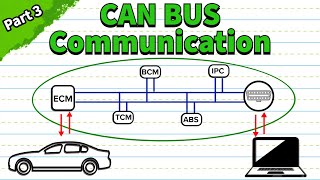
- Failed CAN Bus Termination Resistor (Rare) — The CAN bus network relies on two 120-ohm resistors to prevent signal reflections. If a resistor fails, the total network resistance shifts, corrupting data packets across the entire vehicle. 🎬 Watch: A deep dive into CAN bus troubleshooting and diagnosis.
Symptoms
- Airbag Warning Light and Cluster Messages — The airbag light stays illuminated permanently. The instrument cluster displays messages like 'Service Airbag System,' 'Airbag Disabled,' or 'Pretensioner Inoperative.'
- Secondary Warning Lights (ABS, Traction Control, Power Steering) — The airbag module communicates with other safety systems. When it sends invalid data, the vehicle disables Anti-lock Brakes (ABS), traction control, and power steering as a precaution.
- Random Electrical Issues (GM Vehicles) — On affected GM models, drivers experience flickering dash lights, sudden loss of power steering at low speeds, and the radio or instrument cluster rebooting randomly.
- Airbag System Self-Test Failure — The vehicle emits a warning chime during its initial startup sequence, indicating the SRS failed its diagnostic check.
Common Fixes & Costs
- Repair BCM Ground G218 (GM Vehicles) — Parts: $0-$5, Labor: $125-$250, ~1.5 hr book time (DIY)
- Battery Replacement — Parts: $150-$250, Labor: $0-$50, ~0.5 hr book time (DIY)
- Restraints Control Module (RCM) Replacement
— Parts: $250-$800, Labor: $150-$350, ~1.8 hr book time
(Professional)
: OEM
: OEM - Wiring Harness or Connector Repair — Parts: $10-$50, Labor: $150-$680, ~2.5 hr book time (Professional)
- RCM Software Update (Dealership) — Parts: $0, Labor: $150-$250, ~1.0 hr book time (Professional)
- Resetting the Original Airbag Module (Mail-in Service) — Parts: $0, Labor: $50-$150, ~0.5 hr book time (Professional)
Used vs. New Parts: Buying Guide
When a used part is worth it: A used RCM from a donor vehicle that has not been in an accident is cost-effective. The part number must match exactly, and it still requires professional programming to your vehicle's VIN.
Donor-vehicle mileage cap: roughly under 100000 miles for the part to have meaningful remaining life.
Donor quality checklist:
- Verify the donor vehicle was not in a collision; used modules from crashed cars contain locked 'crash data'.
- Ensure the part number on the used module is an exact match to the original.
- Avoid modules from flood-damaged vehicles, as internal corrosion makes them unreliable.
Decision logic:
- If The fault is a known software glitch addressed by a TSB → Do not buy any part; pay for a software update of your existing module.
- If Your original module has stored crash data after an accident → Use a professional mail-in reset service on your original module; it guarantees compatibility. 🎬 See how to flash a Ford RCM after deployment.
- If The original module failed internally from water damage → A used module with a matching part number is viable, but a new OEM part offers guaranteed reliability.
Warranty tradeoff: Used parts typically have a 30-90 day warranty covering only the part. New OEM parts installed by a dealer carry a 1-2 year warranty on both the part and labor.
Worst-case if a used part fails: $300-$600 if a used module is faulty after purchase, covering repeat labor for installation and programming.
What Happens If You Wait — Timeline
- Immediate (0 seconds): Code U0452 sets, the airbag warning light illuminates, and the entire Supplemental Restraint System (airbags, pretensioners) is disabled. (MPG impact: 0%% · Added cost: $0)
- 1-4 weeks: If caused by a poor ground, secondary symptoms appear: flickering dash lights, random warning messages ('Service Power Steering'), or radio reboots. These create unpredictable driving hazards. (MPG impact: 0%% · Added cost: $150-$300 (Diagnostic fees for new, seemingly unrelated symptoms).)
- 1-6 months: An unstable electrical environment from a bad ground or intermittent short puts continuous stress on other modules connected to the CAN bus network, such as the BCM. (MPG impact: 0%% · Added cost: $500-$1500 (Increased risk of damaging another control module).)
- 6+ months: A secondary module fails due to prolonged electrical stress. The vehicle experiences no-start conditions or a complete loss of body functions, requiring complex repairs. (MPG impact: 0%% · Added cost: $1000-$2500+ (Cost of replacing and programming multiple damaged modules).)
Cost of Not Fixing It
- Immediate: Complete failure of the airbag and supplemental restraint systems (SRS). Airbags and seatbelt pretensioners will not deploy in an accident. (Added cost: N/A)
- 0-3 months: The underlying electrical fault causes cascading problems, including intermittent loss of power steering, flickering dash lights, and stalling. (Added cost: $200-$1500)
- 3+ months: Continued electrical stress from a poor ground or shorted wire damages other sensitive control modules on the CAN bus network. (Added cost: $500-$3000+)
Diagnosis Steps
- Scan for All Trouble Codes
Use a bi-directional OBD-II scanner to read codes from the Body (B), Chassis (C), and Network (U) systems. Note all codes. A U0140 (Lost Comms with BCM) alongside U0452 on a GM vehicle strongly points to the G218 ground issue.
Tools: Advanced Bi-Directional OBD-II Scanner (Beginner) - Check Battery Health and Connections
Ensure the battery is fully charged and terminals are tight. Use a multimeter to verify voltage. A healthy battery reads 12.4-12.6V at rest. A voltage drop below 10V during engine cranking indicates a weak battery, a primary cause of communication codes.
Tools: Multimeter, Battery Terminal Brush (Beginner) - Pro Tip: Inspect BCM Ground G218 (GM Vehicles)
For 2014-2019 GM trucks/SUVs, locate ground G218 in the driver's side footwell near the A-pillar. Remove the 10mm nut, pull the ground rings off, trim away trapped foam insulation, clean the contact surfaces with a wire brush until shiny, and re-secure tightly (TSB #PIT5405C).
Tools: 10mm Socket, Trim Removal Tools, Wire Brush (Intermediate) - Perform a Visual Inspection of the RCM
Locate the RCM (usually under the center console or front seats). Look for obvious signs of water intrusion, spilled drinks, or corrosion. Inspect visible wiring for chafing or breaks.
Tools: Flashlight, Trim Removal Tools (Beginner) - Inspect RCM Connectors and Verify Power/Ground
Disconnect the battery and wait 15 minutes. Disconnect the RCM harness and inspect pins for green/white corrosion. Reconnect the battery and use a multimeter to verify ground resistance to the chassis is under 0.1 Ohms. Power pins must measure battery voltage (12.4V+) with the key on.
Tools: Socket Set, Multimeter, Electrical Contact Cleaner, Wiring Diagram (Intermediate) - Test the CAN Bus Network Resistance
With the battery disconnected, measure resistance between Pin 6 (CAN High) and Pin 14 (CAN Low) on the OBD-II port. A healthy network reads 60 ohms. A reading of 120 ohms indicates an open circuit; 0 ohms indicates a short.
Tools: Multimeter (Advanced) - Scope the CAN Bus Signal
Connect an oscilloscope to the CAN High and Low lines. With the ignition on, verify a clean, square waveform. CAN High should toggle to ~3.5V and CAN Low to ~1.5V. Noise or distortion indicates a wiring problem or a corrupting module.
Tools: Oscilloscope, Back-probe Pins (Advanced) - Isolate the Faulty Module
If network tests fail, disconnect modules one by one from the CAN bus, re-testing network resistance each time. When resistance returns to 60 ohms, the last disconnected module is the source of the network corruption.
Tools: Multimeter, Wiring Diagram (Advanced)
When This Code Triggers (Freeze-Frame Conditions)
- Module Supply Voltage: 11.0-14.5V (During normal operation; drops significantly during cranking if the battery is weak.)
- Ignition Status: Run (The fault is detected shortly after the vehicle starts and modules begin communicating.)
- Vehicle Speed: 0-70 mph (Occurs at any speed, including at startup (0 mph) or while driving.)
- Engine RPM: 0-3000 RPM (The code sets with the engine off (key on) or during normal driving.)
Related Codes
- U0151 — Lost Communication With Restraints Control Module. U0151 is a timeout fault (no message received). U0452 is a content fault (corrupt message received). Both present together point to an intermittent wiring or power issue causing the RCM to drop offline.
- U0140 — Lost Communication With Body Control Module (BCM). If seen alongside U0452 in a GM vehicle, the BCM's ground connection (G218) is the primary suspect. The BCM acts as a network gateway and routes messages incorrectly when failing.
- U0131 — Lost Communication With Power Steering Control Module. On GM trucks, the high electrical demand of power steering exposes the weak G218 ground, causing both the steering module and RCM to lose communication simultaneously.
- B0022 — Fault in the driver's side seatbelt pretensioner circuit. If the RCM sends invalid data (U0452), it is often because it cannot correctly read the status of satellite components like pretensioners, setting secondary B-codes.
Climate & Environmental Factors
- High Humidity / Water Intrusion: Moisture is a primary catalyst for corrosion on electrical connectors and module circuit boards. Water leaks from windshields or cabin spills directly contact the RCM, causing rapid failure.
- Road Salt (Salt Belt Regions): De-icing salts create a highly corrosive environment. Salt spray works into unprotected wiring harnesses and ground connections, accelerating corrosion and causing high resistance.
- Extreme Cold: Cold temperatures increase the internal resistance of a battery, reducing cranking power. This causes a significant voltage drop during startup, confusing sensitive modules and triggering communication codes.
How to Talk to a Mechanic About This Code
Say this: "I have an airbag light on and my scanner shows code U0452. I'd like to schedule a diagnostic appointment. Please start by checking for technical service bulletins, and verifying power, ground, and network communication at the Restraints Control Module before recommending a replacement."
This language shows you understand U0452 is often a wiring or communication issue, directing the technician to perform a proper diagnosis instead of jumping to an expensive module replacement.
Avoid saying:
- 'My airbag light is on, can you just fix it?'
- 'Just do whatever it takes to get the light off.'
- 'My buddy said I need a new airbag computer.'
Questions to ask before authorizing the repair:
- Did you find a TSB related to this code for my vehicle?
- What were the voltage and resistance readings at the RCM's power and ground pins?
- What was the resistance of the CAN bus at the OBD-II port?
- If recommending a module replacement, is programming included in the quote?
Where to Take It: Dealer vs Independent vs Chain
- Dealer:
Recommended if a software update is the known fix or if a new module requires programming, as they have guaranteed access to factory tools.
Best for: Vehicles under warranty, Known software-related issues fixed by a TSB, Complex programming of a new Restraints Control Module (RCM)
Downsides: Highest labor rates and part costs., Defaults to module replacement instead of in-depth wiring diagnostics. (Typical cost: +50% vs. baseline) - Independent Shop:
Best fit for diagnosing common wiring and ground faults. A shop with strong electrical skills saves hundreds by repairing a wire instead of replacing a module.
Best for: Out-of-warranty vehicles where the cause is likely a wiring or ground issue., Owners seeking a component-level electrical diagnosis rather than module replacement.
Downsides: Electrical diagnostic capabilities vary widely., Lacks the latest tools for programming brand-new modules on all makes. (Typical cost: +0% vs. baseline) - Chain Shop:
AVOID. This code requires specialized diagnostic skills beyond the scope of chain repair shops.
Best for: Tires, brakes, and oil changes.
Downsides: Technicians are not trained for complex network diagnostics., High risk of misdiagnosis leading to unnecessary part recommendations. (Typical cost: -10% vs. baseline)
When to Walk Away From the Repair
If the estimated repair cost for the U0452 code exceeds 40-50% of your car's private-party value, seriously consider selling or trading it in.
- Car worth $4000, fix is $2000: Walk away. The repair cost is 50% of the car's value, and other expensive failures are likely on the horizon.
- Car worth $15000, fix is $1800: Fix it. The repair cost is only 12% of the vehicle's value.
- Car worth $2500, fix is $1500: Walk away. A repair costing 60% of the car's value is a poor investment.
What Scan Tool You Need for This Code
Minimum: A scanner that reads SRS/Airbag system codes (U-codes and B-codes). A basic engine-only code reader will NOT see this fault.
A cheap scanner reports 'No Codes Found' because it cannot communicate with the Restraints Control Module. You need a tool explicitly stating it reads ABS and SRS codes.
Budget: BlueDriver Pro (~$100) — Connects to your smartphone to read and clear SRS/Airbag codes, providing the specific fault code (U0452) to verify the fix.
Mid-range: Autel MaxiCOM MK808 (~$350) — Provides full-system diagnostics to read codes from every module (RCM, BCM, ABS). Views live data from the RCM and performs basic bidirectional tests.
Professional: Autel MaxiSys MS906 Pro (~$1300) — Offers full bidirectional control and OEM-level functions, including module programming required when installing a new RCM.
Rent vs buy: Auto parts stores offer free loaner tools. You must specifically ask for their advanced scanner that reads 'SRS' or 'Airbag' codes, as the basic loaner is engine-only.
How to Clear the Code After You Fix It
- Ensure all repairs are complete and wiring is secured.
- Reconnect the battery if it was disconnected.
- Use an SRS-capable OBD-II scan tool to clear the U0452 code from all modules.
- Cycle the ignition off and then on, and wait for the airbag light to self-test (it should turn on briefly, then turn off).
Drive cycle (~15 minutes): A specific drive cycle is not required for the airbag system. The system performs a self-test at every startup. If the light stays off after starting the car and driving for 10-15 minutes, the repair is successful.
Readiness monitors affected: This is a Network code and does not directly affect emissions readiness monitors. However, disconnecting the battery during repair resets all monitors.
Before emissions retest: drive at least 50 miles to fully set monitors.
Watch out for:
- Using a basic engine code reader that cannot access or clear codes from the Restraints Control Module.
- Clearing the code without fixing the root cause; the code returns immediately on the next startup self-test.
- Failing to confirm the airbag light turns on for a few seconds and then turns off after starting the car.
Will This Fail Emissions / State Inspection?
Yes — this code typically fails an OBD-II emissions inspection.
- California: An illuminated airbag warning light is a safety issue and causes the vehicle to fail the state safety inspection performed alongside the smog check.
- New York: An illuminated airbag warning light is an advisory item, not an automatic failure for the safety inspection. The inspector notes it on the report.
- Texas: The airbag warning light is not a required item on the Texas vehicle safety inspection list. A vehicle with code U0452 typically passes inspection.
Most Commonly Affected Vehicles
- Chevrolet Silverado, Suburban, Tahoe (2014-2019) — Highly prone to a poor BCM ground at location G218, a manufacturing flaw covered by TSB #PIT5405C that causes this code and random electrical issues.
- GMC Sierra, Yukon, Yukon XL (2014-2019) — Shares the same K2XX platform and BCM grounding issue (G218) as Chevrolet counterparts, making U0452 very common. The repair is identical.
- Ford F-150 (2015-2020) — This code appears intermittently in the FCIM as a 'ghost code' triggered by a low battery during startup. Always check battery state of charge first.
- Ford Ecosport (2018-2022) — Liquid spills onto the RCM under the center console cause corrosion and failure, triggering this code along with ABS and traction control faults.
- Hyundai Sonata (2015-2019) — Prone to communication codes caused by open circuits or damaged wiring in harnesses located in the front bumper area due to minor impacts.
- Toyota RAV4 (2019-2022) — Appears with a 'Pre-Collision System Malfunction' warning after a windshield replacement if camera wiring is not reconnected properly.
- BMW 3-Series, 5-Series, X3, X5 (2012-2018) — Often appears alongside a 'Chassis Stabilization Malfunction' message. A failing battery causing low voltage is a very common trigger.
Manufacturer-Specific Notes
- General Motors (Chevrolet/GMC): The U0452 code on 2014-2019 trucks and SUVs is almost always caused by a poor ground at location G218 under the driver's side dash. Do not replace any modules before fixing this ground per TSB #PIT5405C.
- Ford: U0452 is often a 'ghost code' appearing in the FCIM when using diagnostic tools, pointing to a low battery condition rather than a hard fault. On Fusions, TSBs indicate a required RCM software update is the correct fix.
- Toyota: On models with Toyota Safety Sense, a 'Pre-Collision System Malfunction' warning precedes a U0452 code. This is commonly caused by a disconnected sensor wire behind the rearview mirror after a windshield replacement.
- Jeep/Dodge/Chrysler (FCA): The code is defined as 'Implausible Data Received From Restraints Control Module.' Diagnosis requires checking the Occupant Restraint Controller (ORC) for specific fault codes that reveal the true source of the invalid data.
Real Owner Stories
2015 GMC Sierra 1500 at 110K miles
Airbag light illuminated alongside intermittent 'Service Power Steering' messages, and the radio randomly rebooted. The dealer quoted over $1,000 to replace the Restraints Control Module (RCM).
What they tried:
- Declined the RCM replacement based on forum research.
- Pulled back the driver-side carpet and located ground G218.
- Found factory foam insulation trapped under the ground connector's eyelet.
- Cleaned the contact point with a wire brush and re-secured the 10mm nut.
Outcome: All symptoms and the U0452 code disappeared immediately. The repair cost $0 and took 30 minutes. The airbag light stayed off permanently.
Lesson: On 2014-2019 GM trucks and SUVs, random electrical issues accompanying a U0452 code are almost certainly the G218 ground fault. Always perform this free check before paying for diagnostic time or replacement modules.
2018 Ford Ecosport with unknown mileage
Purchased the vehicle with ABS, traction control, and airbag lights on. Found the RCM under the console visibly corroded from a liquid spill.
What they tried:
- Purchased a used RCM with a matching part number.
- Paid a service to 'clone' the data from the old module to the replacement.
- Installed the cloned module, but the U0452 code and warning lights immediately returned.
Outcome: The cloning service failed. The owner used FORScan diagnostic software to download the vehicle's original 'As-Built' data from Ford's service website using the VIN. Manually programming the As-Built data into the used RCM corrected the configuration mismatch and resolved the code.
Lesson: Module 'cloning' is unreliable for SRS components. When replacing an RCM, it must be programmed with the correct vehicle-specific configuration data using dealer-level tools or advanced software like FORScan.
2017 Ford Fusion with airbag light
The airbag light was on, and a scan revealed code U0452 stored in the ABS module. The vehicle drove normally otherwise.
What they tried:
- Initially suspected a failed ABS module or RCM.
- Researched Ford Technical Service Bulletins (TSBs) SSM 46901 and SSM 46109.
- Discovered the official fix was a software update, not hardware replacement.
Outcome: Took the car to a dealership, referenced the TSBs, and requested an RCM reprogram. The dealer performed the software update, extinguishing the airbag light. The cost was 1.5 hours of labor instead of a $800 module replacement.
Lesson: Always search for Technical Service Bulletins (TSBs) related to your specific vehicle and code. For modern electronic issues, the official fix is frequently a software update.
How to Prevent This Code From Triggering
- Maintain Battery Health (Every 6 months) — A weak battery causes low voltage during startup, confusing sensitive modules like the RCM and triggering communication codes.
- Prevent Water Intrusion (Annually) — Clearing sunroof drains and checking windshield seals prevents water from dripping onto the RCM, which is highly vulnerable to corrosion under the center console.
- Apply Dielectric Grease to Key Connectors (When performing under-dash repairs) — In high-humidity or salt-belt regions, dielectric grease on critical connector seals prevents moisture intrusion and long-term CAN bus corrosion.
Frequently Asked Questions
Is it safe to drive with code U0452?
No. This code means your entire airbag and safety restraint system is disabled. In an accident, the airbags and seatbelt pretensioners will not deploy, drastically increasing the risk of severe injury.
Will clearing the code fix the problem?
No. U0452 is triggered by a hard fault. Even if cleared, it returns immediately upon the next drive cycle until the underlying electrical problem is repaired.
Can I just pull the airbag fuse to turn the light off?
No. Pulling the fuse ensures the system remains disabled but will not turn the light off. The warning light is controlled by the instrument cluster reporting the network fault, and only fixing the root cause extinguishes it.
I replaced the RCM and the code is still there. What now?
The fault is likely in the wiring, power, or ground TO the module. Use a multimeter to confirm the RCM has stable battery voltage (12.4V+) and a clean ground (<0.1 ohms). Also, test the CAN bus resistance to rule out a network wiring issue.
Can aftermarket accessories cause code U0452?
Yes. Improperly installed accessories like remote starters or trailer brake controllers disrupt the CAN bus network. If the code appeared after an installation, disconnect the accessory immediately.
Can a low battery cause a U0452 code?
Yes. A weak battery causes severe voltage drops during startup, confusing sensitive electronic modules and causing them to broadcast invalid data. Always check your battery health first.
Can I replace the Restraints Control Module (RCM) myself?
This is not recommended for DIY. A new RCM must be programmed to your vehicle's specific VIN and configuration using dealer-level software. An incorrectly programmed module will not function.
My car was in an accident and now has this code. What does that mean?
The RCM stores 'crash data' after an accident, locking the module. It sends invalid signals until professionally reset by a mail-in service or replaced entirely.
Key Takeaways
- Code U0452 disables your entire airbag system, meaning airbags and seatbelt pretensioners will not deploy in a crash.
- Always test your battery first; a voltage drop below 10V during engine cranking is a primary trigger for this communication error.
- On 2014-2019 GM trucks and SUVs, over 80% of U0452 codes are solved for $0 by cleaning ground G218 under the driver's side dash (TSB #PIT5405C).
- Never replace the Restraints Control Module (RCM) without verifying it receives a stable 12.4V+ and has a ground resistance under 0.1 ohms.
Helpful Videos
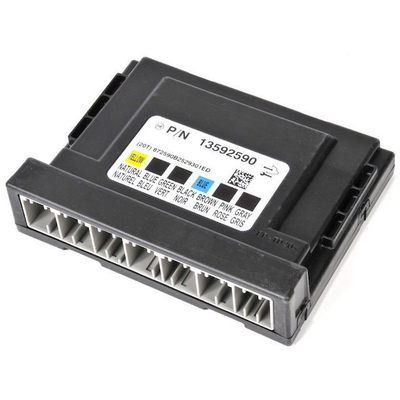
Shop the Parts Behind U0452
Below are the parts most often responsible for code U0452, ranked by how frequently each one is the actual culprit (per the diagnosis above). Tap any to see what we have for your vehicle.



The information in this article is provided for general reference and educational purposes only. Vehicle specifications, procedures, and part compatibility can vary by production date, trim level, and region. Always consult your vehicle's factory service manual and verify part numbers before purchasing or performing repairs. Safety-critical components such as airbags, seat belts, and braking systems should be installed by a qualified professional.
- 🎬 Helpful Videos
- 🛍️ Shop This Part
- What Does U0452 Mean?
- Can I Drive With U0452?
- Common Causes
- Symptoms
- Common Fixes & Costs
- Used vs. New Parts: Buying Guide
- What Happens If You Wait — Timeline
- Cost of Not Fixing It
- Diagnosis Steps
- When This Code Triggers (Freeze-Frame Conditions)
- Related Codes
- Climate & Environmental Factors
- How to Talk to a Mechanic About This Code
- Where to Take It: Dealer vs Independent vs Chain
- When to Walk Away From the Repair
- What Scan Tool You Need for This Code
- How to Clear the Code After You Fix It
- Will This Fail Emissions / State Inspection?
- Most Commonly Affected Vehicles
- Manufacturer-Specific Notes
- Real Owner Stories
- 2015 GMC Sierra 1500 at 110K miles
- 2018 Ford Ecosport with unknown mileage
- 2017 Ford Fusion with airbag light
- How to Prevent This Code From Triggering
- Frequently Asked Questions
- Is it safe to drive with code U0452?
- Will clearing the code fix the problem?
- Can I just pull the airbag fuse to turn the light off?
- I replaced the RCM and the code is still there. What now?
- Can aftermarket accessories cause code U0452?
- Can a low battery cause a U0452 code?
- Can I replace the Restraints Control Module (RCM) myself?
- My car was in an accident and now has this code. What does that mean?
- Key Takeaways
- 🎟️ Get 5% Off