

OBD-II Code U0592: Invalid Data Received From Gear Shift Control Module 'B'
What U0592 means, why it triggers, and how to fix it
- Code U0592 indicates the transmission control module received scrambled data from the gear shifter, forcing the vehicle into a protective 'Limp Mode'.
- Always unplug aftermarket OBD-II devices like insurance trackers or Bluetooth scanners first, as they frequently cause CAN bus interference.
- Test your battery voltage before replacing any parts; a resting voltage below 12.4V is the most common trigger for communication errors.
- Avoid driving more than 5 to 10 miles with this code active to prevent overheating the transmission fluid and causing a $3,500+ mechanical failure.
What Does U0592 Mean?
Code U0592 means the main computer received an incorrect or scrambled message from the gear shift control module. This module tells the transmission when to shift. Without clear signals, the transmission defaults to a protective state, causing shifting problems and dashboard warnings.
Technical definition: The SAE definition is 'Invalid Data Received From Gear Shift Control Module "B"'. This means a control module on the CAN bus detected implausible, corrupted, or missing data from the gear shift module.
Can I Drive With U0592?
Yes, But With Caution. You can drive, but the transmission often shifts poorly, gets stuck in 'Limp Mode' 🎬 Watch: What is limp mode and how to fix it, or fails to shift out of Park. Drive only to a safe location or repair shop. Prolonged driving in Limp Mode overheats transmission fluid and clutches, turning a $150 electrical repair into a $3,500+ transmission rebuild.
Common Causes
- Low battery voltage or charging system problems (Very Common) — Control modules require a steady 12V supply. A weak battery (below 12.4V at rest), failing alternator, or poor ground strap causes voltage drops that corrupt data between modules.
- Damaged wiring or poor electrical connections (Very Common) — Wires connecting the gear shift module corrode, loosen, or break. Moisture, vibration, and chafing create bad connections, including expanded female terminals that lose grip or poor factory crimps.
- Interference from aftermarket OBD-II devices (Common) — Bluetooth OBD-II adapters or insurance trackers flood the CAN bus with electrical noise. This interference disrupts normal communication. Unplugging these devices is often the easiest fix.
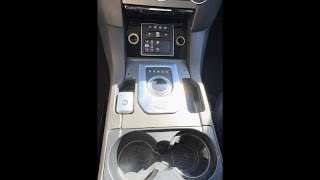
- Software glitches or outdated module firmware (Common) — Outdated module firmware causes communication errors. Jaguar and Land Rover vehicles frequently require a dealer software update 🎬 See how to replace a Land Rover gear shift module to resolve this specific code.
- Faulty Gear Shift Control Module (GSCM) (Common) — The module fails internally due to cracked solder joints, failed electronic components, or water intrusion.
- CAN bus network failure (Less Common) — A fault on the CAN bus, such as a shorted wire or missing terminating resistor, disrupts all communication and triggers this code.
- Incorrect module or component installed (Less Common) — Installing a non-approved shift selector on Allison transmissions triggers this code. A software mismatch between a 'prognostic-capable' shifter and a standard shifter also causes faults.
Symptoms
- Check Engine Light or Transmission Warning Light — A warning light or a 'Gearbox Fault' message appears on the dashboard.
- Shifter is stuck in Park or Neutral — You cannot move the gear selector lever, even with your foot firmly on the brake.
- Transmission enters 'Limp Mode' — The vehicle gets stuck in a single gear (often 2nd or 3rd) to prevent damage, resulting in poor acceleration and high RPMs.
- Harsh, erratic, or delayed shifting — The transmission slams into gear, hesitates before shifting, or shifts at the wrong times.
- Gear position indicator is incorrect or blank — The dashboard display showing your current gear (P, R, N, D) shows the wrong gear, a dash, or fails to update.
Diagnostic Flowchart
Tap your situation to follow the diagnostic path that matches what you're seeing on this code.
Common Fixes & Costs
- Replacing a Faulty Battery — Parts: $150-$300, Labor: $50-$100, ~0.5 hr book time (DIY)
- Repairing Damaged Wiring or Cleaning Connectors — Parts: $5-$50, Labor: $150-$300, ~1.5 hr book time (Intermediate)
- Updating or Reprogramming the Gear Shift Module Software — Parts: $0, Labor: $150-$250, ~1.0 hr book time (Professional)
- Replacing the Gear Shift Control Module
— Parts: $200-$1200, Labor: $150-$400, ~2.0 hr book time
(Professional)
: OEM T2R1473, T2H1305 (Alt: XeMODeX repair services)
: OEM LR117072, LR108936 (Alt: Various repair kits)
: OEM 61319260968, 61319296896 (Alt: Bosch) - Replacing a Faulty Alternator — Parts: $300-$600, Labor: $150-$350, ~1.5 hr book time (Intermediate)
Used vs. New Parts: Buying Guide
When a used part is worth it: A used Gear Shift Control Module (GSCM) makes sense for vehicles over 10 years old where a new OEM part exceeds 20% of the car's value.
Donor-vehicle mileage cap: roughly under 80000 miles for the part to have meaningful remaining life.
Donor quality checklist:
- Verify the donor vehicle was not scrapped due to electrical or transmission issues.
- Match the part number exactly, as slight variations are incompatible.
- Ensure the part comes with a short-term warranty (30-90 days).
Decision logic:
- If The fix is a known software issue for your vehicle (check TSBs) → Do not buy any part; pay for the software update at a dealer first.
- If A new OEM part is available for <$500 and the vehicle is newer → Buy new for the longer warranty and guaranteed compatibility.
- If The vehicle is over 10 years old or 150,000 miles and budget is the primary concern → A used part from a reputable salvage yard is an acceptable risk, but prepare for programming costs.
Warranty tradeoff: Used parts offer a 30-90 day warranty covering the part only. New aftermarket parts offer a 1-year warranty. New OEM parts carry a 1-2 year warranty.
Worst-case if a used part fails: $300-$600 if a used module fails after installation, requiring repeat labor for removal and re-programming.
What Happens If You Wait — Timeline
- 0-1 month: Intermittent 'Gearbox Fault' message appears, possibly stuck in Park once. Restarting the car temporarily resolves the issue. (MPG impact: 0%% · Added cost: $0)
- 1-3 months: The vehicle enters 'Limp Mode' occasionally, forcing limited speed. This causes poor acceleration and high engine RPM at moderate speeds. (MPG impact: 10-25%% · Added cost: $50-$150 in wasted fuel.)
- 3-6 months: Continued driving in limp mode causes transmission fluid to overheat and break down. Clutch packs begin to slip and burn. (MPG impact: 20-35%% · Added cost: $300-$850 for a transmission fluid flush and potential solenoid replacement.)
- 6+ months: Catastrophic internal transmission damage. The clutch packs are destroyed, and the vehicle stops moving altogether. (MPG impact: N/A (Vehicle likely undrivable)% · Added cost: $3,500-$7,000+ for a complete transmission rebuild or replacement.)
Cost of Not Fixing It
- Immediate: Driver becomes stranded if the vehicle gets stuck in Park or Neutral. Unpredictable shifting creates a safety hazard. (Added cost: Towing costs ($100-$300).)
- 0-1 month: Continued driving in 'Limp Mode' causes the transmission to operate at non-optimal RPMs, leading to overheating. (Added cost: Negligible if driven only to a repair shop; significant fuel waste if used daily.)
- 1-6 months: Prolonged operation in limp mode turns a simple electrical fix into a major mechanical failure due to heat damage. (Added cost: $3,500-$7,000+.)
Diagnosis Steps
- Unplug Aftermarket OBD-II Devices
If you have any device plugged into the diagnostic port (Bluetooth adapter, insurance tracker, etc.), unplug it. Clear the codes and test drive the vehicle to see if the fault returns. These devices are a known source of CAN bus interference.
Tools: None (Beginner) - Inspect the Battery and Charging System
Check that the battery terminals are clean and tight. Use a multimeter to test the battery voltage with the engine off (should be ~12.6V) and while running (should be ~13.7-14.7V). A weak battery is a very common cause.
Tools: Multimeter, Basic hand tools (Beginner) - Check for Other Trouble Codes
Use a professional OBD-II scanner to read all active and pending codes from all modules. Other codes, especially U0402 or P0705, help pinpoint the root cause. Save all codes and freeze-frame data before clearing.
Tools: Professional OBD-II Scanner (Beginner) - Visually Inspect the Wiring and Connectors
Locate the Gear Shift Control Module and carefully inspect its electrical connector and the surrounding wiring harness. Look for green or white corrosion, bent pins, or chafed wires. Ensure empty pin locations have plugs.
Tools: Flashlight, Inspection mirror (Intermediate) - Perform a 'Wiggle Test' and 'Terminal Drag Test'
With the ignition on (engine off), gently wiggle the harness for the GSCM while observing live data on a scan tool. If the fault appears, the wiring is faulty. Disconnect the connector and use a male terminal to test the female pins for proper tension.
Tools: OBD-II Scanner, Terminal pin kit (Advanced) - Check Power and Ground at the Module
Using a multimeter and the wiring diagram, check for proper battery voltage at the module's power pin and a good ground connection. The power supply should be 12.0V ± 0.5V with the key on. The ground circuit should have less than 0.1 Ohms of resistance.
Tools: Multimeter, Vehicle-specific wiring diagram (Advanced) - Test CAN Bus Resistance
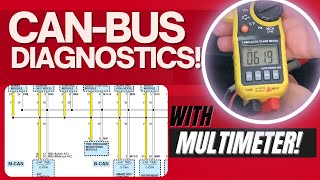
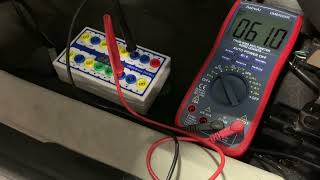
Disconnect the vehicle's battery. Set a multimeter to Ohms and measure the resistance between Pin 6 (CAN High) and Pin 14 (CAN Low) at the OBD-II port. A healthy network reads approximately 60 Ω. A reading of 120 Ω indicates an open circuit.
Tools: Multimeter (Advanced) - Test CAN Bus Voltages
Reconnect the battery and turn the ignition ON (engine off). Set a multimeter to DC Volts. Measure the voltage between Pin 6 (CAN High) and ground; it should be ~2.6V. Measure between Pin 14 (CAN Low) and ground; it should be ~2.4V.
Tools: Multimeter (Advanced) - Analyze Scan Tool Live Data
Access the live data stream for the Gear Shift Control Module. Monitor PIDs for 'Gear Selector Position'. The data should change instantly as you move the shifter. Freezes or incorrect readings point towards a fault in the GSCM.
Tools: Professional OBD-II Scanner (Advanced)
When This Code Triggers (Freeze-Frame Conditions)
- Engine Coolant Temp: 180-200°F (82-93°C) (Fully warmed up during steady driving.)
- RPM: 1500-2500 RPM (Cruise or steady throttle, when modules are in constant communication.)
- System Voltage: <12.0V or >15.0V (Sets during low voltage events (cranking with a weak battery) or high voltage spikes.)
- Vehicle Speed: 35-55 mph (56-88 km/h) (Highway driving, where continuous data exchange is expected between the GSCM and TCM.)
Related Codes
- U0402 — 'Invalid Data Received From Transmission Control Module'. This frequently appears with U0592. If both are present, the Gear Shift Module is often the source, as it sends data to the TCM.
- P0705 — 'Transmission Range Sensor Circuit Malfunction'. P0705 identifies a fault specifically with the circuit reporting gear position. A P0705 fault is a likely cause of a U0592 code.
- U0101 — 'Lost Communication with TCM'. This indicates a complete loss of signal from the transmission module. If seen with U0592, the TCM may have lost power or ground.
- U0140 — 'Lost Communication With Body Control Module'. A problem with the BCM disrupts the entire network and causes multiple U-codes, including U0592.
Climate & Environmental Factors
- High Humidity / Moisture: Accelerates corrosion on wiring, connector pins, and module circuit boards. Moisture intrusion into connectors is a primary cause of electrical faults.
- Cold Weather: Low temperatures significantly reduce a battery's cranking power. Since low system voltage causes data corruption, the code appears more frequently during cold starts.
- Road Salt (Winter Climates): Salt spray is highly corrosive and compromises under-vehicle wiring harnesses and connectors, leading to a higher incidence of wiring-related failures.
How to Talk to a Mechanic About This Code
Say this: "I have a U0592 code. Please test the battery, charging system, and shifter wiring harness before quoting a module replacement."
This signals you know that 'U' codes are often caused by simple electrical issues, guiding the shop toward a logical, cost-effective diagnostic path.
Avoid saying:
- 'Just fix whatever's wrong'
- 'My check engine light is on, can you look at it?'
- 'Whatever you recommend'
Questions to ask before authorizing the repair:
- Did you test the battery and charging system under load, and what were the results?
- Did you check for any Technical Service Bulletins (TSBs) for this code on my specific vehicle?
- Were you able to test for power, ground, and CAN bus signals at the gear shift module connector?
- If you're recommending a module replacement, does the new part require programming and is that cost included in the estimate?
Where to Take It: Dealer vs Independent vs Chain
- Dealer:
Recommended. The high likelihood of software updates or module programming makes the dealer's specialized equipment valuable for a first-time fix.
Best for: Vehicles under warranty., Vehicles with known software-related TSBs (like Jaguar/Land Rover)., Complex systems requiring proprietary programming (like BMW battery registration).
Downsides: Typically highest labor rates., May default to module replacement over component-level electrical repair. (Typical cost: +50% vs. baseline) - Independent Shop:
Acceptable with caution. Choose an independent shop that specializes in electrical diagnostics or your specific vehicle make. Ask them if they can perform module programming before you commit.
Best for: Out-of-warranty vehicles where the cause is likely a common electrical fault (wiring, battery)., Shops you have a trusted, long-term relationship with.
Downsides: Shop must have advanced diagnostic tools and experience with CAN bus networks., May not have access to the latest manufacturer software updates or programming capabilities. (Typical cost: +0% vs. baseline) - Chain Shop:
Avoid. This type of communication fault requires diagnostic expertise beyond the scope of most chain repair shops.
Best for: Simple, unrelated maintenance like oil changes or tire rotations.
Downsides: Technicians are generally not equipped or trained for complex network diagnostics., High risk of misdiagnosis, leading to unnecessary parts replacement. (Typical cost: -10% vs. baseline)
When to Walk Away From the Repair
If the repair cost exceeds 50% of the vehicle's private-party value, consider selling.
- Car worth $5000, fix is $2200: Borderline. Get a second opinion to confirm if it's an expensive module or a cheaper wiring issue before deciding.
- Car worth $15000, fix is $2200: Fix it. The repair cost is well below the 50% threshold and extends the life of a valuable asset.
- Car worth $3000, fix is $2200: Walk away. The repair cost is over 70% of the car's value. It is not a sound financial decision.
What Scan Tool You Need for This Code
Minimum: A scanner that can read codes from all vehicle modules (Engine, Transmission, ABS, Body Control) and display live data from the Transmission Control Module (TCM).
A basic $20 code reader only shows generic engine codes (P-codes) and cannot access the TCM or other modules where U-codes are stored.
Budget: BlueDriver Pro (~$100) — Connects to your smartphone and reads codes from all modules, views freeze-frame data, and graphs live data for the gear selector position.
Mid-range: Innova 5610 or Foxwell NT809 (~$350) — These handheld units offer bi-directional controls, allowing you to command module self-tests and providing deeper access to manufacturer-specific codes.
Professional: Autel MaxiCOM MK808S or MK900BT (~$450-600) — These professional-grade tablets offer full bi-directional control, advanced service functions like battery registration, and some module programming capabilities.
Rent vs buy: A basic code reader from an auto parts store is insufficient. If this is a one-time diagnosis, your money is better spent on a professional diagnostic fee. Buy a mid-range or pro-level scanner only if you plan to perform advanced DIY diagnostics regularly.
How to Clear the Code After You Fix It
- Reconnect battery if disconnected for repair.
- Use an OBD-II scan tool to clear all diagnostic trouble codes (DTCs).
- Perform a complete drive cycle to allow readiness monitors to run.
Drive cycle (~30 minutes): A generic drive cycle includes a cold start (engine off for 8+ hours), a 2-3 minute idle, mixed city driving, and 5-10 minutes of steady highway speed (around 55 mph).
Readiness monitors affected: Comprehensive Component Monitor, CAN Bus System
Before emissions retest: drive at least 100 miles to fully set monitors.
Watch out for:
- Simply clearing the code with a scanner does not fix the underlying fault; the code returns.
- Disconnecting the battery clears codes but resets all OBD-II readiness monitors, causing an automatic emissions test failure.
- Not allowing a proper cold soak (sitting for 8+ hours) prevents certain monitors from running.
Will This Fail Emissions / State Inspection?
Yes — this code typically fails an OBD-II emissions inspection.
- California: An illuminated Check Engine Light from a 'U' code is an automatic failure. After repair, most readiness monitors must be in a 'Ready' state to pass.
- New York: Any active code that illuminates the Malfunction Indicator Lamp (MIL), including U0592, results in an automatic emissions inspection failure.
- Texas: In the 17 counties requiring emissions testing, an illuminated Check Engine Light is an automatic failure.
Most Commonly Affected Vehicles
- Jaguar F-Type, Various Models (2014-2017) — These vehicles set U0592 alongside U0402 due to a software bug resolved by reprogramming the Gear Shift Module. It is also caused by CAN bus interference from aftermarket OBD-II devices.
- Land Rover Range Rover Sport (L494) (2017-2018) — TSB LTB01128NAS2 points to a software error in the Transmission Control Switch as the cause, fixed by a module update.
- BMW 3-Series (F30), X-Series (F15), and others (2012-2018) — BMWs are highly sensitive to battery voltage. This code appears if the battery is weak or improperly registered to the vehicle.
- GMC / Chevrolet Trucks with Allison Transmissions (2010-2024) — This code sets due to wiring issues, power supply problems, or installing a non-approved aftermarket shift selector.
- Ford Focus (2012-2018) — Problems with the PowerShift (DPS6) Transmission Control Module lead to communication codes, covered under extended warranty programs.
- Chrysler / Dodge / Jeep Various models with electronic shifters (2013-2022) — Models equipped with electronic rotary or monostable shifters experience this code due to wiring harness issues or the shifter control module losing communication.
- Hyundai Elantra and others (2011-2020) — U0592 points to wiring issues between the shifter and TCM, or verifying power and ground to the shift module.
- Various Vehicles with Aftermarket OBD-II Devices (1996-2024) — Plugging in a low-quality Bluetooth OBD-II adapter or insurance monitoring device interferes with the CAN bus network. Always remove these devices first.
Manufacturer-Specific Notes
- Jaguar / Land Rover: This code is frequently caused by a software glitch. TSB LTB01128NAS2 notes U0592-00 logs due to a software error in the Transmission Control Switch, fixed by a dealer update.
- Allison Transmission: This code sets if an incorrect shift selector is installed or if there is a software mismatch between a 'prognostic' calibration and a standard shifter.
- BMW: The battery must be 'registered' with the car's computer when replaced. Failing to do so leads to improper charging and communication codes like U0592.
- Ford: On 2012-2018 Focus and 2011-2016 Fiesta models, communication codes are often a symptom of a failing Transmission Control Module (TCM), covered under extended warranty programs.
Real Owner Stories
2014 Jaguar F-Type V8 S with 31K miles
A 'Gearbox Malfunction' message appeared, and the shifter locked in Park. After 4-5 restarts, it drove normally, but codes U0592 and U0402 remained and could not be cleared.
What they tried:
- Restarting the car multiple times.
- Using an OBD-II scanner to clear codes.
- Disconnecting the battery for 15 minutes.
Outcome: The owner discovered an aftermarket OBD-II Bluetooth adapter had been knocked loose. After removing the adapter, the fault never returned.
Lesson: Interference from aftermarket OBD-II devices is a documented cause of CAN bus faults. Always unplug these devices as the first diagnostic step.
GMC/Chevrolet truck with Allison Transmission
Code U0592 appeared, accompanied by the inability to select a range and the shifter locking in Neutral.
What they tried:
- Initial diagnosis pointed towards replacing the shift selector module.
Outcome: Technicians found corroded pins inside a connector due to moisture intrusion where an empty pin location lacked a weather plug. Cleaning and sealing the connector fixed the issue.
Lesson: Do not immediately replace the module. Thoroughly inspect wiring harnesses and connectors for corrosion or damage first.
BMW (various models) after battery service
After replacing the battery, transmission and communication fault codes, including U0592, appeared alongside shifting issues.
What they tried:
- Clearing the codes with a standard scan tool, but they returned instantly.
Outcome: The problem was resolved by properly 'registering' the new battery with the vehicle's computer using a BMW-specific diagnostic tool.
Lesson: On modern European vehicles, you cannot simply swap the battery. Failing to register the new battery causes unstable voltage and communication codes.
How to Prevent This Code From Triggering
- Keep battery terminals clean and tight (Every 6 months) — Corrosion creates resistance, causing voltage drops that corrupt CAN bus data.
- Test battery health annually (Once per year) — Identifies a failing battery before it causes intermittent electrical gremlins.
- Apply dielectric grease to critical connectors (When servicing components) — Keeps moisture out of weather seals, preventing corrosion that leads to bad connections.
- Avoid low-quality OBD-II plug-in devices (Ongoing) — Cheap adapters create electrical noise that disrupts CAN bus communication.
- Ensure regular, longer drives (At least once a week) — Allows the alternator to fully recharge the battery, preventing low-voltage data corruption.
Frequently Asked Questions
What are the most common misdiagnosis mistakes for code U0592?
The biggest mistake is immediately replacing the Gear Shift Module without testing the battery or checking for software updates. Technicians often overlook simpler causes like corroded ground wires or interference from an OBD-II dongle. Always verify power and ground to the module first.
Could my aftermarket accessories cause code U0592?
Yes, any device plugged into the OBD-II port can interfere with the vehicle's communication network. Documented cases show faulty or dislodged OBD-II dongles causing 'Gearbox Faults' and setting code U0592. Always unplug these devices as your first diagnostic step.
Can a bad battery cause code U0592?
Yes, a weak battery is a primary cause of this code. Modern vehicles require stable voltage, and a drop below 12.4V corrupts data signals between computer modules. Always load-test the battery early in your diagnosis.
Will clearing the code fix the problem?
No, clearing the code only turns the warning light off temporarily. If the underlying problem remains, the code returns immediately upon the next drive cycle.
How much does it cost to diagnose code U0592?
A professional diagnostic check typically costs between $150 and $250. This covers 1 to 1.5 hours of labor to scan the vehicle, check for TSBs, and perform electrical tests.
Is the Gear Shift Control Module the same as the Transmission Control Module?
They are different parts. The Gear Shift Control Module reads your physical shifter input and sends it over the network, while the Transmission Control Module receives that data and physically changes the gears.
Can I reset the U0592 code by disconnecting the battery?
Disconnecting the battery clears the code temporarily but does not fix the underlying fault. The code returns as soon as the ignition is turned on if a hard fault exists. On modern cars, this also resets readiness monitors and requires module relearning procedures.
What is the difference between Gear Shift Control Module 'A' and 'B'?
The 'B' designation is part of the generic SAE standard and does not necessarily mean there is an 'A' module. Most vehicles only have one primary gear shift module. Focus your diagnosis on the main gear selector and its wiring.
What is a 'prognostic-capable' shifter and how does it relate to U0592?
A prognostic-capable shifter monitors fluid life and transmission health on commercial vehicles like Allison transmissions. Installing a standard shifter on a vehicle programmed for a prognostic shifter triggers U0592 due to missing data. Ensure replacement parts match the vehicle's exact software calibration.
Key Takeaways
- Code U0592 indicates the transmission control module received scrambled data from the gear shifter, forcing the vehicle into a protective 'Limp Mode'.
- Always unplug aftermarket OBD-II devices like insurance trackers or Bluetooth scanners first, as they frequently cause CAN bus interference.
- Test your battery voltage before replacing any parts; a resting voltage below 12.4V is the most common trigger for communication errors.
- Avoid driving more than 5 to 10 miles with this code active to prevent overheating the transmission fluid and causing a $3,500+ mechanical failure.
Helpful Videos
![How To Test CAN BUS With A Multimeter [CAN Bus Resistance Check] Mechanic Mindset](https://img.youtube.com/vi/JPE42HSJxAk/mqdefault.jpg)

Shop the Parts Behind U0592
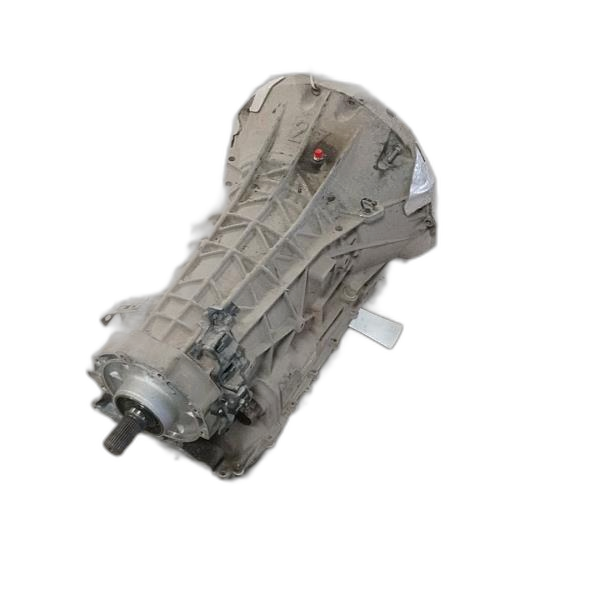
Below are the parts most often responsible for code U0592, ranked by how frequently each one is the actual culprit (per the diagnosis above). Tap any to see what we have for your vehicle.



The information in this article is provided for general reference and educational purposes only. Vehicle specifications, procedures, and part compatibility can vary by production date, trim level, and region. Always consult your vehicle's factory service manual and verify part numbers before purchasing or performing repairs. Safety-critical components such as airbags, seat belts, and braking systems should be installed by a qualified professional.
- 🧭 Diagnostic Flowchart
- 🎬 Helpful Videos
- 🛍️ Shop This Part
- What Does U0592 Mean?
- Can I Drive With U0592?
- Common Causes
- Symptoms
- Common Fixes & Costs
- Used vs. New Parts: Buying Guide
- What Happens If You Wait — Timeline
- Cost of Not Fixing It
- Diagnosis Steps
- When This Code Triggers (Freeze-Frame Conditions)
- Related Codes
- Climate & Environmental Factors
- How to Talk to a Mechanic About This Code
- Where to Take It: Dealer vs Independent vs Chain
- When to Walk Away From the Repair
- What Scan Tool You Need for This Code
- How to Clear the Code After You Fix It
- Will This Fail Emissions / State Inspection?
- Most Commonly Affected Vehicles
- Manufacturer-Specific Notes
- Real Owner Stories
- 2014 Jaguar F-Type V8 S with 31K miles
- GMC/Chevrolet truck with Allison Transmission
- BMW (various models) after battery service
- How to Prevent This Code From Triggering
- Frequently Asked Questions
- What are the most common misdiagnosis mistakes for code U0592?
- Could my aftermarket accessories cause code U0592?
- Can a bad battery cause code U0592?
- Will clearing the code fix the problem?
- How much does it cost to diagnose code U0592?
- Is the Gear Shift Control Module the same as the Transmission Control Module?
- Can I reset the U0592 code by disconnecting the battery?
- What is the difference between Gear Shift Control Module 'A' and 'B'?
- What is a 'prognostic-capable' shifter and how does it relate to U0592?
- Key Takeaways
- 🎟️ Get 5% Off