

OBD-II Code U0594: Invalid Data from Hybrid/EV Control Module
What U0594 means, why it triggers, and how to fix it
- Code U0594 is a network communication error indicating the hybrid control module is sending corrupt data, not suffering a mechanical failure.
- Check for Technical Service Bulletins (TSBs) first; a dealership software update costing $150-$450 is the most common fix across all brands.
- Test your 12-volt auxiliary battery before replacing expensive modules, as voltage drops below 9.6V during load testing frequently trigger false U0594 codes.
- Expect the vehicle to enter a reduced-power 'limp mode' that disables electric-only driving and regenerative braking until the code is cleared.
What Does U0594 Mean?
Code U0594 means the vehicle's main computer received scrambled or nonsensical data from the Hybrid/EV Powertrain Control Module (HPCM). Because this data fails validation checks, the vehicle shuts down high-voltage hybrid systems as a safety measure. On some non-hybrid vehicles (like Dodge/Chrysler), manufacturers reuse the 'HCP' designation, making this code point to an ABS or body control module fault instead.
Technical definition: The SAE/OBD-II definition for U0594 is "Invalid Data Received From Hybrid/EV Powertrain Control Module". This indicates a Controller Area Network (CAN bus) communication error where data packets from the HPCM or Battery Pack Control Module (BPCM) fail checksum validation, fall outside expected ranges, or drop entirely. Other network modules flag this data as unreliable and trigger the fault.
Can I Drive With U0594?
Yes, But With Caution. You can drive, but the vehicle enters a reduced-power 'limp mode' with hybrid or electric features disabled. Service the vehicle immediately to prevent sudden power loss while driving. Extended driving in this state strains the gasoline engine and risks secondary component damage.
Common Causes
- Control Module Software/Firmware Bug (Very Common) — Outdated software in the vehicle's control modules is the primary cause. Manufacturers frequently release Technical Service Bulletins (TSBs) to patch communication glitches, such as real-time clock synchronization faults between modules.
- Weak or Failing 12-Volt Battery (Common) — The standard 12V battery powers all vehicle computers. Voltage drops below 12.0V cause modules to malfunction, broadcast corrupt data, or drop off the CAN bus entirely. 🎬 Watch: Why 12V batteries cause major hybrid communication issues.
- Damaged Wiring or Loose Connectors (Common) — Corroded pins, loose grounds, or rodent-chewed wires scramble the CAN bus data signal. Loose primary 12V power and ground connections cause widespread communication faults.
- Failing Hybrid/EV Powertrain Control Module (HPCM) (Less Common) — Internal hardware failures, such as cracked solder joints or a faulty transceiver, 🎬 Watch: A walkthrough of replacing a failed control module. force the module to broadcast corrupt data onto the network.
- Faulty Sensor Reporting to the HPCM (Less Common) — The HPCM functions correctly but receives bad data from a high-voltage battery sensor or drive motor position sensor, which it then passes along the network.
- Failed DC Fast Charging Session (Rare) — A failed communication handshake with a public DC fast charger leaves a temporary fault code in the vehicle's memory requiring a manual reset.
- Blown Control Module Fuse (Rare) — A blown fuse severs power to a critical module, causing a cascade of network codes as other computers stop receiving expected data.
Symptoms
- Hybrid/EV System Warning Light On — A warning light specific to the hybrid or charging system illuminates, often displaying 'Check Electric Vehicle System' or 'Powertrain Data Invalid'.
- Electric-Only Mode Unavailable — The vehicle relies entirely on the gasoline engine and locks out full electric driving modes.
- Regenerative Braking Disabled — The vehicle coasts freely when lifting off the accelerator, and the high-voltage battery stops recharging during deceleration.
- Unable to Charge High-Voltage Battery — Plug-in hybrids or EVs refuse to initiate a charging session when plugged into a wall unit or fast charger.
- Premature 'Oil Change Required' Message — On the Chrysler Pacifica Hybrid, the software glitch causing U0594 incorrectly triggers the oil life monitor.
- Reduced Engine Power ('Limp Mode') (also visible on scanner) — The vehicle feels sluggish as electric motor assistance is disabled to prevent drivetrain damage.
Diagnostic Flowchart
Tap your situation to follow the diagnostic path that matches what you're seeing on this code.
Common Fixes & Costs
- Updating Control Module Software — Parts: $0, Labor: $150-$450, ~1.5 hr book time (Professional)
- Replacing the 12-Volt Battery — Parts: $150-$350, Labor: $50-$100, ~0.8 hr book time (DIY)
- Repairing Damaged Wiring or Connectors — Parts: $10-$50, Labor: $150-$600, ~2.5 hr book time (Intermediate)
- Replacing the Hybrid/EV Powertrain Control Module (HPCM) — Parts: $800-$1500, Labor: $200-$400, ~2 hr book time (Professional)
- Replacing a Blown Fuse — Parts: $1-$10, Labor: $50-$150, ~0.5 hr book time (DIY)
Used vs. New Parts: Buying Guide
When a used part is worth it: For a VIN-locked security component like a Hybrid Powertrain Control Module (HPCM), buying a used part from a salvage yard is guaranteed to fail. A 'used' part only makes sense if it is a professionally remanufactured and pre-programmed unit from a reputable specialist.
Donor-vehicle mileage cap: roughly under 50000 miles for the part to have meaningful remaining life.
Donor quality checklist:
- Verify the seller provides a VIN-programming service so the part is 'plug-and-play'.
- Avoid salvage yard modules as they are VIN-locked to the donor car and cannot be reprogrammed.
- Ensure the part number is an exact match, including hardware or software version numbers.
- Check that the seller offers a long-term or lifetime warranty.
Decision logic:
- If The fix is a software update → This guide does not apply; you must have the service performed by a professional.
- If The part is a security-critical module (HPCM, BPCM, BECM) → Buy a new OEM 'virgin' module or a professionally remanufactured, VIN-programmed module. Avoid used salvage parts.
- If Vehicle is older and budget is the primary concern → A remanufactured module is the most cost-effective choice, costing 50-70% less than a new OEM part.
Warranty tradeoff: Used/Salvage parts: Minimal to no warranty. Remanufactured: Typically 1-year to lifetime warranty. OEM New: 1-2 year parts warranty, requires dealer installation.
Worst-case if a used part fails: $500-$1000 if an improperly programmed module is used, including the bad part cost plus repeated diagnostic fees.
Cost of Not Fixing It
- 0-1 month: Vehicle operates in 'limp mode' with reduced power and disabled hybrid/EV features. Fuel economy decreases as the gasoline engine runs constantly. (Added cost: $20-$50 in extra fuel costs.)
- 1-6 months: Continued operation strains the gasoline engine and support systems. Running rich in limp mode begins to degrade the catalytic converter. (Added cost: $100-$300 in cumulative fuel costs and increased engine wear.)
- 6+ months: Prolonged driving in limp mode leads to significant secondary failures, damaging components that were not originally faulty. Risk of sudden power loss increases. (Added cost: $500-$2000+ if a secondary component like a catalytic converter fails.)
Diagnosis Steps
- Check for Technical Service Bulletins (TSBs)
Search online for your vehicle's make, model, year, and 'U0594 TSB'. Manufacturers issue software updates that serve as the direct fix for this code. This is the mandatory first step.
Tools: ['Smartphone or Computer'] - Read All Fault Codes from All Modules
Use a bi-directional OBD-II scanner to read codes from all vehicle modules. Note any other 'U' (network), 'P' (powertrain), or 'B' (body) codes to establish the root cause.
Tools: ['Bi-directional OBD-II Scanner'] - Test the 12-Volt Battery and Connections
Check the health of the standard 12V battery. Resting voltage must exceed 12.4V. Perform a load test; voltage must not drop below 9.6V. Inspect main battery terminals and chassis grounds for corrosion.
Tools: ['Digital Multimeter', 'Battery Load Tester'] - Inspect Wiring and Connectors
Visually inspect the wiring harnesses going to the Hybrid Powertrain Control Module (HPCM) and Battery Pack Control Module (BPCM). Look for water damage, bent pins, or rodent-chewed wires.
Tools: ['Flashlight', 'Dielectric Grease'] - [ADVANCED] Check CAN Bus Network Resistance
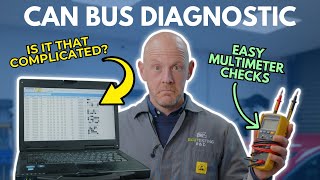
With the 12V battery disconnected, measure the resistance between CAN High (Pin 6) and CAN Low (Pin 14) at the OBD-II port. A healthy high-speed CAN bus reads exactly 60 ohms. 120 ohms indicates a broken circuit; 0 ohms indicates a short.
Tools: ['Digital Multimeter'] (Advanced) - [ADVANCED] Check CAN Bus Static Voltage
With ignition ON and engine OFF, back-probe the CAN connector. Measure voltage between CAN High (Pin 6) and ground; it must be a steady ~2.6V. Measure CAN Low (Pin 14) to ground; it must be ~2.4V. 0V indicates a short to ground.
Tools: ['Digital Multimeter', 'Back-probe kit'] (Advanced) - [ADVANCED] Monitor Live Scan Tool Data
Monitor live data PIDs from the HPCM. Watch for frozen or erratic data. The high-voltage bus must remain stable within a 300-400V range during operation. Erratic readings point to a failing sensor rather than a module fault.
Tools: ['Bi-directional Scan Tool'] (Advanced) - Isolate the Faulty Module
If CAN bus resistance reads 120 ohms, unplug modules on that network one by one. When resistance returns to 60 ohms, you have isolated the module with the internal failure or the faulty wiring section.
Tools: ['Digital Multimeter', 'Vehicle Wiring Diagram']
When This Code Triggers (Freeze-Frame Conditions)
- Vehicle Speed: 25-65 mph (The fault sets during steady-state driving when modules constantly broadcast status messages.)
- Engine State: Running (The code sets when the vehicle is on, has completed startup checks, and modules are actively communicating.)
- 12V System Voltage: 13.5-14.5V (A freeze frame showing voltage below 12V indicates a weak 12V battery is the underlying cause.)
- Engine Coolant Temp: 170-210°F (The fault occurs at any temperature but frequently happens after the vehicle is fully warmed up.)
Related Codes
- P1A29 / P1A2A — These codes for 'Cell Supervisory Circuit Failure' appear with U0594 on Chrysler Pacificas. U0594 is the result (bad data received), while P1A29/P1A2A is the cause (a failing battery circuit generating bad data). This combination requires the BPCM software update.
- P2BE5 — This code for 'Hybrid/EV Battery Pack Current Sensor Circuit Performance' specifies that data from the battery's internal sensors is faulty. P2BE5 pinpoints the exact component sending faulty information to the HPCM.
- U0001 — 'High Speed CAN Communication Bus' means the entire network is down. U0594 means one specific module is sending bad data. Seeing both indicates a network-wide failure like a shorted wire or failed gateway module.
- U0111 — 'Lost Communication With Battery Energy Control Module' means total communication loss. U0594 means data is received but corrupt. U0111 points directly to a wiring break, blown fuse, or completely dead module.
Climate & Environmental Factors
- Cold Climates: Low ambient temperatures strain the 12V battery, increasing the likelihood of low voltage conditions that trigger communication codes. Rodents also seek shelter in warm engine bays during cold weather.
- High Humidity / Water Ingress: Humid environments accelerate corrosion on wiring connectors and module circuit boards. Water penetrating a connector seal shorts CAN bus lines, directly causing data corruption.
- Rodent Infestation: Rodents chew on automotive wiring, attracted to soy-based insulation. A single chewed wire in a CAN bus harness severs communication and triggers a U0594 fault.
How to Clear the Code After You Fix It
- Reconnect the 12V battery if disconnected for repair.
- Use an OBD-II scan tool to erase all Diagnostic Trouble Codes (DTCs) from all modules.
- Perform a complete drive cycle to allow readiness monitors to run self-tests.
Drive cycle (~30 minutes): A generic drive cycle includes a cold start (engine off for 8+ hours), a 2-3 minute idle, 15-20 minutes of mixed city driving, followed by 10 minutes of steady highway speed between 55-65 mph.
Readiness monitors affected: Comprehensive Component Monitor, Misfire Monitor, Catalyst Monitor, Evaporative System Monitor
Before emissions retest: drive at least 100 miles to fully set monitors.
Watch out for:
- Clearing the code resets readiness monitors to 'Not Ready', causing an immediate emissions test failure.
- If the root cause is not fixed, the code reappears within the first few minutes of driving.
- Driving only on the highway is insufficient; a variety of conditions are needed to complete all monitor tests.
Will This Fail Emissions / State Inspection?
Yes — this code typically fails an OBD-II emissions inspection.
- California: A vehicle with an illuminated Check Engine Light due to a U-code fails the OBD-II portion of the Smog Check. A full drive cycle must be completed after repair.
- New York: Any active diagnostic trouble code that commands the MIL on, including U0594, results in an automatic inspection failure.
- Texas: In the 17 counties requiring emissions testing, an active U0594 code with an illuminated MIL causes the vehicle to fail the OBD-II test.
Most Commonly Affected Vehicles
- Chrysler Pacifica Hybrid (2017-2018) — TSB 08-130-21 identifies a software issue in the Battery Pack Control Module (BPCM) as the primary cause. Recalls Z11 and T34 also involve software updates to hybrid system modules.
- Ford Escape (2020-2021) — TSB SSM 50694 points to a software issue in the Instrument Panel Cluster (IPC) that stores this code alongside display glitches. The fix is an IPC software update.
- Chevrolet Volt (2011-2018) — U-codes frequently indicate a failing Battery Energy Control Module (BECM). For 2016-2018 models, GM issued special coverage program N232432680 extending the BECM warranty to 15 years or 150,000 miles.
- Kia Niro EV / EV6 (2019-2023) — Appears with code P0C17 ('Position Sensor Not Learned') or points to issues with the Vehicle Control Unit (VCU) software. Also related to the ICCU failure affecting the E-GMP platform.
- BMW i3 (2014-2021) — Drivetrain errors are heavily linked to a failing 12V battery. A weak 12V battery is the primary suspect for any communication fault on this chassis.
- Mitsubishi Outlander PHEV (2014-2023) — Service information points to CAN bus line damage or a failure of the PHEV-ECU. A blown fuse for the ECU is a common root cause.
- Hyundai Ioniq 5 (2022-2024) — Appears temporarily after a failed DC fast charging session. If persistent, it is a symptom of a failing Integrated Charging Control Unit (ICCU), covered by Hyundai Safety Recall 272 (NHTSA 24V-204).
- Ford Fusion Hybrid / C-Max Hybrid (2013-2020) — Frequently related to wiring harness chafing, HPCM failure, or Battery Energy Control Module (BECM) issues.
Manufacturer-Specific Notes
- Chrysler/Jeep/Dodge: On the Pacifica Hybrid, U0594 almost always requires a software update for the Battery Pack Control Module (BPCM) per TSB 08-130-21. On non-hybrid models like the Challenger, U0594 misleadingly refers to an internal fault in the ABS module.
- Ford: For the 2020-2021 Escape, this code triggers due to a software bug in the instrument panel cluster (IPC), not the hybrid module itself. Always check for TSBs related to the IPC.
- Hyundai/Kia: A temporary U0594 code appears after a communication failure with a DC fast charger. If the code persists, it indicates a failing Integrated Charging Control Unit (ICCU), covered under Safety Recall 272.
- General Motors (Chevrolet): On Gen 2 Chevrolet Volts (2016-2018), U-codes are early indicators of a failing Battery Energy Control Module (BECM). GM extends the warranty on the BECM to 15 years or 150,000 miles under special coverage program N232432680.
Frequently Asked Questions
Can I fix code U0594 myself?
You can perform basic checks like testing the 12V battery or inspecting fuses. However, the most common fix is a software update requiring dealer-level tools. Stop DIY diagnosis and visit a shop if the 12V battery tests fine.
Will clearing the code fix the problem?
Clearing the code only works if a temporary glitch, like a failed charging session, caused it. If an underlying hardware or software fault exists, the code returns immediately. Clearing codes never fixes physical root causes.
What is a common misdiagnosis for U0594?
Mechanics frequently misdiagnose this by immediately replacing the expensive Hybrid Powertrain Control Module (HPCM). Always test the 12V battery and check for software updates first. Skipping these basic steps leads to costly, unnecessary repairs.
Why do I pay a diagnostic fee under warranty?
Dealers charge an upfront fee to cover the technician's investigation time. If the root cause is a warrantable failure, the dealer waives or refunds this fee. You remain responsible for the cost if the issue is uncovered, like rodent damage.
How much does it cost to diagnose U0594?
A professional diagnosis costs between $150 and $250. This covers the labor required to use advanced scan tools and read manufacturer-specific network data. This step is mandatory for complex communication codes.
Is it safe to drive with code U0594?
You can drive short distances to a repair shop, but the vehicle operates with reduced power and disabled hybrid features. Sudden power loss remains a risk. Service the vehicle immediately to prevent secondary damage.
Does U0594 mean I need a new hybrid battery?
No. This code indicates a communication error, not a mechanical failure of the high-voltage battery pack. A software update, 12V battery replacement, or wiring repair resolves the issue in almost all cases.
What is a CAN bus?
The Controller Area Network (CAN bus) is the primary communication system connecting your car's computers. A fault on this network, like a broken wire, prevents modules from sharing data. This triggers U-codes like U0594.
Key Takeaways
- Code U0594 is a network communication error indicating the hybrid control module is sending corrupt data, not suffering a mechanical failure.
- Check for Technical Service Bulletins (TSBs) first; a dealership software update costing $150-$450 is the most common fix across all brands.
- Test your 12-volt auxiliary battery before replacing expensive modules, as voltage drops below 9.6V during load testing frequently trigger false U0594 codes.
- Expect the vehicle to enter a reduced-power 'limp mode' that disables electric-only driving and regenerative braking until the code is cleared.
Helpful Videos
Shop the Parts Behind U0594
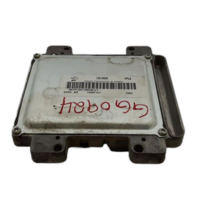
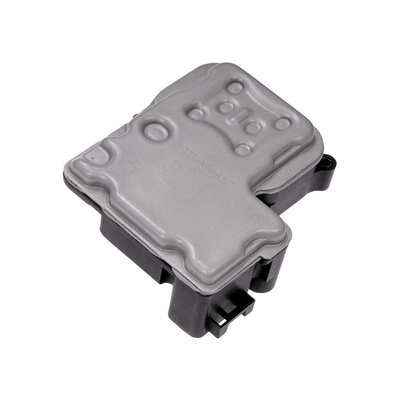
Below are the parts most often responsible for code U0594, ranked by how frequently each one is the actual culprit (per the diagnosis above). Tap any to see what we have for your vehicle.



The information in this article is provided for general reference and educational purposes only. Vehicle specifications, procedures, and part compatibility can vary by production date, trim level, and region. Always consult your vehicle's factory service manual and verify part numbers before purchasing or performing repairs. Safety-critical components such as airbags, seat belts, and braking systems should be installed by a qualified professional.
- 🧭 Diagnostic Flowchart
- 🎬 Helpful Videos
- 🛍️ Shop This Part
- What Does U0594 Mean?
- Can I Drive With U0594?
- Common Causes
- Symptoms
- Common Fixes & Costs
- Used vs. New Parts: Buying Guide
- Cost of Not Fixing It
- Diagnosis Steps
- When This Code Triggers (Freeze-Frame Conditions)
- Related Codes
- Climate & Environmental Factors
- How to Clear the Code After You Fix It
- Will This Fail Emissions / State Inspection?
- Most Commonly Affected Vehicles
- Manufacturer-Specific Notes
- Frequently Asked Questions
- Can I fix code U0594 myself?
- Will clearing the code fix the problem?
- What is a common misdiagnosis for U0594?
- Why do I pay a diagnostic fee under warranty?
- How much does it cost to diagnose U0594?
- Is it safe to drive with code U0594?
- Does U0594 mean I need a new hybrid battery?
- What is a CAN bus?
- Key Takeaways
- 🎟️ Get 5% Off