

U0594 on 2017-2018 Chrysler Pacifica Hybrid: Implausible Data Causes and Fixes
On a 2017-2018 Pacifica Hybrid, code U0594 almost always indicates a software issue in the Battery Pack Control Module (BPCM). The most common fix is a software update performed by a Chrysler dealer, which is often covered by a Technical Service Bulletin (TSB). This issue can also cause premature oil change messages and force the vehicle into fuel/oil refresh mode.
- U0594 on a Pacifica Hybrid is a communication error, usually triggered by faulty data from the high-voltage battery's control module (BPCM).
- The most common and first-line fix is a software update for the BPCM, as specified in Chrysler's Technical Service Bulletins. Do this before replacing any parts.
- This is not a DIY repair. The high-voltage system is dangerous, and diagnosis requires dealer-level scan tools.
- Always check for associated codes. If you see codes like P1A29 or P2BE5 alongside U0594, it strongly points to the known software issue.
- Ensure the vehicle's standard 12V battery is healthy, as a weak 12V battery can cause numerous, unrelated electronic fault codes.
What's Unique About the 2017-2018 Chrysler PACIFICA
On the Pacifica Plug-in Hybrid (PHEV), U0594 is rarely a standalone code. It's a known issue documented by Chrysler in Technical Service Bulletins (TSBs). The code typically appears with a specific group of other faults related to the high-voltage battery's internal sensors. This pattern strongly suggests a software logic problem rather than a simple hardware failure. Specifically, the software update corrects a real-time clock synchronization issue between the BPCM and the Powertrain Control Module (PCM), which can also trigger premature oil change messages. This makes a dealer-level software update the most common and manufacturer-recommended first step in the repair process.
Diagnostic Flowchart
Tap your situation to follow the diagnostic path that matches what you're seeing on this vehicle.
Symptoms You May Notice
- Check Engine Light (Malfunction Indicator Lamp) is on.
- Hybrid/EV system warning light illuminated on the dashboard.
- "Service Charging System" or similar message displayed.
- Noticeable loss of power or acceleration.
- Vehicle relies more on the gasoline engine and may not enter electric-only mode.
- Regenerative braking is disabled or not working correctly.
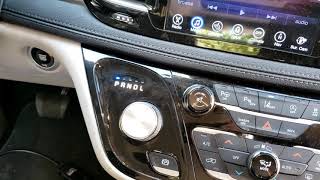
- In some cases, a no-start condition may occur. 🎬 Watch: Troubleshooting a Pacifica that won't start or crank.
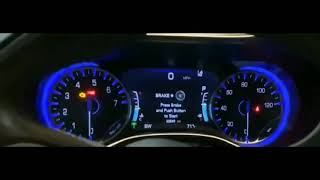
- Premature 'oil change required' message displayed on the cluster.
- Vehicle frequently enters fuel/oil refresh mode.
- Replacing the Hybrid Control Processor (HCP) without first performing a software update.
- Attempting to fix individual symptoms (like the oil change message) without understanding that they stem from a single root communication fault.
- Replacing the high-voltage battery or its components before a BPCM software update has been performed and verified.
Most Likely Causes
- Battery Pack Control Module (BPCM) Software Requires Update 🔴 High Probability → Shop Vehicle Battery Chrysler has issued multiple Technical Service Bulletins (TSBs), most notably 08-130-21, specifically to address this code and a related cluster of codes with a software update. The update corrects faulty logic, including a real-time clock synchronization issue with the PCM.
How to confirm: A Chrysler dealer or a qualified shop with a wiTECH scan tool can check the current software version of the BPCM and compare it to the latest available version referenced in TSB 08-130-21 or newer.
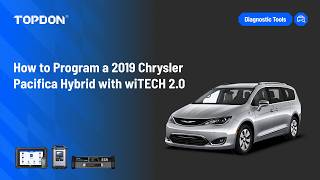
Typical fix: Reprogramming (flashing) the BPCM with the latest software version. This is a software fix, not a hardware replacement, and typically takes about 0.3 hours of labor time. 🎬 Watch: Step-by-step guide to programming with the wiTECH tool.
Est. part cost: $0-$250 - Faulty Component in High-Voltage Battery Assembly 🟡 Medium Probability → Shop Vehicle Battery The codes that often accompany U0594 (like P1A29, P2BE5, and various P0Bxx voltage sense codes) point to failures of internal battery components like cell supervisory circuits or current sensors.
How to confirm: If a software update does not resolve the issue, a technician must follow the manufacturer's diagnostic procedures to test components within the sealed high-voltage battery pack. This is a complex, dealer-level diagnosis.
Typical fix: Replacement of the specific faulty component within the battery assembly or, in some cases, the entire battery pack. This is a very expensive and specialized repair, sometimes necessitated by the Z11 safety recall if the battery fails an integrity test.
Est. part cost: $500-$10000+ - Wiring or Connector Issue ⚪ Low Probability Complex vehicle electronics can be susceptible to issues from loose connections, corrosion, or damaged wiring harnesses, which can corrupt communication signals on the CAN bus network.
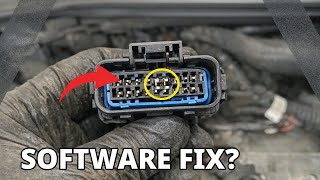
How to confirm: Visual inspection of wiring harnesses connected to the BPCM and HCP/PIM. A technician would also test the CAN bus network for proper voltage and resistance. 🎬 See how to diagnose Pacifica CAN bus communication issues. A key area to check is the main 12V battery connections, as looseness there can cause widespread communication faults.
Typical fix: Repairing the damaged wire, cleaning corrosion, or re-seating a loose connector. One owner's detailed repair invoice showed that a loose 12V system connection (specifically at connection D8118A) was the root cause of multiple communication codes and loss of power.
Est. part cost: $0-$300
Rare But Worth Checking
- Failing 12V Battery: → Shop Vehicle Battery A weak or failing conventional 12V battery can cause a wide range of bizarre electronic issues and communication faults in modern vehicles. Before diving into expensive hybrid diagnostics, it's always worth testing the 12V battery's health. A failing 12V battery can cause intermittent voltage drops that disrupt module communication.
- Faulty Hybrid Control Processor (HCP): While the code points to data *received by* the HCP, it's possible, though less common, for the module itself to be the source of the problem. This should only be considered after software updates and wiring checks have been exhausted.
Diagnosis Steps
- SAFETY WARNING: Do not attempt these steps without proper training and equipment for high-voltage systems. Professional service is strongly recommended.
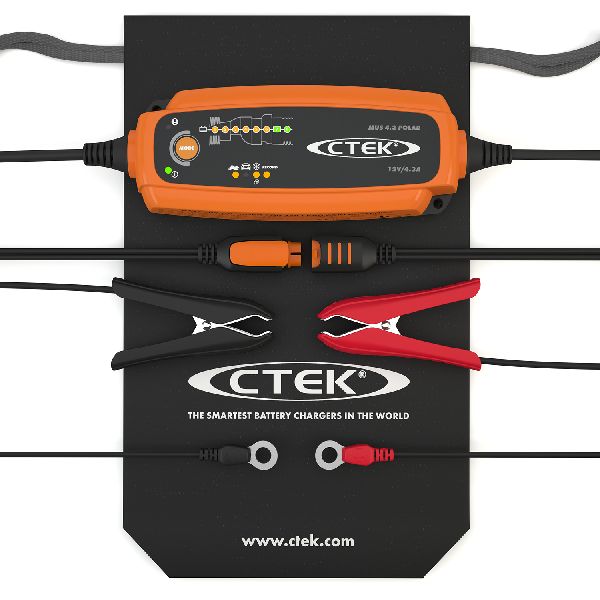
- Connect a stable battery charger to maintain the 12V system between 13.2 and 13.5 volts during diagnosis and flashing. This is critical.
- Using a wiTECH scan tool, perform a full vehicle scan and record all Diagnostic Trouble Codes (DTCs) from all modules.
- Check for any open safety recalls (like Z11 for fire risk) or customer satisfaction campaigns for the vehicle's VIN, as these may involve a BPCM update.
- Using the scan tool, navigate to the BPCM and check its current software calibration ID.
- Compare the installed software ID to the latest version available as specified in TSB #08-130-21 (which supersedes 08-047-20).
- If the software is outdated, perform the BPCM software update as described in the TSB. This is the most critical step. The flash process itself takes approximately 6 minutes.
- After the update, clear all DTCs from all modules and perform a key cycle, allowing modules to go to sleep for at least 5 minutes.
- Perform a test drive to see if the code returns. If it does, follow the manufacturer's specific diagnostic test procedure for U0594, which will involve checking CAN bus wiring, connectors, and potentially diagnosing the high-voltage battery internals.
Parts You'll Likely Need
- Battery Pack Control Module (BPCM) Software Update
(OEM #Labor Op: 18-19-87-9C or similar)— This is not a physical part, but a software re-flash. It is the most common fix documented in Chrysler's own service bulletins (TSB 08-130-21) to correct the logic that triggers U0594.
OEM price range: $100-$250
Aftermarket price range: N/A
Related Codes That Often Appear With This One
- P1A29 — This code for 'Cell Supervisory Circuit A Failure' is listed in the same TSB as U0594 and points to the battery pack as the source of the implausible data.
- P1A2A — This code for 'Cell Supervisory Circuit B Failure' is also listed in the TSB and reinforces that the issue lies within the battery's monitoring system.
- P2BE5 — For 'Hybrid/EV Battery Pack Current Sensor 'C' Circuit Performance', this code further specifies that the data being sent from the battery's internal sensors is faulty.
- P1D3E — 'Internal Control Module Shut Off Test Error' is another code in the group identified by Chrysler's TSBs related to this issue.
- P0AA1-00 / P0AA4-00 — Codes for the positive and negative battery contactors being stuck closed, also included in TSB 08-130-21.
- P0B3C-00 through P0B55-00 — A series of codes for Hybrid/EV Battery Voltage Sense Circuit Performance, indicating a problem with how the BPCM is reading cell voltages. These are explicitly mentioned in TSB 08-130-21.
Technical Service Bulletins (TSBs) & Recalls
- 08-130-21: Supersedes 08-047-20. Cites U0594 and a long list of other codes, recommending a BPCM software update to fix MIL illu
Platform-Specific Known Issues
- Chrysler has released Technical Service Bulletins (e.g., #08-130-21, which supersedes #08-047-20) that directly address U0594 appearing with a cluster of other battery-related codes. The prescribed fix is a software update for the Battery Pack Control Module (BPCM).
- This issue is also related to the broader context of software and battery issues in these vehicles, including safety recall Z11 (NHTSA 22V-077) for fire risk, which also involves a BPCM software update and battery inspection.
Mechanic-Grade Diagnostic Values
- CAN C Bus Resistance — expected: 60 Ohms (measured between Pin 6 and Pin 14 of the OBD-II port). Failure: A reading significantly different from 60 Ohms indicates a problem with a terminating resistor or a wiring short/open. However, a correct reading does not rule out intermittent connection issues.
- CAN C Bus Voltage (Key On, Engine Off) — expected: CAN High (Pin 6) and CAN Low (Pin 14) should both show a bias voltage of approximately 2.5V.. Failure: On a corrupt bus, voltage can become erratic, with sawtooth patterns or peaks reaching 3.0-3.5V, indicating noise or a module fault.
Hidden / Shadow Codes Worth Checking
- U11C5-00: BPCM Lost Communication With On Board Charging Module. This code, mentioned in TSB 08-043-17 and a real repair invoice, often accompanies other communication faults and points towards a network-level problem. (see via Standard professional scan tool or wiTECH.)
- P0AA6-00: Hybrid Battery Voltage System Isolation Fault. TSB 08-043-17 notes that this fault can cause the BPCM to falsely set other codes, leading to a no-start condition, highlighting the interconnected software logic issues. (see via Standard professional scan tool or wiTECH.)
Scan Tool Commands That Help
- wiTECH: Proxy Configuration Alignment (PROXI Alignment) — This procedure is critical after replacing or reprogramming a major control module (like the BPCM, PCM, or BCM). It synchronizes the vehicle's configuration data across all modules on the network. A flashing odometer is a common indicator that a PROXI alignment is needed.
- wiTECH: PCM Replaced — This routine must be run from the BCM's miscellaneous functions menu after installing a new Powertrain Control Module. It often incorporates or must be followed by a PROXI alignment to ensure the new module is integrated into the vehicle's security and configuration.
Wiring & Ground Locations
- CAN C Star Connector — Located under the glove box area. It serves as a central hub where all the CAN C bus high and low data lines meet.. This is a critical point of failure. Poor pin retention (loose female terminals) within this connector can cause intermittent and widespread communication faults, including U-codes, even if a standard resistance test of the bus shows a correct 60 Ohms.
- Connection D8118A — A 12V system power connection. While its exact location is not diagrammed, a dealer repair invoice identified it as the source of a fault.. A loose connection at this point was found to cause the entire 12V system to drop intermittently, leading to power loss and multiple communication codes (U11C5-00, U0074-00). This demonstrates that a basic power supply issue can manifest as complex network codes.
- Security Gateway Module (SGM) — On 2018 and newer models, it is located behind the climate control panel in the center dash.. This module prevents aftermarket scan tools from performing bidirectional commands. To clear codes, run resets, or perform a PROXI alignment with a non-dealer tool, a 12+8 bypass cable must be connected directly to the two connectors on the SGM.
Real Owner Repair Stories
- YouTube user 'The Fix It Guy!' (2018 Chrysler Pacifica Hybrid) — Intermittent loss of power, multiple communication codes.
❌ Tried (didn't work) Multiple dealer visits for diagnosis.
✅ What actually fixed it A technician found and tightened a loose 12V power connection labeled 'D8118A' on the repair invoice. This loose connection caused the 12V system to drop out, triggering communication codes U11C5-00 and U0074-00. After tightening the connection, the codes were erased and did not return.
"I Checked Everything" — The Actual Cause
- A common diagnostic step for network codes is to measure the CAN bus resistance, which should be 60 Ohms. In a documented case on a 2017 Pacifica, the resistance test passed perfectly, suggesting the wiring was intact. However, the vehicle had severe communication problems. The actual cause was poor pin retention in the CAN C Star Connector under the glove box. The female terminals were loose, causing intermittent contact that could only be diagnosed by physically wiggling the connector while monitoring the bus signal on an oscilloscope. This type of connection failure is missed by static resistance tests.
OEM Part Supersession History
68320995AA→— This is the Mopar part number for the CAN Bus Star Connector (20-way, white). It is a potential point of failure due to poor pin retention.
Model Year Variations Within This Range
- 2017 (early production): TSB 08-043-17, which addresses several DTCs including some that can trigger a no-start, applies specifically to vehicles built on or before June 13, 2017. This indicates a software version change for later 2017 models.
- 2018+: Vehicles from the 2018 model year onward are equipped with a Security Gateway Module (SGM). This prevents aftermarket scan tools from performing bidirectional functions (like resets or alignments) through the standard OBD-II port. A technician using a non-dealer tool must access the SGM behind the dash and use a special 12+8 bypass cable to gain full diagnostic control.
Helpful Videos
Used OEM Parts in Stock
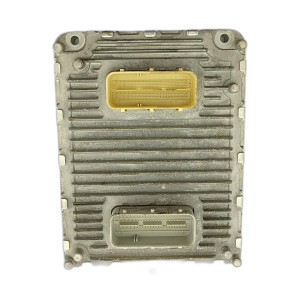
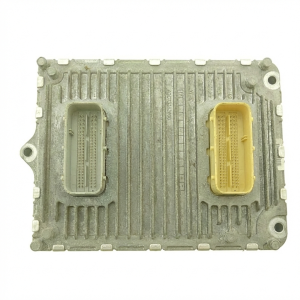
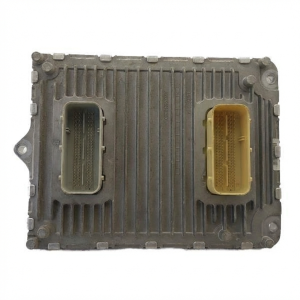
New Aftermarket Parts Available


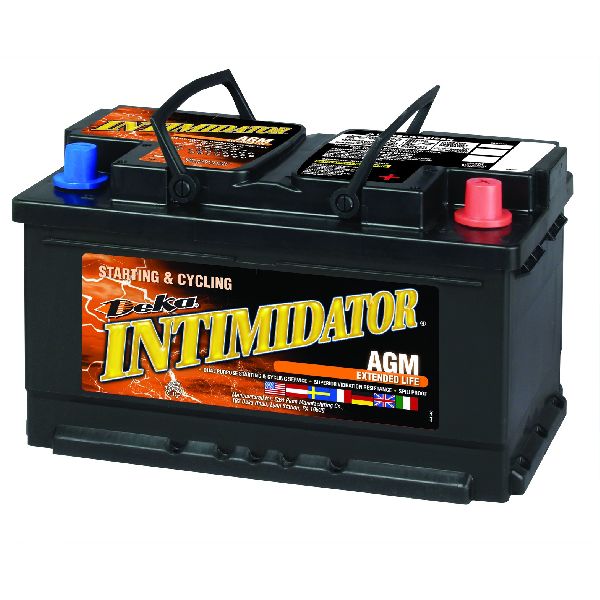

The information in this article is provided for general reference and educational purposes only. Vehicle specifications, procedures, and part compatibility can vary by production date, trim level, and region. Always consult your vehicle's factory service manual and verify part numbers before purchasing or performing repairs. Safety-critical components such as airbags, seat belts, and braking systems should be installed by a qualified professional.
- Chrysler PACIFICA:
- 🧭 Diagnostic Flowchart
- 🎬 Helpful Videos
- 🛍️ Shop This Part
- What's Unique About the 2017-2018 Chrysler PACIFICA
- Symptoms You May Notice
- Most Likely Causes
- Rare But Worth Checking
- Diagnosis Steps
- Parts You'll Likely Need
- Related Codes That Often Appear With This One
- Technical Service Bulletins (TSBs) & Recalls
- Platform-Specific Known Issues
- Mechanic-Grade Diagnostic Values
- Hidden / Shadow Codes Worth Checking
- Scan Tool Commands That Help
- Wiring & Ground Locations
- Real Owner Repair Stories
- "I Checked Everything" — The Actual Cause
- OEM Part Supersession History
- Model Year Variations Within This Range
- 🎟️ Get 5% Off