

OBD-II Code U0644: Lost Communication With a Control Module
What U0644 means, why it triggers, and how to fix it
- Code U0644 indicates a network communication failure, but the specific offline module varies by manufacturer, ranging from a GPS antenna to a turbo wastegate.
- For 2019 and newer GM trucks and SUVs, U0644 almost always points to a chafed engine wiring harness covered under TSB 21-NA-149.
- Do not drive with an active U0644 code, as the underlying electrical short frequently causes sudden engine stalling or complete loss of power steering.
- Always perform a full-system scan first; finding U0644 alongside codes like U0073 or U0100 confirms a physical wiring or ground failure rather than a broken computer module.
- Inspect the main battery and chassis ground straps before replacing any parts, as a single corroded $30 ground cable easily triggers a cascade of U-codes.
What Does U0644 Mean?
U0644 is a network communication code indicating a critical computer module stopped talking to the main engine control module (ECM). The specific offline module varies by manufacturer. For 2019 and newer GM trucks, this code points to a widespread network failure caused by a damaged wire harness. On other vehicles, it means the GPS module, turbocharger wastegate position sensor, or active grille shutter module is offline.
Technical definition: The SAE definition for a U-series code indicates a CAN bus network communication problem. Code U0644 specifically means 'Lost Communication With...' a particular module. The Society of Automotive Engineers (SAE) does not assign a single specific module to this code; it varies by manufacturer. Common manufacturer-specific definitions include Lost Communication with the Front Controls Interface Module (FCIM), GPS Module, Active Grille Shutter Module, or Wastegate Position Sensor.
Can I Drive With U0644?
No — Do Not Drive. Driving is not recommended. Depending on the specific module that is offline, your vehicle will stall, lose power steering, or enter a reduced power 'limp mode' at any time, creating a major safety risk. Because a shorted wiring harness is the most common cause, tow the vehicle to a qualified repair facility for diagnosis.
Common Causes
- Chafed Engine Wiring Harness (GM Specific) (Very Common) — On 2019 and newer General Motors trucks and SUVs, the engine wiring harness routes too close to sharp metal brackets. Vibrations cause the harness to rub through, shorting out multiple wires, blowing fuses, and causing widespread electrical failure. GM Technical Service Bulletin 21-NA-149 covers this well-documented issue.
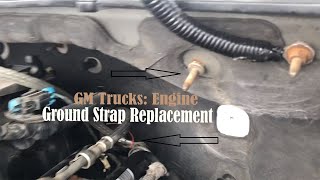
- Corroded or Loose Main Ground Strap (Common) — A completely corroded or loose main ground strap causes a cascade of communication codes, including U0644. On GM trucks, a braided ground strap behind the front splash shield frequently fails. 🎬 Watch: How to find and fix every GM ground wire. This interrupts the primary ground for numerous modules, leading to erratic electrical behavior that mimics a harness failure.
- General Wiring Damage or Water Intrusion (Common) — Heat, corrosion, rodent damage, or vibration damages wires outside of specific TSBs. This frequently affects sensors in hot areas, like a turbocharger wastegate sensor. A single broken wire, bent connector pin, or water intrusion interrupts communication and triggers the code.
- Failed Wastegate Position Sensor/Actuator (VW/Audi Specific) (Less Common) — In turbocharged Volkswagen and Audi vehicles, U0644 points specifically to the wastegate position sensor or its actuator. The sensor, which reports the turbo's boost control valve position to the engine computer, fails internally or suffers compromised wiring.
- Failed Peripheral Control Module (Less Common) — The offline module itself fails internally. This includes the GPS module, navigation control module (NCM), or active grille shutter. Internal component failure from age, heat, or moisture stops it from communicating on the network.
- Battery Management System (BMS) Calibration Issue (Rare) — On modern Fords, replacing the battery without resetting the Battery Management System (BMS) causes the system to incorrectly shed electrical loads. This powers down modules unexpectedly, triggering random U-codes. The BMS requires a scan tool reset or 8 hours of undisturbed time to relearn the new battery's state of charge. 🎬 See this DIY guide for resetting your Ford BMS.
- Internal Engine Computer (ECM/PCM) Failure or Software Glitch (Very Rare) — The main engine computer develops an internal fault on the specific communication channel, or a software glitch causes a communication mismatch. This requires dealer reprogramming or ECM replacement, but only after exhausting all physical wiring possibilities.
Symptoms
- Vehicle will not start or stalls while driving — This is the primary symptom for the GM wiring harness issue, where critical circuits for engine operation short to ground.
- Multiple warning lights on the dashboard — The Check Engine Light illuminates alongside messages for 'Service Brakes,' 'Service ESC,' 'Service Airbag,' or ABS warnings, indicating a widespread network failure.
- Reduced engine power or 'limp mode' — If the code relates to the turbo wastegate, the engine loses significant power and exhibits noticeable turbo lag. The GM harness issue also triggers this symptom.
- Loss of power steering assist — On GM vehicles, the damaged harness shorts the power steering control module, making the vehicle extremely difficult to steer.
- Instrument panel gauges sweep or act erratically — The speedometer, tachometer, and other gauges suddenly drop to zero or sweep back and forth while driving.
- Navigation system or Active Grille Shutter failure — The GPS map freezes or displays a 'GPS Signal Lost' error. Alternatively, active grille shutters fail to operate, affecting aerodynamics and engine temperature regulation.
Diagnostic Flowchart
Tap your situation to follow the diagnostic path that matches what you're seeing on this code.
Common Fixes & Costs
- Repair and Protect Chafed Engine Wiring Harness — Parts: $15-$75, Labor: $400-$1000, ~4 hr book time (Professional)
- Replace Corroded Ground Strap — Parts: $20-$60, Labor: $100-$250, ~1 hr book time (DIY)
- Replace Turbocharger Wastegate Sensor/Actuator — Parts: $100-$450, Labor: $150-$300, ~1.5 hr book time (Intermediate)
- Replace GPS Antenna — Parts: $25-$100, Labor: $80-$160, ~1.2 hr book time (DIY)
- Replace Navigation Control Module (NCM) — Parts: $400-$1200, Labor: $100-$200, ~1 hr book time (Professional)
- Replace Engine Wiring Harness — Parts: $500-$3000, Labor: $1200-$2500, ~12.5 hr book time (Professional)
DIY vs Professional
- Replace Corroded Ground Strap 🟢 Beginner
Tools: Socket set, wire brush. - Replace GPS Antenna 🟢 Beginner
Tools: Trim removal tools, socket set. - Replace Turbocharger Wastegate Sensor/Actuator 🟢 Beginner
Tools: Socket set, wrenches, diagnostic scanner for calibration. - Repair and Protect Chafed Engine Wiring Harness 🟢 Beginner
Tools: Soldering iron, wire strippers, heat shrink tubing, multimeter, protective sleeves, high-quality tape. - Replace Engine Wiring Harness 🟢 Beginner
Tools: Extensive set of mechanic's tools, vehicle-specific knowledge. - Replace Navigation Control Module (NCM) 🟢 Beginner
Tools: Trim removal tools, socket set, OEM diagnostic software.
Used vs. New Parts: Buying Guide
When a used part is worth it: Almost never. A used engine wiring harness is one of the riskiest used parts to purchase. The high cost of labor to install it means a premature failure is financially devastating. It only makes sense if the part is no longer available new and the donor vehicle has exceptionally low mileage and no signs of damage.
Donor-vehicle mileage cap: roughly under 20000 miles for the part to have meaningful remaining life.
Donor quality checklist:
- Verify the donor vehicle was not involved in a front-end collision or fire.
- Inspect the entire harness meticulously for any signs of prior repair, brittle insulation, or rodent damage.
- Ensure the part number matches exactly; 'close enough' results in incompatible connectors or wire lengths.
- Avoid harnesses from flood vehicles or those from regions with heavy road salt use, as corrosion hides within connectors.
Decision logic:
- If A new OEM harness is available → Buy the new OEM harness. The peace of mind and warranty outweigh the potential cost savings of a used part.
- If The damage to the original harness is localized to a few wires → Favor repairing the existing harness with professional techniques over replacing it with a used one.
- If A new harness is unavailable and the original is destroyed → A low-mileage used harness is a last resort. Factor in the cost of professional bench-testing and inspection before installation.
Warranty tradeoff: Used parts from a salvage yard typically have a 30-90 day warranty on the part only, not the labor. New OEM parts carry a 1-2 year warranty. The labor to replace a harness is the most expensive part of the job, so a failed used part costs you thousands.
Worst-case if a used part fails: $2000-4000 if a used harness fails after installation, requiring a second replacement (part + labor).
What Happens If You Wait — Timeline
- Immediate (First Occurrence): Code U0644 logs, often with a cluster of other U-codes. The Check Engine Light illuminates, and multiple warning messages ('Service ESC,' 'Service Brakes') flash intermittently. The vehicle experiences a brief, momentary loss of power or function. (MPG impact: 0-5%% · Added cost: $0)
- Days to Weeks: The underlying issue, like a chafing wire making more frequent contact, worsens. The vehicle stalls unexpectedly while driving, loses power steering, or enters a permanent 'limp mode.' The risk of being stranded or causing an accident becomes significant. (MPG impact: 5-20% (due to limp mode)% · Added cost: $250+ (for towing and diagnostics))
- Weeks to Months: The short circuit in the wiring harness becomes severe. The intermittent short sends incorrect voltage through the CAN bus, damaging the sensitive transceivers in other, previously healthy control modules (ECM, BCM, TCM). (MPG impact: N/A (vehicle likely undrivable)% · Added cost: $1500-$4000 (cost of a wiring repair plus one or more new control modules))
- Variable (Can happen at any time): A chafed power wire shorts directly to ground without a fuse in its path. The wire overheats, melting nearby wires and igniting the plastic harness loom and other flammable materials in the engine bay, leading to an electrical fire. (MPG impact: N/A% · Added cost: $20,000+ (potential total vehicle loss))
Cost of Not Fixing It
- Immediate: Catastrophic failure while driving. The vehicle stalls in traffic, loses power steering, or disables safety systems like ABS and airbags, creating a significant safety hazard. (Added cost: $0 (but risk of accident is high))
- Days to Weeks: Cascading electrical damage. A shorted wire sends incorrect voltage to other modules on the same network, damaging sensitive electronics in the ECM, BCM, or TCM. What started as a wiring issue turns into a multi-thousand dollar module replacement. (Added cost: $1500-$4000)
- Weeks to Months: Complete harness failure or fire risk. Continued vibration and exposure to moisture worsens a small chafe, leading to more wires shorting out. A direct short to ground with no fuse protection overheats and causes an electrical fire. (Added cost: Total vehicle loss)
Diagnosis Steps
- Perform a Full System Scan
Use a professional-grade OBD-II scanner that reads manufacturer-specific codes from all modules (not just the engine). Note all 'U' codes present. The combination of codes (e.g., U0073, U0100, U0101, U0140 along with U0644) is a strong clue pointing to a wiring harness issue, not an individual module failure.
Tools: Professional OBD-II Scanner (Beginner) - Check for Technical Service Bulletins (TSBs) and Recalls
Search online for your vehicle's make, model, year, and the code U0644 for any TSBs or recalls. For 2019+ GM trucks and SUVs, TSB 21-NA-149 is the key document. For 2021-2023 Ford F-150s, recall 23S35 points to a similar wiring issue near the rear axle.
Tools: Internet access (Beginner) - Inspect Main Wiring Harnesses and Ground Straps
Following the TSB if available, carefully inspect the engine wiring harness for any signs of rubbing, chafing, or exposed wires. On GM vehicles, pay close attention to the areas near the ECM/TCM bracket and shock tower. Locate and inspect the main engine and chassis ground straps for corrosion or looseness. A bad ground is a common and often-missed cause.
Tools: Flashlight, inspection mirror (Intermediate) - Inspect Specific Module Connectors
If no harness damage is obvious, locate the specific module implicated by the scan tool (e.g., GPS module, Wastegate actuator). Disconnect the battery, then unplug the module's connector. Look for corrosion, moisture, or bent/damaged pins.
Tools: Socket set, trim removal tools (if needed) (Intermediate) - Test CAN Bus Network Resistance
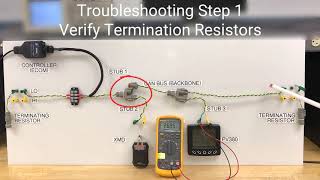
With the battery disconnected, use a multimeter to measure the resistance between the CAN High (Pin 6) and CAN Low (Pin 14) pins at the OBD-II port. A healthy network reads approximately 60 ohms. A reading of 120 ohms indicates one of the two 120-ohm terminating resistors is offline. A reading near 0 ohms indicates a short circuit between the CAN lines.
Tools: Multimeter, OBD-II breakout box (optional) (Advanced) - Test CAN Bus Voltage
With the key on and engine off, use a multimeter to measure DC voltage. CAN High (Pin 6 to ground) should be approximately 2.5V to 3.5V. CAN Low (Pin 14 to ground) should be approximately 1.5V to 2.5V. The two voltages should mirror each other and add up to roughly 5V. If one line is stuck at 0V or 5V, it indicates a short to power, a short to ground, or a faulty module transceiver.
Tools: Multimeter, OBD-II breakout box (optional) (Advanced) - Perform a 'Wiggle and Tug' Test on Connectors
Wires break internally near a connector without any visible damage to the insulation. With the system active (if safe) or while monitoring continuity, gently wiggle and tug on individual wires at the suspected connector. A change in symptoms or a fluctuating multimeter reading indicates an internal wire break requiring connector pin replacement.
Tools: Multimeter (Advanced) - Isolate the Faulty Module or Circuit
If the CAN bus resistance is incorrect, unplug modules one by one from the network until the resistance reading returns to 60 ohms. The last module unplugged is the one causing the network to fail. This requires a wiring diagram to identify module locations.
Tools: Multimeter, wiring diagram (Advanced) - Verify Network Signals with an Oscilloscope
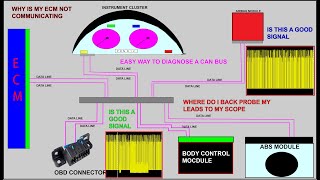
For intermittent issues, connect oscilloscope probes to the CAN High and CAN Low lines to visualize the data signals. A healthy CAN bus shows a clean, mirror-image square wave pattern. A distorted, noisy, or flat-lined pattern pinpoints the exact nature of the electrical fault.
Tools: Oscilloscope, wiring diagram (Professional)
When This Code Triggers (Freeze-Frame Conditions)
- Engine Coolant Temp: 180-210°F (The fault appears after the vehicle reaches full operating temperature, when all modules are active and drawing current.)
- RPM: 1200-2500 (The code triggers under steady-state cruise conditions. This is when modules perform routine 'check-in' communications, and a failure to report logs the code.)
- Vehicle Speed: 25-65 mph (Occurs during city or highway driving, where engine and road vibrations cause a chafed wire to make intermittent contact with the chassis.)
- Time Since Engine Start: 10-20 minutes (The issue manifests after a period of driving as components heat up and vibrations take their toll on compromised wiring.)
Related Codes
- U0073 — Control Module Communication Bus 'A' Off. This is a general network code that frequently appears with U0644 when a wiring harness is damaged, as it takes down the entire communication bus. Seeing them together points to a widespread harness problem.
- U0100 — Lost Communication With ECM/PCM. Often set alongside U0644, indicating the main engine computer is losing connection to the network. If you see U0100, the problem is almost certainly a critical wiring or power/ground issue, resulting in a no-start or stalling condition.
- U0101 — Lost Communication with TCM. The transmission control module's wires run in the same harness as the ECM and other modules. A chafe causes this code to appear with U0644 and U0100. The key symptom is the transmission going into a limp mode or failing to shift.
- U0140 — Lost Communication With Body Control Module (BCM). Seeing this code with U0644 is strong evidence of a widespread network failure from a central wiring problem. If you have engine stalling (U0100) AND interior electrical issues (U0140), a damaged harness is the prime suspect.
Climate & Environmental Factors
- High Humidity and Road Salt: Regions with high humidity or that use road salt in winter see accelerated corrosion of wiring, connectors, and especially ground straps. Salt brine is conductive and seeps into connectors or worn insulation, causing shorts and communication errors.
- Extreme Cold: In very cold weather, wire insulation becomes brittle. If a harness is disturbed during other repairs, the insulation cracks, exposing the wire to moisture and potential short circuits. This makes pre-existing chafing issues worse.
- Rodent Damage: Rodents chewing on wires is a common cause of electrical faults, including U0644. Some manufacturers use soy-based wire insulation that attracts animals. This is more common in rural areas or if a vehicle is stored for long periods.
How to Talk to a Mechanic About This Code
Say this: "I have a U0644 code, and based on my vehicle's make and symptoms, I'd like to schedule a diagnostic appointment. Please instruct the technician to start by checking for any relevant TSBs, like GM's 21-NA-149, and to perform a full visual inspection of the main wiring harnesses and ground connections before testing or quoting any control modules."
This signals you are an informed customer. It directs the technician to the most probable and cost-effective starting points (wiring and grounds), preventing them from immediately quoting an expensive and unnecessary module replacement. It shows you've done research on common failure points.
Avoid saying:
- 'My check engine light is on, can you just fix it?'
- 'I think the computer is bad.'
- 'Just do whatever you think is best.'
Questions to ask before authorizing the repair:
- Did you find a relevant Technical Service Bulletin for this code on my vehicle?
- Can you show me a picture of the chafed wiring or the corroded ground strap you found?
- If you are recommending a module replacement, can you explain what tests you performed to condemn the old module and rule out a wiring issue?
- What is the warranty on this specific repair, including both parts and labor?
Where to Take It: Dealer vs Independent vs Chain
- Dealer:
Recommended, especially for GM vehicles with known TSBs or any vehicle still under warranty. They have direct access to manufacturer-specific diagnostic flows and bulletins.
Best for: Vehicles under warranty, as TSB-related repairs are covered., Diagnosing manufacturer-specific quirks like the GM harness issue or VW wastegate calibration., Repairs involving recalls or software reprogramming.
Downsides: Higher labor rates., More likely to replace a whole harness than perform a detailed wire-by-wire repair. (Typical cost: +50% vs. baseline) - Independent Shop:
Good fit, but only if it's a top-tier independent shop with a strong reputation for electrical and diagnostic work. A good indie is more likely to repair a harness rather than replace it, saving money.
Best for: Out-of-warranty vehicles where cost is a major factor., Shops that specialize in electrical diagnostics., Getting a second opinion on a pricey dealer quote.
Downsides: Diagnostic skill varies greatly; vet the shop's reputation for electrical work., Lacks access to the very latest TSBs or OEM-specific programming tools. (Typical cost: +0% vs. baseline) - Chain Shop:
AVOID. This code requires advanced diagnostic skill that is beyond the scope of a quick-lube or chain tire shop. The likelihood of an incorrect and expensive guess is very high.
Best for: Simple jobs like battery replacement or oil changes.
Downsides: Technicians are not equipped or trained for complex network diagnostics., High risk of misdiagnosis, leading to unnecessary replacement of parts like the battery or alternator. (Typical cost: -10% vs. baseline)
When to Walk Away From the Repair
If the estimated repair cost for the U0644 fault exceeds 40-50% of your car's private-party value, it's time to seriously consider selling or trading it in.
- Car worth $30000, fix is $1200: Fix it. The repair cost is well below the threshold and preserves the value of a modern vehicle.
- Car worth $8000, fix is $3500: Borderline. A full harness replacement is 44% of the car's value. Get a second opinion to see if a cheaper wire-level repair is possible before authorizing.
- Car worth $4000, fix is $3000: Walk away. The repair cost is 75% of the car's value. It is not economically sensible to proceed.
What Scan Tool You Need for This Code
Minimum: A scanner that reads manufacturer-specific codes from ALL vehicle modules (ECM, BCM, TCM, ABS, etc.).
A basic $20 code reader only checks the engine module (ECM) and misses the U-codes stored in other computers. To diagnose a network fault like U0644, you MUST see which modules are reporting errors and which are offline. A full-system scan is the first and most critical step.
Budget: BlueDriver Pro (~$100) — Performs a full system scan to read codes from all modules, provides freeze-frame data, and allows live data graphing. It confirms which modules are offline, which is essential for diagnosis.
Mid-range: OBDeleven (VAG Specific) or Ancel FD500 (Ford Specific) (~$80-150) — For VW/Audi, OBDeleven is required for the wastegate actuator calibration. For Fords, a tool like the FD500 performs the necessary BMS reset after a battery change, which is a cause of U-codes.
Professional: Autel MaxiCOM MK808 / ThinkTool Max (~$500-1200) — Offers full bidirectional control to test components, performs special functions like calibrations and resets for most makes, and provides advanced features like network topology mapping to visually see which modules are not communicating.
Rent vs buy: For a one-time diagnosis, many auto parts stores rent scanners, but they lack the all-module capability needed for this code. If you own a modern vehicle (especially GM, Ford, or VW), buying a capable scanner like a BlueDriver or a brand-specific tool is a wise investment that saves you from a single expensive misdiagnosis.
How to Clear the Code After You Fix It
- Ensure all wiring repairs are complete and protected against future damage.
- Reconnect the vehicle's battery (negative terminal last).
- Use a professional-grade OBD-II scan tool to clear all Diagnostic Trouble Codes (DTCs) from all modules.
- Perform a complete drive cycle to allow all system readiness monitors to run.
Drive cycle (~20 minutes): A generic drive cycle to verify the repair involves: 1) Cold start and idle for 2-3 minutes. 2) Drive in stop-and-go city traffic for 10 minutes, including several full stops. 3) Drive at a steady highway speed (55-60 mph) for 5-7 minutes. 4) Safely perform turns and some acceleration/deceleration to flex wiring. 5) Park and shut off the engine. The goal is to confirm the fault does not return under various operating conditions.
Readiness monitors affected: Comprehensive Component Monitor, Misfire Monitor
Before emissions retest: drive at least 50 miles to fully set monitors.
Watch out for:
- Simply disconnecting the battery clears the check engine light but does not erase permanent DTCs (PDTCs) required for emissions tests, nor does it reset readiness monitors.
- The code returns immediately if the underlying physical fault (chafed wire, bad ground) is not properly repaired and protected.
- Using a basic code reader that only clears engine codes leaves 'U' codes active in other modules like the BCM or TCM, causing continued issues.
Will This Fail Emissions / State Inspection?
Yes — this code typically fails an OBD-II emissions inspection.
- California: California requires all readiness monitors to be set. A U-code that triggers the MIL prevents this. After repair, a specific drive cycle or up to 200 miles of driving is needed to clear any Permanent DTCs (PDTCs) before a retest passes.
- New York: NYS DMV emissions inspection includes an OBD-II scan for all 1996 and newer vehicles. An active check engine light from a U0644 code results in an automatic failure. All original emissions components must also be present.
- Texas: As of 2025, safety inspections are eliminated for non-commercial vehicles, but emissions testing is still required in 17 major counties. If your vehicle is registered in one of these counties, a U0644 code with a check engine light causes you to fail the emissions test.
Most Commonly Affected Vehicles
- Chevrolet Silverado 1500 (2019-2022) — Extremely common issue with the engine wiring harness chafing, as documented in GM TSB 21-NA-149. Affects models with 2.7L (L3B), 3.0L (LM2), 4.3L (LV3), 5.3L (L82/L84), and 6.2L (L87) engines.
- GMC Sierra 1500 (2019-2022) — Shares the same platform and wiring harness issue as the Chevrolet Silverado, covered by GM TSB 21-NA-149. Affects all engine variants.
- Chevrolet Tahoe / Suburban (2021-2022) — These full-size SUVs are also included in GM TSB 21-NA-149 for the engine harness chafing problem.
- GMC Yukon / Yukon XL (2021-2022) — Also part of the T1 platform, these models are susceptible to the same harness failure outlined in TSB 21-NA-149.
- Chevrolet Equinox / GMC Terrain (2018-2020) — These models are known for engine harness chafing against the transmission mount bracket or valve body studs, as outlined in GM TSB 19-NA-181. Can also suffer from general electrical issues.
- Ford F-150 (2015-2023) — Multiple U-codes appear due to Battery Management System (BMS) issues after a battery change. Additionally, 2021-2023 models are subject to recall 23S35 for a rear harness that chafes on the axle housing, causing loss of the electric parking brake.
- Volkswagen Jetta / Golf / Passat (2016-2021) — On models with the 1.4T and 1.8T engines, this code is commonly associated with a failed electronic wastegate actuator or a faulty throttle body.
- Hyundai Sonata (2015-2019) — On hybrid and some non-hybrid models, this code points to a loss of communication with the active air flap (radiator shutter) module.
Manufacturer-Specific Notes
- General Motors (Chevrolet/GMC/Cadillac): On 2019+ T1 platform trucks and SUVs, U0644 is a primary indicator of a chafed engine wiring harness per TSB 21-NA-149. This is a service bulletin, not a recall, meaning repairs are typically only covered under the vehicle's bumper-to-bumper warranty. Some 2019 2.7L models were covered by a separate Customer Satisfaction Program (N192219370).
- Ford: On many modern Fords, a host of 'U' codes appear after a battery replacement if the Battery Management System (BMS) is not reset. Also, check for recall 23S35 (NHTSA 23V-509) on 2021-2023 F-150s for a harness rubbing on the rear axle, which causes the electric parking brake to activate while driving.
- Volkswagen: On 1.4T and 1.8T engines from the mid-to-late 2010s, U0644 is frequently linked to a failure of the electronic turbocharger wastegate actuator. VW has issued extended warranties for turbochargers on some models, but coverage for wastegate actuators on gasoline engines is inconsistent and requires a dealer inquiry.
- Dodge / Chrysler / Jeep / Ram: While not specific to U0644, these brands are known for having network communication issues ('U' codes) caused by either wiring problems or a failing Totally Integrated Power Module (TIPM). Symptoms are widespread and erratic electrical problems.
Real Owner Stories
2019 GMC Sierra 1500 at 45K miles
While driving on the highway, the dashboard lit up with multiple warnings ('Service ESC,' 'Service Brakes'), the gauges swept to zero, and the truck went into limp mode. After pulling over, it would not restart.
What they tried:
- Owner initially suspected a dead battery.
- The dealership first quoted a new Engine Control Module (ECM).
- Owner found TSB 21-NA-149 online and insisted the dealer inspect the wiring harness.
Outcome: The dealership confirmed the engine wiring harness chafed through on a bracket near the ECM. They performed a wiring repair and rerouted the harness with protective sleeving as per the TSB. Total cost was covered under the bumper-to-bumper warranty.
Lesson: For 2019+ GM trucks and SUVs, a sudden cascade of warning lights and a no-start condition is almost certainly the known harness chafing issue. Always reference TSB 21-NA-149 before agreeing to replace expensive modules.
2016 VW Jetta 1.4T at 70K miles
The EPC (Electronic Power Control) light came on, and the car suffered a significant loss of power (no turbo boost). The code scanner showed U0644 and P2263 (Turbocharger/Supercharger Boost System Performance).
What they tried:
- The owner noticed the wastegate actuator rod disconnected from the wastegate arm on the turbo.
- They ordered a new aftermarket actuator and clip online for $60.
- After installing the new actuator, the car still lacked power and a new code, P2562, appeared.
Outcome: The owner discovered the new actuator required calibration. Using an OBDeleven diagnostic tool, they adjusted the actuator rod until the live data voltage read correctly (3.5V) and ran the 'Acknowledgement of charge pressure actuator' basic setting. This cleared the codes and restored normal engine power.
Lesson: On modern turbocharged cars, simply replacing the wastegate actuator is insufficient. The part must be precisely calibrated with a capable scan tool to match the ECU's expected position sensor readings. Failure to calibrate results in continued limp mode.
2018 Ford F-150 at 60K miles
After replacing the original battery, the owner experienced strange electrical issues. The auto start/stop system stopped working, and the truck entered a 'Deep Sleep' mode shortly after being parked, accompanied by various U-codes.
What they tried:
- The owner fully charged the new battery with an external charger, but the issues persisted.
- They took it to the dealer, who tested the new battery and found it healthy.
- The dealer performed a 'BMS Reset' using their diagnostic tool.
Outcome: Resetting the Battery Management System (BMS) resolved the electrical issues. The system, which learned the characteristics of the old, failing battery, treated the new battery incorrectly and shut down systems to save power.
Lesson: On modern Ford vehicles, you must perform a BMS reset after installing a new battery. Skipping this step causes the vehicle to generate random communication codes and disable features.
2010 Chevrolet Cobalt at 100K miles
Vehicle was purchased from an auction with the check engine light on and messages for 'Service Power Steering'. A scan revealed multiple communication codes, including U0101 (Lost Comm with TCM) and U0140 (Lost Comm with BCM).
What they tried:
- A breakout box test on the CAN bus showed abnormally high voltage on the CAN Low line (4.4V instead of 2.3V).
- Unplugging the Transmission Control Module (TCM), a common failure point, did not fix the voltage.
- The technician noticed a missing ground bolt on the chassis near the TCM.
Outcome: A simple jumper wire from the TCM's mounting bracket to a known good chassis ground immediately corrected the CAN bus voltage (dropped to 2.8V), and the communication errors cleared. The permanent fix was installing a new ground strap bolt.
Lesson: A storm of communication codes across multiple modules points to a single, fundamental problem. Always inspect and verify primary power and ground connections before suspecting multiple expensive module failures.
How to Prevent This Code From Triggering
- Inspect and Protect Known Chafe Points (Every oil change) — On vehicles with known issues (like GM trucks under TSB 21-NA-149), periodically checking the harness allows you to spot and address rubbing before the insulation breaches. Applying sacrificial material like high-quality automotive tape or split-loom tubing prevents the failure entirely.
- Clean and Check Main Ground Straps (Every 30,000 miles or 2 years) — The main engine-to-chassis and battery-to-chassis ground straps corrode, creating high resistance that disrupts module communication. Disconnecting them, cleaning the contact points to bare metal with a wire brush, and re-securing them tightly ensures a solid ground path.
- Apply Dielectric Grease to Critical Connectors (When performing other repairs) — When connectors are unplugged, applying a small amount of dielectric grease to the seal protects the pins from moisture and corrosion, which are primary causes of communication failures.
- Implement Rodent Deterrents (If parking outdoors or for long periods) — Rodents chew on wires, causing catastrophic damage. Using deterrents like peppermint oil-soaked cotton balls, electronic ultrasonic repellents, or rodent-repellent tape on harnesses prevents them from nesting.
Frequently Asked Questions
Why does U0644 have so many different meanings?
The 'U' in U0644 stands for Network. The code tells you communication was lost, but the specific module it was lost with is defined by the vehicle manufacturer, not by a universal standard.
Is it safe to drive with code U0644?
No, it is not safe. The most common cause on many popular vehicles is a damaged wiring harness that causes the engine to stall or lose power steering without warning.
My mechanic wants to replace a module, but I think it's the wiring. What should I do?
If you own a 2019 or newer GM truck or SUV, show your mechanic Technical Service Bulletin 21-NA-149. It specifically states that codes like U0644 are most often caused by a chafed harness and that the harness must be inspected before replacing expensive modules.
Could a bad ground connection really cause all these problems?
Absolutely. A single corroded or loose main ground strap creates floating voltages and disrupts communication for multiple modules simultaneously. This generates a storm of 'U' codes and creates bizarre symptoms that look like a major harness failure.
Can a bad battery cause a U0644 code?
Yes, a failing battery causes low voltage and communication errors between modules, triggering a U0644 code. Before beginning complex wiring diagnostics, ensure your battery is fully charged and healthy.
What is the difference between a U-code and a P-code?
P-codes (Powertrain) relate to the engine, transmission, and emissions system, like a bad oxygen sensor. U-codes (Network) relate to communication problems between the vehicle's computers.
How much does it cost to fix code U0644?
The cost varies greatly based on the root cause. A simple fix like cleaning a ground strap costs under $200, while a localized wiring harness repair costs between $400 and $1,000. If the entire engine harness needs replacement, the cost exceeds $3,000.
What is a LIN bus and how is it related to U0644?
A LIN (Local Interconnect Network) bus is a simpler, slower communication network used for less critical components like a cooling fan module. Some vehicles log a U0644 code for a fault on a LIN bus, as seen in some Chevrolet Equinox models with cooling fan communication issues.
Key Takeaways
- Code U0644 indicates a network communication failure, but the specific offline module varies by manufacturer, ranging from a GPS antenna to a turbo wastegate.
- For 2019 and newer GM trucks and SUVs, U0644 almost always points to a chafed engine wiring harness covered under TSB 21-NA-149.
- Do not drive with an active U0644 code, as the underlying electrical short frequently causes sudden engine stalling or complete loss of power steering.
- Always perform a full-system scan first; finding U0644 alongside codes like U0073 or U0100 confirms a physical wiring or ground failure rather than a broken computer module.
- Inspect the main battery and chassis ground straps before replacing any parts, as a single corroded $30 ground cable easily triggers a cascade of U-codes.
Helpful Videos
![Avoid Expensive Shop Repairs: DIY Reset the Ford Vehicle Battery Monitoring System [BMS]](https://img.youtube.com/vi/QTtb7rKaZTE/mqdefault.jpg)
Shop the Parts Behind U0644
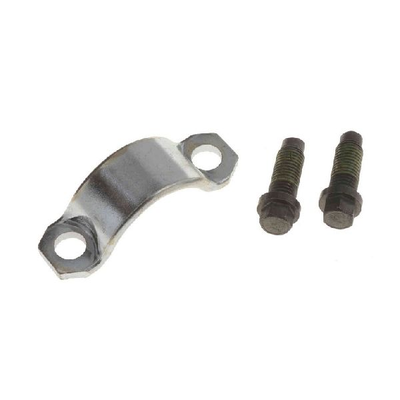
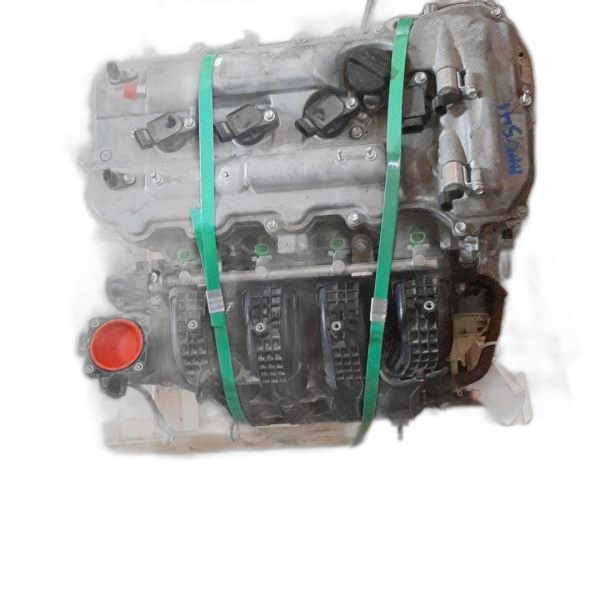
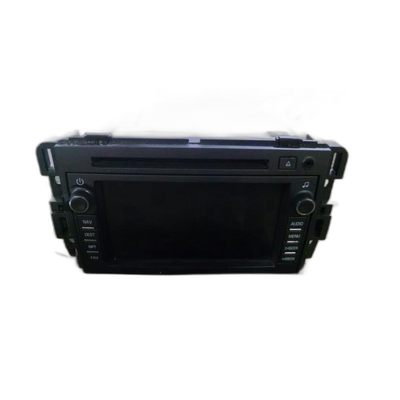
Below are the parts most often responsible for code U0644, ranked by how frequently each one is the actual culprit (per the diagnosis above). Tap any to see what we have for your vehicle.





The information in this article is provided for general reference and educational purposes only. Vehicle specifications, procedures, and part compatibility can vary by production date, trim level, and region. Always consult your vehicle's factory service manual and verify part numbers before purchasing or performing repairs. Safety-critical components such as airbags, seat belts, and braking systems should be installed by a qualified professional.
- 🧭 Diagnostic Flowchart
- 🎬 Helpful Videos
- 🛍️ Shop This Part
- What Does U0644 Mean?
- Can I Drive With U0644?
- Common Causes
- Symptoms
- Common Fixes & Costs
- DIY vs Professional
- Used vs. New Parts: Buying Guide
- What Happens If You Wait — Timeline
- Cost of Not Fixing It
- Diagnosis Steps
- When This Code Triggers (Freeze-Frame Conditions)
- Related Codes
- Climate & Environmental Factors
- How to Talk to a Mechanic About This Code
- Where to Take It: Dealer vs Independent vs Chain
- When to Walk Away From the Repair
- What Scan Tool You Need for This Code
- How to Clear the Code After You Fix It
- Will This Fail Emissions / State Inspection?
- Most Commonly Affected Vehicles
- Manufacturer-Specific Notes
- Real Owner Stories
- 2019 GMC Sierra 1500 at 45K miles
- 2016 VW Jetta 1.4T at 70K miles
- 2018 Ford F-150 at 60K miles
- 2010 Chevrolet Cobalt at 100K miles
- How to Prevent This Code From Triggering
- Frequently Asked Questions
- Why does U0644 have so many different meanings?
- Is it safe to drive with code U0644?
- My mechanic wants to replace a module, but I think it's the wiring. What should I do?
- Could a bad ground connection really cause all these problems?
- Can a bad battery cause a U0644 code?
- What is the difference between a U-code and a P-code?
- How much does it cost to fix code U0644?
- What is a LIN bus and how is it related to U0644?
- Key Takeaways
- 🎟️ Get 5% Off