

OBD-II Code U0672: Lost Communication With Electric Coolant Pump
The Ultimate 2026 Guide to What U0672 Means, Why It Triggers, and How to Fix It
- U0672 indicates a total communication loss with the electric coolant pump, requiring you to stop driving immediately to prevent a $5,000+ engine replacement.
- A poor electrical connection at the pump causes over 50% of U0672 codes on GM vehicles; always clean and reseat the connector before buying parts.
- Perform a voltage drop test on the 40A or 80A battery-top fuse block, as cracking during battery replacement is a primary trigger for this code.
- Check your VIN against GM Special Coverage Program N232412120, which covers the full cost of diagnosis and pump replacement for affected 2019-2024 models.
What Does U0672 Mean?
U0672 means your vehicle's Engine Control Module (ECM) has lost its communication link with the electric engine coolant pump's control module. This pump operates over a single-wire data network (LIN bus). When the ECM fails to send commands or receive a status signal for more than a few seconds, it triggers a Check Engine Light and forces the vehicle into a protective fail-safe mode.
Technical definition: The official SAE definition is "Lost Communication With Engine Coolant Pump Control Module". General Motors vehicles often define it as 'Lost Communication With Drive Motor Control Module J', where Module J is the Electric Engine Coolant Pump Control Module (G59). The code sets when the expected communication signal is absent for a calibrated period, typically one to two seconds.
Can I Drive With U0672?
No — Do Not Drive. Do not drive the vehicle under any circumstances. The engine's main computer has lost contact with the electric coolant pump, causing the engine to overheat in minutes. Continuing to drive guarantees catastrophic engine damage, such as a warped cylinder head ($1,500-$3,000 repair) or a cracked engine block ($5,000-$10,000 engine replacement).
Common Causes
- Poor Electrical Connection at the Coolant Pump (Very Common) — The 3- or 4-pin connector at the pump becomes loose, corroded, or contaminated with moisture, interrupting the data signal. Poor terminal tension within the connector is the leading cause documented in manufacturer Technical Service Bulletins (TSBs).
- Faulty Battery-Top Fuse Block (Common) — The electric coolant pump uses a high-amperage (40A-80A) fuse located in a dedicated block on the battery. This fragile block frequently cracks during battery replacement (due to over-tightening), causing an internal open circuit even if the fuse appears intact.
- Failed Electric Engine Coolant Pump (Common) — The coolant pump assembly contains an integrated electronic control module. This module fails internally due to circuit board defects, internal short circuits, or fluid intrusion, permanently breaking communication with the ECM.
- Damaged Wiring Harness (Less Common) — The single LIN bus data wire connecting the ECM to the pump chafes against metal components. GM TSBs identify specific chafe points near the camshaft carrier cover, battery tray support bracket, and alternator bracket.
- Poor Ground Connection (Uncommon) — The pump module requires a solid ground connection (under 0.1 ohms) to the engine block. Corroded or broken ground wires create high resistance, leading to intermittent communication dropouts.
- Software Calibration Mismatch (Uncommon) — After replacing a pump or updating the ECM, mismatched software calibrations cause the ECM to misinterpret normal pump signals as a communication failure.
- Data Bus Interference (Rare) — A short circuit in another module sharing the same LIN bus sub-network corrupts the data signal, blocking the pump's communication. This always sets additional communication codes.
- Failed Engine Control Module (ECM) (Very Rare) — The ECM's internal communication driver for the LIN bus fails. This is only considered after ruling out the pump, connector, wiring, and fuses.
Symptoms
- Check Engine Light is on — The Malfunction Indicator Lamp (MIL) illuminates immediately upon communication loss.
- Engine Overheating or Temperature Warning — The temperature gauge spikes into the red zone, accompanied by a high-temperature warning message on the dashboard.
- Reduced Engine Power / Limp Mode — The vehicle enters a limp mode, drastically cutting acceleration to protect the engine from thermal destruction.
- Cooling Fans Run Constantly at High Speed — The ECM commands the radiator cooling fans to run at maximum speed as a primary fail-safe measure.
- Loss of Cabin Heat — The heater blows cold air because the disabled pump cannot circulate hot coolant through the heater core.
- A/C System Disabled — The ECM disables the air conditioning compressor to reduce the engine's thermal load.
- Loss of Electric Power Steering Assist — The electric power steering system shares a circuit on some models and disables itself, causing heavy steering.
Diagnostic Flowchart
Tap your situation to follow the diagnostic path that matches what you're seeing on this code.
Common Fixes & Costs
- Clean, Secure, or Replace Electrical Connector Pigtail — Parts: $0-$60, Labor: $75-$200, ~0.5 hr book time (DIY)
- Replace Battery-Top Fuse Block — Parts: $50-$150, Labor: $100-$200, ~1.0 hr book time (Intermediate)
- Replace Electric Engine Coolant Pump — Parts: $250-$650, Labor: $400-$950, ~4.5 hr book time (Professional)
- Repair Chafed Wiring Harness — Parts: $5-$25, Labor: $200-$500, ~3.0 hr book time (Intermediate)
- ECM/PCM Reprogram or Replacement — Parts: $0-$1000, Labor: $150-$300, ~1.5 hr book time (Professional)
Used vs. New Parts: Buying Guide
When a used part is worth it: Buying a used electric coolant pump is never recommended. The sensitive internal electronics fail from heat and vibration without visible damage, guaranteeing a repeat failure.
Donor-vehicle mileage cap: roughly under 20000 miles for the part to have meaningful remaining life.
Donor quality checklist:
- Verify the exact OEM part number to match software calibrations.
- Avoid parts from salt-belt states due to terminal corrosion.
- Only select parts from low-mileage collision totals.
Decision logic:
- If The part is an electric coolant pump with an integrated control module. → Buy a new OEM part. Aftermarket or used pumps suffer high rates of communication failure.
- If The failed part is a mechanical bracket or hose. → A used part from a salvage yard is acceptable.
- If The vehicle is a BMW with over 50,000 miles. → Buy a new OEM or Pierburg pump proactively. Used parts are guaranteed to fail.
Warranty tradeoff: Used parts carry a 30-day warranty covering only the part. New OEM parts provide a 1-2 year warranty covering the part and network compatibility.
Worst-case if a used part fails: $1100 (Cost of repeat labor plus a new OEM pump after the used part fails).
What Happens If You Wait — Timeline
- 0-2 Minutes of Driving: The temperature gauge enters the red zone. The ECM activates 'Reduced Power' mode and runs cooling fans at maximum speed. (MPG impact: N/A% · Added cost: $100-$300 (Cost of immediate tow))
- 2-5 Minutes of Driving: Coolant boils, creating extreme pressure that bursts hoses or the radiator. The aluminum cylinder head begins to warp. (MPG impact: N/A% · Added cost: $1,500-$3,000 (Cost of warped cylinder head repair).)
- 5-10 Minutes of Driving: Extreme heat destroys engine oil lubrication. Piston rings lose tension, pistons seize in the cylinder bores, and the head gasket blows. (MPG impact: N/A% · Added cost: $3,000-$6,000 (Cost of head gasket and bottom-end repair).)
- 10+ Minutes of Driving: The engine block cracks from thermal stress. Connecting rods break and pistons melt. The engine is completely destroyed. (MPG impact: N/A% · Added cost: $5,000-$10,000 (Cost of a complete replacement engine).)
Cost of Not Fixing It
- 0-15 Minutes of Driving: Severe engine overheating warps the aluminum cylinder head, requiring extensive machine work or replacement. (Added cost: $1,500-$3,000)
- 15-30 Minutes of Driving: Catastrophic thermal destruction seizes pistons and cracks the engine block, requiring a full engine replacement. (Added cost: $5,000-$10,000)
- Immediate (Towing): Towing the vehicle to a repair shop is the only safe option to prevent irreversible engine damage. (Added cost: $100-$300)
Diagnosis Steps
- Scan for All Trouble Codes
Use an OBD-II scanner to confirm U0672. Note communication codes (U1345, U1348) or cooling codes (P26BB), as they dictate the diagnostic path.
Tools: OBD-II Scanner (Beginner) - Inspect and Cycle the Coolant Pump Connector
Disconnect the coolant pump connector. Inspect for green corrosion, moisture, or backed-out pins. Clean with contact cleaner, apply dielectric grease, and reconnect until it clicks. This resolves the code in a majority of cases per GM TSB #PIP5863C.
Tools: Flashlight, Contact Cleaner, Dielectric Grease (Beginner) - Check the High-Amperage Fuse and Fuse Block
Locate the 40A-80A pump fuse on the battery-top block. Perform a voltage drop test by connecting a multimeter to both sides of the fuse while wiggling it. A reading over 100mV confirms a cracked internal connection inside the block.
Tools: Multimeter (Intermediate) - Test the Circuit for Power and Ground
Check the pump connector's power pin for 12V+ with the ignition on. Perform a voltage drop test on the ground pin by back-probing it to the negative battery terminal; a reading above 0.1V indicates excessive ground resistance requiring repair.
Tools: Multimeter, Back-probe kit, Wiring Diagram (Intermediate) - Test LIN Bus Signal
Back-probe the LIN bus data wire at the pump connector. A healthy signal toggles between ~1V and ~11V on a multimeter, or shows a clean square wave on an oscilloscope. A static voltage (stuck at 0V or 12V) confirms a severed wire or a dead module.
Tools: Multimeter, Oscilloscope, Back-probe kit (Advanced) - Command the Pump with a Bi-Directional Scan Tool
If power, ground, and data lines are intact, use a professional scan tool to command the pump to turn on. If the pump fails to respond to the command, its internal control module is dead and the pump assembly must be replaced.
Tools: Advanced Bi-Directional Scan Tool (Professional)
When This Code Triggers (Freeze-Frame Conditions)
- Engine Coolant Temp: 185-210°F (85-99°C) (The engine has reached full operating temperature.)
- RPM: 1200-2500 RPM (Sets during steady-state driving or light acceleration, rarely at idle.)
- Vehicle Speed: 30-60 mph (48-97 kph) (Occurs during city or highway cruise conditions.)
- Engine Load: 25-60% (Detected when the ECM actively manages coolant flow under normal driving loads.)
Related Codes
- P26BB — Indicates an 'Engine Coolant Flow Control Valve' issue. This is a secondary symptom caused by the ECM's inability to communicate with the pump. Fixing U0672 automatically resolves P26BB.
- U1345 / U1348 — Indicates a general fault on the LIN Bus. Seeing these alongside U0672 confirms a wiring short, chafed harness, or cracked fuse block rather than an isolated pump failure.
- U0073 — Indicates 'Control Module Communication Bus A Off'. This points to a widespread CAN bus failure upstream from the pump, requiring advanced network diagnostics.
- BMW FC 2E81, 2E82, 2E83, 2E84, 2E85 — BMW-specific equivalents to U0672. They signal imminent or complete electric water pump failure, requiring immediate replacement of the pump and thermostat.
Climate & Environmental Factors
- Cold Climates / Road Salt: Road salt and de-icing brines spray onto the pump connector, rapidly accelerating corrosion of the copper pins and causing an open circuit.
- High Humidity: Ambient moisture bypasses aging connector seals, initiating terminal oxidation even without direct water exposure.
- Thermal Cycling: Constant expansion and contraction during engine heat cycles makes plastic connectors brittle, destroying their weatherpack seals.
How to Talk to a Mechanic About This Code
Say this: "I have a Check Engine Light with code U0672. I know this is a common communication loss issue on these vehicles. Please start the diagnosis by checking the battery-top fuse block, inspecting the harness for chafing, and cycling the pump connector per TSB PIP5863C before quoting a full pump replacement."
This directs the service advisor toward a specific, logical diagnostic path that starts with the cheapest fixes, preventing them from immediately quoting an expensive pump replacement.
Avoid saying:
- 'My check engine light is on, can you just fix it?'
- 'The internet said I need a new water pump.'
- 'My car is overheating, do whatever you think is best.'
Questions to ask before authorizing the repair:
- Did you perform the checks outlined in TSB PIP5863C, including 'cycling the connection'?
- Did you perform a voltage drop test on the battery-top fuse for the pump?
- Did you inspect the wiring harness for chafing in the known spots mentioned in TSB 21-NA-149?
- Can you confirm you tested for 12V power, good ground, and a toggling LIN bus signal at the pump connector?
- If the pump needs replacement, is the part from the OEM and what is the warranty?
Where to Take It: Dealer vs Independent vs Chain
- Dealer:
Highly Recommended. The dealer has the specific tools and access to warranty programs that make this repair free.
Best for: Vehicles under warranty or with Special Coverage Program N232412120., First-time diagnosis requiring manufacturer-specific TSBs and the GDS2 scan tool., Complex electrical or network issues.
Downsides: Highest labor rates., Quick to replace the entire pump assembly if not pushed to follow TSBs for cheaper fixes. (Typical cost: +50% vs. baseline) - Independent Shop:
Acceptable. Ensure they are willing to diagnose the connector, fuse, and wiring before replacing the pump.
Best for: Out-of-warranty vehicles where cost is a primary concern., Shops specializing in GM or BMW platforms with professional diagnostic systems.
Downsides: Are often unaware of the latest TSBs or Special Coverage Programs., Lack the bi-directional scanner required for the pump bleed procedure., Diagnostic skill varies widely. (Typical cost: +0% vs. baseline) - Chain Shop:
Not Recommended. The complexity of this communication code guarantees misdiagnosis and an expensive, unnecessary repair.
Best for: Simple maintenance like oil changes or tires.
Downsides: Technicians lack advanced diagnostic training for network communication codes., High pressure to sell parts leads to unnecessary replacement of the expensive pump., Lack specific tools or TSB access. (Typical cost: -10% vs. baseline)
When to Walk Away From the Repair
If the total estimated repair cost exceeds 50% of your vehicle's current private-party market value, consider selling or trading it in.
- Car worth $25000, fix is $1200: Fix it. This repair cost is a small fraction of the vehicle's value.
- Car worth $8000, fix is $1500: Fix it, but get a second opinion to ensure the expensive pump is truly the failure point.
- Car worth $4000, fix is $2100: Walk away. The repair cost is over half the car's value.
What Scan Tool You Need for This Code
Minimum: Bi-directional control. You must have a scan tool that sends commands to activate the electric coolant pump.
A basic $20 reader only displays the U0672 code. Without the ability to command the pump on and off, you cannot confirm if the pump has failed or if the problem is in the wiring.
Budget: Kingbolen Ediag Elite / XTOOL A30M (~$90) — Provides essential bi-directional capability to command the coolant pump on/off.
Mid-range: Autel MaxiCOM MK808S / Foxwell NT710 (~$380) — Offers robust bi-directional control, live data streams (pump speed, voltage), and service functions like the coolant bleed procedure.
Professional: Autel MaxiSys MS906 Pro / Launch X431 Series (~$1000-2500) — Provides full dealer-level diagnostics, network topology maps to diagnose LIN bus faults, and advanced programming functions.
Rent vs buy: Auto parts stores rent basic code readers for free, but these lack bi-directional control. You must buy a capable scanner or visit a professional shop.
How to Clear the Code After You Fix It
- Reconnect the battery if disconnected.
- Use an OBD-II scan tool to clear all fault codes from the ECM.
- Perform a complete drive cycle to run onboard diagnostics.
Drive cycle (~20 minutes): Start from a cold engine (below 122°F). Idle for 3 minutes with A/C on. Accelerate to 55 mph and hold for 5 minutes. Coast to 20 mph without braking. Accelerate to 60 mph and hold for 5 minutes. Decelerate and idle for 2 minutes.
Readiness monitors affected: Catalyst Monitor, Oxygen (O2) Sensor Monitor, EVAP System Monitor
Before emissions retest: drive at least 100 miles to fully set monitors.
Watch out for:
- Disconnecting the battery clears the code but resets all readiness monitors to 'Not Ready', causing an automatic emissions failure.
- The code returns instantly if the root cause (e.g., cracked fuse block) remains unaddressed.
- The Catalyst monitor requires up to five complete drive cycles to set.
Will This Fail Emissions / State Inspection?
Yes — this code typically fails an OBD-II emissions inspection.
- California: An active U0672 code triggers an automatic smog check failure. All readiness monitors must read 'Ready' after the repair before re-testing.
- New York: An illuminated Check Engine Light results in an automatic NYS DMV emissions inspection failure.
- Texas: In emissions-testing counties (Harris, Dallas, Travis), an active Check Engine Light guarantees an automatic failure.
Most Commonly Affected Vehicles
- Chevrolet Silverado 1500 / Colorado (2019-2024) — Extremely common on 2.7L L3B Turbo models. Addressed in GM TSB #PIP5863C (connector) and battery fuse block failures.
- GMC Sierra 1500 / Canyon (2019-2024) — Shares the 2.7L L3B Turbo platform. Subject to identical connector and fuse block failures.
- Chevrolet Blazer (2020-2024) — Affects 2.0L LSY Turbo engines. TSBs #PIP5863C and #23-NA-074 (harness chafing) are highly relevant.
- Cadillac CT4, CT5, XT4, XT5, XT6 (2019-2024) — Common on 2.0L LSY and 2.7L L3B engines. Use updated pump part #12738953 for LSY repairs.
- Buick Envision (2021-2024) — Affects 2.0L LSY engines, sharing the identical connector defect (TSB #PIP5863C) as other GM SUVs.
- Ford Escape Hybrid / Maverick Hybrid (2020-2024) — Refers to the Motor Electronics Coolant Pump (MECP) cooling the hybrid battery, not the main engine pump.
- Volkswagen / Audi Jetta, Golf, GTI, A3, A4 (2015-2021) — Triggered by an internal failure of the auxiliary coolant pump (V50) that runs after engine shutdown.
- BMW 3-Series, 5-Series, X3, X5 (N52/N54/N55) (2007-2015) — Uses codes 2E81-2E85. Pump failure is a guaranteed maintenance item between 50k-80k miles due to internal electronic failure.
Manufacturer-Specific Notes
- General Motors: Over 50% of U0672 faults stem from a poor electrical connection. GM TSB #PIP5863C mandates technicians 'cycle the connection' before replacing parts. GM Special Coverage Program N232412120 covers pump replacement for specific VINs.
- BMW: The electric water pump is a predictable wear item failing between 50,000-80,000 miles. Codes 2E81-2E85 dictate proactive replacement of the pump and thermostat assembly to avoid catastrophic overheating.
- Volkswagen / Audi: This code points to the secondary auxiliary coolant pump used to cool the turbocharger after shutdown, not the primary engine water pump.
- Ford: On hybrid models, U0672 refers to the Motor Electronics Coolant Pump (MECP) operating on a completely separate cooling loop from the internal combustion engine.
Real Owner Stories
2020 GMC Sierra 2.7L after Battery Change
Immediately after a DIY battery replacement, the truck displayed 'Engine Power Reduced' and the temperature gauge climbed rapidly. Codes U0672 and U1345 were active.
Outcome: A technician diagnosed a cracked battery-mounted fuse block. Over-tightening the battery terminal broke the internal connection to the 40-amp coolant pump fuse. Replacing the fuse block assembly (part #846461) resolved all codes.
Lesson: If U0672 appears immediately after battery service, a cracked battery-top fuse block is the guaranteed culprit.
2021 Chevy Blazer 2.0L with Intermittent U0672
The Check Engine Light illuminated with U0672 during wet weather but disappeared randomly. No overheating occurred.
Outcome: Following GM TSB #PIP5863C, the owner disconnected the pump connector, cleaned it with contact cleaner, and re-secured it. The code never returned, costing less than $10.
Lesson: Always perform the cheapest fix first. 'Cycling the connection' is the mandatory first diagnostic step for U0672 on modern GM vehicles.
2022 Chevrolet Silverado 2.7L with Blown Fuse
The truck entered limp mode with U0672. The owner towed it to a dealership.
Outcome: The 80A fuse in the battery-top fuse block was blown. Testing confirmed the electric water pump had an internal short to ground. The repair required replacing both the pump and the fuse block assembly.
Lesson: A blown high-amperage fuse proves the pump has failed internally. Replacing the fuse without replacing the shorted pump causes the new fuse to blow instantly.
2020 Cadillac CT4 2.7L with Multiple Codes
The vehicle set U0672 and other communication codes after hitting a pothole. The engine ran rough with reduced power.
Outcome: Following TSB #21-NA-149, the technician found the engine wiring harness rubbed through on the camshaft carrier cover. The pothole impact severed the damaged LIN bus wire. Splicing the wire and applying anti-abrasion tape fixed the issue.
Lesson: Harness chafing is a known defect. Multiple simultaneous communication codes point to a severed wire, not multiple failed modules.
How to Prevent This Code From Triggering
- Apply Dielectric Grease to the Pump Connector (Once, or during any related service) — Dielectric grease seals electrical connectors from moisture and road salt, preventing the corrosion that causes over 50% of U0672 codes.
- Inspect and Protect Wiring Harness at Known Chafe Points (During oil changes) — Applying anti-abrasion tape to the engine harness near the battery tray and camshaft cover prevents the LIN bus wire from shorting out against sharp metal brackets.
- Perform Regular Cooling System Flushes (Every 5 years or 100,000 miles) — Degraded, acidic coolant destroys the internal seals and electronic components of the electric water pump, causing premature failure.
- Use a Torque Wrench During Battery Replacement (Whenever servicing the battery) — Over-tightening the battery terminal clamps cracks the fragile battery-top fuse block, instantly triggering U0672.
Frequently Asked Questions
What is the most common misdiagnosis for a U0672 code?
The most common and costly mistake is immediately replacing the electric coolant pump without inspecting the electrical connector, battery-top fuse block, and wiring harness. Simply cleaning and reseating the connector or replacing a cracked fuse block resolves the code in most cases. Always perform these checks before authorizing a $1,000+ pump replacement.
I just replaced my battery and now I have a U0672 code. Are they related?
Yes, they are directly related on many GM vehicles. The coolant pump fuse sits in a fragile block mounted on the battery, and over-tightening the terminal clamp cracks this block. This breaks the internal connection and instantly triggers U0672.
Can I use an aftermarket coolant pump?
Using aftermarket pumps is highly risky because the integrated control module must communicate flawlessly on the vehicle's LIN network. Cheaper aftermarket pumps frequently suffer communication glitches that cause the U0672 code to return immediately. Always use an OEM or high-quality OEM-equivalent part to ensure network compatibility.
What is a LIN bus?
A Local Interconnect Network (LIN) bus is a single-wire data network connecting smart components to the main engine computer. It provides a cost-effective way to control devices without running multiple wires for power, ground, and signal. A break or short in this single data wire instantly causes a U0672 communication failure.
Can I just clear the U0672 code and keep driving?
Absolutely not. This code represents a critical failure in the engine cooling system that disables the primary water pump. The engine will overheat and suffer catastrophic, irreversible damage within minutes of driving.
Is the electric coolant pump the same as a water pump?
Yes, they perform the identical function of circulating engine coolant. Modern vehicles replace the traditional belt-driven water pump with an electric version controlled by the engine computer for precise temperature management. This electronic control is exactly why a communication failure triggers a critical code.
What does 'cycling the connection' mean?
Cycling the connection means unplugging the electrical connector, visually inspecting the pins for corrosion, and plugging it back in securely. This physical action scrapes away minor oxidation and restores weak or intermittent electrical contacts. GM issues specific service bulletins requiring technicians to perform this 10-minute step before replacing any parts.
Why does my scan tool say 'Lost Communication With Drive Motor Control Module J'?
This is the generic SAE definition used by aftermarket scan tools. On modern GM vehicles, 'Drive Motor Control Module J' is the specific engineering designation for the Electric Engine Coolant Pump Control Module. Both definitions point to the exact same component failure.
Key Takeaways
- U0672 indicates a total communication loss with the electric coolant pump, requiring you to stop driving immediately to prevent a $5,000+ engine replacement.
- A poor electrical connection at the pump causes over 50% of U0672 codes on GM vehicles; always clean and reseat the connector before buying parts.
- Perform a voltage drop test on the 40A or 80A battery-top fuse block, as cracking during battery replacement is a primary trigger for this code.
- Check your VIN against GM Special Coverage Program N232412120, which covers the full cost of diagnosis and pump replacement for affected 2019-2024 models.
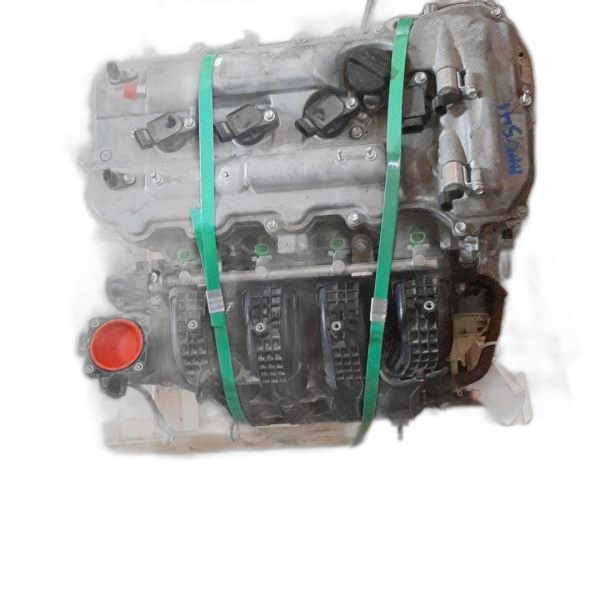
Shop the Parts Behind U0672
Below are the parts most often responsible for code U0672, ranked by how frequently each one is the actual culprit (per the diagnosis above). Tap any to see what we have for your vehicle.




The information in this article is provided for general reference and educational purposes only. Vehicle specifications, procedures, and part compatibility can vary by production date, trim level, and region. Always consult your vehicle's factory service manual and verify part numbers before purchasing or performing repairs. Safety-critical components such as airbags, seat belts, and braking systems should be installed by a qualified professional.
- 🧭 Diagnostic Flowchart
- 🛍️ Shop This Part
- What Does U0672 Mean?
- Can I Drive With U0672?
- Common Causes
- Symptoms
- Common Fixes & Costs
- Used vs. New Parts: Buying Guide
- What Happens If You Wait — Timeline
- Cost of Not Fixing It
- Diagnosis Steps
- When This Code Triggers (Freeze-Frame Conditions)
- Related Codes
- Climate & Environmental Factors
- How to Talk to a Mechanic About This Code
- Where to Take It: Dealer vs Independent vs Chain
- When to Walk Away From the Repair
- What Scan Tool You Need for This Code
- How to Clear the Code After You Fix It
- Will This Fail Emissions / State Inspection?
- Most Commonly Affected Vehicles
- Manufacturer-Specific Notes
- Real Owner Stories
- 2020 GMC Sierra 2.7L after Battery Change
- 2021 Chevy Blazer 2.0L with Intermittent U0672
- 2022 Chevrolet Silverado 2.7L with Blown Fuse
- 2020 Cadillac CT4 2.7L with Multiple Codes
- How to Prevent This Code From Triggering
- Frequently Asked Questions
- What is the most common misdiagnosis for a U0672 code?
- I just replaced my battery and now I have a U0672 code. Are they related?
- Can I use an aftermarket coolant pump?
- What is a LIN bus?
- Can I just clear the U0672 code and keep driving?
- Is the electric coolant pump the same as a water pump?
- What does 'cycling the connection' mean?
- Why does my scan tool say 'Lost Communication With Drive Motor Control Module J'?
- Key Takeaways
- 🎟️ Get 5% Off