

U0672 on 2019-2024 GMC Sierra 1500 2.7L: Lost Communication With Coolant Pump Causes and Fixes
On a 2019-2024 GMC Sierra with the 2.7L engine, code U0672 most often means there's a bad electrical connection at the electric engine coolant pump. Before replacing the pump, inspect the wiring connector and check the 40-amp fuse on the battery fuse block. GM has issued TSBs that strongly suggest checking the connector first by simply unplugging and replugging it.
- U0672 on a 2.7L Sierra almost always points to an electrical issue, not necessarily a bad pump.
- Always start diagnosis with the easiest and cheapest checks: the fuse on the battery and the wiring connector at the pump.
- Simply unplugging the pump connector, inspecting it, and plugging it back in can fix the problem.
- If you recently replaced your battery and this code appeared, suspect damage to the battery-top fuse block.
What's Unique About the 2019-2024 Gmc SIERRA 1500
The GMC Sierra 1500 with the 2.7L L3B engine relies on a sophisticated electronic water pump that communicates with the ECM over a Local Interconnect Network (LIN) bus. While efficient, this design introduces a communication failure point that doesn't exist on simpler, belt-driven systems. General Motors has issued multiple Technical Service Bulletins (TSBs), such as PIP5863C, acknowledging that the primary cause for this code is often not the pump itself, but a poor connection at its electrical harness connector. This is a known issue across several GM vehicles using the L3B engine.
Diagnostic Flowchart
Tap your situation to follow the diagnostic path that matches what you're seeing on this vehicle.
Generation note: This issue affects the fourth-generation GMC Sierra 1500 (T1 platform), including the 2022 mid-cycle refresh. TSBs from GM cover the entire 2019-2024 model year range for trucks equipped with the 2.7L L3B engine. The problem is also prevalent in its platform-mate, the Chevrolet Silverado 1500.
Symptoms You May Notice
- Check Engine Light is on
- Engine temperature gauge rises rapidly or shows an overheating warning, even if the engine is not actually hot
- Message on the driver information center like "Engine Power Red 🎬 Watch: Diagnosing 'Engine Power Reduced' and related communication codesuced"
- Engine cooling fans run constantly at high speed, even when the engine is cold
- Loss of heat from the cabin vents
- Replacing the electric coolant pump without first checking the connector, fuse, and wiring harness. The TSBs strongly suggest the connection is the most likely issue, making pump replacement an unnecessary expense in many cases.
- Replacing the ECM. Wiring harness issues are far more common and can mimic the symptoms of a failed ECM.
Most Likely Causes
- Poor Connection at Electric Coolant Pump 🔴 High Probability → Shop Engine Water Pump GM has identified this as a common issue and released TSBs #PIP5863B and #PIP5863C. The connector can suffer from contamination, poor terminal tension, or not being fully seated. The TSB explicitly advises technicians to check this first.
How to confirm: Locate the electric coolant pump and its electrical connector. Visually inspect for damage or corrosion. Disconnect, inspect the pins for looseness or damage, and reconnect it firmly. This is known as 'cycling the connection'. If the code does not return after clearing, this was the issue.
Typical fix: Clean the connector terminals and apply dielectric grease. Ensure it is securely latched. If the connector or terminals are damaged, a new connector pigtail may need to be spliced in. TSB #PIP5863A allows for 0.3 hours of labor under warranty just to cycle the connection.
Est. part cost: $0-$30 - Blown Fuse in Battery Fuse Block 🟡 Medium Probability → Shop Vehicle Battery A specific 40-amp fuse that powers the coolant pump is located in a fuse block mounted directly on the battery. This fuse can be broken internally if the battery terminal nut is over-tightened during a battery replacement, twisting the fuse block.
How to confirm: Inspect the 40-amp fuse in the battery-top fuse block. In many cases, the fuse element breaks internally without being visibly blown, requiring a multimeter to test for continuity. A voltage drop test while wiggling the fuse block is the most effective confirmation method.
Typical fix: The fuse itself is not sold separately. The entire battery fuse block assembly must be replaced. The part number is often superseded, but examples include 84646134 and its replacement 85015808.
Est. part cost: $50-$100 - Chafed or Damaged Engine Wiring Harness 🟡 Medium Probability → Shop Engine Wiring Harness TSB #21-NA-149 is a comprehensive bulletin detailing multiple common locations where the engine harness on 2.7L models can rub against sharp edges, causing wires to short out.
How to confirm: Carefully inspect the engine wiring harness for any signs of rubbing, chafing, or exposed wires. For the 2.7L L3B engine, TSB #21-NA-149 specifically points to areas where the harness crosses over the camshaft carrier cover 🎬 See this walkthrough of common wiring harness rub points, near the lower air cleaner housing, and around the generator bracket.
Typical fix: Repair the damaged wires using approved methods like solder and heat-shrink tubing. Reroute the harness and secure it with zip ties or conduit to prevent future contact, as detailed in the TSB.
Est. part cost: $5-$25 - Failed Electric Engine Coolant Pump ⚪ Low Probability → Shop Engine Water Pump While less common than connection issues, the internal electronics of the pump module can fail, causing it to stop communicating. This should be the last part replaced after ruling out all other causes. In some cases, an internal short-to-ground within the pump can cause the failure and blow the main fuse.
How to confirm: If all wiring, fuses, and connections are confirmed to be good, the pump itself is the likely culprit. An advanced scan tool may be able to directly query the pump module; a lack of response points to a failed pump.
Typical fix: Replace the entire electric engine coolant pump assembly. The OEM part is manufactured by ACDelco. 🎬 Watch: How to perform a coolant flush after pump replacement
Est. part cost: $250-$450
Rare But Worth Checking
- Faulty Engine Control Module (ECM): → Shop Engine Control Module (ECM) This is very rare. TSB #21-NA-149 notes that the ECM is often unnecessarily replaced for these types of concerns. The ECM should only be considered after all other possibilities, including wiring, connections, fuses, and the pump itself, have been definitively ruled out.
Diagnosis Steps
- Read all fault codes with an OBD-II scanner. Note any other codes that are present, especially U1345.
- Inspect the battery-mounted fuse block. Check the 40-amp fuse that supplies power to the electric coolant pump. Test for continuity with a multimeter, as visual inspection may not be sufficient. Perform a voltage drop test on the fuse while wiggling it to check for internal breaks.
- Locate the electric engine coolant pump. It is on the front of the engine block.
- Carefully inspect the wiring harness connector going to the pump. Look for any signs of green corrosion, backed-out pins, or physical damage.
- Disconnect the pump connector. Inspect the pins and terminals on both the pump and harness side for damage or poor tension.
- Reconnect the connector firmly until it clicks. This action is called 'cycling the connection'. Clear the codes with the scanner.
- Start the engine and let it run. If the U0672 code does not return, the issue was the connection. GM authorizes this as a warranty repair.
- If the code returns, perform a thorough inspection of the engine wiring harness for any signs of chafing or damage, paying close attention to the areas mentioned in TSB 21-NA-149, such as over the camshaft carrier cover.
- If the wiring, fuse, and connector are all confirmed to be in good condition, the electric engine coolant pump is the most likely cause of failure and should be replaced.
Parts You'll Likely Need
- Electric Engine Coolant Pump
(OEM #12718538)— This part is replaced if the internal electronics fail, preventing communication with the ECM. This should only be replaced after verifying the wiring and connections are good.
Trusted brands: ACDelco GM Genuine Parts
OEM price range: $350-$500
Aftermarket price range: $250-$400 - Battery Fuse Block
(OEM #85015808 (supersedes 84646134))— Replaced if the non-serviceable 40-amp fuse for the coolant pump is found to be blown, often due to accidental damage from over-tightening the battery terminal nut during a battery change.
Trusted brands: ACDelco GM Genuine Parts
OEM price range: $50-$100
Aftermarket price range: $40-$80
Related Codes That Often Appear With This One
- U1345 — This is a general code for a fault on LIN Bus 1. The electric coolant pump communicates on a LIN bus network, so a fault causing U0672 can also trigger a bus-wide error code.
- P26BB — This code relates to the Coolant Flow Control Valve, which works in conjunction with the electric water pump. A communication failure with the pump can lead to faults with related components.
Technical Service Bulletins (TSBs) & Recalls
- PIP5863B / PIP5863C: Advises technicians that U0672 is likely caused by a poor connection at the Electric Engine Coolant Pump and to inspect it first.
- PIT5677E / 21-NA-149: Details common locations for engine wire harness chafing that can cause various DTCs, including U0672.
Platform-Specific Known Issues
- GM Technical Service Bulletin #PIP5863C directly addresses code U0672, advising technicians to inspect the Electric Engine Coolant Pump connection before performing any other repairs. The fix is often as simple as unplugging and replugging the connector.
- GM Technical Service Bulletin #21-NA-149 (superseding PIT5677E) warns of widespread engine harness chafing issues on these trucks, which can lead to U0672 among many other electrical fault codes. Specific chafe points for the 2.7L engine include where the harness crosses the camshaft carrier cover and near the generator bracket.
Mechanic-Grade Diagnostic Values
- LIN Bus Circuit Voltage — expected: Toggling between approx. 1V (low) and 11-12V (high) during communication.. Failure: A steady voltage of 11-12V indicates a communication loss, as the line is not being pulled low to transmit data. A steady low voltage could indicate a short to ground.
- Coolant Pump Ground Circuit Resistance — expected: Below 0.1 Ω. Failure: Resistance higher than 0.1 Ω indicates a poor ground connection, which can cause communication and power issues.
- Coolant Pump Power Feed Voltage Drop — expected: Near 0V (e.g., 0.03V) when measured between the battery positive terminal and the power pin at the pump connector.. Failure: A significant voltage reading (e.g., several volts) under load or when wiggling the harness/fuse indicates high resistance in the power supply circuit, often pointing to a bad fuse or chafed wire.
Scan Tool Commands That Help
- GDS2 (GM Dealer Scan Tool): Coolant Pump Test — To verify if the pump is mechanically and electronically capable of responding to a command. The test runs the pump at approximately 4,000 RPM for 15 seconds, and the tool monitors the pump motor's AC current feedback to determine if it's operating correctly. This can help rule out the pump itself before chasing wiring issues.
- Advanced OBD-II Scanner: Query Coolant Pump Module ID / Live Data Request — This is a basic communication check. If the scan tool cannot get a response or read live data (like pump speed or status) from the coolant pump module, it confirms the 'Lost Communication' status indicated by code U0672.
Wiring & Ground Locations
- G59 Electric Engine Coolant Pump Connector — On the electric coolant pump assembly, mounted to the bottom left (driver's) side of the engine block.. This is the primary connection point for power, ground, and the LIN bus communication wire. TSB #PIP5863C identifies a poor connection here as the most common cause of U0672.
- Battery-Mounted Fuse Block — Directly on top of the vehicle's battery positive terminal.. This block contains the non-serviceable 40-amp fuse that supplies main power to the electric coolant pump. This fuse can be internally damaged by the mechanical stress of over-tightening the battery terminal nut.
- Engine Harness Chafe Point 1 (TSB 21-NA-149) — Where the main engine harness crosses over the top of the camshaft carrier cover.. Vibrations can cause the harness to rub through on the sharp edges of the cover, potentially damaging the LIN bus wire or power/ground circuits for the coolant pump.
- Engine Harness Chafe Point 2 (TSB 21-NA-149) — Where the harness is routed near the generator (alternator) bracket.. Contact with the generator bracket can cause chafing and short circuits for various engine components, including the coolant pump circuit.
Real Owner Repair Stories
- YouTube user 'Antonio Aguirre' (2020 GMC Sierra 2.7L) — Check Engine Light, 'Engine Power Reduced' message, codes U0672, U1345, P16F3, U01B0 after a battery replacement.
❌ Tried (didn't work) Clearing the codes with a scanner; they immediately returned.
✅ What actually fixed it Replaced the entire battery-mounted fuse block because the internal, non-serviceable 40-amp fuse for the coolant pump was broken from over-tightening the battery terminal nut. - YouTube user 'PAULY'S AUTO' (GM Truck with 2.7L L3B Engine) — LIN bus 4 code related to the coolant pump.
✅ What actually fixed it Diagnosed a massive voltage drop (5-7 volts) from the battery fuse block when wiggled. The internal fuse was bad, requiring replacement of the fuse block. The video also identified and repaired several harness chafing spots. - YouTube user 'Casi que motor' (2022 Chevrolet Silverado 1500 2.7L) — Check Engine Light with code U0672.
✅ What actually fixed it The electric water pump had an internal short to ground. Replacing the water pump and the 80-amp fuse in the battery fuse block (which had blown due to the short) resolved the issue.
When the Usual Fixes Don't Work
- While the most common causes are wiring and connection-related, a confirmed repair on a 2022 Silverado showed that a direct failure of the electric coolant pump can occur. In that instance, the pump developed an internal short-to-ground which, in turn, blew the main fuse in the battery fuse block. This serves as a reminder that while less probable, pump failure is not impossible and should be considered after exhausting wiring diagnostics.
Model Year Variations Within This Range
- 2019-2021: TSB 21-NA-149, which details extensive engine harness chafing points, was revised to remove the 2022+ refreshed models (RPO J22). This implies that the harness routing or protective coverings may have been improved starting with the 2022 model year refresh, potentially making those specific chafe points less common on newer trucks.
Helpful Videos
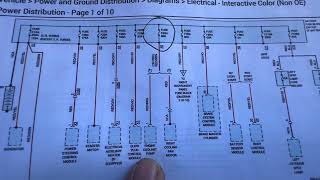
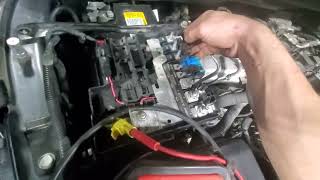
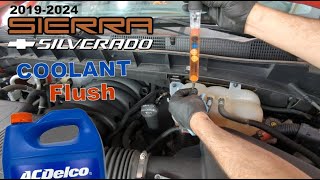
We Have This Part in Stock


The information in this article is provided for general reference and educational purposes only. Vehicle specifications, procedures, and part compatibility can vary by production date, trim level, and region. Always consult your vehicle's factory service manual and verify part numbers before purchasing or performing repairs. Safety-critical components such as airbags, seat belts, and braking systems should be installed by a qualified professional.
- Gmc SIERRA 1500:
- 🧭 Diagnostic Flowchart
- 🎬 Helpful Videos
- 🛍️ Shop This Part
- What's Unique About the 2019-2024 Gmc SIERRA 1500
- Symptoms You May Notice
- Most Likely Causes
- Rare But Worth Checking
- Diagnosis Steps
- Parts You'll Likely Need
- Related Codes That Often Appear With This One
- Technical Service Bulletins (TSBs) & Recalls
- Platform-Specific Known Issues
- Mechanic-Grade Diagnostic Values
- Scan Tool Commands That Help
- Wiring & Ground Locations
- Real Owner Repair Stories
- When the Usual Fixes Don't Work
- Model Year Variations Within This Range
- 🎟️ Get 5% Off