

OBD-II Code U0673: Lost Communication With Glow Plug Control Module
What U0673 means, why it triggers, and how to fix it for diesel vehicles
- Code U0673 indicates the Glow Plug Control Module (GPCM) is offline, preventing the glow plugs from heating and causing hard cold starts.
- Always test the GPCM's 12V power supply and ground connections with a multimeter before spending $250+ on a replacement module.
- A battery dropping below 11.5 volts during cranking forces the GPCM to shut down, triggering this code without any actual module failure.
- Avoid cheap aftermarket GPCMs; they have a high failure rate and often trigger immediate U0073 network codes due to software incompatibility.
- Ignoring this code for more than 3 months leads to severe carbon buildup and clogged Diesel Particulate Filters (DPF), risking a $2,000+ repair.
What Does U0673 Mean?
Code U0673 means the Engine Control Module (ECM) lost communication with the Glow Plug Control Module (GPCM). The GPCM is a dedicated computer that manages the glow plugs to pre-heat diesel cylinders for cold starts. When this data link drops, the glow plugs remain off, making the engine difficult or impossible to start in cold weather.
Technical definition: The official SAE/OBD-II definition is "Lost Communication With Glow Plug Control Module (GPCM)". This indicates the serial data link between the GPCM and the vehicle's Controller Area Network (CAN) bus is interrupted or offline.
Can I Drive With U0673?
Yes, But With Caution. Yes, but cold starts will be difficult or impossible. Attempting repeated cold starts with a faulty GPCM puts excessive strain on the starter motor and battery, causing premature failure. Long-term incomplete combustion increases carbon buildup, clogging the Diesel Particulate Filter (DPF) and resulting in repairs exceeding $2,000.
Common Causes
- Faulty Glow Plug Control Module (GPCM) (Very Common) — The GPCM is the most frequent failure point. Internal components burn out from electrical surges or fail from prolonged exposure to engine heat and vibration.
- Blown Fuse or Faulty Relay (Common) — The GPCM is protected by high-amperage fuses and relays. A blown fuse severs power entirely, taking the module offline. Repeatedly blown fuses indicate a direct short circuit.
- Damaged Wiring or Loose Connectors (Common) — CAN bus network wires frequently corrode, fray, or break. The GPCM connector is vulnerable to oil contamination, moisture intrusion, and bent pins.
- Poor Electrical Grounds (Common) — A loose or corroded ground wire for the GPCM destabilizes voltage signals on the CAN bus, causing dropped messages and communication blackouts.
- Low Battery Voltage or Faulty Charging System (Less Common) — Control modules require stable voltage above 11.5V. A weak battery causes voltage to plummet during startup, forcing the GPCM to shut down unexpectedly.
- Incompatible Aftermarket Module (Less Common) — Cheap aftermarket GPCMs often lack proper programming or CAN bus compatibility, triggering immediate communication faults upon installation.
- CAN Bus Network or Gateway Failure (Rare) — A fault at a central hub, like the Serial Data Gateway Module, disrupts the entire network, preventing the ECM from reaching the GPCM.
Symptoms
- Engine is hard to start or won't start in cold weather — Without a functioning GPCM, glow plugs fail to heat the cylinders, preventing diesel fuel from igniting. 🎬 Watch: What a diesel cold start looks like without glow plugs.
- Check Engine Light is illuminated — The ECM triggers the Malfunction Indicator Lamp immediately upon losing the GPCM signal.
- Glow plug "Wait to Start" light is off or flashes — The dashboard pre-heat indicator fails to illuminate, flashes erratically, or stays on indefinitely.
- Thick white smoke from the exhaust on startup — Unburnt diesel fuel pushes through the exhaust because the cylinders are too cold for complete combustion.
- Rough, erratic idling after a cold start — The engine shakes and runs poorly for the first few minutes until it generates sufficient internal heat.
Diagnostic Flowchart
Tap your situation to follow the diagnostic path that matches what you're seeing on this code.
Common Fixes & Costs
- Replacing the Glow Plug Control Module (GPCM)
— Parts: $240-$500, Labor: $85-$150, ~1.0 hr book time
(Intermediate)
: OEM
: OEM - Replacing a Blown Fuse or Relay — Parts: $5-$25, Labor: $0-$50, ~0.2 hr book time (DIY)
- Cleaning or Repairing a Main Ground Connection — Parts: $5-$20, Labor: $50-$150, ~0.5 hr book time (DIY)
- Repairing Damaged Wiring or Connectors — Parts: $10-$75, Labor: $150-$300, ~1.5 hr book time (Intermediate)
- Replacing the Glow Plug Wiring Harness
— Parts: $50-$150, Labor: $200-$400, ~2.5 hr book time
(Advanced)
: OEM
DIY vs Professional
- Replacing a Blown Fuse — Beginner:
- Cleaning or Repairing a Main Ground Connection — Beginner:
- Replacing the Glow Plug Control Module (GPCM) — Beginner:
- Repairing Damaged Wiring or Connectors — Beginner:
Used vs. New Parts: Buying Guide
When a used part is worth it: A used OEM module from a reputable recycler is preferable to a cheap, unproven aftermarket part, especially if new OEM parts are backordered.
Donor-vehicle mileage cap: roughly under 100000 miles for the part to have meaningful remaining life.
Donor quality checklist:
- Verify the exact part number matches.
- Ensure the donor vehicle wasn't scrapped for an electrical fire or engine failure.
- Inspect for physical damage, melted plastic, or green corrosion on the pins.
Decision logic:
- If A new OEM part is available and affordable → buy new OEM for best reliability and warranty.
- If New OEM is unavailable or cost-prohibitive → buy a tested, used OEM part or a professionally remanufactured module.
- If Only cheap, no-name aftermarket parts are available → avoid them entirely due to high failure rates and incompatibility.
Warranty tradeoff: Used parts offer 30-90 days. Remanufactured units offer 1 year. New OEM parts carry a 1-2 year warranty.
Worst-case if a used part fails: $200-$500 if a cheap aftermarket part fails immediately, requiring repeat labor and a second part purchase.
What Happens If You Wait — Timeline
- 0-1 month: Code U0673 sets. The 'Wait to Start' light fails. The engine is hard to start in cold weather but runs normally once warm. (MPG impact: 0-1%% · Added cost: $0-$50)
- 1-3 months: Repeated cold cranking strains the battery and starter. White smoke is prominent on startup. Fuel economy drops slightly due to inefficient cold combustion. (MPG impact: 1-4%% · Added cost: $400-$1500 (Premature starter or battery failure))
- 3-9 months: Incomplete combustion accelerates soot buildup, coating the EGR system and clogging the Diesel Particulate Filter (DPF). DPF regeneration cycles fail. (MPG impact: 5-10%% · Added cost: $600-$1500 (Professional DPF cleaning))
- 9+ months: The DPF becomes severely clogged, causing extreme exhaust backpressure, massive power loss, and permanent DPF damage. (MPG impact: 10-25%% · Added cost: $2,500-$6,000+ (DPF replacement))
Cost of Not Fixing It
- 0-1 month: Hard or no-starts in cold weather, increased strain on battery and starter motor. (Added cost: Negligible, unless battery or starter fails from repeated cranking ($400-$1500).)
- 1-6 months: Increased white smoke on startup, accelerated carbon buildup, and clogging of the Diesel Particulate Filter (DPF) due to incomplete combustion. (Added cost: $1500-$4000+)
- 6+ months: Severe DPF clogging requiring replacement, permanent damage to emissions components, and being stranded. (Added cost: $2000-$5000+)
Diagnosis Steps
- Perform a Full System Scan
Use a professional scanner to check all modules. If U0673 is accompanied by U0073 or U0100, you have a network-wide wiring issue. If specific glow plug codes (P0671-P0678) are absent, the GPCM is completely offline.
Tools: Professional OBD-II Scanner (Beginner) - Inspect GPCM Fuses and Relays
Locate the GPCM fuse (often a large 100A+ mega fuse) and control relays in the power distribution box. Replace any blown fuses and swap the relay with an identical non-critical one to test.
Tools: Owner's Manual, Fuse Puller, Multimeter (Beginner) - Test Battery and Charging System
Verify the battery holds at least 12.4V resting and doesn't drop below 10.5V during cranking. Low voltage forces modules offline.
Tools: Multimeter (Beginner) - Visually Inspect and "Wiggle Test" Wiring
Inspect the GPCM harness for chafing, melting, or corrosion. With the key on and a scanner monitoring communication status, wiggle the harness and connectors. If communication drops or returns, you found the physical break.
Tools: Flashlight, Professional OBD-II Scanner (Intermediate) - Check Power and Ground at the GPCM Connector
Disconnect the GPCM. Verify battery voltage at the main power pins and ensure resistance between the ground pin and the negative battery terminal is under 0.1 ohms. A dead module cannot communicate.
Tools: Multimeter, Vehicle-specific Wiring Diagram (Advanced) - Check CAN Bus Voltages
With the key on, back-probe the CAN wires. CAN High should read 2.5V to 3.0V. CAN Low should read 2.0V to 2.5V. Readings outside this range indicate a short to power or ground.
Tools: Multimeter, Back-probe Pins (Intermediate) - Test CAN Bus Resistance
Disconnect the battery. Measure resistance between OBD-II pins 6 and 14. A healthy network reads 60 ohms. A reading of 120 ohms means a module or terminating resistor is unplugged or broken. Near 0 ohms means the wires are shorted together.
Tools: Multimeter (Advanced) - Analyze the CAN Bus Waveform
Connect an oscilloscope to the CAN lines. A healthy signal shows a mirror-image square wave. Distorted or flatlined waveforms pinpoint specific network failures invisible to a multimeter.
Tools: Dual-Channel Oscilloscope, Back-probe Pins (Expert)
When This Code Triggers (Freeze-Frame Conditions)
- Engine RPM: 0 or > 700 RPM (Key-On Engine-Off or during normal driving)
- Engine Coolant Temp: Any (The communication check runs continuously, so the code sets at any temperature.)
- Vehicle Speed: Any (The fault logs while parked or driving.)
- Control Module Voltage: 11.5V - 14.8V (A snapshot of system voltage when communication was lost; low voltage is a primary cause.)
Related Codes
- P0670 — P0670 indicates a fault in the GPCM's main power, ground, or internal circuit. A dead module causing P0670 always triggers U0673 because it cannot communicate.
- P0380 — A generic code set by the ECM when it knows the glow system failed but cannot communicate with the GPCM to get specific diagnostic data.
- P0671-P0678 — These codes pinpoint specific glow plug failures and are reported BY a functioning GPCM. If you only have U0673, the GPCM is offline and cannot report these.
- U0073 — A general code for 'Control Module Communication Bus A Off'. Seeing U0073 alongside U0673 proves a wider network wiring issue, not just a bad GPCM.
Climate & Environmental Factors
- Cold Climates: GPCM failures become immediately apparent as no-start conditions when temperatures drop. Extreme cold also makes wiring insulation brittle, increasing physical damage risks.
- High Humidity / Salt Belt Regions: Moisture and road salt drive corrosion on wiring and ground points. Because the CAN bus relies on low-voltage signals, minor corrosion creates enough resistance to sever communication.
How to Talk to a Mechanic About This Code
Say this: "I have a U0673 code on my diesel truck. I know this is a communication code for the glow plug module. Please verify power, ground, and communication at the GPCM connector before recommending a module replacement. I also want to rule out common wiring chafe points."
This proves you understand the code is electrical. It directs the technician to perform proper diagnosis instead of immediately quoting the most expensive part. Mentioning 'wiring chafe points' shows you researched common failures.
Avoid saying:
- 'My check engine light is on, can you look at it?' (Too vague, invites expensive diagnostics).
- 'My truck won't start when it's cold.' (Describes a symptom, leading them to check glow plugs first, which is incorrect for a U-code).
- 'Just replace the glow plug module.' (Asks them to be a parts-changer, risking paying for unneeded parts).
Questions to ask before authorizing the repair:
- Did you find 12V power and a solid ground at the module connector?
- If recommending a module replacement, how did you confirm the old module was the failure point?
- If the problem is wiring, can you show me exactly where the damage is?
- What is the warranty on the recommended part and labor?
Where to Take It: Dealer vs Independent vs Chain
- Dealer:
Recommended only if the vehicle is under warranty or requires a specific manufacturer software update.
Best for: Vehicles under powertrain or emissions warranty., Applying known TSBs or software updates for this specific code., Complex electrical issues requiring factory engineering support.
Downsides: Labor rates are up to 40% higher than independent shops., Dealers default to replacing entire expensive harnesses rather than repairing a single wire. (Typical cost: +40% vs. baseline) - Independent Shop:
Best fit. A good independent diesel specialist diagnoses CAN bus issues effectively and offers cost-effective wire repairs instead of full module replacements.
Best for: Out-of-warranty diesel trucks (Ford, GM, Ram)., Diagnosing and repairing common wiring or connector failures., Cost-sensitive owners needing thorough diagnosis without dealer overhead.
Downsides: Expertise varies; you must find a shop specializing in diesel or electrical diagnostics., May lack access to the latest software updates for brand-new models. (Typical cost: +0% vs. baseline) - Chain Shop:
AVOID. Complex electrical diagnostics are beyond the scope of chain repair shops. They will likely misdiagnose the issue.
Best for: Simple maintenance like oil changes or tire rotations.
Downsides: Technicians lack specialized training and oscilloscopes for CAN bus diagnostics., Business models encourage quick parts replacement over electrical troubleshooting. (Typical cost: -10% vs. baseline)
When to Walk Away From the Repair
If the estimated repair cost for the U0673 fault exceeds 40% of your truck's private-party market value, seriously consider selling it as-is.
- Car worth $8000, fix is $3500: Walk away. The repair cost is a massive percentage of the truck's value.
- Car worth $25000, fix is $800: Fix it. This repair cost is well within a reasonable budget to maintain a valuable truck.
- Car worth $5000, fix is $400: Fix it. A relatively inexpensive repair restores critical function and makes the vehicle sellable.
What Scan Tool You Need for This Code
Minimum: A scanner that reads manufacturer-specific 'U' (network) codes from all modules, displays live data, and captures freeze frame data.
Cheap code readers only show generic 'P' codes. You need a tool that scans all modules (ABS, BCM, etc.) to see if other modules are offline, which is the critical clue for diagnosing network wiring.
Budget: BlueDriver Pro (~$90) — Reads enhanced U-codes from major manufacturers, provides freeze frame data, and monitors live module voltage to confirm the U0673 code.
Mid-range: Foxwell NT809 / Autel MaxiCOM MK808 (~$350) — Offers full system diagnostics and bidirectional controls to actively query module status on the network.
Professional: Launch X431 series / Autel MaxiSys MS906Pro (~$500-1200) — Provides advanced topology maps to visualize the network and pinpoint exactly where the communication break occurs.
Rent vs buy: Buy a budget pick like the BlueDriver. Renting from auto parts stores yields basic readers incapable of reading U-codes. A mid-range scanner is best for serious DIYers.
How to Clear the Code After You Fix It
- Reconnect the battery if it was disconnected for the repair.
- Use an OBD-II scan tool to clear the Diagnostic Trouble Codes (DTCs).
- Perform a complete drive cycle to allow the vehicle's readiness monitors to run their self-tests.
Drive cycle (~20 minutes): Start the engine from a cold soak (at least 8 hours off). Let it idle for 2-3 minutes. Drive for 15 minutes in a mix of city and highway conditions to reach normal operating temperature.
Readiness monitors affected: Comprehensive Component Monitor
Before emissions retest: drive at least 50 miles to fully set monitors.
Watch out for:
- Clearing the code without a drive cycle leaves readiness monitors 'incomplete', causing an automatic emissions test failure.
- If the underlying wiring issue is not resolved, the code returns instantly upon key-on.
Will This Fail Emissions / State Inspection?
Yes — this code typically fails an OBD-II emissions inspection.
- California: A U-series code related to an emissions component causes an automatic failure. All readiness monitors must be 'Ready'.
- New York: The presence of a Check Engine Light and a stored DTC like U0673 results in a failed OBD-II inspection.
- Texas: Vehicles fail if the Malfunction Indicator Lamp (MIL) is commanded on, which U0673 triggers.
Most Commonly Affected Vehicles
- Ford F-250/F-350 Super Duty (with 6.0L Power Stroke) (2003-2007) — The GPCM mounts directly on the vibrating valve cover, causing high failure rates. Always use the updated Motorcraft replacement part.
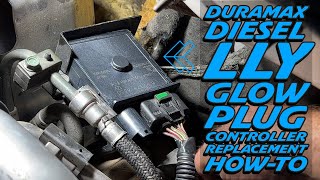
- Chevrolet / GMC Silverado / Sierra HD (with LLY, LBZ, LMM Duramax) (2006-2010) — Original modules fail frequently from glow plug current spikes. Loose connections at the GPCM mega fuse also trigger this code.
- Dodge / Ram 2500/3500 (with 6.7L Cummins) (2007-2018) — Uses a grid heater instead of glow plugs. The grid heater relay is prone to catastrophic failure and fire risks, prompting multiple NHTSA recalls.
- BMW X5 xDrive35d, 335d (E70, E90 with M57 engine) (2009-2013) — The glow plug control unit fails frequently. Replacement requires complete removal of the intake manifold.
- Mercedes-Benz Sprinter (NCV3 with OM642/OM651 engines) (2007-2018) — Module failures are frequent and often trigger U0673 alongside individual circuit codes.
- Jeep Grand Cherokee (WK2 with 3.0L EcoDiesel) (2014-2019) — TSB 18-021-16 REV. A addresses U0673 with a software update. Check for updates before replacing hardware.
- Volkswagen Jetta / Golf / Passat (with TDI engines) (2009-2015) — The plastic glow plug harness becomes brittle and fails more often than the module itself.
- Chevrolet / GMC Colorado / Canyon (with 2.8L Duramax) (2016-2022) — TSB 18-NA-002 points to poor terminal connections at the Serial Data Gateway Module, which misdiagnoses as a GPCM failure.
Manufacturer-Specific Notes
- General Motors (Chevy/GMC): On 2006-2010 Duramax trucks, new OEM GPCMs are frequently backordered, forcing owners to use remanufactured units. On 2.8L Duramax models, gateway module connection issues mimic GPCM failures.
- Ford: The 6.0L Power Stroke GPCM is mounted on the hot valve cover. Technicians strongly advise against cheap aftermarket modules, which fail rapidly in this environment.
- Dodge / Ram (Cummins): The 6.7L Cummins grid heater relay is a severe fire and engine damage risk. A loose power stud on the relay is an urgent warning sign requiring immediate replacement.
- Volkswagen (TDI): The plastic glow plug harness degrades heavily from heat cycles. On some models, the ECU numbers glow plug faults in reverse order (e.g., a cylinder 1 code means cylinder 4 is bad).
Real Owner Stories
2006 GMC Sierra 2500HD (LLY Duramax) with intermittent U0673 and U0073
Truck experienced intermittent 'Check Engine' lights and poor shifting. Codes U0101 and U0106 appeared. The problem worsened in wet weather.
Outcome: Wiggling the harness over the alternator bracket triggered the errors. The harness had chafed through on the sharp metal, shorting the CAN bus wires. Repairing the wires and adding a protective loom permanently solved the issue.
Lesson: Multiple 'U' codes appearing together point to a network-wide wiring problem, not multiple failed modules. Always inspect harnesses for chafing before replacing expensive parts.
2008 Ram 2500 (6.7L Cummins) with no 'Wait to Start' light
The 'Wait to Start' light failed to illuminate on cold mornings, causing rough idles. No Check Engine Light was on initially.
Outcome: A multimeter confirmed 12V power reached the relay, but it failed to activate. Replacing the internally failed grid heater relay restored normal function.
Lesson: On Cummins engines, the grid heater system fails without immediately setting a U0673 code. Listening for the relay 'click' is a fast, no-tools first step.
2004.5 Chevy Silverado (LLY Duramax) with U0073 after DIY repair
The truck set a P0670 code. The owner installed a cheap aftermarket GPCM from Amazon.
Outcome: The aftermarket module was incompatible with the truck's CAN bus. Reinstalling the original module cleared the U0073 code. Purchasing a genuine ACDelco module fixed the original issue.
Lesson: Cheap aftermarket modules introduce severe communication problems. A new U-code appearing immediately after a part replacement proves the new part is faulty.
2006 Ford F-350 (6.0L Power Stroke) with codes for one bank of glow plugs
The Check Engine Light illuminated with codes for glow plugs on cylinders 2, 4, 6, and 8 (the entire passenger side).
Outcome: Swapping the connectors proved the GPCM itself was faulty on one internal bank. The owner replaced the GPCM.
Lesson: On Ford 6.0L engines, the GPCM has separate internal drivers for each bank. Swapping connectors definitively isolates the fault to the GPCM or the wiring harness.
How to Prevent This Code From Triggering
- Apply Dielectric Grease to Connectors (During any related maintenance) — Seals out moisture and road salt, preventing the corrosion that causes high-resistance connections and communication faults.
- Perform Regular Battery Tests (Annually (before winter)) — Ensures voltage stays above 11.5V during cranking, preventing modules from shutting down and logging false 'U' codes.
- Inspect and Secure Wiring Harnesses (During oil changes) — Prevents vibrations from rubbing wiring harnesses against sharp engine brackets, stopping shorts before they start.
- Use Only OEM Modules (When replacement is needed) — Guarantees CAN bus compatibility and prevents the immediate network failures common with cheap aftermarket electronics.
Frequently Asked Questions
How much does it cost to fix code U0673?
Costs range from $10 for a fuse to $300 for wiring repairs. Replacing the GPCM, the most common fix, averages $325 to $550 for parts and labor depending on the vehicle. Dealerships charge up to 40% more than independent diesel shops.
Can I just replace the glow plugs to fix a U0673 code?
No, replacing glow plugs will not fix a U0673 code. This code indicates a communication failure with the control module, not a mechanical failure of the plugs. Bad glow plugs trigger specific P0671-P0678 circuit codes instead.
Is a Glow Plug Control Module the same as a glow plug relay?
Older diesels used a simple on/off relay switch. A GPCM is a smart computer that uses engine data to precisely control glow plug timing and temperature. A relay cannot communicate on the CAN bus, whereas a GPCM does.
Do I need to program a new Glow Plug Control Module?
Most replacement GPCMs are plug-and-play and do not require programming. However, some newer European models (like BMW or Mercedes) require a relearn procedure using a factory-level scan tool. Always verify with your specific vehicle's service manual.
I saw another guide mention an 'Ion Sense Module' for U0673. What is that?
This is incorrect information found in generic online guides. The standardized OBD-II definition for U0673 is strictly 'Lost Communication With Glow Plug Control Module'. It applies exclusively to diesel engine pre-heating systems.
Could a bad battery cause a U0673 code?
Yes, a weak battery causes voltage to drop below 11.5V during engine cranking. This sudden voltage drop forces modules like the GPCM to shut down temporarily. The ECM registers this shutdown as a U0673 communication loss.
My U0673 code is intermittent. What should I check first?
Intermittent communication faults almost always stem from loose connections or corroded grounds. Start by checking the GPCM's main power and ground pins for tightness and green corrosion. Perform a 'wiggle test' on the wiring harness while monitoring a scan tool to pinpoint the break.
Key Takeaways
- Code U0673 indicates the Glow Plug Control Module (GPCM) is offline, preventing the glow plugs from heating and causing hard cold starts.
- Always test the GPCM's 12V power supply and ground connections with a multimeter before spending $250+ on a replacement module.
- A battery dropping below 11.5 volts during cranking forces the GPCM to shut down, triggering this code without any actual module failure.
- Avoid cheap aftermarket GPCMs; they have a high failure rate and often trigger immediate U0073 network codes due to software incompatibility.
- Ignoring this code for more than 3 months leads to severe carbon buildup and clogged Diesel Particulate Filters (DPF), risking a $2,000+ repair.
Helpful Videos

Shop the Parts Behind U0673
Below are the parts most often responsible for code U0673, ranked by how frequently each one is the actual culprit (per the diagnosis above). Tap any to see what we have for your vehicle.



The information in this article is provided for general reference and educational purposes only. Vehicle specifications, procedures, and part compatibility can vary by production date, trim level, and region. Always consult your vehicle's factory service manual and verify part numbers before purchasing or performing repairs. Safety-critical components such as airbags, seat belts, and braking systems should be installed by a qualified professional.
- 🧭 Diagnostic Flowchart
- 🎬 Helpful Videos
- 🛍️ Shop This Part
- What Does U0673 Mean?
- Can I Drive With U0673?
- Common Causes
- Symptoms
- Common Fixes & Costs
- DIY vs Professional
- Used vs. New Parts: Buying Guide
- What Happens If You Wait — Timeline
- Cost of Not Fixing It
- Diagnosis Steps
- When This Code Triggers (Freeze-Frame Conditions)
- Related Codes
- Climate & Environmental Factors
- How to Talk to a Mechanic About This Code
- Where to Take It: Dealer vs Independent vs Chain
- When to Walk Away From the Repair
- What Scan Tool You Need for This Code
- How to Clear the Code After You Fix It
- Will This Fail Emissions / State Inspection?
- Most Commonly Affected Vehicles
- Manufacturer-Specific Notes
- Real Owner Stories
- 2006 GMC Sierra 2500HD (LLY Duramax) with intermittent U0673 and U0073
- 2008 Ram 2500 (6.7L Cummins) with no 'Wait to Start' light
- 2004.5 Chevy Silverado (LLY Duramax) with U0073 after DIY repair
- 2006 Ford F-350 (6.0L Power Stroke) with codes for one bank of glow plugs
- How to Prevent This Code From Triggering
- Frequently Asked Questions
- How much does it cost to fix code U0673?
- Can I just replace the glow plugs to fix a U0673 code?
- Is a Glow Plug Control Module the same as a glow plug relay?
- Do I need to program a new Glow Plug Control Module?
- I saw another guide mention an 'Ion Sense Module' for U0673. What is that?
- Could a bad battery cause a U0673 code?
- My U0673 code is intermittent. What should I check first?
- Key Takeaways
- 🎟️ Get 5% Off