

OBD-II Code U0710: Invalid Data from Vehicle Dynamics Control Module
What U0710 means, why it triggers, and how to fix it
- Despite being a network communication code, U0710 almost exclusively indicates a failure, wiring fault, or lost calibration of the Steering Angle Sensor (SAS).
- General Motors vehicles frequently log U0710 erroneously; technicians must ignore it and diagnose chassis code C0710 per GM TSB PIC5257C.
- Driving with U0710 disables Electronic Stability Control (ESC), increasing the risk of a single-vehicle crash during emergency maneuvers or on slippery roads.
- Repair costs range from $15 for cleaning a corroded connector on a GM truck to over $1,500 if a Ford requires a complete Electronic Power Steering rack replacement.
What Does U0710 Mean?
U0710 indicates a control module on the Controller Area Network (CAN bus) is broadcasting invalid or nonsensical data. Most often, this points directly to the Steering Angle Sensor (SAS). The sensor sends implausible data to the Electronic Brake Control Module (EBCM)—for example, reporting the steering wheel is turned 90 degrees while the vehicle is traveling straight at 60 mph.
Technical definition: U0710 is formally defined as 'Invalid Data Received From Vehicle Dynamics Control Module.' It triggers when a module broadcasts data that other network modules cannot verify as plausible. On many General Motors vehicles, the SAS module erroneously sets U0710 when the EBCM should actually log chassis code C0710.
Can I Drive With U0710?
Yes, But With Caution. You can physically drive, but limit trips to short distances to a repair shop. The U0710 code completely disables Electronic Stability Control (ESC) and Traction Control (TCS). This drastically increases the risk of skidding or spinning out during emergency maneuvers or on slippery roads. Some vehicles also enter a reduced-power 'limp mode' or default to heavy, unresponsive manual steering.
Common Causes
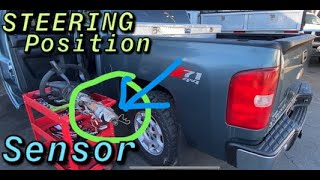
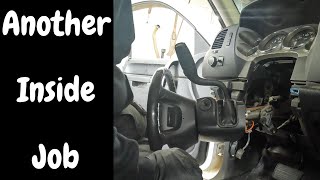
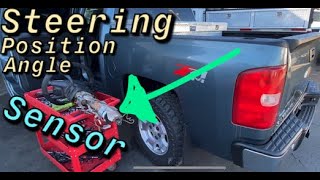
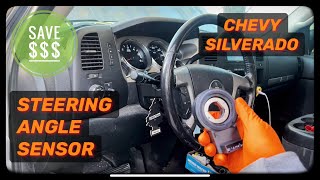
- Corroded or Loose Electrical Connector (Very Common) — The SAS connector loosens or develops fretting corrosion from moisture and vibration, disrupting the signal. GM notes this is a frequent issue on 2007-2014 trucks and SUVs, issuing TSB PI0639D to recommend cleaning and securing the connector before replacing the sensor. 🎬 Watch: Step-by-step steering angle sensor replacement for GM trucks.
- Needs Steering Angle Sensor (SAS) Recalibration (Common) — Wheel alignments, battery replacements, or suspension work erase the sensor's 'center' position. Without recalibration via a scan tool, the sensor reports 🎬 See how to perform a steering angle sensor recalibration. a steering angle that conflicts with the vehicle's direction of travel.
- Faulty Steering Angle Sensor (SAS) (Very Common) — This sensor reports the steering wheel's exact position. Internal wear, contamination of an optical disc (common in BMWs), or electronic failure causes it to send irrational data.
- Damaged Wiring Harness (Less Common) — CAN bus wires fray, short, or break from chassis rubbing or rodent damage. This severs communication between the SAS and the EBCM, causing a loss of signal even if the sensor is perfectly functional.
- Low Battery Voltage or Poor Ground (Less Common) — A weak battery or degraded ground connection starves electronic modules of the stable 12.4V+ required for communication, leading to unpredictable network errors.
- Altered Steering Geometry (Mods or Misalignment) (Less Common) — Installing lift kits, leveling kits, or mismatched tire sizes alters the vehicle's steering geometry. The EBCM flags the resulting SAS data as implausible, triggering the code. GM TSB #PIT4322P specifically addresses this on newer trucks.
- Faulty Electronic Brake Control Module (EBCM) (Rare) — If the SAS and wiring test perfectly, but live data shows the EBCM failing to receive or process the steering angle signal, the EBCM itself has failed.
- Misaligned Steering Components (Rare) — Replacing a steering rack or column without perfectly centering it physically prevents the SAS from reading the correct angle, even after electronic calibration attempts.
Symptoms
- Service Stability / Stabilitrak / ESC Light — The most common dashboard warning light, indicating the stability control system is completely disabled.
- Traction Control and/or ABS Light On — Because the stability system is offline, the Anti-lock Brake and Traction Control systems default to an inactive state.
- Stiff or Heavy Steering — Vehicles with electric power steering default to a heavy, manual-feeling failure mode when steering angle input is lost.
- Disabled Driver-Assist Features — Advanced driver-assistance systems (ADAS) like lane-keep assist and adaptive cruise control shut down because they rely on steering angle data.
- Turn Signals Don't Cancel — On vehicles where the SAS is integrated into the steering column switch cluster (like BMW), a sensor failure stops the turn signals from canceling automatically.
Diagnostic Flowchart
Tap your situation to follow the diagnostic path that matches what you're seeing on this code.
Common Fixes & Costs
- Clean and Secure SAS Connector — Parts: $5-$15, Labor: $75-$150, ~1.0 hr book time (DIY)
- Recalibrate Steering Angle Sensor — Parts: $0, Labor: $100-$200, ~1.0 hr book time (Professional)
- Replace Steering Angle Sensor
— Parts: $60-$400, Labor: $150-$450, ~2.0 hr book time
(Intermediate)
Chevrolet Silverado / GMC Sierra (2007-2013): OEM ACDelco 19418403 (Alt: Dorman 601-175)
Chevrolet Silverado / GMC Sierra (2014): OEM ACDelco 13590209 (Alt: Dorman 601-285)
Chevrolet Equinox (2010-2012): OEM ACDelco 25849366 (Alt: Standard Motor Products SWS98)
BMW 3-Series E90 (as SZL assembly): OEM BMW 61319123061 (Alt: Vemo V20-80-0015) - Wiring Harness Repair/Replacement — Parts: $20-$200, Labor: $200-$600, ~3.0 hr book time (Professional)
- Replace Electronic Power Steering Rack — Parts: $800-$2000, Labor: $500-$1000, ~5.0 hr book time (Professional)
Used vs. New Parts: Buying Guide
When a used part is worth it: For a standalone Steering Angle Sensor, a used part from a reputable recycler with a warranty is cost-effective for older vehicles. Avoid used parts if the failure is on a Ford where the sensor is integrated into the entire steering rack.
Donor-vehicle mileage cap: roughly under 100000 miles for the part to have meaningful remaining life.
Donor quality checklist:
- Verify the exact OEM part number matches; superseded numbers cause compatibility issues.
- Purchase from a seller providing a 30-90 day warranty and clear return policy.
- Check the donor vehicle's VIN for accident history; avoid parts from flood or major collision vehicles.
- For BMW SZL units, ensure the internal optical disc has been cleaned and tested.
Decision logic:
- If The part is a complete electronic steering rack (common on Ford) → Buy a new or professionally remanufactured unit with a long warranty due to the high labor cost of replacement.
- If The part is a standalone sensor and the vehicle is over 10 years old → A tested, warrantied used part is a reasonable choice to save money.
- If The cost of a new OEM or quality aftermarket sensor is less than $150 → Buy new for peace of mind and a longer warranty.
Warranty tradeoff: Used parts typically come with a 30-90 day functional warranty. New aftermarket parts offer 1-year to limited lifetime warranties. Labor for a failed used part is never covered.
Worst-case if a used part fails: $300-$600
What Happens If You Wait — Timeline
- Immediate: Code is set, and the 'Service Stability' / ABS / Traction Control lights illuminate. ESC, TCS, and related ADAS features are immediately disabled. (MPG impact: 0%% · Added cost: $0)
- 1-3 months: The vehicle automatically fails state safety inspections due to illuminated warning lights. Driving risk remains elevated in adverse weather. (MPG impact: 0%% · Added cost: $50-$200)
- 3-9 months: On vehicles with electric power steering, continued operation with a faulty SAS signal causes inconsistent steering feel, leading to uneven tire wear. (MPG impact: 0-1%% · Added cost: $50-$100)
- 9+ months: The long-term probability of a loss-of-control accident increases with every trip. The cost of such an incident is potentially thousands in repairs. (MPG impact: 0%% · Added cost: $1000+)
Cost of Not Fixing It
- Immediate: Electronic Stability Control (ESC) and Traction Control (TCS) are disabled, drastically increasing the risk of a spin or loss of control in an emergency maneuver. (Added cost: $0)
- 0-6 months: The vehicle automatically fails state safety inspections that check for ABS or stability control system warning lights. (Added cost: $50-$200)
- 6+ months: Continued driving without stability control increases long-term accident risk. Ignoring the fault on models with integrated electronic steering accelerates wear on other steering components. (Added cost: $1000+)
Diagnosis Steps
- Scan for All Codes from All Modules
Use an advanced OBD-II scanner to read codes from all modules (EBCM, PSCM, BCM). Look for C0710, U0126, or other communication codes. On GM vehicles, if you see U0710, immediately pivot to the diagnostic procedure for C0710 per TSB PIC5257C.
Tools: Advanced OBD-II Scanner (Beginner) - Inspect Wiring and Connectors
Visually inspect the wiring going to the Steering Angle Sensor. On GM trucks, check the connector for dark, smudgy fretting corrosion. Check underbody connectors for corrosion on vehicles like the Equinox.
Tools: Flashlight, Mirror, Magnifying Glass (Beginner) - Analyze Live Data from Steering Angle Sensor
Use the scanner's live data function to watch the 'Steering Wheel Angle' parameter. The degrees must change smoothly and return to 0° (± 2.5°) when the wheel is straight. Jumps, freezing, or a stuck value indicates a bad sensor or wiring issue.
Tools: Advanced OBD-II Scanner (Intermediate) - Perform a Steering Angle Sensor Recalibration
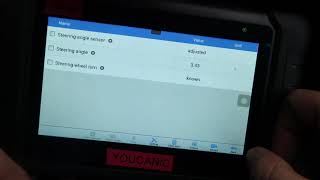
Initiate the SAS calibration procedure via a bi-directional scan tool. This fixes the code if it appeared after an alignment, suspension work, or battery replacement. Set the steering wheel perfectly straight before initiating.
Tools: Bi-directional OBD-II Scanner (Intermediate) - Check Battery and Grounds
Verify battery voltage exceeds 12.4V and terminals are clean. Test the alternator output. Clean main chassis and module ground connections. Low voltage is a primary source of communication faults.
Tools: Multimeter, Fuse Puller, Wire Brush (Beginner) - Pro Tip: Verify SAS Voltage and Ground at the Connector
Back-probe the SAS connector with the key on. Verify the 5V or 12V reference wire is within spec. Check the ground wire for less than 0.1V or <5 Ω resistance to chassis ground. If power and ground are good but the signal is erratic, the sensor has failed.
Tools: Multimeter, Wiring Diagram, Back-probe Kit (Advanced) - Pro Tip: Test CAN Bus Resistance
With the battery disconnected, measure resistance between pins 6 (CAN High) and 14 (CAN Low) on the OBD-II port. A reading of 60 Ω indicates intact network wiring. A reading of 120 Ω suggests a break in the circuit or a failed module.
Tools: Multimeter (Advanced) - Pro Tip: Analyze SAS Signal with an Oscilloscope
Connect an oscilloscope to the signal and ground wires. A good digital sensor produces a clean square wave pattern that changes frequency as you turn the wheel. A flat line or noisy signal confirms internal sensor failure.
Tools: Oscilloscope, Wiring Diagram (Advanced)
When This Code Triggers (Freeze-Frame Conditions)
- Vehicle Speed: 15-45 mph (During a turn or steering maneuver)
- Steering Angle Sensor Status: Implausible Data (The EBCM flags the sensor data as irrational)
- System Voltage: 13.0-14.5V (Normal operating voltage, ruling out low voltage as the primary cause)
- Time Since Engine Start: 2-15 minutes (Occurs shortly after starting and beginning a drive)
Related Codes
- C0710 — On many GM vehicles, the steering sensor mistakenly logs the network code U0710 when the EBCM should log chassis code C0710. Ignore U0710 and follow the diagnostic steps for C0710.
- U0126 — Indicates the SAS module is completely offline and not sending any data. U0710 means the module is online but sending garbage data. If U0126 is present, check SAS power and ground.
- U0073 — A generic code for 'Control Module Communication Bus A Off.' If present with U0710, it points to a wider network problem like a shorted CAN bus, rather than an isolated SAS failure.
- U0428 — Means 'Invalid Data Received From Steering Angle Sensor Module.' It directly confirms other modules receive data from the SAS, but flag it as corrupt, pointing to internal SAS failure.
Climate & Environmental Factors
- High Humidity / Rain: Increases moisture intrusion into electrical connectors. Condensation accelerates corrosion, causing shorts or high resistance in the SAS circuit.
- Road Salt (Winter Climates): Salt spray is highly corrosive and compromises under-dash connectors and grounds, directly causing the fretting corrosion noted in GM service bulletins.
- Extreme Cold: Cold temperatures stiffen lubricants within mechanical sensor components, leading to erratic readings. It also makes plastic connectors brittle and prone to cracking.
How to Talk to a Mechanic About This Code
Say this: "I have a 'Service Stabilitrak' light and my scanner shows code U0710. I know on this vehicle this often means a C0710 steering angle sensor fault. I'd like to schedule a diagnostic, but please check for TSBs related to the SAS connector and perform a calibration before recommending a sensor replacement."
This directs the technician to the cheapest fixes first (connector cleaning, calibration). It prevents them from immediately quoting an expensive sensor replacement without proper diagnosis.
Avoid saying:
- 'My stability light is on, can you fix it?'
- 'Just replace the steering sensor.'
- 'Do whatever you think is best.'
Questions to ask before authorizing the repair:
- Did you check the SAS connector for corrosion per the GM TSB?
- Did you try to recalibrate the existing sensor, and did it fail?
- Can you show me the live data from the steering angle sensor to confirm it's not working?
- If the sensor is replaced, does the quoted price include the mandatory post-install calibration?
- What is the warranty on the new sensor and the labor?
Where to Take It: Dealer vs Independent vs Chain
- Dealer:
A strong option if you suspect a complex issue or drive a Ford with a potential EPAS rack failure. They possess the exact diagnostic tools and TSBs.
Best for: Vehicles under warranty, Complex electronic issues on German makes (BMW, Mercedes), Ford vehicles where the EPAS steering rack requires replacement
Downsides: Highest labor rates, typically 1.5-2x an independent shop., Defaults to replacing entire assemblies rather than repairing components. (Typical cost: +50% vs. baseline) - Independent Shop:
Best overall fit. An experienced independent shop knows to check connectors and calibration first, saving you money.
Best for: Out-of-warranty vehicles, especially common GM trucks/SUVs., Known issues with TSBs., Customers wanting a direct relationship with the technician.
Downsides: Shop equipment varies; ensure they have a bi-directional scan tool capable of SAS calibration., Lacks experience with obscure models. (Typical cost: +0% vs. baseline) - Chain Shop:
AVOID for diagnosis. They are generally not equipped to properly diagnose and calibrate this type of electronic fault.
Best for: Tires, brakes, oil changes, and alignments.
Downsides: Technician skill varies dramatically., Lacks the advanced, bi-directional scan tools required for SAS calibration., High pressure to meet sales targets leads to misdiagnosis. (Typical cost: -10% vs. baseline)
When to Walk Away From the Repair
If the estimated repair cost exceeds 40-50% of the car's Kelley Blue Book (KBB) private-party value, seriously consider selling or trading in the vehicle.
- Car worth $15000, fix is $450: Fix it. A standard SAS replacement and calibration is well below the threshold and restores a critical safety feature.
- Car worth $8000, fix is $3500: Walk away. This scenario, likely a Ford requiring a full EPAS steering rack replacement, is disproportionate to the vehicle's value.
- Car worth $3000, fix is $1200: Borderline. The repair is 40% of the car's value. Get a second opinion to confirm no cheaper fix exists before proceeding.
What Scan Tool You Need for This Code
Minimum: A bi-directional scan tool capable of performing a 'Steering Angle Sensor (SAS) Calibration/Reset'.
A basic $20-$50 code reader only confirms the U0710 code exists. It CANNOT read required chassis codes, view live SAS data, or perform the mandatory SAS calibration.
Budget: N/A for this code (~$0) — Sub-$100 scanners and Bluetooth dongles lack the bi-directional SAS calibration function required for this repair.
Mid-range: Foxwell NT510 Elite / NT530 (~$180) — Provides full system access to read specific C0710 codes, view live steering angle data, and perform the SAS calibration service function.
Professional: Autel MaxiCOM MK808S / MK900BT (~$500-800) — Offers full bi-directional control for all vehicle systems. Features fast interfaces for SAS calibration and live data graphing.
Rent vs buy: You cannot rent the bi-directional scanner needed for this job. If this is a one-time fix, pay a shop $100-$200 for a professional diagnosis and calibration. Buy a mid-range scanner only if you perform advanced DIY repairs regularly.
How to Clear the Code After You Fix It
- Reconnect battery if disconnected for repair.
- Use a bi-directional scan tool to perform the 'Steering Angle Sensor Learn/Calibration' procedure.
- Use the scan tool to clear the U0710 and related C-codes from all modules.
- Perform a road test including several left and right turns to confirm warning lights remain off.
Drive cycle (~15 minutes): A specific emissions drive cycle is not required. Start the vehicle and turn the steering wheel lock-to-lock. Drive for 15 minutes, including multiple turns at speeds above 15 mph, to ensure the stability control system remains active.
Readiness monitors affected: None. This is a chassis/network code and does not affect emissions readiness monitors.
Watch out for:
- Clearing the code with a basic scanner fails; the warning light returns instantly because the underlying fault or lost calibration still exists.
- Forgetting to perform the mandatory Steering Angle Sensor calibration after replacing the sensor guarantees the repair will fail.
- Disconnecting the battery does not clear this fault code from the EBCM's memory.
Will This Fail Emissions / State Inspection?
No — by itself this code doesn't fail OBD inspection (but it can keep readiness monitors from setting, which causes a separate fail).
- California: U0710 does not cause a Smog Check failure. However, if directed to a 'Brake and Lamp' or 'Vehicle Safety Systems' inspection, an active stability control light results in an immediate failure.
- New York: The NYS inspection includes safety components. An illuminated ABS or stability control warning light on the dashboard is grounds for an automatic safety inspection failure.
- Texas: An illuminated ABS or stability control light does not cause an emissions test failure. However, law enforcement can ticket a vehicle for unsafe conditions.
Most Commonly Affected Vehicles
- Chevrolet Silverado / Tahoe / Suburban (2007-2014) — Extremely common issue due to fretting corrosion on the SAS connector (TSB PI0639D). The fix is cleaning and securing the connector, not replacing the sensor.
- GMC Sierra / Yukon (2007-2014) — Shares the same platform as Chevrolet trucks. Suffers from frequent SAS connector corrosion. Part number 19418403 supersedes older numbers.
- Chevrolet Equinox / Cruze / Malibu (2010-2017) — GM TSB PIC5257C notes these models incorrectly set U0710 instead of C0710. Diagnosis must follow the C0710 path.
- Cadillac SRX (2010-2016) — Covered under TSB PIC5257C. Prone to SAS failures and calibration issues, triggering the 'Service Stability' message.
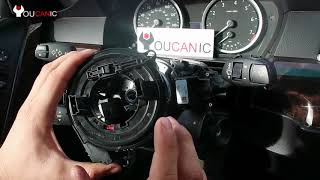
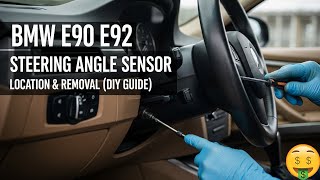
- BMW 3-Series (E90) / 5-Series (F10) (2006-2016) — The SAS is integrated into the Steering Column Switch Cluster (SZL). Failure is often due to a dirty optical disc, which can be cleaned as a low-cost fix.
- Ford F-150 / Explorer / Fusion (2011-2018) — The SAS is integrated into the Electronic Power Assisted Steering (EPAS) rack. Failure requires replacement of the entire steering rack. Water intrusion is a known cause.
- Subaru Outback / Forester / Impreza (2008-2018) — Highly sensitive to battery changes. The code appears after battery replacement if the SAS is not recalibrated.
- Dodge Charger / 300 / Grand Cherokee (2005-2010) — Sets codes like C121C for SAS circuit malfunction. The sensor is a common failure point, disabling the Electronic Stability Control system.
Manufacturer-Specific Notes
- General Motors (Chevrolet, GMC, Cadillac, Buick): GM TSB PIC5257C states the Steering Angle Sensor incorrectly sets code U0710. Technicians must disregard U0710 and diagnose code C0710 instead.
- General Motors (Trucks/SUVs): On 2007-2014 trucks, TSB PI0639D identifies fretting corrosion on the SAS connector as the primary cause. Clean the connector and apply dielectric grease before replacing the sensor.
- BMW: The SAS is part of the Steering Column Switch Cluster (SZL). Dirt on an internal optical disc causes failure. Disassembling and cleaning this disc avoids a costly SZL replacement.
- Ford: On models like the F-150, the SAS is integrated into the Electronic Power Assisted Steering (EPAS) rack. A simple sensor failure requires a complete, expensive steering rack replacement.
- Subaru: Subaru systems are highly sensitive to power loss. Disconnecting the battery triggers stability control codes, requiring an SAS recalibration procedure to restore normal function.
Real Owner Stories
2011 Chevy Silverado 2500 with C0710
The 'Service StabiliTrak' message appeared. A scan revealed code C0710, indicating a steering wheel position sensor plausibility failure.
What they tried:
- The owner analyzed live data and noticed the yaw rate signal was -115 degrees/second, which was abnormal.
- The code returned immediately after clearing.
Outcome: The owner replaced the steering angle sensor at the base of the steering column. The new part resolved the C0710 code and turned off the warning message.
Lesson: Even if live data seems plausible, a persistent C0710 code on a GM truck points to an internal failure of the sensor itself.
2017 Chevy Equinox with C0710-5A
The 'Service StabiliTrak' warning light illuminated shortly after a wheel alignment.
What they tried:
- The owner scanned the vehicle and found code C0710-5A (Steering Position Signal Not Plausible).
- Instead of replacing the sensor, they attempted a recalibration using a capable scan tool.
Outcome: The steering angle sensor recalibration procedure successfully cleared the code. The total cost was $0 in parts.
Lesson: If the code appears immediately after a wheel alignment, battery replacement, or suspension work, perform a steering angle sensor recalibration before replacing parts.
2010-2013 GMC Terrain with U0710/C0710
The owner experienced 'Service StabiliTrak' and 'Service Power Steering' messages, along with hard steering. Codes U0710 and C0710 were present.
What they tried:
- Initial diagnosis pointed towards a faulty steering angle sensor.
- Further research revealed GM TSB #PIT5427B, highlighting a specific wiring issue.
Outcome: The root cause was corrosion in the X411 wiring harness connector under the rear of the vehicle. Cleaning the terminals and applying dielectric grease resolved the communication issue.
Lesson: On first-generation Chevy Equinox and GMC Terrain models, always inspect the X411 underbody connector for corrosion before replacing the steering angle sensor.
How to Prevent This Code From Triggering
- Apply dielectric grease to key connectors (During any related service or every 3-5 years in harsh climates) — Applying dielectric grease to the seals of connectors creates a barrier against moisture and road salt, preventing the corrosion that causes signal failure.
- Ensure proper SAS recalibration after service (Every time a wheel alignment or suspension work is done) — Mandatory steering angle sensor recalibration prevents the system from flagging correct sensor data as implausible due to new steering geometry.
- Regularly inspect and clean chassis grounds (Every 30,000 miles or if electrical issues appear) — Electronic modules require a stable ground to communicate reliably. Cleaning frame grounds ensures the EBCM maintains a solid connection.
- Avoid piercing wires for testing (Whenever performing electrical diagnostics) — Puncturing wire insulation creates an entry point for moisture, leading to corrosion. Always use back-probes or test at the connector itself.
Frequently Asked Questions
What is the difference between code U0710 and C0710?
U-codes indicate network communication problems, while C-codes indicate chassis system problems. On many GM vehicles, the steering sensor mistakenly logs the network code U0710 when it should log the chassis code C0710. The root cause remains an implausible sensor signal, but you must follow the diagnostic tree for C0710.
Can I fix U0710 myself?
Basic checks like inspecting the battery, fuses, and visible wiring are DIY-friendly. However, replacing a Steering Angle Sensor requires removing the airbag and steering wheel. You also need a professional bi-directional scan tool to perform the mandatory recalibration after installation.
What happens if I ignore code U0710?
Your vehicle's stability and traction control systems remain disabled, drastically increasing the risk of losing control on slippery roads. The vehicle will also fail state safety inspections. Furthermore, advanced driver-assist features like lane-keeping assist will not function.
My mechanic replaced the steering sensor, but the light came back on. Why?
Four main culprits exist. The new sensor wasn't calibrated (most common), the electrical connector remains corroded, underlying wiring is damaged, or the steering rack is physically misaligned.
Can a wheel alignment cause the U0710 code?
Yes. An alignment changes the relationship between the steering wheel's position and the direction of the road wheels. If the technician fails to recalibrate the Steering Angle Sensor afterward, the sensor sends data contradicting the vehicle's travel direction, triggering the code.
Can a lift kit or bigger tires cause this code?
Yes. Modifying suspension height or tire diameter alters the vehicle's designed steering geometry. The stability control module interprets the new data from the wheel speed and steering angle sensors as implausible, disabling the system.
Why did my stability light turn on right after changing my car battery?
Modern vehicles are highly sensitive to power loss. When the battery is disconnected, the Steering Angle Sensor loses its stored calibration or 'zero point.' A simple recalibration with a scan tool restores the zero point and fixes the issue.
What does a symptom byte like C0710-5A mean?
The extra two characters are a 'symptom byte' providing specific failure details. For example, C0710-5A means 'Steering Position Signal Plausibility Failure,' while C0710-42 means 'Calibration Not Programmed.' This detail helps technicians pinpoint the exact cause faster.
The codes point to the Steering Angle Sensor, but my mechanic says the EBCM is bad. Is that possible?
Yes, but it is rare. The EBCM receives the SAS data, so if the sensor and wiring test perfectly but the EBCM shows no signal, the module itself has failed. Confirm this by checking live data at both the sensor and the EBCM before replacing parts.
Key Takeaways
- Despite being a network communication code, U0710 almost exclusively indicates a failure, wiring fault, or lost calibration of the Steering Angle Sensor (SAS).
- General Motors vehicles frequently log U0710 erroneously; technicians must ignore it and diagnose chassis code C0710 per GM TSB PIC5257C.
- Driving with U0710 disables Electronic Stability Control (ESC), increasing the risk of a single-vehicle crash during emergency maneuvers or on slippery roads.
- Repair costs range from $15 for cleaning a corroded connector on a GM truck to over $1,500 if a Ford requires a complete Electronic Power Steering rack replacement.
Helpful Videos


Shop the Parts Behind U0710
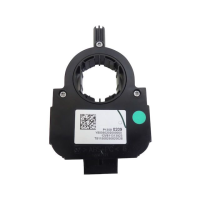
Below are the parts most often responsible for code U0710, ranked by how frequently each one is the actual culprit (per the diagnosis above). Tap any to see what we have for your vehicle.




The information in this article is provided for general reference and educational purposes only. Vehicle specifications, procedures, and part compatibility can vary by production date, trim level, and region. Always consult your vehicle's factory service manual and verify part numbers before purchasing or performing repairs. Safety-critical components such as airbags, seat belts, and braking systems should be installed by a qualified professional.
- 🧭 Diagnostic Flowchart
- 🎬 Helpful Videos
- 🛍️ Shop This Part
- What Does U0710 Mean?
- Can I Drive With U0710?
- Common Causes
- Symptoms
- Common Fixes & Costs
- Used vs. New Parts: Buying Guide
- What Happens If You Wait — Timeline
- Cost of Not Fixing It
- Diagnosis Steps
- When This Code Triggers (Freeze-Frame Conditions)
- Related Codes
- Climate & Environmental Factors
- How to Talk to a Mechanic About This Code
- Where to Take It: Dealer vs Independent vs Chain
- When to Walk Away From the Repair
- What Scan Tool You Need for This Code
- How to Clear the Code After You Fix It
- Will This Fail Emissions / State Inspection?
- Most Commonly Affected Vehicles
- Manufacturer-Specific Notes
- Real Owner Stories
- 2011 Chevy Silverado 2500 with C0710
- 2017 Chevy Equinox with C0710-5A
- 2010-2013 GMC Terrain with U0710/C0710
- How to Prevent This Code From Triggering
- Frequently Asked Questions
- What is the difference between code U0710 and C0710?
- Can I fix U0710 myself?
- What happens if I ignore code U0710?
- My mechanic replaced the steering sensor, but the light came back on. Why?
- Can a wheel alignment cause the U0710 code?
- Can a lift kit or bigger tires cause this code?
- Why did my stability light turn on right after changing my car battery?
- What does a symptom byte like C0710-5A mean?
- The codes point to the Steering Angle Sensor, but my mechanic says the EBCM is bad. Is that possible?
- Key Takeaways
- 🎟️ Get 5% Off