

U1000 on 2014-2018 BMW X5: What This Vague Communication Code Really Means
U1000 on a BMW X5 is a generic code from non-BMW scanners indicating a network communication failure. It does not point to a specific part. The most common underlying causes are a weak or old battery, water damage in wiring harnesses, or a failing control module. Diagnosis requires a BMW-specific scan tool like ISTA to find the true fault.
- U1000 is not a real BMW code; it's a generic code from a non-specific scanner. Do not replace any parts based on this code alone.
- The first step in diagnosis should always be to check the battery's health and ensure it is properly registered with the vehicle.
- The true cause must be found using BMW-specific diagnostic software (like ISTA) to identify the exact module or network bus that is failing.
- Check for signs of water ingress in the cabin, especially in the footwells and trunk, as this is a known cause of wiring corrosion and network faults.
- Repairing this issue is not DIY-friendly and requires a specialist with the right tools and knowledge of BMW's complex electrical systems.
What's Unique About the 2014-2018 BMW X5
The F15 X5, like other modern BMWs, uses multiple complex data networks (K-CAN, K-CAN2, PT-CAN, MOST, FlexRay) to link its many control modules. The U1000 code is almost always a sign that a generic scanner can't understand this proprietary system. Unlike other brands like Nissan or GM which have well-documented U1000 causes, on a BMW this code is a symptom of using the wrong tool. The actual problem is often a more specific BMW fault related to a known weakness, such as water ingress from clogged sunroof drains corroding K-CAN wiring under the carpets, or a failing head unit (NBT) or instrument cluster (KOMBI) bringing down a network segment.
Symptoms You May Notice
- Check Engine Light or other warning lights (ABS, DSC, parking brake, Restraint System Malfunction) illuminating on the dash.
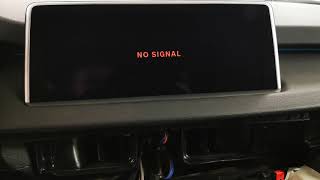
- Intermittent or total failure of the iDrive screen, often showing a 'No Signal' message before rebooting or going black.
- Loss of function in non-essential systems like radio, navigation, or power windows.
- Instrument cluster going black or resetting intermittently.
- In some cases, rough idling or hesitation if the powertrain network (PT-CAN) is affected.
- Multiple, seemingly unrelated fault codes stored along with U1000.
- iDrive system stuck in a continuous reboot loop (showing the BMW logo repeatedly).
- Replacing a module based solely on the U1000 code without further diagnosis. The U1000 code does not identify which module is at fault, only that a fault exists on the network.
- Replacing the iDrive screen when a 'No Signal' message appears. The problem is almost always the head unit itself, not the display panel.
Most Likely Causes
- Weak or Failing Battery 🔴 High Probability → Shop Vehicle Battery Modern BMWs have high electrical demands and complex battery management systems (IBS). A battery that is old, improperly coded after replacement, or has low voltage can cause modules to drop off the network during startup, triggering communication faults.
How to confirm: Test the battery voltage; it should be above 12.4V at rest. Use a BMW-specific tool to check the battery's state of health and ensure it is registered and coded correctly to the vehicle. An unregistered battery is a very common cause of electrical gremlins.
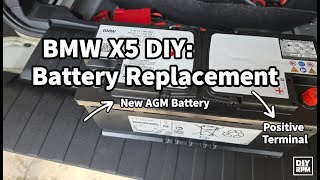
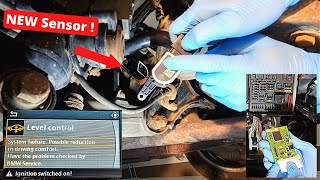
Typical fix: Replace the battery with a high-quality AGM of the correct spec and register/code the new battery to the vehicle 🎬 Watch: How to replace and register your battery using a diagnostic tool like ISTA or a capable aftermarket tool. This is a critical step.
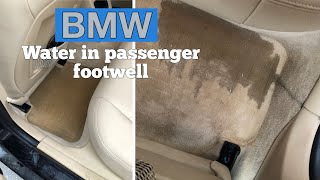
Est. part cost: $250-$450 - Water Intrusion & Wiring Corrosion 🟡 Medium Probability Clogged front sunroof drains are a notorious F15 issue. They cause water to leak down the A-pillar and saturate the passenger footwell, corroding the K-CAN2 wiring harness and junction blocks located there. This single point of failure can take down numerous modules.
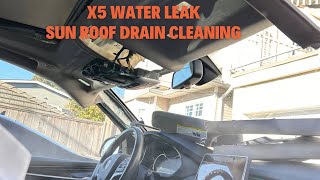
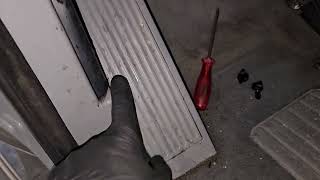
How to confirm: Check for dampness under the carpets in the front passenger footwell. Pull back the carpet and inspect the wiring looms and connectors for green or white corrosion. Check sunroof drains by slowly pouring water into the sunroof cassette and ensuring it exits behind the front wheels, not into the cabin. 🎬 See: Tips for cleaning your sunroof drains
Typical fix: Dry out the affected area, locate the corroded section of the wiring, and repair or replace the damaged wires and connectors. This is labor-intensive. The sunroof drains must be cleared or modified to prevent recurrence.
Est. part cost: $20-$100 for wiring supplies - Failing Head Unit (NBT/HU-H) 🟡 Medium Probability The NBT head unit is a central gateway for the MOST (media) and other CAN buses. The internal mechanical hard drive (HDD) is a common failure point due to heat and vibration, causing the unit to get stuck in a reboot loop or become unresponsive. This can disrupt network communication and cause a 'No Signal' display.
How to confirm: Use a BMW-specific scan tool to see if the head unit (HU_NBT or HU_H) is unresponsive. If the iDrive screen is stuck rebooting or shows 'No Signal' permanently, the head unit is a prime suspect. TSB SI B65 09 15 details diagnostic steps for a resetting head unit.
Typical fix: Replace the faulty head unit. A used unit is a cost-effective option but MUST be programmed/coded to the vehicle's VIN. Some specialists can repair the unit by replacing the failing HDD with an SSD and cloning the original data.
Est. part cost: $500-$2500+
Rare But Worth Checking
- Aftermarket Electronics: Poorly installed aftermarket devices (remote starters, alarms, audio equipment) tapped into the CAN bus are a common source of network interference and communication faults.
- Faulty Alternator: → Shop Alternator A failing alternator can produce excessive AC ripple or unstable voltage, disrupting sensitive electronic modules and causing communication errors.
- Failing Instrument Cluster (KOMBI): → Shop Instrument Cluster Less common than head unit failure, but the KOMBI is also a gateway module. Its failure can cause a black dash and take down segments of the CAN bus.
Diagnosis Steps
- Ignore the U1000 code itself. Treat it as a generic 'Check Engine' light for the car's network.
- Check and verify battery health first. Charge the battery and perform a load test. Ensure voltage is stable and above 12.4V. A weak battery is the #1 cause of spurious communication faults.
- If the battery has been replaced, verify it was registered and coded to the vehicle. An unregistered battery can cause persistent electrical faults.
- Gain access to a BMW-specific diagnostic tool (ISTA, Autel with BMW software, etc.). A generic OBD-II reader is not sufficient. 🎬 Watch: How to diagnose BMW codes using ISTA+
- Perform a full vehicle scan and identify which specific modules are not communicating or are reporting faults. This is the key diagnostic step. Note which modules are on which bus (e.g., K-CAN2, PT-CAN).
- If multiple modules on the same bus are offline, suspect a wiring issue. For K-CAN2 faults, immediately inspect the passenger footwell for signs of water damage from clogged sunroof drains.
- If a single major module like the Head Unit (HU-H) or Central Gateway (ZGW) is offline, it is the likely culprit. Disconnecting a faulty module can sometimes restore communication to the rest of the network.
- If wiring is intact, a technician may use an oscilloscope to check for a valid CAN signal (two distinct, mirrored square waves) at the module's connector.
- If a specific module is confirmed to be the source of the network disruption, it will need to be replaced and programmed.
Parts You'll Likely Need
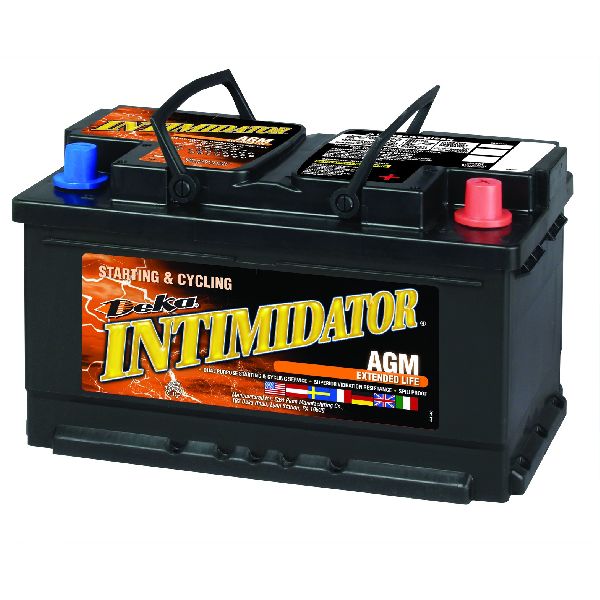
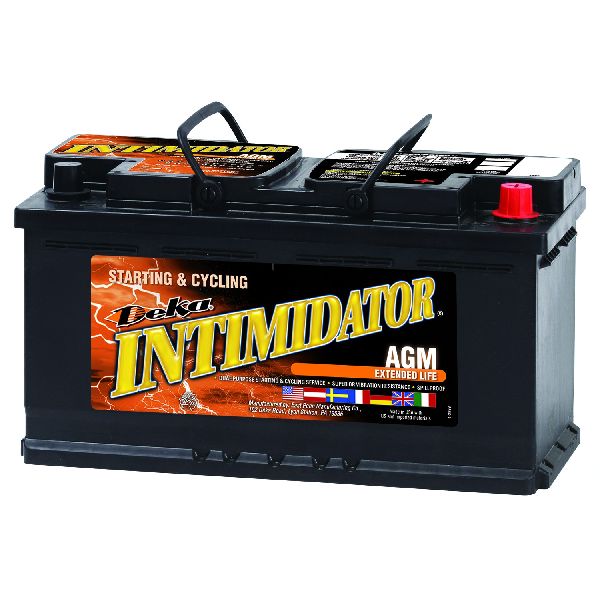
- AGM Battery
(OEM #e.g., 61-21-2-357-113)— A weak or improperly coded battery is the most frequent and simplest cause of network communication faults in modern BMWs.
Trusted brands: Varta, Bosch, Exide, East Penn (Deka)
OEM price range: $350-$500
Aftermarket price range: $250-$400 - Head Unit (NBT)
(OEM #Varies by options, e.g., 65-12-9-387-564)— The head unit is a central hub for multiple vehicle networks. Its internal HDD failure is a known issue and can cause widespread communication faults, often resulting in a 'No Signal' display or reboot loop.
OEM price range: $1500-$2500+
Aftermarket price range: $600-$1200 (remanufactured/used) - Instrument Cluster (KOMBI)
(OEM #Varies by options)— The instrument cluster acts as a gateway module for several CAN buses. A failure here can cause a black dash and numerous communication codes.
OEM price range: $1200-$2000
Aftermarket price range: $500-$900 (remanufactured)
Related Codes That Often Appear With This One
- Multiple U0xxx codes (e.g., U0100, U0121, U0140) — These are standardized codes for 'Lost Communication With...' specific modules (ECM, ABS, Body Control Module). If a generic scanner can identify the specific module, it may show these alongside or instead of U1000.
- BMW-specific codes (e.g., E1C440, 801C20) — A proper BMW scan will reveal specific faults like 'E1C440 - HU-H reset' or '801C20 - ZGW: undervoltage detected' which point directly to the problem, unlike the generic U1000.
Technical Service Bulletins (TSBs) & Recalls
- SI B54 01 15: Details water leaks from the headliner due to improperly installed, kinked, or torn sunroof drain tubes.
- SI B54 07 19: Addresses a gurgling noise from front sunroof drains caused by hoses moving out of position, which can be a precursor to clogs and leaks.
- SI B65 09 15: Describes troubleshooting steps for an NBT head unit that resets intermittently or permanently, a potential root cause for communication faults.
Platform-Specific Known Issues
- Water damage to the K-CAN wiring harness located in the passenger footwell is a known issue on the F15 platform, often leading to network failures. The primary cause is clogged front sunroof drains.
- A 'No Signal' message on the iDrive screen is a very common symptom of a failing NBT head unit, which contains a mechanical hard drive prone to failure.
Mechanic-Grade Diagnostic Values
- CAN Bus Resistance — expected: Approximately 60 Ohms across CAN High and CAN Low pins (e.g., pins 6 and 14 at OBD-II port) with the battery disconnected. A reading of 120 Ohms indicates a single terminating resistor is active or there's a break in the circuit. A reading near 0 Ohms indicates a short circuit between the CAN lines.. Failure: Readings significantly different from 60 Ohms, such as 120 Ohms or near 0 Ohms.
- CAN Bus Voltage (with ignition on) — expected: CAN High (e.g., PT-CAN Red wire) should average ~2.6V. CAN Low (e.g., PT-CAN Blue/Red wire) should average ~2.4V. The voltages are mirrored and switch rapidly.. Failure: Voltages that are stuck high or low, or shorted to ground (0V) or power (~12V).
- Oscilloscope Waveform (with ignition on) — expected: A clean, mirror-image square wave pattern. CAN High switches from ~2.5V up to ~3.5V, while CAN Low simultaneously switches from ~2.5V down to ~1.5V.. Failure: A flat line, a noisy signal, or a waveform that doesn't switch between the correct voltage levels indicates a bus problem (short, open, or module interference).
Hidden / Shadow Codes Worth Checking
- ZGM: no FlexRay initialization: This fault, visible in ISTA, indicates the Central Gateway Module (ZGM) failed to initialize the FlexRay bus, a high-speed network used for chassis and powertrain systems. This is a specific, actionable fault, unlike the generic U1000. (see via BMW ISTA diagnostic software)
- Service Fault Code: 'No communication possible with control unit': This is not a standard DTC but a status entry generated by ISTA when it attempts to identify all modules and one or more do not respond. The ISTA control unit tree will visually show which modules are offline (often in red). (see via BMW ISTA diagnostic software, during a full vehicle test)
Scan Tool Commands That Help
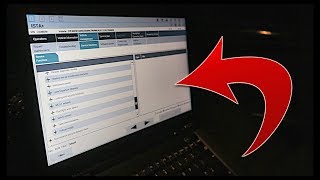
- ISTA (ISTA-D/ISTA+): Vehicle Test / Display Fault Memory — This is the primary function to start any diagnosis. It generates a 'control unit tree' that visually displays all modules on the vehicle's networks, color-coding them based on status (green for OK, yellow for fault, red for no communication). This immediately shows which module or bus is the source of the problem.
- ISTA (ISTA-D/ISTA+): Guided Troubleshooting / Test Plan — After identifying a fault, ISTA generates a specific test plan. For a communication issue, this plan will guide the technician through checking relevant fuses, wiring, connectors, and voltages, providing specific instructions and expected values.
- E-Sys (with ENET Cable): VO Coding (Vehicle Order Coding) — When replacing a major module like a Head Unit (NBT) or Instrument Cluster (KOMBI), the new part must be coded to the car's specific Vehicle Order (factory options). E-Sys is used to write the car's VIN and FA (Fahrzeugauftrag) to the new module so it integrates correctly with the rest of the vehicle.
Wiring & Ground Locations
- Engine Ground Strap — One primary ground strap connects the engine block to the chassis. On the F15, a key ground cable is located at the transfer case.. A corroded or broken main engine ground strap can cause a voltage differential between modules, leading to a cascade of communication errors, warning lights, and even no-start conditions. The electrical system becomes unstable, causing modules to drop off the network.
- K-CAN2 Splice / Junction — In the wiring loom located in the front passenger footwell, under the carpet and sound deadening.. This area is highly susceptible to water damage from clogged sunroof drains. Corrosion at the K-CAN2 splices here is a very common cause for communication failure with multiple comfort/infotainment modules (e.g., Head Unit, iDrive Controller, etc.) that share this bus.
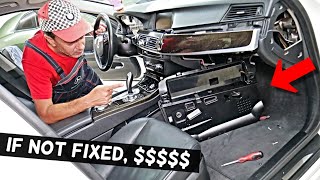
- ZGW (Zentrales Gateway) — The Central Gateway Module is typically located behind the dashboard, often near the OBD-II port area.. The ZGW is the master hub connecting all the different CAN buses (PT-CAN, K-CAN, MOST, FlexRay). A failure of the ZGW itself or its connections will cause a total communication breakdown and a flood of U-codes.
Real Owner Repair Stories
- Bimmerpost user 'MPizza' (2014 BMW X5 50i (F15)) — Multiple warning lights (transmission error, drivetrain malfunction, parking brake), no-start condition with clicking sounds, even after battery replacement. Car would only start when jump-starting from the engine block directly to a chassis ground.
❌ Tried (didn't work) Replacing the battery and registering it., Checking for parasitic drains from common culprits like water pump or door handles.
✅ What actually fixed it Temporarily fixed by adding a new ground strap from the oil filter housing to the chassis. The permanent fix was to replace the original, corroded factory engine ground strap. The corrosion, likely from road salt, created high resistance and prevented the engine from being properly grounded to the chassis, causing widespread electrical chaos.
Model Year Variations Within This Range
- 2014-2016: These model years were primarily equipped with the NBT (Next Big Thing) iDrive system. This system uses a mechanical Hard Disk Drive (HDD) which is a common failure point leading to rebooting and communication issues.
- 2017-2018: BMW transitioned to the NBT Evo (Evolution) system, often with iDrive 5.0 or 6.0. These units are generally more reliable and feature a more modern interface, touchscreen capability, and the option for Apple CarPlay. While still a complex module, they do not suffer from the same widespread HDD failure rate as the earlier NBT units.
Diagnostic Flowchart
Other Known Issues on This Vehicle
Issues unrelated to this code that are worth knowing about as an owner of this generation:
- N55 Engine Oil Filter Housing Gasket (OFHG) Leak 🔴 High — Very common, often occurs between 60,000 and 100,000 miles. If left unchecked, leaking oil can destroy the serpentine belt, which can then be ingested into the engine through the main crank seal, causing catastrophic engine failure.
- xDrive Transfer Case (VTG) Failure 🔴 High → Shop Transfer Case Motor — Common, especially on higher mileage vehicles or those with mismatched tire tread depths. Symptoms include shuddering/juddering during acceleration or low-speed turns. Often, a fluid change and recalibration with ISTA can resolve or delay the issue.
- N20 Engine Timing Chain Guide Failure 🔴 High — Affects the 4-cylinder N20 engine (e.g., xDrive40e). Plastic timing chain guides can break, leading to a loose chain and potential engine failure. An extended warranty program was issued by BMW for this issue on earlier models, but may not cover all F15s. (Ref: BMW Extended Warranty (not a formal recall))
- Electric Water Pump Failure 🔴 High — Common across many BMW engines of this era, including the N55. The electric water pump can fail without warning, typically between 60,000 and 100,000 miles, leading to rapid engine overheating.
- Rear Air Spring Leaks 🟠 Medium — For vehicles equipped with rear air suspension, the rubber air springs can dry rot and develop slow leaks over time, causing the rear of the vehicle to sag after being parked. Ignoring the issue can overwork and burn out the air compressor.
Used vs. New Parts: Buying Guide for This Vehicle
When a used part is the smart pick: For major electronic modules like the NBT Head Unit or Instrument Cluster (KOMBI), a used part from a reputable salvage yard is a very common and cost-effective repair strategy. Given the high cost of new OEM units, a used part can save thousands of dollars.
Donor-vehicle mileage cap: roughly under 80000 miles for the part to have meaningful remaining life.
What to inspect on the donor part:
- Verify the part number matches exactly or is a known compatible replacement.
- For head units, try to source one from a newer model year (e.g., a 2016 unit for a 2014 car) to get a potentially revised and more reliable part.
- Ensure the seller guarantees the part is functional and check their return policy.
- Visually inspect connectors for any signs of corrosion, bent pins, or physical damage.
OEM-only on this vehicle (don't cheap out):
- Central Gateway Module (ZGW)
- Body Domain Controller (BDC/FEM)
Aftermarket brands forum-validated for this vehicle:
- For NBT Head Unit repair, upgrading the internal mechanical HDD to a Solid State Drive (SSD) is a popular and reliable fix. This is a service offered by many independent specialists.
Brands owners have reported issues with on this vehicle:
- Be cautious of pre-coded used head units from unknown online sellers. Often, proper integration requires vehicle-specific coding with tools like E-Sys, and a poorly coded unit can cause more issues.
Real Owner Stories
Aggregated from forums and TSBs cited above. Mileages and costs reflect what owners reported in those sources.
2017 BMW X5 (F15)
Symptoms: Restraint system malfunction warning lights appeared with specific codes for short to B+ and high resistance.
What fixed it: The issue was traced to a known sunroof drain leak that caused water damage to the electrical system.
Source hint: Reddit r/BmwTech thread titled '2017 bmw x5 f15 restraint system malfunctions'
2014-2018 BMW X5
Symptoms: The iDrive screen displayed a persistent 'No Signal' message; the owner checked fuses and power but the screen remained unresponsive.
What fixed it: Replacement of the NBT head unit, as the internal mechanical hard drive had failed.
Source hint: BIMMERPOST F15/F16 Forum thread regarding persistent 'No Signal' message
2014-2018 BMW X5
Symptoms: Water puddle found on the passenger side floorboard.
What fixed it: Performed a 'sunroof drain hack' to clear the clogged drains and prevent further water intrusion into the passenger footwell wiring.
Source hint: BIMMERPOST F15/F16 Forum discussion on a sunroof drain hack
Documented NHTSA Reports
Cross-Manufacturer Reference: Nissan/Infiniti
Symptoms: Owners of other vehicles have reported that a U1000 code can be triggered by a "systemic Electrical Network Jam" from obsolete or unconfigured telecommunications hardware, as noted in NHTSA ODI #11727548. In other instances, such as NHTSA ODI #11653700, owners replaced the battery only to find the communication circuit problem persisted, requiring a jump start to function.
Cross-Manufacturer Reference: Nissan/GM
Symptoms: NHTSA ODI #10681194 describes U1000 as a "ground harness problem" where cleaning battery terminals failed to resolve the issue. Additionally, NHTSA ODI #10970695 highlights cases where an instrument cluster failed to communicate despite power and ground being present, leading to a CAN system diagnosis failure. In some older GM platforms, NHTSA ODI #10171770 reports that U1000 appeared alongside stalling and a loss of ignition input.
Related OBD-II Codes
Frequently Asked Questions
My iDrive screen is showing 'No Signal' and rebooting; does TSB SI B65 09 15 apply to my 2014-2018 X5?
I have a 'Restraint System Malfunction' and U1000 on my F15 X5; could this be related to my sunroof?
Can a gurgling noise from my sunroof area lead to a U1000 communication code?
Do I need to do anything special when replacing the battery to clear U1000 codes?
Is there a TSB for water leaking from the headliner that might affect my X5's electronics?
Can I use a standard OBD-II scanner to diagnose U1000 on my 2015 BMW X5?
Helpful Videos



We Have This Part in Stock



The information in this article is provided for general reference and educational purposes only. Vehicle specifications, procedures, and part compatibility can vary by production date, trim level, and region. Always consult your vehicle's factory service manual and verify part numbers before purchasing or performing repairs. Safety-critical components such as airbags, seat belts, and braking systems should be installed by a qualified professional.
- BMW X5:
- 🧭 Diagnostic Flowchart
- 🎬 Helpful Videos
- 🛍️ Shop This Part
- What's Unique About the 2014-2018 BMW X5
- Symptoms You May Notice
- Most Likely Causes
- Rare But Worth Checking
- Diagnosis Steps
- Parts You'll Likely Need
- Related Codes That Often Appear With This One
- Technical Service Bulletins (TSBs) & Recalls
- Platform-Specific Known Issues
- Mechanic-Grade Diagnostic Values
- Hidden / Shadow Codes Worth Checking
- Scan Tool Commands That Help
- Wiring & Ground Locations
- Real Owner Repair Stories
- Model Year Variations Within This Range
- Other Known Issues on This Vehicle
- Used vs. New Parts: Buying Guide for This Vehicle
- Real Owner Stories
- 2017 BMW X5 (F15)
- 2014-2018 BMW X5
- 2014-2018 BMW X5
- Documented NHTSA Reports
- Cross-Manufacturer Reference: Nissan/Infiniti
- Cross-Manufacturer Reference: Nissan/GM
- Related OBD-II Codes
- Frequently Asked Questions
- 🎟️ Get 5% Off