

U1000 on 2005-2010 Chevrolet Cobalt: Network Communication Error Causes and Fixes
Code U1000 on a 2005-2010 Chevy Cobalt almost always points to a network communication failure caused by corroded grounds, bad wiring, or a faulty module. The most common fix is finding and repairing a corroded ground wire, especially under the fuse box or on the transmission, which is a low-cost but potentially time-consuming repair.
- U1000 on your Cobalt is a serious electrical fault, not a simple sensor issue.
- Before buying any expensive parts, meticulously inspect, clean, and tighten all ground connections, especially under the hood and on the transmission.
- Check for corrosion under the fuse box; this is a known weak point on the Cobalt platform.
- If you are not comfortable tracing wiring diagrams and testing electrical circuits, this code is best left to a professional.
- A weak battery can cause these codes, so start with the simplest solution: ensure your battery and its connections are in perfect condition.
What's Unique About the 2005-2010 Chevrolet Cobalt
The Cobalt from this era is known for electrical issues, often stemming from its wiring and grounding points. Unlike a simple sensor code, U1000 is a network-wide flag that something is disrupting communication. On this specific GM Delta platform, the problem is frequently traced back to corrosion at key grounding points under the hood (specifically grounds G105/G106 under the fuse box) or a failure within the underhood fuse box (UBEC) itself, rather than a more expensive module failure. This makes checking grounds and wiring the absolute first step before considering module replacement.
Symptoms You May Notice
- No crank / no start condition.
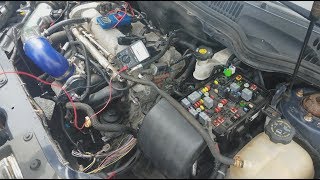
- Inability to communicate with the vehicle using a scan tool. 🎬 Watch: Where to find the OBD2 scanner port and fuse box
- Multiple warning lights illuminated, such as 'Power Steering', 'Low Traction', or the security light.
- Instrument cluster gauges (speedometer, fuel gauge) not working or behaving erratically.
- Harsh or erratic automatic transmission shifting.
- Key fob stops working and security light may be on.
- DIC (Driver Information Center) displays error messages like 'SERVICE TRACTION' or 'POWER STEERING'.
- Engine may stall while driving.
- Replacing the starter when a no-crank condition is caused by a bad ground or corroded UBEC preventing the starter relay from activating. 🎬 Watch: How to fix a Cobalt no crank no start condition
- Replacing individual sensors when the root cause is a network failure preventing the ECM from reading any sensors.
- Replacing the battery without first checking for corroded ground wires that are preventing a good connection.
- Replacing the BCM or ECM when the true fault is a simple corroded ground wire under the fuse box.
Most Likely Causes
- Corroded or Broken Ground Wires 🔴 High Probability Ground wires, particularly the ground pack under the under-hood fuse box (UBEC) and the main ground on the transmission case, are exposed to moisture and road salt, leading to corrosion and poor connections. These are well-documented failure points for U1000 on the Delta platform.
How to confirm: Visually inspect the main ground strap on the transmission and the smaller ground wires (often a black wire bolted to the frame rail) under the fuse box. Look for green/white corrosion or broken wire strands. Use a multimeter to check for high resistance (more than a few ohms) between the ground point and the battery negative terminal.
Typical fix: Remove the ground connection, clean the wire terminal and the chassis mounting point to bare metal with a wire brush or sandpaper, apply dielectric grease to prevent future corrosion, and re-secure it tightly. If the wire or terminal is badly corroded, it must be replaced.
Est. part cost: $5-$20 - Corroded Under-Hood Fuse Box (UBEC) 🟡 Medium Probability The fuse box is susceptible to moisture intrusion from below, which can corrode internal connections, the main connector plugs underneath, and the terminals for relays and fuses, particularly the crank and run/crank relays.
How to confirm: Disconnect the battery. Unbolt and lift the fuse box to inspect the large wiring connectors and terminals on the underside for green or white corrosion. Check the pins of critical relays (like CRNK, RUN/CRNK) and their sockets in the fuse box for corrosion.
Typical fix: In minor cases, cleaning the terminals with a specialized brush and contact cleaner may work. Often, the corrosion is internal or has damaged the connectors, and the entire fuse box assembly needs to be replaced. 🎬 See this walkthrough on how to remove the fuse box
Est. part cost: $100-$400 - Faulty Control Module (BCM, ECM, or TCM) 🟡 Medium Probability
How to confirm: This is difficult without a professional scan tool. A common diagnostic technique is to disconnect modules one by one. If communication is restored after unplugging a specific module (e.g., the ECM), that module is likely the cause of the failure by shorting the data line. The BCM is a common failure point as it acts as a central gateway.
Typical fix: Replace the faulty module. Note that replacement modules (especially the ECM and BCM) must be programmed to your vehicle's VIN to function correctly. This requires specialized tools like a GM Tech2 or MDI.
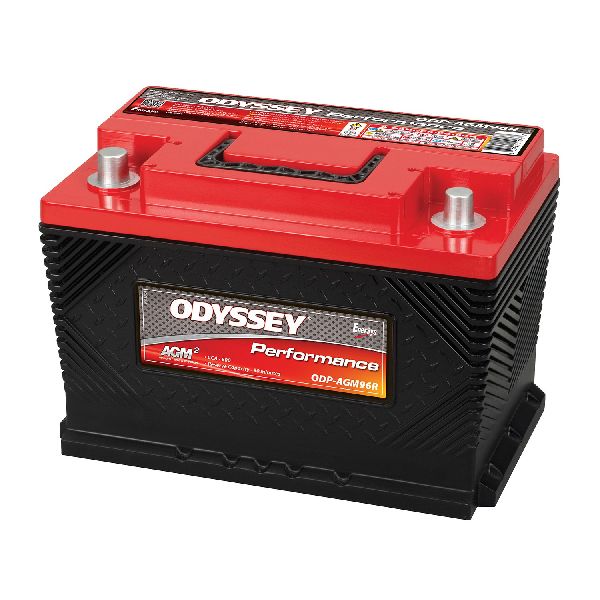
Est. part cost: $150-$500 - Weak Battery or Corroded Terminals ⚪ Low Probability → Shop Vehicle Battery
How to confirm: Test the battery voltage with a multimeter; it should be above 12.4V with the engine off. A low voltage can cause modules to drop off the network during startup. Inspect the battery terminals for any white or green corrosive buildup.
Typical fix: Clean the battery terminals and cable ends with a wire brush and a baking soda solution. If the battery is weak or fails a load test, replace it.
Est. part cost: $10-$200
Rare But Worth Checking
- Damaged Wiring Harness: Physical damage to the wiring harness from rubbing against the chassis, heat from the exhaust, or rodents can cause a short or open in the single Class 2 data line (typically a dark green wire). This is hard to find and usually requires a visual trace of the entire harness. A manufacturer service bulletin for another GM model, TSB Bulletin #GCUS-3-423, suggests that a U1000 code during a crank/no-start event may require a revision to the engine harness.
- Aftermarket Electronics: Improperly installed aftermarket stereos, remote starters, or alarms can interfere with or damage the Class 2 data network, causing communication failures. A common mistake is tapping into the data wire for power or signal.
Diagnosis Steps
- Check Battery: Ensure the battery has a full charge (12.4V+) and that the terminals are clean and tight. Low voltage can cause random communication faults.
- Scan for Other Codes: Use a scan tool to check for other 'U' codes. A cluster of codes pointing to a specific module (e.g., TCM) can help narrow the search. Note which modules are and are not communicating.
- Inspect Main Grounds: Visually inspect and clean the main battery-to-chassis ground and the engine/transmission ground strap. On the Cobalt, this strap is often on the top of the transmission case.
- Inspect Under-Hood Fuse Box (UBEC): Disconnect the battery. Remove the fuse box and inspect the large connectors underneath for any signs of green or white corrosion or moisture damage. Pay close attention to the crank relay socket and the ground splice packs (G105/G106) often located in the harness directly below the UBEC.
- Isolate Modules (Advanced): If the scan tool cannot communicate, try disconnecting non-essential modules one at a time (e.g., radio, OnStar if equipped) to see if communication is restored. If it is, the last module disconnected is likely faulty and shorting the data bus.
- Isolate Primary Modules (Advanced): If the problem persists, disconnect the primary modules (TCM, ECM, BCM) one by one. If unplugging the ECM restores communication with the BCM, the ECM is the likely culprit. This is an advanced step and may require knowledge of module locations (BCM is behind the passenger side of the center console, TCM is on the transmission, ECM is near the driver's side strut tower).
- Seek Professional Help: If the cause is not obvious after checking grounds and visible wiring, a professional with a wiring diagram and diagnostic tools like an oscilloscope may be needed to trace the fault on the Class 2 data line. Note that TSB Bulletin #PIC3557 advises that a U1000 code may not always lead directly to a final repair and may sometimes need to be disregarded if it is not current.
Parts You'll Likely Need
- Under-Hood Fuse Block / UBEC
(OEM #15947841, 19116537, 25825002 (Part numbers vary by year and options, verify with VIN))— Internal corrosion can disrupt power and data signals to multiple modules, causing a U1000 code.
Trusted brands: ACDelco, Dorman
OEM price range: $250-$400
Aftermarket price range: $150-$300 - Body Control Module (BCM)
(OEM #15906912, 25906892 (Part numbers vary by year, verify with VIN))— The BCM acts as a central hub for communication. An internal failure can bring down the entire network. Requires programming upon replacement.
Trusted brands: ACDelco (GM Genuine)
OEM price range: $200-$350
Aftermarket price range: $150-$250 - Battery Terminal Ends / Ground Straps — Often the simplest and most common fix. Corroded terminals or ground straps are a primary cause of communication faults on this vehicle.
Trusted brands: Standard Motor Products, Deka
OEM price range: $20-$50
Aftermarket price range: $5-$25
Related Codes That Often Appear With This One
- U0100 — Lost Communication With ECM/PCM. Manufacturer bulletin TSB Bulletin #PIT5369 notes that U0100 and U1000 can be found together in multiple high-speed modules.
- U0101 — Lost Communication with TCM
- U0140 — Lost Communication With Body Control Module
Platform-Specific Known Issues
- A well-documented issue is the corrosion of the ground wire for the crank relay, located in the harness directly under the fuse box, leading to a no-crank/no-start condition that sets a U1000 code.
- Manufacturer bulletin TSB Bulletin #PIT5369A describes a crank/no-start issue occurring after sitting overnight below freezing, where a technician may find code U1000 and need to unsecure the engine harness from its retainers above the fuel rail.
Mechanic-Grade Diagnostic Values
- Class 2 (J1850 VPW) Data Line Voltage — expected: The bus toggles between 0V (inactive) and a nominal 7V (active).. Failure: A line stuck at 0V, a constant high voltage, or no voltage indicates a short to ground, short to power, or an open circuit, respectively. A scope is ideal for seeing the waveform.
- Class 2 (J1850 VPW) Data Line Resistance — expected: There is no standard resistance test like the 60Ω test for CAN bus. Testing is primarily done via voltage and signal analysis.. Failure: N/A
Scan Tool Commands That Help
- GM Tech2 / High-End Aftermarket (e.g., Autel): Module Poll / Network Health Test — This is a primary step to see which modules are online and which are not responding. It helps narrow down if the fault is with a single module or a widespread network issue.
- GM Tech2 / High-End Aftermarket (e.g., Autel): BCM Setup / SDM Setup — After replacing the Body Control Module (BCM), the new module must be configured to the vehicle. This includes setting up the VIN and synchronizing it with other modules like the Sensing and Diagnostic Module (SDM) for airbags.
- GM Tech2 / High-End Aftermarket (e.g., Autel): Radio Setup — If the BCM is replaced, the radio will be locked. This function is used to unlock the radio by coding it to the new BCM.
- GM Tech2 / High-End Aftermarket (e.g., Autel): 30-Minute Relearn Procedure (Theft Deterrent) — After replacing the BCM or ECM, the vehicle's anti-theft system must relearn the key transponder. This procedure synchronizes the components.
Wiring & Ground Locations
- Class 2 Serial Data Wire — Pin 2 of the Data Link Connector (DLC) under the driver's side dashboard. The wire is typically Dark Green.. This is the primary point for testing the voltage and signal of the entire communication network. A fault here affects all modules.
- G105 — Bolted to a stud on the lower left front of the transmission case.. This is a critical ground point. On a 2.2L engine, it provides the ground path for the ECM, TCM (for automatics), MAF/IAT sensor, and the Ignition Control Module. Corrosion here can cause U1000 and a no-start.
- G103 — On the body frame behind/under the driver's side (left) headlamp assembly.. A ground cable runs from the G105 stud to G103, making this part of the same critical ground path for the engine and transmission control modules.
- BCM (Body Control Module) — The BCM is integrated into the interior fuse panel, located on the passenger side of the center console, accessible by removing the side panel.. The BCM is the central gateway for the Class 2 network. Failures here, or with its connections, will bring down the entire network and set a U1000 code.
Real Owner Repair Stories
- CobaltSS.net forum user (2010 Cobalt LT) — Remote start not working, which was later found to be related to a BCM issue.
❌ Tried (didn't work) Initial diagnosis was unclear.
✅ What actually fixed it The owner replaced the BCM with a new one from RockAuto and had the dealership program it for approximately $200. This resolved the issue. - Chevroletforum.com user (2007 Chevy Cobalt) — Car would not start, no crank, security light on, scan tool would not communicate. Multiple 'U' codes stored.
❌ Tried (didn't work) Checking battery and fuses.
✅ What actually fixed it The problem was corrosion in the underhood fuse box (UBEC). The owner removed the fuse box, cleaned all the green corrosion from the connectors underneath with a wire brush and contact cleaner, and reassembled. The car started and ran normally afterward. - NHTSA ODI #11244385 — An owner reported that their vehicle would lose engine power and throw codes P0700, U0073, and U1000. During the event, the car would buck, and the odometer, RPM gauge, and temperature gauge would malfunction while the Stabilitrak and Check Engine lights illuminated.
OEM Part Supersession History
15167184→15947841— This part number is for a Driver Information Display Switch, which was incorrectly listed in the Pass 2 JSON as a UBEC part number. This part is not related to the U1000 code fix.
Heads up: Part 15947841 does not fit the Chevrolet Cobalt. It is for trucks and SUVs like the Silverado and Tahoe.
Model Year Variations Within This Range
- 2007-2010: For remote start and keyless entry systems, the required interface bypass module for aftermarket installations changed from a DB-ALL for 2005-2006 models to a DB-ALL or XK09 for 2007-2010 models, indicating a possible change in the BCM or security logic.
Diagnostic Flowchart
Other Known Issues on This Vehicle
Issues unrelated to this code that are worth knowing about as an owner of this generation:
- Faulty Ignition Switch 🔴 High → Shop Ignition Switch — Extremely widespread, subject of a massive safety recall (NHTSA Campaign 14V047000). (Ref: Recall 14V047000. The switch can move out of the 'Run' position if bumped or with a heavy keychain, shutting off the engine and disabling airbags.)
- Sudden Loss of Electric Power Steering 🔴 High — Very common, subject of a major safety recall (NHTSA Campaign 10V073000). (Ref: Recall 10V073000. The electric power steering (EPS) motor can fail suddenly, making the vehicle very difficult to steer at low speeds.)
- Cracked Fuel Pump Module / Fuel Leaks 🔴 High — Common enough to warrant a safety recall in certain states/years (NHTSA Campaign 09V419000). (Ref: Recall 09V419000. The plastic ports on the fuel pump module can crack, causing a fuel leak and strong fuel odor, posing a fire risk.)
- Corroding Fuel Lines 🟠 Medium — Common in regions with road salt; subject of an NHTSA investigation (PE20-009). (Ref: NHTSA Investigation PE20-009. Steel fuel lines located near the rear wheel well are prone to rusting through, causing fuel leaks.)
- Faulty Transmission Shift Cable Clip 🟠 Medium → Shop Transmission Assembly — Affected enough vehicles to trigger a recall (NHTSA Campaign 09V073000). (Ref: Recall 09V073000. The clip on the shift cable may not be fully engaged, allowing the driver to remove the key without the transmission actually being in Park, creating a rollaway risk.)
Used vs. New Parts: Buying Guide for This Vehicle
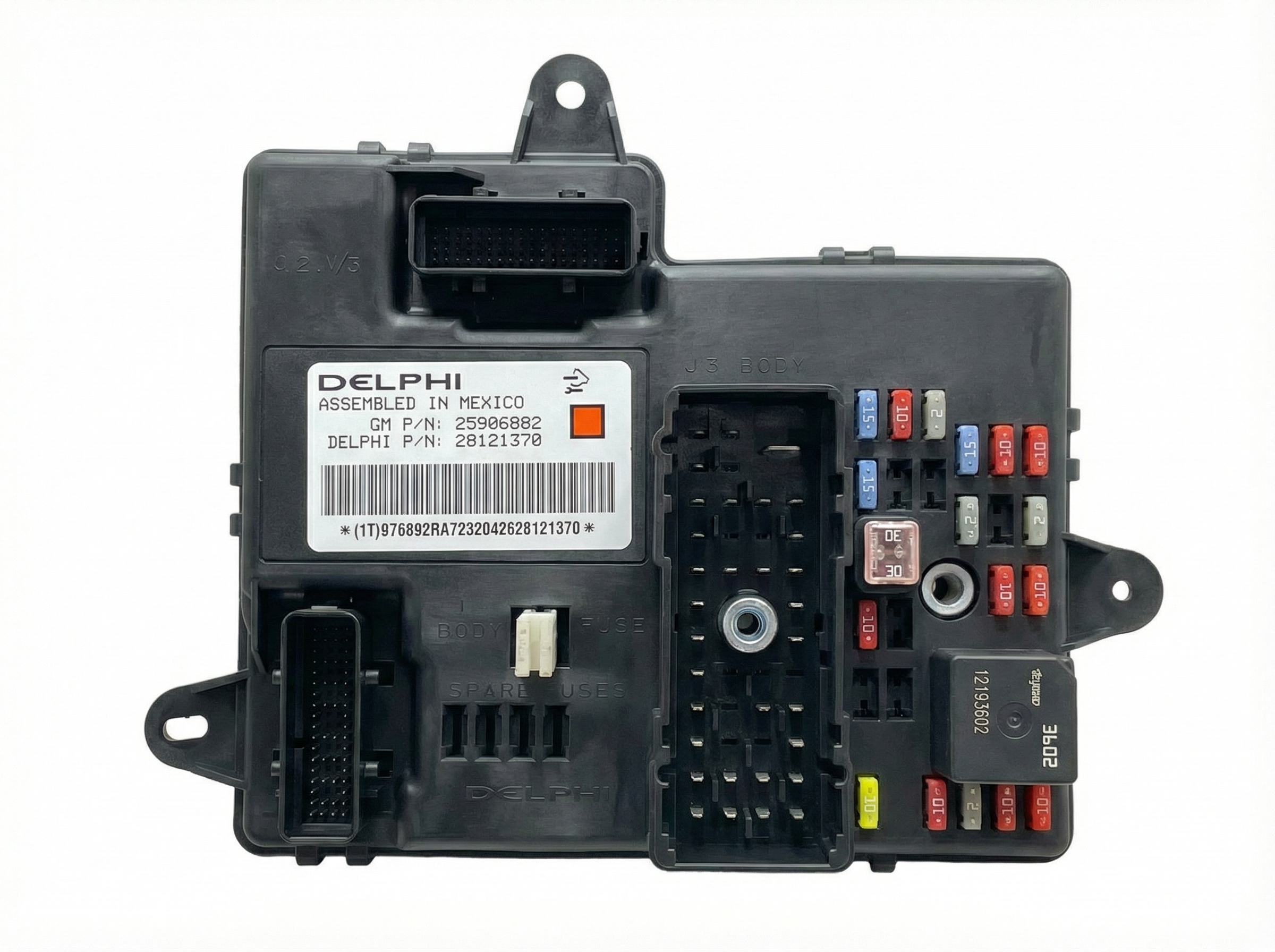
When a used part is the smart pick: A used Under-Hood Fuse Box (UBEC) or Body Control Module (BCM) from a junkyard can be a cost-effective solution, provided it is from the correct year range and has the same part number. These are often viable fixes for a fraction of the OEM new price.
Donor-vehicle mileage cap: roughly under 120000 miles for the part to have meaningful remaining life.
What to inspect on the donor part:
- For a UBEC, flip it over and inspect the large connector ports. Avoid any unit with even a hint of green or white corrosion on the pins or plastic.
- For a BCM, ensure the part number matches your original exactly. Different options (like with/without remote start) use different BCMs.
- Choose parts from vehicles that appear to have been well-maintained and are from regions with less road salt to minimize corrosion risk.
- Verify the donor vehicle was not involved in a front-end collision that could have damaged the UBEC or wiring.
Aftermarket brands forum-validated for this vehicle:
- Dorman makes a direct replacement for the Under-Hood Fuse Box (UBEC) that is a common and generally accepted alternative to OEM.
- ACDelco is the original GM parts supplier and is the preferred choice for modules like the BCM.
Brands owners have reported issues with on this vehicle:
- Be cautious with no-name, off-brand electronic modules from online marketplaces, as they may have quality control issues and are unlikely to have support for the required VIN programming.
Real Owner Stories
Aggregated from forums and TSBs cited above. Mileages and costs reflect what owners reported in those sources.
2006 Saturn Ion-3 2.4L
Symptoms: U1000 set in every module alongside multiple other codes; network failure cascaded into numerous seemingly unrelated faults.
What fixed it: The professional technician identified a network failure where communication was lost across the Class 2 data line.
Source hint: iatn.net thread titled '2006 Saturn Ion-3 2.4L No Start - U1000 in every module'
2005-2010 Chevrolet Cobalt
Symptoms: No-crank/no-start condition with a U1000 code present.
What fixed it: Repairing the corroded ground wire for the crank relay located in the harness directly under the fuse box.
Source hint: vehicle_specific_issues
2005-2010 Chevrolet Cobalt
Symptoms: U1000 code and communication issues.
What fixed it: Cleaning the ground on the transmission and the ground points under the fuse box, or replacing the entire under-hood fuse box due to hidden corrosion on the bottom connectors.
Source hint: Chevy Cobalt Forum - Multiple U1000 Threads
Related OBD-II Codes
Frequently Asked Questions
My 2005-2010 Chevrolet Cobalt is showing 'POWER STEERING' and 'LOW TRACTION' on the DIC along with a U1000 code. Are these related?
Could the massive ignition switch recall on my Cobalt be causing the U1000 code?
I'm experiencing a no-crank condition and a U1000 code. Where is the most common failure point for this on a Cobalt?
Where should I look for the main ground strap that causes U1000 issues on the Cobalt's Delta platform?
If I need to replace the ECM or BCM to fix the U1000 code, can I just swap in a used one?
My Cobalt's gauges are behaving erratically and the key fob stopped working. Is this a U1000 symptom?
Helpful Videos
Used OEM Parts in Stock
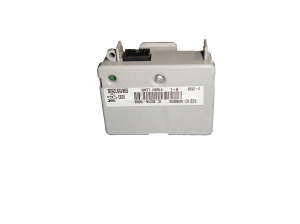
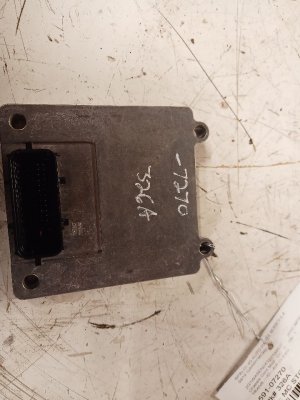
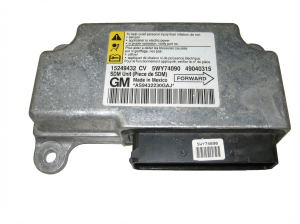
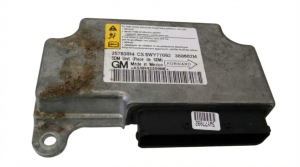
New Aftermarket Parts Available


The information in this article is provided for general reference and educational purposes only. Vehicle specifications, procedures, and part compatibility can vary by production date, trim level, and region. Always consult your vehicle's factory service manual and verify part numbers before purchasing or performing repairs. Safety-critical components such as airbags, seat belts, and braking systems should be installed by a qualified professional.
- Chevrolet Cobalt:
- 🧭 Diagnostic Flowchart
- 🎬 Helpful Videos
- 🛍️ Shop This Part
- What's Unique About the 2005-2010 Chevrolet Cobalt
- Symptoms You May Notice
- Most Likely Causes
- Rare But Worth Checking
- Diagnosis Steps
- Parts You'll Likely Need
- Related Codes That Often Appear With This One
- Platform-Specific Known Issues
- Mechanic-Grade Diagnostic Values
- Scan Tool Commands That Help
- Wiring & Ground Locations
- Real Owner Repair Stories
- OEM Part Supersession History
- Model Year Variations Within This Range
- Other Known Issues on This Vehicle
- Used vs. New Parts: Buying Guide for This Vehicle
- Real Owner Stories
- 2006 Saturn Ion-3 2.4L
- 2005-2010 Chevrolet Cobalt
- 2005-2010 Chevrolet Cobalt
- Related OBD-II Codes
- Frequently Asked Questions
- 🎟️ Get 5% Off