

U1000 on 2019-2024 GMC Sierra: Understanding Network Communication Faults
On a 2019-2024 GMC Sierra, U1000 indicates a generic loss of communication between electronic modules. The definition is not standardized for this specific platform, making diagnosis complex. Before suspecting expensive modules, check the battery, all major ground straps, and look for aftermarket accessories that may be interfering with the network. A weak battery or poor ground is the most common culprit.
- U1000 on a 2019-2024 Sierra is a general network error, not a code for a specific part.
- Always start diagnosis by testing the battery and inspecting all major ground connections before considering more complex issues.
- Improperly installed aftermarket electronics are a common cause of this code.
- Do not replace expensive control modules like the BCM or ECM unless a professional has proven it is the point of failure after ruling out all other possibilities.
- Diagnosis is best left to a professional with a proper CAN bus diagnostic tool.
What's Unique About the 2019-2024 GMC Sierra
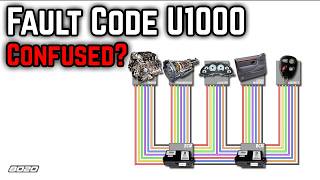
The primary challenge with U1000 on a modern GMC Sierra is the lack of a single, precise public definition, unlike on older GM products where it specifically meant a 'Class 2 Data Link Malfunction'. On the 2019-2024 T1 platform, which uses GM's newer Vehicle Intelligence Platform (VIP) or Global B electrical architecture, U1000 acts as a general flag that a communication problem exists somewhere on the complex network. It does not point to a single component but rather indicates the start of a complex diagnostic process. 🎬 Watch: Understanding U1000 communication codes and what they mean The root cause could be anything from a loose ground wire to a software glitch in one of the many interconnected modules, and is often a secondary code triggered by an underlying issue.
Symptoms You May Notice
- Check Engine Light is on
- Other warning lights (ABS, Traction Control, Service 4WD) may illuminate
- Erratic or non-functional instrument cluster gauges
- Loss of features like power windows, radio, or climate control.
- Vehicle may not start or may stall intermittently.
- Error messages on the driver information center, such as 'Service Brake System'.
- Engine may enter a reduced-power 'limp mode'.
- Replacing the ECM or BCM without proper diagnosis. These are expensive parts and are often not the cause of a U1000 code. The problem is more likely in the wiring, power, or grounds connected to them.
Most Likely Causes
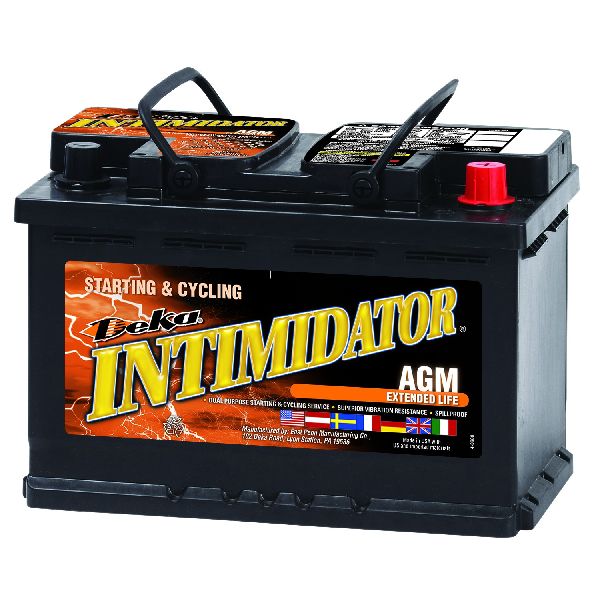
- Weak or Failing Battery 🔴 High Probability → Shop Vehicle Battery Modern trucks have a high electrical demand with numerous modules that must initialize at startup. A battery with low or unstable voltage can prevent modules from initializing correctly, causing temporary communication dropouts that log a U1000 code.
How to confirm: Test the battery with a digital multimeter or a carbon pile load tester. A healthy, resting battery should be at ~12.6V. Check for voltage drops below 10V during cranking.
Typical fix: Recharge or replace the battery.
Est. part cost: $150-$400 - Loose or Corroded Ground Straps 🔴 High Probability → Shop Engine Ground Strap Vehicles have multiple critical ground points (engine block to chassis, battery to chassis, cab to frame). Corrosion or looseness at any of these points can create electrical noise and voltage inconsistencies, disrupting module communication. This is a very common cause for U-codes on GM trucks.
How to confirm: Visually inspect and physically check the main ground straps for tightness and corrosion. Key locations are the main battery negative cable, the engine-to-firewall strap, and frame grounds under the driver's side.
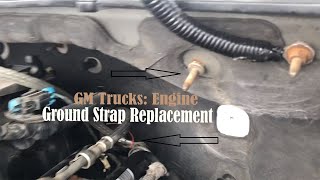
Typical fix: Clean the contact surfaces with a wire brush and re-secure the ground connection. Replace the strap if it is frayed or excessively corroded. 🎬 See this step-by-step GM ground strap replacement guide
Est. part cost: $15-$50 - Faulty Aftermarket Accessory 🟡 Medium Probability Improperly installed aftermarket equipment (remote starters, alarms, lighting, audio systems) that taps into the vehicle's wiring can interfere with the CAN bus network, causing communication errors.
How to confirm: Temporarily disconnect or remove any aftermarket electronic devices one by one, clear the codes, and see if the U1000 code returns.
Typical fix: Professionally reinstall or completely remove the faulty accessory.
Est. part cost: $0 - Damaged Wiring Harness or Connector ⚪ Low Probability While less common on newer vehicles, wiring can be damaged by rodents, previous repairs, or chafing against vehicle components. Connectors can also become corroded or have pins back out.
How to confirm: This requires a detailed visual inspection of the wiring harnesses, particularly around the main fuse block, Body Control Module (BCM), and Engine Control Module (ECM). A multimeter is needed to check for continuity and resistance on the CAN bus wires.
Typical fix: Repair the damaged section of wire or replace the affected connector.
Est. part cost: $10-$100
Rare But Worth Checking
- Faulty Control Module: While often blamed, a module is rarely the root cause. A module should only be replaced after all wiring, power, and ground issues have been definitively ruled out. An internal failure in a module can disrupt the entire network.
- Software Glitch: Sometimes, a module's software can become corrupted, requiring a reflash or update from a dealership. TSB 20-NA-218, for example, addresses an ECM software anomaly causing no-start conditions.
Diagnosis Steps
- Use a professional scan tool to check for any other DTCs, especially more specific U-codes that can point to the problematic module.
- Check and record the freeze frame data to see the conditions under which the code was set.
- Perform a full vehicle battery and charging system test. Ensure battery voltage is stable and above 12.4V at rest.
- Inspect all major power and ground connections. Check the battery terminals, engine-to-chassis ground, and body-to-frame grounds for tightness and corrosion. This is a critical and common failure point.
- Disconnect any aftermarket electronic accessories (remote start, alarm, stereo, etc.). Clear the codes and see if the issue persists.
- If the problem continues, a professional technician will use a scan tool to perform a 'network test' or 'module roll call' to see which modules are not responding.
- Based on which module is offline, the technician will inspect the wiring and connectors for that specific module, checking for power, ground, and CAN signal integrity. 🎬 Watch: How to perform a GM CAN-bus electrical diagnostic
- Check for relevant Technical Service Bulletins (TSBs) for software updates, as some communication issues are resolved with a module reflash.
- As a last resort, after verifying all wiring, power, and grounds are good, the module itself may be tested or replaced.
Parts You'll Likely Need
- Battery
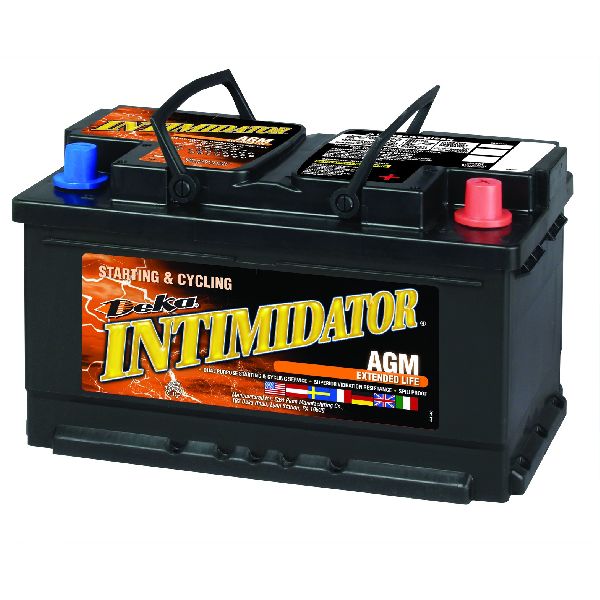
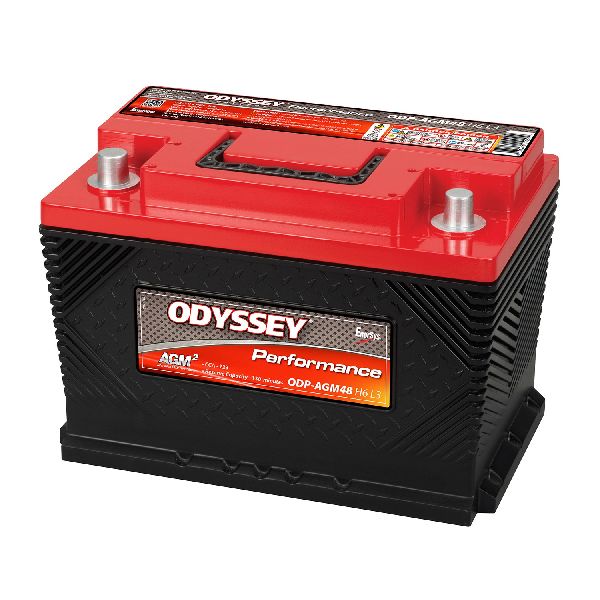
(OEM #88865934 (ACDelco Gold, 800 CCA), 94RAGM (ACDelco GM OE, 850 CCA))— Low or unstable voltage is a primary cause of communication faults on modern vehicles.
Trusted brands: ACDelco
OEM price range: $250-$400
Aftermarket price range: $150-$300 - Battery/Ground Cable — A corroded or damaged ground cable is a common and simple-to-fix cause of widespread electrical issues.
Trusted brands: ACDelco, Standard Motor Products
OEM price range: $50-$150
Aftermarket price range: $25-$75
Related Codes That Often Appear With This One
- U0xxx codes (e.g., U0100, U0101, U0140) — These are more specific communication loss codes. For example, U0100 is 'Lost Communication With ECM/PCM'. If you have a U1000 and a more specific U-code, the specific code is the key to diagnosing which module has the problem.
Technical Service Bulletins (TSBs) & Recalls
- TSB 20-NA-218: Addresses a no-start or long crank condition due to a software anomaly in the ECM, which can be related to communication faults.
- TSB 15-06-01-002L: Pertains to engine misfire/tick noise from V8 lifter issues, a major platform problem that can indirectly cause system faults.
- TSB 22-NA-182: Addresses transmission issues like harsh shifts and overheating, which involve TCM communication and could be seen alongside network codes.
- TSB 24-NA-048: Pertains to infotainment screen freezing, a communication-related issue on the vehicle's network.
Platform-Specific Known Issues
- A body-control-module (BCM) glitch can sometimes cause parasitic battery drain overnight, leading to a weak battery condition that triggers a U1000 code on the next startup.
Documented NHTSA Reports
While the following reports involve different manufacturers, they highlight how U1000 manifests as a critical communication or ground failure across the industry:
- NHTSA ODI #10169405 describes a U1000 code as an electrical and ground wire problem that can leave a vehicle in a state where it cannot be driven.
- NHTSA ODI #10171770 notes that when a vehicle stalled, it lost ignition input, with U1000 appearing alongside other communication codes like U1016 and U1152.
- NHTSA ODI #10970695 reports a BCM failure where U1000 was present and the instrument cluster could not communicate or retrieve mileage data.
- NHTSA ODI #11461728 describes U1000 as a loss of communication with the TCM, potentially caused by the module overheating due to its physical location.
- NHTSA ODI #11653700 reports a communication circuit problem (Code U1000-01) where the vehicle would not start without a jump, even after the battery was replaced.
Mechanic-Grade Diagnostic Values
- CAN Bus Network Resistance — expected: Approximately 60 Ohms (± 5 Ohms). Failure: A reading of 120 Ohms indicates an open circuit or a missing termination resistor. A reading significantly less than 60 Ohms (e.g., 0 Ohms) indicates the CAN High and CAN Low wires are shorted together.
- High-Speed GMLAN Voltage (Key On, Engine Off) — expected: CAN High (Pin 6): ~2.66V. CAN Low (Pin 14): ~2.34V.. Failure: Voltages that are stuck high (e.g., 5V), low (e.g., 0V), or do not mirror each other indicate a circuit fault or a module pulling the bus down. The bus is biased to 2.5V, with CAN High toggling up to ~3.5V and CAN Low toggling down to ~1.5V during communication.
- CAN Line Resistance to Ground — expected: Megaohms (MΩ) or an open circuit.. Failure: Low resistance to ground on either the CAN High or CAN Low line indicates a short to ground in the wiring harness or within a connected module.
Scan Tool Commands That Help
- GM GDS2 (Global Diagnostic System 2): Module Status / Network Test — This is a primary step. The function polls all expected modules on the network and displays which ones are communicating and which are not. This is critical for isolating which module has dropped off the network, guiding the diagnostic path toward that module and its specific circuits.
- GM GDS2 / High-Level Scan Tool: Read All DTCs from All Modules — Essential for seeing if other, more specific 'U' codes (like U0100, U0101, U0140) are present alongside U1000. A specific code like 'U0140 - Lost Communication with BCM' is far more valuable than the generic U1000 and immediately points to the problem area.
Wiring & Ground Locations
- Data Link Connector (DLC) Pins 6 & 14 — The OBD-II port, located under the driver's side dashboard.. Pin 6 is the CAN High line and Pin 14 is the CAN Low line for the high-speed bus. These are the primary test points for checking network-wide resistance and voltage.
- Termination Resistors — The high-speed CAN bus has two 120-Ohm resistors. One is typically located within the Engine Control Module (ECM). The other is at the opposite end of the bus, often within another module like the Electronic Brake Control Module (EBCM) or a dedicated termination plug in the harness.. The entire network relies on having two termination resistors to function correctly. If one is missing (due to a disconnected or failed module), the total bus resistance will read 120 Ohms instead of 60 Ohms, causing communication failures.
- Body Control Module (BCM) — Located on the driver's side, behind the lower instrument panel, often near the steering column.. The BCM is a central hub for multiple networks. A failure in the BCM, its connectors, or its grounds can cause widespread communication issues, often logging a U1000 code in other modules. Its connectors (e.g., X1, X2) are key points for checking specific circuit integrity.
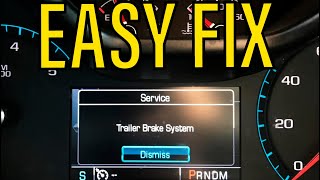
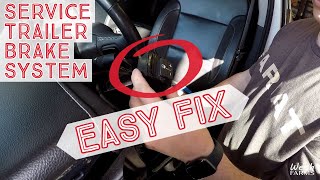
- Trailer Brake Control Module (TBCM) — For trucks with the factory integrated trailer brake controller, the control switch is in the dash. The module itself is often located above the spare tire.. This module is exposed to the elements and its wiring/connectors are prone to corrosion. A fault in the TBCM or its wiring can disrupt the CAN bus and trigger a U1000 code, often accompanied by a 'Service Trailer Brake System' message.
Real Owner Repair Stories
- GM-Trucks.com forum user (2015 Silverado (similar T1 platform architecture)) — No-start condition, 'Service Trailer Brake System' message on the dash.
❌ Tried (didn't work) Jump starting the vehicle.
✅ What actually fixed it The user reported that after spending $1,200 on other repairs, the issue was related to the trailer brake system. Another user in the same thread noted that a faulty Trailer Brake Control Module (located above the spare tire) or its connector is a common cause for these symptoms. - YouTube video by BriGuy Garage (2014 Chevy Silverado (similar T1 platform architecture)) — Intermittent but persistent 'Service Trailer Braking System' error on the driver information center.
❌ Tried (didn't work) An aftermarket trailer brake controller switch failed shortly after installation.
✅ What actually fixed it Replacing the integrated trailer brake controller switch on the dashboard with a genuine GM part resolved the issue. This is noted as a very common fix for this specific warning message, which is a network communication symptom.
OEM Part Supersession History
13599685→13528941— Part revision/update by GM.
Heads up: This is the Body Control Module (BCM) for 2019+ models. When replacing, the new module requires programming with GM's GDS2 software to function in the vehicle.
Model Year Variations Within This Range
- 2022.5-2024 (Refresh models): These models use the newer GM Vehicle Intelligence Platform (VIP) or 'Global B' architecture. While still a CAN-based system, it integrates Ethernet for higher data speeds between certain modules and has enhanced cybersecurity. Diagnostics may require CAN-FD compatible scan tools. The DLC pinout is different, using pins 3 & 11 and 12 & 13 for Ethernet diagnostics and programming. The core diagnostic principle of checking for 60 Ohms of resistance on the main CAN bus (Pins 6 & 14) remains the same.
- 2019-2022 (Pre-refresh models): These models use an earlier version of the T1 platform electrical system, which is a more traditional high-speed GMLAN setup without the extensive use of Ethernet found in the 2022.5+ refresh. Diagnostic procedures are more aligned with previous GM truck generations.
Diagnostic Flowchart
Other Known Issues on This Vehicle
Issues unrelated to this code that are worth knowing about as an owner of this generation:
- V8 Engine Lifter Failure (AFM/DFM) 🔴 High — Widespread issue affecting 5.3L (L84) and 6.2L (L87) engines, particularly in 2019-2021 models, but can occur at various mileages. Often leads to misfires, engine noise, and can require camshaft and lifter replacement. (Ref: Multiple TSBs exist, including 15-06-01-002L and N212353840, which address diagnosis and repair procedures.)
- 8-Speed Automatic Transmission Shudder/Harsh Shifting 🟠 Medium → Shop Transmission Assembly — Common on earlier models of this generation equipped with the 8L90 transmission. Symptoms include shuddering at certain speeds, harsh 1-2 upshifts, and clunky downshifts. (Ref: TSBs like 18-NA-355 and 22-NA-182 recommend a fluid flush to an updated Mobil 1 Synthetic LV ATF HP fluid and/or software updates.)
- Infotainment System Glitches (Black Screen/Freezing) 🟡 Low — Owners of 2020-2024 models, particularly higher trims, report the infotainment screen freezing, going black, or rebooting randomly, affecting audio and HVAC controls. (Ref: TSB 24-NA-048 provides for an infotainment system software update to resolve freezing or black screens.)
- Long Crank / No-Start Condition 🟠 Medium — Affects a range of 2019-2021 GM trucks and SUVs. The engine may crank for an extended period before starting or fail to start entirely. (Ref: TSB 20-NA-218 identifies a software anomaly in the ECM and instructs dealers to reprogram the module.)
- Power Tailgate Malfunction 🟡 Low — Some users report the power up/down tailgate fails to close completely or operate correctly. (Ref: TSB 20-NA-177 describes a potential misalignment issue causing a bind, with a corresponding realignment procedure.)
Used vs. New Parts: Buying Guide for This Vehicle
When a used part is the smart pick: For purely mechanical or simple electrical parts like a battery ground cable or a trailer wiring connector, a used part from a reputable salvage yard is a cost-effective option. Ensure there is no corrosion or physical damage.
Donor-vehicle mileage cap: roughly under 80000 miles for the part to have meaningful remaining life.
What to inspect on the donor part:
- For wiring harnesses or connectors, check for any signs of cuts, rodent damage, or brittle insulation.
- Inspect connector pins to ensure they are straight and free of green or white corrosion.
- For a ground cable, check for fraying near the terminal ends and ensure the mounting surfaces are clean.
OEM-only on this vehicle (don't cheap out):
- Body Control Module (BCM)
- Engine Control Module (ECM)
- Any programmable electronic module
Aftermarket brands forum-validated for this vehicle:
- ACDelco (GM's own brand, considered OEM quality)
- Standard Motor Products (for cables and connectors)
Brands owners have reported issues with on this vehicle:
- Unnamed/generic trailer brake controller switches have been reported to fail prematurely.
Real Owner Stories
Aggregated from forums and TSBs cited above. Mileages and costs reflect what owners reported in those sources.
2019 GMC Sierra 1500 8-Speed Automatic
Symptoms: Owner experienced transmission shuddering at certain speeds and harsh 1-2 upshifts, alongside general vehicle module concerns.
What fixed it: A transmission fluid flush using updated Mobil 1 Synthetic LV ATF HP fluid as recommended in TSB 18-NA-355.
Source hint: gm-trucks.com/forums/topic/220839-8-speed-transmission-tsb-flush/
2020 GMC Sierra
Symptoms: The infotainment screen would freeze, go black, or reboot randomly, affecting the ability to use audio and HVAC controls.
What fixed it: Infotainment system software update per TSB 24-NA-048.
Source hint: TSB 24-NA-048
2019 GMC Sierra 1500
Symptoms: The engine would crank for an extended period before starting or sometimes fail to start entirely.
What fixed it: Reprogramming the Engine Control Module (ECM) to correct a software anomaly.
Source hint: TSB 20-NA-218
Related OBD-II Codes
Frequently Asked Questions
My 2019 GMC Sierra is having trouble starting; could TSB 20-NA-218 be the reason for my U1000 code?
Can a problem with my Sierra's 8-speed transmission trigger a network communication code?
My infotainment screen is freezing and I have a U1000 code; is there a known fix for this on the 2024 Sierra?
Could a parasitic drain from the Body Control Module (BCM) be causing my U1000 code?
I have a 'Service Brake System' message on my dash along with U1000. What does this mean for my truck?
Will cleaning my ground straps fix a U1000 on a GMC Sierra?
Helpful Videos
We Have This Part in Stock


The information in this article is provided for general reference and educational purposes only. Vehicle specifications, procedures, and part compatibility can vary by production date, trim level, and region. Always consult your vehicle's factory service manual and verify part numbers before purchasing or performing repairs. Safety-critical components such as airbags, seat belts, and braking systems should be installed by a qualified professional.
- GMC Sierra:
- 🧭 Diagnostic Flowchart
- 🎬 Helpful Videos
- 🛍️ Shop This Part
- What's Unique About the 2019-2024 GMC Sierra
- Symptoms You May Notice
- Most Likely Causes
- Rare But Worth Checking
- Diagnosis Steps
- Parts You'll Likely Need
- Related Codes That Often Appear With This One
- Technical Service Bulletins (TSBs) & Recalls
- Platform-Specific Known Issues
- Documented NHTSA Reports
- Mechanic-Grade Diagnostic Values
- Scan Tool Commands That Help
- Wiring & Ground Locations
- Real Owner Repair Stories
- OEM Part Supersession History
- Model Year Variations Within This Range
- Other Known Issues on This Vehicle
- Used vs. New Parts: Buying Guide for This Vehicle
- Real Owner Stories
- 2019 GMC Sierra 1500 8-Speed Automatic
- 2020 GMC Sierra
- 2019 GMC Sierra 1500
- Related OBD-II Codes
- Frequently Asked Questions
- 🎟️ Get 5% Off