

U1000 on 2008-2012 Infiniti EX35: Causes for CAN Communication Failure and Fixes
U1000 on a 2008-2012 Infiniti EX35 indicates a network communication problem, not a specific broken part. The most common causes are a weak battery, corroded ground wires, or loose battery terminals. Always check these simple, inexpensive items before suspecting a costly control module failure. Water intrusion from clogged cowl or sunroof drains is also a known culprit that can damage the IPDM or BCM.
- U1000 is a network error, not a part failure. The module reporting the code is likely OK.
- Start your diagnosis with the easiest and most common causes: test the battery and clean all main ground connections.
- Check for water leaks in the battery compartment (near the IPDM) and the passenger footwell (near the BCM), as these are known weak points.
- Do not replace any expensive control modules without performing a full CAN system diagnosis with a professional scan tool.
- If other trouble codes are present, resolve them first, as this may also clear the U1000 code.
What's Unique About the 2008-2012 Infiniti EX35
On the Infiniti EX35 and related Nissan FM platform vehicles (like the G37, FX35, and Nissan 370Z), the U1000 code is a very common but frustratingly vague fault. Owner experiences and TSBs frequently point towards electrical system instability rather than a single failed part. Water intrusion is a well-documented issue; clogged cowl drains can lead to water collecting in the battery compartment and damaging the IPDM (Intelligent Power Distribution Module), while clogged sunroof drains can cause water to leak into the passenger footwell, damaging the BCM (Body Control Module). Therefore, diagnosis should always start with the battery, its connections, and checking for any signs of water damage in these key areas.
Diagnostic Flowchart
Tap your situation to follow the diagnostic path that matches what you're seeing on this vehicle.
Symptoms You May Notice
- Check Engine Light is on
- Multiple other warning lights may illuminate, such as VDC, SLIP, ABS, or the airbag light
- Vehicle may not start or crank
- Transmission may get stuck in one gear or shift erratically
- Gauges on the instrument cluster may behave erratically or not work
- Electrical glitches with windows, locks, or the infotainment system
- Trip computer and fuel economy data resetting with every engine start
- Flashing security indicator light on the dashboard during a no-start event
- Replacing the control module that stored the U1000 code without proper diagnosis. The TSB explicitly warns that this module is often functioning correctly.
- Replacing expensive components like the ECU or BCM before thoroughly checking and cleaning all battery and chassis ground connections.
Most Likely Causes
- Low Battery Voltage or Failing Battery 🔴 High Probability → Shop Vehicle Battery Modern control modules are sensitive to voltage. A voltage drop during startup is a very common trigger for communication codes across all modern vehicles, including the EX35 platform.
How to confirm: Test the battery with a multimeter or a load tester. A healthy, fully charged battery should read approximately 12.6 volts with the engine off and between 14.0V and 14.7V with the engine running. A voltage drop during cranking below 10V can trigger the code even if the car starts.
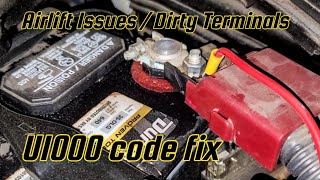
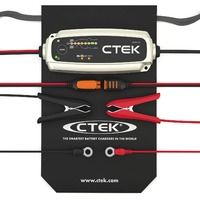
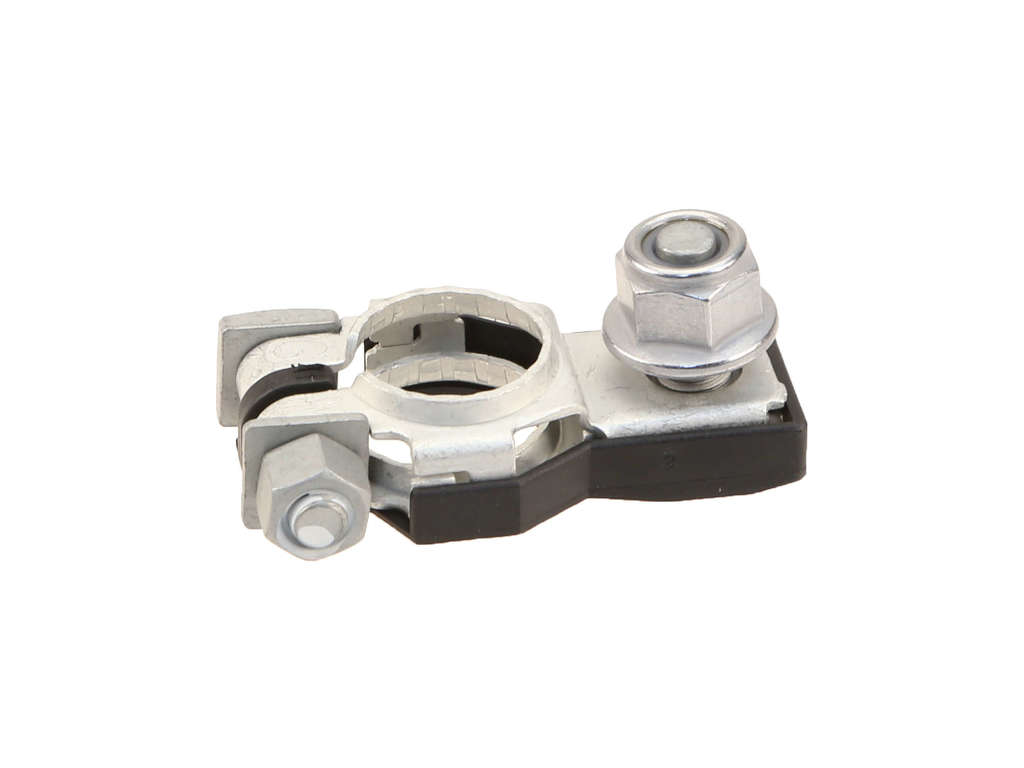
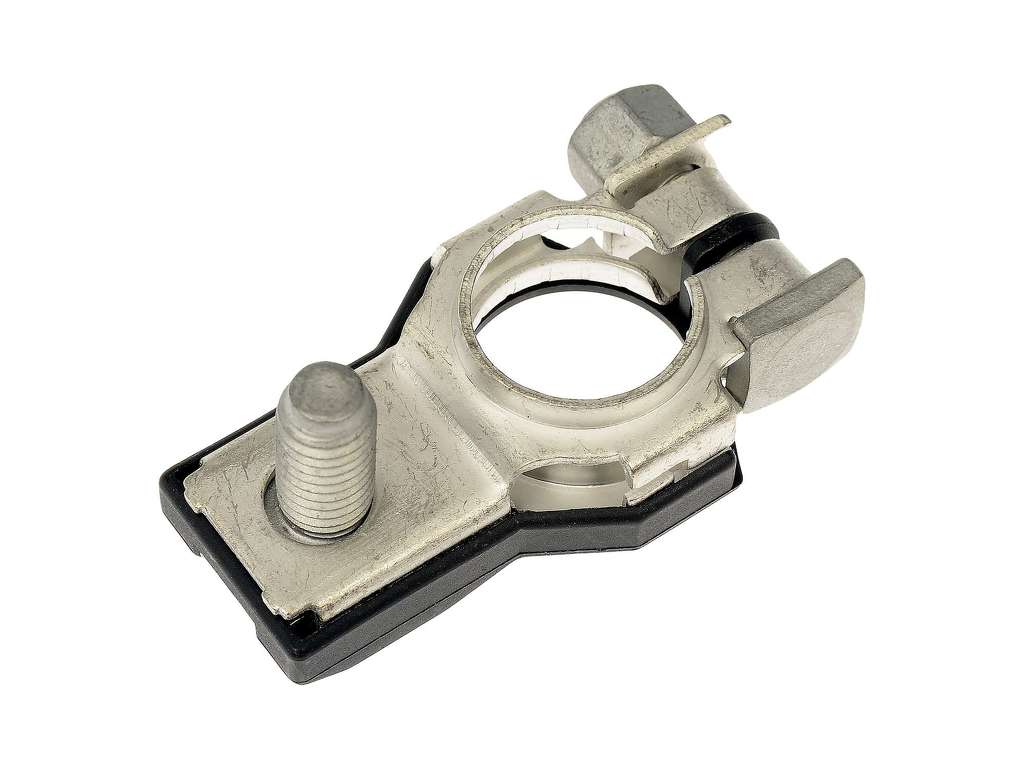
Typical fix: Recharge or replace the battery. Ensure battery terminals are clean and tight. 🎬 Watch: How to clean terminals to fix a U1000 code
Est. part cost: $150-$300 - Corroded or Loose Ground Wires 🔴 High Probability Nissan and Infiniti vehicles of this era are known for having issues with main ground points corroding over time, which creates high resistance and electrical problems. Key locations include the battery-to-chassis ground, engine block grounds, and grounds near the brake fluid reservoir.
How to confirm: Visually inspect all major ground straps and connection points for corrosion, looseness, or damage. Key spots are the negative battery cable's connection to the chassis and engine block. Perform a voltage drop test on the ground circuit to confirm a solid connection.
Typical fix: Remove the ground connection, clean the contact surfaces on the wire terminal and the chassis/engine block down to bare metal, and re-secure it tightly. Apply dielectric grease to prevent future corrosion. This simple cleaning has resolved the U1000 code for many owners.
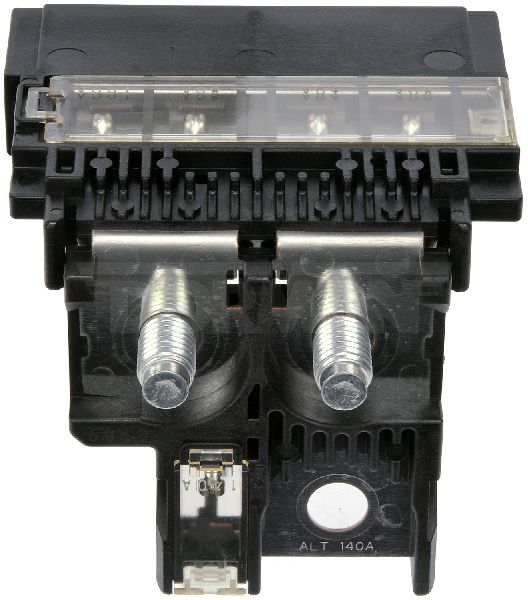
Est. part cost: $0-$20 - Faulty IPDM (Intelligent Power Distribution Module) 🟡 Medium Probability The IPDM is located in the battery compartment and is highly susceptible to water damage 🎬 See how to inspect and save your IPDM box if the cowl drains become clogged, allowing water to pool and submerge the module. The IPDM is a terminating module for the CAN bus, so its failure can bring down the network.
How to confirm: Check for any signs of water, debris, or corrosion in the battery compartment and on the IPDM itself and its connectors. A professional can perform an 'auto active test' to check IPDM function or see if it's offline on the CAN network using a CONSULT scan tool.
Typical fix: Replace the IPDM. The cowl drains must also be cleared to prevent a repeat failure. This is a plug-and-play part, but the part number must match exactly.
Est. part cost: $200-$500 - Damaged CAN Bus Wiring Harness ⚪ Low Probability Wiring can be damaged by rodents, previous repairs, or chafing against chassis components. Water intrusion in the passenger footwell from a clogged sunroof drain is known to damage the BCM and its wiring on the EX35 and related Infiniti models.
How to confirm: This requires advanced diagnostics. A technician will measure resistance on the CAN bus (should be ~60 ohms between Pin 6 and Pin 14 at the OBD-II port with the battery disconnected) and check for shorts to power or ground. Visual inspection of harnesses in vulnerable areas (passenger footwell, engine bay) is also necessary.
Typical fix: Repair the damaged section of the wiring harness. This is labor-intensive.
Est. part cost: $5-$50 for wiring repair supplies
Rare But Worth Checking
- Failed Control Module (ECM, BCM, TCM): While possible, a control module is less likely to be the cause than a power/ground issue. Per TSB ITB10029A, the module setting the code is usually not the one that has failed. Diagnosis must rule out all other possibilities before replacing an expensive module. Water damage to the BCM in the passenger footwell is a specific and known failure mode on this platform.
- Improperly Installed Aftermarket Electronics: Remote starters, alarms, or stereos that are not wired correctly can interfere with the CAN bus network and cause communication errors. A forum user on a platform-mate G37 reported causing U1000 by improperly wiring a radar detector to the mirror, which blew a fuse and triggered the code.
- Miscalibrated Steering Angle Sensor (SAS): Following suspension work or a wheel alignment, the SAS may need to be reset. A miscalibrated sensor can cause VDC/ABS system errors, which can sometimes trigger a U1000 code as a secondary fault. An Infiniti position statement mandates a reset via scan tool after any alignment.
Diagnosis Steps
- Check for other stored DTCs. Diagnose and fix any other codes first, as they may be the root cause of the U1000.
- Check Battery Health: Test the battery voltage and perform a load test. Ensure it is above 12.4V engine-off and charges correctly (14.0V-14.7V) when running. A weak battery is the number one suspect.
- Inspect Battery Terminals and Ground Connections: Clean any corrosion from the battery terminals and chassis/engine ground points. Key locations are the main negative cable to the body, and engine block straps. Disconnect, sand to bare metal, re-tighten, and apply dielectric grease.
- Check for Water Intrusion: This is critical. Inspect the passenger side floorboard/carpet for dampness (clogged sunroof drain, potential BCM issue). Remove the battery cowl cover and check the battery compartment for standing water or debris (clogged cowl drain, potential IPDM issue).
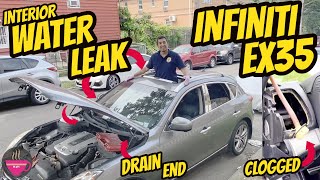
- Clear Sunroof and Cowl Drains: Proactively clean the four sunroof drains and the cowl drain 🎬 Watch: How to find and clear clogged sunroof drains in the battery compartment. Videos online show how to modify the drain ends to prevent future clogs.
- Check Fuses: Inspect all fuses in the interior fuse box (driver's kick panel) and in the IPDM (in the battery compartment). A shorted aftermarket accessory can blow a seemingly unrelated fuse and cause a U1000 code.
- Advanced Scan Tool Diagnosis: Use a professional scan tool (like Infiniti CONSULT) to perform a 'CAN Diagnosis Support Monitor' test. This will show which modules are online and which are not communicating, which is critical for pinpointing the fault.
- CAN Bus Resistance Check: With the battery disconnected, measure the resistance between Pin 6 (CAN-H) and Pin 14 (CAN-L) at the OBD-II port. A healthy network should read approximately 60 ohms. If it reads 120 ohms, there is likely an open circuit or a problem with one of the two terminating modules/resistors.
Parts You'll Likely Need
- Car Battery — A weak or failing battery is the most common trigger for network communication codes due to low voltage.
Trusted brands: Interstate, DieHard, Duralast
OEM price range: $200-$350
Aftermarket price range: $150-$300 - Intelligent Power Distribution Module (IPDM)
(OEM #284B7-JK00A (for 2008-2010 models, verify with VIN))— This module is located in a spot prone to water damage on the EX35 platform, which can cause it to fail and disrupt the CAN network.
Trusted brands: Infiniti (OEM), Hitachi
OEM price range: $970
Aftermarket price range: $200-$500 (Used/Remanufactured)
Related Codes That Often Appear With This One
- U1001 — This is another CAN communication code, often related to the ECM, that can appear alongside U1000, indicating a widespread network issue.
- U0101 — This code specifically indicates 'Lost Communication with TCM' (Transmission Control Module). If you see this with U1000, it helps narrow the focus of the investigation to the TCM or its related circuits.
Technical Service Bulletins (TSBs) & Recalls
- ITB10029A - SERVICE INFORMATION FOR CAN COMMUNICATION
Platform-Specific Known Issues
- Clogged Sunroof Drains Causing BCM Failure: A very common failure pattern involves the front sunroof drains getting clogged. Water then overflows the drain channel, runs down the A-pillar, and drips directly onto the BCM located in the passenger-side kick panel. This causes corrosion and failure of the BCM, leading to U1000 and a host of other electrical issues. Several YouTube tutorials demonstrate a permanent fix by re-routing the drain hoses.
- Clogged Cowl Drain Causing IPDM Failure: The drain at the bottom of the battery compartment under the cowl gets clogged with leaves and debris. This causes the compartment to fill with water, submerging the IPDM. This is a primary cause of IPDM failure and subsequent U1000 codes. Regular cleaning of this area is critical preventative maintenance.
- Real Owner Story: No-Crank, No-Start: A user on Reddit with an '08 G37 (platform mate) experienced a no-crank, no-start condition with a U1000 code and flashing security lights. After replacing the IPDM and checking grounds with no success, a dealer ultimately diagnosed the problem as a simple faulty starter, which had been causing electrical feedback on the network.
Mechanic-Grade Diagnostic Values
- CAN Bus Network Resistance — expected: ~60 Ω (ohms). Failure: A reading of ~120 Ω indicates an open circuit or a fault in one of the two terminating resistors/modules. A reading near 0 Ω indicates a short between the CAN High and CAN Low lines.
- CAN Bus Terminating Resistor Check — expected: ~120 Ω (ohms). Failure: If a known terminating module (e.g., ECM or IPDM) is disconnected, the total network resistance should rise to ~120 Ω. If it does not, the issue may be with the other terminating module or the wiring itself.
- Battery Voltage (Engine Off) — expected: >12.4 Volts. Failure: A reading below 12.4V indicates a discharged or failing battery. Modules can begin to drop off the network below 10V.
- Charging System Voltage (Engine Running) — expected: 14.0V - 14.7V. Failure: Voltage below 13.7V may indicate a failing alternator. Voltage consistently above 14.7V could indicate a faulty voltage regulator or an issue with an aftermarket alternator setup.
Scan Tool Commands That Help
- Infiniti CONSULT: CAN Diagnosis Support Monitor — This is the primary function to use when a U1000 code is present. It actively polls the CAN network and displays a list of all control units, showing which are communicating ('OK') and which are not ('NG' - No Good), directly pointing the technician to the module(s) that are offline.
- Infiniti CONSULT or compatible advanced scanner: Steering Angle Sensor Adjustment/Reset — This must be performed after any wheel alignment or replacement of steering/suspension components. If the U1000 code is accompanied by VDC/SLIP/ABS lights and there has been recent front-end work, performing this reset can resolve the issue.
- Infiniti CONSULT or compatible advanced locksmith tool: BCM Immobilizer Programming — This is not a diagnostic command, but a mandatory service function required after replacing the Body Control Module (BCM). The car will not start until the replacement BCM is programmed to the vehicle's keys and immobilizer system.
Wiring & Ground Locations
- IPDM E/R — Intelligent Power Distribution Module Engine Room, located in the battery compartment at the right rear of the engine bay.. This module is a CAN network terminator and is highly susceptible to water damage from clogged cowl drains, making it a primary suspect for U1000 faults.
- BCM — Body Control Module, located in the passenger footwell, behind the right-side kick panel.. The BCM is a central hub for the CAN network. It is highly susceptible to water damage from clogged sunroof drains, which causes corrosion and network failure.
- E22 / E46 — Main engine compartment ground points. E22 is at the right rear of the engine compartment, E46 is at the left rear.. Poor engine grounding can cause significant electrical noise and voltage discrepancies between modules, leading to communication errors. These are critical points to inspect and clean.
- B202 / B224 — Main cabin ground points. B202 is behind the right kick panel (near the BCM), and B224 is at the right 'C' pillar.. A bad ground near the BCM can directly cause it to malfunction and disrupt CAN communication.
Real Owner Repair Stories
- MyG37.com forum user 'Kvpg37' (2009 Infiniti G37x Coupe (platform mate)) — SLIP and VDC lights stuck on, trip computer resetting on every start, U1000 and U1001 codes stored.
❌ Tried (didn't work) Checking brake fluid, Initial scan showed ABS code but ABS light was not on.
✅ What actually fixed it The user caused a short while hardwiring a radar detector to the mirror without disconnecting the battery. The fix was replacing a blown 10amp fuse in the interior driver-side kick panel fuse box and disconnecting the battery for 15 minutes to reset the systems. - MyG37.com forum user 'Crusher103' (Infiniti G37 (platform mate)) — Car would not stay running, voltage was extremely low (10.7V) while on, and the car died instantly when the battery was disconnected. A grinding noise was heard at startup.
❌ Tried (didn't work) The battery was less than a year old, ruling it out as the primary failure component.
✅ What actually fixed it The alternator had failed completely. Replacing the alternator restored proper voltage and resolved the running issues. - Reddit user 'TheRob941' (Infiniti G37 (platform mate)) — U1000 code, occasional engine 'spitter', and display flickering/resetting.
❌ Tried (didn't work) Initially unsure of the cause.
✅ What actually fixed it The problem was traced to a 'jenky wiring harness'. Cleaning the harness connections resolved the issue.
"I Checked Everything" — The Actual Cause
- A common scenario for U1000 is that a visual inspection of the ground wires shows them to be tight and connected, yet the fault persists. The actual cause is high resistance from unseen corrosion between the terminal and the chassis. The fix is to physically unbolt the ground, sand all contact surfaces to bare metal, and re-secure it.
- The battery may pass a simple voltage test but fail under load during cranking. This momentary voltage drop is enough to cause modules to lose communication and set a U1000 code, but it can be missed if only a static voltage test is performed.
When the Usual Fixes Don't Work
- While poor grounds and low battery voltage are the most common causes, the U1000 code can also be triggered by a simple, unrelated electrical fault. In one documented case on a sister platform, a user installing a radar detector accidentally shorted a power wire for the rearview mirror. This blew a 10A fuse in the cabin fuse box, which in turn caused the U1000, VDC, and SLIP lights to appear. The fix had nothing to do with the main battery grounds or CAN harness, but was simply replacing the blown fuse and correcting the faulty wiring. This highlights the importance of checking all fuses and considering any recent electrical work done on the vehicle.
OEM Part Supersession History
284B7-JK00A→284B7-JK06A— Part revision by the manufacturer. Reasons can include minor component changes for reliability or sourcing.
Heads up: The new part number is the correct service replacement for the original. Using the old part number if the new one is available is not recommended.
Model Year Variations Within This Range
- 2008-2010: These models were equipped with a 5-speed automatic transmission.
- 2011-2012: These models received a significant update, including a new 7-speed automatic transmission, standard 18-inch wheels (previously 17-inch), and revised instrument panel illumination. The change in transmission means the TCM and its network communication are different from earlier models, which could be relevant when diagnosing CAN faults involving the drivetrain.
Helpful Videos
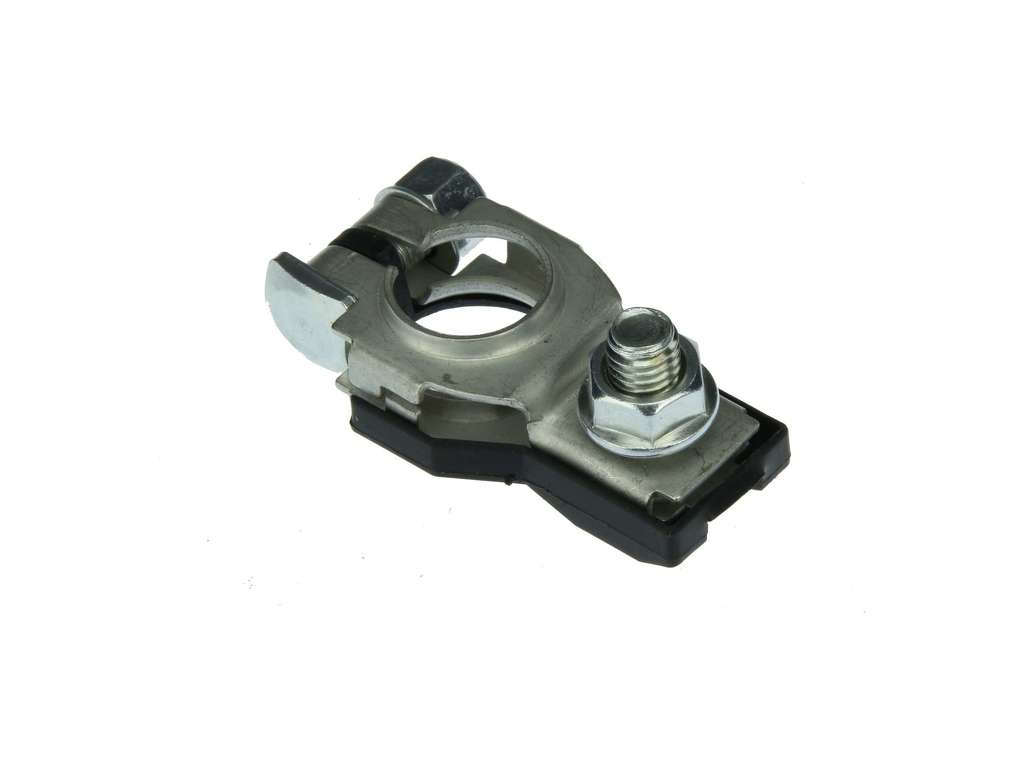
We Have This Part in Stock


The information in this article is provided for general reference and educational purposes only. Vehicle specifications, procedures, and part compatibility can vary by production date, trim level, and region. Always consult your vehicle's factory service manual and verify part numbers before purchasing or performing repairs. Safety-critical components such as airbags, seat belts, and braking systems should be installed by a qualified professional.
- Infiniti EX35:
- 🧭 Diagnostic Flowchart
- 🎬 Helpful Videos
- 🛍️ Shop This Part
- What's Unique About the 2008-2012 Infiniti EX35
- Symptoms You May Notice
- Most Likely Causes
- Rare But Worth Checking
- Diagnosis Steps
- Parts You'll Likely Need
- Related Codes That Often Appear With This One
- Technical Service Bulletins (TSBs) & Recalls
- Platform-Specific Known Issues
- Mechanic-Grade Diagnostic Values
- Scan Tool Commands That Help
- Wiring & Ground Locations
- Real Owner Repair Stories
- "I Checked Everything" — The Actual Cause
- When the Usual Fixes Don't Work
- OEM Part Supersession History
- Model Year Variations Within This Range
- 🎟️ Get 5% Off