

U1000 on 2018-2019 Jaguar E-PACE: BCM Protection Mode Causes and Fixes
On a 2018-2019 Jaguar E-PACE, code U1000 means the Body Control Module (BCM) has shut down a circuit to protect itself from a short. The problem is almost always a short in an external component or wiring, not the BCM itself. A specialist with Jaguar diagnostic tools is needed to find the short and reset the BCM.
- U1000 on your E-PACE means the Body Control Module (BCM) has turned off a circuit to protect itself from a short. It is not a BCM failure.
- DO NOT replace the BCM. The problem is almost always a short circuit in the wiring or a component (like a light or lock) that the BCM controls.
- Common symptoms are non-working exterior or interior lights, or a fuel door that won't open.
- A specialist with Jaguar's 'Pathfinder' diagnostic software is required to find the shorted circuit and perform the mandatory 'Enable Protected Outputs' reset after the physical repair is complete.
What's Unique About the 2018-2019 Jaguar E-PACE
🎬 Watch: Common issues and buying advice for the E-PACEUnlike many vehicles where U1000 is a vague network error, Jaguar Land Rover (JLR) uses this code very specifically. On the E-PACE and other JLR models of this era, the BCM is designed to actively shut down a problematic circuit and report it. This makes the U1000 code a direct pointer to a BCM in self-preservation mode, guiding technicians to look for an underlying short circuit rather than a module communication failure. These vehicles are also known to be highly sensitive to battery voltage, and low voltage can trigger a variety of electrical faults, including this one.
Diagnostic Flowchart
Tap your situation to follow the diagnostic path that matches what you're seeing on this vehicle.
Symptoms You May Notice
- One or more exterior lights not working (e.g., headlights, tail lights, indicators).
- Interior lights not functioning.
- Sunroof blind or steering wheel adjustment inoperative.
- Fuel filler door not opening.
- ECO start/stop system unavailable.
- Multiple, seemingly unrelated warning lights on the dashboard.
- "Boot open" warning light stays on, preventing the car from locking remotely (if the short is in the tailgate harness).
- Replacing the Body Control Module (BCM). This is the most common mistake. The code means the BCM is working correctly by protecting itself. Replacing it without fixing the external short will only cause the new BCM to enter protection mode as well.
- Replacing light bulbs. If a light is out and a U1000 code is present, the issue is likely that the BCM has cut power to that circuit, not a burned-out bulb.
- Clearing the U1000 code with a standard scanner. This will not work. The BCM's protected output must be specifically re-enabled with JLR software after the physical short is repaired.
Most Likely Causes
- Short Circuit in an External Component or Wiring 🔴 High Probability Complex wiring harnesses and numerous electronic accessories provide many potential points for failure. Common failure points include chafing wires in the tailgate/boot lid harness from repeated opening and closing, corrosion in wheel well harnesses, or internal shorts in components like tail light assemblies or fuel door actuators.
How to confirm: A technician must use a JLR-specific scan tool (Pathfinder) to identify which circuit the BCM has disabled by looking for accompanying short circuit codes (ending in -11, -12, -14, or -15). Then, they must inspect the wiring and components on that specific circuit for shorts to ground, corrosion, or damage.
Typical fix: Repair the damaged wiring (e.g., in the tailgate harness) or replace the shorted component (e.g., a tail light assembly, fuel door actuator). After the physical repair, the BCM's protected output must be re-enabled using the 'Enable Protected Outputs' function in the Pathfinder diagnostic software.
Est. part cost: $50-$400 - Low Battery Voltage or Failing Battery 🟡 Medium Probability → Shop Vehicle Battery Modern Jaguars are packed with electronics and are very sensitive to battery health. A weak battery can cause voltage drops that lead to unpredictable behavior from control modules, including the BCM, sometimes triggering protective faults.
How to confirm: Perform a comprehensive battery and charging system test using a digital battery analyzer. The battery should be load-tested to confirm its health, not just checked for surface voltage. A stable voltage of at least 12.6V at rest is expected.
Typical fix: Replace the vehicle's 12V battery and register the new battery with the vehicle's system if required.
Est. part cost: $200-$450
Rare But Worth Checking
- Faulty Body Control Module (BCM): → Shop Body Control Module This is rare. TSB SSM74171 explicitly states 'Do not replace the BCM' as a first step. The U1000 code indicates the BCM is *protecting* itself, not that it has failed. It should only be replaced after all external short circuits have been ruled out. If the fault is cleared too many times without repairing the underlying short, the BCM can permanently disable the output, which may require specialist BCM cloning/repair services or replacement.
Diagnosis Steps
- Connect a Jaguar Land Rover (JLR) approved battery support unit to maintain stable voltage during diagnosis.
- Scan all vehicle modules with a JLR-specific diagnostic tool (Pathfinder for 2017+ models) capable of reading manufacturer codes.
- Check for any short circuit DTCs, which often end in suffixes like -11, -12, -14, or -15. These codes will pinpoint the faulty circuit.
- Thoroughly inspect the wiring harness and components of the identified circuit. Pay close attention to known chafe points like the tailgate/boot lid hinge harness.
- Repair the identified short circuit. This may involve fixing a chafed wire or replacing a faulty component (e.g., a light assembly, motor, or actuator).
- Once the physical short is repaired, connect the Pathfinder diagnostic tool again.
- Navigate to 'ECU Diagnostics' -> 'Body Control Module [BCM]' -> 'ECU Functions'.
- Run the 'Enable Protected Outputs' service routine to reset the BCM and restore power to the disabled circuit. Follow all on-screen instructions.
- Clear all DTCs and verify that the previously non-functional component now works correctly and the U1000 code does not return.
Parts You'll Likely Need
- Body Control Module (BCM)
(OEM #J9C19964)— Only needed in the rare case that the module itself has failed internally, or if a previous attempt to clear the code too many times has permanently disabled an output. This is a last resort after all external shorts are ruled out.
Trusted brands: Jaguar (OEM)
OEM price range: $615-$755
Aftermarket price range: $75-$250 (Used/Cloned) - Tailgate/Boot Wiring Harness
(OEM #J9C13734 (With Active Driveline), J9C13735 (Without Active Driveline))— The harness that flexes with the tailgate is a common point of failure due to repeated bending, causing wires for lights or the latch to break and short out. TSB H117NAS1 also notes unsealed splices in the rear axle and passenger compartment harnesses can lead to water ingress and CAN bus failures.
Trusted brands: Jaguar (OEM)
OEM price range: $200-$300 - Fuel Filler Door Lock Actuator
(OEM #C2Z13877 (Note: Verify by VIN, as variations exist))— A common component to fail by shorting internally, causing the BCM to disable the circuit and preventing the fuel door from opening.
Trusted brands: Jaguar (OEM)
OEM price range: $75-$150
Aftermarket price range: $30-$60
Related Codes That Often Appear With This One
- U3000-49 — This code for 'Control Module Internal Electronic Failure' can sometimes appear with U1000 if the BCM has disabled a driver or its memory is affected by a voltage issue.
- B-series or U-series codes ending in -11, -12, -14, or -15 — These suffixes indicate a short circuit to ground (-11) or a short to battery/power (-12). They are the specific codes that tell the technician which circuit has the fault that caused the BCM to log U1000.
- P04BB-12 — This code indicates a 'Fuel Filler Door Lock Circuit' short to battery. A faulty fuel door actuator is a known cause that can trigger the BCM to log U1000 to protect that circuit.
Technical Service Bulletins (TSBs) & Recalls
- SSM74171: States that U1000-00 indicates the BCM is in self-protection mode due to repeated short circuits, disabling outputs for systems like lighting. It explicitly advises against replacing the BCM as a first step and details the 'Enable Protected Outputs' reset procedure for both SDD and Pathfinder software.
- SSM74176: An equivalent TSB for Land Rover models (including platform-mates like the Discovery Sport and Range Rover Evoque) that confirms the exact same BCM protection strategy and reset procedure is used across JLR brands.
Platform-Specific Known Issues
- TSB SSM74171 was issued specifically for this fault, confirming that when U1000-00 is present, the BCM has entered a self-protection mode due to repeated short circuits. The bulletin provides the exact diagnostic path to follow, which involves finding the external short and using JLR software to re-enable the circuit.
- Tailgate Wiring Harness Failure: The wiring that passes from the body to the tailgate is prone to chafing and breaking from the repeated motion of opening and closing the boot. This can short out circuits for the license plate lights, reverse camera, or the boot latch itself, triggering a U1000 code.
- TSB H117NAS1: For 2018 E-PACE models within VIN range Z08161-Z19553, a service action was issued for unsealed splices on the rear axle and passenger compartment harnesses. Water ingress into these splices can cause numerous CAN network failures and warning lights.
Hidden / Shadow Codes Worth Checking
- DTCs with suffixes -11, -12, -14, -15: These are not hidden codes but are critical manufacturer-specific suffixes to standard DTCs. They indicate the nature of the circuit fault: -11 (short circuit to ground), -12 (short circuit to battery), -14 (circuit open), and -15 (circuit short to ground or open). They are essential for pinpointing the root cause of the U1000 code. (see via JLR Pathfinder or SDD diagnostic software.)
Scan Tool Commands That Help
- JLR Pathfinder (2017+): ECU Diagnostics > Body Control Module [BCM] > ECU Functions > Enable Protected Outputs — This is the mandatory final step after repairing the physical short circuit. It commands the BCM to exit its self-protection mode and restore power to the previously disabled circuit.
- JLR SDD (pre-2017): Service Functions > Body systems - Enable Protected Outputs — This is the equivalent mandatory reset procedure for older JLR vehicles using the SDD software, performed after the physical short has been fixed.
- JLR Pathfinder / SDD: Active Test / Actuate Component — Can be used during diagnosis to command a specific component (e.g., a light, a lock) to turn on or off. This helps confirm if the BCM is attempting to control the circuit and if the component is responding, aiding in fault isolation before checking wiring.
Wiring & Ground Locations
- Body Control Module (BCM) / Central Junction Box (CJB) — On many JLR vehicles of this era, the main BCM (also called the CJB) is located in the passenger compartment, often behind the trim panel in the right-hand side of the front passenger footwell. A secondary or rear junction box is often in the trunk/boot area.. This is the module that logs the U1000 code and disables the affected circuit. Physical inspection for corrosion on its connectors, often caused by water ingress from clogged drains or windshield seals, is a valid diagnostic step if no external short is found.
- Splices S3DB27G, S3DB28G, S4DB26GE, S4DB25GE — Located in the rear axle and passenger compartment harnesses. Access may require removing the rear left wheel arch liner.. TSB H117NAS1 identifies these splices as potentially unsealed from the factory on some 2018 E-PACE models. Water ingress here can cause widespread CAN bus errors, mimicking a module failure and potentially triggering protective faults like U1000.
- Tailgate Harness Connector — The harness passes from the main body into the tailgate, typically through a flexible rubber conduit near one of the hinges.. This is a primary chafe point. Wires for the license plate lights, trunk latch, and rear camera run through here and are subject to repeated bending, which can cause them to break and short circuit, a common trigger for the U1000 code.
Real Owner Repair Stories
- JaguarForums user Deano1968 (Jaguar XF 2.2 R Sport Sportbrake (similar electrical architecture)) — Started with intermittent DSC, Tyre pressure, and park brake faults. Progressed to a no-start condition with gearbox, park brake, and ABS faults lighting up the dashboard. Diagnostics showed lost communication with the ABS module.
❌ Tried (didn't work) Replacing the auxiliary battery which was found to be faulty (only provided a temporary fix for 5 miles).
✅ What actually fixed it The owner inspected the BCMs and found two corroded pins on the lower left blue plug of the front BCM (Central Junction Box). The suspected cause was water wicking up from the windshield washer pump wiring, a known issue on the Sportbrake model. The final fix was to have the BCM tested and repaired.
OEM Part Supersession History
C2Z13876→C2Z13877— Part update or supplier change for the fuel filler door lock actuator.
Heads up: Some very early models (e.g., 2009 XF) have been reported on forums to have a 3-wire actuator, while the replacement C2Z13877 is a 2-wire part. This is less likely to affect the E-PACE but highlights the importance of always verifying part compatibility by VIN.
Model Year Variations Within This Range
- 2018 (VIN Z08161-Z19553): These vehicles are subject to Service Action H117NAS1 for potentially unsealed splices in the rear axle and passenger compartment wiring harnesses. This creates a specific vulnerability to water ingress causing CAN bus faults that may not be present on other 2018 or 2019 models.
Helpful Videos


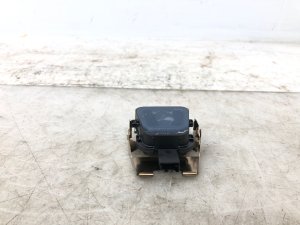
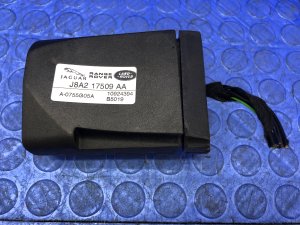
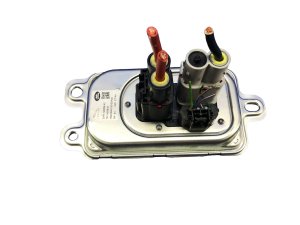
We Have This Part in Stock

The information in this article is provided for general reference and educational purposes only. Vehicle specifications, procedures, and part compatibility can vary by production date, trim level, and region. Always consult your vehicle's factory service manual and verify part numbers before purchasing or performing repairs. Safety-critical components such as airbags, seat belts, and braking systems should be installed by a qualified professional.
- Jaguar E-PACE:
- 🧭 Diagnostic Flowchart
- 🎬 Helpful Videos
- 🛍️ Shop This Part
- What's Unique About the 2018-2019 Jaguar E-PACE
- Symptoms You May Notice
- Most Likely Causes
- Rare But Worth Checking
- Diagnosis Steps
- Parts You'll Likely Need
- Related Codes That Often Appear With This One
- Technical Service Bulletins (TSBs) & Recalls
- Platform-Specific Known Issues
- Hidden / Shadow Codes Worth Checking
- Scan Tool Commands That Help
- Wiring & Ground Locations
- Real Owner Repair Stories
- OEM Part Supersession History
- Model Year Variations Within This Range
- 🎟️ Get 5% Off