

U1000 on 2017-2019 Jaguar F-PACE: BCM Faults, Causes, and Fixes
On a 2017-2019 F-PACE, U1000 almost always means the Body Control Module (BCM) has disabled an electrical circuit due to a repeated short. This is often caused by a faulty component or wiring, such as a fuel door actuator or tailgate harness. The first step is to rule out a weak battery, then use a JLR-specific scan tool to identify which circuit has the short before attempting to reset the BCM.
- U1000 on a 2017-2019 F-PACE is not a vague error; it means the Body Control Module (BCM) has shut down a specific electrical circuit to protect itself from a short.
- Do NOT replace the BCM first. The problem is almost always a short in wiring or a connected part (like a light or motor).
- A professional diagnosis with Jaguar-specific tools is required to find the shorted circuit and re-enable the protected output in the BCM after the repair.
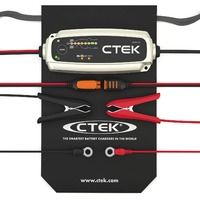
- Always check the battery first. These vehicles are very sensitive to low voltage, which can cause many electrical faults.
What's Unique About the 2017-2019 Jaguar F-PACE
Unlike many vehicles where U1000 is a vague network communication error, Jaguar Land Rover (JLR) uses this code very specifically across its model range, including the F-PACE. On the F-PACE and other JLR models of this era, the BCM is designed to enter a self-preservation mode when it detects a recurring short circuit. This means the U1000 code is a direct pointer to a BCM that has actively shut down a problematic circuit, rather than just a loss of communication between modules. This makes diagnosis more direct, as it guides technicians to look for accompanying short-circuit-related fault codes (ending in -11, -12, -14, or -15).
Diagnostic Flowchart
Tap your situation to follow the diagnostic path that matches what you're seeing on this vehicle.
Symptoms You May Notice
- Exterior or interior lights not working (e.g., tail lights, brake lights)
- Sunroof blind inoperative
- Power steering wheel adjustment not working
- ECO start/stop system unavailable
- Warning lights on the dashboard, sometimes a cascade of unrelated warnings
- Erratic behavior of other electronics like power locks or windows
- Parasitic battery drain leading to a 'Low Battery' warning
- Fuel filler door failing to unlock
- Inoperative tailgate/liftgate functions
- Replacing the Body Control Module (BCM) without first finding the underlying short circuit. The TSB SSM74171 explicitly warns against this, as the new BCM will likely enter protection mode as well if the short is not fixed.
Most Likely Causes
- Short Circuit in a Component or Wiring 🔴 High Probability Complex electronics and numerous features increase the potential points of failure. Known weak points include the fuel door actuator and wiring harnesses in high-flex areas like the tailgate. Wiring for accessories like trailer hitches can also be a source of shorts if installed improperly.
How to confirm: Use a JLR-specific scan tool to find other DTCs ending in -11, -12, -14, or -15, which indicate a short circuit. Trace the circuit identified by the secondary code (e.g., P04BB-12 for the fuel door) and inspect its wiring and component for damage. Common areas to inspect are the tailgate wiring harness for chafing and the fuel door actuator connector for corrosion.
Typical fix: Repair the damaged wiring or replace the faulty component (e.g., light assembly, actuator, or motor). After the repair, the BCM's protected output must be re-enabled using the 'Enable Protected Outputs' function in a dealer-level scan tool.
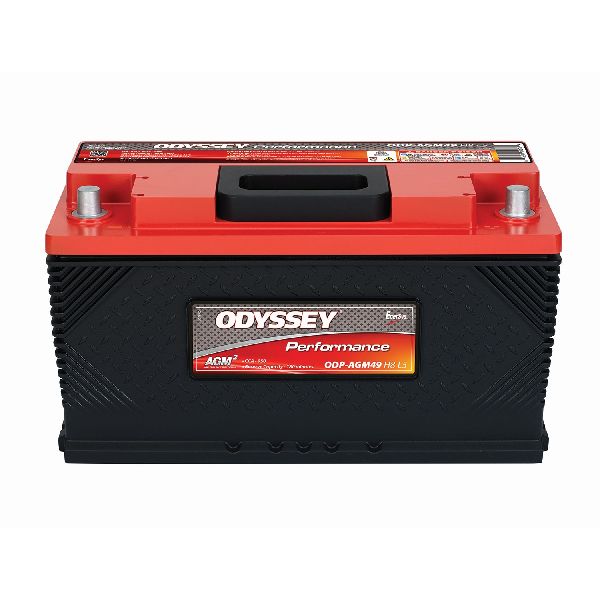
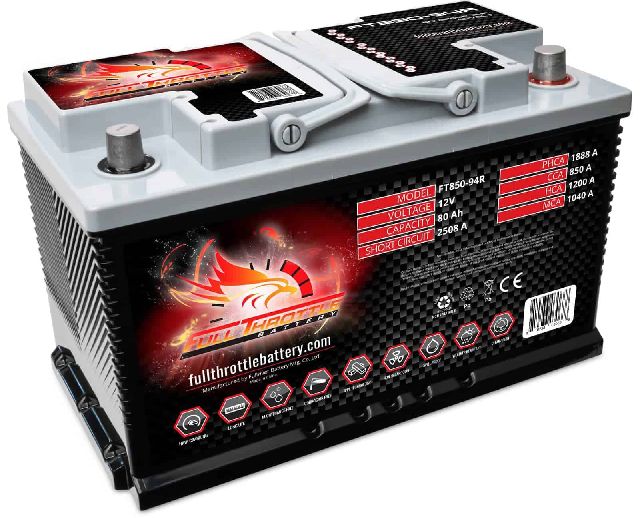
Est. part cost: $50-$500 - Weak or Failing Battery 🟡 Medium Probability → Shop Vehicle Battery Modern Jaguars are highly sensitive to battery voltage. A weak battery can cause numerous, seemingly unrelated electronic glitches and communication faults, sometimes triggering a U1000 code during startup voltage drops.
How to confirm: Test the battery voltage at rest (should be ~12.6V) and while the engine is running (should be ~13.7-14.7V). A professional load test is the most definitive way to confirm battery health. Multiple forum threads confirm that a low battery is the first thing to check for any electrical gremlins.
Typical fix: Replace the vehicle's 12V battery and register the new battery with the vehicle's Battery Management System (BMS) using a compatible scan tool.
Est. part cost: $250-$500 - Faulty Body Control Module (BCM) ⚪ Low Probability → Shop Body Control Module While the BCM is usually disabling an output to protect itself, an internal failure of the BCM's driver circuit can also trigger this code. This can sometimes be caused by voltage spikes or repeated clearing of the U1000 code without fixing the external short.
How to confirm: This is a diagnosis of exclusion. If a short circuit cannot be found in any external wiring or component, and the BCM cannot be reset using diagnostic tools, the module itself is suspect. The TSB specifically advises against replacing the BCM as a first step.
Typical fix: Replace the Body Control Module and program the new unit to the vehicle using JLR-specific software. This is a job for a dealer or specialist. Some third-party services may be able to repair the original BCM.
Est. part cost: $800-$1500
Rare But Worth Checking
- Tailgate Wiring Harness Chafing: → Shop Body Wiring Harness
Diagnosis Steps
- Check and charge the battery. Ensure it is healthy and providing stable voltage (at least 12.6V at rest). Low voltage is a common cause of electronic issues on these vehicles.
- Connect a JLR-approved diagnostic tool (like SDD or Pathfinder).
- Scan all modules for Diagnostic Trouble Codes (DTCs). Pay close attention to any codes stored in the BCM.
- Specifically look for codes that accompany U1000, especially those ending in -11 (short to ground), -12 (short to battery), -14, or -15, as these indicate a short circuit.
- Identify the circuit associated with the short-circuit code (e.g., left rear tail light, fuel door actuator, sunroof blind).
- Thoroughly inspect the wiring harness and connectors for that circuit, looking for chafing, corrosion, or damage. Pay special attention to known problem areas like the fuel door and tailgate harness.
- Test the component on that circuit (e.g., the bulb, motor, or actuator) to see if it has failed internally.
- Once the short circuit has been repaired and confirmed fixed with a multimeter, use the 'Enable Protected Outputs' function in the JLR diagnostic software to reset the BCM and clear the U1000 code.
- Clear all codes and test the repaired circuit to ensure it functions correctly and the code does not return.
Parts You'll Likely Need
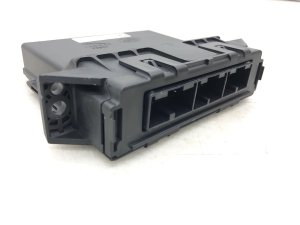
- Body Control Module (BCM)
(OEM #HPLA-14F041-BG (example))— While it's often not the root cause, if all external shorts are ruled out, the BCM itself may have an internal fault. Replacement is a last resort after thorough diagnosis. Part numbers are highly specific to the vehicle's features.
Trusted brands: Jaguar (OEM)
OEM price range: $800-$1500 - Vehicle Battery — Low or unstable battery voltage is a frequent trigger for various electronic communication faults in modern Jaguar vehicles.
Trusted brands: Bosch, Interstate, Varta (AGM Type Recommended)
OEM price range: $400-$600
Aftermarket price range: $250-$400 - Fuel Filler Door Actuator
(OEM #C2Z13877)— This is a well-documented component that can short out or fail, causing the BCM to set a U1000 code to protect the circuit. It is shared across several Jaguar models.
Trusted brands: Jaguar (OEM)
OEM price range: $75-$95
Aftermarket price range: $30-$60
Related Codes That Often Appear With This One
- U3000-49 — This code for 'Control Module - Internal Electronic Failure' can appear alongside U1000 when the BCM detects a serious internal or external fault that forces it into a protective shutdown.
- P04BB-12 — This code for the 'Fuel Filler Door Lock Circuit' indicates a short to battery. A faulty fuel door actuator is a known cause that can make the BCM trigger U1000 to protect that circuit.
- Any DTC ending in -11, -12, -14, or -15 — These suffixes indicate the type of short circuit detected (e.g., short to ground, short to power). They are the primary codes that identify the root cause, while U1000-00 indicates the BCM's reaction to that short.
Technical Service Bulletins (TSBs) & Recalls
- SSM74171: States that U1000-00 is set when the BCM enters a self-protection mode due to repeated short circuits, disabling outputs for things like lighting or other accessories. It advises against replacing the BCM and instructs technicians to find and fix the short first using JLR diagnostic tools to identify codes ending in -11, -12, -14, or -15.
- SSM74176: A nearly identical TSB for Land Rover models that confirms this U1000-00 definition and diagnostic procedure is standard across JLR platforms of the era, including platform-mate Range Rover Velar.
Platform-Specific Known Issues
- Tailgate Wiring Harness Failure: → Shop Body Wiring Harness The wiring that runs through the flexible conduit between the body and the tailgate is a known point of failure. Over time, wires for the tailgate lock, license plate lights, or rear wiper can chafe and short-circuit, leading the BCM to d
Mechanic-Grade Diagnostic Values
- CAN Bus Network Resistance — expected: Approximately 60 Ω. Failure: A reading of 120 Ω indicates an open circuit in the main harness or a disconnected terminating module. A reading significantly lower than 60 Ω (e.g., ~40 Ω) could suggest a third terminating resistor (from an aftermarket device) or a faulty module transceiver.
- CAN Bus Voltage (for reference) — expected: Idles at ~2.5V. A 'dominant' bit will show ~3.5V on CAN High and ~1.5V on CAN Low.. Failure: These values cannot be accurately measured with a standard multimeter due to the data speed. An oscilloscope is required for proper voltage analysis. Incorrect average readings on a multimeter are not a reliable indicator of a fault.
Scan Tool Commands That Help
- JLR Pathfinder/SDD: BCM - Enable Protected Outputs — This function is required after a physical short circuit has been repaired. It resets the BCM's internal latch (sometimes called a Customer Symptom on Output or CSO) that disabled the specific circuit and triggered the U1000-00 code.
- JLR Pathfinder: Configure new module - Body Control Module — This programming function is mandatory when replacing the BCM. The new module must be coded to the vehicle's VIN and configuration, otherwise the immobilizer will prevent the engine from starting.
- Manual Procedure (No Tool): Sunroof Blind Motor Initialization/Reset — If the sunroof blind is inoperative or has lost one-touch functionality after a battery disconnect or voltage fluctuation, this can re-synchronize the motor. Press and hold the 'close' (forward) position on the sunshade switch for 15-30 seconds with the ignition on.
Wiring & Ground Locations
- Body Control Module (BCM) / Passenger Compartment Fuse Box — Located in the passenger footwell, behind the A-pillar cowl trim panel. On a Left-Hand Drive (LHD) vehicle, this is on the right side. On a Right-Hand Drive (RHD) vehicle, it is on the left side.. This is the module that sets the U1000 code. Physical inspection of its connectors is necessary if water intrusion (a known F-Pace issue) or a wiring fault at the module itself is suspected.
- Rear Ground Stud — A factory ground stud is located on the left-hand side of the vehicle in the rear cargo area.. This ground point is used by various rear body components, including factory and aftermarket trailer wiring modules. A loose or corroded connection here can cause intermittent short-to-ground faults for circuits like tail lights, triggering a U1000 code.
- OBD-II DLC Connector — Driver's side footwell, under the dashboard.. Pin 6 (CAN High) and Pin 14 (CAN Low) are used to test the resistance of the main CAN bus backbone to quickly check for network integrity issues.
OEM Part Supersession History
GX73-14F041-AJ, GX73-14F041-AK→GX73-14F041-AM— Internal hardware or software revisions by the manufacturer.
Heads up: These part numbers appear specific to the 2017 model year. Using a BCM from a different model year range may cause incompatibility issues. Always match part numbers exactly or confirm with a dealer.T4A33290, T4A34722→475123465— Part consolidation and revisions for later model years.
Heads up: These part numbers are listed for 2019-2020 F-Pace models, indicating a potential change in BCM hardware or suppliers from the earlier 2017 models.
Model Year Variations Within This Range
- 2017 vs. 2019-2020: The OEM part numbers for the Body Control Module (BCM) are different, suggesting a hardware or supplier change. For example, 2017 models often use a 'GX73' prefix part number, while later models may use 'T4A' or other prefixes. This means modules are not directly interchangeable between these year ranges without careful part number verification.
Helpful Videos
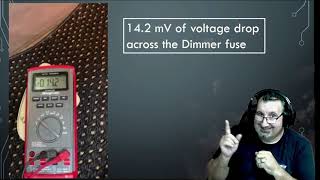


Used OEM Parts in Stock
New Aftermarket Parts Available

The information in this article is provided for general reference and educational purposes only. Vehicle specifications, procedures, and part compatibility can vary by production date, trim level, and region. Always consult your vehicle's factory service manual and verify part numbers before purchasing or performing repairs. Safety-critical components such as airbags, seat belts, and braking systems should be installed by a qualified professional.
- Jaguar F-PACE:
- 🧭 Diagnostic Flowchart
- 🎬 Helpful Videos
- 🛍️ Shop This Part
- What's Unique About the 2017-2019 Jaguar F-PACE
- Symptoms You May Notice
- Most Likely Causes
- Rare But Worth Checking
- Diagnosis Steps
- Parts You'll Likely Need
- Related Codes That Often Appear With This One
- Technical Service Bulletins (TSBs) & Recalls
- Platform-Specific Known Issues
- Mechanic-Grade Diagnostic Values
- Scan Tool Commands That Help
- Wiring & Ground Locations
- OEM Part Supersession History
- Model Year Variations Within This Range
- 🎟️ Get 5% Off