

U1000 on 2014-2019 Jaguar F-TYPE: BCM Fault Causes and Fixes
On a 2014-2019 Jaguar F-TYPE, code U1000 indicates the Body Control Module (BCM) has disabled an electrical circuit due to a repeated short. This is a protective measure. The fix is to find and repair the underlying short circuit in a component or wiring, then use a Jaguar-specific scan tool to reset the BCM. Do not replace the BCM unless it is confirmed to be the source of the fault.
- U1000 on your F-TYPE is not a generic communication error; it means the Body Control Module (BCM) has shut down a specific electrical circuit to protect itself from a short.
- DO NOT replace the BCM as a first step. The fault is almost always an external component or wire.
- A Jaguar-specific scan tool is required to find the exact shorted circuit and to reset the BCM after the repair.
- Always check the health of your battery, as low voltage is a known cause of electrical problems in these cars.
What's Unique About the 2014-2019 Jaguar F-TYPE
On many vehicles, U1000 is a vague network communication error. For Jaguar Land Rover (JLR) vehicles of this era, it's a very specific and actionable code pointing to a BCM self-protection event. The BCM is designed to sacrifice the function of one circuit to prevent catastrophic damage to the module itself from repeated short circuits. This is often triggered by something as simple as a bad bulb or a frayed wire in a high-movement area like the trunk lid harness. It can also be caused by low battery voltage during startup, which these vehicles are notoriously sensitive to.
Diagnostic Flowchart
Tap your situation to follow the diagnostic path that matches what you're seeing on this vehicle.
Symptoms You May Notice
- One or more exterior lights not working (headlights, tail lights, turn signals)
- Interior lights not functioning
- Power-adjustable steering column not working or stuck.
- Sunroof or convertible top issues, such as being stuck open or closed.
- ECO start/stop system unavailable.
- Parasitic battery drain that kills the battery when parked.
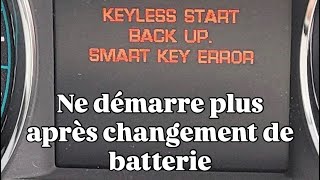
- In severe cases, a 'Smart Key Not Found' message and a no-start condition.
- Fuel filler door lock inoperative.
- Multiple, seemingly unrelated electrical gremlins.
- Message 'Steering Column Locked' on the dash.
- Replacing the Body Control Module (BCM) without finding the root cause. The U1000 code is a symptom of an external problem, and a new BCM will likely enter the same protective mode if the short circuit isn't fixed.
- Treating it as a generic CAN bus network failure. Technicians unfamiliar with Jaguar's specific definition may waste time checking the entire vehicle network instead of focusing on the BCM's outputs.
- Replacing the battery without fixing an underlying parasitic drain caused by a short circuit. A new battery will also be drained, and the electrical faults will return.
Most Likely Causes
- Short Circuit in a Component or Wiring 🔴 High Probability Wiring harnesses, especially those in areas exposed to movement or the elements (like trunk lids or convertible top mechanisms), can chafe over time, causing wires to break or short out. Aftermarket electrical accessories can also introduce shorts if not installed correctly. A common failure point is the trunk/boot wiring harness, which can lead to boot release and light failures.
How to confirm: Use a Jaguar-specific scan tool to find related DTCs ending in -11, -12, -14, or -15, which pinpoint a specific short circuit fault. Visually inspect the wiring and connectors for the non-functioning component. For example, if the trunk release fails, inspect the harness where it flexes near the hinge.
Typical fix: Repair the damaged wiring by soldering and using heat-shrink tubing, or replace the faulty component (e.g., light bulb assembly, door lock actuator). In some cases, replacing the affected section of the wiring loom is the most reliable long-term solution.
Est. part cost: $5 - $400 - Weak or Failing Battery 🟡 Medium Probability → Shop Vehicle Battery Modern Jaguar electrical systems and modules are highly sensitive to voltage. A drop in voltage during startup can cause modules to behave erratically, log spurious faults, and even trigger a protective shutdown. The F-TYPE's charging system can be insufficient for cars that are only driven short distances, leading to a chronically undercharged battery. Even a new battery can cause issues if it wasn't fully charged before installation.
How to confirm: Test the battery's voltage and load capacity. A healthy AGM battery should read approximately 12.6-12.8 volts at rest and maintain voltage above 9-10 volts during cranking. Many owners report that electrical issues appear when the resting voltage drops below 12.4V. Even if the car starts, the battery may not have enough voltage for all modules to operate correctly.
Typical fix: Replace the vehicle's 12V AGM battery and ensure the new battery is fully charged before installation and correctly registered to the vehicle's charging system (BMS reset). Using a battery maintainer (like a CTEK) is highly recommended for vehicles not driven daily.
Est. part cost: $250 - $500 - Corrupted BCM Software ⚪ Low Probability Voltage spikes from improper jump-starting or battery replacement can sometimes corrupt the BCM's data, leading to it entering a permanent self-protection mode.
How to confirm: This is a diagnosis of exclusion. If an external short is repaired but the BCM output cannot be re-enabled using the proper diagnostic tool, software corruption is a possibility. A specialist with JLR tools would need to attempt to re-flash the module.
Typical fix: A specialist can sometimes repair or 'virginize' the BCM software. Otherwise, the BCM must be replaced and programmed by a dealer or qualified independent shop using SDD or Pathfinder. Cloning services are also available if you can provide the original and a compatible used module.
Est. part cost: $500 - $1500
Rare But Worth Checking
- Internal BCM Hardware Failure: This is the least likely cause. Jaguar's TSBs explicitly advise against replacing the BCM as a first step. This should only be considered after all other possibilities, including external shorts and wiring, have been exhaustively checked.
- Water Intrusion: On convertible F-TYPEs, clogged roof drains can cause water to accumulate and damage the convertible top modules, motors, or wiring, leading to shorts that trigger the U1000 code. On coupes, leaking windshield seals can potentially allow water to drip onto the BCM or other interior electronics, a known issue in the wider Jaguar family.
Diagnosis Steps
- Connect a Jaguar-specific diagnostic tool (SDD or Pathfinder). Do not rely on a generic OBD-II reader. A battery support unit supplying stable voltage is required.
- Scan for all Diagnostic Trouble Codes (DTCs). Specifically look for the U1000-00 code in the Body Control Module (BCM).
- Identify accompanying codes that pinpoint the exact circuit at fault (e.g., codes for a specific light, lock, or sensor that end in -11, -12, -14, or -15).
- Thoroughly inspect the component and wiring harness associated with the identified short circuit. Pay close attention to flex points like door hinges, trunk lid harnesses, and convertible top mechanisms.
- Repair the wiring or replace the faulty component.
- Once the physical repair is complete, use the Jaguar diagnostic software to reset the BCM. For SDD, navigate to 'Service Functions' and run 'Body systems - Enable Protected Outputs'. For Pathfinder, go to 'ECU Diagnostics' -> 'Body Control Module [BCM]' -> 'ECU Functions' -> 'Enable Protected Outputs'.
- Follow all on-screen instructions to complete the task.
- Clear all DTCs and verify that the previously non-functioning component now works correctly and the U1000 code does not return.
Parts You'll Likely Need
- Body Control Module (BCM)
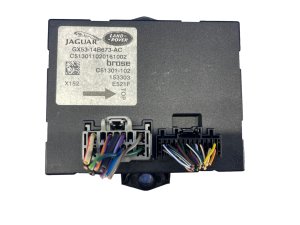
(OEM #FW93-14F041-AF, JPLA-14F041-BG (Note: Part numbers are specific to vehicle options and year, always verify with VIN))— This is only needed in the rare case that the module itself has failed internally or its software is irreparably corrupted. It is almost never the first part to replace.
Trusted brands: Jaguar (OEM)
OEM price range: $800 - $1500 - AGM Battery — A weak battery is a common trigger for various electrical faults on this platform.
Trusted brands: Bosch, Interstate, Deka, Champion
OEM price range: $400 - $500
Aftermarket price range: $250 - $350 - Trunk/Boot Lid Wiring Harness — This harness is a common failure point due to repeated flexing, causing shorts in the wiring for the trunk lock, camera, and lights, which can trigger a U1000 code.
Trusted brands: Jaguar (OEM)
OEM price range: $200 - $300
Related Codes That Often Appear With This One
- B-series, C-series, or U-series codes ending in -11, -12, -14, or -15 — These codes indicate the specific circuit that has a short to ground or a short to power, which is the root cause that triggers the U1000 protection mode.
- U3000-49 — This code indicates an internal electronic failure within a control module and can sometimes appear alongside U1000 if the BCM has been damaged or its software corrupted.
- P04BB-12 — This is a specific example of a code for a short circuit in the fuel filler door lock, which is a known trigger for U1000-00 on JLR vehicles.
Technical Service Bulletins (TSBs) & Recalls
- SSM74171: BCM outputs not functioning with U1000-00 DTC. This TSB is the primary source for understanding this code, explaining it as a BCM self-protection feature and outlining the reset procedure for both SDD and Pathfinder software. It lists affected systems like lighting, sunroof, and steering column adjust.
- SSM74176: A nearly identical TSB for Land Rover models, confirming this is a JLR-wide fault strategy and not unique to Jaguar.
Platform-Specific Known Issues
- Jaguar issued Technical Service Bulletin #SSM74171 which details that U1000-00 is set when the BCM enters a self-protection mode due to repeated short circuits. It explicitly states NOT to replace the BCM, but to find the short and use diagnostic software to re-enable the disabled output.
- Convertible top failures are a known, complex issue. Problems can stem from low battery voltage, faulty position sensors, water damage from clogged drains, or wiring harness shorts, any of which could lead to a U1000 code.
- Power steering column adjustment failure is another specific symptom. The column may fail to move, which can be caused by a bad connector, a faulty motor, or a BCM-disabled circuit, sometimes requiring recalibration with a dealer tool after the fix.
Mechanic-Grade Diagnostic Values
- AGM Battery Voltage (Resting, Engine Off) — expected: 12.6V to 12.8V. Failure: A reading below 12.4V suggests a discharged or failing battery that can cause spurious electrical faults.
- Battery Voltage (During Engine Cranking) — expected: Above 9.0V, typically 9V-11V. Failure: A drop below 9.0V indicates a weak battery unable to supply sufficient power for all modules to initialize correctly.
- Charging System Voltage (Engine Running) — expected: 13.2V to 14.8V. Failure: Voltage outside this range indicates a problem with the alternator or voltage regulator. Importantly, AGM batteries can be damaged if charged above 14.8V.
- Ground Circuit Voltage Drop — expected: Less than 0.2 Ω resistance. Failure: Higher resistance indicates a poor ground connection, which can cause intermittent and unpredictable module behavior.
Hidden / Shadow Codes Worth Checking
- DTCs ending in -11, -12, -14, or -15: These suffixes on other B, C, or U-series codes are not hidden but are critical details that specify the type of short circuit (e.g., short to ground, short to power) that caused the BCM to trigger the U1000-00 protection mode. (see via Jaguar SDD or Pathfinder diagnostic tool.)
Scan Tool Commands That Help
- Jaguar SDD: Service Functions -> Body systems - Enable Protected Outputs — This is the mandatory final step after finding and physically repairing the short circuit. It commands the BCM to restore power to the output that it disabled. This function requires SDD version 155.00 or later.
- Jaguar Pathfinder: ECU Diagnostics -> Body Control Module [BCM] -> ECU Functions -> Enable Protected Outputs — This is the mandatory final step for newer vehicles supported by Pathfinder, used after repairing the short circuit to reset the BCM's protected driver. This function requires Pathfinder version 201 or later.
- JLR Approved Diagnostic Equipment: Battery Support Unit Connection — A battery support unit must be connected to the vehicle during any diagnostic or programming procedure, including enabling protected outputs, to ensure stable voltage and prevent module corruption.
Wiring & Ground Locations
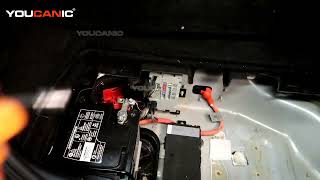
- Luggage Compartment Grounds — In the trunk/boot area, near the battery.. The BCM is often referred to as the Central Junction Box, located behind the rear seat back. Poor grounding in this area can cause a wide range of BCM-related faults.
- Convertible Top Module/Harness — Behind the seats, in the storage area for the convertible top.. This area is prone to water damage from clogged drains. The wiring harness and control modules for the top are located here, and corrosion can cause shorts that trigger a U1000 code in the BCM.
- A-Pillar / Passenger Footwell Connectors — Behind the kick panels in the passenger footwell and up the A-pillar.. This area contains several major harness connectors. Water leaks from a windshield seal or sunroof drain could potentially affect these connections, leading to shorts.
Real Owner Repair Stories
- Reddit user in r/AskMechanics (2014 Jaguar F-Type V8 S Convertible) — Convertible top was completely inoperative; no response from the switch.
❌ Tried (didn't work) A European specialist shop and a Jaguar dealer replaced both convertible top control units, the wiring harness, and the Body Control Unit (BCM), but the top still would not communicate or operate.
✅ What actually fixed it The root cause was water damage to the left convertible top control unit and its wiring harness from a leak in the canvas top. The story highlights the diagnostic difficulty, as even replacing all affected parts did not immediately solve the problem, suggesting potential programming or further hidden wiring issues. - JaguarForums user (2013 Jaguar XF Sportbrake 2.2 (similar JLR electronics)) — Car would not start. SDD scan showed codes U1000-00 and U3000-49 in the rear BCM (BCMB).
❌ Tried (didn't work) Owner checked all connectors for corrosion and found nothing. Purchased a used BCMB to swap.
✅ What actually fixed it A responding user identified that these specific codes are commonly for the fuel flap door actuator. When the actuator shorts or fails, the BCMB disables that driver and logs these codes. The user clarified this was likely unrelated to the no-start condition, preventing a misdiagnosis of replacing the BCMB for the starting issue. - JaguarForums user (2014 Jaguar F-Type Convertible) — Convertible roof stopped working.
❌ Tried (didn't work) Diagnosed system, suspected water in the left side module, and replaced it with a used one which only worked for a day.
✅ What actually fixed it The user later posted, "Officially fixed the car couple weeks ago." While not providing the specific final repair detail, it confirms that a water-damaged convertible top module was the root of the problem and was ultimately fixable.
"I Checked Everything" — The Actual Cause
- In cases involving the convertible F-TYPE, a standard visual or electrical test of wiring harnesses may show no obvious damage. The true cause is often water intrusion from clogged roof drains located behind the seats. This water submerges the convertible top control module and its connectors, causing internal corrosion and short circuits that are not externally visible, leading to the BCM setting a U1000 code.
OEM Part Supersession History
FW93-14F041-AE→FW93-14F041-AF (also listed as C2D49819)— Standard part revision for bug fixes or hardware updates.
Heads up: Part numbers are critical. A module from a different VIN range or model year may not be compatible due to changes in vehicle functionality. If replacing with a used module, part numbers must match exactly, and cloning of the original module's data is often required.
Model Year Variations Within This Range
- 2014-2019: The diagnostic software required to perform a BCM reset changed. TSBs specify that resetting the BCM requires a minimum of SDD version 155.00 or Pathfinder version 201 (or later, 203 is also mentioned). This indicates that as the model years progressed, the software tools evolved, and older versions of the dealer tool may not work on later cars within this range.
Helpful Videos
Used OEM Parts in Stock
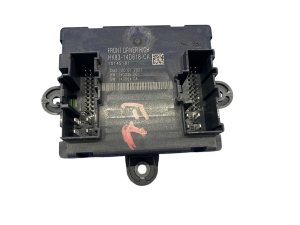
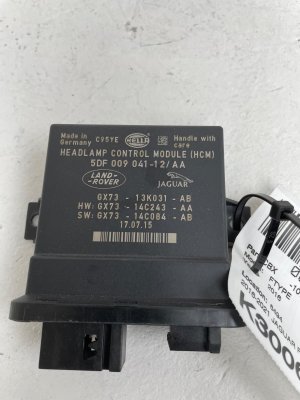
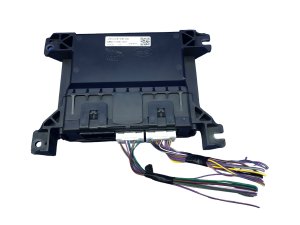
New Aftermarket Parts Available
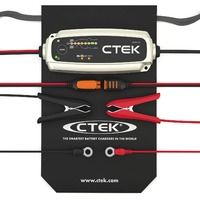

The information in this article is provided for general reference and educational purposes only. Vehicle specifications, procedures, and part compatibility can vary by production date, trim level, and region. Always consult your vehicle's factory service manual and verify part numbers before purchasing or performing repairs. Safety-critical components such as airbags, seat belts, and braking systems should be installed by a qualified professional.
- Jaguar F-TYPE:
- 🧭 Diagnostic Flowchart
- 🎬 Helpful Videos
- 🛍️ Shop This Part
- What's Unique About the 2014-2019 Jaguar F-TYPE
- Symptoms You May Notice
- Most Likely Causes
- Rare But Worth Checking
- Diagnosis Steps
- Parts You'll Likely Need
- Related Codes That Often Appear With This One
- Technical Service Bulletins (TSBs) & Recalls
- Platform-Specific Known Issues
- Mechanic-Grade Diagnostic Values
- Hidden / Shadow Codes Worth Checking
- Scan Tool Commands That Help
- Wiring & Ground Locations
- Real Owner Repair Stories
- "I Checked Everything" — The Actual Cause
- OEM Part Supersession History
- Model Year Variations Within This Range
- 🎟️ Get 5% Off