

U1000 on 2016-2019 Jaguar XF: Causes for BCM Communication Faults and Fixes
On a 2016-2019 Jaguar XF, code U1000 means the Body Control Module (BCM) has disabled an electrical circuit due to a repeated short. The most common causes are a weak battery or a fault in an external component like a tail light or trunk wiring. Do not replace the BCM first; find and fix the short, then reset the BCM with a professional Jaguar scan tool.
- U1000 on your Jaguar XF means the Body Control Module (BCM) has shut down a circuit to protect itself from a short.
- DO NOT replace the BCM first. This is an expensive mistake. The problem is almost always an external short in a wire or component (like a light).
- Always test the battery first. Low voltage is a very common trigger for this code on modern Jaguars.
- A Jaguar-specific scan tool is required to find the exact circuit that is shorted and to reset the BCM after the repair is complete.
- If you see this code after a battery change or jump-start, the BCM's software may be corrupted and require a reset or re-flash by a professional.
What's Unique About the 2016-2019 Jaguar XF
Unlike many vehicles where U-codes suggest a general network failure, on this Jaguar platform, U1000 is a specific BCM self-protection status. Critically, Jaguar Technical Service Bulletin SSM74171 explicitly warns *not* to replace the BCM as a first step. The correct procedure is to find the external short circuit that caused the BCM to protect itself, repair it, and then use a Jaguar-specific diagnostic tool (like SDD or Pathfinder) to re-enable the protected circuit. Modern Jaguars are also extremely sensitive to battery voltage, and a weak battery can cause modules to behave erratically, triggering these faults.
Diagnostic Flowchart
Tap your situation to follow the diagnostic path that matches what you're seeing on this vehicle.
Symptoms You May Notice
- One or more exterior lights not working (e.g., tail lights, license plate lights).
- Third brake light (high-mounted stop lamp) inoperative.
- Interior lights not functioning.
- Sunroof blinds inoperative.
- Power steering wheel adjustment not working.
- Central locking or keyless entry failure.
- "Smart Key Not Found" message on the dashboard.
- Windshield washers not working.
- Multiple, seemingly unrelated warning lights on the instrument cluster.
- Trunk release button on the lid, key fob, and interior switch not working.
- Replacing the Body Control Module (BCM). This is the most common and expensive mistake. The U1000 code is a signal that the BCM is working correctly by protecting itself from an external short. Replacing the BCM without fixing the underlying short will only cause the new BCM to enter protection mode as well.
Most Likely Causes
- Weak or Failing Battery 🔴 High Probability → Shop Vehicle Battery Modern Jaguars have high electrical demands and complex battery management systems. Low voltage during startup or operation can cause modules to behave erratically, leading to spurious faults and communication errors that can be misinterpreted by the BCM as a short.
How to confirm: Perform a load test on the battery. A simple voltage check is insufficient. The battery should be fully charged and tested with a professional battery tester. Many owner forums report that a battery older than 4 years is a prime suspect for any electrical gremlin.
Typical fix: Replace the battery with a high-quality AGM (Absorbent Glass Mat) equivalent and register the new battery with the 🎬 See how to perform a battery monitoring system reset. vehicle's system using a diagnostic tool.
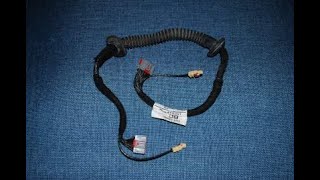
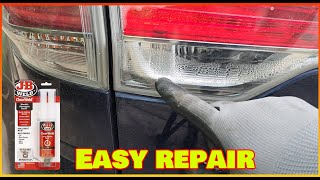
Est. part cost: $250-$450 - Short Circuit in an External Component or Wiring 🔴 High Probability This is the direct cause for the BCM entering protection mode. Common failure points include the trunk lid wiring harness, where wires fatigue and break from repeated opening and closing, and water ingress into the tail light assemblies causing short circuits on the internal circuit board.
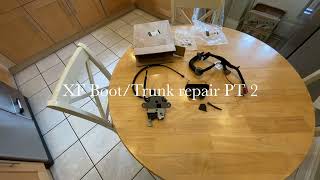
How to confirm: Use a Jaguar-specific scan tool to identify which circuit the BCM has disabled. The tool will often show other DTCs ending in -11, -12, -14, or -15, which indicate a short circuit. Then, perform a physical inspection and electrical testing of that specific circuit. For trunk wiring, peel back the rubber conduit between the body and trunk lid 🎬 Watch this video to see how to repair trunk wiring. to inspect for broken wires. For tail lights, look for condensation or water inside the lens.
Typical fix: Repair the damaged wiring (solder and heat shrink) or replace the faulty component (e.g., a tail light assembly, trunk wiring harness). After the repair, the BCM's protected output must be re-enabled using the 'Enable Protected Outputs' function in SDD or Pathfinder.
Est. part cost: $5-$500 - Corrupted BCM Software or Data 🟡 Medium Probability Voltage fluctuations, especially during a battery change or jump-start, can corrupt the BCM's software or configuration data. This can cause it to improperly manage its outputs or enter a permanent protection mode that cannot be reset by the standard dealer procedure. This often presents with both U1000-00 and U3000-49 codes.
How to confirm: This is diagnosed after confirming the battery is healthy and no external shorts exist. If the BCM output cannot be re-enabled with a diagnostic tool, software corruption is likely.
Typical fix: A specialist can perform a software fix to repair the module and re-enable the output. Some services can 'clone' the data from the original BCM to a used donor unit, avoiding the high cost and programming requirements of a new module from the dealer.
Est. part cost: $0 (if part of other labor)
Rare But Worth Checking
- Internal BCM Failure: This should be the last consideration. TSB SSM74171 explicitly states NOT to replace the BCM as a first step. The U1000 code is a sign the BCM is *protecting* itself from an external fault, not that the BCM itself has failed. However, in rare cases of severe water damage or if a software repair fails, the module itself can be the root cause.
- Water Intrusion: On some Jaguar Land Rover platforms, clogged sunroof drains or leaking windshield seals can allow water to drip directly onto the BCM (located in the driver's footwell), causing corrosion and failure. More commonly for this code, water leaks into a tail light assembly, causing the external short that triggers the U1000 code.
Diagnosis Steps
- Connect a Jaguar Land Rover (JLR) approved battery support unit to maintain stable voltage (12.6V or higher).
- Scan all vehicle modules with a JLR-approved diagnostic tool (like SDD or Pathfinder). 🎬 Watch this guide on using JLR SDD diagnostic software.
- Check for the U1000-00 code in the Body Control Module (BCM).
- Look for any other DTCs, especially those with suffixes indicating a short circuit (-11, -12, -14, -15). These codes will point to the specific circuit that is causing the problem.
- Thoroughly inspect the wiring, connectors, and components of the circuit identified in the previous step. Pay close attention to the trunk lid wiring harness (inside the rubber boot) and tail light assemblies for water ingress.
- Test the circuit with a multimeter to confirm the location of the short to ground or short to power.
- Repair the wiring or replace the faulty component.
- Once the physical repair is complete, connect the JLR diagnostic tool again.
- For Pathfinder: Navigate to 'ECU Diagnostics' -> 'Body Control Module [BCM]' -> 'ECU Functions' -> 'Enable Protected Outputs'.
- For SDD: Navigate to 'Service Functions' -> 'Body systems - Enable Protected Outputs'.
- Follow the on-screen prompts to reset the BCM and re-enable the disabled circuit.
- Clear all DTCs and re-scan to confirm that U1000 and the related short-circuit codes do not return.
Parts You'll Likely Need
- AGM Battery — Low or unstable battery voltage is a primary trigger for electrical and communication faults on this platform.
Trusted brands: Bosch, Interstate, DieHard
OEM price range: $350-$500
Aftermarket price range: $250-$450 - Trunk Lid Wiring Harness
(OEM #C2Z19978 (example for earlier X250, verify for X260))— The wires in this harness are a known weak point, prone to breaking from the repeated motion of opening and closing the trunk, causing shorts in the third brake light, license plate lights, or trunk release actuator.
Trusted brands: Jaguar (OEM)
OEM price range: $150-$300
Aftermarket price range: N/A - Tail Light Assembly
(OEM #GX23-13W029-xx (example format))— The seals on the tail light assemblies can fail, allowing water to enter and short out the internal LED circuit board. This is a very common cause of the short that triggers the U1000 code.
Trusted brands: Jaguar (OEM)
OEM price range: $400-$600
Aftermarket price range: $150-$300 (Used) - Body Control Module (BCM) / Central Junction Box (CJB)
(OEM #DX23-14B476-AG)— This part is only needed in rare cases of internal failure, often from water damage or if it cannot be reset after a software corruption issue. It is almost never the root cause of the U1000 code.
Trusted brands: Jaguar (OEM), Used (requires cloning service)
OEM price range: $800-$1200
Aftermarket price range: $150-$400 (Used/Repaired)
Related Codes That Often Appear With This One
- U3000-49 — This code for 'Control Module - Internal Electronic Failure' often appears with U1000 when the BCM's software is corrupted or it has entered a locked protective state, often after a battery issue.
- B-series, C-series, or U-series codes ending in -11, -12, -14, or -15 — These suffixes indicate a short circuit to ground or battery. They are the underlying fault codes that cause the BCM to trigger the U1000 protection mode. Finding and fixing the circuit related to these codes is the key to the repair.
Technical Service Bulletins (TSBs) & Recalls
- SSM74171: States that with U1000-00 present, one or more BCM outputs may not function. It instructs technicians NOT to replace the BCM, but to find the external short, repair it, and then use SDD/Pathfinder to run the 'Enable Protected Outputs' routine.
Platform-Specific Known Issues
- Per TSB SSM74171, the BCM on the XF (X260) and related platforms will enter a self-protection mode when it detects repeated short circuits, disabling the affected output and logging U1000-00.
- The trunk lid wiring harness is a common point of failure. Wires passing through the rubber conduit between the body and the trunk lid can chafe and break over time, causing shorts for the third brake light, license plate lights, and trunk latch.
- Water ingress into the outer tail light assemblies is a frequent problem, leading to corrosion and short circuits on the internal electronics, which in turn triggers the BCM's protection mode.
Mechanic-Grade Diagnostic Values
- CAN Bus Resistance at OBD-II Port — expected: ~60 Ohms (with battery disconnected). Failure: A reading of ~120 Ohms indicates an open circuit on the bus or a missing terminating resistor. A reading significantly lower than 60 Ohms suggests a short between the CAN High and CAN Low lines.
- CAN Bus Voltage at OBD-II Port — expected: CAN High (Pin 6) to Ground (Pin 4/5): ~2.5-3.0V. CAN Low (Pin 14) to Ground (Pin 4/5): ~2.0-2.5V. (Key On, Engine Off).. Failure: Voltages that are stuck high, low, or at battery/ground potential indicate a shorted wire or a faulty module transceiver. The sum of CAN High and CAN Low voltages should be approximately 5V.
Hidden / Shadow Codes Worth Checking
- DTCs with suffixes -11, -12, -14, -15: These are not hidden codes, but manufacturer-specific suffixes that pinpoint the actual electrical fault. -11 (short to ground), -12 (short to power), -14 (open circuit), -15 (short to ground/open). The U1000-00 is a *result* of these codes; these are the *cause* that must be diagnosed and fixed. (see via Jaguar SDD or Pathfinder diagnostic software.)
Scan Tool Commands That Help
- JLR SDD / Pathfinder: Body systems - Enable Protected Outputs — This is the mandatory final step after repairing the physical short circuit. It commands the BCM to exit its self-protection mode and restore power to the circuit that was disabled, clearing the U1000 code.
- JLR SDD: Configure New Modules – Central Junction Box (Body Control Module) — This function is used to program a brand new or 'virginized' BCM to the vehicle's specific configuration and VIN.
- JLR SDD / Professional Diagnostic Tool: Immobilisation — This procedure is required after a new or pre-programmed BCM is installed to synchronize it with the vehicle's immobilizer system and keys.
Wiring & Ground Locations
- Body Control Module (BCM) / Central Junction Box (CJB) — Located in the front driver's footwell area, accessible by removing the right kick panel.. This is the module that logs the U1000 code and enters protection mode. Physical access may be needed to check its connectors (e.g., C3BP01D, C3BP01E) for corrosion or damage, especially if water ingress is suspected.
- G3D138 — A ground stud located at the right kick panel, near the Central Junction Box.. A poor ground connection at this point can cause erratic behavior in the BCM, potentially leading to incorrect fault detection and the logging of spurious codes like U1000.
- Trunk Lid Harness — The section of wiring inside the rubber conduit that runs along the right-hand trunk/boot lid hinge.. This is a primary failure point. Constant flexing from opening and closing the trunk causes wires for the lights and latch to break or short, which is a direct cause for the BCM to trigger U1000 protection.
Real Owner Repair Stories
- Go-Parts research based on forum data (Jaguar XF (X260 platform)) — Fuel filler door would not unlock, with codes U1000-00, U3000-49, and P04BB-12 (Fuel Filler Door Lock short circuit) present.
❌ Tried (didn't work) Replacing the faulty fuel filler door lock actuator.
✅ What actually fixed it The U1000 code indicated the BCM had disabled the circuit. Replacing the actuator fixed the short, but the BCM output remained off. The final fix required using Jaguar SDD software to run the 'Enable Protected Outputs' function to reset the BCM and restore power to the new actuator. - CarTechnoloGY forum user (Jaguar XF) — After the battery went flat and was replaced, the rear windows, folding mirrors, and fuel cap stopped working. Fault codes U1000-00 and U3000-49 were stored in the BCM.
✅ What actually fixed it The combination of a flat battery event followed by U1000 and U3000-49 points to BCM data corruption. The resolution is a software fix or re-flashing of the BCM to repair the corrupted data, rather than a wiring repair. - Jaguar Forums user POD XF (2010 Jaguar XF (X250, but same principle applies)) — 'Boot open' warning light on, and trunk would not open electronically.
❌ Tried (didn't work) A temporary wire patch was considered but deemed unreliable long-term.
✅ What actually fixed it The user identified the failure in the trunk lid wiring harness. Recognizing that patching one broken wire would likely lead to future breaks due to the poor design concentrating stress in one spot, the user ordered a complete new harness section from Jaguar to ensure a reliable, long-term repair.
OEM Part Supersession History
DX23-14B476-AD, -AE, -AF, -AJ→DX23-14B476-AG— Revision and update of the BCM/CJB module.
Heads up: The part number DX23-14B476-AH is for the saloon model. While it may allow a Sportbrake (estate) model to run, functions like the rear wash/wipe will not work. It is critical to match the part number or use a compatible superseded version for the correct vehicle body style.
Model Year Variations Within This Range
- c. 2017-2019: The dealer-level diagnostic software transitioned from SDD (Symptom Driven Diagnostics) to Pathfinder. While the function name 'Enable Protected Outputs' remains the same, the menu path to access it differs between the two software platforms.
- 2019: The InControl Touch Pro infotainment system became standard, and a Smartphone Pack with Apple CarPlay® and Android Auto™ was added. While this doesn't directly affect the U1000 fault, it represents a change in the vehicle's electronic modules and software environment.
Helpful Videos


Used OEM Parts in Stock
New Aftermarket Parts Available

The information in this article is provided for general reference and educational purposes only. Vehicle specifications, procedures, and part compatibility can vary by production date, trim level, and region. Always consult your vehicle's factory service manual and verify part numbers before purchasing or performing repairs. Safety-critical components such as airbags, seat belts, and braking systems should be installed by a qualified professional.
- Jaguar XF:
- 🧭 Diagnostic Flowchart
- 🎬 Helpful Videos
- 🛍️ Shop This Part
- What's Unique About the 2016-2019 Jaguar XF
- Symptoms You May Notice
- Most Likely Causes
- Rare But Worth Checking
- Diagnosis Steps
- Parts You'll Likely Need
- Related Codes That Often Appear With This One
- Technical Service Bulletins (TSBs) & Recalls
- Platform-Specific Known Issues
- Mechanic-Grade Diagnostic Values
- Hidden / Shadow Codes Worth Checking
- Scan Tool Commands That Help
- Wiring & Ground Locations
- Real Owner Repair Stories
- OEM Part Supersession History
- Model Year Variations Within This Range
- 🎟️ Get 5% Off