

U1000 on 2010-2017 Jaguar XJ: BCM Communication Fault Causes and Fixes
On a 2010-2017 Jaguar XJ, code U1000 almost always means the Body Control Module (BCM) has shut down an electrical circuit due to a repeated short. The most common underlying causes are a weak battery or a fault in a component like a light, lock actuator, or wiring harness. The fix involves finding and repairing the short, then resetting the BCM with a specialized scan tool to 're-enable' the protected circuit.
- U1000 on a 2010-2017 XJ means the BCM has shut down a circuit to protect itself from a short.
- DO NOT replace the BCM first. The problem is almost always an external short circuit in a component like a light or lock.
- A weak or failing battery is a frequent underlying cause of electrical issues on this car and should be tested early in the diagnosis.
- A Jaguar-specific scan tool is required to identify the exact circuit that is shorted and to reset the BCM after the repair is complete.
What's Unique About the 2010-2017 Jaguar XJ
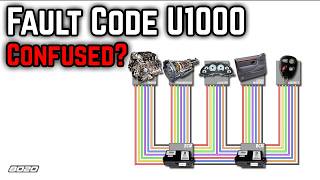
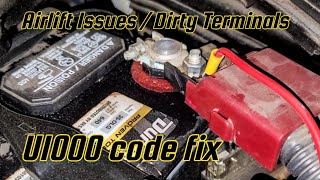
Unlike many vehicles where a U-code implies a general network failure, on this Jaguar platform, U1000 is a very specific BCM status code. 🎬 Watch: Understanding what the U1000 communication error means for your vehicle. The BCM is designed to disable outputs that see repeated short circuits. Critically, Jaguar Technical Service Bulletin SSM74171 explicitly states NOT to replace the BCM as a first step. The correct procedure is to find the external short circuit that caused the BCM to protect itself, repair it, and then use a Jaguar-specific diagnostic tool (like SDD or Pathfinder) to run the 'Enable Protected Outputs' function, which re-enables the protected circuit.
Diagnostic Flowchart
Tap your situation to follow the diagnostic path that matches what you're seeing on this vehicle.
Symptoms You May Notice
- One or more exterior lights not working
- Interior lights are inoperative
- Sunroof blind does not work
- Power steering column adjustment fails
- ECO start/stop system unavailable
- Warning messages on the instrument cluster related to body systems
- Fuel filler door may not unlock
- Power folding mirrors do not work
- Trunk/boot will not open electronically
- 'Boot Open' warning light stays on
- Replacing the Body Control Module (BCM) prematurely. The U1000 code is a signal that the BCM is *protecting* itself from an external problem. Replacing the BCM without fixing the underlying short circuit will result in the new BCM also entering protection mode.
Most Likely Causes
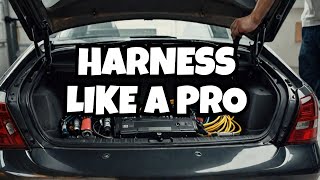
- Underlying Short Circuit in a BCM-Controlled Component or Wiring 🔴 High Probability Complex electronics and numerous features controlled by the BCM increase the potential points of failure. Wiring harnesses that pass through moving parts like the trunk/boot hinge are especially vulnerable to fatigue and breakage over time.
How to confirm: Use a Jaguar-specific scan tool to identify other DTCs ending in -11, -12, -14, or -15, which indicate a short circuit. For example, a code for a fuel flap actuator fault may accompany U1000. Manually inspect the wiring and function of the suspected component, paying close attention to the trunk lid wiring harness near the right-side hinge.
Typical fix: Repair the wiring or replace the faulty component (e.g., a light bulb, a door lock actuator, or the fuel filler door lock). The trunk lid wiring harness is a common failure point and may need to be repaired or replaced. After the repair, the BCM's protected output must be reset using diagnostic software.
Est. part cost: $50-$400 - Weak or Failing Battery 🟡 Medium Probability → Shop Vehicle Battery The Jaguar XJ has a high electrical demand, and a weak battery can cause voltage drops that modules interpret as faults, sometimes leading to erratic behavior that can trigger the BCM's protection mode. Many owners in forums report that electrical issues, including BCM faults, began after a battery went flat or was replaced.
How to confirm: Perform a load test on the battery. A healthy, fully charged AGM battery should read approximately 12.6V or higher at rest. Check the charging system voltage with the engine running; it should be between 13.5V and 14.1V. Low voltage during startup is a key trigger.
Typical fix: Replace the old or weak battery with a new, high-quality AGM (Absorbed Glass Mat) battery of the correct specification. Ensure all connections are clean and tight. After replacement, some modules may require recalibration.
Est. part cost: $250-$450 - Faulty Body Control Module (BCM) ⚪ Low Probability → Shop Body Control Module While possible, internal BCM failure is less common than an external short causing it to enter protection mode. TSB SSM74171 specifically advises against replacing the BCM until all other causes are ruled out. However, BCM data can become corrupted, especially after severe voltage fluctuations, which can sometimes be repaired with specialized software without replacing the hardware.
How to confirm: After confirming all wiring is intact, the battery is healthy, and all external shorts are repaired, if the BCM still cannot be reset or continues to set the U1000 code with no other faults, the module itself may be faulty. This is a last-resort diagnosis.
Typical fix: Replace the Body Control Module. This is an expensive repair that requires programming the new module to the vehicle's VIN using dealer-level diagnostic tools. In some cases of data corruption, a specialist may be able to repair the existing BCM software.
Est. part cost: $800-$1500
Rare But Worth Checking
- Corroded Ground Straps or BCM Connectors: → Shop Engine Ground Strap Poor ground connections can cause intermittent voltage issues that mimic component faults, potentially triggering the BCM's protection mode. Always check the main body and BCM ground points for corrosion or looseness.
- Broken Sunroof Blind Components: The sunroof blind mechanism on the X351 is a known weak point. Broken plastic guides or a failing motor can cause a short or overload, leading the BCM to disable the circuit and log a U1000 code.
Diagnosis Steps
- Connect a JLR-approved battery support unit to maintain stable voltage during diagnosis.
- Connect a Jaguar-specific diagnostic tool (SDD for 2010-2017 models, or Pathfinder for newer vehicles). Do not rely on a generic OBD-II scanner.
- Scan all modules for Diagnostic Trouble Codes (DTCs). Pay close attention to any codes stored in the BCM.
- Specifically look for any codes ending in -11, -12, -14, or -15, as these will point to the circuit with the short.
- Check the vehicle's battery health. Perform a load test and verify the charging system is functioning correctly. A voltage below 12.4V at rest indicates a weak battery.
- Based on the short circuit codes found, inspect the wiring, connectors, and the component itself. Common areas to check are the trunk lid wiring harness (inside the rubber conduit on the right hinge) for broken wires, and the fuel filler door actuator wiring.
- Repair the identified short circuit. This may involve soldering and heat-shrinking broken wires or replacing the faulty part.
- Once the repair is complete, connect the diagnostic tool again. For SDD, navigate to 'Service Functions' and run 'Body systems - Enable Protected Outputs'. For Pathfinder, go to 'ECU Diagnostics' -> 'Body Control Module [BCM]' -> 'ECU Functions' -> 'Enable Protected Outputs'.
- Follow the on-screen prompts to complete the reset procedure.
- Clear all DTCs and verify that the U1000 code does not return and that the previously non-functional component now works correctly.
Parts You'll Likely Need
- AGM Battery — A weak battery is a common trigger for various electrical faults on this platform.
Trusted brands: Bosch, Interstate, Varta, Genuine Jaguar
OEM price range: $350-$500
Aftermarket price range: $250-$400 - Fuel Filler Door Lock Actuator
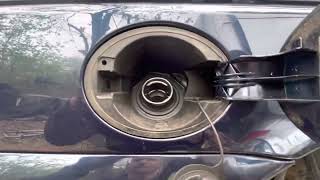
(OEM #C2Z13877 (Verify with VIN, as variations exist))— This is a known component that can short out and cause the BCM to log a U1000 code.
Trusted brands: Genuine Jaguar
OEM price range: $100-$150
Aftermarket price range: $60-$100 - Trunk/Boot Lid Wiring Harness — The wires in this harness are prone to breaking from repeated opening and closing of the trunk, causing shorts in circuits for the latch, license plate lights, or camera.
Trusted brands: Genuine Jaguar
OEM price range: $250-$350 - Body Control Module (BCM)
(OEM #C2D20176 (Example for 2010-2012, always verify by VIN))— This is a last resort, only to be replaced if it is confirmed to be internally faulty after all external shorts and wiring issues have been resolved.
Trusted brands: Genuine Jaguar
OEM price range: $1000-$1500
Related Codes That Often Appear With This One
- U3000-49 — This code indicates a general control module internal electronic failure. It often appears alongside U1000 when the BCM has disabled a driver due to a fault or when its memory has been corrupted by a voltage issue.
- P04BB-12 — This code points to a short circuit in the fuel filler door lock circuit. This is a perfect example of an external short that would cause the BCM to set a U1000 code to protect that circuit.
- Any DTC ending in -11, -12, -14, or -15 — These suffixes indicate a short circuit to ground or a short circuit to power, which is the root cause that triggers the BCM to set the U1000 protection code.
Technical Service Bulletins (TSBs) & Recalls
- SSM74171: BCM outputs not functioning with U1000-00 DTC present. Advises to find and repair external short circuits and then reset the BCM, not replace it. It lists affected components like exterior/interior lighting, sunroof blinds, and the ECO start/stop system.
Platform-Specific Known Issues
- TSB SSM74171: The Definitive Guide
Mechanic-Grade Diagnostic Values
- Voltage at washer fluid level sensor plug — expected: System voltage (typically >5V reference). Failure: A reading of ~0.8V was observed in a known-faulty vehicle, indicating a problem with the BCM/CJB output circuit.
Hidden / Shadow Codes Worth Checking
- DTCs with suffixes -11, -12, -14, -15: These are not hidden codes, but specific suffixes to standard DTCs that Jaguar uses to denote a short circuit. For example, B109B-11 indicates a 'License Plate Lamp Circuit Short to Ground'. Finding these is the key to locating the root cause of the U1000 code. (see via Jaguar SDD or Pathfinder diagnostic software.)
Scan Tool Commands That Help
- Jaguar SDD (Symptom Driven Diagnostics): Service Functions -> Body systems - Enable Protected Outputs — This is the mandatory final step after repairing the underlying short circuit. It commands the BCM to 'un-disable' the circuit it shut down, restoring function to the affected component.
- Jaguar Pathfinder: ECU Diagnostics -> Body Control Module [BCM] -> ECU Functions -> Enable Protected Outputs — This is the mandatory final step on newer vehicles supported by Pathfinder, used after repairing the short circuit to reset the BCM's protected driver.
- Jaguar SDD: Service Function -> Body system – Steering column calibration — This may be required if the BCM/CJB has been replaced or reconfigured, especially if the steering column adjustment was one of the systems that was disabled.
Wiring & Ground Locations
- BCM / CJB (Central Junction Box) — Located centrally behind the rear seat back.. This is the module that sets the U1000 code. All diagnostic work for this code centers on the BCM and the circuits it controls.
- G4D108AS, G4D171BS, etc. — Multiple ground studs are located throughout the vehicle, such as in the A-pillars and behind kick panels. A full list of identifiers is available in the workshop manual.. The BCM relies on numerous ground points. A corroded or loose ground can cause voltage fluctuations that the BCM may interpret as a short circuit, triggering the U1000 code.
- Main Engine/Transmission Ground Strap — A braided ground strap often cited as problematic is located on the underbody, connecting the transmission bellhousing area to the chassis.. While not directly connected to the BCM, a poor main ground can introduce electrical noise and voltage instability across the entire vehicle, leading to unpredictable module behavior.
Real Owner Repair Stories
- Jaguar Forums user (2011 Jaguar XJ (X351)) — Persistent network faults, including 'boot open' warning light.
❌ Tried (didn't work) Unknown, but likely included scanning for codes and basic checks.
✅ What actually fixed it The owner physically cleaned the male pins on the Central Junction Box (BCM), door control modules, A/C modules, and keyless vehicle module using a small Dremel with a wire disc, followed by CRC contact cleaner on the female connectors. The faults did not return after this cleaning. - Jaguar Forums user (2011 Jaguar XJ L) — Both panoramic sunroof shades would not retract or make any sound.
❌ Tried (didn't work) Operating the switch repeatedly.
✅ What actually fixed it The owner fixed the issue by pulling fuse F21 (in the rear fuse box) with the car off, cleaning the fuse contacts, cycling the ignition on and off with the fuse out, then turning the car off and reinstalling the fuse. This reset the system and restored normal operation to the shades and sunroof. - CarTechnoloGY forum user (Jaguar XF (similar electronics to XJ)) — After battery went flat and was replaced, rear windows, folding mirrors, and fuel cap stopped working. U1000-00 and U3000-49 codes were present.
❌ Tried (didn't work) Clearing codes without addressing the root cause.
✅ What actually fixed it The issue was identified as BCM data corruption caused by the battery event. The suggested fix was to re-flash the BCM with correct software, which is a known repair performed by specialists.
"I Checked Everything" — The Actual Cause
- In one documented case, persistent and varied network faults (including a 'boot open' warning) were not resolved by standard diagnostics. The actual cause was found to be oxidation on the physical connector pins of the Central Junction Box (BCM/CJB) and other related modules. A simple continuity test or visual inspection would likely miss this, as the connection is not fully broken. The fix required physically cleaning the male pins with a Dremel and using contact cleaner to restore a clean, low-resistance connection.
When the Usual Fixes Don't Work
- While the U1000 code is almost always caused by an external short or a weak battery, there are cases where these have been ruled out, yet the problem persists. In one such instance, the root cause was found to be oxidation on the physical pins of the Central Junction Box and other modules on the network. Instead of replacing the BCM, the successful repair involved disconnecting the modules and thoroughly cleaning the male and female connector pins to restore proper communication. This suggests that before condemning the BCM, a physical cleaning of its connectors and related module connectors should be considered as a diagnostic step, especially if multiple, intermittent network faults are present.
OEM Part Supersession History
C2D27355→C2D44310— Part revision or update.
Heads up: Part numbers for the BCM (or CJB) are highly specific to the vehicle's VIN and fitted options. A used module from another car will require dealer-level programming (immobilization, CCF download, key programming) to function.DW9314F681AJ→N/A— This is the engineering number printed on the part itself, which cross-references to OEM part numbers like C2D27355.
Heads up: Always order by the OEM part number (e.g., C2Dxxxx) and verify with the vehicle's VIN, not just the number printed on the module case.
Model Year Variations Within This Range
- 2016-2017: The 2016 model year facelift introduced significant electrical changes. These include full LED headlights, a new InControl Touch Pro infotainment system, and Electric Power-Assisted Steering (EPAS) on RWD models. A U1000 code related to lighting, for example, would involve diagnosing these different LED systems compared to the earlier Bi-Xenon lamps.
Helpful Videos

Used OEM Parts in Stock
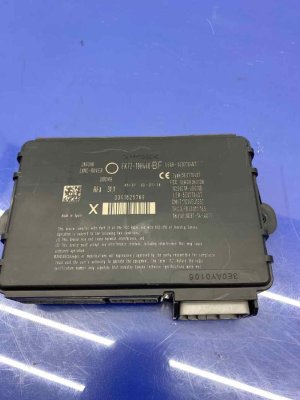
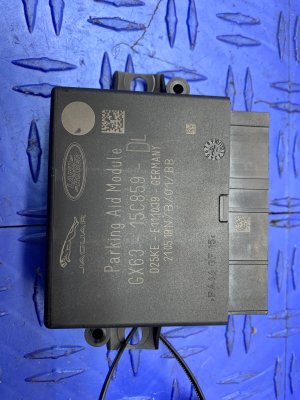
New Aftermarket Parts Available

The information in this article is provided for general reference and educational purposes only. Vehicle specifications, procedures, and part compatibility can vary by production date, trim level, and region. Always consult your vehicle's factory service manual and verify part numbers before purchasing or performing repairs. Safety-critical components such as airbags, seat belts, and braking systems should be installed by a qualified professional.
- Jaguar XJ:
- 🧭 Diagnostic Flowchart
- 🎬 Helpful Videos
- 🛍️ Shop This Part
- What's Unique About the 2010-2017 Jaguar XJ
- Symptoms You May Notice
- Most Likely Causes
- Rare But Worth Checking
- Diagnosis Steps
- Parts You'll Likely Need
- Related Codes That Often Appear With This One
- Technical Service Bulletins (TSBs) & Recalls
- Platform-Specific Known Issues
- Mechanic-Grade Diagnostic Values
- Hidden / Shadow Codes Worth Checking
- Scan Tool Commands That Help
- Wiring & Ground Locations
- Real Owner Repair Stories
- "I Checked Everything" — The Actual Cause
- When the Usual Fixes Don't Work
- OEM Part Supersession History
- Model Year Variations Within This Range
- 🎟️ Get 5% Off