

U1000 on 2001-2011 Mazda Tribute: CAN Communication Failure Causes and Fixes
On a 2001-2011 Mazda Tribute, a U1000 code indicates a network communication failure. For 2008-2011 models, the most common cause is a faulty instrument cluster with bad internal solder joints. For all years, check the battery, grounds, and fuses before suspecting a failed module. A cluster repair service costs around $150-$300 and is the standard fix for the second-gen issue.
- U1000 means there is a communication breakdown between your car's computers.
- For 2008-2011 models, the instrument cluster is the most likely culprit. A 'dashboard tap test' can often confirm this.
- For all years, always start with the basics: test the battery, and clean and tighten all battery terminals and main ground connections.
- Diagnosing network issues beyond the basics is complex and usually requires professional tools and expertise.
- If your instrument cluster has failed, using a mail-in repair service is far more cost-effective than buying a new one from the dealer.
What's Unique About the 2001-2011 Mazda Tribute
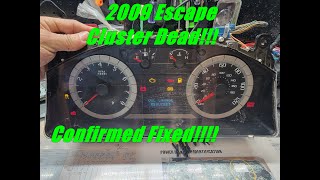
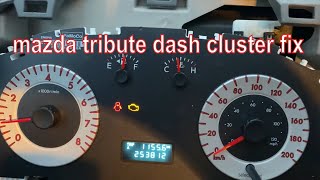
While U1000 is a generic communication code, the 2008-2011 second-generation Tribute/Escape platform is known for a specific, extremely common point of failure: the instrument panel cluster. The cluster in these models acts as a critical gateway for network communication, and internal failures due to cracked solder joints on the circuit board are widespread. This often leads to a U1000 code accompanied by bizarre symptoms like random warning lights and dead gauges, even though the vehicle may still run. The first generation (2001-2006) is more prone to general wiring, grounding, or module issues rather than this specific cluster defect.
Generation note: This range covers two generations: - First Generation (2001-2006): U1000 issues are typically from general causes like wiring corrosion, bad grounds (especially on the firewall and near the passenger headlight), or a failing PCM. - Second Generation (2008-2011): While still susceptible to general causes, these models have a very high rate of instrument cluster failure causing the U1000 code. This is the first thing to suspect if symptoms match.
Symptoms You May Notice
- Check Engine Light is on
- Gauges (speedometer, tachometer, etc.) suddenly drop to zero or behave erratically
- Multiple warning lights (ABS, Brake, Airbag, Wrench icon) turn on randomly
- Digital odometer/information display may be blank or show dashes
- Car may not start or may stall intermittently
- Inability to communicate with the vehicle's computer through the OBD-II port
- Battery drains overnight due to a module not going to 'sleep'
- Erratic shifting or hard shifts from the transmission
- Replacing the ABS module: A faulty instrument cluster can cause the ABS light to come on, leading to a misdiagnosis of the ABS module itself.
- Replacing the PCM: Because the U1000 code indicates a communication failure, mechanics may incorrectly assume the main computer (PCM) is bad, when the issue is often the cluster or wiring, especially on 2008-2011 models.
Most Likely Causes
- Faulty Instrument Cluster 🔴 High Probability → Shop Instrument Cluster This is a well-documented, widespread issue on the second-generation (2008-2011) platform due to internal circuit board and solder joint failures. The cluster acts as a network gateway, and its failure disrupts all communication.
How to confirm: Tap on the dashboard above the cluster. If the gauges flicker or return to life temporarily, it strongly suggests a bad connection inside the cluster. A professional diagnosis involves using a scan tool to see if communication with multiple modules is lost simultaneously.
Typical fix: The cluster must be removed and sent to a specialized repair service that rebuilds the circuit board with more robust connections. This is more cost-effective than a new cluster, which requires expensive programming.
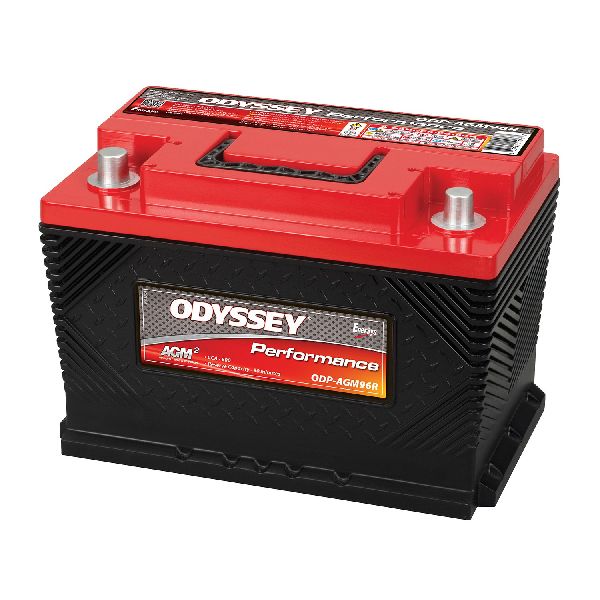
Est. part cost: $150-$300 for a mail-in repair service. - Weak or Failing Battery 🟡 Medium Probability → Shop Vehicle Battery Low voltage during startup can cause modules to drop off the network, creating temporary communication errors that log a U1000 code.
How to confirm: Test the battery voltage with a multimeter. It should be above 12.4V with the engine off and 13.7-14.7V with the engine running. A simple voltage test isn't enough; get the battery load-tested at an auto parts store.
Typical fix: Replace the battery and clean the terminals.
Est. part cost: $150-$250 - Corroded or Loose Ground Wires 🟡 Medium Probability Ground straps from the engine to the chassis and various module grounds can corrode over time, creating a poor connection and electrical noise that disrupts the CAN network. Key spots include grounds on the firewall, behind the headlights, and on the transmission case.
How to confirm: Visually inspect the main battery ground, engine-to-chassis grounds, and grounds near the PCM for rust or looseness. Perform a voltage drop test on the ground side to confirm a good connection.
Typical fix: Clean the contact points with a wire brush and re-secure the ground connection. Replace the ground strap if it's badly corroded.
Est. part cost: $10-$40 - Damaged Wiring or Connectors ⚪ Low Probability Wires in the engine bay or under the vehicle can be damaged by heat, vibration, or rodents. Connectors to the PCM or under the fuse box can also corrode. The twisted pair of CAN wires (often Grey/Red and Blue/White) are critical.
How to confirm: Visually inspect harnesses for chafing, breaks, or signs of rodent damage. Check connectors for green or white corrosion on the pins. This requires tracing the CAN bus wires (typically a twisted pair) from the OBD-II port (pins 6 and 14).
Typical fix: Repair the damaged section of wire or clean/replace the corroded connector.
Est. part cost: $5-$50 for repair materials.
Rare But Worth Checking
- Faulty Powertrain Control Module (PCM): → Shop Engine Control Module (ECM) While less common than the instrument cluster, the PCM itself can fail internally, causing it to stop communicating with the rest of the vehicle. This usually results in a no-start condition and an inability to connect a scan tool to the engine module.
- Blown Fuse for OBD-II Port: On some models, the fuse for the cigarette lighter/12V power outlet also powers the OBD-II port. If a scanner cannot connect at all, check this fuse first, as it can sometimes present as a communication fault.
- Missing Radio Interference Capacitor: On at least one documented case for a first-gen Tribute, a missing radio noise capacitor allowed electrical interference from the ignition coils to disrupt PCM communication, causing sweeping gauges and other U-code symptoms.
- Transmission Control Module (TCM) Overheating: → Shop Transmission Assembly While documented on other Mazda platforms like the Mazda3, NHTSA ODI #11461728 notes that a U1000 "lost communication with TCM" code can occur when the module overheats due to its placement directly on the transmission under the battery.
Diagnosis Steps
- Check Battery Health: Ensure the battery has a full charge (12.4V+ engine off) and that the terminals are clean and tight. Have it load tested, as surface voltage can be misleading.
- Scan for All Codes: Use a capable scanner to read codes from ALL modules (Engine, ABS, Body, etc.), not just the engine computer. Note which modules are not responding. A failure to communicate with multiple modules points to a network fault.
- Check Fuses: Inspect all fuses, especially any related to the PCM, instrument cluster, or OBD-II port (sometimes labeled CIG or AUX).
- The 'Dashboard Tap Test' (2008-2011 models): With the engine running and symptoms present (gauges dead, lights on), firmly tap the top of the dashboard over the instrument cluster. If the gauges flicker or temporarily work, the cluster is almost certainly the fault.
- Inspect Grounds: Visually inspect and tighten the main battery-to-chassis ground and engine-to-body ground straps. Key locations include the firewall and inner fenders near the headlights.
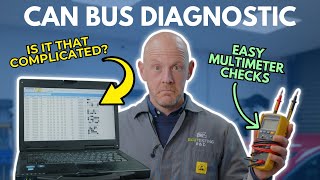
- Check CAN Bus Resistance: 🎬 Watch: Step-by-step guide to diagnosing CAN BUS network faults Disconnect the battery. Using a multimeter, measure the resistance between Pin 6 (CAN High) and Pin 14 (CAN Low) on the OBD-II port. A healthy network should read approximately 60 ohms. A reading of 120 ohms suggests one of the two terminating resistors (often in the PCM and cluster) is offline. An open circuit (OL) or 0 ohms indicates a wiring short/break.
- Inspect Wiring: Perform a visual inspection of wiring harnesses in the engine bay and near the PCM for any obvious damage, chafing, or corrosion, paying close attention to the twisted pair of CAN wires.
- Professional Diagnosis: If the above steps do not identify the issue, a professional will need to perform network tests to isolate the faulty module or wiring section.
Parts You'll Likely Need
- Instrument Cluster Repair Service
(OEM #Varies by year/trim, e.g., 8L8T-10849-xx, 9L8T-10849-xx)— For 2008-2011 models, this is the most probable fix. The original cluster is repaired, which avoids the need for expensive reprogramming.
Trusted brands: Circuit Board Medics, Automotive Circuit Solutions, Atlanta Speedometer
OEM price range: $800-$1200 for new part
Aftermarket price range: $150-$300 for repair service - Automotive Battery — A weak battery is a common cause of various electronic issues, including communication codes.
Trusted brands: Motorcraft, Interstate, DieHard
Related Codes That Often Appear With This One
- P1000 — This code simply means the OBD-II readiness monitors have not completed since the battery was last disconnected or codes were cleared. It will often appear after fixing a U1000 issue and will clear itself with normal driving.
- U-codes in other modules (e.g., U1900, U2023) — Multiple U-codes in different modules all point to a network-wide communication problem, reinforcing the diagnosis of a central issue like a bad cluster, wiring, or ground.
Technical Service Bulletins (TSBs) & Recalls
- Mazda Special Service Program (SSP 95): While not for U1000 directly, this program extends the warranty on the electronic throttle body for 2009-2011 models. A failing ETB can cause a wrench light and limp mode, symptoms that can overlap with network issues.
Platform-Specific Known Issues
- A widespread, known failure of the instrument cluster on 2008-2011 models causes CAN bus communication loss, triggering code U1000 and multiple other electronic faults.
Mechanic-Grade Diagnostic Values
- CAN Bus Resistance — expected: ~60 Ω. Failure: A reading of ~120 Ω indicates one terminating resistor is offline (often the cluster or PCM). A reading of 0 Ω or OL indicates a short or open in the wiring.
- CAN High Voltage (Key On, Engine Off) — expected: ~2.6V - 2.7V (average). Failure: No voltage, or voltage near 0V or battery voltage (12V), indicates a short to ground or power.
- CAN Low Voltage (Key On, Engine Off) — expected: ~2.3V - 2.4V (average). Failure: No voltage, or voltage near 0V or battery voltage (12V), indicates a short to ground or power.
- Instrument Cluster Ground Resistance — expected: < 5 Ω. Failure: High resistance indicates a poor ground connection, which can cause the cluster to malfunction.
Scan Tool Commands That Help
- Ford IDS / FORScan: BCM Self-Test — On some Ford platforms, a U1000 code is set by the Body Control Module (BCM) when it disables a circuit due to an overload. After repairing the underlying short (e.g., a bad light bulb), running the BCM self-test is required to clear the U1000 and reactivate the circuit.
- Ford IDS / FORScan: Module Roll-Call / Network Test — This function attempts to communicate with every module on the network. It quickly identifies which specific modules are not responding, helping to narrow down the location of the fault. This is a primary step in diagnosing any U-code.
Wiring & Ground Locations
- G104 / G5 — Left front of the engine compartment, near the battery tray/headlight area.. This is a major chassis ground point for several engine bay components. Corrosion here is common and can introduce noise or voltage drops that disrupt network communication.
- G12 / G13 — Lower right side of the dash, near the passenger kick panel area.. These are primary interior ground points. The passenger compartment fuse box (Smart Junction Box on later models) and other modules ground here. Water leaks from the windshield or cowl can cause corrosion at these points.
- G203 — Behind the left side of the dash.. This is a key ground point for the instrument cluster and other dash components. A loose connection here can directly cause cluster-related U1000 codes.
- Instrument Cluster Connector (C220) — The main 26-pin connector on the back of the instrument cluster.. This is the single point of connection for the cluster. Pins 25 (CAN High) and 26 (CAN Low) are the network lines. Pin 21 is battery power, and Pin 5 is the main ground. Testing these pins is critical for diagnosing a faulty cluster.
Real Owner Repair Stories
- YouTube user review (Vehicle with aftermarket air suspension, year/model not specified but symptoms are general.) — U1000 CAN communication code present, along with failure of an aftermarket air suspension controller to power on.
❌ Tried (didn't work) Checking fuses, Inspecting wiring for damage
✅ What actually fixed it The positive battery terminal was heavily corroded. Cleaning the terminal and the post with a wire brush and baking soda restored proper voltage to all systems and cleared the U1000 code after a week of driving. - NHTSA ODI #11461728 — An owner reported experiencing delayed shifting along with check engine and ATF lights. Diagnostic codes included U1000 for lost communication with the TCM, which was attributed to the module overheating due to its location under the battery.
OEM Part Supersession History
8L8T-10849-xx→8L8Z-10849-R (Remanufactured)— Standard part lifecycle. The original part number corresponds to 2008 model year vehicles.
Heads up: Part numbers are specific to model year and options (with/without message center, etc.). A cluster from a different year or trim level may physically fit but will not function correctly due to different data streams. Always match the ID number on the part (e.g., 8L8T-10849-HA).9L8T-10849-xx→9L8Z-10849-C (Remanufactured)— Standard part lifecycle. The original part number corresponds to 2009 model year vehicles.
Heads up: Interchangeable part numbers for a 2009 model include 9L8T-10849-CA, CB, CC, CD, and CE. Using a cluster from a different year range (e.g., a 2008 '8L8T' cluster in a 2009 vehicle) is not advised and will likely cause communication errors.5L8T-10849-xx→N/A— Part for first-generation (2005 model year) vehicles.
Heads up: First-generation clusters (e.g., 5L8T-10849-AG for 2005 models) are not electronically compatible with second-generation (2008-2011) vehicles, even if connectors appear similar. The network protocol and gateway functions are different.
Model Year Variations Within This Range
- 2001-2007 (First Generation): The network protocol is less complex. U1000 codes are more likely caused by general wiring corrosion, PCM issues, or bad grounds (G104 is a common culprit). The widespread instrument cluster failure is not a characteristic of this generation.
- 2008-2011 (Second Generation): These models use a High-Speed CAN bus where the instrument cluster acts as a critical network gateway. This makes the well-known cluster solder joint failure the primary and most probable cause of U1000 codes, a problem not seen in the first generation.
Diagnostic Flowchart
Other Known Issues on This Vehicle
Issues unrelated to this code that are worth knowing about as an owner of this generation:
- Automatic Transmission (CD4E) Failure 🔴 High → Shop Transmission Assembly — Common in first-generation (2001-2008) models, particularly V6. Issues include harsh shifting, slipping, TCC shudder (P0741), and complete failure. (Ref: A recall (15V677000) was issued for some 2008 models with replaced remanufactured transmissions.)
- Rear Subframe and Shock Tower Rust 🔴 High — Widespread on first-generation (2001-2004) vehicles sold in salt-belt regions, can lead to lower control arm separation or shock detachment. (Ref: Recall NHTSA 14V174000 was issued for 2001-2004 models to install a reinforcement brace.)
- Electronic Throttle Body (ETB) Failure 🟠 Medium — Common on 2009-2011 models, causing the wrench light to illuminate and the vehicle to enter a reduced-power 'limp mode'. (Ref: Mazda issued an extended warranty (SSP 95) for the throttle body for up to 10 years/150,000 miles.)
- Power Steering Failure (EPS) 🟠 Medium — Affects 2008-2011 models, where the steering torque sensor can fail, resulting in a sudden loss of power steering assist. (Ref: A recall was issued for this issue.)
- Cracked Fuel Delivery Module (FDM) 🔴 High — Affects 2010-2011 models with the 3.0L engine, which can lead to a fuel leak and fire risk. (Ref: Recall NHTSA 16V788000 was issued.)
Used vs. New Parts: Buying Guide for This Vehicle
When a used part is the smart pick: For the common instrument cluster failure, a used/junkyard part is a risky option. While cheaper, it likely has the same internal defect or will develop it soon. The smart choice is having your original cluster repaired by a specialist service, which is cheaper than a new OEM part and more reliable than a used one.
Donor-vehicle mileage cap: roughly under 40000 miles for the part to have meaningful remaining life.
What to inspect on the donor part:
- Verify the part ID number on the sticker matches your original cluster exactly (e.g., 9L8T-10849-CA).
- Inspect the clear plastic lens for deep scratches or hazing.
- Ask the seller if the part has been tested or if it comes from a vehicle that was running when parked.
- Be aware that the odometer reading is stored in the cluster, and a used part will display the donor vehicle's mileage, not your own.
OEM-only on this vehicle (don't cheap out):
- Powertrain Control Module (PCM) - A used PCM will not work as it is programmed specifically to the original vehicle's VIN and options (PATS anti-theft system). A new or remanufactured PCM must be programmed by a dealer or a qualified locksmith with Ford-specific tools.
Aftermarket brands forum-validated for this vehicle:
- Circuit Board Medics (for cluster repair)
- Automotive Circuit Solutions (for cluster repair)
- Atlanta Speedometer (for cluster repair)
Brands owners have reported issues with on this vehicle:
- Unknown eBay/Amazon sellers offering 'plug-and-play' used clusters without requiring an exact part number match.
Real Owner Stories
Aggregated from forums and TSBs cited above. Mileages and costs reflect what owners reported in those sources.
2006 Mazda Tribute
Symptoms: Loss of instrument cluster functionality and the battery drains overnight.
What fixed it: Identified the instrument cluster as the communication gateway with an internal fault causing it to not go to 'sleep'.
Source hint: Reddit r/MechanicAdvice thread titled "06 Mazda Tribute wiring issue? Help!?"
2003 Mazda Tribute
Symptoms: Sweeping gauges and communication issues with no codes initially present.
What fixed it: Replaced a missing radio interference capacitor which was allowing electrical noise from the ignition coils to disrupt the PCM.
Source hint: TDIClub Forums thread titled "SOLVED STORY 03 Mazda Tribute Sweeping Gauges, No Codes"
2008 Mazda Tribute V6
Symptoms: Harsh shifting and transmission problems.
What fixed it: Diagnosis of internal transmission failure (CD4E) related to code P0741.
Source hint: Mazda Forum thread titled "2008 tribute v6 cd4e transmission problems"
Related OBD-II Codes
Frequently Asked Questions
My 2009 Mazda Tribute has a wrench light and goes into limp mode; is this related to the U1000 code?
Why do my gauges drop to zero when I hit a bump in my 2008 Tribute?
Can a bad battery really cause a U1000 communication code in a Mazda Tribute?
Where are the common ground points that cause electrical noise on this vehicle?
Is there a recall for the transmission issues on the 2008 Tribute?
Should I buy a new instrument cluster from the dealer to fix the U1000 code?
Helpful Videos
We Have This Part in Stock

The information in this article is provided for general reference and educational purposes only. Vehicle specifications, procedures, and part compatibility can vary by production date, trim level, and region. Always consult your vehicle's factory service manual and verify part numbers before purchasing or performing repairs. Safety-critical components such as airbags, seat belts, and braking systems should be installed by a qualified professional.
- Mazda Tribute:
- 🧭 Diagnostic Flowchart
- 🎬 Helpful Videos
- 🛍️ Shop This Part
- What's Unique About the 2001-2011 Mazda Tribute
- Symptoms You May Notice
- Most Likely Causes
- Rare But Worth Checking
- Diagnosis Steps
- Parts You'll Likely Need
- Related Codes That Often Appear With This One
- Technical Service Bulletins (TSBs) & Recalls
- Platform-Specific Known Issues
- Mechanic-Grade Diagnostic Values
- Scan Tool Commands That Help
- Wiring & Ground Locations
- Real Owner Repair Stories
- OEM Part Supersession History
- Model Year Variations Within This Range
- Other Known Issues on This Vehicle
- Used vs. New Parts: Buying Guide for This Vehicle
- Real Owner Stories
- 2006 Mazda Tribute
- 2003 Mazda Tribute
- 2008 Mazda Tribute V6
- Related OBD-II Codes
- Frequently Asked Questions
- 🎟️ Get 5% Off