

U1000 on 2005-2012 Nissan Armada: Causes and Fixes for CAN Communication Failure
On a 2005-2012 Nissan Armada, a U1000 code almost always points to a network communication problem, not a faulty part. The most likely causes are poor ground connections, a weak battery, or a failing Intelligent Power Distribution Module (IPDM). Do not replace any control modules until all grounds, power sources, and the IPDM have been thoroughly checked.
- U1000 is a network problem, not a part problem. Do not replace expensive modules until you are certain they are the cause.
- Start your diagnosis with the simplest and most common causes: test the battery and thoroughly inspect, clean, and tighten all major ground connections.
- This code often triggers multiple, seemingly unrelated warning lights (ABS, VDC, SLIP). This is a symptom of the network failure, not multiple simultaneous part failures.
- Due to the complexity of CAN bus diagnosis, professional service is highly recommended if the issue isn't a simple battery or ground connection.
- Reference Nissan TSBs NTB10-066a and NTB10-145B for manufacturer-approved diagnostic procedures.
What's Unique About the 2005-2012 Nissan ARMADA
For the first-generation Nissan Armada and its platform mates (the Nissan Titan and Infiniti QX56), the U1000 code is a well-documented but often misdiagnosed issue. Owners frequently report a cascade of warning lights, including ABS, VDC, and SLIP, which can be alarming. The key takeaway from both technician bulletins and owner experiences is that this F-Alpha platform is highly sensitive to voltage drops and poor grounds. Unlike a simple sensor code, U1000 requires a diagnostic strategy that focuses on the health of the entire vehicle network, starting with the most basic electrical components like the battery, its cables, and critical ground points.
Diagnostic Flowchart
Tap your situation to follow the diagnostic path that matches what you're seeing on this vehicle.
Symptoms You May Notice
- Check Engine Light or Service Engine Soon light is on
- ABS, VDC, and/or SLIP warning lights are illuminated
- Engine may stall, hesitate, or run rough
- Transmission may exhibit harsh shifting or get stuck in a gear
- Vehicle may crank but fail to start
- No-crank, no-start condition, sometimes with clicking relays
- Electrical glitches, like issues with gauges, climate control, wipers, or horn activating unexpectedly
- Loss of features like automatic emergency braking (AEB) or intelligent cruise control (ICC)
- Replacing the ABS module simply because it stored a U1000 code.
- Replacing the ECM or BCM without first verifying all power and ground circuits.
- Replacing any control unit based solely on the presence of a U1000 code, which is explicitly warned against in Nissan's service bulletins. [NTB10066A]
Most Likely Causes
- Poor or Corroded Ground Connections 🔴 High Probability Nissan TSBs and countless owner forums for the Armada, Titan, and QX56 cite corroded or loose grounds as a primary cause for network issues. The main negative battery cable, which has multiple ground points, is a frequent culprit.
How to confirm: Visually inspect the main battery ground cable where it connects to the battery, the chassis (often on the driver's side fender), and the engine block. Even if they look clean, remove, scuff all contact points to bright metal, and re-secure. Perform a voltage drop test on the ground circuit to check for high resistance.
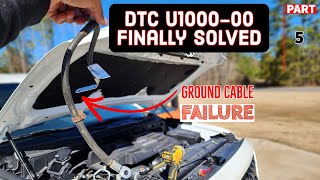
Typical fix: Clean the contact surfaces of ground straps and connection points with a wire brush until they are shiny, then re-secure them tightly. Apply dielectric grease to prevent future corrosion. Often, replacing the entire negative battery cable assembly 🎬 Watch: How to replace the battery ground cable on a Titan. is the most effective repair.
Est. part cost: $0-$90 - Weak or Failing Battery 🔴 High Probability → Shop Vehicle Battery Low battery voltage, especially during the high current draw of startup, can cause modules to temporarily drop off the CAN network, triggering a U1000 code. This is a common sensitivity across many modern vehicles.
How to confirm: Test the battery with a multimeter. A healthy, resting battery should be at or above 12.4V. A load test is the most definitive way to confirm battery health, as a battery can show good voltage but fail under load.
Typical fix: Replace the vehicle's battery.
Est. part cost: $150-$300 - Faulty Intelligent Power Distribution Module (IPDM) 🟡 Medium Probability → Shop Fuse Box The IPDM, which is a smart fuse and relay box, is a known failure point on this platform. Internal relay failures (especially for the ECM or fuel pump) can cause stalling, no-start conditions, and disrupt CAN communication, logging a U1000 code. Early models with white-cased IPDMs were particularly susceptible.
How to confirm: A technician can perform an IPDM self-test. 🎬 See this walkthrough on how to perform an IPDM self-test. Another sign is a crank-no-start condition where the cooling fans run at high speed. Swapping the ECM relay within the IPDM can be a temporary diagnostic step, though Nissan officially advises against it.
Typical fix: Replace the entire IPDM assembly. On some early models (2004-2006), a specific ECM relay was available for replacement, but for most, the entire unit must be swapped.
Est. part cost: $200-$500 - Damaged CAN Bus Wiring Harness 🟡 Medium Probability Wiring can become chafed, broken, or corroded over time due to vibration, moisture, or rodent damage. Connectors to modules can also become loose or corroded.
How to confirm: Visually inspect the wiring harnesses between major control modules (ECM, BCM, ABS). Use a multimeter to check for continuity and for shorts to power or ground on the CAN High and CAN Low wires. The resistance between Pin 6 (CAN High) and Pin 14 (CAN Low) at the DLC should be approximately 60 ohms with the battery disconnected.
Typical fix: Repair the specific section of damaged wire. This may involve soldering, using quality butt connectors with heat shrink, and re-looming the harness. Clean corroded connectors.
Est. part cost: $10-$50 - Faulty Control Module ⚪ Low Probability While less common, a module (e.g., ECM, BCM, ABS, or TCM) can fail internally and disrupt or 'shout down' the entire network.
How to confirm: This is a process of elimination. After confirming all wiring, grounds, and power sources are good, disconnect modules from the CAN bus one at a time to see if communication is restored to the other modules. This requires an advanced scan tool.
Typical fix: Replace the identified faulty module. The new module will likely require programming by a dealer or a qualified shop with Nissan-specific tools.
Est. part cost: $300-$1500+
Rare But Worth Checking
- Faulty aftermarket electronics: Improperly installed stereos, alarms, or remote starters tapped into the CAN wiring can introduce interference or shorts that disrupt the network.
- Swapped Connectors: After major repairs like a harness replacement, it is possible to swap physically identical connectors for different modules that are located near each other, such as the power steering control unit and tire pressure monitoring unit, leading to U1000 codes.
Diagnosis Steps
- Check Battery Health: Ensure the battery is fully charged (12.4V+) and passes a load test. A weak battery is a very common cause.
- Retrieve All Codes: Use an advanced scan tool to read codes from ALL modules (Engine, ABS, BCM, etc.). Note which modules are reporting U1000 and which are not communicating at all.
- Inspect and Clean All Grounds: This is the most critical step. Disconnect, wire brush, and re-secure the main negative battery cable connections at the battery terminal, the chassis (fender), and the engine block. Even if they look clean, clean them.
- Inspect the IPDM: Visually inspect the Intelligent Power Distribution Module (in the engine bay) for any signs of water intrusion or corrosion. Check all related fuses.
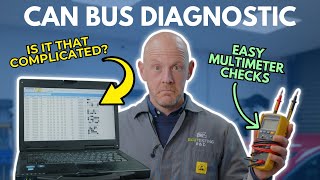
- Test the CAN Network Resistance: With the battery disconnected, measure the resistance between Pin 6 (CAN High) and Pin 14 (CAN Low) on the OBD-II port. A healthy network should read approximately 60 ohms. 🎬 Watch: A professional guide to troubleshooting CAN BUS faults. A reading of 120 ohms suggests a missing terminating resistor or an open circuit; 0 ohms indicates a short.
- Isolate the Fault: If the resistance is incorrect, the next step is to disconnect modules one by one to find the one causing the incorrect reading or to locate the wiring fault. This is an advanced step best left to professionals.
- Consult TSBs: Refer to Nissan TSBs NTB10-066a, NTB13-027C, and NTB10-145B for detailed diagnostic flowcharts provided by the manufacturer.
Parts You'll Likely Need
- Battery Ground Cable
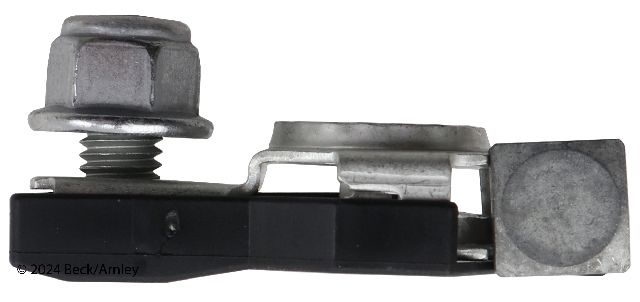
(OEM #24080-ZR00A)— The main ground connection is a frequent point of failure due to corrosion, causing a host of electrical and network issues. The OEM cable has multiple ground points and replacing the whole assembly is often more effective than cleaning.
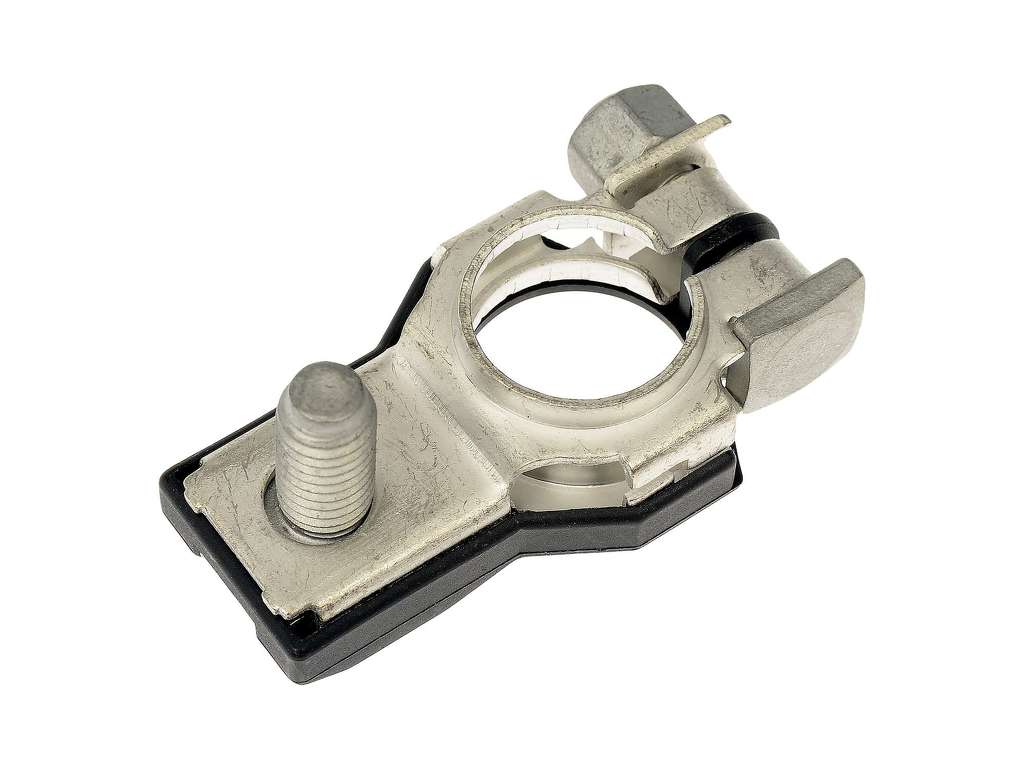
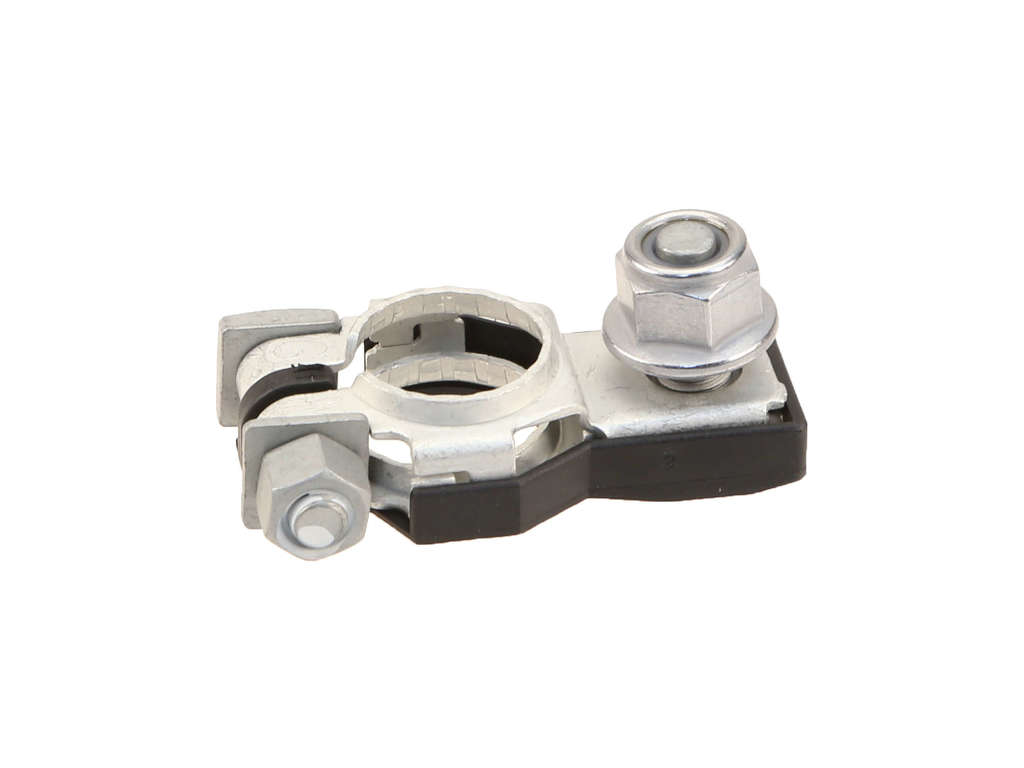
Trusted brands: Nissan OE, Dorman (926-514 - terminal only)
OEM price range: $50-$90
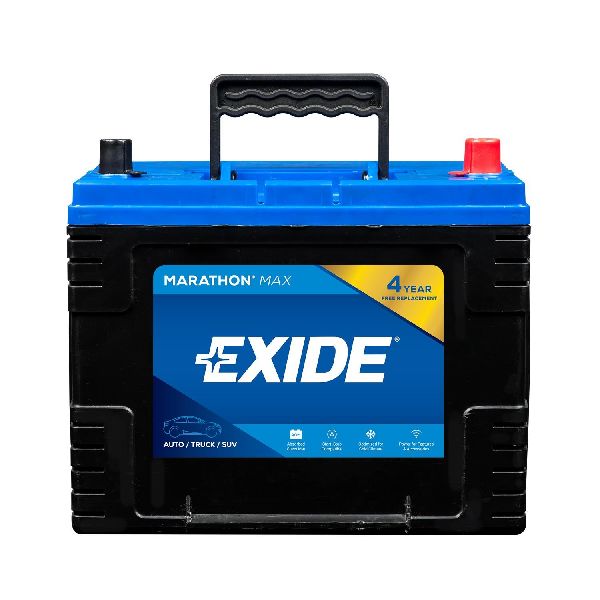
Aftermarket price range: $20-$50 - Battery — A weak battery provides unstable voltage, which can cause control modules to malfunction and log communication codes.
Trusted brands: Interstate, DieHard, Duralast
OEM price range: $200-$300
Aftermarket price range: $150-$250 - Intelligent Power Distribution Module (IPDM) — Internal relays within the IPDM are a known failure point on this platform, leading to stalling and communication faults. The original white-cased units were particularly problematic.
Trusted brands: Nissan OE
OEM price range: $200-$500
Aftermarket price range: $150-$400
Related Codes That Often Appear With This One
- U1001 — U1001 is also a CAN communication code, often related to the ECM or TCM. Seeing U1000 and U1001 together is common and points to a general network failure, as noted in owner complaints and TSBs. [NTB10066A, ODI #10915486]
Technical Service Bulletins (TSBs) & Recalls
- NTB10-066A: Provides general service information for diagnosing communication codes U1000, U1001, etc., and states that the module reporting the code is typically normal.
- NTB13-027C: Contains detailed diagnostic flowcharts for troubleshooting CAN network issues on most Nissan vehicles.
- NTB10-145B: Gives specific diagnostic steps for when a U1000 code is found in the ABS/VDC control unit.
Platform-Specific Known Issues
- NHTSA owner complaint ODI #10915486 for a 2006 Armada notes that a service advisor recommended replacing the ECM and ABS assembly after finding hard codes U1000 and U1001, highlighting a common and expensive potential misdiagnosis.
- Nissan TSB NTB10-145B specifically addresses the scenario where U1000 is the only code stored in the ABS/VDC actuator control unit, providing a dedicated flowchart for diagnosis.
- On the related Nissan Titan, owners on TitanTalk forums frequently solve U1000 issues by thoroughly cleaning all contacts on the negative battery cable or replacing it entirely.
Mechanic-Grade Diagnostic Values
- CAN Bus Resistance — expected: ~60 Ω. Failure: 120 Ω indicates an open circuit or missing terminating resistor. 0 Ω indicates a short between CAN High and CAN Low.
- CAN High (CAN-H) Voltage to Ground (Key ON) — expected: ~2.7 V (Recessive) / ~3.5 V (Dominant). Failure: Significant deviation from these voltages indicates a bus problem.
- CAN Low (CAN-L) Voltage to Ground (Key ON) — expected: ~2.3 V (Recessive) / ~1.5 V (Dominant). Failure: Significant deviation from these voltages indicates a bus problem.
- Battery Voltage (System) — expected: 12.4V or higher (Key OFF), 13.5V-14.5V (Engine ON). Failure: Voltages below 10V can cause modules to stop communicating.
Scan Tool Commands That Help
- Nissan CONSULT: CAN Diag Support Monitor — This is the primary function on the dealer tool to automatically check the communication status of all modules on the CAN bus. It quickly identifies which modules are online and which are not responding.
- Manual Procedure: IPDM E/R Self-Test (Auto Active Test) — To verify the functionality of the IPDM and the components it controls (wipers, lights, A/C clutch, etc.). This test confirms if the IPDM can receive commands and activate its internal relays. The procedure is: 1. Turn ignition ON. 2. Within 20 seconds, press the driver's door switch 10 times. 3. Turn ignition OFF. 4. Turn ignition ON again. The horn will chirp, and the test sequence will begin.
Wiring & Ground Locations
- Main Battery Ground Cable — Connects the negative battery terminal to the chassis (driver's side inner fender) and the engine block.. This is the most critical ground path for the entire vehicle. Corrosion or looseness at any of its connection points can create voltage drops that disrupt CAN communication network-wide.
- Engine Control Harness Grounds — Multiple points on the engine block, typically near the rear of the engine, grounding the ECM, TCM, and ignition coils.. A poor ground for the ECM or TCM can directly cause them to malfunction or lose communication, triggering U1000/U1001 codes.
- Main Harness Grounds (Interior) — Located under the dash, often near the A-pillars and behind kick panels, grounding the BCM and other interior modules.. If the BCM logs the U1000 code, its own ground connection is a primary suspect. A poor interior ground can cause a wide range of bizarre electrical issues in addition to CAN faults.
- IPDM E/R (Intelligent Power Distribution Module Engine Room) — Located in the engine compartment, typically on the passenger side near the firewall, behind the battery.. This module is a central hub for power and communication. It's a known failure point and its connectors are susceptible to corrosion from water intrusion, especially on vehicles where the cowl drains are clogged.
Real Owner Repair Stories
- YouTube user BT Builds Things (2019 Nissan Titan (similar F-Alpha platform)) — U1000 code present, intermittent no-crank condition.
❌ Tried (didn't work) Initial visual inspection showed no obvious corrosion.
✅ What actually fixed it The U1000 code was resolved by removing the main negative battery ground cable, using a wire brush to clean all metal-to-metal contact points (terminal, chassis mount, engine block mount) until they were shiny, and re-installing securely. Even though the connections did not look corroded, cleaning them provided a solid ground and eliminated the communication code. - YouTube user Less Expensive Fix (Infiniti G35 (shares CAN architecture principles)) — U1000 and U1001 codes, VDC/SLIP/ABS lights on, car may or may not start.
❌ Tried (didn't work) Simply clearing the codes with a scanner.
✅ What actually fixed it After replacing a faulty accelerator pedal and disconnecting the throttle body for service, the codes appeared. The fix required performing the throttle body and accelerator pedal re-learn procedures. The video also emphasizes that a full ECU reset (disconnecting the battery and pumping the brake pedal to discharge capacitors) is a necessary step after repairs to clear volatile memory and prevent old fault data from causing issues.
OEM Part Supersession History
284B6-ZE03A→284B6-ZE03B— Revision to improve reliability of internal relays and circuitry.
Heads up: The original white-cased IPDMs were known to be more failure-prone. The revised black-cased IPDMs are generally more robust. When replacing, ensure the part number is correct for the vehicle's specific year and trim.
Model Year Variations Within This Range
- 2004-2006: These early models were often equipped with a white-cased IPDM that was the subject of a service bulletin for ECM relay failure. For these specific years, Nissan provided a separate replacement relay, whereas later models require replacement of the entire IPDM assembly.
- 2008-2012: The 2008 model year received a significant facelift, including an updated interior, new infotainment options, and a twist-knob ignition for the Intelligent Key system. While the core CAN architecture remained similar, the addition of new modules and features could introduce different potential points of failure for the network compared to the 2005-2007 models.
Helpful Videos
We Have This Part in Stock


The information in this article is provided for general reference and educational purposes only. Vehicle specifications, procedures, and part compatibility can vary by production date, trim level, and region. Always consult your vehicle's factory service manual and verify part numbers before purchasing or performing repairs. Safety-critical components such as airbags, seat belts, and braking systems should be installed by a qualified professional.
- Nissan ARMADA:
- 🧭 Diagnostic Flowchart
- 🎬 Helpful Videos
- 🛍️ Shop This Part
- What's Unique About the 2005-2012 Nissan ARMADA
- Symptoms You May Notice
- Most Likely Causes
- Rare But Worth Checking
- Diagnosis Steps
- Parts You'll Likely Need
- Related Codes That Often Appear With This One
- Technical Service Bulletins (TSBs) & Recalls
- Platform-Specific Known Issues
- Mechanic-Grade Diagnostic Values
- Scan Tool Commands That Help
- Wiring & Ground Locations
- Real Owner Repair Stories
- OEM Part Supersession History
- Model Year Variations Within This Range
- 🎟️ Get 5% Off