

U1000 on 2009-2014 Nissan CUBE: CAN Network Communication Failure Causes and Fixes
On a 2009-2014 Nissan Cube, a U1000 code almost always points to a communication breakdown on the CAN network, not a specific failed part. The most common causes are poor ground connections, a weak battery, or corroded wiring, especially at the IPDM. Start by cleaning all major ground points and load testing the battery before considering expensive module replacements.
- U1000 is a network code, not a part failure code. The problem is that modules can't talk to each other.
- Always start with the basics: Test the battery and thoroughly inspect, clean, and tighten all major ground connections.
- Do not replace the module that has the U1000 code stored. It is almost always just reporting the problem.
- Diagnosing this code correctly requires a logical process and often specialized tools. It is not a simple fix for a beginner.
- A healthy CAN bus should have about 60 Ohms of resistance across pins 6 and 14 of the OBD-II port with the battery disconnected.
What's Unique About the 2009-2014 Nissan CUBE
The Nissan Cube (Z12 generation) is built on the Nissan B platform, sharing its electrical architecture with the Versa and Juke. This makes it prone to the same well-documented CAN communication issues across the Nissan lineup of the era. Poor ground connections and corroded harnesses are a known weak point. A particularly vulnerable component on these platforms is the Intelligent Power Distribution Module (IPDM), which can suffer from corrosion due to its location, leading to network-wide failures. Unlike a simple sensor code, U1000 on a Cube requires a logical diagnostic process 🎬 See a breakdown of common causes and fixes for U1000., as it points to a system-wide problem rather than a single component failure.
Diagnostic Flowchart
Tap your situation to follow the diagnostic path that matches what you're seeing on this vehicle.
Symptoms You May Notice
- Check Engine Light is on
- Multiple warning lights illuminated at once (ABS, VDC, SLIP, etc.)
- Engine may crank but not start
- Solid red key/security light on the dash, indicating the ECM is offline
- Poor engine performance, including stalling or rough idle
- Electrical glitches, such as non-responsive gauges, climate controls, or radio/display
- Scan tool cannot communicate with some modules or read the VIN
- Replacing the control module that stored the U1000 code. Per TSB NTB10-066B, this module is usually the one *detecting* the problem, not the one *causing* it.
Most Likely Causes
- Poor or Corroded Ground Connections 🔴 High Probability Nissan TSBs and extensive owner reports frequently point to poor grounds as a root cause for U1000 across many models. The main ground from the battery to the chassis and engine block is a primary failure point. These connections can loosen or corrode over time, creating high resistance and causing modules to drop off the network.
How to confirm: Visually inspect and physically check the main battery ground cable, engine block grounds, and chassis grounds. Look for green or white corrosion. Perform a voltage drop test on the ground circuit to check for high resistance that isn't visually apparent.
Typical fix: Remove, clean, and securely re-fasten all ground connections. This involves cleaning the contact point on the chassis/engine and the cable terminal itself down to bare metal using a wire brush and baking soda solution. In some cases, the entire ground cable needs replacement.
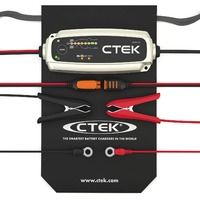
Est. part cost: $5-$100 - Weak or Failing Battery 🟡 Medium Probability → Shop Vehicle Battery Low system voltage during startup is a very common trigger for communication codes. If the battery voltage drops too low while cranking, modules can fail to initialize properly and post a U1000 code.
How to confirm: Test the battery with a professional digital load tester. A simple voltage check is not sufficient. Ensure voltage is above 12.4V at rest and doesn't drop below 10V during cranking. Check for parasitic draw, as a failing module could be draining the battery overnight.
Typical fix: Replace the battery and ensure the new one is fully charged before installation. Clean the battery terminals and connectors thoroughly.
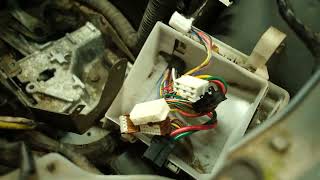
Est. part cost: $150-$250 - Corroded or Damaged Wiring/Connectors (especially at IPDM) 🟡 Medium Probability On related Nissan platforms like the 350Z and Versa, the IPDM (Intelligent Power Distribution Module) is located in an area under the windshield cowl with poor drainage, making it susceptible to water intrusion and corrosion. This corrosion can affect CAN bus pins within the IPDM connectors, causing network failure.
How to confirm: Visually inspect major harness connectors for signs of green or white corrosion, especially at the BCM, ECM, and IPDM. With the battery disconnected, check CAN bus resistance (~60 Ohms) at the OBD-II port (pins 6 & 14). Wiggling harnesses while monitoring resistance can help pinpoint intermittent issues.
Typical fix: Clean corroded terminals with a specialized contact cleaner or replace the damaged connector and a section of wiring. In a documented case on a Versa, a single corroded pin in the IPDM connector 🎬 Watch this diagnostic walkthrough on a Versa with similar issues. was the culprit. If the IPDM itself is corroded internally, it will need replacement.
Est. part cost: $20-$400 - Faulty Control Module ⚪ Low Probability While less common, a module (like the ECM, BCM, ABS, or IPDM) can fail internally, causing it to stop communicating or flood the network with bad data.
How to confirm: This is a process of elimination. Use an advanced scan tool to see which module is not responding. Disconnect the suspect module and see if communication with other modules is restored or if the CAN bus resistance returns to a normal value (e.g., from 120 Ohms back to 60 Ohms if a terminating module was the issue).
Typical fix: Replace the faulty module. This often requires programming the new module to the vehicle using a tool like Nissan's CONSULT.
Est. part cost: $300-$1500
Rare But Worth Checking
- Failing Alternator: → Shop Alternator
- Faulty Aftermarket Electronics:
Diagnosis Steps
- Connect an advanced scan tool capable of communicating with all modules (not just the engine). Note which modules are storing the U1000 code and which modules, if any, are not communicating at all (an 'MIA' module).
- Perform a full visual inspection. Check the battery terminals for tightness and corrosion. Inspect the main battery ground cable and all visible chassis and engine ground points for corrosion or looseness.
- Test the battery and charging system. Ensure the battery passes a load test and the alternator is not producing excessive AC ripple voltage.
- If the battery and grounds are good, turn the ignition off and disconnect the battery.
- Measure the resistance between Pin 6 (CAN High) and Pin 14 (CAN Low) on the OBD-II port. A healthy network should read approximately 60 Ohms. A reading of 120 Ohms indicates one of the two terminating resistors (usually in the ECM and another module) is offline or its branch is open. A reading near 0 Ohms indicates a short between the CAN lines.
- If resistance is incorrect, begin disconnecting modules one by one (starting with the ones that didn't communicate on the scan tool) to see if the resistance returns to normal. This can help isolate a faulty module or wiring branch.
- If resistance is correct but the problem persists, an oscilloscope is needed to check the CAN signal waveform for proper voltage levels (mirroring around 2.5V), square waves, and the absence of noise or shorts to power/ground. 🎬 Watch a professional technician diagnose a Nissan CAN communication failure.
Parts You'll Likely Need
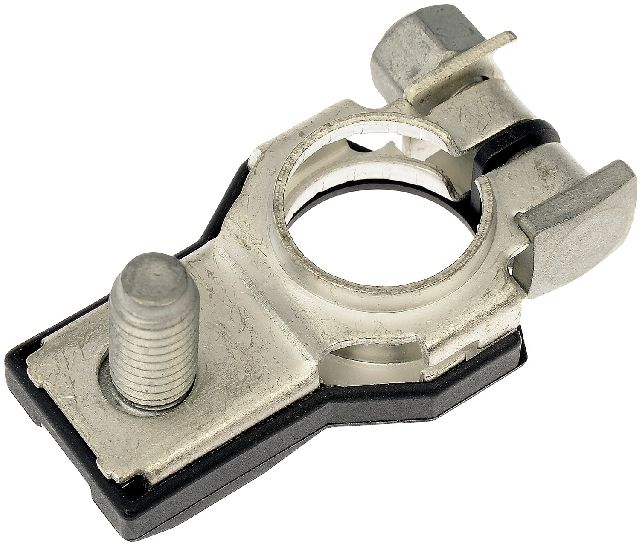
- Battery Ground Cable
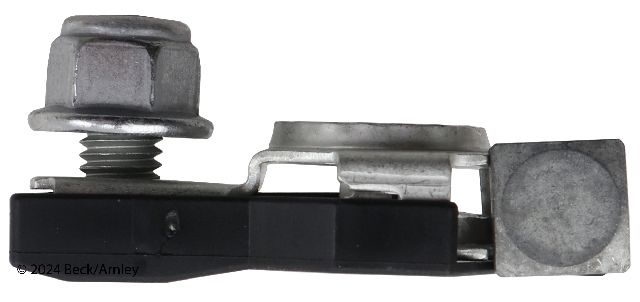
(OEM #24080-1FD0A or 24080-1FD0B)— The primary ground path for the vehicle's electrical system. Corrosion or damage to this cable is a very common cause of network communication issues on Nissans. There are two potential part numbers depending on the specific vehicle configuration.
Trusted brands: Nissan OE, Standard Motor Products, Duralast
OEM price range: $85-$140
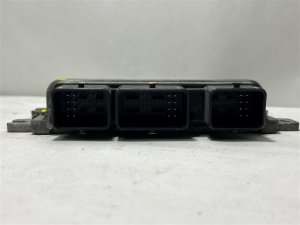
Aftermarket price range: $30-$70 - Engine Control Module (ECM) — The ECM is a terminating module on the CAN bus. If it fails internally, it can take down the entire network. Replacement is a last resort after all wiring, grounds, and other modules have been checked.
Trusted brands: Nissan OE, Hitachi
OEM price range: $800-$1200
Aftermarket price range: $400-$700
Related Codes That Often Appear With This One
- U1001, U1002, U1010 — These are all CAN communication-related codes. U1001 is a general CAN communication error, U1002 has a tighter timing specification, and U1010 often points to an internal issue within a module. They often appear together with U1000 as part of a larger network failure.
Technical Service Bulletins (TSBs) & Recalls
- NTB10-066B: The foundational TSB for Nissan CAN codes. It clarifies that a module reporting U1000 is usually healthy and that the fault lies elsewhere on the network. It advises using the CONSULT scan tool's CAN Diag Support Monitor to find the source of the error.
- NTB13-027a: Provides a detailed diagnostic flowchart for Nissan CAN communication issues, emphasizing checking battery voltage, fuses, and using a CONSULT scan tool to identify the fault type. It defines U1000, U1001, U1002, and U1010.
- NTB10-145B: Specifically addresses when U1000 is the only code stored in the ABS/VDC control unit, providing a specific repair flow chart for that scenario.
Platform-Specific Known Issues
- IPDM Water Intrusion and Corrosion: On related Nissan platforms, the IPDM (Intelligent Power Distribution Module) is located under the cowl near the windshield, an area prone to collecting water and debris if drainage paths are clogged. This moisture can lead to severe corrosion on the IPDM's external connectors and internal circuitry, causing a U1000 code and a no-start condition. A Reddit user with a similar Nissan vehicle described this exact failure mode.
Mechanic-Grade Diagnostic Values
- CAN Bus Resistance (Battery Disconnected) — expected: ~60 Ω. Failure: A reading of ~120 Ω indicates a missing terminating resistor (open circuit or module offline). A reading near 0 Ω indicates a short between the CAN H and CAN L lines. A reading of ~40 Ω may indicate an extra terminating resistor, often from an aftermarket device.
- CAN High Voltage to Ground (Key On, Engine Off) — expected: ~2.5V to 3.0V DC (average). Failure: Significant deviation from this range, or voltage that is stuck high or low, indicates a fault in a module's transceiver or a short to power/ground. An oscilloscope is required for accurate waveform analysis.
- CAN Low Voltage to Ground (Key On, Engine Off) — expected: ~2.0V to 2.5V DC (average). Failure: Significant deviation from this range, or voltage that is stuck high or low, indicates a fault in a module's transceiver or a short to power/ground. The sum of CAN H and CAN L average voltages should be approximately 5V.
- Module Internal CAN Port Resistance (Module Unplugged) — expected: 28kΩ - 50kΩ between CAN H and CAN L pins on the module itself.. Failure: A reading outside this range can indicate internal damage to the module's CAN transceiver.
Hidden / Shadow Codes Worth Checking
- U1000-01: This is a more specific version of the U1000 code with a 'symptom byte' of 01. It is often seen on newer Nissans and points more directly to a specific module (like ADAS) being the source of the communication error message, though the root cause may still be wiring or power supply to that module. (see via Advanced scan tools like the Nissan CONSULT or high-end aftermarket scanners that can read manufacturer-specific symptom bytes.)
Scan Tool Commands That Help
- Nissan CONSULT-II / CONSULT-III: CAN Diagnosis Support Monitor — This function polls all expected CAN modules and displays a list of which ones are communicating ('OK') and which are not ('NG' - No Good). This is the primary starting point for a U1000 diagnosis to quickly identify the module(s) that are offline.
- Nissan CONSULT-III: Self-Diagnostic Results — After identifying a non-communicating module, this function can check for internal faults within other modules. For example, if the TCM is offline, running self-diagnostics on the BCM and ECM can confirm they are still functioning correctly.
- Nissan CONSULT-III: WRITE CONFIGURATION — This function is mandatory after replacing the Body Control Module (BCM). It programs the new BCM with the vehicle's specific configuration. Failure to perform this step will result in a U1000 code and malfunctioning body systems.
Wiring & Ground Locations
- IPDM E/R (Intelligent Power Distribution Module Engine Room) — Located in the engine bay, typically near the battery or under the cowl panel. It serves as a smart fuse and relay box.. The IPDM E/R is a central hub for power and CAN signals. Corrosion within its connectors due to water intrusion is a very common cause of network failure and U1000 codes on Nissan B-platform vehicles.
- BCM (Body Control Module) — Inside the cabin, often located to the right of the steering column or behind the glove box.. The BCM controls numerous body functions and communicates constantly on the CAN bus. It is a key node for diagnostics. A failure here can cause widespread electrical issues along with a U1000 code.
- CAN Bus Wires at BCM — At the BCM connector: CAN HIGH is a Blue wire at Pin 22. CAN LOW is a Pink wire at Pin 21.. These are critical points for testing the CAN signal with an oscilloscope or multimeter when trying to isolate a fault to the BCM or the wiring leading to it.
- Main Engine/Chassis Ground — The negative battery cable bolts directly to the chassis and/or engine block. There are additional ground straps from the engine to the firewall.. A loose or corroded main ground is the single most common and easily fixed cause of U1000. It creates a floating ground, causing modules to lose their reference voltage and drop off the network.
Real Owner Repair Stories
- YouTube channel 'Car hospital' (2015 Nissan Sunny (shares platform architecture with Cube)) — U1000 and U1001 codes present, intermittent blowing of a 10A fuse for a control unit.
❌ Tried (didn't work) Customer repeatedly replaced the blown fuse.
✅ What actually fixed it The technician removed the air filter box and ECM to inspect the wiring harness underneath. A wire was found with damaged insulation that was intermittently shorting to ground. Repairing the damaged wire and properly securing the harness resolved the short and cleared the U1000/U1001 codes. - YouTube channel 'Chrizleyva' (Nissan vehicle with aftermarket air suspension) — U1000 code, aftermarket suspension controller not powering on.
❌ Tried (didn't work) Checking fuses., Replacing oxygen sensors for unrelated codes.
✅ What actually fixed it The negative battery terminal was heavily corroded. A thorough cleaning of the battery post and terminal clamp with a wire brush and baking soda solution restored proper power and ground connection, which fixed the communication code and allowed the aftermarket module to power on.
Helpful Videos

Used OEM Parts in Stock
New Aftermarket Parts Available


The information in this article is provided for general reference and educational purposes only. Vehicle specifications, procedures, and part compatibility can vary by production date, trim level, and region. Always consult your vehicle's factory service manual and verify part numbers before purchasing or performing repairs. Safety-critical components such as airbags, seat belts, and braking systems should be installed by a qualified professional.
- Nissan CUBE:
- 🧭 Diagnostic Flowchart
- 🎬 Helpful Videos
- 🛍️ Shop This Part
- What's Unique About the 2009-2014 Nissan CUBE
- Symptoms You May Notice
- Most Likely Causes
- Rare But Worth Checking
- Diagnosis Steps
- Parts You'll Likely Need
- Related Codes That Often Appear With This One
- Technical Service Bulletins (TSBs) & Recalls
- Platform-Specific Known Issues
- Mechanic-Grade Diagnostic Values
- Hidden / Shadow Codes Worth Checking
- Scan Tool Commands That Help
- Wiring & Ground Locations
- Real Owner Repair Stories
- 🎟️ Get 5% Off