

U1000 on 2013-2016 Nissan Frontier: Causes and Fixes for CAN Communication Failure
On a 2013-2016 Nissan Frontier, code U1000 almost always points to a poor electrical connection, not a failed part. Before replacing any expensive modules, check for a weak battery and thoroughly clean all main battery and body ground connections, especially the main body ground on the passenger-side inner fender. This often resolves the issue for free.
- U1000 is a network communication code, not a specific part failure code.
- Always start your diagnosis with the simplest and most common causes: the battery and ground connections. A thorough cleaning of these points solves the problem in many cases.
- Do not replace any control modules (like the ECM or BCM) until all power supply, ground, and wiring issues have been professionally ruled out.
- A professional scan tool is necessary for proper diagnosis to see which modules are offline.
- On the 2013-2016 Frontier, pay special attention to the main body ground on the passenger-side inner fender and the health of the IPDM.
What's Unique About the 2013-2016 Nissan FRONTIER

The Nissan Frontier (D40 platform), like its platform-mates the Xterra and Titan, is known for being sensitive to grounding issues. The main body ground connection, often a 'strip-and-clip' style on the passenger-side inner fender, can become loose or corroded over time, leading to a host of intermittent electrical problems, including the U1000 code. Additionally, the Intelligent Power Distribution Module (IPDM), which acts as a central relay and fuse box, is a known failure point that can cause widespread communication loss.
Diagnostic Flowchart

Tap your situation to follow the diagnostic path that matches what you're seeing on this vehicle.
Symptoms You May Notice
- Check Engine Light is on
- Intermittent flickering of the Check Engine Light, Traction Control (VDC/SLIP) light, or 4WD indicator.
- Hard or erratic transmission shifting.
- Electrical glitches, such as dim/flickering lights or erratic gauges.
- Audio or navigation system malfunctions [⭐ MANUFACTURER TSB — highest authority] Bulletin #NTB13106E
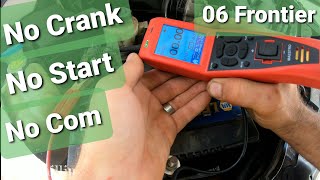
- In some cases, a no-start condition where the engine will not crank. 🎬 Watch: Troubleshooting a no-start and communication loss issue.
- Horn may activate and wipers may run on their own upon turning the key to the 'ON' position.
- Replacing the Engine Control Module (ECM) or another control unit without proper diagnosis. The U1000 code indicates a communication problem *between* modules, and the module storing the code is often not the one that is faulty. [⭐ MANUFACTURER TSB — highest authority] Bulletin #NTB10-066A
Most Likely Causes

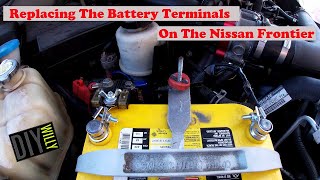
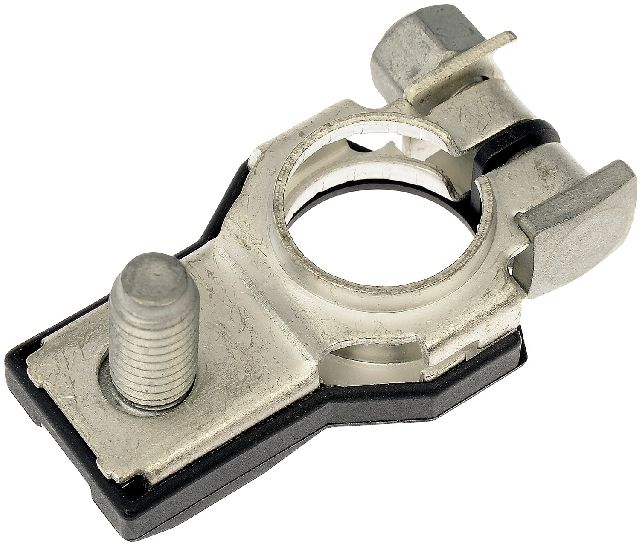
- Poor Battery or Terminal Connections 🔴 High Probability → Shop Vehicle Battery Low voltage during startup is a very common trigger for communication codes on many vehicles, including Nissans. Corroded or loose battery terminals can easily cause this voltage drop, and many owners have resolved the U1000 code simply by cleaning or replacing the terminal clamps.
How to confirm: Test the battery with a load tester to ensure it's healthy, not just showing 12V. Visually inspect terminals for any white or greenish corrosion and ensure they are tight. A battery older than 5 years is a suspect even if it starts the truck.
Typical fix: Disconnect the battery (negative first) and clean the terminals and cable ends thoroughly with a wire brush and a baking soda/water solution. Re-tighten securely. Applying dielectric grease can prevent future corrosion.
Est. part cost: $0-$250 - Corroded or Loose Ground Wires 🔴 High Probability Nissan TSBs and countless owner forums frequently point to poor grounds as a root cause for the U1000 code. The main body ground on the passenger-side inner fender is a known weak point that can corrode or loosen, creating high resistance in the circuit.
How to confirm: Locate the main ground straps (negative battery cable to body, body to engine block). The primary suspect is on the passenger-side inner fender panel. Inspect for corrosion or looseness. Perform a voltage drop test on the ground circuit; a reading of more than a few millivolts indicates a problem.
Typical fix: Disconnect, thoroughly clean the connection points (eyelet and chassis) with a wire brush or sandpaper until shiny bare metal is exposed. Re-secure tightly. Do not use paint or other coatings that could interfere with the connection.
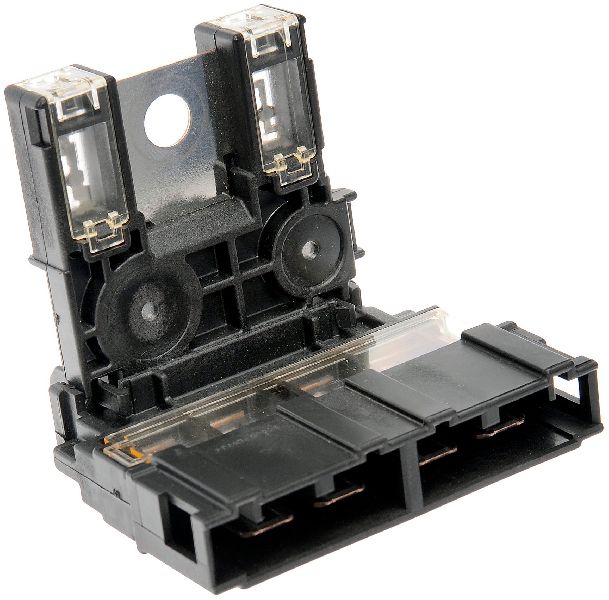
Est. part cost: $0-$5 - Faulty Intelligent Power Distribution Module (IPDM) 🟡 Medium Probability → Shop Fuse Box The IPDM is a sensitive electronic module located in the engine bay near the battery. It's prone to failure from moisture, vibration, or internal circuit issues, causing widespread electrical problems. The original factory units were often white plastic, while the updated, more robust replacements are typically black.
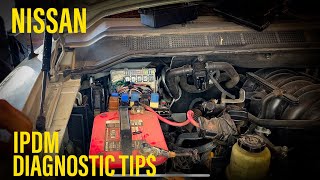
How to confirm: A professional scan tool may show the IPDM is not communicating. A common quick test is to swap the internal ECM relay with an identical relay from a non-critical circuit (like the fog light relay) to see if the issue resolves. An IPDM self-test can also be initiated by pressing the driver's door switch 10 times within 10 seconds of turning the ignition on, which cycles various components. 🎬 See how to perform this IPDM self-test yourself.
Typical fix: Replacement of the IPDM module. This is a plug-and-play part that comes with new fuses and relays. Using dielectric grease on the connectors is recommended during installation.
Est. part cost: $200-$400 - Damaged CAN Wiring Harness ⚪ Low Probability Wiring can be damaged by chafing against chassis components, rodent damage, or corrosion from water intrusion, particularly in the connectors under the vehicle or in the engine bay.
How to confirm: Visually inspect the harness for obvious damage. A technician would use a multimeter or oscilloscope to check for shorts, opens, or resistance issues on the CAN high (Pin 6) and CAN low (Pin 14) wires at the OBD-II port.
Typical fix: Repairing the specific section of damaged wire. This requires identifying the exact point of failure, which can be labor-intensive.
Est. part cost: $5-$100
Rare But Worth Checking
- Faulty Control Module (ECM, BCM, TCM): While possible, a control module is rarely the cause. As TSB NTB10-066A states, the module reporting the code is typically operating normally. All other causes, especially grounds and power supply, should be eliminated first.
- Improperly Installed Aftermarket Electronics: Aftermarket stereos, alarms, or remote starters that are improperly tapped into the vehicle's wiring can introduce interference or voltage drops onto the CAN network, causing communication errors.
Diagnosis Steps
- Read all codes from all available modules using a professional-grade scan tool. Note which modules are reporting the U1000 code and which, if any, are not communicating at all.
- Check the battery. Perform a load test and ensure it is fully charged and healthy. A simple voltage check is not sufficient.
- Inspect and clean battery terminals and cable clamps until they are free of corrosion. Ensure they are tight.
- Locate, disconnect, and thoroughly clean the main body and engine ground connections. Pay special attention to the ground point on the passenger-side inner fender. 🎬 Watch: How to clean and repair your ground connections. Clean contact points to bare metal and re-tighten securely.
- Inspect all fuses in both the interior fuse box and the IPDM, paying close attention to any related to the ECM, BCM, or TCM.
- If the problem persists, disconnect any aftermarket electronic devices to rule them out as a source of interference.
- A professional should then perform CAN bus resistance tests. With the battery disconnected, the resistance between Pin 6 (CAN High) and Pin 14 (CAN Low) on the OBD-II port should be approximately 60 ohms.
- If resistance is 120 ohms, it indicates a break in the circuit or a problem with one of the two terminating resistors (typically in the ECM and BCM). If it's near 0 ohms, it points to a short between the CAN high and low wires.
Parts You'll Likely Need
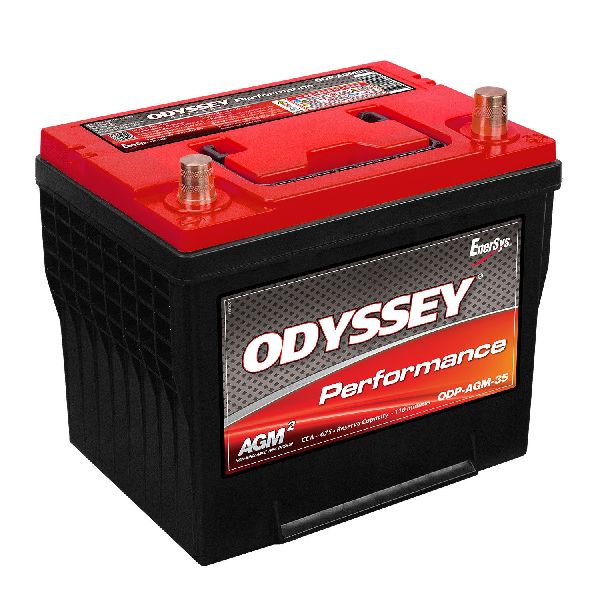
- Battery — A weak or failing battery is a primary cause of low-voltage conditions that trigger communication faults.
Trusted brands: Interstate, DieHard, Duralast
OEM price range: $200-$300
Aftermarket price range: $150-$250 - Intelligent Power Distribution Module (IPDM)
(OEM #284B6-ZE03B (replaces 284B6-ZE03A))— This module is a known failure point on Frontiers and can cause a U1000 code along with other electrical issues. The updated part is considered more reliable.
Trusted brands: Nissan OE
OEM price range: $280-$400
Aftermarket price range: $150-$250
Related Codes That Often Appear With This One
- U1001 — This code also indicates a CAN communication error and often appears alongside U1000 when the network is unstable. U1001 specifically points to a loss of communication with the ECM.
- P1610, P1614 — These are immobilizer (NATS) related codes that can be triggered when the BCM and ECM cannot communicate properly during startup, often leading to a no-start condition.
- C1130 — This ABS/VDC code for 'Engine Signal 1' can appear when the ABS control unit loses communication with the ECM, a common side effect of the U1000 network fault.
Technical Service Bulletins (TSBs) & Recalls
- NTB10-066A - States that when a module reports a U1000 code, it is typically operating normally and to diagnose communication codes first. It emphasizes checking power and grounds before module replacement.
- NTB13-106E - Mentions that DTC U1000 for the AVM (Around View Monitor) C/U could be present with certain audio/navigation system symptoms.
Platform-Specific Known Issues
- The main body ground connection on the passenger-side inner fender is a frequent culprit. It's a 'strip-and-clip' style ground that can loosen or corrode, causing high resistance in the ground path.
- The IPDM (Intelligent Power Distribution Module) located in the engine bay is susceptible to moisture and internal failures, which can take down the entire CAN network. The original white-cased modules are particularly noted for failure compared to the updated black-cased versions.
Mechanic-Grade Diagnostic Values
- CAN Bus Resistance — expected: Approximately 60 Ω between Pin 6 (CAN-H) and Pin 14 (CAN-L) at the DLC with the battery disconnected.. Failure: A reading of 120 Ω indicates an open circuit or missing terminating resistor. A reading near 0 Ω indicates a short between the CAN lines. A reading of ~45 Ω may indicate an unwanted third terminating resistor on the bus.
- Body Ground Voltage Drop — expected: Less than 0.20 Volts (200 mV), with up to 0.50V (500mV) being a marginal limit.. Failure: A reading higher than 0.50V indicates excessive resistance in the main body ground connection, a common cause of U1000.
- Alternator AC Ripple Voltage — expected: Less than 0.2 Volts AC (200 mV) measured at the alternator output post with the engine running and electrical loads on. A healthy Frontier may show as low as 0.03V AC.. Failure: Excessive AC voltage (e.g., over 0.5V AC) indicates failing alternator diodes, which can introduce electrical noise onto the CAN bus and trigger communication codes.
Scan Tool Commands That Help
- Manual Procedure (No Tool Required): IPDM E/R Auto Active Test — This is a built-in self-test to verify the IPDM's ability to control various components (wipers, lights, etc.). Crucially, if the test initiates (indicated by a horn chirp), it confirms the CAN communication line between the IPDM and the BCM is functional, helping to isolate the fault. To activate: Ignition ON, press driver's door switch 10 times in under 20 seconds, ignition OFF, then ignition ON again.
- Nissan CONSULT-III / CONSULT-III Plus: CAN Diagnosis Support Monitor — This dealer-level function performs a 'roll call' of all modules on the CAN network. It can quickly identify which specific module(s) are not responding, which is essential for pinpointing the location of a network break or a faulty module, saving significant diagnostic time compared to manual checks.
Wiring & Ground Locations

- E15, E24 — Right front of the engine compartment. This corresponds to the frequently cited main body ground on the passenger-side inner fender panel.. These are the primary grounding points for the engine bay and are a notorious source of corrosion and looseness, directly causing intermittent CAN communication failures.
- M57 — Behind the left side of the dashboard.. This is a major interior ground point. While less common to fail than engine bay grounds, a loose or corroded M57 can cause communication issues with interior modules like the BCM or instrument cluster.
- Engine Harness Chafe Points — Visually inspect the main wiring harness for rubbing/chafing where it passes over the ECM/TCM bracket, near suspension components like the upper control arm, and around the engine itself.. Vibration can cause the harness to rub through on sharp metal edges, shorting CAN wires and causing intermittent U1000 codes that are difficult to trace without a careful visual inspection.
Real Owner Repair Stories
- Reddit user on r/nissanfrontier (2013 Nissan Frontier SV 4x4) — Vehicle drives fine, then randomly the check engine light, traction control light, and 4WD indicator will flicker. When this happens, the transmission shifts hard. The issue seems to happen more often with the A/C on.
❌ Tried (didn't work) User was in the diagnostic phase.
✅ What actually fixed it This story is included as a perfect real-world example of the classic U1000 symptoms on this platform, directly matching the flickering lights and hard shifting described in the main article. - YouTube video by 'Infiniti G35' (Nissan vehicle (G35, but same principle and code)) — U1000 code present, aftermarket air suspension system not working.
❌ Tried (didn't work) Replacing O2 sensors for other codes.
✅ What actually fixed it The U1000 code was resolved by thoroughly cleaning heavy corrosion from the positive and negative battery terminals and clamps using a wire brush and baking soda solution. - YouTube video by 'sixto's garage' (2016 Nissan Frontier) — Crank no-start, cooling fan running with key on engine off.
❌ Tried (didn't work) Initial check showed correct 60-ohm resistance on the CAN bus with the battery disconnected.
✅ What actually fixed it This video demonstrates a critical diagnostic step. While the CAN bus resistance was correct (60 ohms) with the battery disconnected, it read as an open circuit (mega-ohms) as soon as the battery was reconnected. This proved the fault was not a simple broken wire but a module or circuit that failed only when powered, leading the technician to suspect a faulty ECM or a short in the powered circuit.
"I Checked Everything" — The Actual Cause
- A common scenario for U1000 is when a passive resistance check of the CAN bus shows a perfect 60 ohms, leading a technician to believe the wiring is fine. However, the fault only appears when the system is powered on. As shown in a diagnostic video on a 2016 Frontier, the resistance can jump to an open circuit reading (mega-ohms) when the battery is connected, indicating a module is failing or a wire is shorting to power/ground only when energized. This is why testing must go beyond a simple resistance check if the problem is intermittent.
OEM Part Supersession History
284B6-ZE03A→284B6-ZE03B— The original IPDM, often with a white-colored case, was prone to internal circuit failure. The updated part number is a more robust revision.
Helpful Videos


We Have This Part in Stock


The information in this article is provided for general reference and educational purposes only. Vehicle specifications, procedures, and part compatibility can vary by production date, trim level, and region. Always consult your vehicle's factory service manual and verify part numbers before purchasing or performing repairs. Safety-critical components such as airbags, seat belts, and braking systems should be installed by a qualified professional.
- Nissan FRONTIER:
- 🧭 Diagnostic Flowchart
- 🎬 Helpful Videos
- 🛍️ Shop This Part
- What's Unique About the 2013-2016 Nissan FRONTIER
- Symptoms You May Notice
- Most Likely Causes
- Rare But Worth Checking
- Diagnosis Steps
- Parts You'll Likely Need
- Related Codes That Often Appear With This One
- Technical Service Bulletins (TSBs) & Recalls
- Platform-Specific Known Issues
- Mechanic-Grade Diagnostic Values
- Scan Tool Commands That Help
- Wiring & Ground Locations
- Real Owner Repair Stories
- "I Checked Everything" — The Actual Cause
- OEM Part Supersession History
- 🎟️ Get 5% Off