

U1000 on 2005-2012 Nissan Maxima: Causes and Fixes for CAN Communication Loss
The U1000 code on a 2005-2012 Nissan Maxima almost always points to a bad ground connection or a weak battery, not a failed computer. Before replacing any expensive parts, clean and tighten all battery terminals and the main ground straps from the battery to the chassis and transmission. Specifically, inspect the ground cable that bolts to the transmission case, as it is a notorious failure point. This simple fix often resolves the issue for little to no cost.
- U1000 is a network communication code, not a part failure code.
- The most likely cause on a 2005-2012 Maxima is a bad ground connection, especially the one on the transmission.
- Always check the battery's health and clean all battery-related connections before attempting more complex diagnostics.
- Do NOT replace the computer (ECM, BCM, etc.) that stored the U1000 code without first ruling out wiring and ground issues.
- Diagnosing the root cause can be complex and may require professional-level tools if simple ground/battery checks don't solve it.
What's Unique About the 2005-2012 Nissan MAXIMA
On this generation of Nissan Maxima, the U1000 code is notoriously triggered by simple electrical faults rather than complex module failures. Owners and technicians frequently report that poor ground connections, particularly the main cable from the battery to the transmission, are the primary culprit. A user on Maxima.org described their experience: after having hard starting issues and an erratic gas gauge, they found the ground cable was completely broken before the transmission attachment point. To access this ground, you typically need to remove the airbox, battery, and battery tray. These grounds can corrode or break, causing widespread, intermittent electrical problems that log a U1000 code as a symptom. A weak or dying battery can also cause modules to drop off the network during startup, triggering the code.
Diagnostic Flowchart
Tap your situation to follow the diagnostic path that matches what you're seeing on this vehicle.
Generation note: This range covers the end of the 6th generation (2005-2008 A34) and the start of the 7th generation (2009-2012 A35). While the underlying cause is often the same (poor grounds, wiring), the exact location of ground points and wiring harness routing may differ between these two generations. For the 6th gen, a unique issue involves coins falling into the AC Auto Amplifier, shorting it out and causing a U1000 code with a no-start condition.
Symptoms You May Notice
- Check Engine Light is on
- VDC OFF and SLIP lights are illuminated 🎬 Watch: Troubleshooting VDC and SLIP light issues on your Nissan.
- ABS light is on
- Engine may hesitate, stall, or fail to start
- Erratic or harsh transmission shifting, sometimes jerking into reverse
- Vehicle enters 'fail-safe' or 'limp' mode with very slow acceleration
- Gauges or radio may not work intermittently
- Unresponsive throttle pedal
- Gas gauge needle doing a full turn and getting stuck
- Replacing the ECM or other control module without first verifying all grounds and battery health. The TSB specifically warns that the module reporting the code is typically not the one that has failed.
Most Likely Causes
- Poor or Corroded Ground Connections 🔴 High Probability The ground cable from the battery to the transmission and chassis is a well-documented failure point on this platform. It is exposed to the elements and can corrode or break completely, often near the transmission case mounting bolt. Nissan TSB NTB06-009a specifically addresses this issue 🎬 Watch: A step-by-step guide to fixing the U1000 code. for U1000 codes.
How to confirm: Visually inspect the main negative battery cable, especially where it bolts to the transmission and the chassis under the battery tray. To get a clear view, you may need to remove the airbox and battery tray. Perform a voltage drop test on the ground circuit; it should be less than 0.2 volts under load. A broken cable is a common finding.
Typical fix: Clean the contact points of the ground connections to bare metal and tighten securely. If the cable is corroded or broken, it must be replaced. Many owners create a supplementary 4-gauge ground wire from the frame to the transmission as a robust repair.
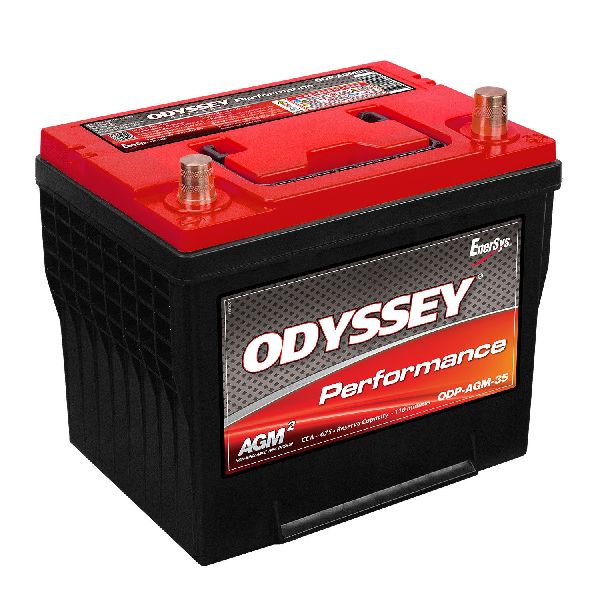
Est. part cost: $20-$70 - Weak or Failing Battery 🟡 Medium Probability → Shop Vehicle Battery Low voltage during engine cranking can cause various control modules to temporarily lose communication and trigger a U1000 code. This can happen even if the car still starts.
How to confirm: Test the battery with a digital multimeter or a load tester. A healthy battery should read approximately 12.6 volts at rest and should not drop below 10 volts during cranking. Many auto parts stores will test this for free.
Typical fix: Recharge or replace the battery if it fails the load test.
Est. part cost: $150-$250 - Damaged Wiring Harness ⚪ Low Probability Wires in the CAN harness can become chafed, corroded, or damaged from heat, vibration, or previous repairs. The main harness that runs near the battery and under the engine can be susceptible.
How to confirm: Visually inspect the wiring harnesses connected to the ECM, TCM, and BCM for any signs of damage. Check CAN bus resistance with a multimeter (with the battery disconnected); it should be approximately 60 ohms between pins 6 and 14 of the OBD-II port.
Typical fix: Repair the damaged section of the wiring harness. This can range from a simple wire repair to replacing a larger harness section.
Est. part cost: $10-$500 - Failing Control Module ⚪ Low Probability While less common, a module like the ECM, TCM, or ABS unit can fail internally and disrupt the entire network. On the 6th gen (A34), the AC Auto Amp is a known failure point if coins fall into it, shorting the module and taking down the CAN bus.
How to confirm: This is typically a process of elimination. After confirming grounds, battery, and wiring are all good, disconnect modules one by one to see if communication is restored to the rest of the network. This requires an advanced scan tool.
Typical fix: Replace the faulty module. The new module may require programming by a dealer or qualified shop.
Est. part cost: $200-$1200
Rare But Worth Checking
- Faulty Alternator: → Shop Alternator An alternator producing excessive AC ripple (electrical noise) can interfere with CAN bus communications. This can be checked with a multimeter set to AC voltage; with the engine running, measure between the battery terminals. A reading above 0.5V AC indicates a likely bad diode in the alternator.
- Aftermarket Electronics: Poorly installed aftermarket stereos, alarms, or remote starters can be tapped into the CAN bus incorrectly, causing interference and communication codes.
- Faulty Driver's Master Power Window Switch: The master window switch is a module on the CAN bus. On some 7th gen (A35) Maximas, a faulty switch (OEM Part # 25401-9N00D) has been known to cause network communication issues, including a U1000 code.
Diagnosis Steps
- Check and record any other stored trouble codes. Always diagnose U1000 first, as it can cause other codes to appear.
- Check the battery. Ensure it has at least 12.4V at rest and passes a load test. Clean battery terminals and cable ends until they are shiny.
- Inspect the primary ground points. This is the most critical step. Remove the airbox, battery, and battery tray to gain access. Unbolt, clean to bare metal, and securely re-attach the negative battery cable connection to the chassis and the ground strap to the transmission case.
- Perform a voltage drop test on the ground side. With the engine running or cranking, place one multimeter probe on the negative battery post and the other on the engine block or transmission case. The reading should be under 0.2V. A reading of 0.4V or higher while cranking indicates a significant grounding issue.
- Visually inspect all accessible wiring harnesses for signs of damage, chafing, or corrosion, paying close attention to the harnesses around the engine, battery tray, and wheels.
- If the problem persists, use an advanced scan tool (like a Nissan CONSULT) to perform a network test or 'module roll-call' to see which specific modules are not communicating.
- With the battery disconnected, measure the resistance between the CAN High (Pin 6) and CAN Low (Pin 14) pins at the DLC (OBD-II port). The reading should be approximately 60 ohms. A reading of 120 ohms indicates a break in the circuit or a missing terminating resistor.
- Check for AC ripple from the alternator. With the engine running, set a multimeter to AC Volts and measure across the battery terminals. A reading above 0.5V AC suggests a failing alternator diode that is creating electrical noise on the network.
- If all else fails, begin disconnecting individual modules one at a time to see if one is internally shorted and bringing down the network. Start with easily accessible modules like the ABS controller or the master window switch.
Parts You'll Likely Need
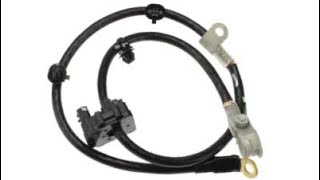
- Battery Ground Cable
(OEM #24080-8Y100 (for 2006-2008 A34 Maxima), 24080-JA00B (for many 2009+ A35 models, verify with VIN))— This is the most frequent point of failure leading to a U1000 code on this platform due to corrosion and breakage near the transmission.
Trusted brands: Nissan OE, Standard Motor Products
Related Codes That Often Appear With This One
- U1001 — This is another CAN communication code, often related to the ECM, that can appear alongside U1000, indicating a general network communication problem.
- P0-series codes — If the ECM loses communication, it may also store various powertrain codes related to sensors or actuators it can no longer talk to.
- C-series codes — If the ABS or VDC module loses communication, it will store C-prefix codes and illuminate the corresponding warning lights on the dash.
Technical Service Bulletins (TSBs) & Recalls
- NTB10-066A: States that when a module reports U1000, it is typically operating normally and the error is external on the CAN network. It advises diagnosing communication codes first and checking CAN resistance.
- NTB06-009a: Specifically addresses MIL 'ON' with U1000 or U1010 stored, pointing to excess resistance in ground connections. It instructs technicians to clean and re-tighten ECM grounds and the negative battery cable body connection.
Platform-Specific Known Issues
- The ground cable that runs from the negative battery terminal to a chassis point under the battery tray and then to the transmission case is a known weak point. It often corrodes and breaks near the transmission, causing a host of electrical issues including the U1000 code.
- On 6th generation (A34) models, coins can fall through a slot in the dash trim and land on the circuit board of the AC Auto Amplifier (A/C control module), causing a short that brings down the CAN network and often results in a no-start condition. Techs refer to this module as the 'Piggy Bank'.
Mechanic-Grade Diagnostic Values
- CAN Bus Resistance — expected: ~60 Ω (Ohms). Failure: A reading of ~120 Ω indicates an open circuit or one of the two terminating resistors is offline. A reading near 0 Ω indicates a short between the CAN High and CAN Low wires.
- CAN High Voltage (Bus Active) — expected: ~2.6V to 2.7V DC. Failure: Significant deviation from this voltage, or voltage matching CAN Low, can indicate a short or open circuit.
- CAN Low Voltage (Bus Active) — expected: ~2.3V to 2.4V DC. Failure: Significant deviation from this voltage, or voltage matching CAN High, can indicate a short or open circuit.
- ECM Ground Voltage Drop (Cranking) — expected: < 0.2V DC. Failure: A reading of 0.4V or higher while the engine is cranking indicates a poor ground connection that may only be apparent under high electrical load.
Hidden / Shadow Codes Worth Checking
- U1002: This is a CAN communication code with a tighter (more sensitive) specification than U1000, indicating a more specific or persistent communication loss. (see via Standard OBD-II scanner or Nissan CONSULT.)
Scan Tool Commands That Help
- Nissan CONSULT-III plus: CAN Diag Support Monitor / V-CAN Diagram — This is the primary diagnostic function to use after retrieving the U1000 code. It performs a 'roll call' of all modules on the network and displays a color-coded chart showing which modules are transmitting (TX) and receiving (RX) data correctly, immediately pinpointing the module(s) that have dropped off the network.
Wiring & Ground Locations
- Main Engine/Transmission Ground — The main negative battery cable splits, with one connection to the chassis under the battery tray and the other, longer cable routing down to a bolt on the transmission case.. This is the most common failure point. The connection at the transmission case is exposed to weather and vibration, causing it to corrode, loosen, or break entirely, disrupting the ground path for multiple critical modules.
- E15 / E24 — Engine compartment ground points, typically located on the chassis rails in the left side of the engine bay.. These are chassis ground points for various components. While not the primary engine ground, corrosion here can cause intermittent issues.
- M14 / M78 (Earlier Models) — ECM ground points located under the dashboard, often attached to the metal cross-brace behind the center console.. On earlier models in the specified range, a poor ground connection specifically at the ECM was a known cause for U1000/U1001 codes.
- IPDM E/R (Intelligent Power Distribution Module Engine Room) — This is the 'smart' fuse and relay box located in the engine compartment. It is not a ground itself, but it controls power to many modules on the CAN bus.. A failure or internal corrosion within the IPDM can cut power to a CAN module, causing it to drop off the network and trigger a U1000 code elsewhere. The IPDM itself may not report a code.
Real Owner Repair Stories
- Reddit user on r/MechanicAdvice (2007 Nissan Maxima) — U1000 code was set only when the state emissions testing scan tool was connected and the key was cycled.
❌ Tried (didn't work) Inspecting and cleaning the OBD-II port., Repeating the test at the same station.
✅ What actually fixed it Taking the car to a different emissions testing station, where it passed without issue. The original testing station's equipment was likely faulty and was causing the communication error on the vehicle's CAN bus. - NICOclub Forums user Gary_ket8r6f (2002 Nissan Maxima SE (A33B, similar architecture to early A34)) — Persistent U1000 and U1001 codes, no-start, various other seemingly unrelated codes.
❌ Tried (didn't work) Cleaning various harness connectors., Checking ECM ground voltage with key-on (read a good 0.005V).
✅ What actually fixed it The user performed a voltage drop test on the ECM ground wire *while cranking the engine* and discovered the voltage jumped to 0.4V, indicating a poor ground under load. Improving the ECM's ground connection resolved the issue. - Reddit user on r/NissanMaxima (2004 Nissan Maxima (6th Gen A34)) — U1000 code and a no-start condition.
❌ Tried (didn't work) Initial diagnosis pointed towards module failure.
✅ What actually fixed it The cause was coins falling through a gap in the dash trim, landing inside the AC Auto Amplifier (a CAN module sometimes called the 'Piggy Bank' by techs) and shorting its circuit board. Removing the coins and insulating the slot on the module fixed the problem.
"I Checked Everything" — The Actual Cause
- In one documented case, a 2007 Maxima repeatedly failed emissions testing with a U1000 code. All vehicle systems and wiring were perfectly fine. The actual cause was a faulty scan tool at the testing facility that was inducing the communication error on the car's network when connected. The problem was resolved by simply using a different testing station.
When the Usual Fixes Don't Work
- While the vast majority of U1000 codes on this platform are caused by a bad battery or a corroded ground wire between the battery, chassis, and transmission, there are cases where these common fixes do not work. In one instance, a technician confirmed all grounds and power sources were perfect but continued to have multiple modules offline. The root cause was traced to the Intelligent Power Distribution Module (IPDM). Though its fuses were intact, the internal circuit board had developed corrosion, preventing it from properly supplying power to other modules on the CAN network. This caused them to drop offline and trigger a U1000 code in the modules that were still active. This highlights that after verifying the main grounds, the next step should be to verify power and ground directly at the non-communicating module, which can lead back to a faulty power distribution unit like the IPDM.
Model Year Variations Within This Range
- 2005-2008 (A34 Generation): This generation is susceptible to coins falling into the AC Auto Amplifier located in the center dash, shorting out the module and causing a U1000 code with a no-start condition.
- 2009-2012 (A35 Generation): While still prone to ground issues, this generation has documented cases where a faulty master power window switch (which is a CAN module) can bring down the network. The physical location of grounds and modules like the ECM also differs from the A34.
Helpful Videos

We Have This Part in Stock


The information in this article is provided for general reference and educational purposes only. Vehicle specifications, procedures, and part compatibility can vary by production date, trim level, and region. Always consult your vehicle's factory service manual and verify part numbers before purchasing or performing repairs. Safety-critical components such as airbags, seat belts, and braking systems should be installed by a qualified professional.
- Nissan MAXIMA:
- 🧭 Diagnostic Flowchart
- 🎬 Helpful Videos
- 🛍️ Shop This Part
- What's Unique About the 2005-2012 Nissan MAXIMA
- Symptoms You May Notice
- Most Likely Causes
- Rare But Worth Checking
- Diagnosis Steps
- Parts You'll Likely Need
- Related Codes That Often Appear With This One
- Technical Service Bulletins (TSBs) & Recalls
- Platform-Specific Known Issues
- Mechanic-Grade Diagnostic Values
- Hidden / Shadow Codes Worth Checking
- Scan Tool Commands That Help
- Wiring & Ground Locations
- Real Owner Repair Stories
- "I Checked Everything" — The Actual Cause
- When the Usual Fixes Don't Work
- Model Year Variations Within This Range
- 🎟️ Get 5% Off