

U1000 on 2016 Nissan NV200: Causes and Fixes for CAN Communication Failure
On a 2016 Nissan NV200, code U1000 indicates a CAN network communication failure. The most common causes are a weak battery, poor ground connections, or a specific wiring issue in the engine harness causing a no-start in cold weather. In some cases, it can be triggered by problems with the audio/navigation unit configuration.
- U1000 is a communication network code, not a specific part failure. Do not replace the module that has the code stored in its memory.
- Always start your diagnosis by checking the simplest things first: test the battery and clean all major ground connections.
- On the NV200, be aware of specific TSBs that link this code to cold-weather starting problems and audio system faults.
- Due to the complexity of network diagnostics, professional help with an advanced scan tool is highly recommended to avoid expensive and unnecessary parts replacement.
What's Unique About the 2016-2016 Nissan NV200
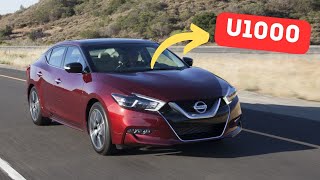
On Nissan vehicles, the U1000 code is a generic communication fault that can be triggered by a surprisingly wide range of issues. For the NV200 and its platform mates, documented causes are very specific, ranging from audio system glitches (TSB NTB13106E) to a well-documented wiring problem in the EGI (engine) harness that causes a no-start condition in freezing weather (TSB NTB15022A). Unlike a simple sensor code, U1000 requires a diagnostic strategy that focuses on the entire vehicle network, starting with 🎬 Watch: Understanding common reasons for Nissan U1000 codes power and grounds, before condemning any single component.
Diagnostic Flowchart
Tap your situation to follow the diagnostic path that matches what you're seeing on this vehicle.
Symptoms You May Notice
- Check Engine Light or Service Engine Soon light is on
- Engine cranks but does not start, especially in below-freezing weather [TSB NTB15022A, 19]
- Engine stalling, hesitation, or lack of power
- Audio system volume is very loud or quiet, and adjustment is overly sensitive [TSB NTB13106E]
- Electrical glitches, like issues with windows, door locks, or HVAC
- Multiple warning lights on the instrument cluster (ABS, Traction Control, etc.)
- Inability for a standard OBD-II scanner to communicate with the vehicle
- Solid red security light on the dashboard when the key is on, indicating the ECM is offline.
- Replacing the control module that stored the U1000 code. TSB NTB10066A explicitly states that the module setting the code is usually the one that is working correctly and reporting a problem with another module.
- Replacing the ECM for a cold-weather no-start condition without first performing the wiring repair specified in TSB NTB15022A. The TSB explicitly warns not to replace the ECM for this specific issue.
Most Likely Causes
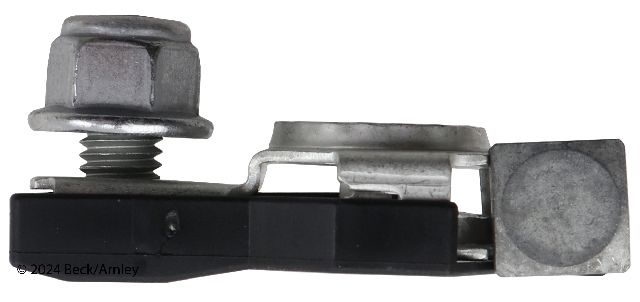
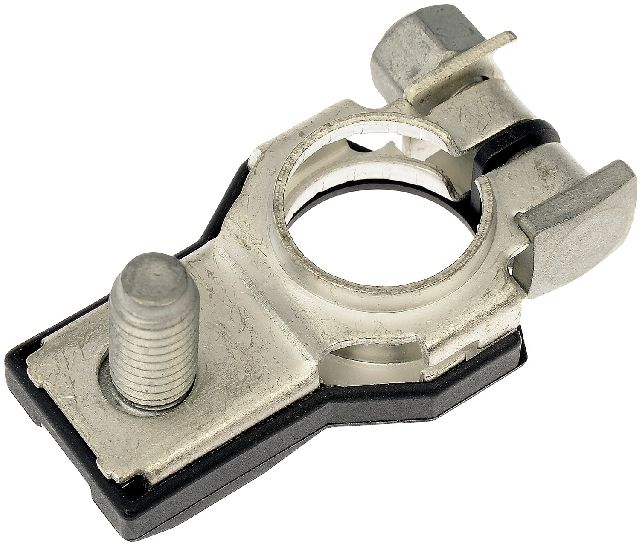
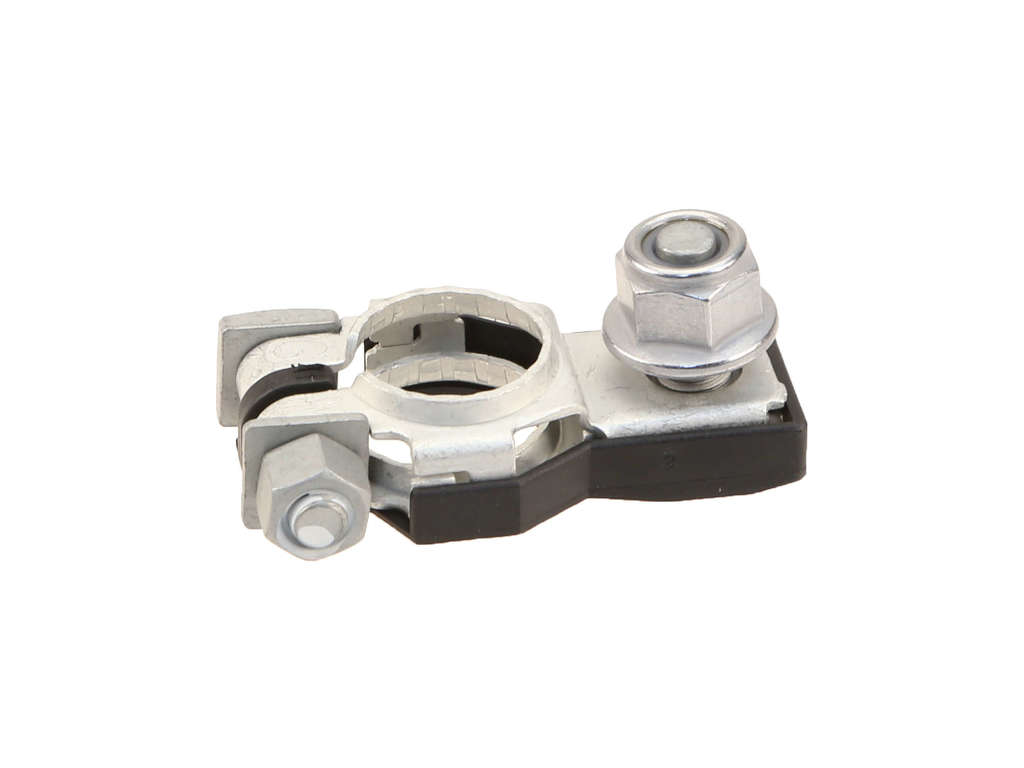
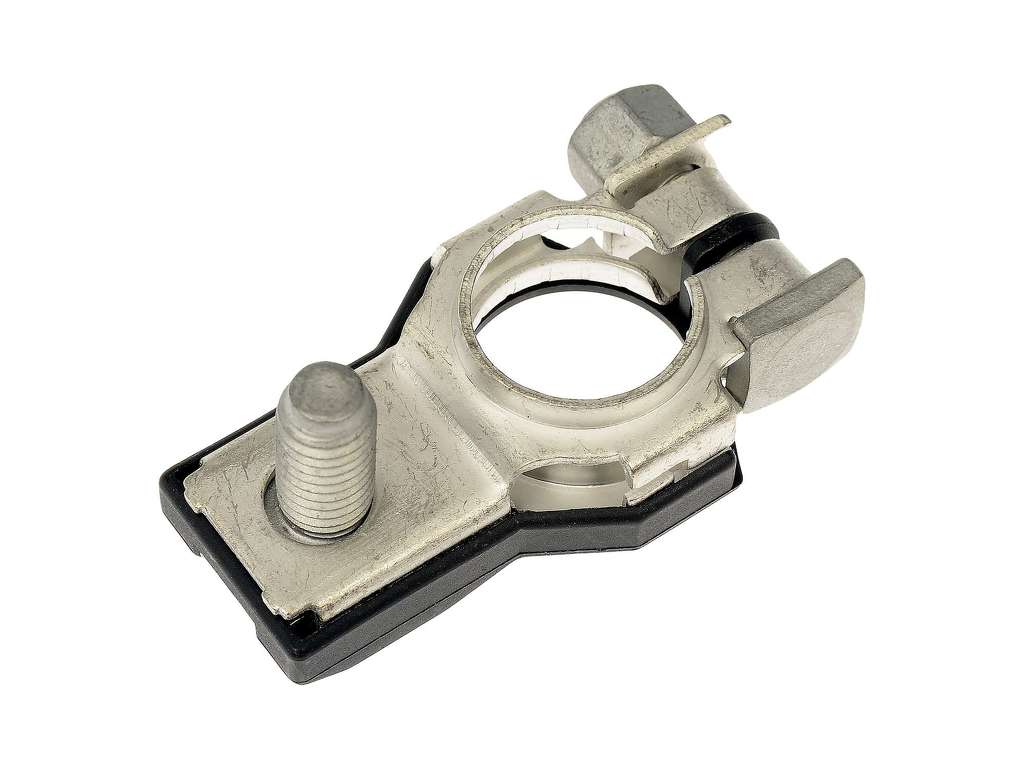
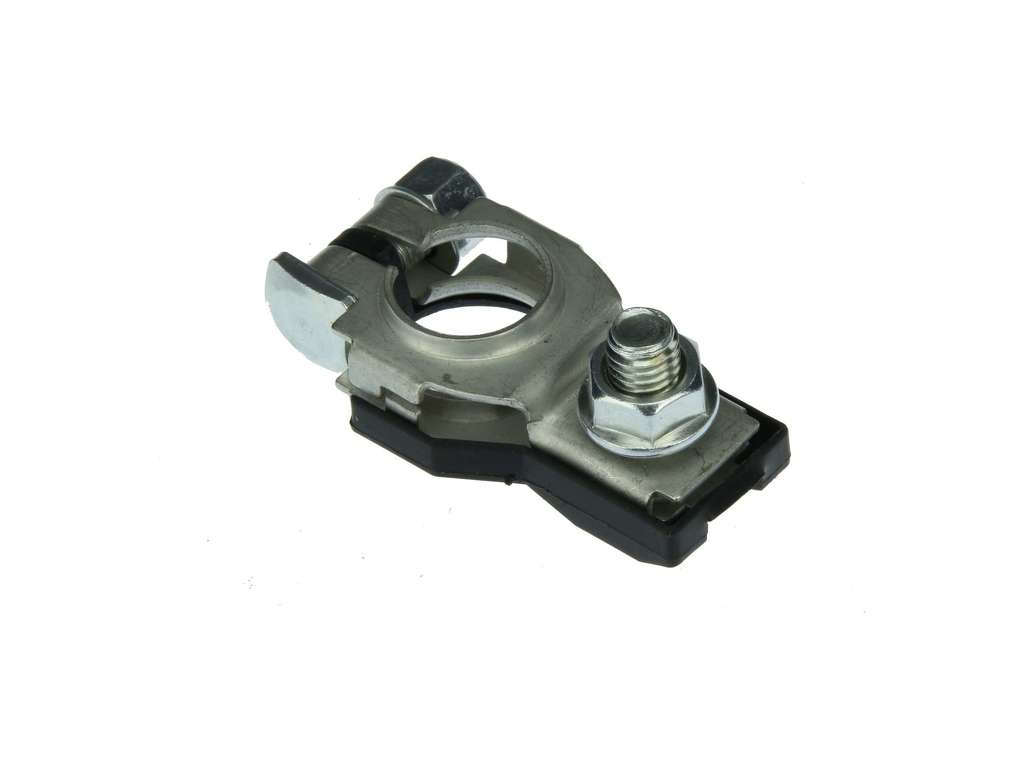
- Weak or Failing Battery 🔴 High Probability → Shop Vehicle Battery Low voltage during startup is a very common cause for modules to temporarily drop off the communication network, triggering a U1000 code. Nissans are known to be sensitive to battery health.
How to confirm: Test the battery with a digital load tester. A simple voltage check is not sufficient, as a weak battery can show 12V at rest but drop excessively under load. A reading below 10V during cranking is a strong indicator of a weak battery. Many auto parts stores offer this service for free. Common battery group sizes for the NV200 include H5, 47, 48, and 121R.
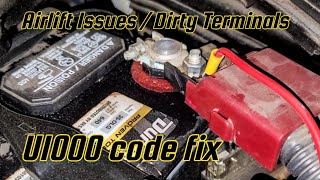
Typical fix: Recharge or replace the 12V battery. Ensure terminals are clean and tight. 🎬 See how to clean battery terminals to fix this code
Est. part cost: $150-$300 - Poor or Corroded Ground Connections 🔴 High Probability Nissan TSBs and extensive owner reports confirm that corroded or loose ground points are a primary cause for communication codes across their lineup. These connections are essential for stable module operation, and even a small amount of resistance can disrupt sensitive CAN signals.
How to confirm: Visually inspect and physically check the main ground straps: follow the negative battery cable to where it bolts to the chassis and the separate strap from the chassis to the engine block. Locate and clean main ground points like E15 and E24 in the engine compartment. Perform a voltage drop test on the ground side for a definitive diagnosis.
Typical fix: Disconnect, clean all contact surfaces of the ground wires and connection points with a wire brush until they are shiny, and re-tighten securely. Applying dielectric grease can prevent future corrosion.
Est. part cost: $1-$10 - Damaged Wiring or Connectors (EGI Harness) 🟡 Medium Probability Nissan TSB NTB15022A specifically identifies a wiring issue in the EGI (Engine Gas Injection) harness that causes a U1000 and a no-start condition in cold weather. This is a known factory issue.
How to confirm: If the symptom is a 'crank, no-start' in freezing weather, this TSB is the primary suspect. The procedure involves locating the EGI harness bend near the driver's side intake manifold, opening the loom, and identifying a specific 16-gauge red wire and a 16-gauge violet/purple wire.
Typical fix: Per TSB NTB15-022A, the fix is to cut the red and violet/purple wires and splice the 'downstream' end of the red wire together with both ends of the violet/purple wire using a solder sleeve connector. The 'upstream' end of the red wire is then capped off with heat shrink tubing. This is a precise repair that should be followed exactly.
Est. part cost: $10-$500 - Failing Control Module (BCM, ECM, IPDM) ⚪ Low Probability Any module on the CAN network can fail internally and stop communicating, causing other modules to log a U1000 code. The IPDM (main fuse box) is also a control module and a known failure point that can cause network-wide codes. TSB NTB13106E notes the AVM (Around View Monitor) control unit can be a cause.
How to confirm: This requires a professional scan tool to perform a network test or 'roll call' to see which specific module is not responding. The faulty module is the one that is offline, not the one storing the U1000 code. If the ECM is suspected, a solid security light on the dash when the key is on can indicate it's offline.
Typical fix: Replace the faulty module (e.g., ECM, BCM, TCM, ABS module, or IPDM) and perform any necessary programming or configuration.
Est. part cost: $200-$1500
Rare But Worth Checking
- Faulty IPDM (Intelligent Power Distribution Module): The IPDM is the main fuse and relay box in the engine bay, but it's also a control module. Internal corrosion or a failing non-serviceable ECM relay within the IPDM can cut power to other modules, causing network-wide U1000 codes.
- Aftermarket Electronics: Improperly installed aftermarket accessories (remote start, alarm, stereo, etc.) that are tapped into the CAN bus wiring can disrupt communication and cause a U1000 code.
- Incorrect Audio/Navigation Unit Configuration: Per TSB NTB13106E, an incorrect configuration of the audio/nav unit can specifically cause the AVM (Around View Monitor) control unit to store a U1000. The fix is to reconfigure the unit with a Nissan CONSULT tool.
- Failing Alternator: → Shop Alternator A failing alternator, specifically with bad diodes or bearings, can introduce significant electrical noise (AC ripple) onto the DC electrical system. This noise can interfere with the sensitive data signals on the CAN bus, leading to intermittent communication errors and U1000 codes.
Diagnosis Steps
- Check and record any other stored DTCs. Other codes can help pinpoint which system is failing.
- Check the battery. Ensure it is fully charged and passes a load test. Clean the battery terminals. A weak battery is a top cause.
- Inspect all major power and ground connections. Disconnect, clean, and tighten the main battery-to-chassis and chassis-to-engine grounds, such as points E15 and E24 in the engine bay.
- If experiencing a crank-no-start in freezing weather, immediately consult and perform the wiring repair outlined in TSB NTB15022A.
- Use a professional scan tool (like Nissan CONSULT) to perform a CAN system test ('roll call'). Identify which specific module(s) are not communicating. The non-responsive module is the suspect.
- If a specific module is offline, check its dedicated fuses (e.g., 'EGI' fuse in the IPDM for the ECM) and verify power and ground at its connector.
- Inspect the wiring harness and connectors for the non-communicating module. Look for physical damage, corrosion, or loose pins.
- With the battery disconnected, measure the resistance between the CAN High and CAN Low pins at the OBD-II port (Pin 6 and Pin 14). A healthy network should read approximately 60 ohms. A reading of 120 ohms indicates an open circuit or a missing terminating resistor (which is internal to a module like the ECM or BCM).
- If all else fails, consider testing the alternator for excessive AC ripple voltage, which can indicate failing diodes and cause network interference.
Parts You'll Likely Need
- Battery — A weak battery is a primary cause of voltage drops that lead to communication errors between modules. Common group sizes for the NV200 are H5, 47, 48, or 121R.
Trusted brands: Interstate, DieHard, Bosch
OEM price range: $200-$350
Aftermarket price range: $150-$300 - Wiring Repair Supplies — Fixing corroded grounds or damaged CAN bus wires is a common repair for U1000. Specifically needed for the TSB NTB15022A repair.
Trusted brands: 3M
OEM price range: $5-$50
Aftermarket price range: $5-$50 - Engine Control Module (ECM)
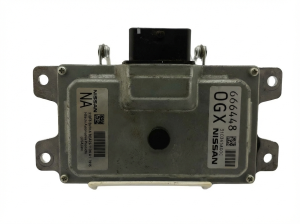
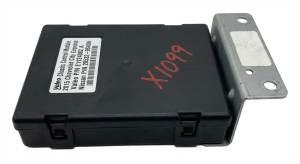
(OEM #23703-3LM2A)— If the ECM fails internally, it can stop communicating on the network, causing other modules to store a U1000 code. This should only be replaced after thorough diagnosis confirms the ECM is the offline module and it has proper power/ground. Note: This part requires programming.
Trusted brands: Hitachi, Nissan Genuine
OEM price range: $580-$800
Aftermarket price range: $400-$800 (remanufactured/programmed) - Body Control Module (BCM)
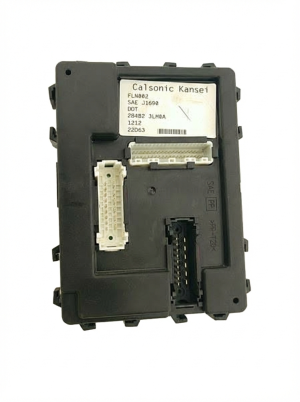
(OEM #284B2-3LM0A)— The BCM is a central hub for many body electronics and a key module on the CAN bus. If it fails, it can cause widespread communication faults. This part requires programming/configuration upon replacement.
Trusted brands: Nissan Genuine
OEM price range: $350-$500
Aftermarket price range: $100-$250 (used, requires programming)
Related Codes That Often Appear With This One
- U0100 — This code means 'Lost Communication With ECM/PCM'. It is a more specific version of U1000 that can appear if the Engine Control Module is the one that has gone offline.
- U0101 — This code means 'Lost Communication With TCM'. It can appear with U1000 if the Transmission Control Module is the source of the communication loss.
- U1001, U1002, U1010 — These are also CAN communication codes. Nissan TSB NTB10066A groups them with U1000 as related network faults that should be diagnosed as a group.
Technical Service Bulletins (TSBs) & Recalls
- NTB13106E: Mentions U1000 in relation to Audio/Navigation unit problems.
- NTB15022A: Links U1000 to a cold-weather no-start condition caused by a wiring issue.
- NTB10066A: Provides general diagnostic advice for U1000, stating the module setting the code is usually normal.
Platform-Specific Known Issues
- A known issue documented in TSB NTB15022A can cause a 'crank but no start' condition during cold weather, accompanied by a U1000 code. The fix involves splicing specific wires in the EGI harness.
- TSB NTB13106E indicates that a U1000 code can be present if there are issues with the Audio/Navigation unit, such as incorrect configuration, causing symptoms like erratic volume control.
Mechanic-Grade Diagnostic Values
- CAN Bus Network Resistance — expected: ~60 Ohms. Failure: A reading of ~120 Ohms indicates one of the two terminating resistors is offline (or the wiring to it is open). A reading near 0 Ohms indicates a short circuit between the CAN High and CAN Low wires.
- CAN Bus Voltage (Key On, Engine Off) — expected: CAN High (Pin 6) and CAN Low (Pin 14) should both show a bias voltage of approximately 2.5V. During active communication, CAN High fluctuates to 3.5V and CAN Low fluctuates to 1.5V.. Failure: Voltages that are stuck high (e.g., 5V or 12V), stuck low (0V), or do not average around 2.5V indicate a short to power/ground or a faulty module transceiver.
- ECM Power Confirmation (Key On, Engine Off) — expected: 5 Volts at a sensor reference wire (e.g., at the Mass Airflow Sensor).. Failure: A lack of 5V reference suggests the ECM is not powering up, which could be due to a blown fuse (like the EGI fuse), a bad ground, or a faulty IPDM relay.
Scan Tool Commands That Help
- Nissan CONSULT-III Plus: CAN Diagnosis Support Monitor — To perform a 'roll call' of all control modules on the network to identify which specific module is not responding. This is the primary method for isolating the source of a U1000 code.
- Manual Procedure: IPDM E/R Auto-Active Test (Self-Test) — To verify the functionality of the Intelligent Power Distribution Module. With the ignition off, turn the key on and, within 20 seconds, press the driver's door jamb switch 10 times. The IPDM will cycle its outputs (wipers, headlights, etc.) for a short period. This helps confirm if the IPDM itself is operational.
Wiring & Ground Locations
- ECM (E16) — Located in the engine compartment, at the left rear.. The ECM is a primary terminating module for the CAN bus. Its power, ground, and network connections are critical. A fault here will take the engine controls offline.
- BCM (M18, M19, M20) — Located inside the cabin, at the left end of the dashboard, potentially behind the instrument cluster.. The BCM is often the second terminating module for the CAN bus and controls numerous body functions. A fault with the BCM can cause widespread, seemingly unrelated electrical issues along with a U1000 code.
- IPDM E/R — The main fuse and relay box located in the engine room.. This module powers up other critical modules, including the ECM. An internal failure of its integrated ECM relay is a known cause of a crank-no-start with U1000 codes.
- E15 / E24 — Main engine compartment ground points. E15 is at the right rear and E24 is at the left rear of the engine compartment.. These are critical chassis ground points for various electronic components. Corrosion or looseness at these locations can cause voltage drops that disrupt CAN communication.
- Data Link Connector (M22) — Under the driver's side dashboard, left side.. This is the primary diagnostic port. Pins 6 (CAN-H) and 14 (CAN-L) are used to test the entire network's resistance and voltage without accessing individual modules.
Real Owner Repair Stories
- MHH Auto forum user (2012 Nissan NV200) — No crank, no start, U1000 code present.
❌ Tried (didn't work) Initial diagnosis pointed towards an immobilizer issue.
✅ What actually fixed it The original ECU was found to be 'burned out'. The problem was resolved by replacing the ECU with a kit (including immobilizer components) from another vehicle. - NissanForums.com user (Nissan NV200) — Died while driving, now cranks but won't start. Multiple U1000 codes stored.
❌ Tried (didn't work) User was in the initial diagnostic phase.
✅ What actually fixed it A responding expert advised that if the red key 'security' light is solid when the key is on, it means the ECM is offline. The first step is to check the ECM fuse, marked 'EGI', in the IPDM (under-hood fuse box). This confirms a common diagnostic path before attempting complex wiring checks.
OEM Part Supersession History
White-colored IPDM unit→Black-colored IPDM unit— The original white-colored IPDM units were known to be more prone to internal failures, particularly of the integrated ECM relay.
Helpful Videos


Used OEM Parts in Stock
New Aftermarket Parts Available


The information in this article is provided for general reference and educational purposes only. Vehicle specifications, procedures, and part compatibility can vary by production date, trim level, and region. Always consult your vehicle's factory service manual and verify part numbers before purchasing or performing repairs. Safety-critical components such as airbags, seat belts, and braking systems should be installed by a qualified professional.
- Nissan NV200:
- 🧭 Diagnostic Flowchart
- 🎬 Helpful Videos
- 🛍️ Shop This Part
- What's Unique About the 2016-2016 Nissan NV200
- Symptoms You May Notice
- Most Likely Causes
- Rare But Worth Checking
- Diagnosis Steps
- Parts You'll Likely Need
- Related Codes That Often Appear With This One
- Technical Service Bulletins (TSBs) & Recalls
- Platform-Specific Known Issues
- Mechanic-Grade Diagnostic Values
- Scan Tool Commands That Help
- Wiring & Ground Locations
- Real Owner Repair Stories
- OEM Part Supersession History
- 🎟️ Get 5% Off