

U1000 on 2005-2012 Nissan Pathfinder: Causes and Fixes for CAN Communication Failure
On a 2005-2012 Pathfinder, code U1000 means there's a communication breakdown on the vehicle's internal network (CAN bus). This is most often caused by bad electrical grounds, a weak battery, or a failing Intelligent Power Distribution Module (IPDM). Check and clean all major ground connections in the engine bay—especially those on the inner fenders and engine block—before replacing any parts.
- U1000 means there is a communication failure on the vehicle's network; it is not a fault with a specific mechanical part.
- Always start your diagnosis by checking the battery and cleaning all major ground connections in the engine bay. This simple step fixes the problem in many cases.
- Do not replace expensive computers like the ECM or TCM unless a professional has confirmed they are the source of the failure.
- The vehicle is unreliable and potentially unsafe to drive with an active U1000 code due to the risk of stalling or transmission failure.
What's Unique About the 2005-2012 Nissan PATHFINDER

The third-generation (R51) Pathfinder and its platform mates (Frontier, Xterra) are known for having sensitive electronics highly susceptible to grounding issues. Many owner experiences and technical service bulletins point towards poor or corroded ground connections as a primary trigger for the U1000 code. 🎬 Watch: Understanding and fixing Nissan U1000 communication codes. Additionally, the Intelligent Power Distribution Module (IPDM E/R), located in the engine bay, is a known failure point that can cause widespread communication issues and no-start conditions, sometimes with bizarre symptoms like the horn and wipers activating on their own.
Diagnostic Flowchart

Tap your situation to follow the diagnostic path that matches what you're seeing on this vehicle.
Symptoms You May Notice

- No-crank or no-start condition.
- Check Engine Light is on.
- Transmission issues, such as slipping, getting stuck in gear (limp mode), or harsh shifting.
- Multiple warning lights on the dashboard (VDC, SLIP, ABS, 4x4).
- Erratic behavior of dash lights, gauges, wipers, or horn with key on.
- Engine stalling or hesitating while driving.
- Cooling fans running on high speed with key on, engine off.
- Replacing the ECM or another control module without proper diagnosis. The U1000 code usually means the module *setting* the code is OK, but it's not hearing from another module. Always check grounds, power, and the network itself before condemning an expensive computer.
Most Likely Causes

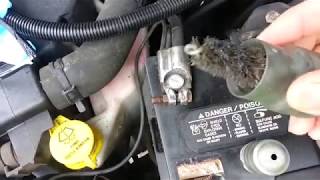
- Poor or Corroded Ground Connections 🔴 High Probability Nissan TSBs and countless owner forums frequently highlight poor grounds as the number one cause for CAN communication codes. Wires grounding the engine, body, and battery can corrode or loosen over time, creating high resistance and disrupting module communication. Key locations include the braided strap from the passenger-side cylinder head to the firewall and grounds near the battery tray.
How to confirm: Visually inspect the main battery-to-chassis ground, engine block grounds, and smaller ground straps in the engine bay. A Reddit user identified a critical braided strap on the passenger side firewall (ground E72) that often frays. Disconnect, clean all contact points (wire lug and chassis) to bare metal, and securely retighten them. A voltage drop test across a ground point can also identify high resistance.
Typical fix: Cleaning and tightening existing ground points. If a ground strap is frayed or broken, it must be replaced.
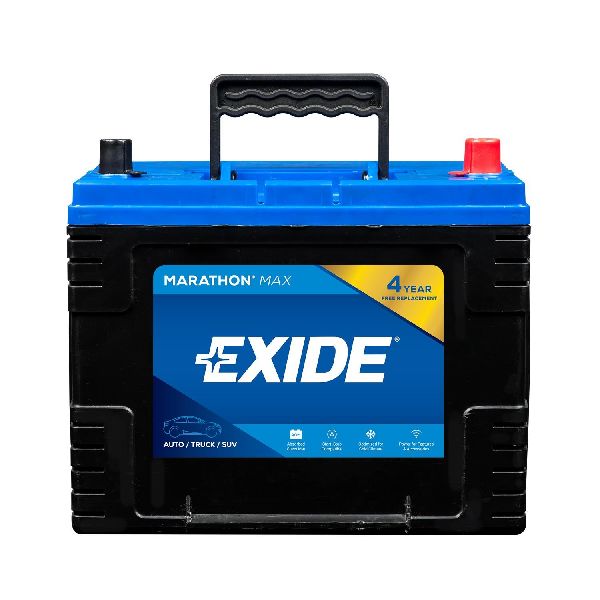
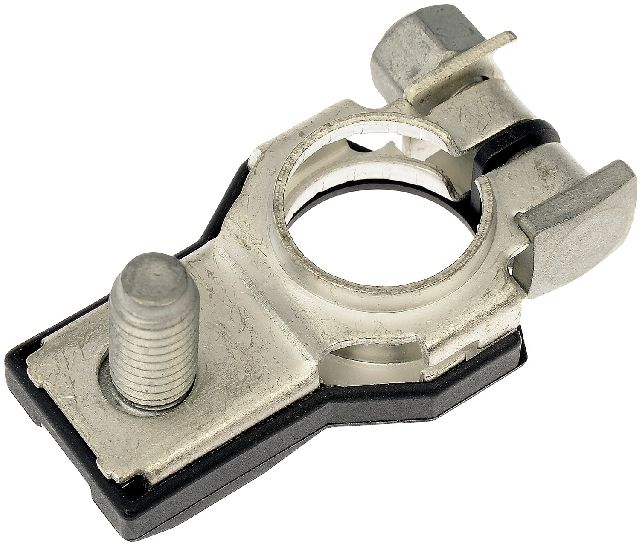
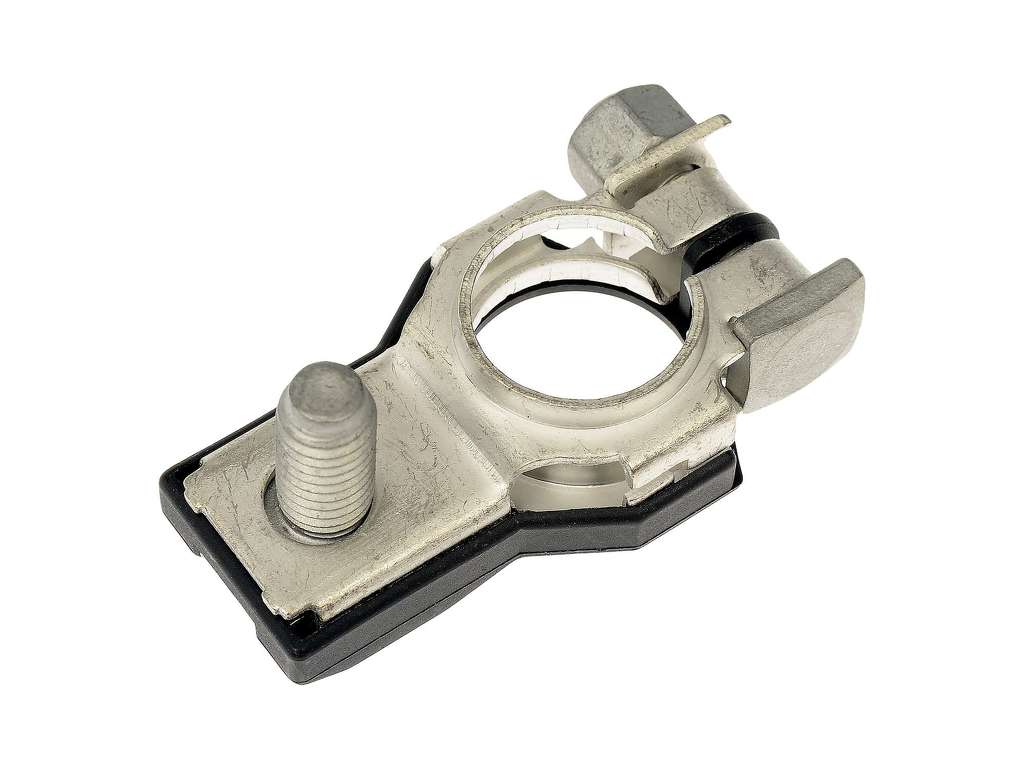
Est. part cost: $10-$30 - Weak or Failing Battery 🟡 Medium Probability → Shop Vehicle Battery Low system voltage (below 12.0V) during startup or operation can cause modules to drop off the CAN network temporarily, triggering a U1000 code. This can happen right after replacing a battery if not done carefully.
How to confirm: Test the battery with a multimeter or a load tester. A healthy battery should show approximately 12.6 volts with the engine off and over 14 volts with the engine running (indicating a working alternator). Ensure terminals are clean and tight.
Typical fix: Replace the battery if it fails a load test.
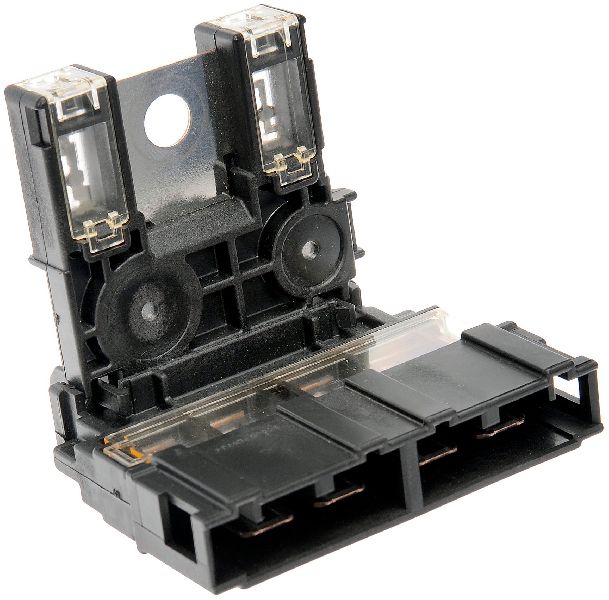
Est. part cost: $150-$250 - Faulty Intelligent Power Distribution Module (IPDM E/R) 🟡 Medium Probability → Shop Fuse Box The IPDM is located in the engine bay and is susceptible to moisture and heat, which can cause internal corrosion on its circuit board and vampire-style contacts. This module acts as a major hub for power and communication, and its failure is a well-documented issue on this platform.
How to confirm: Symptoms include no-start, erratic wipers/lights, and a scan tool showing the IPDM as 'not detected'. A self-test can be initiated by turning the ignition on, pressing the driver's door switch 10 times, then turning the ignition off and on again; the IPDM will cycle through its outputs (wipers, lights, etc.). Swapping the ECM relay with another similar relay (like the fog lamp relay) within the IPDM is a common diagnostic step for a no-start.
Typical fix: Replacement of the IPDM module. It often comes with new fuses and relays pre-installed.
Est. part cost: $200-$500 - Damaged CAN Bus Wiring ⚪ Low Probability Wiring harnesses can be damaged by abrasion against the chassis, impact, or rodents. Corrosion can also develop in connectors, especially those exposed to the elements under the vehicle.
How to confirm: Visually inspect the wiring harness for any signs of damage. With the battery disconnected, a multimeter should be used to check for 60 ohms of resistance across Pin 6 (CAN-H) and Pin 14 (CAN-L) at the OBD-II port. Deviations from this reading indicate a wiring or module problem. A reading of 120 ohms suggests a break in the circuit or a problem with one of the two terminating resistors. A reading near 0 ohms indicates a short between the CAN lines.
Typical fix: Repairing the specific section of damaged wire or cleaning/replacing a corroded connector.
Est. part cost: $5-$100
Rare But Worth Checking
- Failing Control Module (ECM, TCM, BCM): While less common than wiring or ground issues, a single module can fail internally and disrupt the entire network. A professional diagnosis is needed to isolate the faulty module by unplugging modules one by one to see if communication is restored.
- Aftermarket Accessories: Improperly installed remote starters, alarms, or audio equipment can interfere with the CAN bus network and generate communication codes.
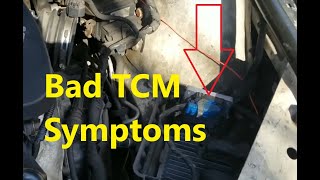
- TCM Failure due to Radiator Breach (SMOD): On 2005-2010 models, a known defect can cause the internal radiator partition to fail, mixing engine coolant with automatic transmission fluid. This contaminated fluid ('Strawberry Milkshake of Death' or SMOD) destroys the Transmission Control Module (TCM), which is located inside the transmission's valve body. A dead TCM cannot communicate, triggering a U1000 code and often a no-start condition.
Diagnosis Steps
- Check and record any other stored trouble codes. Diagnose communication codes (U-codes) first, as they can cause other codes to appear.
- Check the battery. Ensure it has a full charge (12.6V+) and that the terminals are clean and tight.
- Perform a visual inspection of all major ground straps in the engine bay. Pay close attention to the negative battery cable connection to the chassis, the engine block grounds, and the braided strap from the passenger-side firewall to the engine.
- Disconnect, scrub all ground connection points to bare metal, apply a dielectric grease or protective coating, and retighten securely.
- Inspect all fuses related to the ECM, TCM, and BCM in both the interior fuse panel and the IPDM in the engine bay.
- If a no-start exists, try swapping the ECM relay inside the IPDM with an identical relay (e.g., fog light relay) to see if the condition changes.
- Run the IPDM self-test by turning the key on and pushing the driver's door jamb switch 10 times in quick succession. The IPDM should begin cycling its outputs (wipers, lights, etc.), confirming it has power and basic function.
- If the problem persists, use an advanced scan tool to perform a 'module roll-call' to see which specific modules are not responding on the network.
- With the battery disconnected, measure the resistance between Pin 6 (CAN-H) and Pin 14 (CAN-L) on the OBD-II port. A healthy network should read approximately 60 ohms. A reading of 120 ohms suggests an open circuit or a missing terminating resistor. A reading near 0 ohms indicates a short between the CAN lines.
Parts You'll Likely Need
- Intelligent Power Distribution Module (IPDM)
(OEM #284B6-ZE03B (replaces 284B6-ZE03A))— This module is a common failure point on R51 Pathfinders and its platform mates. Its failure directly causes CAN communication errors and no-start symptoms.
Trusted brands: Hitachi, Nissan (OEM)
OEM price range: $270-$450
Aftermarket price range: $150-$300 - Battery Ground Cable / Engine Ground Strap
Related Codes That Often Appear With This One
- U1001 — This code specifically points to a loss of communication with a primary module on the CAN C network. It often appears with U1000 when the ECM or another critical module is the source of the network problem or is not communicating.
- P0717 — This code indicates no signal from the transmission's turbine speed sensor. An owner complaint linked this with U1000 and a no-start condition, suggesting a network failure can disrupt transmission sensor data or that the TCM itself is failing. [NHTSA ODI #10583698]
Technical Service Bulletins (TSBs) & Recalls
- NTB10-066A: This bulletin provides service information for diagnosing CAN communication codes like U1000, U1001, etc. It confirms that the module reporting the U1000 is usually not the one that has failed. It advises technicians to diagnose communication codes first, check for low battery voltage, and verify power, ground, and 60-ohm resistance at a suspect module's connector before replacement.
Platform-Specific Known Issues
- Owner complaints and forum discussions frequently link the U1000 code on this platform to a no-start condition where the vehicle cranks but will not start, or will not crank at all.
- The Transmission Control Module (TCM) may be the non-communicating module, leading to a no-start because the vehicle cannot confirm it is in Park or Neutral. This is especially true if the gear position indicator on the dash is blank.
- A known issue with the radiator design on 2005-2010 models can cause coolant to leak into the transmission fluid (SMOD), damaging the TCM and causing CAN communication codes along with transmission failure.
- Failure of the IPDM can cause bizarre electrical behavior, such as the horn, wipers, and lights activating randomly when the key is turned on, in addition to the U1000 code and a no-start.
Mechanic-Grade Diagnostic Values
- CAN Bus Network Resistance — expected: ~60 Ohms. Failure: A reading of ~120 Ohms indicates an open circuit or one of the two terminating resistors is offline. A reading near 0 Ohms indicates a short between the CAN High and CAN Low wires.
- CAN Bus Voltage to Ground (Network Asleep) — expected: 0 Volts. Failure: Any voltage present indicates a short to power on the network.
- ECM Power Supply Voltage — expected: 11-14 Volts (Battery Voltage). Failure: 0 Volts or significantly low voltage indicates a problem with the power supply to the ECM, such as a blown fuse, bad relay, or wiring issue.
Scan Tool Commands That Help
- Manual Procedure (No Scan Tool): IPDM E/R Auto Active Test — Use this test to verify the IPDM's core functions and its ability to receive commands over the CAN bus from the BCM. With the ignition ON, press the driver's door switch 10 times within 20 seconds, then turn the ignition OFF, then ON again. A horn chirp confirms activation, followed by a sequence of tests (wipers, lights, A/C clutch, fans). Successful activation confirms the IPDM and its communication link to the BCM are likely okay.
- Professional Scan Tool (e.g., CONSULT): Module 'Roll Call' or Network Test — Use this function to see a list of all expected control modules on the network and their status (Active/Inactive). This is the fastest way to determine which specific module is not communicating, which is the root cause of the U1000 code. Note: If the ECM is offline, the scan tool may not be able to automatically identify the vehicle's VIN.
Wiring & Ground Locations
- E15 / E24 — Located in the engine bay, under or near the battery tray.. These are primary engine and chassis ground points. Corrosion from battery fumes or moisture is common here, leading to high resistance that can disrupt module communication.
- E72 — A short, braided ground strap from the passenger-side cylinder head (or exhaust heat shield) to the firewall.. This ground is critical for stabilizing sensor reference voltages for the ECM. It is known to fray, break, or corrode, causing intermittent communication issues.
- M57, M61, M79 — These are body ground points located in the passenger cabin, often under the dash or behind kick panels.. These grounds are used by various in-cabin modules like the BCM and other controllers. A fault in these grounds can cause a module to drop off the network. The Factory Service Manual (FSM) section PG (Power Supply & Ground) contains detailed diagrams of all ground locations.
- CAN Bus Wires (OBD-II Port) — Pin 6 (CAN High, L/W wire) and Pin 14 (CAN Low, L/R wire) in the OBD-II diagnostic connector under the driver's side dashboard.. This is the primary access point for testing the entire CAN network's health (resistance and voltage) without needing to access individual modules.
Real Owner Repair Stories
- Infiniti Scene forum user (Infiniti FX (similar platform)) — Cranks but does not start, random engine shut-off while driving, multiple U1000 codes.
❌ Tried (didn't work) Initial diagnosis was inconclusive.
✅ What actually fixed it The owner systematically cleaned multiple ground points: the negative battery cable, engine block ground, a ground behind the front headlight, grounds near each strut tower, and a ground next to the ECM. This resolved the no-start and U1000 codes. - YouTube video by Romy Dial (2009 Nissan Pathfinder) — Initially crank-no-start, which progressed to a no-crank-no-start. U1000 code present.
❌ Tried (didn't work) Checking the park/neutral switch, checking starter relay.
✅ What actually fixed it A scan tool showed no communication with the Transmission Control Module (TCM). Because the ECM was not receiving the park/neutral signal from the offline TCM, it would not allow the engine to start. The final diagnosis was a failed TCM, which is located inside the transmission on the valve body. - Reddit user on r/G37 (2008 Infiniti G37 (similar platform)) — No-crank, no-start, U1000 code, security lights on.
❌ Tried (didn't work) Replaced IPDM, Tried a new (unprogrammed) ECU, Checked all fuses, Checked engine bay and interior grounds.
✅ What actually fixed it In a follow-up comment, the original poster stated the final fix was replacing the starter motor. - Reddit user on r/nissanpathfinder (2005 Nissan Pathfinder) — U1000 code, harsh shifting, and limp mode specifically when driving uphill with a load.
❌ Tried (didn't work) Dealer inspected all wiring and grounds and ruled them out. Dealer also ruled out SMOD (coolant contamination).
✅ What actually fixed it The dealership recommended replacing the transmission valve body, which contains the TCM. The issue was not resolved in the thread, but it points to a heat-induced failure of the TCM under load, a scenario where grounds and wiring might otherwise test fine.
When the Usual Fixes Don't Work
- While poor grounds and faulty IPDM modules are the most common culprits for a U1000 code, they are not the only causes. In one documented case on a similar platform, a 2008 Infiniti G37 with a no-crank/no-start and U1000 had the IPDM replaced and grounds checked with no success. The actual root cause was a failed starter motor. This highlights that significant electrical draw or failure from a non-network component during startup can create enough electrical noise to disrupt the CAN bus and set a communication code, leading technicians down the wrong path. Always confirm basic starting/charging system integrity before condemning network components.
OEM Part Supersession History
284B6-ZE03A→284B6-ZE03B— Revision and replacement for the Intelligent Power Distribution Module (IPDM).
Heads up: The new part number is a direct replacement for the old one. Using the superseded part is not recommended.
Model Year Variations Within This Range
- 2005-2010: These model years are susceptible to the 'SMOD' (Strawberry Milkshake of Death) radiator failure, where the internal transmission cooler leaks, contaminating the transmission fluid with coolant. This contaminated fluid quickly destroys the internally-mounted Transmission Control Module (TCM), causing it to go offline and trigger a U1000 code along with severe transmission failure.
Helpful Videos


We Have This Part in Stock
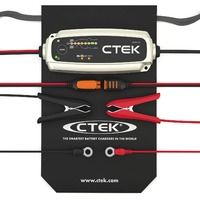
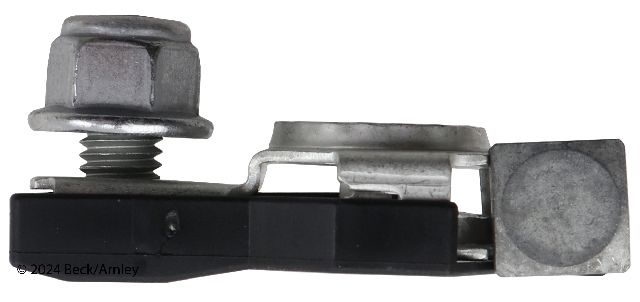

The information in this article is provided for general reference and educational purposes only. Vehicle specifications, procedures, and part compatibility can vary by production date, trim level, and region. Always consult your vehicle's factory service manual and verify part numbers before purchasing or performing repairs. Safety-critical components such as airbags, seat belts, and braking systems should be installed by a qualified professional.
- Nissan PATHFINDER:
- 🧭 Diagnostic Flowchart
- 🎬 Helpful Videos
- 🛍️ Shop This Part
- What's Unique About the 2005-2012 Nissan PATHFINDER
- Symptoms You May Notice
- Most Likely Causes
- Rare But Worth Checking
- Diagnosis Steps
- Parts You'll Likely Need
- Related Codes That Often Appear With This One
- Technical Service Bulletins (TSBs) & Recalls
- Platform-Specific Known Issues
- Mechanic-Grade Diagnostic Values
- Scan Tool Commands That Help
- Wiring & Ground Locations
- Real Owner Repair Stories
- When the Usual Fixes Don't Work
- OEM Part Supersession History
- Model Year Variations Within This Range
- 🎟️ Get 5% Off