

U1000 on 2011-2014 Nissan Quest: CAN Communication Causes and Fixes
On a 2011-2014 Nissan Quest, the U1000 code almost always points to a CAN communication failure caused by a weak battery or poor ground connections, not a failed module. Before replacing any expensive parts, fully charge and test the battery, then clean and tighten all major ground points, especially the negative battery cable and the ground strap under the battery tray. This often resolves the issue for little to no cost.
- U1000 is a network code, not a component code. It means computers aren't talking to each other.
- Do not replace any modules until you have ruled out the two most common causes: a weak battery and bad ground connections.
- Start your diagnosis by load testing the battery and cleaning all major ground points on the engine and chassis.
- If the problem persists, a professional diagnosis is recommended to trace the CAN bus wiring and identify the source of the communication loss without replacing unnecessary parts.
What's Unique About the 2011-2014 Nissan QUEST
Nissan and Infiniti vehicles of this era are notoriously prone to the U1000 code, primarily due to grounding issues. Unlike some other makes where this code might point to a specific module failure, on the Quest, the diagnostic approach must start with the basics: 🎬 Watch this overview of common causes and fixes for U1000. battery voltage and ground integrity. The electrical system's sensitivity to voltage drops and corrosion on ground straps is the main reason this code appears so frequently. A common failure point across this platform is the ground connection located under the battery tray.
Diagnostic Flowchart
Tap your situation to follow the diagnostic path that matches what you're seeing on this vehicle.
Symptoms You May Notice
- Check Engine Light is on
- Multiple, seemingly unrelated warning lights on the dashboard (ABS, Airbag, VDC OFF, SLIP)
- Engine hesitation, stalling, or rough idle
- No-start or difficult starting condition
- Transmission goes into limp mode (fail-safe) or exhibits harsh shifting
- Electrical glitches, like malfunctioning power windows, door locks, or HVAC controls
- Scan tool fails to communicate with one or more modules
- Replacing the control module that stored the U1000 code. The TSB explicitly warns against this, as the fault is usually external to that module.
- Replacing sensors when the root cause is a network communication failure.
- Overlooking a simple corroded ground wire under the battery tray, which is a very common fix.
Most Likely Causes
- Weak or Failing Battery 🔴 High Probability → Shop Vehicle Battery CAN bus systems are highly sensitive to voltage. A drop in voltage during startup is enough to disrupt communication between modules and trigger a U1000 code. Many owner experiences confirm that a simple battery replacement resolved the code.
How to confirm: Test the battery with a digital load tester, not just a voltmeter. A healthy battery should read above 12.5 volts at rest and maintain voltage above 10V under load. Check for readings below 12V at rest.
Typical fix: Recharge or replace the battery. Ensure new battery terminals are clean and tight. Applying a corrosion inhibitor can prevent future issues.
Est. part cost: $150-$300 - Poor Ground Connections 🔴 High Probability Nissan TSBs frequently point to corroded or loose ground points as a primary cause for U1000. Road spray and age cause corrosion on the main ground straps. Key locations include the negative battery cable connection to the chassis, the ground point under the battery tray, and the engine-to-firewall strap. 🎬 See how to identify and fix a bad ground fault.
How to confirm: Visually inspect the main ground straps for green or white corrosion, fraying, or looseness. Perform a voltage drop test from the negative battery post to the chassis and engine block; there should be minimal voltage (under 0.2V). A jump to 0.4V or higher while cranking indicates a bad ground under load.
Typical fix: Disconnect the ground straps, clean the contact points on the wire terminal and the chassis/engine block to bare metal using a wire brush, and re-secure them tightly. Replace the strap if it's badly corroded or damaged.
Est. part cost: $0-$80 - Damaged Wiring or Connectors 🟡 Medium Probability The CAN wiring harness can be susceptible to damage from moisture (especially at the ECM connectors), vibrations, or rodents, leading to an open or short circuit.
How to confirm: Visually inspect the wiring harnesses connected to the main control modules (ECM, TCM, BCM) for any signs of damage. Check for green crust or broken pins in connectors. A multimeter can be used to check for continuity and resistance on the CAN H and CAN L wires; the total resistance across the bus should be approximately 60 ohms.
Typical fix: Repair the damaged section of wire or clean/replace the corroded connector.
Est. part cost: $5-$100
Rare But Worth Checking
- Faulty Control Module (e.g., ABS Actuator): While less common, a failing module can disrupt the entire network. The ABS actuator is a known potential cause. If U1000 is stored only in the ABS module, specific diagnostics are required per TSB NTB10-145B. All wiring, power, and ground issues must be exhaustively ruled out before condemning a module.
- Blown Fuse: A fuse that powers a specific module can blow, taking that module offline and causing a communication breakdown. Check fuses related to the ECM, TCM, and BCM in both the engine bay and interior fuse panels.
- Aftermarket Electronics: Improperly installed aftermarket accessories (remote starters, alarms, stereos) that tap into the CAN bus can introduce interference and trigger communication codes.
Diagnosis Steps
- Check for other stored trouble codes. More specific U-codes (like U0100) or module-specific codes (like C1111) can help pinpoint the problem area.
- Check the battery. Ensure it is fully charged and passes a load test. Clean any corrosion from the terminals using a baking soda solution and a wire brush. 🎬 Watch why cleaning battery terminals prevents expensive misdiagnosis.
- Inspect all main ground connections. This is a critical step. Locate and clean the battery-to-chassis ground, the strap under the battery tray, and the engine-to-chassis/firewall ground strap. Disconnect, clean all contact points to bare metal, and securely reattach them.
- Check fuses related to major control modules (ECM, TCM, BCM, ABS) in both the engine bay (IPDM) and interior fuse panels.
- If you have an advanced scan tool, perform a network test or 'module roll-call' to see which specific module is not responding.
- Inspect the wiring harness going to the non-communicating module for any visible damage, corrosion, or loose connections. Pay close attention to the main ECM connector for signs of water intrusion.
- With a multimeter, check for 60 ohms of resistance across the CAN High and CAN Low pins at the OBD-II port (with the battery disconnected). A reading of 120 ohms indicates an open circuit or a missing terminating resistor, while a reading near 0 ohms indicates a short circuit.
- Check for any aftermarket electronics (alarms, remote start, audio) and inspect their wiring for improper connections to the vehicle's data lines.
Parts You'll Likely Need
- Battery — A weak battery is a primary trigger for communication codes on this platform due to voltage sensitivity.
Trusted brands: Interstate, DieHard, Duralast
OEM price range: $200-$350
Aftermarket price range: $150-$300 - Battery Ground Cable / Strap
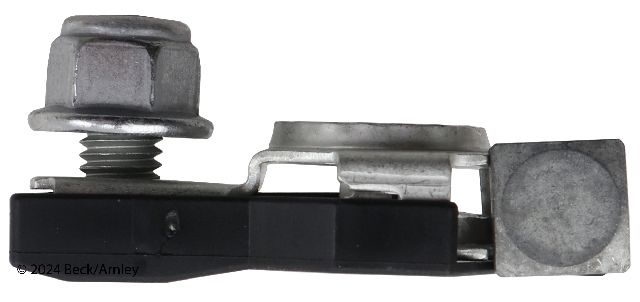
(OEM #24080-1JA0A)— The factory ground straps are known to corrode, creating high resistance and causing a host of electrical issues, including the U1000 code.
Trusted brands: Nissan (OEM), Standard Motor Products, Dorman
OEM price range: $40-$80
Aftermarket price range: $15-$50
Related Codes That Often Appear With This One
- U0100 — Lost Communication With ECM/PCM. This is a more specific code that can appear with U1000, indicating the Engine Control Module is the one that has dropped off the network.
- U0101 — Lost Communication With TCM. This indicates the Transmission Control Module is the one that has stopped communicating, which can help narrow down the search for a wiring or power issue.
- C1110 / C1111 — These codes point to an ABS controller failure. If seen with a U1000, it could suggest the ABS module is the source of the network disruption.
Technical Service Bulletins (TSBs) & Recalls
- NTB10066A / ITB10-029a: States that when a module reports a U1000 code, it is typically operating normally and the error is external to that module on the CAN network. It advises diagnosing communication codes first.
- NTB10-145B: Provides a specific repair flow chart for when DTC U1000 is the ONLY code stored in the ABS/VDC control unit, guiding technicians to check the CAN system before replacing the expensive actuator.
Platform-Specific Known Issues
- Per Nissan TSB NTB10066A, it is critical to diagnose communication codes first. The bulletin emphasizes that a module reporting U1000 is usually functioning correctly, and the fault is external on the CAN network.
- A corroded ground point under the battery tray is an extremely common failure point on the Quest and its platform mates (like the Murano) that leads directly to the U1000 code.
- Water intrusion can damage the pins on the main ECM connector, causing a U1000 code and a no-start condition, as documented on a similar Nissan platform.
Mechanic-Grade Diagnostic Values
- CAN Bus Resistance (Battery Disconnected) — expected: ~60 Ω across CAN-H and CAN-L pins (e.g., at OBD-II port pins 6 & 14).. Failure: A reading of ~120 Ω indicates an open circuit or a missing terminating resistor. A reading near 0 Ω indicates a short between the CAN lines. A reading of 40-45 Ω may indicate a third, improper terminating resistor on the network.
- CAN High Voltage to Ground (Key On) — expected: ~2.5V to 3.0V DC.. Failure: Significant deviation, or a voltage stuck high or low, points to a module transceiver fault or a short circuit.
- CAN Low Voltage to Ground (Key On) — expected: ~2.0V to 2.5V DC.. Failure: The sum of CAN High and CAN Low average voltages should be approximately 5V. If not, a fault is present.
- Ground Voltage Drop (Under Load) — expected: Less than 0.2V from negative battery post to chassis and engine block.. Failure: A reading above 0.2V, especially one that jumps to 0.4V or higher during engine cranking, indicates high resistance in the ground circuit.
- Module Internal CAN Resistance (Module Unplugged) — expected: 28kΩ - 50kΩ between the CAN-H and CAN-L pins on the module itself.. Failure: A reading outside this range suggests internal damage to the module's CAN transceiver.
Hidden / Shadow Codes Worth Checking
- U1000-01: This is a more specific version of U1000 with a 'symptom byte' of 01. It can point more directly to a specific module (like ADAS) being the source of the communication error message, though the root cause may still be the power or ground to that module. (see via Advanced scan tools like the Nissan CONSULT or high-end aftermarket scanners capable of reading manufacturer-specific symptom bytes.)
Scan Tool Commands That Help
- Nissan CONSULT-II / CONSULT-III: CAN Diagnosis Support Monitor — This is the primary starting point for a U1000 diagnosis. It polls all modules on the network and provides a list of which ones are communicating ('OK') and which are not ('NG' - No Good), immediately identifying the offline module.
- Nissan CONSULT-III: Self-Diagnostic Results — After the 'CAN Diagnosis Support Monitor' identifies a non-communicating module (e.g., the TCM), you can run this function on other modules (like the ECM or BCM) to confirm they are still functioning correctly and not the source of the problem.
- Nissan CONSULT-III: WRITE CONFIGURATION — This function is mandatory after replacing certain control modules, such as the BCM or ABS actuator. It programs the new module with the vehicle's specific VIN and configuration. Failure to perform this step will cause a U1000 code and system malfunction.
Wiring & Ground Locations
- E21 — Rear of engine.. This is a primary engine ground point. Corrosion or looseness here can disrupt the ECM and other critical engine bay modules, causing network communication failures.
- M35 — Behind the right side of the dash.. This is an interior ground point for various modules located inside the cabin, such as the BCM or other controllers. A poor connection here can cause seemingly random electrical issues and communication codes.
- M76 — Behind the left side of the dash.. Similar to M35, this is another crucial interior ground point. The BCM is located behind the left side of the dash and relies on a solid ground connection in this area to communicate properly on the CAN bus.
- IPDM E/R (Intelligent Power Distribution Module Engine Room) — Located in the left side of the engine compartment.. This is the 'smart' fuse and relay box that supplies power to many of the vehicle's control modules. A failure within the IPDM can cut power to a module, making it drop off the network and triggering a U1000 code in the remaining online modules.
Real Owner Repair Stories
- Infiniti Scene forum user (2004 Infiniti FX45 (shares similar CAN architecture)) — VDC OFF and SLIP warning lights on, U1000 and C1204 error codes stored.
❌ Tried (didn't work) Initial diagnostics were inconclusive.
✅ What actually fixed it The user removed the AWD control unit located on the passenger side under the dash, cleaned the grounding contact points with sandpaper, and reinstalled it. This resolved the warning lights and communication codes. - YouTube user 'Less Expensive Fix' (Infiniti G35 (shares similar CAN architecture)) — U1000 and U1001 codes, VDC/SLIP/ABS lights on, intermittent no-start.
❌ Tried (didn't work) Clearing codes with a scanner did not resolve the issue.
✅ What actually fixed it The main negative battery ground cable was removed. All metal-to-metal contact points (terminal, chassis mount, engine block mount) were cleaned to a shine with a wire brush and re-secured. This provided a solid ground and fixed the codes, even though the connections did not look visibly corroded.
OEM Part Supersession History
47660-1JA0A, 47660-1JA0B→Check with dealer for latest part number.— Standard revisions for electronic components.
Heads up: The ABS Actuator/Control Unit (Part No. ~47660-1JA0B for the 2011-2017 Quest) is NOT plug-and-play. A replacement unit, whether new or used, must be programmed to the vehicle's VIN using a tool like the Nissan CONSULT. Failure to program will result in a persistent U1000 code and non-functional ABS/VDC systems.
Model Year Variations Within This Range
- 2011-2015: A voluntary service campaign (P0A08) was issued for some 2011-2015 models to flush the original DOT 3 brake fluid and replace it with a specific DOT 4 fluid to prevent issues within the brake system, including the ABS actuator. It's important to verify if this has been done, as incorrect fluid can contribute to ABS system problems that may lead to communication faults.
Helpful Videos


We Have This Part in Stock


The information in this article is provided for general reference and educational purposes only. Vehicle specifications, procedures, and part compatibility can vary by production date, trim level, and region. Always consult your vehicle's factory service manual and verify part numbers before purchasing or performing repairs. Safety-critical components such as airbags, seat belts, and braking systems should be installed by a qualified professional.
- Nissan QUEST:
- 🧭 Diagnostic Flowchart
- 🎬 Helpful Videos
- 🛍️ Shop This Part
- What's Unique About the 2011-2014 Nissan QUEST
- Symptoms You May Notice
- Most Likely Causes
- Rare But Worth Checking
- Diagnosis Steps
- Parts You'll Likely Need
- Related Codes That Often Appear With This One
- Technical Service Bulletins (TSBs) & Recalls
- Platform-Specific Known Issues
- Mechanic-Grade Diagnostic Values
- Hidden / Shadow Codes Worth Checking
- Scan Tool Commands That Help
- Wiring & Ground Locations
- Real Owner Repair Stories
- OEM Part Supersession History
- Model Year Variations Within This Range
- 🎟️ Get 5% Off