

U1000 on 2005-2012 Nissan TITAN: Causes and Fixes for CAN Communication Failure
On a 2005-2012 Nissan Titan, the U1000 code almost always points to a CAN network communication failure, not a bad module. The most common fixes involve cleaning corroded ground connections (especially the negative battery cable and engine grounds), addressing low battery voltage, or replacing a faulty IPDM. This is often a no-cost or low-cost repair focused on electrical fundamentals.
- Do not replace any modules until you have ruled out the basics. The U1000 code is a symptom of a network problem, not a faulty part in most cases.
- Your first and most important step is to check and clean your battery terminals and all major ground connections, especially the negative cable.
- A weak battery is a very common trigger for this code. Have your battery properly load-tested.
- If grounds and battery are good, the IPDM is the next most likely suspect on a 2005-2012 Titan.
- Diagnosing this code is a process of elimination. Start with the simplest and most common causes (grounds, battery) before moving to more complex diagnostics.
What's Unique About the 2005-2012 Nissan TITAN

On the first-generation Nissan Titan and its platform mates (Armada, Xterra, Frontier), the U1000 code is notoriously triggered by poor ground connections. Over time, the main ground points on the engine block and chassis are prone to corrosion, creating electrical resistance that disrupts the sensitive CAN network. Another common culprit on this platform is the Intelligent Power Distribution Module (IPDM), which acts as a smart fuse box. The original white-colored IPDMs are known to contain a faulty ECM relay that fails, causing a variety of electrical issues, including communication codes and no-start conditions.
Diagnostic Flowchart

Tap your situation to follow the diagnostic path that matches what you're seeing on this vehicle.
Symptoms You May Notice
- Check Engine Light is on
- Intermittent stalling or hesitation, especially at low speeds
- No-start or crank-no-start condition
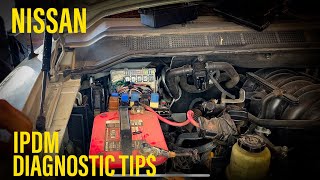
- Crank-no-start with radiator fans running at full speed 🎬 Watch: A real-world diagnosis of this common no-start condition. (strong indicator of IPDM/ECM communication loss)
- Erratic gauge behavior (speedometer, tachometer)
- ABS, VDC, or 4WD warning lights on
- Transmission shifting problems
- Electrical glitches like flickering lights or non-working accessories
- Replacing the control module that stored the U1000 code (e.g., replacing the TCM because it has a U1000) without first checking grounds, battery voltage, and the overall network health.
- Replacing the ECM when the actual fault is the ECM relay inside the IPDM.
Most Likely Causes

- Poor or Corroded Ground Connections 🔴 High Probability Nissan TSBs and extensive owner reports confirm that corroded grounds are a primary cause of U1000 on this platform. The main negative battery cable, which has multiple grounding points, is a frequent culprit.
How to confirm: Visually inspect the main negative battery cable where it bolts to the chassis and engine block. Even if they look clean, remove, and thoroughly clean the contact points with a wire brush until shiny. Pay special attention to the smaller ground wires branching off the main negative cable. Use a multimeter to check for voltage drops between the negative battery post and the chassis/engine block; it should be near zero volts (less than 0.1V).
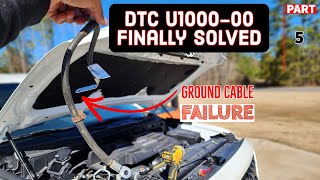
Typical fix: Remove the ground bolts, clean the cable ends and the mounting surface with a wire brush or sandpaper, and re-secure them tightly. Applying a dielectric grease or anti-corrosion spray can prevent future issues. In some cases, the entire ground cable assembly must be replaced if corrosion is internal or severe. 🎬 See how a faulty ground cable causes communication codes.
Est. part cost: $0-$80 - Failing Intelligent Power Distribution Module (IPDM) 🟡 Medium Probability → Shop Fuse Box The IPDM on this generation of Nissan trucks is a known failure point. Original units were often white and contained an internal ECM relay that was prone to failure. This relay cuts power to the ECM, disrupting CAN communication and often causing a crank-no-start with fans running on high.
How to confirm: A key symptom is a crank-no-start where the cooling fans run at full speed as a default failsafe. An IPDM self-test can be performed: with the key off, sit in the driver's seat, close the door, then turn the ignition ON (don't start) and press the driver's door jamb switch 10 times within 20 seconds. The horn should chirp and lights/wipers will cycle. If the test doesn't run or components fail, the IPDM is suspect. 🎬 Watch: Step-by-step walkthrough of the IPDM self-test procedure.
Typical fix: Replacement of the entire IPDM module is the official Nissan-recommended fix. The updated replacement parts are typically black. While some owners have had success replacing only the internal ECM relay (Part No. 284B7-CW29E), Nissan issued bulletins advising against this practice for long-term reliability, except for a specific campaign on 2004-2006 models.
Est. part cost: $100-$400 - Low Battery Voltage or Failing Alternator 🟡 Medium Probability → Shop Alternator Control modules are sensitive to voltage. A weak battery or an alternator that isn't charging properly can cause modules to drop off the CAN network during startup or while driving, triggering a U1000 code.
How to confirm: Test the battery with a digital load tester. A healthy battery should hold a charge above 12.4V and not drop below ~9.6V during a load test. With the engine running, check the alternator output at the battery terminals; it should be between 13.5V and 14.5V.
Typical fix: Charge or replace the battery. If the alternator output is low, it will need to be replaced.
Est. part cost: $150-$400 - Damaged CAN Bus Wiring Harness ⚪ Low Probability Wiring can be damaged by chafing against the frame or engine components, corrosion (especially in connectors exposed to the elements), or rodent activity, causing a short or open in the CAN high and low wires.
How to confirm: Visually inspect the wiring harnesses, especially around the engine bay, IPDM, and under the vehicle. With the battery disconnected, a multimeter can be used to check for resistance between the CAN High (Pin 6) and CAN Low (Pin 14) at the OBD-II port. A healthy network should read approximately 60 ohms. A reading of 120 ohms indicates one of the two terminating resistors is offline, and an open circuit or 0 ohms indicates a short.
Typical fix: Repairing the specific section of damaged wire. This requires locating the exact point of the break or short, which can be labor-intensive.
Est. part cost: $5-$100
Rare But Worth Checking
- Faulty Control Module (ECM, TCM, BCM): While possible for any module to fail and bring down the network, it is much less common than ground or power supply issues. The TSB specifically advises against replacing the module that reports the code without thorough network diagnosis.
- Poorly Installed Aftermarket Electronics: Aftermarket stereos, alarms, or remote starters that are improperly tapped into the vehicle's wiring can introduce interference or shorts onto the CAN bus, causing a U1000 code.
Diagnosis Steps
- Check the battery voltage and have it load tested. Ensure terminals are clean and tight.
- With the engine running, verify the alternator is charging correctly (13.5V-14.5V).
- Check for the classic IPDM failure symptom: Turn the key to 'ON'. If the check engine light does NOT illuminate and the cooling fans run on high, the IPDM is the most likely cause.
- Perform the IPDM self-test by turning the ignition on and pressing the driver's door jamb switch 10 times in 20 seconds. Listen and watch for components (lights, wipers, horn) to activate.
- Disconnect the negative battery terminal. Locate, remove, and thoroughly clean all major ground points with a wire brush until shiny. This includes the main battery-to-chassis ground, chassis-to-engine ground, and any grounds near the ECM/IPDM.
- Visually inspect wiring harnesses for obvious damage, chafing, or corrosion, paying close attention to connectors at the IPDM and ECM.
- If the problem persists, use a multimeter to check for ~60 ohms of resistance across CAN High (Pin 6) and CAN Low (Pin 14) at the OBD-II port with the battery disconnected. This confirms the network's terminating resistors are intact.
Parts You'll Likely Need
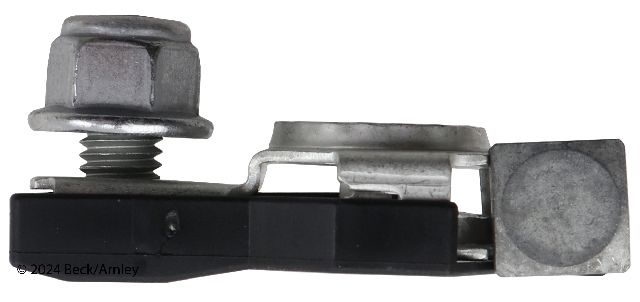
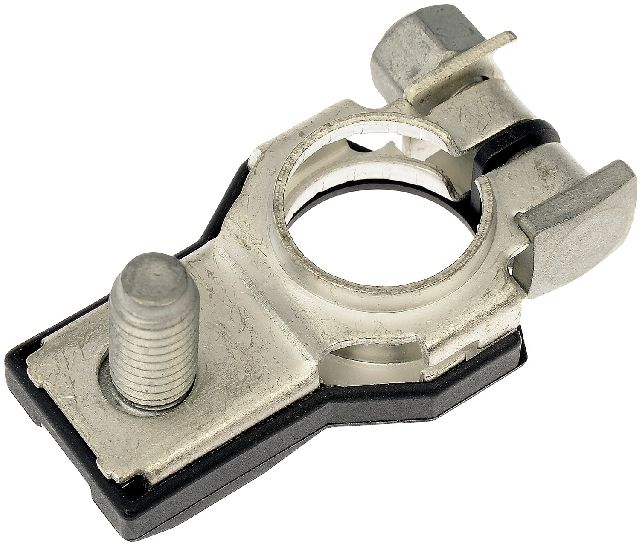
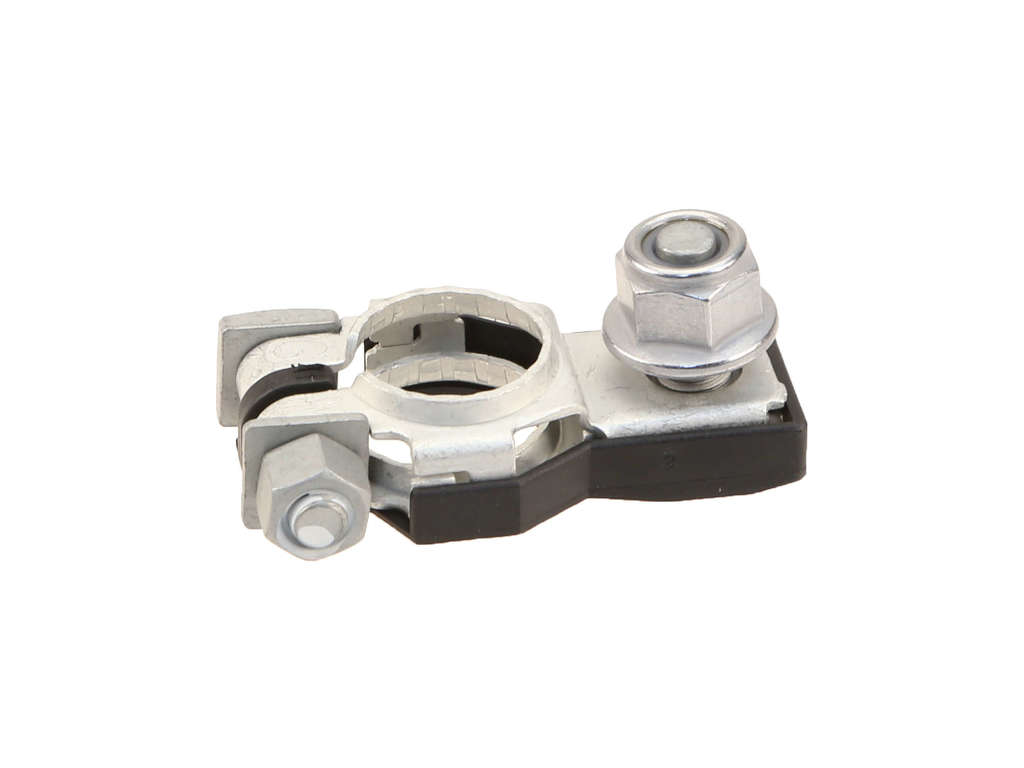
- Negative Battery Cable / Ground Strap
(OEM #24080-7S200 (for models up to 08/2006), 24080-ZR00A (for models from 08/2006-2015))— The factory ground cables are a common point of failure due to corrosion, causing most U1000 issues. Cleaning is often sufficient, but replacement may be necessary if the cable is internally corroded.
Trusted brands: Nissan OE, Standard Motor Products
OEM price range: $60-$120
Aftermarket price range: $25-$60 - Intelligent Power Distribution Module (IPDM)
(OEM #284B7-ZE03A, 284B7-ZE03B (check VIN for exact fitment, multiple revisions exist))— A known weak point on this platform that can cause a host of electrical and communication problems, including U1000. The original white modules are particularly failure-prone.
Trusted brands: Nissan OE, Hitachi
OEM price range: $280-$400
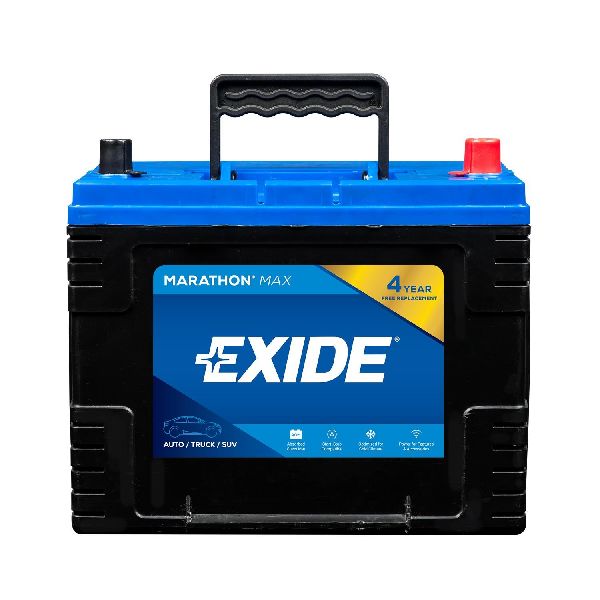
Aftermarket price range: $120-$250 - Battery — A weak or failing battery is a simple but very common cause of communication codes due to low voltage during cranking or operation.
Trusted brands: Interstate, DieHard, Duralast, Optima
OEM price range: $150-
Aftermarket price range: $120-$250
Related Codes That Often Appear With This One
- U1001 — This is another CAN communication code, often indicating a more specific timeout error with a particular module like the ECM. It frequently appears alongside U1000 when the network is unstable.
Technical Service Bulletins (TSBs) & Recalls
- NTB10-066A: This is the primary service bulletin for CAN communication codes (U1000, U1001, etc.). It advises technicians that the module reporting the code is usually not the faulty part and provides a diagnostic framework focusing on the network itself, including power and grounds.
- An earlier bulletin for 2004-2006 models specifically addressed replacing the ECM relay (Part No. 284B7-CW29E) in the original white IPDMs to fix stalling issues.
Platform-Specific Known Issues
- Specific Ground Locations to Clean: Owners report the most success by cleaning these specific points: 1) The main negative battery terminal itself. 2) The point where the negative cable bolts to the chassis/inner fender. 3) The point where a ground strap connects the chassis to the engine block (often near the alternator or starter). 4) Smaller ground wire clusters bolted to the inner fenders in the engine bay.
- IPDM ECM Relay Failure: The ECM relay is a non-serviceable part within the IPDM. When it fails, the ECM loses power, and the BCM and TCM log a U1000 code because they can't communicate with it. The classic symptom is a crank-no-start with the cooling fans running at maximum speed. The original IPDM is white; the updated, more reliable replacement is black.
Mechanic-Grade Diagnostic Values
- CAN Bus Resistance — expected: Approximately 60 Ω. Failure: A reading of 120 Ω indicates a missing terminating resistor or an open circuit. A reading near 0 Ω indicates a short between the CAN High and Low lines.
- CAN High Voltage (Key On, Engine Off) — expected: Approximately 2.7 V. Failure: Significant deviation from this voltage can indicate a wiring short or a faulty module pulling the voltage down.
- CAN Low Voltage (Key On, Engine Off) — expected: Approximately 2.3 V. Failure: Significant deviation from this voltage can indicate a wiring short or a faulty module pulling the voltage up.
- Ground Voltage Drop — expected: Near 0 V (ideally < 0.1 V). Failure: Any significant voltage reading indicates high resistance in the ground path, which is a primary cause of this code.
Scan Tool Commands That Help
- Nissan CONSULT-II / CONSULT-III Plus: CAN Diagnosis Support Monitor — This function performs a network-wide roll call, showing which control units are actively communicating and which are not. It's the fastest way to identify the specific module(s) that are offline and causing the U1000 code.
- Nissan CONSULT-III Plus: Data Monitor & Recording — Allows for recording live data streams from specific modules (like ECM, TCM, BCM). This can be used to capture network instability or voltage fluctuations under specific driving conditions that trigger the U1000 code.
- Nissan CONSULT-III Plus: IPDM Auto Active Test — This is the scan tool equivalent of the manual door-jamb switch test. It commands the IPDM to cycle its outputs (wipers, lights, horn, etc.) to confirm the IPDM itself is functional and communicating, helping to isolate the fault if the test fails.
Wiring & Ground Locations

- E15 — Right side of the engine compartment.. This is a major ground distribution point for several engine bay components. Corrosion here can disrupt multiple systems.
- E24 — Left front of the engine compartment, near the battery.. This is a critical ground point for the ECM and IPDM E/R. It is one of the most common culprits for the U1000 code due to its proximity to the battery and susceptibility to corrosion.
- F16 — Left front of the engine.. This ground point serves the ECM, TCM (A/T Assembly), and various critical engine sensors. A poor connection here directly impacts the main control modules' ability to communicate.
- Main Negative Battery Cable — Connects from the negative battery post to the chassis and then to the engine block.. This is the primary ground path for the entire vehicle. Corrosion at either the chassis or engine block connection point creates high resistance and is a leading cause of the U1000 code.
Real Owner Repair Stories
- Forum User Reports (2004-2012 Nissan Titan (multiple examples)) — Crank-no-start, radiator fans running on high, multiple warning lights (VDC, SLIP, ABS), U1000 code present.
❌ Tried (didn't work) Replacing the battery, Replacing the ECM, Clearing codes without diagnosis
✅ What actually fixed it In numerous documented cases, the final fix was thoroughly cleaning the main ground points: the negative battery cable connection to the body, the body-to-engine-block strap, and the grounds near the IPDM (E24). - Car Stereo Installer Video (Nissan Titan (1st Gen)) — Multiple electrical issues and communication codes after a new stereo was installed.
❌ Tried (didn't work) Checking fuses
✅ What actually fixed it The aftermarket stereo harness was improperly wired. The installer had to rebuild the factory harness and create a proper adapter harness to interface with the vehicle's CAN bus without causing interference or shorts.
OEM Part Supersession History
284B7-ZE03A→284B7-ZE03B, 284B7-ZE03C, and others— Revisions to address internal relay failures and improve reliability.
Heads up: VIN verification is absolutely critical when ordering a replacement IPDM. There were several mid-production changes, and installing the wrong revision can lead to non-functional systems or persistent communication errors.
Model Year Variations Within This Range
- 2004-2006 (approx.): Early model year Titans were more likely to have the original, failure-prone white-cased IPDM. A dealer service campaign existed to replace only the internal ECM relay on some of these early models, whereas later models typically require full IPDM replacement.
- 2007-2012 (approx.): Later models may require ECM reprogramming or configuration with a Nissan CONSULT tool when a new IPDM is installed, whereas many earlier models were plug-and-play.
Helpful Videos

We Have This Part in Stock


The information in this article is provided for general reference and educational purposes only. Vehicle specifications, procedures, and part compatibility can vary by production date, trim level, and region. Always consult your vehicle's factory service manual and verify part numbers before purchasing or performing repairs. Safety-critical components such as airbags, seat belts, and braking systems should be installed by a qualified professional.
- Nissan TITAN:
- 🧭 Diagnostic Flowchart
- 🎬 Helpful Videos
- 🛍️ Shop This Part
- What's Unique About the 2005-2012 Nissan TITAN
- Symptoms You May Notice
- Most Likely Causes
- Rare But Worth Checking
- Diagnosis Steps
- Parts You'll Likely Need
- Related Codes That Often Appear With This One
- Technical Service Bulletins (TSBs) & Recalls
- Platform-Specific Known Issues
- Mechanic-Grade Diagnostic Values
- Scan Tool Commands That Help
- Wiring & Ground Locations
- Real Owner Repair Stories
- OEM Part Supersession History
- Model Year Variations Within This Range
- 🎟️ Get 5% Off