

U1001 on 2008-2012 Infiniti EX35: CAN Communication Loss Causes and Fixes
On a 2008-2012 Infiniti EX35, code U1001 is most often caused by clogged sunroof drains leading to a water-damaged Body Control Module (BCM) or by poor battery ground connections. Check the passenger floor for dampness and clean all main ground points before replacing any expensive parts.
- U1001 is a network communication code, not a specific part failure. Do not replace the ECM.
- Before any complex diagnosis, check for water in the passenger footwell. If it's damp, your sunroof drains are clogged and the BCM is the likely problem.
- Thoroughly inspect, clean, and tighten the battery terminals and the main chassis ground cable. This is a common, inexpensive fix.
- Diagnosing this code beyond grounds or water damage requires an advanced scan tool to see which module is offline.
What's Unique About the 2008-2012 Infiniti EX35
The Infiniti EX35, which shares its FM platform with the G35/G37 and FX series, is particularly susceptible to two specific issues that trigger the U1001 code. The most notorious is a design flaw where the sunroof drains clog, causing water to leak directly onto the Body Control Module (BCM) and its connectors, leading to failure. This is a widely documented problem in owner forums. Secondly, these vehicles are very sensitive to poor ground connections; corrosion on the main battery ground cable or chassis grounds is a frequent and often overlooked cause of network communication errors.
Diagnostic Flowchart
Tap your situation to follow the diagnostic path that matches what you're seeing on this vehicle.
Symptoms You May Notice
- Multiple warning lights on the dashboard, especially 'VDC OFF' and 'SLIP'.
- Check Engine Light is on.
- Transmission is stuck in a single gear (limp mode).
- Instrument cluster gauges behave erratically or the gear indicator display goes blank.
- No-start or engine cranks but won't start.
- Trip computer and fuel economy data reset every time the car is started.
- Power windows, locks, or key fob functions are erratic (if the BCM is the cause).
- Car alarm may go off randomly.
- Replacing the Engine Control Module (ECM). The ECM is usually the module that *reports* the U1001 code because it has lost communication with another module. As stated in TSB ITB10-029A, the reporting module is typically operating normally.
- Replacing brake components for VDC/SLIP lights. When these lights appear with a U1001 code, the problem is almost always the network communication failure, not the brake pads or wheel speed sensors themselves.
Most Likely Causes
- Clogged Sunroof Drains Causing BCM Failure 🔴 High Probability The sunroof drain tubes on the EX35 are known to clog with debris. Their exit points in the firewall are poorly designed with a small check-valve that traps sediment. When they back up, water overflows from the A-pillar directly onto the BCM located in the passenger footwell.
How to confirm: Peel back the carpet in the front passenger footwell and feel for moisture. Check for dampness on the A-pillar trim. Visually inspect the BCM and its connectors for green or white corrosion. You may hear a 'sloshing' sound from the dashboard area during turns.
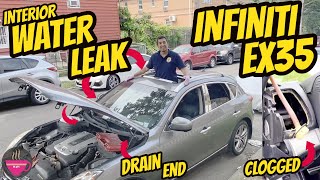
Typical fix: The BCM must be removed, dried, and its connectors cleaned with electronic contact cleaner. If corrosion is severe, the BCM will need to be replaced and programmed by a dealer or specialist. The sunroof drains must be cleared using compressed air or a flexible cleaning tool (like a weed whacker line). Many owners modify the drain ends by snipping the restrictive check-valve or re-routing the drain hose entirely 🎬 Watch: How to modify and clear your sunroof drains. to prevent future clogs.
Est. part cost: $50-$450 - Corroded or Loose Ground Connections 🔴 High Probability The main ground cable from the battery to the chassis and other grounding points on the engine and body are susceptible to corrosion over time, creating resistance that disrupts sensitive module communications. This is a very common cause for U1000/U1001 codes across the Nissan/Infiniti lineup.
How to confirm: Visually inspect the negative battery cable and where it bolts to the chassis for corrosion (green or white powder). A key ground point to check is near the brake fluid reservoir in the engine bay. Use a multimeter to perform a voltage drop test on the ground side. A reading above 0.2 volts indicates a poor connection.
Typical fix: Disconnect, thoroughly clean the cable ends and the chassis mounting point with a wire brush until shiny, and re-secure tightly. Applying dielectric grease can prevent future corrosion. If the cable is badly corroded, replace the entire ground cable assembly.
Est. part cost: $20-$100 - Failing ABS Control Module 🟡 Medium Probability → Shop ABS Control Module The ABS module is a common point of failure on many vehicles. Internal electronic failure or corrosion at its main connector can take it offline, disrupting the CAN network and triggering a U1001 code in other modules.
How to confirm: Use an advanced scan tool to check for communication with the ABS module specifically. If the ABS module is not responding, inspect its connector for corrosion and verify it is receiving proper power and ground before condemning the unit.
Typical fix: If the module is confirmed to be faulty, it must be replaced or sent to a specialist for repair. A replacement module often requires programming to the vehicle.
Est. part cost: $200-$800 - Low Battery Voltage or Failing Battery 🟡 Medium Probability → Shop Vehicle Battery Infiniti TSB ITB10-029A/B explicitly states that low battery voltage can set CAN DTCs. Modern vehicles with multiple control modules are very sensitive to stable voltage.
How to confirm: Test the battery voltage with a multimeter. A healthy battery should read approximately 12.6V when off and 13.7V-14.7V when the engine is running. Have the battery load-tested at an auto parts store, as a battery can show good voltage but fail under load.
Typical fix: Recharge or replace the battery if it fails a load test. Ensure the alternator is charging correctly.
Est. part cost: $150-$300
Rare But Worth Checking
- Faulty Transmission Control Module (TCM): → Shop Transmission Assembly While less common than BCM or ABS issues, a failing TCM can also drop off the CAN bus and cause U1001 along with severe shifting problems.
- Damaged CAN Bus Wiring: Physical damage to the twisted pair of CAN wires from rodents, previous repairs, or chafing can cause an open or short in the network. This requires advanced diagnostics with a multimeter or oscilloscope to pinpoint.
- Aftermarket Electronics: Improperly installed aftermarket stereos, alarms, or remote starters can interfere with the CAN bus network, causing communication errors. One owner on a forum traced their U1000/U1001 codes to a short they created while hardwiring a radar detector.
Diagnosis Steps
- Check Battery Health: Start by testing the battery's voltage and having it professionally load-tested. A weak battery is a simple but common cause.
- Inspect for Water Intrusion: Carefully check the passenger side floor and carpet for any signs of dampness. If wet, the sunroof drains are clogged, and the BCM is the primary suspect.
- Inspect All Grounds: Visually inspect and clean the main battery ground cable connection to the chassis and any other accessible engine or body ground straps, especially the one near the brake fluid reservoir. Ensure all connections are clean, tight, and free of corrosion.
- Scan the Network: Use an advanced OBD-II scanner capable of communicating with all modules (ABS, BCM, TCM, etc.). Perform a full network scan (like the 'CAN Diag Support Monitor' on the Infiniti CONSULT tool) to see which specific module(s) are not responding.
- Inspect the Offline Module: Once the non-communicating module is identified (e.g., BCM or ABS), inspect its electrical connector for corrosion or damage. Test for proper power and ground at the module's connector before condemning it.
- Check CAN Bus Resistance: If multiple modules are offline or the culprit isn't clear, disconnect the battery and measure the resistance between Pin 6 (CAN High) and Pin 14 (CAN Low) at the OBD-II port. A healthy network should read approximately 60 ohms. A reading of 120 ohms indicates a break in the circuit or a missing terminating resistor.
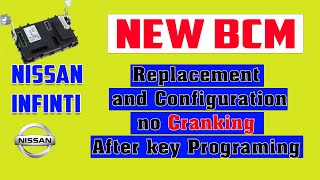
- Replace Faulty Component: If a module has good power and ground but will not communicate, it has likely failed internally and requires replacement or repair. Be aware that a new BCM will require programming to the vehicle's keys.
Parts You'll Likely Need
- Body Control Module (BCM)
(OEM #284B1-1CA9C (supersedes multiple older numbers), 284B1-1BA0A, 284B1-1CA7D)— Extremely common point of failure on the EX35 due to water damage from clogged sunroof drains. It is a central hub for many electronic functions and CAN communication.
Trusted brands: Infiniti (OEM)
OEM price range: $350-$700
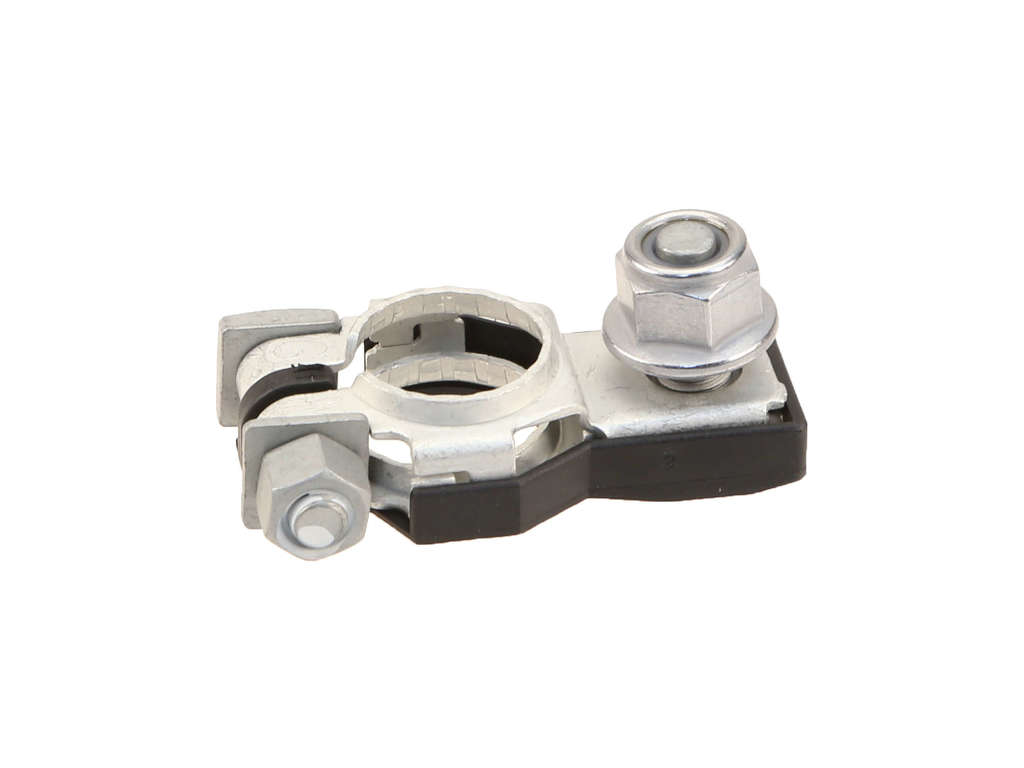
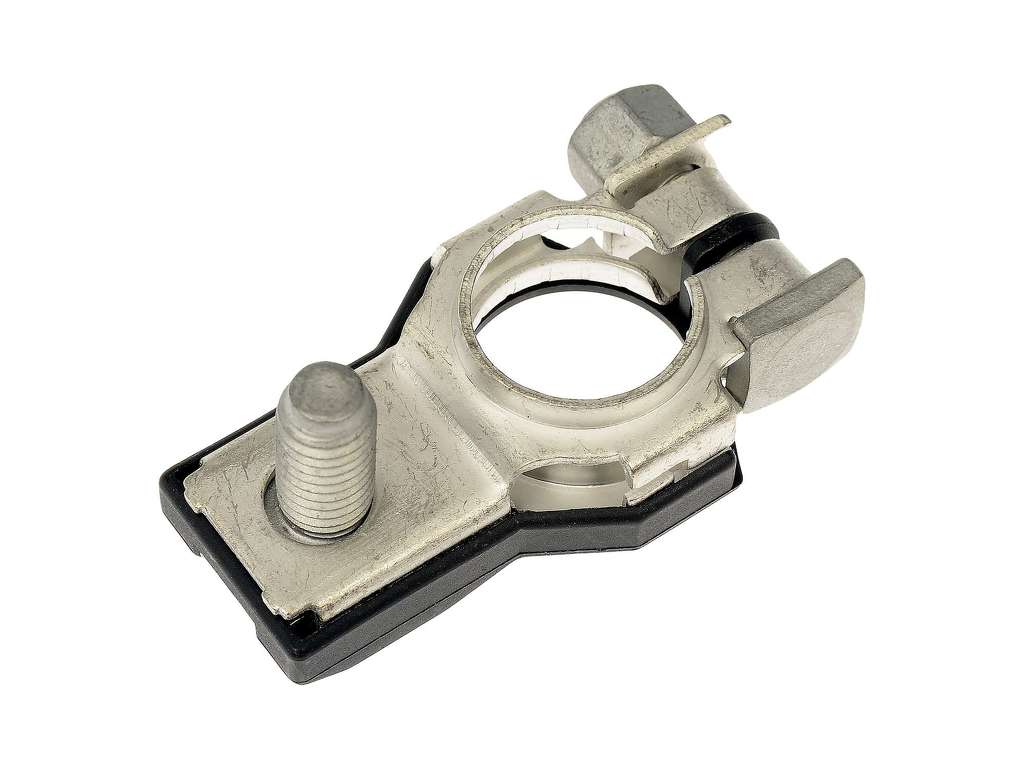
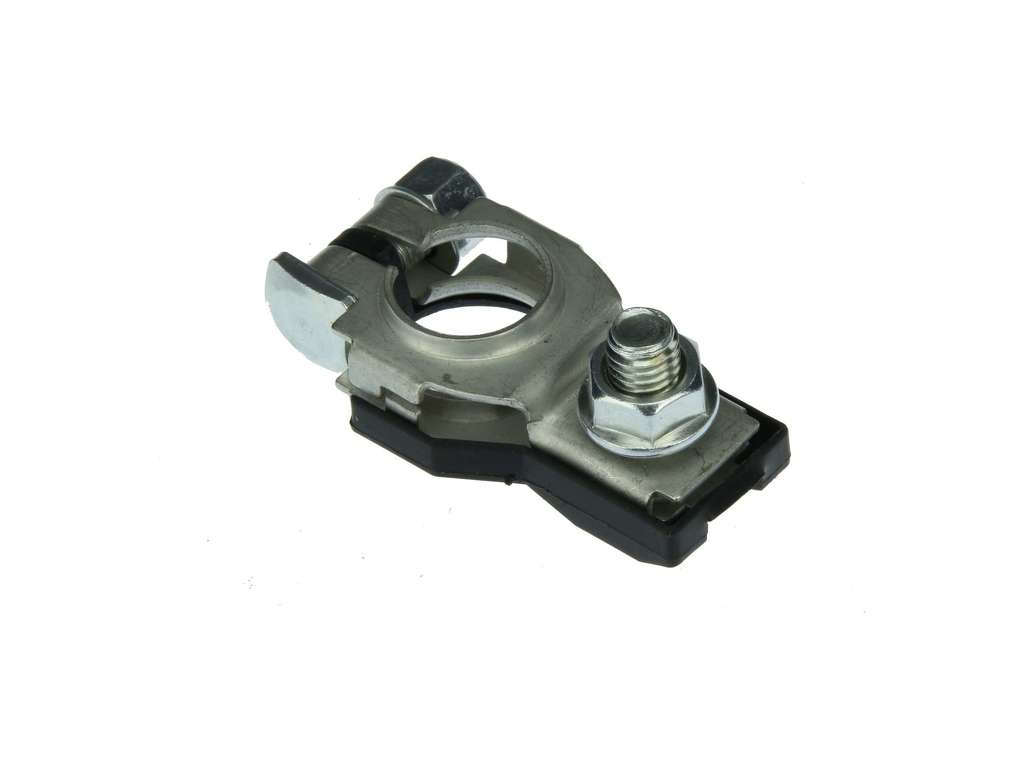
Aftermarket price range: $150-$350 (used/rebuilt) - Battery Ground Cable — The original cable is prone to corrosion at the chassis connection point, causing high resistance and leading to CAN communication faults.
Trusted brands: Infiniti (OEM), Dorman
OEM price range: $50-$100
Aftermarket price range: $20-$50
Related Codes That Often Appear With This One
- U1000 — U1000 is a general CAN Communication Circuit Malfunction code. It is extremely common to see U1000 and U1001 appear together as they both point to a network problem.
- C1109 — This ABS code indicates a battery voltage issue. Seeing it with U1001 strongly suggests the root cause is a weak battery or poor power/ground connection.
Technical Service Bulletins (TSBs) & Recalls
- ITB10-029A / ITB10-029B — CAN COMMUNICATION CODES – DIAGNOSTIC TIPS & GUIDELINES — This is the primary service bulletin for diagnosing CAN codes like U1000 and U1001. It advises technicians to diagnose communication codes first, confirms that the reporting module (like the ECM) is usually not the faulty part, and notes that low battery voltage can be a cause. It also provides the correct CAN bus resistance values (60 ohms) for testing.
Platform-Specific Known Issues
- Sunroof Drain Design Flaw: The most significant vehicle-specific issue for the U1001 code on the EX35 is the sunroof drainage system. The front drains, intended to channel water away, terminate in a small rubber grommet with a cross-slit design located in the firewall. This design easily clogs with leaves, pollen, and other debris. Once clogged, rainwater backs up the tube and overflows inside the A-pillar, dripping directly onto the unprotected Body Control Module (BCM) in the passenger-side footwell. The resulting water damage to the BCM is the number one cause of this code and a host of other electrical problems on this platform.
Mechanic-Grade Diagnostic Values
- CAN Bus Network Resistance — expected: ~60 Ohms. Failure: A reading of ~120 Ohms indicates an open circuit or a disconnected terminating module. A reading of ~40 Ohms indicates an extra (third) terminating resistor on the network.
- CAN Bus Terminating Module Resistance — expected: ~120 Ohms. Failure: Measuring a terminating module (e.g., ECM, BCM) in isolation should yield ~120 Ohms. A significantly different value suggests the module's internal resistor has failed.
- CAN High Voltage (Key On, Engine Off) — expected: Fluctuates between 2.5V and 3.5V (Average ~2.7V on a multimeter). Failure: No voltage, steady voltage, or voltage outside this range indicates a short or open on the CAN High wire.
- CAN Low Voltage (Key On, Engine Off) — expected: Fluctuates between 1.5V and 2.5V (Average ~2.2V on a multimeter). Failure: No voltage, steady voltage, or voltage outside this range indicates a short or open on the CAN Low wire.
- Ground Connection Voltage Drop — expected: < 0.2 Volts. Failure: A reading above 0.2V from the negative battery post to the chassis or engine block indicates excessive resistance in the ground circuit.
Scan Tool Commands That Help
- Infiniti CONSULT-III plus: CAN Diag Support Monitor / V-CAN Diagram — This is the primary diagnostic function for U1001. It creates a visual map of the entire CAN network and color-codes each module based on its communication status (Green: OK, Orange: Past Error, Red: Current Error). This allows a technician to immediately see which module has dropped off the network and is causing the fault.
- Infiniti CONSULT-III plus: Idle Air Volume Learn (IAVL) — This procedure, along with Accelerator Pedal Closed Position and Throttle Valve Closed Position learning, is required after the ECM has been reprogrammed or replaced to ensure correct idle speed and throttle response.
Wiring & Ground Locations
- Body Control Module (BCM) — In the passenger kick panel area, behind a trim panel.. This is the most common failure point due to water intrusion from clogged sunroof drains. Its connectors (M118, M119, M120, etc.) are susceptible to corrosion, which disrupts CAN communication.
- Engine Control Module (ECM) — Behind the glove box assembly on the passenger side.. The U1001 code specifically indicates a communication loss involving the ECM. While the ECM itself is often not the faulty part, its connectors and nearby grounds are critical inspection points.
- IPDM E/R (Intelligent Power Distribution Module Engine Room) — In the right rear corner of the engine compartment, near the battery.. The IPDM contains critical fuses and relays that power other modules, including the ECM. It also often houses one of the two 120-ohm CAN terminating resistors, making its health vital for the entire network.
- Ground Connection M95 — This is a specific ground point referenced in the Factory Service Manual (FSM) for ECM diagnostics. Its exact location requires the FSM, but key grounds to check are on the chassis near the battery and on the engine block.. The FSM specifically calls out checking this ground when diagnosing ECM-related codes. A poor connection here can directly cause communication faults.
Real Owner Repair Stories
- Infiniti Scene forum user 'Mountain Man' (2004 Infiniti FX35 (similar platform)) — While driving hard, the gear indicator display went blank, the transmission became stuck in one gear, and the Check Engine Light came on with codes U1000 and U1001.
❌ Tried (didn't work) The immediate issue was resolved by simply stopping and restarting the car, but the codes were stored.
✅ What actually fixed it The suggested permanent fix from other forum members was to disconnect the battery, then unplug the ECM and TCM connectors and clean all contact points with electronic contact cleaner to remove any slight corrosion or moisture. Checking the main chassis-to-engine ground strap was also recommended. - NICOclub forum user 'Cedric6581' (2002 Infiniti I35 (different platform, but same U-codes)) — TCS OFF, SLIP, and Check Engine lights were on. Cruise control did not work. Codes U1000 and U1001 were present. Car could not pass smog inspection.
❌ Tried (didn't work) The owner was unable to locate the faulty ground wires. A dealership spent five hours on diagnostics and identified that the TCM was not communicating with the ECM but was not certain this would fix the issue.
✅ What actually fixed it The owner sourced a used Transmission Control Module (TCM) for $27.00, installed it, cleared the codes, and all warning lights went off, resolving the problem.
OEM Part Supersession History
284B1-1BA0A, 284B1-1BM0A, 284B1-1CA0A, 284B1-1CA0B, 284B1-1CA0C, 284B1-1CA4C, 284B1-1CA5C, 284B1-1CA7C→284B1-1CA9C— Part has been updated by the manufacturer over the vehicle's life. The latest part number incorporates revisions for improved reliability.
Heads up: While multiple part numbers may fit, it is always best to use the latest superseded part number for the most current design. A new BCM requires programming to the vehicle's keys and configuration.
Model Year Variations Within This Range
- 2008-2010 vs 2011-2012: The automatic transmission was updated. According to user reports, 2008-2010 models often used a 5-speed automatic, while 2011-2012 models were equipped with a 7-speed automatic transmission. While not a direct cause of the common U1001 faults, this could be relevant if the TCM is the suspected cause.
Helpful Videos


Used OEM Parts in Stock
New Aftermarket Parts Available


The information in this article is provided for general reference and educational purposes only. Vehicle specifications, procedures, and part compatibility can vary by production date, trim level, and region. Always consult your vehicle's factory service manual and verify part numbers before purchasing or performing repairs. Safety-critical components such as airbags, seat belts, and braking systems should be installed by a qualified professional.
- Infiniti EX35:
- 🧭 Diagnostic Flowchart
- 🎬 Helpful Videos
- 🛍️ Shop This Part
- What's Unique About the 2008-2012 Infiniti EX35
- Symptoms You May Notice
- Most Likely Causes
- Rare But Worth Checking
- Diagnosis Steps
- Parts You'll Likely Need
- Related Codes That Often Appear With This One
- Technical Service Bulletins (TSBs) & Recalls
- Platform-Specific Known Issues
- Mechanic-Grade Diagnostic Values
- Scan Tool Commands That Help
- Wiring & Ground Locations
- Real Owner Repair Stories
- OEM Part Supersession History
- Model Year Variations Within This Range
- 🎟️ Get 5% Off