

U1001 on 2005-2012 Infiniti QX56: CAN Communication Failure Causes and Fixes
This code indicates a communication failure between your vehicle's computers. The most common cause on the Infiniti QX56 is a poor electrical ground due to a corroded battery ground cable or a weak battery. Checking and cleaning grounds, especially the main battery-to-chassis connection, is the first and most effective step.
- U1001 is a network code, not a sensor code. It means your car's computers are not communicating with each other.
- Before suspecting expensive modules, ALWAYS check the basics first: battery health and all major ground connections.
- The most likely fix is cleaning or replacing a corroded battery ground cable, which is an inexpensive DIY job.
- This code can cause serious drivability issues, including a no-start condition or disabled safety systems. Do not ignore it.
- Diagnosing the fault beyond simple ground/battery issues requires specialized tools and knowledge, so professional help is recommended if the easy checks don't solve it.
What's Unique About the 2005-2012 Infiniti QX56
The Infiniti QX56, along with its Nissan relatives (Titan, Armada), is known for being particularly sensitive to electrical system integrity. Unlike many other vehicles where a communication code might point directly to a failed module, on this platform, the root cause is very often a simple, foundational electrical issue. Corroded ground straps and low battery voltage are frequent culprits that can send a technician on a wild goose chase if not checked first. This guide covers two distinct QX56 generations with different underlying platforms, so it's important to identify which one you have.
Diagnostic Flowchart
Tap your situation to follow the diagnostic path that matches what you're seeing on this vehicle.
Generation note: The 2005-2012 year range covers two different QX56 generations: - First Generation (JA60): 2005-2010, based on the Nissan Titan/Armada platform. - Second Generation (Y62): 2011-2012, based on the global Nissan Patrol platform. While the root causes like bad grounds are common to both, the specific locations of grounds, fuses (IPDM), and control modules differ significantly between these two platforms. The IPDM on the JA60 models is particularly known for failure.
Symptoms You May Notice
- Multiple warning lights on the dashboard, such as Check Engine, VDC, and SLIP.
- Engine cranks but does not start.
- Engine stalls while driving, sometimes after hitting a bump.
- Transmission is stuck in one gear (limp mode) or shifts harshly.
- Instrument cluster gauges behave erratically or drop to zero, especially the tachometer.
- Scan tool is unable to communicate with the Engine Control Module (ECM).
- Power windows, locks, or seats operate slowly or inconsistently.
- Replacing the Engine Control Module (ECM) or another module without first verifying its power and ground connections are good.
- Replacing sensors when the issue is a network-wide communication failure.
- Assuming the battery is good just because the engine cranks, without performing a proper voltage and load test.
- Replacing the transmission or transmission components when shifting issues are caused by a communication loss, not a mechanical failure.
Most Likely Causes
- Corroded or Loose Ground Connections 🔴 High Probability The main battery-to-chassis ground strap and engine-to-chassis grounds are exposed to the elements and are a known failure point due to corrosion, especially in regions that use road salt. This is the #1 cause for U1001 on Nissan/Infiniti platforms.
How to confirm: Visually inspect the negative battery cable and other braided ground straps connected to the engine and chassis. Look for green or white crusty buildup, fraying, or looseness. A common failure point is where the negative cable bolts to the chassis near the battery. Perform a voltage drop test with a multimeter from the negative battery post to the chassis and engine block; a reading above 0.2 volts indicates a poor connection.
Typical fix: Disconnect, thoroughly clean the cable ends and mounting points with a wire brush until shiny, and re-secure. If the cable is badly corroded or frayed, it must be replaced. Many owners on forums like NICOclub and InfinitiScene have resolved U1000/U1001 codes with this procedure alone.
Est. part cost: $5-$75 - Weak or Failing Battery 🔴 High Probability → Shop Vehicle Battery Low system voltage (below 10V) can cause random communication dropouts between modules as they shut down at different voltage thresholds. Infiniti's own service bulletin ITB10-029A notes that low battery voltage is a potential cause for CAN DTCs. A weak battery can also cause slow cranking or a clicking noise on startup.
How to confirm: Test the battery voltage with a multimeter with the engine off. A healthy battery should read approximately 12.6 volts. Anything below 12.3 volts suggests it needs charging and testing. Have the battery professionally load-tested at an auto parts store, as it may show good voltage but fail under load.
Typical fix: Recharge or replace the battery.
Est. part cost: $150-$350 - Faulty Intelligent Power Distribution Module (IPDM) 🟡 Medium Probability → Shop Fuse Box The IPDM E/R (in the engine room) acts as a smart fuse/relay box and is a known weak point, especially on the 2005-2010 (JA60) models. Internal relay failures can cut power to the ECM or fuel pump, causing stalling and communication codes.
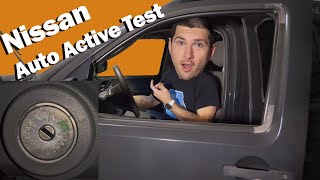
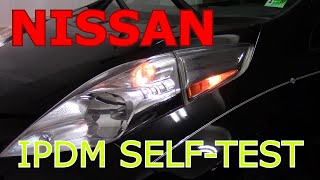
How to confirm: Check fuses related to the ECM, BCM, and other control modules within the IPDM. A diagnostic self-test (Auto Active Test) can be performed without tools by sitting in the driver's seat, turning the ignition ON, and cycling the driver's door open/closed 10 times within 20 seconds. If components 🎬 Watch this walkthrough of the Nissan IPDM self-test procedure controlled by the IPDM fail to activate during the test, the IPDM is likely faulty.
Typical fix: Replace the IPDM. This part is plug-and-play and does not require dealer programming. Ensure the part number matches your vehicle's year.
Est. part cost: $75-$300 (Used/Remanufactured) - Damaged CAN Bus Wiring ⚪ Low Probability
How to confirm: Visually inspect the wiring harnesses for chafing, cuts, or rodent damage, particularly around the ECM and IPDM. With the battery disconnected, measure the resistance between pins 6 (CAN-H) and 14 (CAN-L) at the OBD-II port. A healthy network should read approximately 60 ohms. A reading of 120 ohms indicates a break in the circuit or a missing terminating resistor.
Typical fix: Repair the damaged section of the wiring harness. This can be a time-consuming process of tracing the wires.
Est. part cost: $10-$100
Rare But Worth Checking
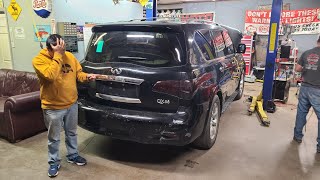
- Failed Control Module (ECM, BCM, TCM): While less common, a module can fail internally, causing it to stop communicating or, in some cases, short out and blow a fuse. This should only be considered after all wiring, grounds, and power sources have been confirmed to be good. A YouTube video documented a 2011 QX56 where a shorted ECM repeatedly blew a 30A fuse. 🎬 Watch: Troubleshooting a shorted ECM on a 2011 QX56
- Aftermarket Electronics Interference: A poorly installed remote starter, alarm system, or stereo can tap into the wrong wires and disrupt CAN bus signals. If the problem started after an installation, this is a strong possibility.
Diagnosis Steps
- Read all fault codes from all available modules with a professional-grade scan tool. Note which modules are not communicating.
- Check and record the battery's state of charge. A reading should be around 12.6V. Load test the battery to ensure it's healthy.
- Visually inspect the negative battery cable, especially where it bolts to the chassis near the battery. Inspect engine ground straps and chassis ground points for corrosion or looseness.
- Perform a voltage drop test on the main ground connections to confirm their integrity. A reading over 0.2V indicates a problem.
- Inspect all fuses in the engine bay (especially the IPDM) and cabin fuse boxes that relate to the ECM, BCM, and TCM. Pay special attention to fuses labeled 'ELEC B', 'IGNITION 1', or 'IGNITION 2'.
- If grounds and power are good, disconnect the battery. Measure the resistance between Pin 6 (CAN-H) and Pin 14 (CAN-L) on the OBD-II port. The reading should be ~60 Ohms.
- If resistance is 120 Ohms, it indicates an open in the circuit or a problem with one of the two terminating resistors (often in the ECM and BCM/IPDM). If it's 0 Ohms, the CAN H and CAN L wires are shorted together.
- If all wiring, power, and grounds are confirmed good, the fault may lie with an individual control module, which would require further specific testing as outlined in Infiniti TSB ITB10-029A.
Parts You'll Likely Need
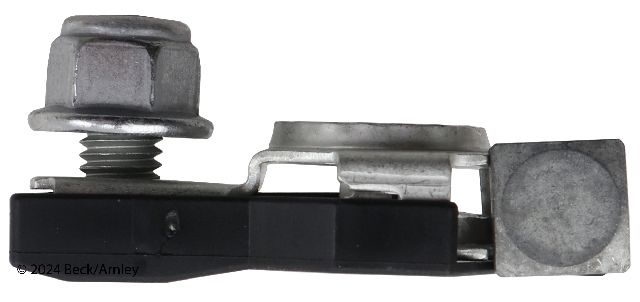
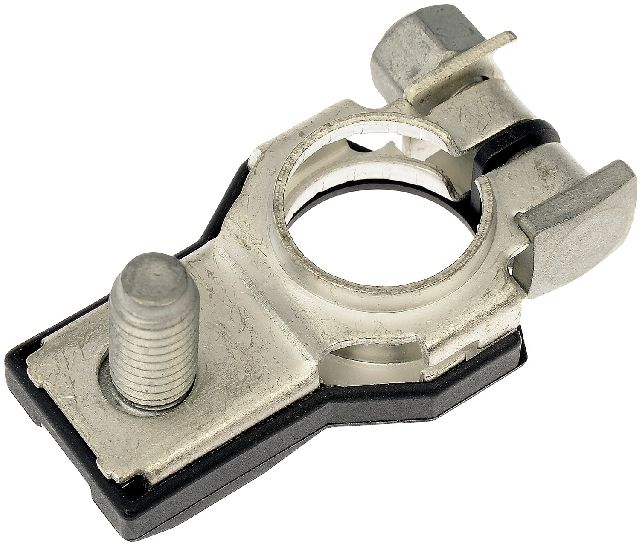
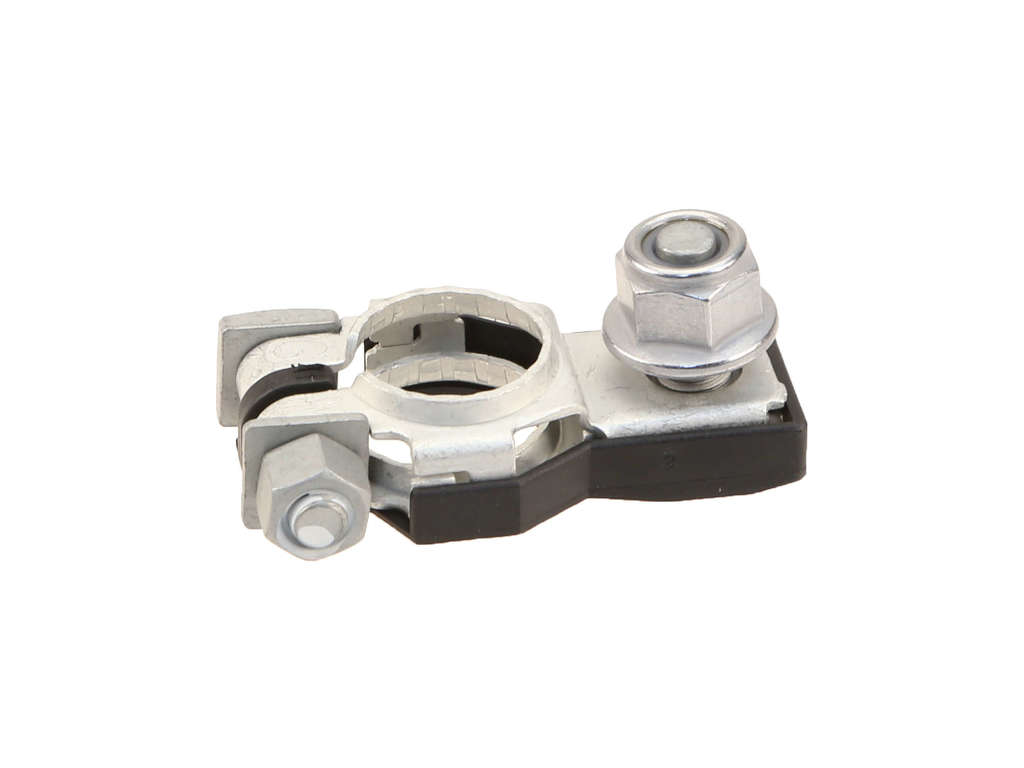
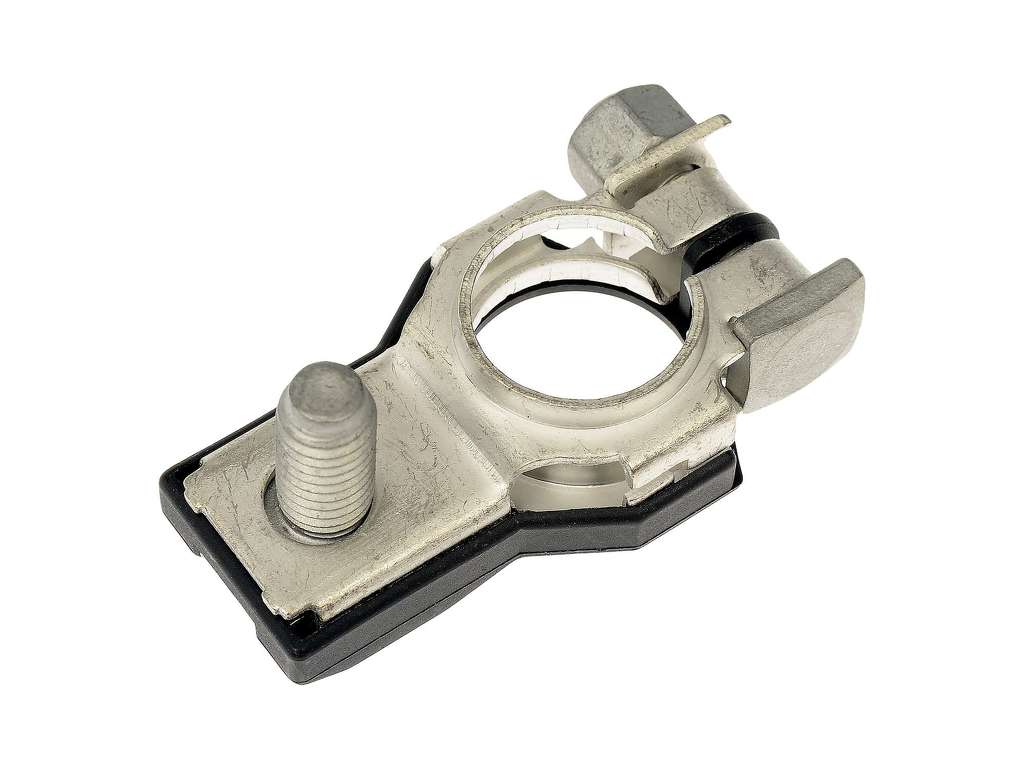
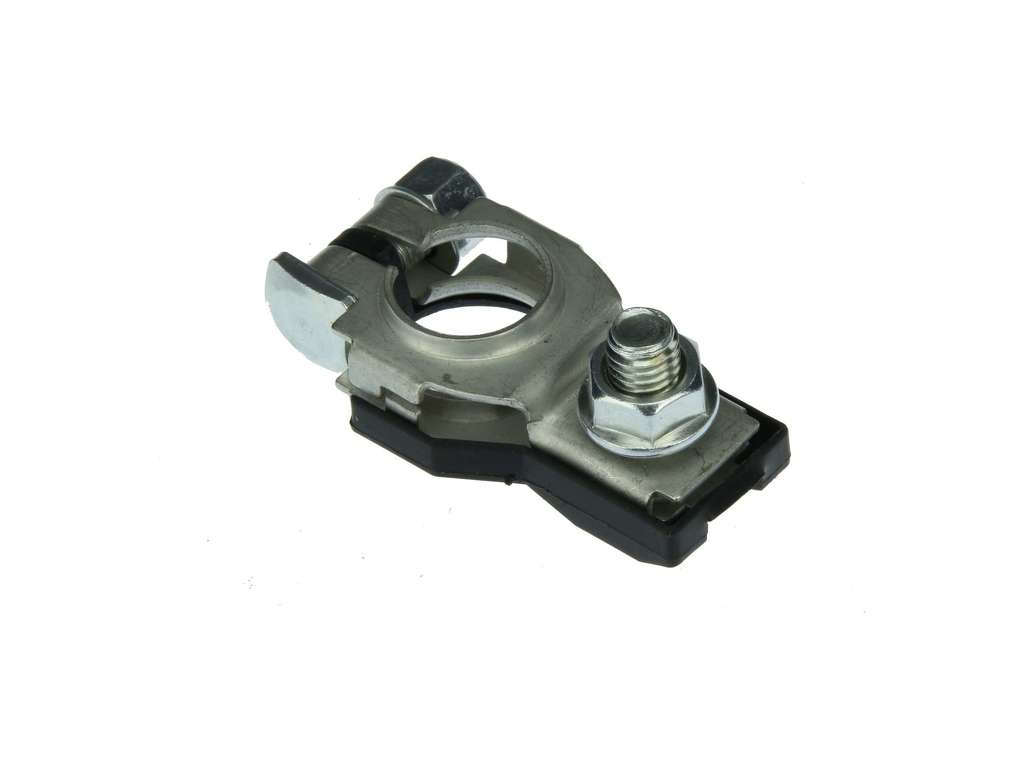
- Negative Battery Cable / Ground Strap
(OEM #24080-ZR00A (for 2007-2010 JA60 models), 24080-1LA0A (for 2011-2013 Y62 models))— This is the most frequently cited cause of communication issues on this platform due to its susceptibility to corrosion.
Trusted brands: Infiniti (OEM), Standard Motor Products, Duralast
OEM price range: $50-$110
Aftermarket price range: $20-$50 - Automotive Battery — Low system voltage from a weak battery is a primary trigger for CAN communication codes.
Trusted brands: Interstate, DieHard, Duralast
OEM price range: $250-$400
Aftermarket price range: $150-$250 - Intelligent Power Distribution Module (IPDM) — A common failure on the JA60 platform, causing stalling and no-start conditions that generate communication codes.
Trusted brands: Infiniti (OEM), Hitachi, Cardone (Remanufactured)
OEM price range: $400-$700
Aftermarket price range: $75-$300
Related Codes That Often Appear With This One
- U1000 — U1000 is a nearly identical CAN communication code. They often appear together, indicating a general network communication problem. U1001 specifically points to a communication loss with the ECM.
Technical Service Bulletins (TSBs) & Recalls
- ITB10-029A / NTB10-066a: This is the primary service bulletin from Infiniti/Nissan for diagnosing CAN communication codes like U1000, U1001, U1002, and U1010. It provides a diagnostic flowchart and confirms that low battery voltage can be a cause. It also gives expected resistance values (60 ohms) for a healthy CAN circuit.
Platform-Specific Known Issues
- The first-generation (2005-2010) models, based on the Titan/Armada, have a well-documented issue with the Intelligent Power Distribution Module (IPDM) failing, leading to stalling and no-start conditions that set U1000/U1001 codes.
- On the second-generation (2011-2012) Y62 models, a case was documented where a shorted ECM was blowing a 30A fuse (Fuse #71), causing a no-start and U1000/U1001.
Mechanic-Grade Diagnostic Values
- CAN Bus Network Resistance — expected: ~60 Ω. Failure: A reading of ~120 Ω indicates an open circuit or a missing terminating module. A reading near 0 Ω indicates a short between the CAN High and CAN Low wires.
- CAN Bus Terminating Module Resistance — expected: ~120 Ω. Failure: A reading significantly different from 120 Ω (e.g., open loop) when a known terminating module (like the ECM or IPDM) is disconnected and measured at its pins indicates a faulty internal resistor.
- CAN Bus Voltage (Key On, Engine Off) — expected: CAN High (Pin 6 to Ground): ~2.6V, CAN Low (Pin 14 to Ground): ~2.4V.. Failure: Voltages that are stuck high, low, or equal to each other indicate a wiring short or a faulty module transceiver.
- Battery Voltage (Engine Off) — expected: ~12.6V. Failure: A reading below 12.3V indicates a discharged battery. A reading below 11.5V is often cited as a direct cause for communication faults.
Scan Tool Commands That Help
- No Tool Required: IPDM E/R Auto Active Test — This is a primary diagnostic step for 2005-2010 (JA60) models when an IPDM failure is suspected. It forces the IPDM to cycle its outputs (wipers, lights, A/C clutch) to confirm its operational status without a scan tool. The test is initiated by turning the ignition ON and cycling the driver's door switch 10 times in 20 seconds.
- Infiniti CONSULT-III plus: CAN Diag Support Monitor / V-CAN Diagram — This is the dealer-level method for diagnosing U1001. It provides a full network topology map, showing which modules are communicating normally (Green), have a past/intermittent error (Orange), or a current error (Red), pinpointing the source of the communication breakdown.
- Professional Scan Tool (e.g., Autel, AutoEnginuity): Steering Angle Sensor Reset — If U1001 is accompanied by VDC/SLIP lights and steering-related codes like C1143, a steering angle sensor reset may be required after an alignment or other suspension work to clear the associated faults.
Wiring & Ground Locations
- ECM (Engine Control Module) — On 2011-2012 (Y62) models, it is located on the right side of the engine compartment.. The U1001 code specifically points to a loss of communication with the ECM. Its connector and nearby grounds are critical inspection points.
- IPDM E/R (Intelligent Power Distribution Module) — On 2011-2012 (Y62) models, it is in the right rear corner of the engine compartment. On 2005-2010 (JA60) models, it is also in the engine bay, near the battery, and houses the ECM power relay.. The IPDM powers the ECM and often contains one of the two CAN bus terminating resistors. A failure here can cut power or disrupt the entire network.
- BCM (Body Control Module) — On 2011-2012 (Y62) models, it is located under the left side of the dashboard.. The BCM is a central communication hub and may contain a CAN terminating resistor. A problem here can affect the entire network.
- Ground Points (Y62) — Various locations, including E43 (left front of engine compartment) and B33 (under driver's seat).. Multiple ground points serve different modules on the CAN network. Corrosion or looseness at any of these can cause intermittent communication faults.
Real Owner Repair Stories
- YouTube channel 'Victor Martinez' (2011 Infiniti QX56 (Y62)) — No crank, no start, U1000 and U1001 codes, scan tool cannot communicate with PCM.
❌ Tried (didn't work) Checking for 5V reference at sensors (it was absent).
✅ What actually fixed it The technician found a 30A fuse that blew instantly when the ECM was connected. Tracing the circuit confirmed the short was internal to the ECM. Replacing the Engine Control Module (ECM) resolved the issue. - InfinitiScene forum user 'Ataher' (2004 Infiniti FX45 (similar CAN architecture)) — Persistent VDC OFF and SLIP lights with a U1000 code that would not clear.
❌ Tried (didn't work) Cleaning all main ground terminals under the hood., Attempting to inspect grounds behind the dashboard.
✅ What actually fixed it The problem was resolved by removing the AWD control unit, physically cleaning its electrical connector contacts with sandpaper, and reinstalling it. The fix was a poor connection at a secondary module, not a main ground or primary module. - YouTube channel 'Car Checkup' (2015 Nissan Sunny (relevant Nissan CAN issue)) — U1000 and U1001 codes, intermittent short of a 10A fuse in the IPDM.
❌ Tried (didn't work) Replacing the fuse repeatedly.
✅ What actually fixed it After removing the air filter housing, a chafed wire in the engine harness was discovered. It was intermittently touching the chassis, causing a short to ground that would blow the fuse and disrupt CAN communication. Repairing the damaged wire fixed the problem.
Model Year Variations Within This Range
- 2005-2010 (JA60) vs. 2011-2012 (Y62): The physical location of key components like the ECM, IPDM, and BCM are different due to the complete platform change from the Titan-based JA60 to the Patrol-based Y62. For example, the Y62's ECM is on the right side of the engine bay, while the JA60's IPDM (containing the ECM relay) is in a different location. Diagnostic procedures like the IPDM 'Auto Active Test' are well-documented for the JA60 platform.
Helpful Videos
We Have This Part in Stock


The information in this article is provided for general reference and educational purposes only. Vehicle specifications, procedures, and part compatibility can vary by production date, trim level, and region. Always consult your vehicle's factory service manual and verify part numbers before purchasing or performing repairs. Safety-critical components such as airbags, seat belts, and braking systems should be installed by a qualified professional.
- Infiniti QX56:
- 🧭 Diagnostic Flowchart
- 🎬 Helpful Videos
- 🛍️ Shop This Part
- What's Unique About the 2005-2012 Infiniti QX56
- Symptoms You May Notice
- Most Likely Causes
- Rare But Worth Checking
- Diagnosis Steps
- Parts You'll Likely Need
- Related Codes That Often Appear With This One
- Technical Service Bulletins (TSBs) & Recalls
- Platform-Specific Known Issues
- Mechanic-Grade Diagnostic Values
- Scan Tool Commands That Help
- Wiring & Ground Locations
- Real Owner Repair Stories
- Model Year Variations Within This Range
- 🎟️ Get 5% Off