

U1001 on 2005-2012 Nissan Maxima: CAN Communication Failure Causes and Fixes
On a 2005-2012 Nissan Maxima, code U1001 almost always points to an electrical issue, not a failed module. The most common fix is cleaning corroded or loose battery terminals and engine/body ground connections, particularly the main transmission ground. This is a low-cost, high-success repair you can often do yourself.
- Always check the battery and ground connections first when you see a U1001 code. This is the most likely and cheapest fix.
- Symptoms can be dramatic (many lights, dead gauges), but the cause is usually a simple electrical fault, not a catastrophic failure.
- Do not replace expensive control modules like the ECM or TCM until all power, ground, and wiring issues have been professionally ruled out.
- This code indicates a serious issue with the vehicle's communication network that can affect safety systems; it should be addressed promptly.
What's Unique About the 2005-2012 Nissan MAXIMA
Nissan vehicles from this era, including the Maxima, are known for their sensitivity to electrical ground issues. Unlike many other cars where a communication code might point to a failed computer, on the Maxima, the root cause is very frequently a simple, corroded ground strap or a weak battery. Owners often experience a cascade of seemingly unrelated warning lights and symptoms that may appear after 10-15 minutes of driving, all stemming from a single poor electrical connection that disrupts the entire CAN network.
Diagnostic Flowchart
Tap your situation to follow the diagnostic path that matches what you're seeing on this vehicle.
Generation note: This range covers two Maxima generations: the 6th generation (2004-2008) and the 7th generation (2009-2014). While the underlying cause is the same (CAN communication failure), the specific locations of ground points, wiring harnesses, and control modules differ between these two body styles. For example, the A/C Amplifier is a known failure point on the 6th gen, while ground cable part numbers differ.
Symptoms You May Notice
- Multiple warning lights on the dashboard, such as ABS, VDC, SLIP, and the Check Engine Light
- Instrument cluster gauges (speedometer, tachometer, fuel gauge) not working or stuck at zero
- Transmission indicator light is blank
- Symptoms appear after 10-15 minutes of driving as the vehicle warms up
- Harsh or erratic transmission shifting
- Engine cranks but will not start
- Climate control system will not turn on
- Turn signal indicator on the dash does not click or flash, even if exterior lights work
- Replacing the ECM or TCM without checking grounds first. These modules are expensive and are rarely the cause of the U1001 code. 🎬 Watch: A simple solution for Nissan U1001 communication codes.
- Replacing individual sensors (like a fuel level sensor) when their failure is a symptom of the network communication problem, not the cause.
Most Likely Causes
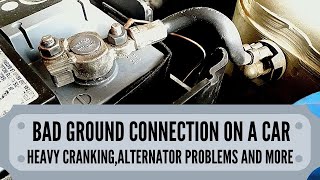
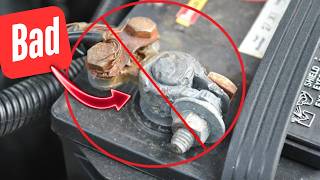
- Loose, Corroded, or Faulty Ground Connections 🔴 High Probability Nissans of this period are particularly sensitive to poor grounds. The main ground points on the engine block, transmission, and body can corrode over time, creating high resistance and disrupting module communication. A broken transmission ground strap is a frequently reported culprit.
How to confirm: Visually inspect the main battery ground cable and where it bolts to the chassis. Check smaller ground straps, especially the one from the transmission to the frame, which is often located behind the driver's side wheel well splash guard. Use a multimeter to check for voltage drops between the battery negative post and the engine block/chassis; it should be less than 0.2 volts. 🎬 See how to test for bad engine ground strap symptoms.
Typical fix: Remove, clean, and securely re-tighten all affected ground connections. This may involve using a wire brush or sandpaper to clean the contact points to bare metal. A common DIY test is to use a jumper cable to connect the battery's negative terminal directly to a clean spot on the engine block to see if the issue resolves. Replace any broken or severely corroded ground straps.
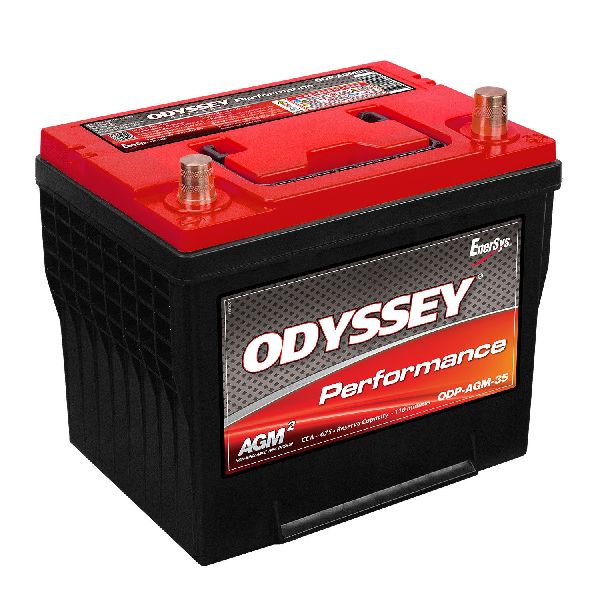
Est. part cost: $5-$70 - Low Battery Voltage or Weak Battery 🟡 Medium Probability → Shop Vehicle Battery A battery that provides insufficient voltage, especially during startup, can cause communication glitches between modules, triggering a U1001 code. Forum members have reported fixing the U1001 code by replacing a battery that seemed to start the car fine but was electrically weak.
How to confirm: Test the battery voltage with a multimeter. A healthy, fully charged battery should read approximately 12.6 volts with the engine off and over 13.7 volts with the engine running. Have the battery load-tested at an auto parts store, as a simple voltage test may not be sufficient.
Typical fix: Recharge or replace the battery.
Est. part cost: $150-$250 - Damaged Wiring Harness or Connectors ⚪ Low Probability Wiring for the CAN bus can become chafed, broken, or corroded, especially in the engine bay where it's exposed to heat and vibration. Wires can rub against brackets or other components, causing an intermittent short to ground that disrupts the network.
How to confirm: Visually inspect the wiring harnesses connecting the ECM, TCM, and IPDM (Intelligent Power Distribution Module) for any signs of damage, chafing against metal parts, or rodent damage. Check connectors for corrosion or pushed-out pins. A technician found a wire that was not properly secured from the factory and would intermittently touch ground, causing a recurring U1001.
Typical fix: Repair the damaged section of the wire or replace the affected connector. This requires soldering and heat-shrinking for a durable repair.
Est. part cost: $10-$100
Rare But Worth Checking
- Faulty A/C Amplifier (6th Gen): → Shop HVAC Control On the 6th generation Maxima (2004-2008), a failed A/C Amplifier module (Part #27760-7Y000) located in the center dash is a well-documented cause. Coins dropped into the dash vents can fall into the amplifier's circuit board and short it out, taking down the entire CAN bus. This should be suspected if the climate control is also inoperative.
- Faulty Control Module: While rare, a module like the ECM, TCM, or ABS actuator can fail internally and disrupt the entire CAN network. This should only be considered after all wiring, grounds, and power supply issues have been ruled out.
- Faulty Intelligent Power Distribution Module (IPDM): → Shop Fuse Box The IPDM, located in the engine bay, contains relays and fuses that power many control units, including the ECM. Failure of the internal ECM relay within the IPDM can cut power to the engine computer, causing a no-start and a U1001 code. Nissan has updated this part, with newer versions often being black instead of the original white.
- Blown Fuse: A blown fuse for a critical control unit can take it offline, causing a communication code. Check fuses related to the ECM, TCM, and other control systems in the IPDM.
Diagnosis Steps
- Check and record any other stored fault codes. Per TSB NTB10-066A, communication codes should always be diagnosed first.
- Check the battery. Ensure it is fully charged (12.6V+) and passes a load test. A weak battery is a common trigger.
- Inspect battery terminals and main ground connections. Clean any corrosion and ensure all connections are tight. Pay special attention to the transmission-to-chassis ground strap.
- As a temporary test, connect a jumper cable from the negative battery terminal to a clean, unpainted metal point on the engine block to see if symptoms disappear.
- Visually inspect the main wiring harnesses in the engine bay for any signs of physical damage, chafing, or corrosion.
- Check all relevant fuses in the IPDM (engine bay fuse box) and interior fuse panel.
- For 6th Gen (2004-2008), if climate controls are also dead, inspect the A/C Amplifier behind the center console for foreign objects like coins that may have fallen in and shorted the unit.
- If the problem persists, use an advanced scan tool to see which control modules are not communicating on the network.
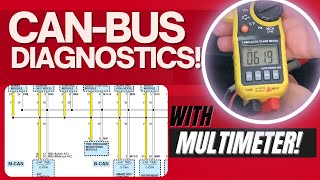
- With the battery disconnected, measure the resistance of the CAN bus at the OBD-II port (between pins 6 and 14). It should be approximately 60 ohms. A reading of 120 ohms indicates an open circuit or a problem with a terminating resistor. 🎬 Watch: How to test CAN bus resistance with a multimeter.
Parts You'll Likely Need
- Battery Ground Cable
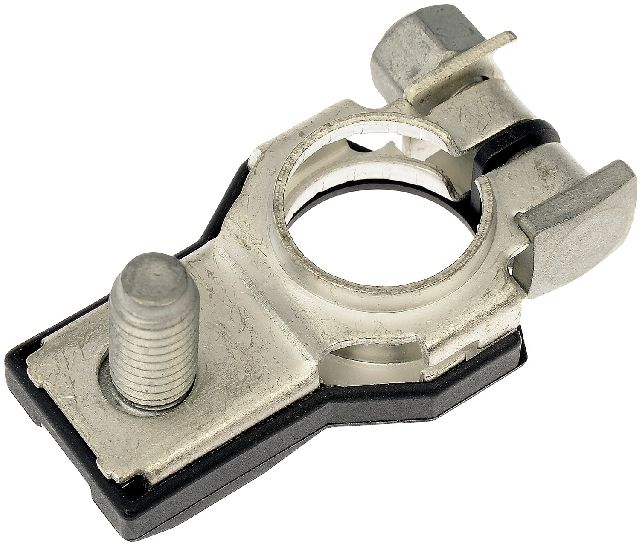
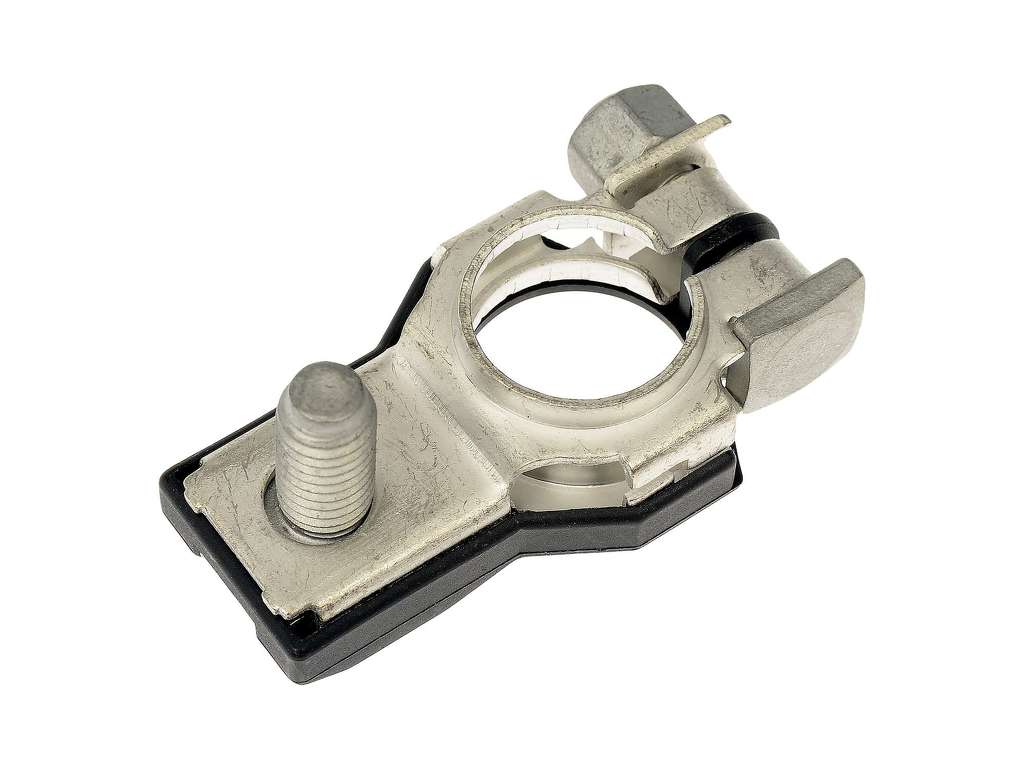
(OEM #24080-JA10A (7th Gen, 2009-2012), 24080-ZK30A (6th Gen, 2006-2008))— The primary ground connection is a frequent failure point due to corrosion, leading to widespread electrical and communication issues. The terminal is often crimped to the cable, requiring full replacement.
Trusted brands: Nissan OE, Standard Motor Products
OEM price range: $60-$150
Aftermarket price range: $20-$50 - Car Battery — A weak or failing battery is a common cause of intermittent communication codes on this platform, even if it can still start the engine.
Trusted brands: Interstate, DieHard, Duralast
OEM price range: $200-$300
Aftermarket price range: $150-$250 - A/C Amplifier
(OEM #27760-7Y000, 27760-7Y01B)— Specific to the 6th generation (2004-2008), this module is a known failure point that can bring down the entire CAN bus, often due to foreign objects (like coins) shorting the circuit board. Its failure is a primary suspect if climate control is also inoperative.
Trusted brands: Nissan OE
OEM price range: $225-$290
Related Codes That Often Appear With This One
- U1000 — U1000 is a general CAN communication failure code. U1001 is often a more specific version of the same network problem, and they frequently appear together.
- P0462 — This code for the Fuel Level Sensor circuit can be triggered by the U1001 fault, as the fuel gauge relies on CAN communication to get its reading from the sensor. The network failure prevents the signal from reaching the instrument cluster.
- P1212 — This is a TCS/ABS communication line fault. It often appears with U1001 because the ABS control unit is a critical node on the CAN bus, and a network failure will disrupt its communication with the ECM.
Technical Service Bulletins (TSBs) & Recalls
- NTB10-066A: States that communication codes like U1001 should be diagnosed first and provides basic diagnostic guidelines for CAN system errors on Nissan vehicles, including checking for low battery voltage.
- NTB10-145B: Provides a specific repair flowchart for when DTC U1000 is stored in the ABS/VDC control unit, reinforcing the need for systematic CAN diagnosis before replacing parts.
Platform-Specific Known Issues
- A/C Amplifier Failure (6th Gen, 2004-2008): → Shop HVAC Control A well-documented issue where coins or other small metal objects fall through the dash vents above the radio and land on the circuit board of the A/C Amplifier (Part #27760-7Y000). This shorts the module, which is a node on the CAN bus, causing a network-wide failure and a U1001 code. A user on Maxima.org confirmed their shop diagnosed and fixed this exact issue by replacing the part for $286 (part) and $270 (labor).
- Transmission Ground Strap Corrosion: → Shop Engine Ground Strap The ground strap that connects the transmission case to the vehicle's chassis is highly susceptible to corrosion and breakage. This specific ground is critical for the proper operation of the TCM and other modules. Its failure is a leading cause of the U1001 code. A user on Maxima.org found their transmission ground wire had broken completely.
Mechanic-Grade Diagnostic Values
- CAN Bus Resistance (Battery Disconnected) — expected: ~60 Ω (measured between Pin 6 and Pin 14 of the OBD-II port). Failure: A reading of ~120 Ω indicates an open circuit or a missing terminating resistor. A reading of ~40 Ω or less could indicate a short or a third, unwanted resistor on the network.
- CAN High Voltage (Key On, Engine Off) — expected: ~2.5V to 3.0V (measured between Pin 6 and chassis ground). Failure: Significant deviation or voltage matching CAN Low indicates a bus problem. Note: Accurate measurement requires an oscilloscope; a multimeter will show an average voltage.
- CAN Low Voltage (Key On, Engine Off) — expected: ~2.0V to 2.5V (measured between Pin 14 and chassis ground). Failure: Significant deviation or voltage matching CAN High indicates a bus problem. Note: Accurate measurement requires an oscilloscope; a multimeter will show an average voltage.
- Ground Point Voltage Drop (Engine Running) — expected: < 0.2 Volts DC. Failure: A reading higher than 0.2V between the negative battery post and a specific ground point (e.g., engine block, transmission case, chassis) indicates high resistance at that ground, a primary cause of U1001.
- Alternator AC Ripple Voltage (Engine at 2000 RPM, loads on) — expected: < 0.5 Volts AC. Failure: Excessive AC voltage (ripple) from a failing diode in the alternator can introduce electrical noise onto the CAN bus, causing communication errors like U1001.
Scan Tool Commands That Help
- Nissan CONSULT-II / CONSULT-III plus: CAN Diag Support Monitor — This is the primary diagnostic function recommended by Nissan to identify which specific control modules are not communicating on the CAN network. It provides a list of all modules and their communication status (OK or NG - No Good), pointing the technician to the source of the failure.
- Manual Procedure (No Scan Tool): IPDM E/R Auto Active Test — This built-in self-test checks the functionality of components controlled by the Intelligent Power Distribution Module (IPDM). To activate, turn the ignition ON, and within 20 seconds, press the driver's door switch 10 times, then turn the ignition OFF, then ON again. A horn chirp confirms activation. If the test runs, it confirms the CAN communication between the BCM and IPDM is likely working, helping to isolate the fault.
Wiring & Ground Locations
- CAN Bus Pins (OBD-II Port) — At the Data Link Connector (DLC) under the driver's side dashboard.. Pin 6 is CAN High and Pin 14 is CAN Low. These are the primary points for testing the overall health of the network (resistance and voltage).
- Transmission Ground Strap — Typically bolted to the transmission case and connects to the chassis frame, often behind the driver's side splash guard.. This is one of the most frequently cited failure points for the U1001 code on Maximas. Corrosion or breakage of this strap leads to high resistance, disrupting communication from the TCM and other modules.
- Main Engine Ground — A heavy gauge cable running from the negative battery terminal to the chassis, and often another from the chassis to the engine block or timing cover area.. A poor main engine ground affects all modules, especially the ECM, and is a primary cause of CAN communication faults.
- Ground Point E15 — Located in the left side of the engine compartment.. This is a shared ground point for multiple components. Corrosion here can cause widespread, intermittent electrical issues, including CAN faults.
- Ground Points (General) — Additional grounds are located behind the headlights, under the airbox, and on the intake manifold.. Any of these grounds can become corroded or loose, causing a floating ground condition that disrupts the sensitive CAN network.
Real Owner Repair Stories
- Maxima.org forum user 'dlcphoto' (2004 Nissan Maxima SL, 144,000 miles) — Tachometer at 0, blank transmission indicator, fuel/temp gauges dead, SLIP/VDC/ABS lights on, climate control won't turn on. Codes U1001 and P0462 present.
❌ Tried (didn't work) Checking battery terminals (they were clean).
✅ What actually fixed it The repair shop diagnosed and replaced the A/C Amplifier module. This resolved all symptoms and cleared the codes. The part cost $286 and labor was $270. - YouTube video by 'Car Hospital' (2015 Nissan Sunny (similar CAN architecture)) — Codes U1001 and U1000, intermittent stalling, gear jerking, and warning lights.
❌ Tried (didn't work) Checking all fuses in the IPDM (all were good)., Checking main body and TCM grounds (all seemed tight).
✅ What actually fixed it A previous, improper repair was found inside the cabin. The main body ground wire had been cut and routed through a relay for unknown reasons. Restoring the ground wire directly to its original connection point fixed the intermittent CAN communication failure. - YouTube video by 'Less Expensive fix' (Infiniti G35 (shares platform and CAN issues with Maxima)) — Codes U1000/U1001, no-start condition.
✅ What actually fixed it The video identifies the most common fixes as cleaning corroded battery terminals and multiple ground points. Specifically mentioned are the main grounds near the battery and a body ground point located near the brake fluid reservoir.
OEM Part Supersession History
27760-7Y01B (A/C Amplifier)→Consult dealer with VIN— Part revisions to address reliability issues.
Heads up: Using an incorrect A/C Amplifier part number, even if it fits physically, can cause CAN communication errors. Always verify the correct part number for the specific vehicle's VIN.Various 'White' IPDM units→Various 'Black' IPDM units (e.g., 284B7-9N00B)— Original white IPDM units were prone to internal relay failures, particularly the ECM relay.
Heads up: Nissan issued a specific replacement ECM relay (Part No. 284B7-CW29E) for some models but generally discouraged replacing individual relays due to the risk of damaging terminals in the IPDM. Full replacement of the IPDM with the updated black unit is the more reliable repair.
Model Year Variations Within This Range
- 2004-2008 (6th Gen): The A/C Amplifier is a very common point of failure on this generation, located behind the center console. This is a less common issue on the 7th generation.
- 2009-2012 (7th Gen): The battery ground cable part number is different (24080-JA10A) compared to the 6th generation. While the failure mode (corrosion) is the same, the physical part is specific to the generation.
Helpful Videos



We Have This Part in Stock



The information in this article is provided for general reference and educational purposes only. Vehicle specifications, procedures, and part compatibility can vary by production date, trim level, and region. Always consult your vehicle's factory service manual and verify part numbers before purchasing or performing repairs. Safety-critical components such as airbags, seat belts, and braking systems should be installed by a qualified professional.
- Nissan MAXIMA:
- 🧭 Diagnostic Flowchart
- 🎬 Helpful Videos
- 🛍️ Shop This Part
- What's Unique About the 2005-2012 Nissan MAXIMA
- Symptoms You May Notice
- Most Likely Causes
- Rare But Worth Checking
- Diagnosis Steps
- Parts You'll Likely Need
- Related Codes That Often Appear With This One
- Technical Service Bulletins (TSBs) & Recalls
- Platform-Specific Known Issues
- Mechanic-Grade Diagnostic Values
- Scan Tool Commands That Help
- Wiring & Ground Locations
- Real Owner Repair Stories
- OEM Part Supersession History
- Model Year Variations Within This Range
- 🎟️ Get 5% Off